An IQ test written by Einstein
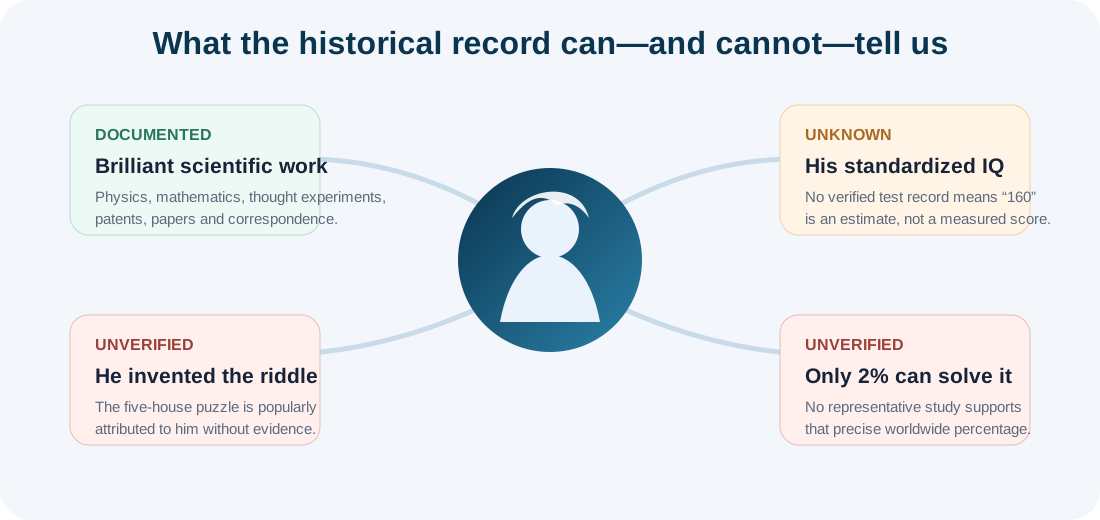
No manual, normative sample, test form, scoring system or archival publication supports this claim.
Fact check + interactive logic challenge
Did Einstein really create an IQ test? Discover what the historical record shows, why his own IQ is unknown, and solve the five-house logic riddle most people associate with his name.
There is no credible evidence that Albert Einstein created a standardized IQ test. There is also no verified record that he took one. The “Einstein IQ test” most people encounter online is a five-house logic puzzle—usually called Einstein’s Riddle or the Zebra Puzzle—whose authorship is unknown.
A documented version was published by LIFE International in December 1962, seven years after Einstein’s death. The famous claim that he invented it as a boy and said only 2% of humanity could solve it is unsupported.
This page lets you enjoy the famous puzzle while clearly separating historical evidence, internet folklore and psychometric fact.
Last updated: August 2026
No manual, normative sample, test form, scoring system or archival publication supports this claim.
The frequently repeated score of 160 is a retrospective estimate, not a verified result from a standardized test.
A genuine, solvable logic challenge exists. What is unverified is the story that Einstein authored it or attached the 2% claim.
Attaching a difficult puzzle to the world’s most recognizable symbol of genius makes it more memorable and shareable. The name also encourages a tempting but false leap: “If Einstein made it, solving it must reveal whether I am a genius.”
In reality, the puzzle is a constraint-satisfaction problem. It rewards organized note-taking, careful reading and repeated elimination. Those are useful cognitive skills, but they are only a narrow slice of what professional intelligence batteries assess.
This playable version uses the same logical structure as the classic 1962 Zebra Puzzle, but replaces historical cigarette brands with neutral activities. Every resident, color, drink, activity and pet appears exactly once.
Use all fourteen clues. You may fill the entire board or answer only the two final questions.
Select values as you deduce them. The board is a notebook, not an adaptive or standardized test.
| Category | House 1 | House 2 | House 3 | House 4 | House 5 |
|---|---|---|---|---|---|
| Resident | Norwegian | Ukrainian | English | Spanish | Japanese |
| Color | Yellow | Blue | Red | Ivory | Green |
| Drink | Water | Tea | Milk | Orange juice | Coffee |
| Activity | Painting | Violin | Chess | Gardening | Astronomy |
| Pet | Fox | Horse | Snails | Dog | Zebra |
Answer: The Norwegian drinks water, and the Japanese resident owns the zebra.
The section below contains the complete arrangement, every major deduction and both final answers. Try the puzzle first, then open it only when you are ready.
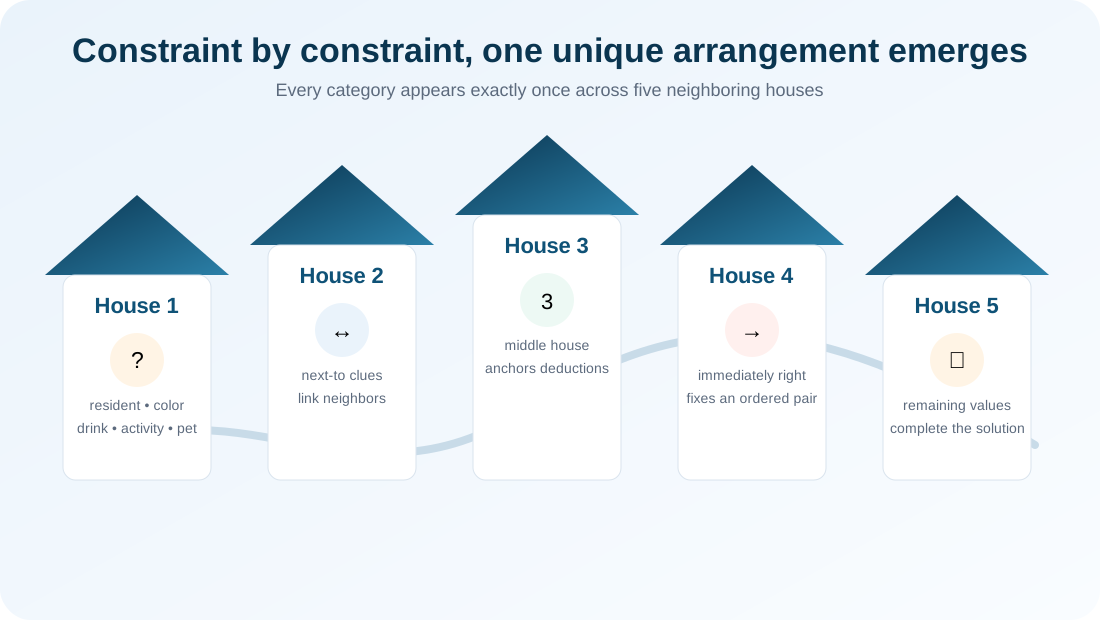
You do not need a sudden flash of genius. You need to create a chain in which each clue removes possibilities. The strongest clues are fixed positions and exact adjacency.
Not by itself. The puzzle can demonstrate successful reasoning on one structured problem, but an IQ score is a norm-referenced estimate built from a broader sample of tasks under standardized conditions.
Holding several rules in mind and seeing how one placement restricts the others.
Using “next to,” “immediately right of,” and “same house” relationships accurately.
Ruling out impossible combinations until only one option remains.
Noticing direction, uniqueness and exact wording without adding assumptions.
A conversion such as “solved in 10 minutes = IQ 140” would require a large representative sample, uniform instructions, controlled timing, evidence that scores are reliable, and a demonstrated relationship with established intelligence measures. The internet versions vary in wording, assistance, age suitability and prior exposure, so those requirements are not met.
No verified score is known. Claims of 160, 180 or other exact values generally work backward from Einstein’s achievements. That is not equivalent to testing him with a standardized instrument during his lifetime.
No test name, date, examiner, score report or normative edition accompanies the claim. Without those details, the number cannot be treated as a historical fact.
His papers, correspondence, education, patent-office work, lectures and scientific influence provide strong evidence of exceptional intellectual accomplishment without needing a speculative IQ number.
Einstein’s first attempt at the Zürich Polytechnic entrance examination is often simplified into the claim that he failed mathematics. The historical account is more interesting: his performance in mathematics and physics was excellent, while some language, history and other general subjects were insufficient for admission at that time.
He completed additional schooling in Aarau and entered the Polytechnic in 1896. This shows an uneven academic profile and a non-linear route—not mathematical incompetence.
Gifted people can be bored, oppositional, inconsistent, poorly matched to an instructional style or simply weaker in some subjects. A single grade, entrance examination or anecdote should not be used to diagnose intelligence.
Biographical stories describe delayed or unusual speech, but their exact accuracy is debated and retrospective. They are not a diagnostic template for modern children. Developmental concerns should be evaluated using current clinical standards, not comparisons with a famous scientist.
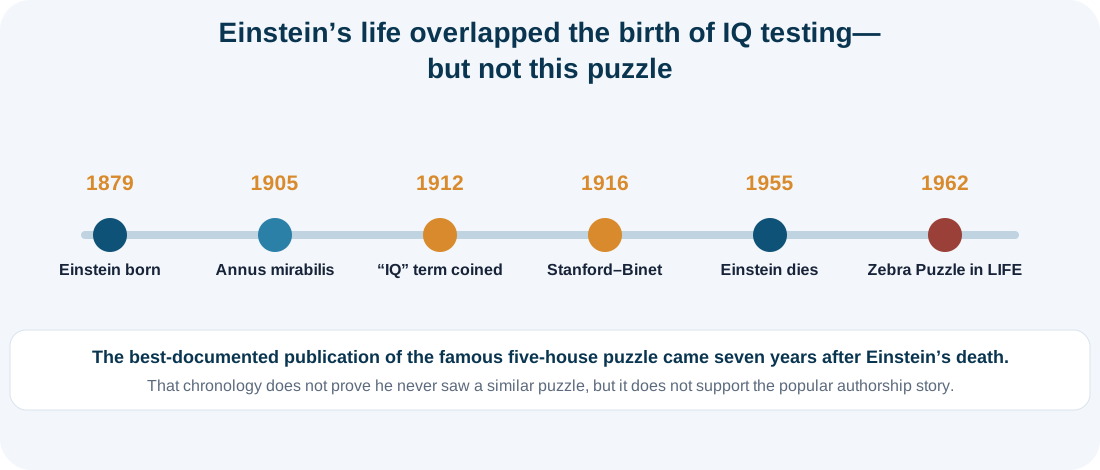
Einstein was born in Ulm, Germany, on March 14. Modern intelligence testing did not yet exist.
At sixteen he excelled in mathematics and physics but did not pass the full entrance examination because other subjects were weaker. He later completed school in Aarau.
He entered the Swiss Federal Polytechnic, later ETH Zürich, to train as a mathematics and physics teacher.
Einstein published landmark work on the photoelectric effect, Brownian motion, special relativity and mass–energy equivalence.
Psychologist William Stern proposed the intelligence quotient concept. This was separate from Einstein’s scientific work.
Lewis Terman’s U.S. revision helped popularize intelligence testing and the IQ label.
Einstein received the 1921 prize for services to theoretical physics, especially the law of the photoelectric effect.
David Wechsler introduced an influential adult intelligence battery with age-based comparison and multiple task types.
Einstein died in Princeton on April 18. No verified standardized IQ score or IQ test authored by him is known.
A five-house logic puzzle appeared in LIFE International on December 17, seven years after Einstein’s death.
LIFE International later printed the solution and names of successful solvers. The Einstein attribution remained unsupported.
| Feature | Five-house puzzle | Professional IQ assessment |
|---|---|---|
| Purpose | Entertainment and reasoning practice | Estimate defined cognitive abilities for a referral question |
| Tasks | One extended deductive problem | Multiple verbal, visual, memory, reasoning and speed tasks |
| Norms | No universal representative norms | Age-based normative sample and standardized conversions |
| Administration | Variable wording, hints, time and tools | Controlled instructions, timing, materials and scoring rules |
| Result | Solved, partly solved or unsolved | Composite and subtest scores with confidence intervals |
| Interpretation | Describes this puzzle attempt | Integrated with history, behavior, language and other evidence |
A responsible website can provide puzzles for practice, but it should not attach unsupported diagnostic labels or claim that a single result reveals a person’s fixed potential.
There is no credible historical evidence that Albert Einstein designed or published a standardized intelligence test. He was a theoretical physicist, not a psychometric test developer.
Most often they mean Einstein’s Riddle, also called the Zebra Puzzle or Five Houses Puzzle. It is a logic-grid puzzle, not a standardized IQ test.
The attribution is popular but unsupported. A documented version appeared in LIFE International in 1962, seven years after Einstein died. No reliable source connects him to authorship.
There is no reliable evidence for that quotation or percentage. Solving rates depend on the exact version, instructions, time, prior puzzle experience, language and whether a grid is supplied.
It is unknown. No verified standardized test result has been found. Numbers such as 160 or 180 are retrospective guesses, not measured scores.
No. A single untimed logic puzzle cannot be converted into a valid IQ. Professional intelligence tests use standardized administration, multiple task types, age norms and reliability data.
In the documented LIFE version, the Japanese resident owns the zebra. The Norwegian drinks water.
Many internet versions replace the zebra with a fish and change other categories. In the common fish version, the German owns the fish, but that is not the same wording as the 1962 LIFE puzzle.
The playable version replaces the original brands with neutral activities while preserving the same one-to-one logical relationships and solution pattern. The historical version is still explained.
There is no official time limit. Experienced logic-grid solvers may finish quickly; first-time solvers can take much longer. Time alone is not an IQ score.
Some can, especially with a grid and clear vocabulary. Reading level, working memory, experience and patience matter. A child’s performance should not be interpreted as a clinical intelligence result.
No. Historical records indicate strong mathematics and physics performance. The myth likely grew from confusion about grading systems and his unsuccessful first attempt at the full ETH entrance examination, where non-science subjects were weaker.
Stories about delayed speech appear in biographies, but the details are uncertain and often exaggerated. They cannot be used to diagnose him retrospectively or to predict another child’s development.
A real test requires a representative normative sample, standardized instructions, reliability evidence, validity evidence, controlled scoring, appropriate age range and qualified interpretation.
Yes. Learning logic-grid strategies, drawing tables and recognizing constraint patterns can improve speed and accuracy. That practice effect is one reason puzzle performance is not a pure intelligence measure.
The standard version has one unique solution when all categories are one-to-one and “immediately right” is interpreted correctly. Altered or missing clues can create multiple solutions.
A rule that limits which combinations are possible.
A problem solved by assigning values while satisfying every stated restriction.
A conclusion that must follow from the premises rather than merely being likely.
A modern age-normed score comparing performance with a reference group, commonly centered on 100.
An incorrect option designed to appear plausible in a test item.
A standardized battery designed to estimate selected cognitive abilities relative to age-based norms.
A table used to mark possible and impossible relationships among categories.
Reference data from a standardized sample used to interpret scores.
The science of psychological measurement, including reliability, validity and score interpretation.
The consistency and precision of scores under defined conditions.
Using consistent instructions, materials, timing and scoring across examinees.
Evidence supporting the interpretations and uses made from test scores.
The five-house logic puzzle often mislabeled as Einstein’s IQ test.
The page distinguishes direct documentation from popular attribution. Source links are included so readers can inspect the underlying material.
States that no verified IQ test by Einstein is known and that his IQ remains unknown.
Open sourceAuthoritative biography and education overview.
Open sourcePrize facts and concise career chronology.
Open sourceExplains his strong mathematics and physics performance and weaker results in some other subjects.
Open sourceTranscribes the December 17, 1962 puzzle and documents that authorship and 2% claims lack evidence.
Open sourceProvides publication dates, solution table and the history of the Einstein/Lewis Carroll attribution.
Open sourceProfessional definition and historical context for IQ.
Open sourceCore standards for validity, reliability, fairness and responsible score use.
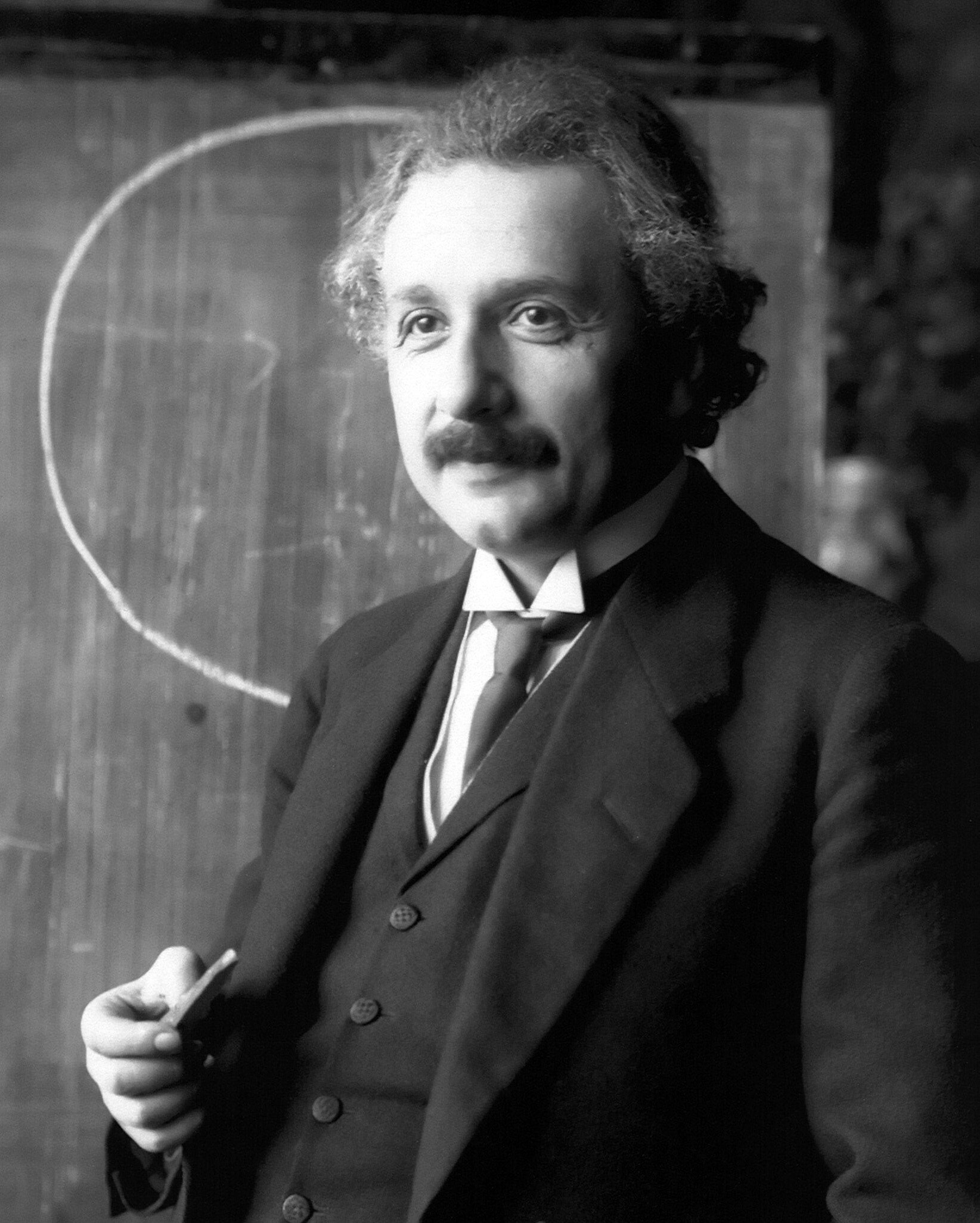
Open sourcePublic-domain photograph by Ferdinand Schmutzer used on this page.
Open source