
IQ Testing in Washington, DC
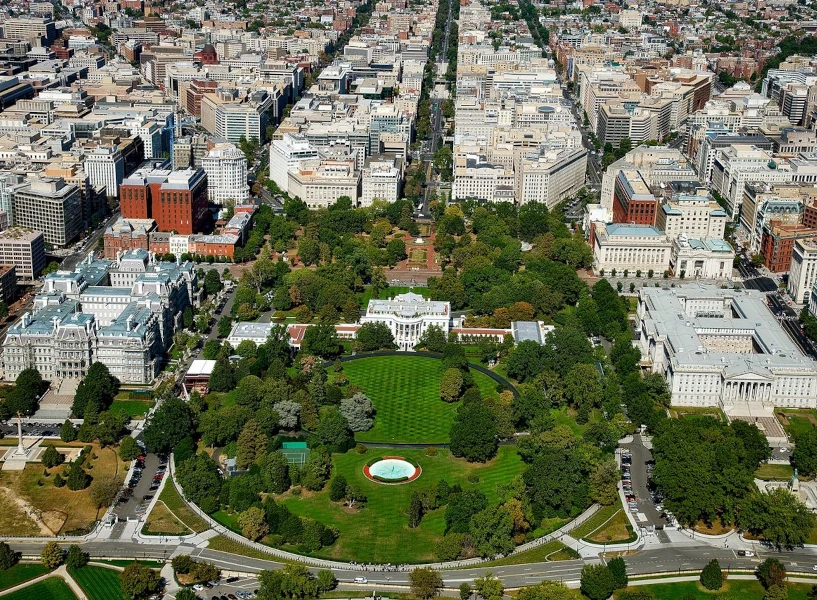

Professional IQ testing in Washington, DC – whether you need an assessment for school, employment, gifted program eligibility, or personal insight, we connect you with licensed psychologists in the Washington, DC area.
Last Updated: October 2026
Child IQ Testing
WISC-V & Stanford-Binet for ages 6–16. Gifted identification, learning profiles.
Adult IQ Testing
WAIS-IV & WAIS-5 available. Comprehensive adult cognitive assessments. Clinical & occupational.
WISC-V Test
Wechsler Intelligence Scale for Children® Fifth Edition – the gold standard for child IQ testing.
WAIS-IV & WAIS-5 Tests
Wechsler Adult Intelligence Scale® – Fourth Edition (WAIS-IV) and Fifth Edition (WAIS-5) available for adult IQ testing.
Gifted Testing
Identify giftedness for school placement, enrichment, and talent programs using WISC-V or Stanford-Binet.
Stanford-Binet 5
Stanford-Binet Intelligence Scales Fifth Edition – comprehensive cognitive assessment for all ages.
Mensa Testing
Mensa qualification guidance and testing that may provide accepted prior evidence, subject to current American Mensa rules. American Mensa's published prior-evidence list includes WAIS-IV and Stanford-Binet 5; verify current acceptance of WAIS-5 before testing.
Full Evaluation
Combined assessment with detailed report and recommendations. Includes WISC-V, WAIS-IV, WAIS-5, or Stanford-Binet 5 as appropriate.
IQ Testing in Washington, DC: city context
Washington, DC is the nation's capital and a compact federal district with a U.S. Census Bureau population estimate of approximately 693,645 residents in 2025. The District's 2020 land area was about 61.13 square miles, creating a dense urban setting connected to a much larger Maryland–Virginia metropolitan region.
The city includes major universities, federal agencies, research institutions, hospitals, independent schools, public and public charter schools, and private practices. These resources support cognitive assessment, educational planning, disability documentation, career guidance, gifted-learning questions, and neuropsychological care.
IQ, gender, and demographic context
Professional IQ tests use national age-based norms. They are not scored against separate Washington, DC norms for men, women, racial groups, ethnic groups, wards, or neighborhoods. Research generally finds substantial overlap in overall IQ distributions by sex, while individual profiles can differ across verbal, visual-spatial, working-memory, fluid-reasoning, and processing-speed tasks.
Current Census context for Washington, DC includes:
- Female residents: 52.5% of the District population.
- White alone: 37.9%.
- Black or African American alone: 42.1%.
- American Indian and Alaska Native alone: 0.4%.
- Asian alone: 4.4%.
- Two or more races: 9.6%.
- Hispanic or Latino: 11.9%; Hispanic origin may overlap with race categories.
- Language other than English spoken at home: 19.1% of residents age 5 and older.
No authoritative public dataset establishes valid Washington, DC IQ averages by gender, race, ethnicity, ward, school, or neighborhood. A psychologist interprets an individual's results in light of age, education, language, culture, disability, health, effort, and testing conditions rather than assigning ability from demographic membership.
Demographic figures are based on current U.S. Census Bureau QuickFacts for Washington city, District of Columbia and should be rechecked when the page is updated.
What is professional IQ testing?
Intelligence quotient (IQ) testing is a standardized method to measure human cognitive abilities and intellectual potential. Professional IQ tests are administered by licensed psychologists in a controlled environment to ensure accuracy and reliability. Unlike online quizzes, clinical assessments provide a full-scale IQ score along with detailed breakdowns of verbal comprehension, perceptual reasoning, working memory, and processing speed.
In Washington, DC, IQ testing is commonly used for gifted program admission, learning disability identification, career guidance, neuropsychological evaluation, and personal development. The results are presented in a comprehensive report that includes normative comparisons, strengths and weaknesses, and actionable recommendations.
Who should get tested?
IQ testing can benefit children, adolescents, and adults in various situations:
- Children: Parents often seek testing for school readiness, gifted placement, or to understand learning challenges.
- Adults: Many adults take IQ tests for career advancement, graduate school applications, or personal curiosity.
- Mensa candidates: High-IQ societies require official test scores for membership.
- Clinical referrals: Psychologists may recommend testing as part of a broader neuropsychological evaluation.
Types of IQ tests
We offer the most recognized and scientifically validated intelligence tests in the field:
- WISC-V (Wechsler Intelligence Scale for Children® – Fifth Edition): The gold standard for children aged 6:0–16:11. It provides a Full-Scale IQ and five primary index scores.
- WAIS-IV (Wechsler Adult Intelligence Scale® – Fourth Edition): The most widely used adult IQ test for ages 16–90. It measures cognitive functioning across four domains.
- Stanford-Binet Intelligence Scales – Fifth Edition: A comprehensive assessment for ages 2–85, often used for gifted identification and clinical evaluations.
- Gifted Testing: Often includes the WISC-V or Stanford-Binet, plus additional creativity and achievement measures.
- Mensa Testing: We provide guidance on Mensa qualification routes and can connect consumers with psychologists whose complete reports may be submitted as prior evidence, subject to current American Mensa rules.
How the testing process works
- Initial consultation: Brief phone or video call to discuss your needs and match you with the right psychologist.
- Testing session: In-person or remote testing (depending on the test) with a licensed psychologist. Most sessions last 1–2 hours.
- Scoring and interpretation: The psychologist scores the test and interprets the results in the context of your background and goals.
- Feedback session: A detailed review of your results, including strengths, weaknesses, and practical recommendations.
- Comprehensive report: You receive a written report with all scores, normative comparisons, and actionable next steps.
How much does IQ testing cost in Washington, DC?
Fees vary according to the test selected, the referral question, the clinician's credentials, the amount of records review, and whether the service includes only a score summary or a comprehensive written report and feedback session. A stand-alone IQ assessment usually costs less than a full psychoeducational or neuropsychological evaluation.
Request a written estimate covering consultation, testing, scoring, report preparation, feedback, and any additional measures. Insurance is more likely to contribute when testing is medically necessary than when it is requested solely for curiosity, career exploration, school admission, or Mensa documentation.
Washington, DC's Intellectual History & Educational Legacy
Washington's intellectual identity reflects its role as the federal capital and a center for education, archives, policy, law, science, medicine, diplomacy, and culture. Georgetown University traces its roots to 1789; The George Washington University was chartered in 1821; Gallaudet University, Howard University, American University, Catholic University, and the University of the District of Columbia add distinctive academic traditions.
- Smithsonian Institution: Museums, research centers, collections, laboratories, and public-learning programs connect science, history, culture, and education.
- Library of Congress and National Archives: Major resources for scholarship, primary-source research, history, law, and civic education.
- Federal research and policy ecosystem: Agencies, think tanks, professional associations, nonprofit organizations, and contractors employ analysts, scientists, attorneys, economists, engineers, and policy specialists.
- Universities and medical centers: Georgetown, GW, Howard, American, Catholic, Gallaudet, UDC, and regional institutions support research in psychology, neuroscience, education, public health, policy, language, and technology.
This history does not imply that city residence determines intelligence. It explains why Washington residents often seek detailed cognitive profiles for education, professional development, research participation, disability documentation, and clinical decision-making.
Knowledge institutions and public scholarship
The capital's intellectual infrastructure extends beyond degree-granting universities. The Smithsonian's museums and research units support scholarship in anthropology, biodiversity, conservation, history, aerospace, art, and material culture. The Library of Congress maintains extensive collections and research services, while the National Archives preserves federal records that support historical, legal, genealogical, and policy research. The National Academies, professional societies, foundations, and policy institutes convene experts and publish evidence reviews used in public decision-making.
Washington also has a distinctive tradition of education serving communities historically excluded from higher learning. Howard University is a major historically Black research institution; Gallaudet University is internationally known for education and research involving deaf and hard-of-hearing people; and UDC is the District's public university. These institutions reinforce the importance of culturally and linguistically responsive assessment rather than assuming that one test score can be interpreted without context.
Major Washington, DC Employers and Cognitive Skill Demands
Washington's labor market is unusually concentrated in government, professional services, law, policy, education, health care, research, nonprofits, hospitality, communications, and technology. Cognitive testing cannot select a career by itself, but a well-interpreted profile can clarify strengths relevant to different work demands.
- Federal and District government: Verbal reasoning, judgment, quantitative analysis, working memory, writing, and sustained attention.
- Law, consulting, policy, and government relations: Complex reading, argument analysis, communication, rapid synthesis, and executive functioning.
- Technology, cybersecurity, data, and engineering: Fluid reasoning, visual-spatial analysis, quantitative skills, working memory, and systematic problem solving.
- Universities, schools, and research organizations: Learning, memory, statistical reasoning, writing, teaching, and project management.
- Hospitals and health systems: Clinical judgment, communication, attention, processing efficiency, and precision.
- Hospitality, media, arts, and nonprofit leadership: Social judgment, verbal communication, creativity, planning, and adaptability.
Employers generally do not need or have a right to a complete clinical IQ report. Discuss privacy, disability law, and the exact purpose of documentation with the psychologist before sharing results.
How cognitive profiles relate to work—without overclaiming
A WAIS or Stanford-Binet profile may identify relative strengths in verbal comprehension, visual-spatial reasoning, fluid reasoning, working memory, or processing speed. Those findings can guide questions for career counseling, but they do not measure motivation, ethics, creativity, interpersonal skill, subject knowledge, clearance eligibility, professional judgment, or practical experience. A person with an uneven profile may succeed by using tools, teams, routines, accommodations, or specialized expertise.
For federal and regulated work, selection decisions may be governed by civil-service rules, occupational qualifications, security requirements, disability law, and agency-specific procedures. For licensed professions, education, supervised experience, examinations, and board rules matter more than an IQ score. Results should be translated into practical strategies—such as workload design, note-taking systems, communication formats, continuing education, or accommodation requests—rather than used as a simplistic ranking of careers.
Washington, DC IQ Testing by Neighborhood and Area
Testing needs occur throughout the District. Providers may serve clients from Downtown, Capitol Hill, Georgetown, Foggy Bottom, Dupont Circle, Logan Circle, Shaw, Columbia Heights, Adams Morgan, Mount Pleasant, Petworth, Brookland, Woodley Park, Cleveland Park, Tenleytown, Chevy Chase DC, Navy Yard, Southwest, H Street, Anacostia, Congress Heights, and nearby communities.
- Northwest DC: Dense clusters of universities, hospitals, independent schools, and private practices.
- Northeast and Southeast DC: Families and adults may use DCPS, public charter, hospital, university, community, and private-practice resources.
- Maryland and Virginia suburbs: Bethesda, Silver Spring, Chevy Chase, Hyattsville, Arlington, Alexandria, Falls Church, and McLean have separate school, licensing, and documentation rules.
Choose a provider based on licensure, age expertise, referral question, accepted test, report quality, accessibility, and whether the receiving school or organization will accept the results—not simply distance from a neighborhood.
Choosing a practical testing location
A convenient location can improve attendance and reduce fatigue, but convenience should be balanced against examiner expertise. Ask whether testing occurs in a dedicated quiet office, whether construction or street noise is controlled, how breaks are handled, and whether the site is accessible from the nearest Metro station or bus route. Families should also consider school dismissal times, federal rush-hour traffic, parking restrictions, and the child's usual energy pattern.
For clients traveling from Maryland or Virginia, confirm that the psychologist may lawfully provide the service across jurisdictional lines and that the receiving institution accepts the report. The place where the client is physically located can matter for telehealth and remote assessment, even when the psychologist's office is in Washington.
Washington, DC Universities and Research Institutions
- Georgetown University: Psychology, lifespan cognitive neuroscience, human development, public policy, medicine, linguistics, and interdisciplinary cognitive science.
- The George Washington University: Clinical psychology, cognitive neuroscience, applied social psychology, applied psychology, education, public policy, medicine, and public health.
- Howard University: Clinical, counseling, developmental, social, school, educational, and neuropsychology training and research with strong attention to underserved communities.
- American University: Clinical psychology, behavior/cognition/neuroscience, public affairs, international service, communication, and data-related programs.
- Catholic University, Gallaudet University, and UDC: Psychology, education, social science, language, accessibility, counseling, and professional programs.
- Regional research network: NIH in Bethesda, universities in Maryland and Virginia, federal laboratories, the Smithsonian, and national professional associations broaden research and training access.
University clinics may have restricted referral criteria, training schedules, waitlists, and research protocols. Confirm whether a program provides clinical testing, a research assessment, or educational services before relying on it for documentation.
Clinical service, training clinic, and research participation are different
A university department may conduct cognitive research without offering diagnostic evaluations. A training clinic may provide lower-cost services under supervision but have limited appointment cycles, narrower referral criteria, or longer turnaround. A hospital program may accept only medically relevant referrals. Before enrolling, ask whether results will include individually interpreted standardized scores, a clinical diagnosis when appropriate, a written report, accommodation recommendations, and permission to release the report to a school or agency.
A brief online IQ test can help Washington residents get acquainted with common question formats, but a qualified examiner should handle any assessment intended for school, work, or healthcare decisions.
Research participation can be valuable and may include cognitive tasks, imaging, surveys, or developmental measures, but research results are often not returned in a format suitable for clinical, educational, legal, or Mensa use. Never assume that participation in a study is equivalent to a professional evaluation.
Washington, DC Economic Context
Washington combines high educational attainment with substantial socioeconomic variation. Census QuickFacts reports that 64.2% of residents age 25 and older hold a bachelor's degree or higher, while 15.4% of residents are below the poverty line. Median household income was $109,870 in 2020–2024, but housing, transportation, childcare, and health-care costs can affect access to private testing.
Assessment fees vary by test, clinician credentials, records review, report length, feedback, urgency, and whether the service is a stand-alone IQ test or a broader psychoeducational/neuropsychological evaluation. Ask for a written estimate and clarify insurance, cancellation, school-documentation, and report-release policies.
Access, affordability, and equity
Private assessment access is affected by clinician shortages, insurance networks, language availability, transportation, childcare, work schedules, and the cost of multi-session testing. Families and adults may explore school-based evaluations, hospital financial-assistance policies, university training clinics, employee benefits, flexible spending accounts, out-of-network reimbursement, or payment plans. Availability and eligibility vary, and lower cost does not automatically mean that a service will meet a school, legal, or accommodation deadline.
For bilingual or multilingual clients, ask how the examiner evaluates language dominance, educational history, interpreter use, and the validity of English-language norms. A translated conversation is not the same as a properly selected and interpreted assessment.
Washington, DC School District and Gifted-Education Context
Washington does not use one citywide IQ cutoff for all advanced learners. DCPS states that it does not screen or label students as “gifted and talented”; instead, it uses enrichment and advanced-learning opportunities, including the Schoolwide Enrichment Model (SEM), Advanced Placement, Junior Great Books, and school-specific programming.
- DCPS neighborhood and citywide schools: Enrollment rights, feeder patterns, out-of-boundary applications, and program offerings vary.
- DCPS selective high schools and programs: Current options include Anacostia Early College, Bard DC, Benjamin Banneker, CHEC, Duke Ellington, Early College Academy at Coolidge, McKinley Tech, Phelps ACE, and School Without Walls. Admission uses program-specific criteria rather than a universal IQ score.
- Public charter schools: Most participate in My School DC, but academic models, supports, and admissions rules differ.
- Independent schools: Each school decides whether it accepts outside cognitive testing and which test, age range, report date, or examiner credentials are required.
- Special education: DCPS school psychologists complete and review evaluations related to IEPs, 504 plans, independent educational evaluations, and disability eligibility.
Before private testing, ask the receiving school exactly what documentation it accepts. A clinically valid WISC-V or Stanford-Binet report may be useful but does not guarantee admission, placement, acceleration, or services.
Educational use of private reports
A private cognitive report can help families describe a student's strengths, weaknesses, instructional needs, or possible twice-exceptionality. It does not replace the school's obligation to review multiple sources of information, and it does not control an IEP, 504, selective-admission, acceleration, or placement decision. School teams may request achievement data, classroom performance, observations, response-to-intervention records, language assessment, or additional evaluation.
Because DCPS, public charter LEAs, independent schools, and neighboring jurisdictions operate under different procedures, families should ask who receives the report, how recent it must be, whether electronic signatures are accepted, and whether the evaluator must attend a meeting. Keep a complete copy and obtain written authorization before records are shared.
Local Testing Centers and Psychologists
Washington-area testing may be available through licensed private psychologists, neuropsychologists, hospital programs, rehabilitation settings, school systems, universities, and specialty clinics. DC Health's Board of Psychology regulates the practice of psychology in the District.
- Children's National Hospital: Pediatric neuropsychology evaluates children and adolescents when cognitive concerns intersect with neurological or medical conditions.
- MedStar Health and MedStar National Rehabilitation Network: Psychology and neuropsychology services may address neurological, rehabilitation, and medical referral questions.
- Washington DC VA Medical Center: Eligible veterans may access psychology and neuropsychology services according to referral and eligibility criteria.
- Private practices: Often serve gifted, school-placement, ADHD, learning, disability, career, Mensa, and personal-insight questions.
Verify the psychologist's active DC license, competence with the requested instrument, report turnaround, and whether the assessment meets the receiving organization's requirements.
Questions to ask before booking
- Which test edition will be administered, and why is it appropriate for the person's age and referral question?
- Will the psychologist personally administer and interpret the test, or will a supervised trainee participate?
- Does the quoted fee include intake, records review, testing, scoring, feedback, a full written report, and school or agency forms?
- What happens if illness, anxiety, fatigue, sensory needs, language factors, or medication changes affect validity?
- How are test materials secured, and what information can legally be released?
- Can the evaluator explain score confidence intervals, index discrepancies, and limitations instead of reporting only a single IQ number?
Washington, DC Learning Events and Professional Resources
- Smithsonian museums and research programs: Exhibitions, lectures, family programs, internships, and online learning across science, history, art, culture, and technology.
- Library of Congress and National Archives: Public programs, primary-source education, research orientations, exhibitions, and teacher resources.
- DC Public Library: Reading, digital learning, makerspaces, workforce support, language learning, and neighborhood programming.
- Universities and professional associations: Public lectures, continuing education, research participation, conferences, policy events, and career programs.
- Metropolitan Washington Mensa: Intellectual and social activities for qualifying members; schedules and locations change.
These resources can enrich learning and professional development, but they are not substitutes for a standardized clinical evaluation when formal scores or diagnostic documentation are required.
Using enrichment after assessment
Results are most useful when they lead to specific opportunities. A verbally strong learner might benefit from debate, writing, languages, history, or public-speaking programs; strong visual-spatial reasoning may support architecture, engineering, art, mapping, or design; strong fluid reasoning may align with mathematics, coding, science, or strategy; and a relative working-memory or processing-speed weakness may suggest supports even when reasoning is advanced.
Families and adults should evaluate program fit, accessibility, cost, transportation, instructional quality, and emotional well-being. More enrichment is not always better; sustainable challenge, sleep, relationships, and unstructured time remain important.
Transportation and Accessibility
Washington testing locations may be reached by WMATA Metrorail and Metrobus, walking, biking, rideshare, private vehicle, MARC, VRE, and regional buses. Union Station and Ronald Reagan Washington National Airport provide regional access. Travel time can vary substantially by rush hour, federal events, demonstrations, weather, parking, and station work.
- Ask about elevator access, quiet waiting space, accessible restrooms, parking, sensory needs, and interpreter policies.
- Allow extra time so transportation stress does not affect test performance.
- Remote assessment should be used only when the psychologist, test publisher, licensing rules, and receiving organization permit it.
Testing-day planning
Confirm the building entrance and suite because federal campuses, hospitals, and multi-building medical complexes may have security screening or separate visitor routes. Bring required identification, glasses, hearing devices, medication information, and permitted snacks. Avoid scheduling immediately after overnight travel, a major examination, an unusually long workday, or a disruptive commute when possible.
Washington, DC Weather and Seasonal Considerations
Washington has hot, humid summers, variable spring and fall weather, and winters that can include cold rain, snow, or ice. Severe storms, heat advisories, federal closures, school schedule changes, and transportation disruptions can affect appointments.
- Summer: Hydration, heat, camps, travel, and altered sleep schedules may affect stamina.
- School year: Avoid testing immediately after unusually demanding school days when possible.
- Winter weather: Confirm cancellation and rescheduling policies.
- Seasonal allergies and illness: Tell the examiner about symptoms or medication changes that may affect attention or processing speed.
Federal-city scheduling factors
Large demonstrations, inaugurations, major hearings, diplomatic events, road closures, and security perimeters can alter travel even in clear weather. Monitor local transportation notices and communicate promptly with the office if arrival conditions could compromise a standardized start time. A valid assessment is preferable to forcing testing under unusually stressful conditions.
Areas we serve
We serve Washington, DC and surrounding areas, including Downtown, Capitol Hill, Georgetown, Foggy Bottom, Dupont Circle, Logan Circle, Shaw, Columbia Heights, Adams Morgan, Mount Pleasant, Petworth, Brookland, Cleveland Park, Tenleytown, Chevy Chase DC, Navy Yard, Southwest, H Street, Anacostia, Congress Heights, Arlington, Alexandria, Falls Church, McLean, Bethesda, Chevy Chase, Silver Spring, Hyattsville, and nearby communities. Provider licensure and school acceptance requirements may differ across DC, Maryland, and Virginia.
Frequently Asked Questions
WISC-V is for children aged 6–16, while WAIS-IV is for adults aged 16–90. Each is normed for its specific age group.
Most IQ tests take between 60 and 90 minutes, plus a feedback session. Allow 2–3 hours total.
No, you can book directly with our psychologists. We serve both self-referred and professionally referred individuals.
A complete psychologist's report may be submitted as prior evidence if the test, score, administration conditions, and documentation satisfy the receiving organization's current rules. Verify requirements before testing.
Some plans cover cognitive assessments when there is a clinical indication. Check with your provider.
Get a good night's sleep, eat a healthy meal, and arrive relaxed. No specific preparation is needed.
You'll receive a comprehensive report with your scores and tailored recommendations.
Remote administration may be possible only in limited circumstances. The evaluator must confirm publisher guidance, test validity, state licensing, technology requirements, and acceptance by the receiving school or organization.