
Gifted Testing in Washington, DC
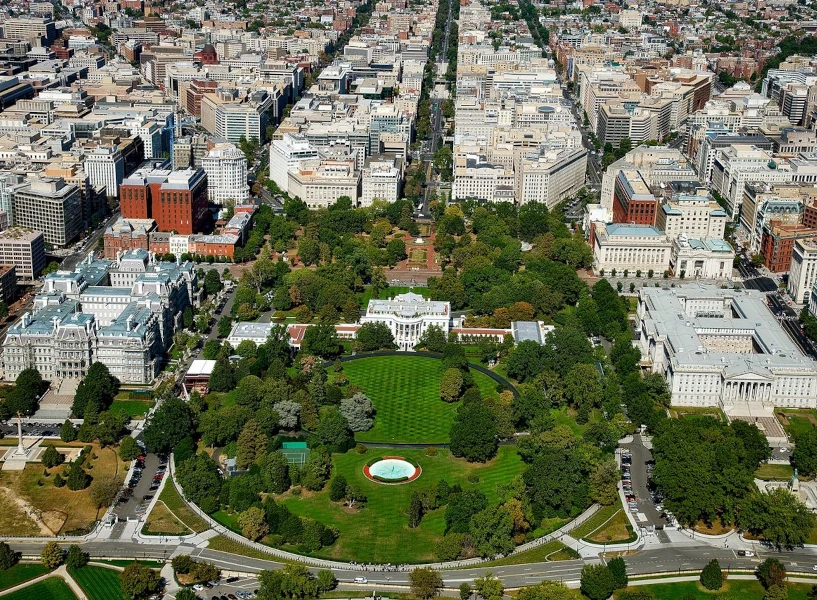

Professional gifted testing in Washington, DC – whether your child needs identification for school placement, enrichment programs, or you're an adult seeking Mensa admission, we connect you with licensed psychologists who specialize in gifted assessment.
Last Updated: July 2026
Child Gifted Testing
WISC-V & Stanford-Binet 5 for ages 6–16. Gifted identification, school placement.
Adult Gifted Testing
WAIS-IV & WAIS-5 available. Comprehensive assessments for adults seeking Mensa or career guidance.
WISC-V Test
Wechsler Intelligence Scale for Children® Fifth Edition – the gold standard for child gifted identification.
Stanford-Binet 5
Stanford-Binet Intelligence Scales Fifth Edition – comprehensive cognitive assessment for all ages, often used for gifted identification.
Mensa Testing
Mensa qualification guidance and testing that may provide accepted prior evidence, subject to current American Mensa rules. American Mensa's published prior-evidence list includes WAIS-IV and Stanford-Binet 5; verify current acceptance of WAIS-5 before testing.
School Placement Testing
Testing for private school admission and gifted program eligibility using WISC-V or Stanford-Binet 5.
Gifted Testing in Washington, DC: city context
Washington, DC serves families in all eight wards and is linked to a much larger Maryland–Virginia metropolitan region. The Census Bureau estimated the District population at approximately 693,645 in 2025, with 18.7% of residents under age 18.
Families may seek child testing for advanced-learning planning, school placement, learning concerns, disability documentation, or a clearer understanding of cognitive strengths. Local resources include DC Public Schools (DCPS), public charter schools, independent schools, Children's National Hospital, university programs, Early Stages, and licensed private psychologists.
IQ, gender, and demographic context (child population)
Child IQ tests such as the WISC-V and Stanford-Binet 5 use national age-based norms. They do not use separate Washington, DC norms for boys and girls, and overall IQ distributions overlap substantially by sex. Individual children may nevertheless show meaningful differences among verbal, visual-spatial, fluid-reasoning, working-memory, and processing-speed abilities.
- Residents under age 18: 18.7% of the District population.
- Female residents: 52.5% of the total population.
- Hispanic or Latino: 11.9%.
- Black or African American alone: 42.1%.
- American Indian and Alaska Native alone: 0.4%.
- Asian alone: 4.4%.
- Two or more races: 9.6%.
- Language other than English spoken at home: 19.1% of residents age 5 and older.
No valid local source supports assigning IQ averages to Washington, DC children by gender, race, ethnicity, ward, school system, or neighborhood. Equitable assessment considers language exposure, educational opportunity, disability, culture, health, and the appropriateness of the selected test.
Gifted children in Washington, DC: who are they?
Gifted learners may show advanced reasoning, rapid learning, creativity, leadership, intense interests, unusual problem solving, or exceptional performance in one or more academic or artistic areas. A single score can be informative, but educational decisions should consider the full profile and the receiving program's criteria.
Schools and programs for gifted learners in Washington, DC
- DCPS Schoolwide Enrichment Model: DCPS does not use a universal gifted label; SEM and other advanced opportunities are designed to develop high ability and interests.
- DCPS selective high schools: Program-specific academic, early-college, arts, STEM, and career pathways use their own admissions rubrics rather than a citywide IQ cutoff.
- Public charter schools: Academic models, acceleration, enrichment, and supports vary by school.
- Independent schools: Sidwell Friends, Georgetown Day, Maret, National Cathedral School, St. Albans, Beauvoir, Washington International School, and others set their own admissions and placement requirements.
- Regional options: Maryland and Virginia school systems, Johns Hopkins CTY, museums, universities, and national organizations offer additional pathways under separate rules.
Advantages of gifted education
- Appropriate pace, depth, complexity, and opportunity for advanced work.
- Access to intellectual peers and mentors.
- Support for creativity, research, leadership, and specialized interests.
- Reduced boredom and better fit when the learner is substantially ahead.
- Opportunities to address social-emotional needs and twice-exceptionality.
Hobbies and interests of gifted children
Advanced learners in Washington may explore museums, coding, robotics, debate, Model United Nations, languages, music, theater, visual arts, history, public policy, mathematics, science, chess, writing, nature, astronomy, and independent research. Interests vary widely and should not be used as a diagnostic checklist.
What is giftedness?
Giftedness is a complex and multifaceted construct that goes beyond a single IQ score. In the field of psychology, giftedness is typically defined as an IQ score of 130 or above (the 98th percentile), but it also encompasses exceptional creativity, leadership ability, or talent in specific academic or artistic domains.
However, in Washington, DC and across the U.S., the definition of giftedness is evolving. Many psychologists and educators now recognize that giftedness manifests in diverse ways, including:
- Intellectual giftedness: Exceptional reasoning, problem-solving, and abstract thinking.
- Creative giftedness: Unusual originality, imagination, and ability to generate novel ideas.
- Leadership giftedness: Exceptional interpersonal skills, empathy, and ability to inspire others.
- Artistic giftedness: Superior talent in visual arts, music, drama, or dance.
- Twice-exceptional (2E): Gifted individuals who also have a learning disability or neurodivergence such as ADHD or dyslexia.
In Washington, DC, where diversity and inclusion are highly valued, there is a growing movement to identify and support gifted students from all backgrounds, including those who may be underserved by traditional testing methods.
Washington, DC Gifted Identification Statistics
- No DCPS gifted-identification count: DCPS does not run a universal gifted-labeling system, so there is no comparable citywide “identified gifted” percentage.
- SEM participation: Current SEM-designated schools and enrichment access can change; families should use DCPS school profiles and speak with school leadership.
- Selective high schools: Admission is based on program-specific criteria rather than a single IQ percentile.
- Charter and independent schools: Each school or network defines its own advanced-learning and admissions practices.
- No valid metro total: There is no single public count covering DCPS, charter, private, home-school, Maryland, and Virginia gifted learners.
IQ percentiles describe performance relative to national age peers; they should not be presented as a city demographic statistic.
Washington, DC Gifted Testing Timeline
- Start with the receiving program: Confirm whether testing is required, optional, or not accepted.
- My School DC cycle: Public-school and selective-high-school deadlines are annual; gather report cards, essays, recommendations, and other required materials early.
- Independent schools: Admissions calendars commonly begin months before enrollment, and testing rules vary by grade.
- Clinical scheduling: Allow time for consultation, testing, scoring, feedback, report writing, and any school follow-up.
- Do not over-practice: Coaching on secure test content can invalidate results; support sleep, nutrition, and familiarity with the general process instead.
Washington, DC Gifted Programs by Age Group
- Early childhood: Play-based enrichment, language, music, museum programs, and developmentally appropriate acceleration decisions; Early Stages evaluates suspected developmental delays, not giftedness.
- Elementary: Schoolwide enrichment, Junior Great Books, advanced math or reading, independent projects, public charter models, and independent-school programs.
- Middle school: Honors or accelerated coursework, enrichment clusters, STEM and arts programs, debate, robotics, language, and preparation for selective high-school applications.
- High school: AP, dual enrollment, early college, selective programs, arts auditions, STEM pathways, internships, research, and career-technical education.
- Outside school: Smithsonian, DC Public Library, universities, Johns Hopkins CTY, museums, national competitions, and regional camps offer changing opportunities.
Unique challenges and nuances of giftedness
Giftedness is not always a straightforward advantage. Many gifted individuals face unique challenges that can impact their well-being and success:
- Asynchronous development: Gifted children often have intellectual abilities that outpace their social and emotional maturity. This can lead to frustration, social isolation, and difficulty relating to peers.
- Perfectionism: Many gifted individuals set unrealistically high standards for themselves, leading to anxiety, burnout, and avoidance of challenges.
- Underachievement: Gifted students may underperform in school if they are not adequately challenged or if their learning needs are not met.
- Social isolation: Gifted individuals may struggle to find peers who share their interests and intellectual intensity, leading to loneliness and depression.
- Twice-exceptionality (2E): Many gifted individuals also have learning disabilities or neurodivergence, such as ADHD, dyslexia, or autism. This can mask their abilities and make it difficult to receive appropriate support.
- Cultural and ethnic disparities: Giftedness is often under-identified in minority and low-income populations due to cultural biases in testing and limited access to enrichment programs. Washington, DC is actively working to address these disparities through inclusive identification practices.
Gifted testing can help identify these challenges and provide a roadmap for support. A comprehensive evaluation can reveal not only strengths but also areas where intervention is needed.
Mensa and high-IQ societies
Metropolitan Washington Mensa serves the Washington, DC area. American Mensa membership requires a qualifying score in the upper two percent on an accepted test. Youth admission, prior-evidence rules, and accepted tests should be confirmed directly with American Mensa.
Mensa qualification and school gifted eligibility are separate processes. A score accepted by one organization may not satisfy another program's requirements, and an admission test does not replace a comprehensive educational or clinical evaluation.
Areas we serve
We serve Washington, DC and surrounding areas, including Downtown, Capitol Hill, Georgetown, Foggy Bottom, Dupont Circle, Logan Circle, Shaw, Columbia Heights, Adams Morgan, Mount Pleasant, Petworth, Brookland, Cleveland Park, Tenleytown, Chevy Chase DC, Navy Yard, Southwest, H Street, Anacostia, Congress Heights, Arlington, Alexandria, Falls Church, McLean, Bethesda, Chevy Chase, Silver Spring, Hyattsville, and nearby communities. Provider licensure and school acceptance requirements may differ across DC, Maryland, and Virginia.
Frequently Asked Questions
Both are excellent tests. WISC-V is more commonly used for school-age children, while Stanford-Binet 5 can be used for ages 2–85. We often recommend WISC-V for school placement and Stanford-Binet 5 for highly gifted individuals.
The test itself takes 60–90 minutes. With the consultation, feedback, and report, the entire process is about 1–2 weeks.
No, you can book directly with our psychologists. We serve both self-referred and professionally referred individuals.
A complete psychologist's report may be submitted as prior evidence if the test, score, administration conditions, and documentation satisfy the receiving organization's current rules. Verify requirements before testing.
Some plans cover cognitive assessments when there is a clinical indication. Check with your provider.
Get a good night's sleep, eat a healthy meal, and arrive relaxed. No specific preparation is needed.
You'll receive a comprehensive report with your scores and tailored recommendations.
Remote administration may be possible only in limited circumstances. The evaluator must confirm publisher guidance, test validity, state licensing, technology requirements, and acceptance by the receiving school or organization.
Not exactly. Smartness is a colloquial term, while giftedness is a clinical construct involving specific cognitive abilities and traits.
We specialize in identifying both giftedness and learning disabilities, and we provide tailored recommendations for support.