
Child IQ Testing in Washington, DC
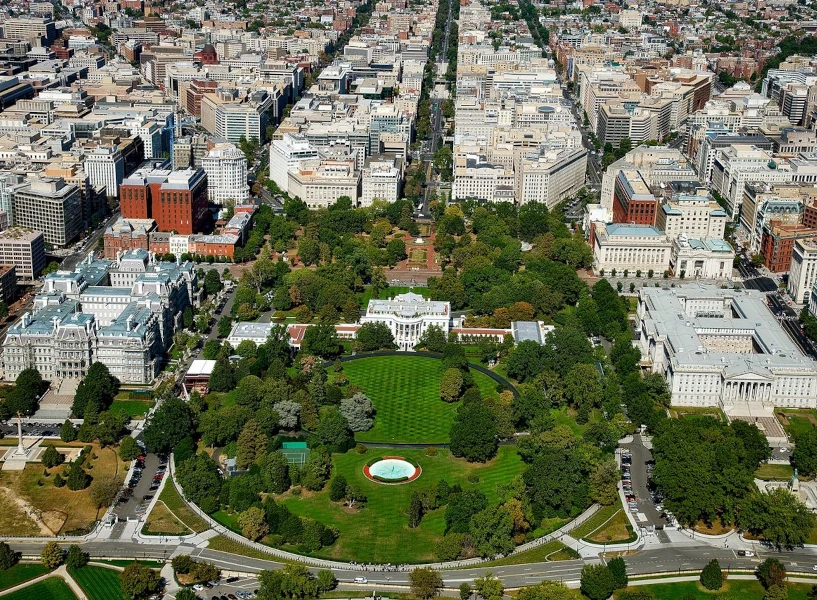

Professional child IQ testing in Washington, DC – whether you need an assessment for school placement, gifted program eligibility, or to understand your child's learning profile, we connect you with licensed psychologists in the Washington, DC area.
Last Updated: July 2026
Gifted Testing
Identify giftedness for school placement, enrichment, and talent programs using WISC-V or Stanford-Binet 5.
WISC-V Test
Wechsler Intelligence Scale for Children® Fifth Edition – the gold standard for child IQ testing.
Stanford-Binet 5
Stanford-Binet Intelligence Scales Fifth Edition – comprehensive cognitive assessment for all ages.
Full Evaluation
Combined assessment with detailed report and recommendations. Includes WISC-V or Stanford-Binet 5.
School Placement Testing
Testing for private school admission and gifted program eligibility using WISC-V or Stanford-Binet 5.
Schedule Child IQ Testing
Book your WISC-V & Stanford-Binet 5 for ages 6–16. Gifted identification, learning profiles, etc. with a licensed psychologist in Washington, DC today.
Child IQ Testing in Washington, DC: city context
Washington, DC serves families in all eight wards and is linked to a much larger Maryland–Virginia metropolitan region. The Census Bureau estimated the District population at approximately 693,645 in 2025, with 18.7% of residents under age 18.
Families may seek child testing for advanced-learning planning, school placement, learning concerns, disability documentation, or a clearer understanding of cognitive strengths. Local resources include DC Public Schools (DCPS), public charter schools, independent schools, Children's National Hospital, university programs, Early Stages, and licensed private psychologists.
IQ, gender, and demographic context (child population)
Child IQ tests such as the WISC-V and Stanford-Binet 5 use national age-based norms. They do not use separate Washington, DC norms for boys and girls, and overall IQ distributions overlap substantially by sex. Individual children may nevertheless show meaningful differences among verbal, visual-spatial, fluid-reasoning, working-memory, and processing-speed abilities.
- Residents under age 18: 18.7% of the District population.
- Female residents: 52.5% of the total population.
- Hispanic or Latino: 11.9%.
- Black or African American alone: 42.1%.
- American Indian and Alaska Native alone: 0.4%.
- Asian alone: 4.4%.
- Two or more races: 9.6%.
- Language other than English spoken at home: 19.1% of residents age 5 and older.
No valid local source supports assigning IQ averages to Washington, DC children by gender, race, ethnicity, ward, school system, or neighborhood. Equitable assessment considers language exposure, educational opportunity, disability, culture, health, and the appropriateness of the selected test.
Washington, DC School Districts and Gifted Programs
DCPS Schoolwide Enrichment Model (SEM)
- No citywide gifted label: DCPS states that it does not screen or label students as “gifted and talented.”
- Enrichment approach: SEM, Junior Great Books, Advanced Placement, enrichment clusters, and school-specific advanced opportunities are used to challenge high-ability learners.
- Selection: Schools may prioritize students who demonstrate high ability or intense interest, while some enrichment clusters include all students.
- Entry grade: DCPS does not use one fixed entry grade for advanced/high-ability programming.
DCPS Selective High Schools and Advanced Coursework
- Selective options: Current programs include Anacostia Early College, Bard DC, Benjamin Banneker, CHEC, Duke Ellington, Early College Academy at Coolidge, McKinley Tech, Phelps ACE, and School Without Walls.
- Admissions: Requirements may include report cards, essays, interviews, recommendations, auditions, or program-specific rubrics; there is no universal WISC or IQ cutoff.
- Advanced courses: AP, dual enrollment, early college, arts, STEM, international, and career-technical pathways vary by school.
Public Charter Schools and My School DC
- Common application: My School DC is the common lottery for most DC public-school options.
- Program variation: Charter schools use different curricula, academic models, supports, acceleration practices, and special-education procedures.
- Outside testing: A private report may inform planning, but the school determines how it is reviewed and whether additional school-based evaluation is required.
Independent Schools and Program-Specific Criteria
- Examples: Sidwell Friends, Georgetown Day School, Maret, National Cathedral School, St. Albans, Beauvoir, Washington International School, and other independent schools maintain their own admissions processes.
- Testing requirements: Schools may use records, teacher recommendations, interviews, observations, achievement measures, school-administered assessments, or accepted outside testing. Requirements change by grade and year.
- Confirm first: Ask which instrument, report date, examiner credential, and score format the school accepts before scheduling private testing.
Nearby Maryland and Virginia School Systems
- Separate jurisdictions: Montgomery County, Prince George's County, Arlington, Alexandria, Fairfax, and Falls Church use their own gifted, advanced-academic, special-education, and transfer rules.
- Cross-border caution: A DC psychologist's report may be clinically valid, but the receiving school system decides whether it meets local eligibility and documentation requirements.
Washington, DC Private Schools and Testing Requirements
Washington's independent-school sector is large and varied. Schools such as Sidwell Friends, Georgetown Day School, Maret, National Cathedral School, St. Albans, Beauvoir, Washington International School, Lowell, Sheridan, Edmund Burke, Gonzaga, and others use grade-specific admissions processes.
- Common components: Applications, school records, recommendations, parent and student interviews, classroom visits, writing samples, achievement measures, or school-selected assessments.
- Outside IQ testing: Some schools may consider WISC-V or Stanford-Binet results; others do not require them or accept only specified reports.
- Timing: Testing windows, maximum report age, and application deadlines can change every cycle.
- Best practice: Obtain written instructions from the admissions office before choosing a test or psychologist.
Private testing does not guarantee admission. Results should be interpreted as one part of a broader educational profile.
Washington, DC Gifted Identification Statistics
- No DCPS gifted-identification count: DCPS does not run a universal gifted-labeling system, so there is no comparable citywide “identified gifted” percentage.
- SEM participation: Current SEM-designated schools and enrichment access can change; families should use DCPS school profiles and speak with school leadership.
- Selective high schools: Admission is based on program-specific criteria rather than a single IQ percentile.
- Charter and independent schools: Each school or network defines its own advanced-learning and admissions practices.
- No valid metro total: There is no single public count covering DCPS, charter, private, home-school, Maryland, and Virginia gifted learners.
IQ percentiles describe performance relative to national age peers; they should not be presented as a city demographic statistic.
The child IQ testing process: step by step
Understanding the testing process can help parents prepare their child and reduce anxiety. Here's what to expect:
- Initial consultation (15–20 minutes): A brief phone or video call with the psychologist to discuss your child's background, concerns, and goals. This helps determine the right test and approach.
- Testing session (60–90 minutes): The child meets one-on-one with a licensed psychologist in a quiet, comfortable room. The psychologist administers the WISC-V or Stanford-Binet 5, which includes a series of subtests measuring verbal comprehension, visual-spatial reasoning, fluid reasoning, working memory, and processing speed. Breaks are offered as needed.
- Scoring and interpretation (1–2 days): The psychologist scores the test and analyzes the results. They consider the child's age, background, and any relevant medical or educational history.
- Feedback session (45–60 minutes): The psychologist meets with the parents (and the child, if appropriate) to explain the results. They discuss the Full-Scale IQ, index scores, strengths, and areas for growth. They also provide tailored recommendations for home, school, and extracurriculars.
- Comprehensive written report (5–7 days): You receive a detailed report with all scores, normative comparisons, and actionable next steps. This report can be shared with schools, doctors, or other professionals.
The entire process from consultation to report usually takes 1–2 weeks, depending on scheduling. The testing itself is non-invasive and designed to be engaging for children.
What is the WISC-V test?
The WISC-V (Wechsler Intelligence Scale for Children® – Fifth Edition) is the most widely used IQ test for children aged 6:0–16:11. It provides a Full-Scale IQ and five primary index scores: Verbal Comprehension, Visual-Spatial, Fluid Reasoning, Working Memory, and Processing Speed. The test is administered one-on-one by a trained psychologist and takes about 60–90 minutes.
The WISC-V is normed on a large, representative sample of U.S. children and is updated regularly to ensure accuracy. It is the gold standard for gifted identification, learning disability diagnosis, and school placement.
Why test your child's IQ?
IQ testing provides valuable insights into your child's cognitive strengths and weaknesses. It can help:
- Identify giftedness: For admission to gifted programs, private schools, or enrichment opportunities.
- Diagnose learning disabilities: Such as dyslexia, dyscalculia, or ADHD, which can be masked by high intelligence.
- Guide educational planning: Tailor instruction to your child's unique learning profile.
- Provide reassurance: Understand why your child is different from peers and how to support them.
Washington, DC Gifted Testing Timeline
- Start with the receiving program: Confirm whether testing is required, optional, or not accepted.
- My School DC cycle: Public-school and selective-high-school deadlines are annual; gather report cards, essays, recommendations, and other required materials early.
- Independent schools: Admissions calendars commonly begin months before enrollment, and testing rules vary by grade.
- Clinical scheduling: Allow time for consultation, testing, scoring, feedback, report writing, and any school follow-up.
- Do not over-practice: Coaching on secure test content can invalidate results; support sleep, nutrition, and familiarity with the general process instead.
Washington, DC Gifted Programs by Age Group
- Early childhood: Play-based enrichment, language, music, museum programs, and developmentally appropriate acceleration decisions; Early Stages evaluates suspected developmental delays, not giftedness.
- Elementary: Schoolwide enrichment, Junior Great Books, advanced math or reading, independent projects, public charter models, and independent-school programs.
- Middle school: Honors or accelerated coursework, enrichment clusters, STEM and arts programs, debate, robotics, language, and preparation for selective high-school applications.
- High school: AP, dual enrollment, early college, selective programs, arts auditions, STEM pathways, internships, research, and career-technical education.
- Outside school: Smithsonian, DC Public Library, universities, Johns Hopkins CTY, museums, national competitions, and regional camps offer changing opportunities.
Washington, DC Child ADHD and Learning Disability Assessment
A child IQ score alone does not diagnose ADHD, dyslexia, dyscalculia, dysgraphia, autism, language disorder, or an emotional condition. A complete evaluation may combine WISC-V or Stanford-Binet testing with achievement measures, attention and executive-function tools, behavior ratings, language or motor assessment, records, interviews, and classroom information.
- DCPS school psychologists: Select, administer, interpret, and review evaluations for disability eligibility, IEPs, 504 plans, independent educational evaluations, and related decisions.
- Early Stages: Provides free evaluations for eligible young children in the District who have not yet entered the school system or meet its service criteria.
- Medical resources: Children's National and other pediatric providers may participate when developmental, neurological, or medical issues are present.
- Private evaluations: Can add detail or provide an independent perspective, but schools retain responsibility for educational eligibility decisions.
Washington, DC Summer and Enrichment Programs for Advanced Learners
- Smithsonian: Museum programs, camps, lectures, family activities, internships, and online learning across science, history, art, and culture.
- DC Public Library: Summer reading, technology, makerspaces, teen programs, language learning, and neighborhood events.
- National museums and cultural institutions: National Air and Space Museum, Natural History Museum, National Building Museum, National Gallery of Art, and others offer changing youth programs.
- Universities: Georgetown, GW, Howard, American, Catholic, Gallaudet, and regional campuses offer changing pre-college, arts, STEM, language, policy, and research programs.
- DCPS and charter schools: Summer learning, enrichment, athletics, arts, and credit-bearing opportunities vary annually.
Program admission may rely on age, interests, school records, auditions, prior coursework, or application materials rather than IQ scores.
Washington, DC Child Testing Costs and School Evaluations
Fees depend on whether the service is a stand-alone cognitive test, gifted consultation, school-placement report, ADHD/learning evaluation, autism assessment, or comprehensive neuropsychological evaluation. Ask for a written estimate covering intake, records review, testing, scoring, report, feedback, school consultation, and rush fees.
- School-based evaluation: Eligible DCPS and charter students may receive evaluations through the special-education process at no direct cost to families.
- Private testing: Usually self-pay when requested solely for giftedness, admissions, Mensa, or personal planning; insurance may contribute when medically necessary.
- Independent Educational Evaluation: Rights and funding depend on IDEA procedures and the facts of the case; families may wish to obtain qualified educational or legal guidance.
Areas we serve
We serve Washington, DC and surrounding areas, including Downtown, Capitol Hill, Georgetown, Foggy Bottom, Dupont Circle, Logan Circle, Shaw, Columbia Heights, Adams Morgan, Mount Pleasant, Petworth, Brookland, Cleveland Park, Tenleytown, Chevy Chase DC, Navy Yard, Southwest, H Street, Anacostia, Congress Heights, Arlington, Alexandria, Falls Church, McLean, Bethesda, Chevy Chase, Silver Spring, Hyattsville, and nearby communities. Provider licensure and school acceptance requirements may differ across DC, Maryland, and Virginia.
Frequently Asked Questions
Both are excellent tests. WISC-V is more commonly used for school-age children, while Stanford-Binet 5 can be used for ages 2–85. We often recommend WISC-V for gifted identification.
The test itself takes 60–90 minutes. With the consultation, feedback, and report, the entire process is about 1–2 weeks.
No, you can book directly with our psychologists. We serve both self-referred and professionally referred children.
A professionally prepared report may be reviewed by DCPS, public charter, or independent-school teams, but acceptance and use are determined by the receiving program. DCPS does not use a universal gifted label or IQ cutoff, so confirm current requirements before testing.
Some plans cover cognitive assessments when there is a clinical indication. Check with your provider.
Get a good night's sleep, eat a healthy meal, and arrive relaxed. No specific preparation is needed.
You'll receive a comprehensive report with your child's scores and tailored recommendations.
Remote administration may be possible only in limited circumstances. The evaluator must confirm publisher guidance, test validity, state licensing, technology requirements, and acceptance by the receiving school or organization.