
IQ Testing in Tulsa
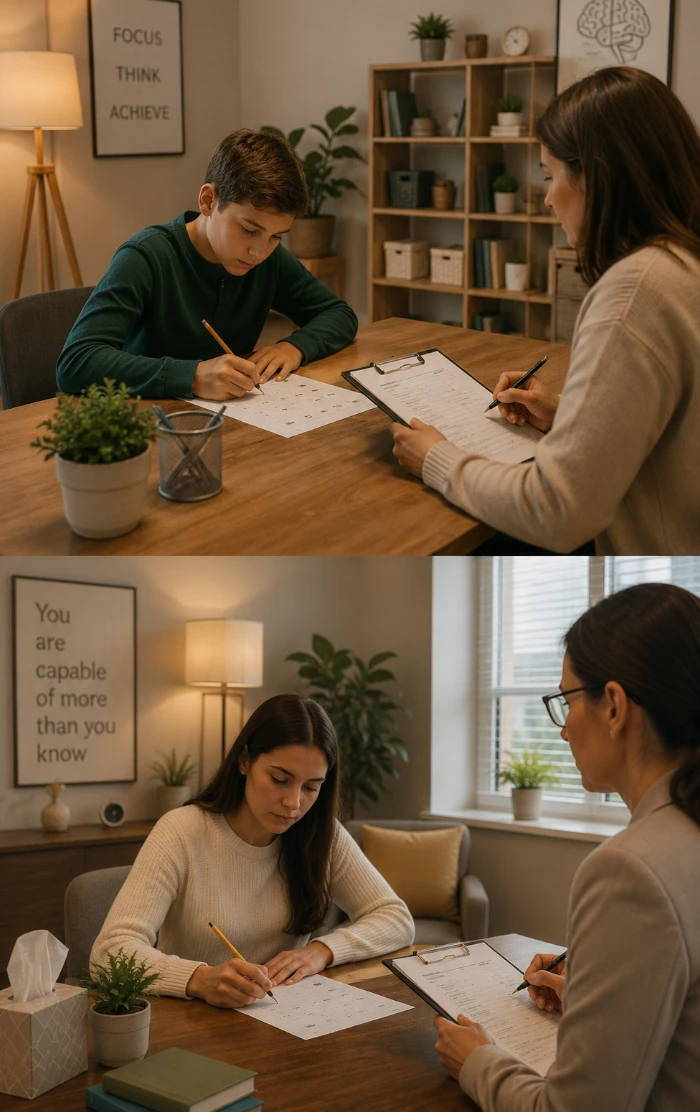
Professional IQ testing in Tulsa – whether you need an assessment for school, employment, gifted program eligibility, or personal insight, we connect you with licensed psychologists in the Tulsa area.
Last Updated: October 2026
Child IQ Testing
WISC-V & Stanford-Binet for ages 6–16. Gifted identification, learning profiles.
Adult IQ Testing
WAIS-IV & WAIS-5 available. Comprehensive adult cognitive assessments. Clinical & occupational.
WISC-V Test
Wechsler Intelligence Scale for Children® Fifth Edition – the gold standard for child IQ testing.
WAIS-IV & WAIS-5 Tests
Wechsler Adult Intelligence Scale® – Fourth Edition (WAIS-IV) and Fifth Edition (WAIS-5) available for adult IQ testing.
Gifted Testing
Identify giftedness for school placement, enrichment, and talent programs using WISC-V or Stanford-Binet.
Stanford-Binet 5
Stanford-Binet Intelligence Scales Fifth Edition – comprehensive cognitive assessment for all ages.
Mensa Testing
Mensa qualification guidance and testing that may provide accepted prior evidence, subject to current American Mensa rules. American Mensa's published prior-evidence list includes WAIS-IV and Stanford-Binet 5; verify current acceptance of WAIS-5 before testing.
Full Evaluation
Combined assessment with detailed report and recommendations. Includes WISC-V, WAIS-IV, WAIS-5, or Stanford-Binet 5 as appropriate.
IQ Testing in Tulsa: city context
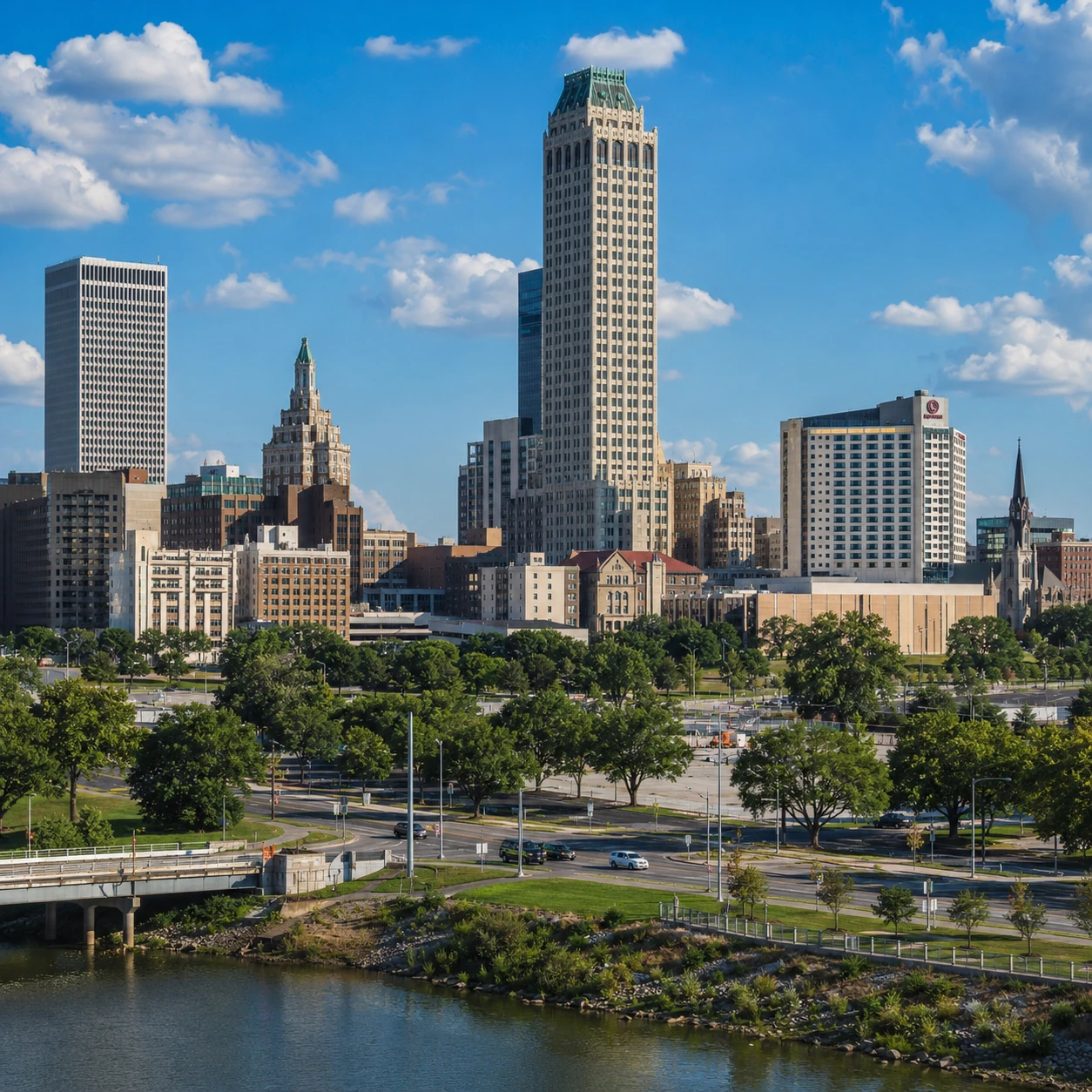
Tulsa is the principal city of northeastern Oklahoma's Green Country region. The U.S. Census Bureau estimated 416,209 residents in 2025, up from 413,066 counted in 2020. The city covers approximately 197.53 square miles of land and serves as a regional center for healthcare, aerospace, energy, finance, education, logistics, advanced manufacturing, and professional services.
Local assessment resources include The University of Tulsa, Oklahoma State University–Tulsa, Oklahoma State University Center for Health Sciences, Oral Roberts University, Tulsa Community College, Saint Francis Health System, Hillcrest HealthCare System, Ascension St. John, the Ernest Childers VA Outpatient Clinic, school psychology teams, and licensed private practices. These resources support cognitive assessment, gifted identification, learning-disability evaluation, disability documentation, career guidance, and neuropsychological care.
IQ, gender, and demographic context
Professional IQ tests use age-based national norms. They are not scored against a separate Tulsa norm for men, women, racial groups, ethnic groups, or neighborhoods. Research generally finds substantial overlap in overall IQ distributions by sex, while individual profiles can differ across verbal comprehension, visual-spatial reasoning, fluid reasoning, working memory, and processing speed.
Current Tulsa Census context:
- Female residents: 50.9% of the city population.
- Children and adolescents: 24.1% of residents are under age 18, making school-based and pediatric assessment an important local need.
- Older adults: 15.3% are age 65 or older, relevant to memory, neurological, disability, and capacity evaluations.
- Racial and ethnic diversity: Census estimates report 54.4% White alone, 14.0% Black alone, 4.2% American Indian or Alaska Native alone, 3.5% Asian alone, 17.1% two or more races, and 19.8% Hispanic or Latino.
- Language context: 20.7% of residents age five and older speak a language other than English at home; evaluators should consider language dominance, interpreter needs, acculturation, and test validity.
- Foreign-born residents: 12.3%, reinforcing the importance of culturally and linguistically informed assessment.
- Educational attainment: 87.6% of adults age 25 and older are high-school graduates and 33.6% hold a bachelor's degree or higher.
- Disability context: 11.8% of residents under age 65 report a disability, a reminder that cognitive scores should be interpreted alongside adaptive functioning, health, and access needs.
No authoritative public dataset establishes valid Tulsa IQ averages by gender, race, ethnicity, or neighborhood. A psychologist interprets an individual's results in light of age, education, language, culture, disability, health, effort, and testing conditions rather than assigning ability from demographic membership.
What is professional IQ testing?
Intelligence quotient (IQ) testing is a standardized method to measure human cognitive abilities and intellectual potential. Professional IQ tests are administered by licensed psychologists in a controlled environment to ensure accuracy and reliability. Unlike online quizzes, clinical assessments provide a full-scale IQ score along with detailed breakdowns of verbal comprehension, perceptual reasoning, working memory, and processing speed.
In Tulsa, IQ testing is commonly used for gifted program admission, learning disability identification, career guidance, neuropsychological evaluation, and personal development. The results are presented in a comprehensive report that includes normative comparisons, strengths and weaknesses, and actionable recommendations.
Who should get tested?
IQ testing can benefit children, adolescents, and adults in various situations:
- Children: Parents often seek testing for school readiness, gifted placement, or to understand learning challenges.
- Adults: Many adults take IQ tests for career advancement, graduate school applications, or personal curiosity.
- Mensa candidates: High-IQ societies require official test scores for membership.
- Clinical referrals: Psychologists may recommend testing as part of a broader neuropsychological evaluation.
Types of IQ tests
We offer the most recognized and scientifically validated intelligence tests in the field:
- WISC-V (Wechsler Intelligence Scale for Children® – Fifth Edition): The gold standard for children aged 6:0–16:11. It provides a Full-Scale IQ and five primary index scores.
- WAIS-IV (Wechsler Adult Intelligence Scale® – Fourth Edition): The most widely used adult IQ test for ages 16–90. It measures cognitive functioning across four domains.
- Stanford-Binet Intelligence Scales – Fifth Edition: A comprehensive assessment for ages 2–85, often used for gifted identification and clinical evaluations.
- Gifted Testing: Often includes the WISC-V or Stanford-Binet, plus additional creativity and achievement measures.
- Mensa Testing: We provide guidance on Mensa qualification routes and can connect consumers with psychologists whose complete reports may be submitted as prior evidence, subject to current American Mensa rules.
How the testing process works
- Initial consultation: Brief phone or video call to discuss your needs and match you with the right psychologist.
- Testing session: In-person or remote testing (depending on the test) with a licensed psychologist. Most sessions last 1–2 hours.
- Scoring and interpretation: The psychologist scores the test and interprets the results in the context of your background and goals.
- Feedback session: A detailed review of your results, including strengths, weaknesses, and practical recommendations.
- Comprehensive report: You receive a written report with all scores, normative comparisons, and actionable next steps.
How much does IQ testing cost in Tulsa?
Fees vary according to the test selected, the referral question, the clinician's credentials, the amount of records review, and whether the service includes only a score summary or a comprehensive written report and feedback session. A stand-alone IQ assessment usually costs less than a full psychoeducational or neuropsychological evaluation.
Request a written estimate covering consultation, testing, scoring, report preparation, feedback, and any additional measures. Insurance is more likely to contribute when testing is medically necessary than when it is requested solely for curiosity, career exploration, school admission, or Mensa documentation.
Tulsa's Intellectual History & Educational Legacy
Tulsa's intellectual history grew from Native nations, the energy economy, aviation, Route 66 commerce, Greenwood's entrepreneurial legacy, and a continuing expansion into healthcare, cybersecurity, advanced manufacturing, and technology. The city's educational infrastructure is concentrated around downtown, the University of Tulsa corridor, OSU–Tulsa and OSU Center for Health Sciences, Oral Roberts University, the Tulsa Community College system, and regional medical campuses.
- Greenwood and Black Wall Street: Greenwood's history of Black entrepreneurship, professional achievement, education, and community institutions remains central to Tulsa's civic and intellectual identity.
- The University of Tulsa: A private research university with colleges in arts and sciences, business, engineering and computer science, health and natural sciences, law, graduate education, and an Honors College.
- OSU–Tulsa and OSU Center for Health Sciences: Downtown institutions supporting undergraduate completion, graduate study, biomedical research, osteopathic medicine, forensic sciences, public health, and clinical training.
- Oral Roberts University: A comprehensive university in south Tulsa offering undergraduate and graduate programs across business, education, engineering, health, theology, arts, and sciences.
- Tulsa Community College: A multi-campus public college serving degree seekers, adult learners, concurrent high-school students, transfer students, and workforce-development participants.
- Public learning institutions: Gathering Place, Discovery Lab, Tulsa City-County Library, Gilcrease Museum, Philbrook Museum of Art, Tulsa Air and Space Museum, Greenwood Rising, and the Woody Guthrie Center offer educational programming across age groups.
- Innovation resources: Tulsa Innovation Labs, 36 Degrees North, university research programs, energy companies, aerospace firms, and health systems support entrepreneurship and technical workforce development.
These institutions create sustained demand for psychological assessment, graduate preparation, gifted services, disability documentation, cognitive research, and professional training throughout the Tulsa metropolitan area.
Major Tulsa Employers and Cognitive Skill Demands
Large Tulsa employers hire for roles requiring different combinations of verbal reasoning, quantitative reasoning, visual-spatial analysis, working memory, processing speed, attention, and executive functioning. Employer procedures vary by position; some roles may involve job-specific aptitude, skills, medical, licensure, security, or psychological screening rather than a clinical IQ test.
A brief online IQ test can help Tulsa residents get acquainted with common question formats, but a qualified examiner should handle any assessment intended for school, work, or healthcare decisions.
- American Airlines Tech Ops–Tulsa: The airline's major maintenance and engineering base supports aircraft maintenance, avionics, engineering, logistics, quality assurance, and technical training.
- Saint Francis Health System: One of the region's largest healthcare employers, with clinical, laboratory, information-technology, administration, research, and leadership roles.
- Ascension St. John and Hillcrest HealthCare System: Major medical networks employing physicians, nurses, therapists, technicians, analysts, and support professionals.
- Tulsa Public Schools and suburban districts: Education systems employ teachers, psychologists, counselors, administrators, specialists, transportation staff, and technology teams.
- City of Tulsa and Tulsa County: Public-safety, engineering, planning, legal, finance, utilities, parks, information-technology, and community-service positions.
- Energy headquarters: ONEOK, Williams, ONE Gas, Helmerich & Payne, Vital Energy, and related firms employ engineers, geoscientists, traders, accountants, analysts, attorneys, and operations specialists.
- BOK Financial: Banking, risk, compliance, analytics, cybersecurity, lending, wealth management, and customer-service roles.
- QuikTrip: Corporate, information-technology, distribution, logistics, retail operations, construction, finance, and management functions.
- Aerospace and manufacturing: Spirit AeroSystems, NORDAM, Lufthansa Technik Component Services, Omni Air International, IC Bus, and suppliers require technical precision and visual-spatial reasoning.
- Cherokee Nation Businesses and Muscogee Nation enterprises: Regional operations include government contracting, healthcare, hospitality, technology, construction, and professional services.
- Tulsa Port of Catoosa and logistics employers: Inland-waterway, industrial, manufacturing, freight, and warehousing operations depend on scheduling, safety, spatial reasoning, and procedural accuracy.
- Other major employers: The University of Tulsa, OSU, Oral Roberts University, Tulsa Community College, Amazon, UPS, Cox Communications, Verizon, and professional-services firms broaden the local skill mix.
A professional cognitive profile can support career counseling or accommodation planning, but it should never replace education, experience, practical skills, interests, personality, or direct job performance.
Tulsa IQ Testing by Neighborhood and Area
There is no authoritative neighborhood-level IQ database for Tulsa, so responsible psychologists do not assign estimated IQ ranges to neighborhoods. The areas below explain access patterns, nearby institutions, family demographics, and common reasons residents seek testing.
- Downtown and the Tulsa Arts District: Central employment, government, cultural, university, and professional-service areas with access to OSU–Tulsa, OSU Center for Health Sciences, BOK Center, libraries, and MetroLink hubs.
- Greenwood: Historic district near downtown, Greenwood Rising, OSU–Tulsa, and community organizations; families and adults may seek educational, disability, career, or neuropsychological assessment.
- Blue Dome and East Village: Mixed commercial and residential districts convenient to downtown practices, employers, and transit connections.
- Cherry Street and Swan Lake: Walkable Midtown areas near healthcare, professional offices, schools, and university corridors.
- Brookside and Riverside: Residential and commercial areas near River Parks, Gathering Place, private schools, clinics, and north–south travel routes.
- Kendall Whittier and the University of Tulsa area: Diverse neighborhoods with access to TU, schools, community services, and multilingual families who may need culturally responsive assessment.
- Midtown Tulsa: Large residential and medical-services area near Saint Francis, Hillcrest, Ascension St. John, private practices, and major arterial roads.
- South Tulsa: Includes neighborhoods near Oral Roberts University, Tulsa Community College Southeast Campus, private schools, clinics, and growing family populations.
- East Tulsa: Diverse and multilingual communities near industrial employers, schools, community organizations, and US-169/I-44 access.
- West Tulsa and Red Fork: Historic Route 66 communities with access to OSU Center for Health Sciences, industrial corridors, and regional highways.
- North Tulsa: Neighborhoods near schools, community-health resources, Tulsa Tech, airport employment, and expanding educational initiatives.
- Broken Arrow, Bixby, Jenks, Owasso, Sand Springs, and Sapulpa: Surrounding communities with separate school districts, gifted procedures, and provider access across the metro.
Tulsa Universities and Research Institutions
- The University of Tulsa: Research and instruction in psychology, neuroscience, engineering, computer science, cybersecurity, business, law, education, health, and the liberal arts.
- OSU–Tulsa: Downtown undergraduate-completion, graduate, research, and professional programs connected to the Oklahoma State University system.
- OSU Center for Health Sciences: Osteopathic medicine, biomedical sciences, forensic sciences, athletic training, public health, residency education, and research.
- Oral Roberts University: Undergraduate and graduate programs in psychology, counseling, education, nursing, business, engineering, and related fields.
- Tulsa Community College: Metro, Northeast, Southeast, and West campuses serving transfer students, career programs, adult learners, and concurrent enrollment.
- Langston University–Tulsa: Upper-division and graduate education serving working adults and regional students.
- OU–Tulsa Schusterman Center: University of Oklahoma programs in social work, public health, medicine, nursing, education, architecture, and other professional fields.
- Spartan College of Aeronautics and Technology: Aviation maintenance, technology, and pilot-training pathways aligned with Tulsa's aerospace sector.
- Health-system research: Saint Francis, Hillcrest, Ascension St. John, Laureate Institute for Brain Research, and clinical partners support medical, behavioral-health, and neuroscience research.
Tulsa Economic Context
- Population: 416,209 residents in the Census Bureau's July 1, 2025 estimate.
- Median household income: $59,838 in 2020–2024 Census estimates.
- Per-capita income: $38,030.
- Residents in poverty: 18.7%.
- Bachelor's degree or higher: 33.6% of adults age 25 and older.
- High-school graduate or higher: 87.6% of adults age 25 and older.
- Labor-force participation: 64.3% of residents age 16 and older; female participation is 58.4%.
- Mean travel time to work: 18.9 minutes, though cross-metro trips and highway construction can lengthen travel.
- Health and social-assistance activity: Approximately $7.724 billion in 2022 receipts/revenue within the city.
- Transportation and warehousing: Approximately $6.457 billion in 2022 receipts/revenue, reflecting aviation, trucking, distribution, and inland-port activity.
- Retail sales: Approximately $9.896 billion in 2022, or $24,034 per capita.
- Accommodation and food services: Approximately $1.919 billion in 2022 sales.
- Housing: 51.9% owner-occupied housing rate, $205,300 median owner-occupied value, and $1,052 median gross rent in 2020–2024 estimates.
- Regional strengths: Aerospace, aviation maintenance, energy, healthcare, finance, professional services, advanced manufacturing, logistics, technology, education, tourism, and tribal enterprises.
Tulsa School District and Gifted-Education Context
- Tulsa Public Schools: The city's largest district offers gifted and advanced-learning services through district identification procedures, classroom differentiation, specialized courses, magnet/application programs, and secondary advanced coursework.
- Multiple-measure identification: Families should confirm current TPS referral windows, accepted ability and achievement measures, portfolio or rating-scale requirements, transfer procedures, and appeal options before private testing.
- Booker T. Washington High School: A nationally recognized magnet program with International Baccalaureate and advanced academic pathways.
- Carver Middle School, Edison Preparatory, and other application programs: Enrollment criteria and testing requirements vary, so parents should obtain current written instructions from the program.
- Union Public Schools: East and southeast Tulsa families may be served by Union, which maintains its own gifted-identification and advanced-course procedures.
- Jenks Public Schools: South Tulsa and Jenks-area students follow Jenks district rules for gifted services, acceleration, honors, AP, and other advanced options.
- Broken Arrow Public Schools: The metro's large eastern district maintains separate gifted identification, programming, transfer, and evaluation procedures.
- Bixby, Owasso, Sand Springs, Sapulpa, and Berryhill: Each district uses its own calendar, accepted measures, service model, and appeals process.
- Oklahoma requirements: State law requires districts to identify and serve gifted students, but local districts determine procedures within state rules.
- Private and independent schools: Admissions and placement standards differ; some request cognitive or achievement testing, while others use records, interviews, classroom visits, or school-administered measures.
- Outside reports: A private WISC-V or Stanford-Binet report does not automatically guarantee district gifted placement; the receiving district decides whether and how outside evidence is considered.
Local Testing Centers and Psychologists
- Licensed private psychologists: May provide stand-alone cognitive testing, gifted evaluations, ADHD and learning assessments, autism evaluations, disability documentation, and forensic services.
- Saint Francis Health System: Pediatric, adult, neurological, rehabilitation, and behavioral-health services may refer for cognitive or neuropsychological assessment when medically indicated.
- Hillcrest HealthCare System: Neurology, rehabilitation, behavioral-health, and hospital services may coordinate evaluation for neurological or functional concerns.
- Ascension St. John: Medical and neurological services may incorporate or refer for neuropsychological assessment depending on clinic scope.
- The Children's Hospital at Saint Francis: Pediatric specialty care can support developmental, neurological, genetic, rehabilitation, and complex learning referrals.
- Laureate Psychiatric Clinic and Hospital and Laureate Institute for Brain Research: Behavioral-health and neuroscience resources relevant to complex psychiatric, cognitive, and research questions.
- OSU Center for Health Sciences: Academic medical, behavioral-health, and specialty clinics may participate in assessment or referral networks.
- Ernest Childers VA Outpatient Clinic: Eligible veterans may access primary, mental-health, neurological, and referral services through the Eastern Oklahoma VA system.
- School psychologists: TPS and surrounding districts conduct evaluations for educational eligibility at no charge when school teams determine an evaluation is warranted.
- Provider selection: Verify Oklahoma licensure, age range, test versions, report format, insurance policies, turnaround time, and whether the intended school, employer, court, licensing body, or Mensa accepts the results.
Tulsa Learning Events and Professional Resources
- Tulsa City-County Library: Reading, research, technology, genealogy, youth, adult-learning, and community programs across the countywide system.
- Discovery Lab: Hands-on science, engineering, design, and creative-learning exhibits for children and families.
- Gathering Place: Educational, environmental, arts, recreation, and family programming along the Arkansas River.
- Tulsa Air and Space Museum: Aerospace history and STEM programming aligned with the city's aviation sector.
- Gilcrease Museum and Philbrook Museum of Art: Art, history, Indigenous cultures, research collections, lectures, and family education.
- Greenwood Rising and the Greenwood Cultural Center: Historical education related to Greenwood, Black Wall Street, and the 1921 Tulsa Race Massacre.
- University lectures and continuing education: TU, OSU–Tulsa, ORU, TCC, OU–Tulsa, and health systems offer changing seminars, conferences, workshops, and public events.
- Tulsa Tech and workforce programs: Career exploration, technical training, certifications, and adult education across multiple campuses.
- Professional organizations: Oklahoma Psychological Association, school-psychology groups, counseling associations, disability organizations, and Green Country Mensa provide changing resources and events.
Transportation and Accessibility
- Major roads: I-44 crosses the city east–west; I-244 and US-412 form the northern downtown loop; US-75 runs north–south west of downtown; US-169/Mingo Valley Expressway serves east Tulsa; SH-51/Broken Arrow Expressway connects downtown with southeast Tulsa and Broken Arrow; SH-11/Gilcrease Expressway serves north and west Tulsa; historic Route 66 follows 11th Street and Southwest Boulevard corridors.
- Public transit: MetroLink Tulsa operates fixed-route buses through Tulsa and selected connections to nearby communities, with major hubs at Denver Avenue Station downtown and Memorial Midtown Station.
- Bus rapid transit: AERO operates on the Peoria Avenue corridor, connecting north Tulsa, downtown, Midtown, Brookside, south Tulsa, and key medical and educational destinations.
- Microtransit: MicroLink provides on-demand service in designated zones and can fill gaps during selected evening, Sunday, or lower-density periods; riders should verify current zones and hours.
- Paratransit: Lift Program service supports eligible riders whose disabilities prevent use of regular fixed-route buses, subject to certification and reservation rules.
- Airport: Tulsa International Airport (TUL) is approximately five miles northeast of downtown and provides commercial passenger service, rental cars, rideshare, taxis, shuttles, accessibility services, and major aerospace employment.
- General aviation: Tulsa Riverside Airport supports flight training, business aviation, and aviation-related education on the south side of the metro.
- Intercity rail: Tulsa does not currently have regular Amtrak passenger service; the closest commonly used Amtrak stations are in Oklahoma City and Fort Smith, so rail travelers should plan a road connection.
- Intercity bus: Greyhound and other carriers provide changing schedules from Tulsa; verify the current station and departure time before an appointment.
- Distance to other cities: Approximately 15–25 minutes to Broken Arrow, 20–30 minutes to Jenks or Bixby, 20–30 minutes to Owasso, 20–30 minutes to Sand Springs, about 1 hour 45 minutes to Oklahoma City, roughly 2 hours to Wichita, about 2 hours to Fayetteville, and around 4 hours to Dallas, depending on route and traffic.
- Walkability: Downtown, the Tulsa Arts District, Blue Dome, Cherry Street, Brookside, Greenwood, and portions of Kendall Whittier are among the more walkable areas, but most cross-city trips require a vehicle or transit.
- Bike infrastructure: River Parks trails, Midland Valley Trail, Osage Prairie Trail, M.K. and T. Trail, Katy Trail connections, protected and conventional bike lanes, and neighborhood routes support cycling, though coverage and comfort vary.
- Accessibility planning: Ask the evaluator about accessible entrances, elevators, parking, sensory needs, interpreter arrangements, service animals, and breaks before the appointment.
- Traffic planning: I-44, US-169, US-75, downtown construction, school arrival periods, concerts, and events at BOK Center or Expo Square can affect travel time.
Tulsa Weather and Seasonal Considerations
- Summer heat: Hot, humid conditions can cause fatigue and dehydration; morning appointments, water, and climate-controlled waiting areas may improve comfort.
- Severe thunderstorms: Spring and early-summer storms may bring lightning, hail, damaging winds, flash flooding, and tornado warnings.
- Tornado planning: Review weather alerts and the provider's shelter or rescheduling procedures when severe weather is forecast.
- Winter weather: Ice, sleet, freezing rain, and occasional snow can make bridges, hills, and untreated roads hazardous even when accumulation is limited.
- Allergies: Tree, grass, mold, and ragweed seasons may affect sleep, attention, medication use, and comfort.
- Air quality: Ozone, smoke, dust, and high-pollen days can aggravate respiratory conditions; sensitive clients should follow medical guidance.
- School calendar: Testing demand may rise before gifted deadlines, school admissions, accommodation applications, and the start of a new academic term.
- Event traffic: Tulsa State Fair, concerts, Route 66 events, university games, and downtown festivals can affect parking and travel.
- Rescheduling: A rested client tested under stable conditions usually produces more interpretable results than someone arriving after dangerous travel, illness, severe sleep loss, or acute weather stress.
Areas we serve
We support all areas of Tulsa.
Frequently Asked Questions
WISC-V is for children aged 6–16, while WAIS-IV is for adults aged 16–90. Each is normed for its specific age group.
Most IQ tests take between 60 and 90 minutes, plus a feedback session. Allow 2–3 hours total.
No, you can book directly with our psychologists. We serve both self-referred and professionally referred individuals.
A complete psychologist's report may be submitted as prior evidence if the test, score, administration conditions, and documentation satisfy the receiving organization's current rules. Verify requirements before testing.
Some plans cover cognitive assessments when there is a clinical indication. Check with your provider.
Get a good night's sleep, eat a healthy meal, and arrive relaxed. No specific preparation is needed.
You'll receive a comprehensive report with your scores and tailored recommendations.
Remote administration may be possible only in limited circumstances. The evaluator must confirm publisher guidance, test validity, state licensing, technology requirements, and acceptance by the receiving school or organization.