
Gifted Testing in Santa Clarita
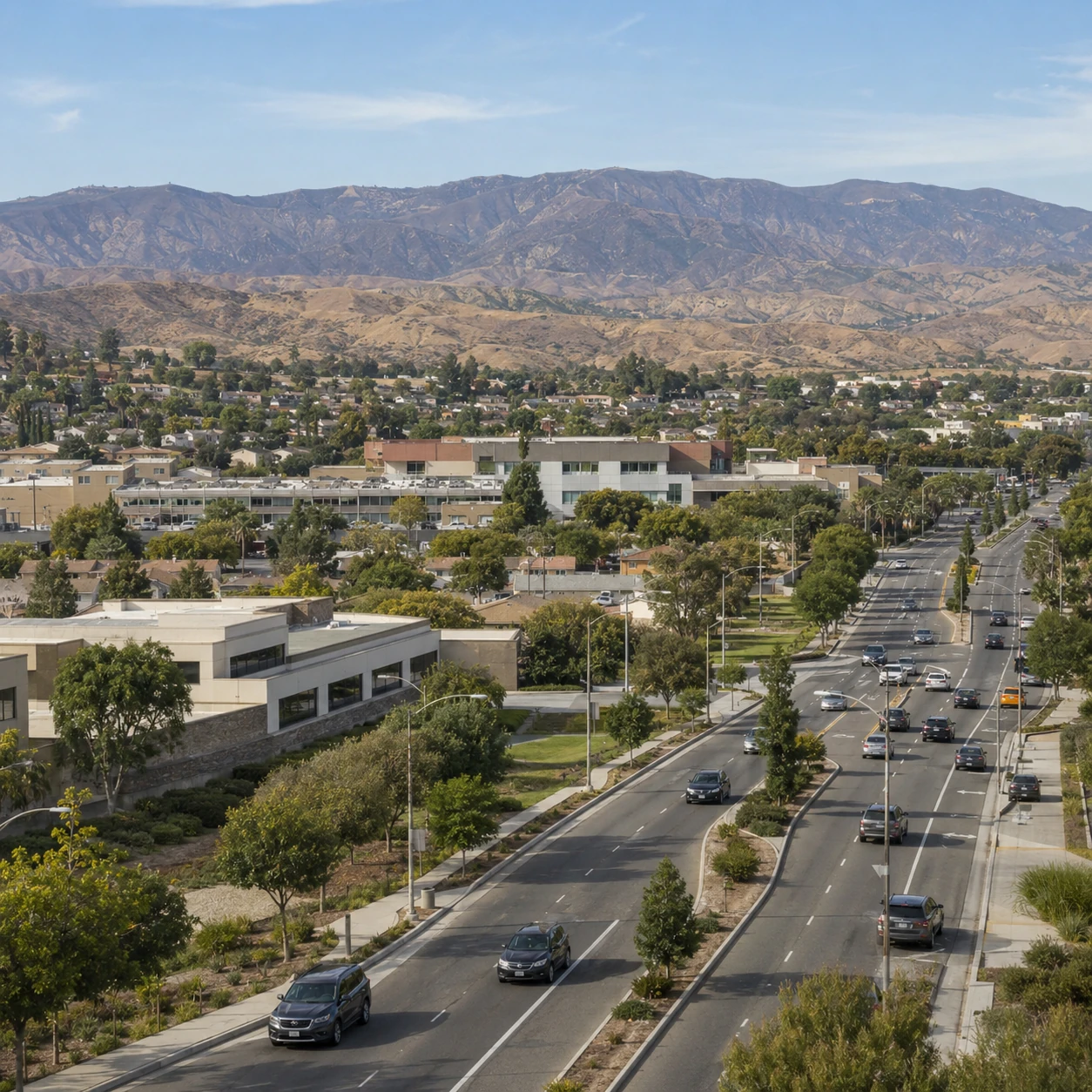

Professional gifted testing in Santa Clarita – whether your child needs identification for school placement, enrichment programs, or you're an adult seeking Mensa admission, we connect you with licensed psychologists who specialize in gifted assessment.
Last Updated: September 2026
Child Gifted Testing
WISC-V & Stanford-Binet 5 for ages 6–16. Gifted identification, school placement.
Adult Gifted Testing
WAIS-IV & WAIS-5 available. Comprehensive assessments for adults seeking Mensa or career guidance.
WISC-V Test
Wechsler Intelligence Scale for Children® Fifth Edition – the gold standard for child gifted identification.
Stanford-Binet 5
Stanford-Binet Intelligence Scales Fifth Edition – comprehensive cognitive assessment for all ages, often used for gifted identification.
Mensa Testing
Mensa admission testing and preparation for the high-IQ society. Accepts WAIS-IV, WAIS-5, and Stanford-Binet 5 scores.
School Placement Testing
Testing for private school admission and gifted program eligibility using WISC-V or Stanford-Binet 5.
Gifted Testing in Santa Clarita: city context
IQ by gender & ethnicity (child population)
Santa Clarita had an estimated 228,430 residents on July 1, 2025. Census 2020–2024 estimates report that 50.6% of residents are female, 24.6% are under age 18, and 13.5% are age 65 or older. The population is 36.3% Hispanic or Latino, 12.3% Asian alone, 4.6% Black alone, 47.2% White alone, and 23.5% reporting two or more races; categories overlap where Hispanic origin is reported separately.
These demographic figures describe the community—not intelligence differences. Professionally interpreted IQ scores must be considered in light of age, language exposure, education, disability, culture, health, and testing conditions. Santa Clarita is linguistically diverse: 36.2% of residents age five and older speak a language other than English at home, and 22.2% are foreign-born. Bilingual assessment, interpreters, nonverbal measures, and careful validity analysis may be appropriate.
- Female residents: 50.6%.
- Children and teens: 24.6% of residents are under 18.
- Older adults: 13.5% are 65 or older.
- Language context: 36.2% speak a language other than English at home.
- Educational context: 91.2% of adults age 25+ finished high school and 39.8% hold a bachelor’s degree or higher.
- Interpretation: No gender, racial, ethnic, or language group should be presumed to have a particular IQ profile; individual testing and appropriate norms are essential.
Gifted children in Santa Clarita: who are they?
Schools for gifted children in Santa Clarita
Most gifted students attend local public or private schools and receive differentiation, cluster grouping, honors, AP/IB, dual enrollment or enrichment rather than a separate gifted school. Saugus Union provides elementary GATE services; Hart district schools provide secondary advanced pathways; private schools set their own placement rules.
Advantages of gifted education
Appropriate depth, complexity, pacing and intellectual peers can improve engagement, reduce repetition and support advanced skill development. Acceleration and enrichment should be individualized rather than based only on a high composite score.
Hobbies and interests of gifted children
Santa Clarita families can explore robotics, coding, engineering, music, theater, visual arts, filmmaking, animation, science, debate, writing, equestrian activities, hiking and library programs through schools, city recreation, College of the Canyons, CalArts and community organizations.
Twice-exceptional and multilingual learners
Giftedness can coexist with ADHD, autism, dyslexia, anxiety, language differences or disability. The city’s diverse population makes culturally and linguistically responsive assessment especially important. Nonverbal screening alone may not explain the full learning profile.
Family and social-emotional considerations
Perfectionism, asynchronous development, sensitivity, peer fit, boredom and school refusal require careful support. Families should avoid treating a score as identity and should consider sleep, stress, wildfire disruption, commute load and extracurricular balance.
What is giftedness?
Giftedness is a complex and multifaceted construct that goes beyond a single IQ score. In the field of psychology, giftedness is typically defined as an IQ score of 130 or above (the 98th percentile), but it also encompasses exceptional creativity, leadership ability, or talent in specific academic or artistic domains.
However, in Santa Clarita and across the U.S., the definition of giftedness is evolving. Many psychologists and educators now recognize that giftedness manifests in diverse ways, including:
- Intellectual giftedness: Exceptional reasoning, problem-solving, and abstract thinking.
- Creative giftedness: Unusual originality, imagination, and ability to generate novel ideas.
- Leadership giftedness: Exceptional interpersonal skills, empathy, and ability to inspire others.
- Artistic giftedness: Superior talent in visual arts, music, drama, or dance.
- Twice-exceptional (2E): Gifted individuals who also have a learning disability or neurodivergence such as ADHD or dyslexia.
In Santa Clarita, where diversity and inclusion are highly valued, there is a growing movement to identify and support gifted students from all backgrounds, including those who may be underserved by traditional testing methods.
Santa Clarita Gifted Identification Statistics
Neither the City nor local districts publish a single citywide number representing all gifted children. Enrollment counts depend on district boundaries, grade spans, identification rules, referral access, universal screening, language supports and annual funding.
Population estimates show that 24.6% of Santa Clarita residents are under age 18. This supports substantial demand for school-based screening and private evaluations, but it should not be converted into an assumed gifted count. Families should request current district-level participation data directly.
Santa Clarita Gifted Testing Timeline
- Early elementary: Monitor development, classroom performance and twice-exceptional concerns; avoid overinterpreting one early score.
- Third grade: Saugus Union materials describe universal screening at many sites, commonly using the NNAT, plus referrals in other grades.
- Grades 3–6: Formal Saugus GATE identification and differentiated elementary services.
- Secondary: Review honors, AP, IB, dual-enrollment and academy prerequisites through the Hart district and individual schools.
- Private testing: Schedule early enough for scoring, feedback, report preparation and school deadlines; verify whether outside reports are accepted.
Santa Clarita Gifted Programs by Age Group
- Preschool–grade 2: Developmentally appropriate enrichment, readiness consultation and evaluation when a clear clinical or educational question exists.
- Grades 3–6: District GATE screening, identification, cluster grouping, differentiated instruction and site enrichment.
- Grades 7–8: Honors/accelerated coursework, advanced mathematics, arts, STEM and academy options.
- Grades 9–12: AP, IB where offered, dual enrollment with College of the Canyons, career pathways, arts programs and independent study options.
- Outside school: Library programs, arts instruction, robotics, coding, science, debate, music, athletics, CalArts/COC youth programs and Greater Los Angeles Mensa youth resources when available.
Unique challenges and nuances of giftedness
Giftedness is not always a straightforward advantage. Many gifted individuals face unique challenges that can impact their well-being and success:
- Asynchronous development: Gifted children often have intellectual abilities that outpace their social and emotional maturity. This can lead to frustration, social isolation, and difficulty relating to peers.
- Perfectionism: Many gifted individuals set unrealistically high standards for themselves, leading to anxiety, burnout, and avoidance of challenges.
- Underachievement: Gifted students may underperform in school if they are not adequately challenged or if their learning needs are not met.
- Social isolation: Gifted individuals may struggle to find peers who share their interests and intellectual intensity, leading to loneliness and depression.
- Twice-exceptionality (2E): Many gifted individuals also have learning disabilities or neurodivergence, such as ADHD, dyslexia, or autism. This can mask their abilities and make it difficult to receive appropriate support.
- Cultural and ethnic disparities: Giftedness is often under-identified in minority and low-income populations due to cultural biases in testing and limited access to enrichment programs. Santa Clarita is actively working to address these disparities through inclusive identification practices.
Gifted testing can help identify these challenges and provide a roadmap for support. A comprehensive evaluation can reveal not only strengths but also areas where intervention is needed.
Mensa and high-IQ societies
Santa Clarita is served by Greater Los Angeles Area Mensa, American Mensa local group 900 in Region 9. Mensa qualification generally requires a score at or above the 98th percentile on an accepted test. Gifted youth may access national or local activities when available, but Mensa membership is separate from school GATE identification.
Other enrichment communities may include school clubs, academic competitions, arts organizations, robotics teams, debate, math circles and university youth programs. Select activities for fit and well-being rather than status.
Areas we serve
We support all areas of Santa Clarita.
Interpreting Gifted Results in Santa Clarita
Gifted testing should lead to an educational response, not merely a label. A useful interpretation connects the score pattern to classroom pace, curriculum depth, social-emotional needs and possible twice-exceptionality.
- Composite versus profile: A single Full Scale IQ may hide meaningful differences among verbal, visual-spatial, fluid-reasoning, working-memory and processing-speed abilities.
- Ceiling effects: Highly advanced children may require instruments, subtests or extended norms appropriate to the referral question.
- Achievement: Compare cognitive potential with actual reading, writing and mathematics performance.
- Creativity: Artistic and inventive strengths may not be fully represented by an IQ composite; Santa Clarita’s CalArts and film community offers additional development routes.
- Motivation: Low classroom output can reflect boredom, anxiety, ADHD, perfectionism, weak executive function or an instructional mismatch.
- Language: Bilingual development must be distinguished from verbal weakness or lack of knowledge.
- Equity: Universal screening and multiple evidence sources can identify students who might be missed by referral-only systems.
- Saugus GATE: District screening and local eligibility rules remain controlling for school services.
- Other districts: Newhall, Sulphur Springs Union, Castaic Union and private schools may use different processes.
- Secondary planning: Honors, AP, IB, dual enrollment and specialized academies require course-specific readiness.
- Twice-exceptionality: Giftedness does not cancel disability, and disability does not cancel giftedness.
- Social fit: Intellectual peers can help, but age, interests, temperament and emotional maturity also matter.
- Acceleration: Decisions should use achievement, readiness and family/school planning in addition to IQ.
- Mensa: A qualifying score can support membership but does not determine educational placement.
- Retesting: Repeat only when development, validity, an updated documentation rule or a new referral question justifies it.
Frequently Asked Questions
Both are excellent tests. WISC-V is more commonly used for school-age children, while Stanford-Binet 5 can be used for ages 2–85. We often recommend WISC-V for school placement and Stanford-Binet 5 for highly gifted individuals.
The test itself takes 60–90 minutes. With the consultation, feedback, and report, the entire process is about 1–2 weeks.
No, you can book directly with our psychologists. We serve both self-referred and professionally referred individuals.
Some professionally administered scores may be submitted as prior evidence, but acceptance is determined solely by American Mensa under its current rules.
Some plans cover cognitive assessments when there is a clinical indication. Check with your provider.
Get a good night's sleep, eat a healthy meal, and arrive relaxed. No specific preparation is needed.
You'll receive a comprehensive report with your scores and tailored recommendations.
Interviews and feedback may be available remotely, but many standardized cognitive tests require controlled administration and may need an in-person appointment. Contact us for details.
Not exactly. Smartness is a colloquial term, while giftedness is a clinical construct involving specific cognitive abilities and traits.
We specialize in identifying both giftedness and learning disabilities, and we provide tailored recommendations for support.