
IQ Testing in Santa Clarita
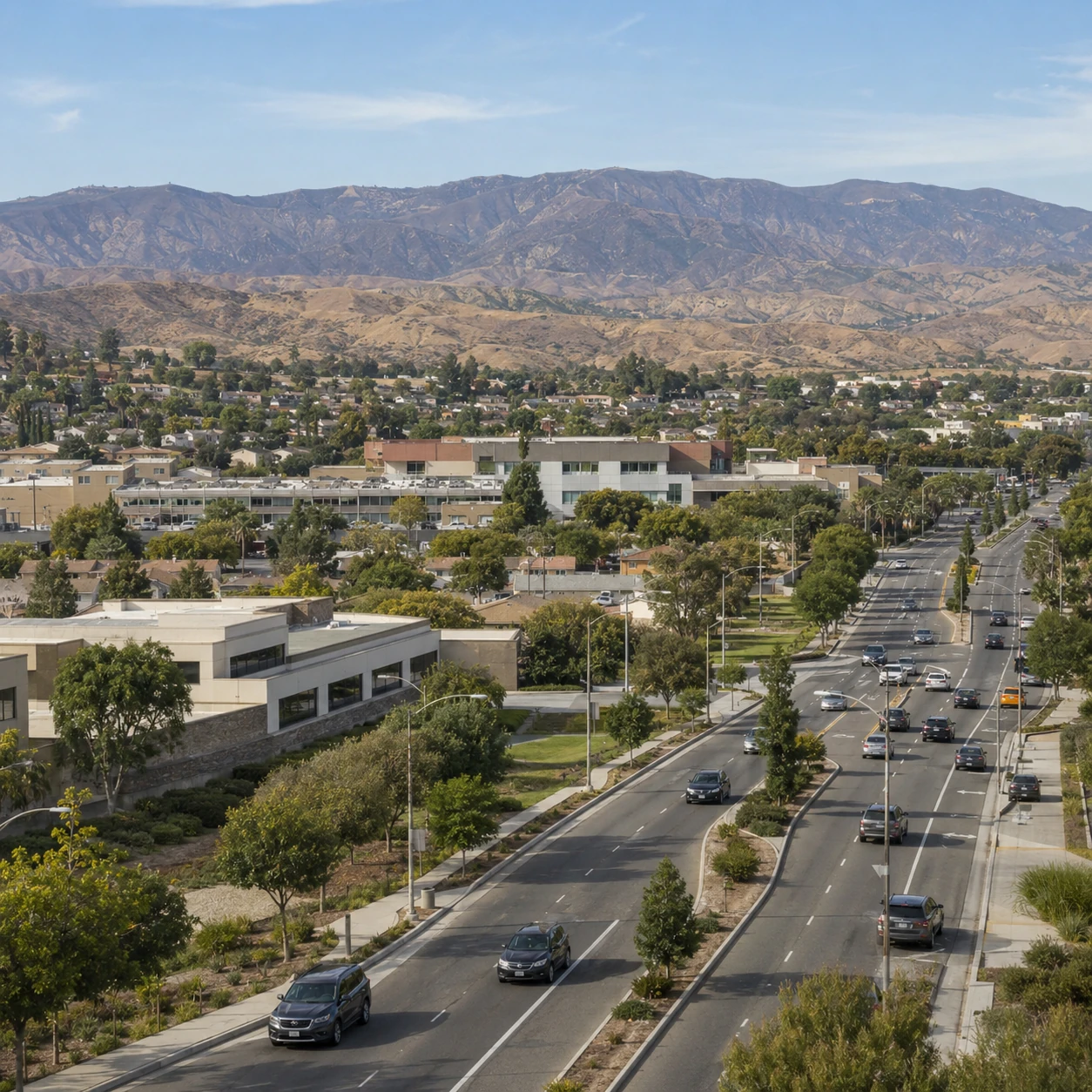
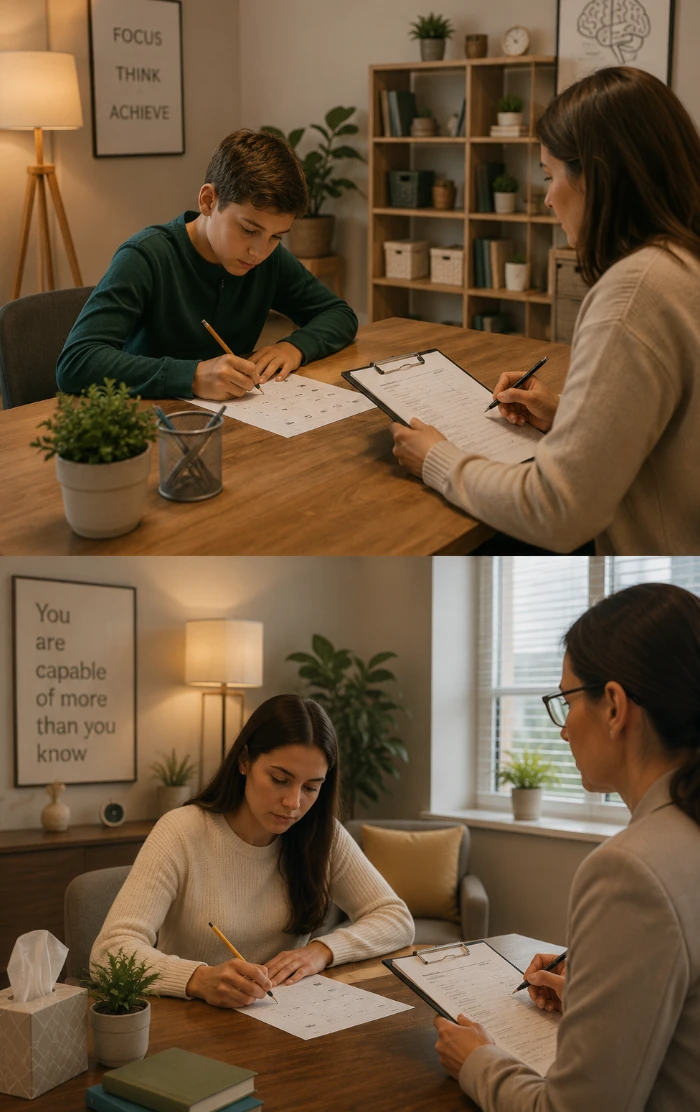
Professional IQ testing in Santa Clarita – whether you need an assessment for school, employment, gifted program eligibility, or personal insight, we connect you with licensed psychologists in the Santa Clarita area.
Last Updated: September 2026
Child IQ Testing
WISC-V & Stanford-Binet for ages 6–16. Gifted identification, learning profiles.
Adult IQ Testing
WAIS-IV & WAIS-5 available. Comprehensive adult cognitive assessments. Clinical & occupational.
WISC-V Test
Wechsler Intelligence Scale for Children® Fifth Edition – the gold standard for child IQ testing.
WAIS-IV & WAIS-5 Tests
Wechsler Adult Intelligence Scale® – Fourth Edition (WAIS-IV) and Fifth Edition (WAIS-5) available for adult IQ testing.
Gifted Testing
Identify giftedness for school placement, enrichment, and talent programs using WISC-V or Stanford-Binet.
Stanford-Binet 5
Stanford-Binet Intelligence Scales Fifth Edition – comprehensive cognitive assessment for all ages.
Mensa Testing
Mensa admission testing and preparation for the high-IQ society. Accepts WAIS-IV, WAIS-5, and Stanford-Binet 5 scores.
Full Evaluation
Combined assessment with detailed report and recommendations. Includes WISC-V, WAIS-IV, WAIS-5, or Stanford-Binet 5 as appropriate.
IQ Testing in Santa Clarita: city context
Gender, age and demographic statistics
Santa Clarita had an estimated 228,430 residents on July 1, 2025. Census 2020–2024 estimates report that 50.6% of residents are female, 24.6% are under age 18, and 13.5% are age 65 or older. The population is 36.3% Hispanic or Latino, 12.3% Asian alone, 4.6% Black alone, 47.2% White alone, and 23.5% reporting two or more races; categories overlap where Hispanic origin is reported separately.
These demographic figures describe the community—not intelligence differences. Professionally interpreted IQ scores must be considered in light of age, language exposure, education, disability, culture, health, and testing conditions. Santa Clarita is linguistically diverse: 36.2% of residents age five and older speak a language other than English at home, and 22.2% are foreign-born. Bilingual assessment, interpreters, nonverbal measures, and careful validity analysis may be appropriate.
- Female residents: 50.6%.
- Children and teens: 24.6% of residents are under 18.
- Older adults: 13.5% are 65 or older.
- Language context: 36.2% speak a language other than English at home.
- Educational context: 91.2% of adults age 25+ finished high school and 39.8% hold a bachelor’s degree or higher.
- Interpretation: No gender, racial, ethnic, or language group should be presumed to have a particular IQ profile; individual testing and appropriate norms are essential.
What is professional IQ testing?
Intelligence quotient (IQ) testing is a standardized method to measure human cognitive abilities and intellectual potential. Professional IQ tests are administered by licensed psychologists in a controlled environment to ensure accuracy and reliability. Unlike online quizzes, clinical assessments provide a full-scale IQ score along with detailed breakdowns of verbal comprehension, perceptual reasoning, working memory, and processing speed.
In Santa Clarita, IQ testing is commonly used for gifted program admission, learning disability identification, career guidance, neuropsychological evaluation, and personal development. The results are presented in a comprehensive report that includes normative comparisons, strengths and weaknesses, and actionable recommendations.
Who should get tested?
IQ testing can benefit children, adolescents, and adults in various situations:
- Children: Parents often seek testing for school readiness, gifted placement, or to understand learning challenges.
- Adults: Many adults take IQ tests for career advancement, graduate school applications, or personal curiosity.
- Mensa candidates: High-IQ societies require official test scores for membership.
- Clinical referrals: Psychologists may recommend testing as part of a broader neuropsychological evaluation.
Types of IQ tests
We offer the most recognized and scientifically validated intelligence tests in the field:
- WISC-V (Wechsler Intelligence Scale for Children® – Fifth Edition): The gold standard for children aged 6:0–16:11. It provides a Full-Scale IQ and five primary index scores.
- WAIS-IV (Wechsler Adult Intelligence Scale® – Fourth Edition): The most widely used adult IQ test for ages 16–90. It measures cognitive functioning across four domains.
- Stanford-Binet Intelligence Scales – Fifth Edition: A comprehensive assessment for ages 2–85, often used for gifted identification and clinical evaluations.
- Gifted Testing: Often includes the WISC-V or Stanford-Binet, plus additional creativity and achievement measures.
- Mensa Testing: We provide official Mensa admission testing and preparation materials.
How the testing process works
- Initial consultation: Brief phone or video call to discuss your needs and match you with the right psychologist.
- Testing session: In-person or remote testing (depending on the test) with a licensed psychologist. Most sessions last 1–2 hours.
- Scoring and interpretation: The psychologist scores the test and interprets the results in the context of your background and goals.
- Feedback session: A detailed review of your results, including strengths, weaknesses, and practical recommendations.
- Comprehensive report: You receive a written report with all scores, normative comparisons, and actionable next steps.
How much does IQ testing cost in Santa Clarita?
The cost of IQ testing in Santa Clarita varies depending on the type of test, the psychologist's experience, and whether a comprehensive report is required. Typical fees range from $200 to $1,200 for a full assessment. Gifted testing and Mensa admission testing are often at the lower end, while neuropsychological evaluations may be higher.
Some insurance plans cover IQ testing when it's deemed medically necessary. We recommend checking with your provider for details. We also offer affordable payment plans and sliding-scale options for qualifying individuals.
Santa Clarita's Intellectual History & Legacy
Santa Clarita’s intellectual and technical identity reflects a blend of aerospace engineering, film production, medical-device development, higher education, public service, and entrepreneurial growth. The region’s history includes the Newhall oil fields, nearby aerospace and defense work, and a major film-and-television production ecosystem supported by local studios, locations, and post-production companies.
People in Santa Clarita who are curious about cognitive problem-solving may begin with an online IQ test, then consult a licensed psychologist when they need standardized scores or a written report.
College of the Canyons, California Institute of the Arts, The Master’s University, local school districts, Henry Mayo Newhall Hospital, Boston Scientific, Advanced Bionics, Quest Diagnostics, and employers in the Valencia Commerce Center create demand for complex reasoning, technical learning, creative problem solving, and evidence-based assessment.
Top Employers in Santa Clarita Requiring Cognitive Skills
Santa Clarita’s largest and most visible employers span entertainment, education, healthcare, tourism, logistics, medical technology, manufacturing, and public administration. Roles requiring strong reasoning, working memory, verbal communication, visual-spatial analysis, or processing efficiency are common across these sectors.
- Six Flags Magic Mountain: Operations, engineering, safety, analytics, guest services, finance, and management.
- College of the Canyons and local school districts: Education, counseling, research, administration, instructional technology, and student services.
- Henry Mayo Newhall Hospital and regional health systems: Clinical care, diagnostics, rehabilitation, health information, and administration.
- Princess Cruises: Corporate operations, technology, finance, marketing, logistics, and customer experience.
- Boston Scientific, Advanced Bionics, and medical-device firms: Engineering, regulatory affairs, quality systems, research, manufacturing, and data analysis.
- Quest Diagnostics: Laboratory science, logistics, information systems, and healthcare operations.
- Aerospace, defense, advanced manufacturing, and digital-media companies: Design, programming, production, technical trades, project management, and systems thinking.
Santa Clarita IQ Testing by City Area
Appointments are available to residents throughout Santa Clarita without turning neighborhood names into repetitive SEO copy. Testing logistics vary by commute time, school district, and access to major corridors.
- Valencia: Convenient to McBean Parkway, College of the Canyons, Henry Mayo, Valencia Commerce Center, and the selected Tourney Road testing office.
- Newhall: Served by I-5, Railroad Avenue, Old Town Newhall, and the Newhall Metrolink station.
- Saugus: Access commonly uses Bouquet Canyon Road, Copper Hill Drive, Newhall Ranch Road, and Seco Canyon Road.
- Canyon Country: Access commonly follows SR-14, Soledad Canyon Road, Sierra Highway, Sand Canyon Road, and the Via Princessa or Vista Canyon stations.
- Scheduling principle: Choose the calmest practical appointment time rather than the closest ZIP-code keyword; fatigue, traffic, heat, and school schedules can influence performance.
Santa Clarita Universities and Research Institutions
- College of the Canyons: The Valencia and Canyon Country campuses provide transfer, career-technical, honors, counseling, disability-support, and workforce programs.
- California Institute of the Arts: CalArts in Valencia supports intensive programs in art, animation, film/video, music, theater, dance, critical studies, and creative technology.
- The Master’s University: A private university in Santa Clarita offering undergraduate and graduate study across liberal arts, business, education, biblical studies, and related fields.
- California State University, Northridge: A major nearby public university with graduate programs, research labs, clinics, and disability-resource services.
- Local applied research: Medical-device, diagnostics, aerospace, film, advanced-manufacturing, and healthcare organizations provide internships and technical career pathways.
Santa Clarita Economic Context
- Median household income: $123,062 in 2020–2024 Census estimates.
- Per-capita income: $51,072.
- Residents in poverty: 7.4%.
- Bachelor’s degree or higher: 39.8% of adults age 25 and older.
- Mean travel time to work: 34.1 minutes, with I-5, SR-14 and Los Angeles-bound commutes often taking longer during peak periods.
- Health and social-assistance activity: Approximately $1.049 billion in 2022 receipts/revenue within the city.
- Transportation and warehousing: Approximately $2.352 billion in 2022 receipts/revenue, reflecting distribution, commuting and regional logistics.
- Accommodation and food services: Approximately $683.3 million in 2022 sales.
- Retail sales: Approximately $4.410 billion in 2022.
- Regional strengths: Aerospace and defense, film and digital media, biotech and medical devices, advanced manufacturing, information technology, healthcare, education, tourism, logistics and corporate headquarters.
Santa Clarita School District Data
Santa Clarita is served by several elementary districts and the William S. Hart Union High School District for most grades 7–12. Gifted identification and advanced-course rules are district-specific.
- Saugus Union School District: Its GATE program serves identified students in grades 3–6. Teachers or parents may recommend testing; district and school materials describe universal third-grade screening at many sites, use of the NNAT, cluster grouping, and differentiated instruction using depth and complexity.
- Other elementary districts: Newhall, Sulphur Springs Union, and Castaic Union policies, referral windows, measures, and services should be verified directly because boundaries and procedures differ.
- William S. Hart Union High School District: Secondary students may access honors, Advanced Placement, International Baccalaureate where offered, dual enrollment, specialized academies, and other advanced pathways; a private IQ score does not automatically place a student.
- California rule: Gifted programming operates under local control. Districts set their own identification guidelines, funding priorities, service models, and appeals procedures.
- Private reports: A private evaluation can document cognitive strengths, learning needs, disability, and recommendations, but the school applies its own eligibility and placement criteria.
Local Testing Centers and Psychologists
- Therapy SoCal / Dr. Melissa Jinariu: 27201 Tourney Road, Suite 201, Santa Clarita, CA 91350; (661) 690-1228. The practice advertises comprehensive testing for IQ, learning disabilities, ADHD and autism and was selected because both the address and telephone area code meet the requested city criteria.
- Laurie Adachi / Compassionate Solutions: A Santa Clarita licensed educational psychology practice offering giftedness and IQ testing, learning-disability assessment, school consultation and accommodations documentation.
- Herman & Associates: Valencia psychodiagnostic evaluations for children, adolescents and adults, including giftedness, attention, learning and developmental questions.
- Henry Mayo Newhall Hospital and regional systems: Appropriate for medical, neurological, rehabilitation or behavioral-health referrals; confirm whether neuropsychological testing is offered for the specific condition.
- Referral check: Confirm licensure, test version, age range, language capability, report purpose, fees, insurance status, turnaround and whether school, court, disability or Mensa documentation requirements will be met.
Santa Clarita Events and Conferences
Useful local learning and professional-development opportunities may be offered through College of the Canyons, CalArts, The Master’s University, Santa Clarita Public Library, Henry Mayo, the Santa Clarita Valley Economic Development Corporation, school districts, employer associations, and regional psychology or education organizations.
- Education and career events: College fairs, transfer workshops, career expos, technical training, and employer information sessions.
- Creative and research events: CalArts performances, exhibitions, screenings, lectures, and interdisciplinary programs.
- Gifted-family resources: District parent meetings, enrichment academies, library programs, STEM events, arts programs, and regional Mensa activities when scheduled.
- Planning: Event calendars and eligibility change; verify current dates rather than relying on an IQ report page as an event listing.
Transportation and Accessibility
- Major roads: I-5 is the primary north–south freeway; SR-14 links Canyon Country and the Antelope Valley; SR-126 runs west toward Ventura. Sierra Highway, Soledad Canyon Road, Newhall Ranch Road, McBean Parkway, Valencia Boulevard, Bouquet Canyon Road and Sand Canyon Road are major local corridors.
- Public transit: City of Santa Clarita Transit operates local routes throughout the valley plus commuter service to Downtown Los Angeles, Century City/Westwood, North Hollywood and Warner Center. Go! Santa Clarita provides app-booked curb-to-curb service.
- Rail: Metrolink’s Antelope Valley Line serves Newhall, Santa Clarita, Via Princessa and Vista Canyon stations, providing connections toward Los Angeles Union Station and the Antelope Valley.
- Accessible transportation: Dial-A-Ride provides curb-to-curb service for eligible seniors and riders with disabilities and is also available to the general public during specified evening hours; regional Access Services rules also apply.
- Airport: Hollywood Burbank Airport (BUR), roughly 20–23 road miles away depending on the starting point, is generally the closest commercial airport. Los Angeles International Airport (LAX) is roughly 35 miles away before route and traffic differences.
- Distance to other cities: Approximately 23 miles to Burbank, 35 miles to central Los Angeles, 35–40 miles to Pasadena, 40 miles to Palmdale, 55–60 miles to Ventura, and about 85 miles to Bakersfield; peak traffic can substantially extend travel times.
- Walkability: Old Town Newhall, portions of Valencia around civic, retail and medical destinations, and neighborhoods connected by paseos are among the easier places to combine walking with appointments. Much of Santa Clarita remains suburban and car-oriented.
- Bike infrastructure: The city reports approximately 80 miles of trails and 20 miles of paseos, and more recent city materials describe over 100 miles of trails and bike paths. Routes include the Santa Clara River Trail, San Francisquito Creek Trail, South Fork Trail and neighborhood paseos.
- Appointment planning: I-5/SR-14 interchange traffic, school drop-off periods, Six Flags events, construction, heat, smoke and wind can affect arrival and test readiness.
Santa Clarita Weather and Seasonal Considerations
- Summer heat: Inland-valley afternoons frequently become hot. Morning sessions, hydration and a temperature-controlled room may help children, older adults and people taking stimulant or other heat-sensitive medication.
- Santa Ana winds: Strong, dry winds can disrupt sleep, aggravate allergies, create power-safety shutoffs and increase wildfire risk.
- Wildfire and smoke: Smoke, evacuations, road closures and anxiety can affect concentration and validity. Reschedule when safety or air quality is poor.
- Winter rain: Intense storms can produce localized flooding, debris flows, slick roads and delays in canyon areas.
- Allergies and air quality: Pollen, ozone and particulate pollution may worsen headaches, fatigue or respiratory symptoms; note unusual conditions in the examiner’s behavioral observations.
- Testing principle: A score obtained during illness, severe sleep loss, heat stress, smoke exposure or acute distress should be interpreted cautiously.
Areas we serve
We support all areas of Santa Clarita.
Frequently Asked Questions
WISC-V is for children aged 6–16, while WAIS-IV is for adults aged 16–90. Each is normed for its specific age group.
Most IQ tests take between 60 and 90 minutes, plus a feedback session. Allow 2–3 hours total.
No, you can book directly with our psychologists. We serve both self-referred and professionally referred individuals.
Some professionally administered scores may be submitted as prior evidence, but acceptance is determined solely by American Mensa under its current rules.
Some plans cover cognitive assessments when there is a clinical indication. Check with your provider.
Get a good night's sleep, eat a healthy meal, and arrive relaxed. No specific preparation is needed.
You'll receive a comprehensive report with your scores and tailored recommendations.
Interviews and feedback may be available remotely, but many standardized cognitive tests require controlled administration and may need an in-person appointment. Contact us for details.