
IQ Testing in Portland
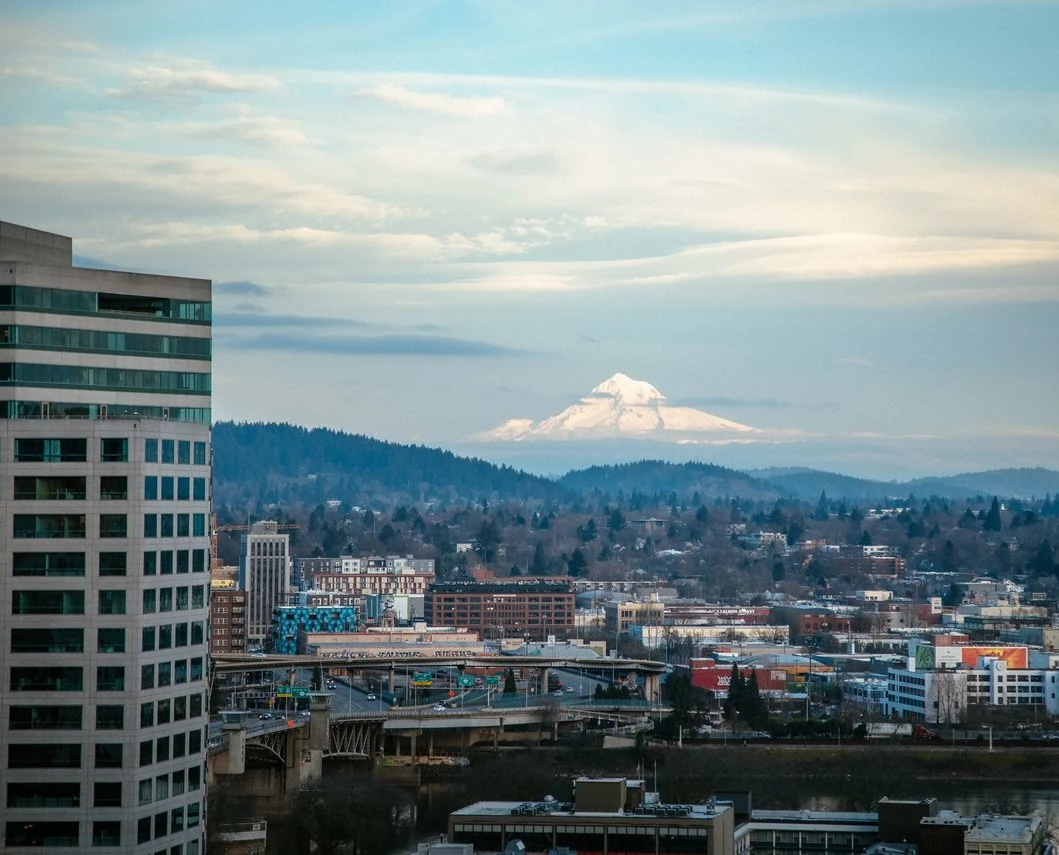
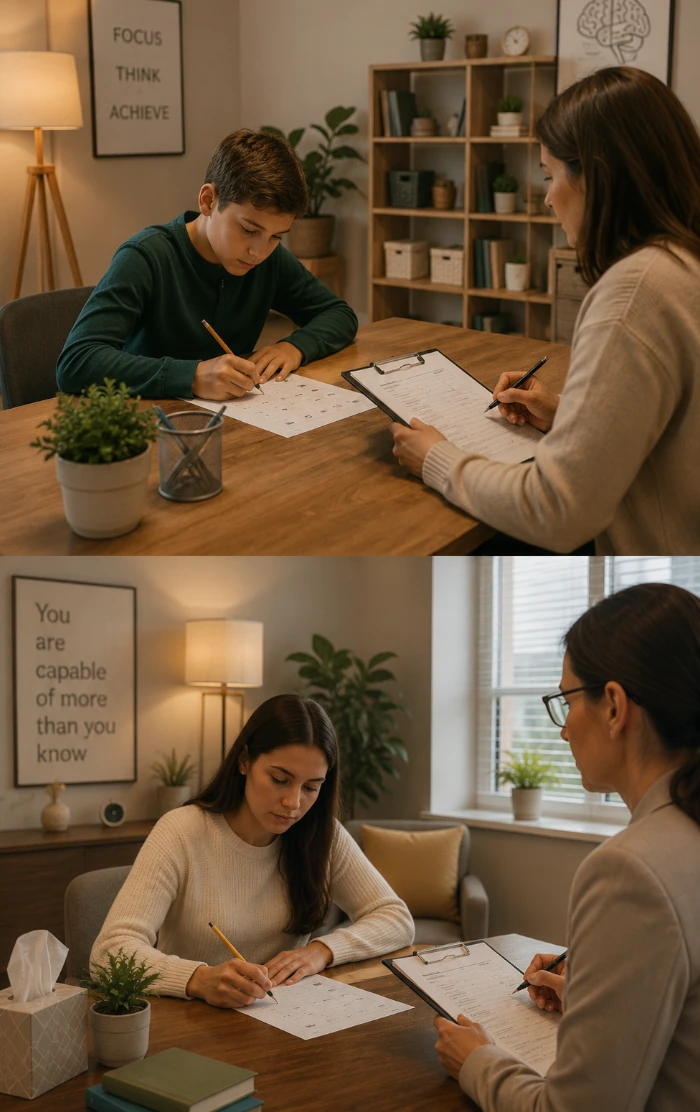
Professional IQ testing in Portland – whether you need an assessment for school, employment, gifted program eligibility, or personal insight, we connect you with licensed psychologists in the Portland area.
Last Updated: October 2026
Child IQ Testing
WISC-V & Stanford-Binet for ages 6–16. Gifted identification, learning profiles.
Adult IQ Testing
WAIS-IV & WAIS-5 available. Comprehensive adult cognitive assessments. Clinical & occupational.
WISC-V Test
Wechsler Intelligence Scale for Children® Fifth Edition – the gold standard for child IQ testing.
WAIS-IV & WAIS-5 Tests
Wechsler Adult Intelligence Scale® – Fourth Edition (WAIS-IV) and Fifth Edition (WAIS-5) available for adult IQ testing.
Gifted Testing
Identify giftedness for school placement, enrichment, and talent programs using WISC-V or Stanford-Binet.
Stanford-Binet 5
Stanford-Binet Intelligence Scales Fifth Edition – comprehensive cognitive assessment for all ages.
Mensa Testing
Mensa qualification guidance and testing that may provide accepted prior evidence, subject to current American Mensa rules. American Mensa's published prior-evidence list includes WAIS-IV and Stanford-Binet 5; verify current acceptance of WAIS-5 before testing.
Full Evaluation
Combined assessment with detailed report and recommendations. Includes WISC-V, WAIS-IV, WAIS-5, or Stanford-Binet 5 as appropriate.
IQ Testing in Portland: city context
Portland is Oregon's largest city and the center of a bi-state metropolitan region that extends across Multnomah, Washington and Clackamas counties in Oregon and into Clark County, Washington. The U.S. Census Bureau estimated the city population at 635,109 in 2025. Professional cognitive assessment in the Portland area serves children, adults, university students, healthcare workers, technology and manufacturing professionals, public employees, veterans, artists, multilingual families and people seeking educational, disability or clinical documentation.
Local assessment resources include licensed private psychologists and neuropsychologists, Oregon Health & Science University (OHSU), OHSU Doernbecher Children's Hospital, the VA Portland Health Care System, Portland State University, Legacy Health, Providence, school-based teams within Portland Public Schools and neighboring districts, and specialty practices throughout the westside, eastside and suburban metro area. The appropriate referral depends on whether the question is gifted identification, school placement, ADHD or learning disability, career or graduate-school planning, Mensa evidence, neurological change, legal documentation, or a broader psychoeducational or neuropsychological evaluation.
IQ, gender, language, and demographic context
Professional IQ tests use national age-based norms rather than a separate Portland norm for men, women, racial groups, ethnic groups, neighborhoods or occupations. Overall IQ distributions overlap substantially by sex. Individual people can nevertheless show meaningful differences across verbal comprehension, visual-spatial reasoning, fluid reasoning, working memory, processing speed and quantitative reasoning.
Current Census context for Portland city includes:
- Female residents: 50.3% of the population.
- Residents under age 18: 16.3%; residents age 65 and older: 14.5%.
- Female civilian labor-force participation: 68.1% among residents age 16 and older in 2020–2024.
- White alone: 68.1%; Black alone: 5.7%; Asian alone: 8.1%; American Indian and Alaska Native alone: 0.8%; Native Hawaiian and Other Pacific Islander alone: 0.6%; two or more races: 12.7%.
- Hispanic or Latino residents: 12.0%; Hispanic origin may overlap with race categories.
- Foreign-born residents: 12.4%.
- Language other than English spoken at home: 17.5% of residents age five and older.
- High-school graduate or higher: 93.4% of adults age 25 and older; bachelor's degree or higher: 53.8%.
- Veterans: 23,619 in the 2020–2024 Census estimate period.
No authoritative public dataset establishes valid Portland IQ averages by gender, race, ethnicity, immigration history, school, ZIP code or neighborhood. A psychologist interprets an individual's results in light of age, education, language exposure, culture, disability, health, sleep, medication, effort and testing conditions. Multilingualism, interrupted schooling, hearing or vision needs, and differences in access to advanced coursework must be considered as context rather than treated as evidence of lower ability.
What is professional IQ testing?
Intelligence quotient (IQ) testing is a standardized method to measure human cognitive abilities and intellectual potential. Professional IQ tests are administered by licensed psychologists in a controlled environment to ensure accuracy and reliability. Unlike online quizzes, clinical assessments provide a full-scale IQ score along with detailed breakdowns of verbal comprehension, perceptual reasoning, working memory, and processing speed.
In Portland, IQ testing is commonly used for gifted program admission, learning disability identification, career guidance, neuropsychological evaluation, and personal development. The results are presented in a comprehensive report that includes normative comparisons, strengths and weaknesses, and actionable recommendations.
Who should get tested?
IQ testing can benefit children, adolescents, and adults in various situations:
- Children: Parents often seek testing for school readiness, gifted placement, or to understand learning challenges.
- Adults: Many adults take IQ tests for career advancement, graduate school applications, or personal curiosity.
- Mensa candidates: High-IQ societies require official test scores for membership.
- Clinical referrals: Psychologists may recommend testing as part of a broader neuropsychological evaluation.
Types of IQ tests
We offer the most recognized and scientifically validated intelligence tests in the field:
- WISC-V (Wechsler Intelligence Scale for Children® – Fifth Edition): The gold standard for children aged 6:0–16:11. It provides a Full-Scale IQ and five primary index scores.
- WAIS-IV (Wechsler Adult Intelligence Scale® – Fourth Edition): The most widely used adult IQ test for ages 16–90. It measures cognitive functioning across four domains.
- Stanford-Binet Intelligence Scales – Fifth Edition: A comprehensive assessment for ages 2–85, often used for gifted identification and clinical evaluations.
- Gifted Testing: Often includes the WISC-V or Stanford-Binet, plus additional creativity and achievement measures.
- Mensa Testing: We provide guidance on Mensa qualification routes and can connect consumers with psychologists whose complete reports may be submitted as prior evidence, subject to current American Mensa rules.
How the testing process works
- Initial consultation: Brief phone or video call to discuss your needs and match you with the right psychologist.
- Testing session: In-person or remote testing (depending on the test) with a licensed psychologist. Most sessions last 1–2 hours.
- Scoring and interpretation: The psychologist scores the test and interprets the results in the context of your background and goals.
- Feedback session: A detailed review of your results, including strengths, weaknesses, and practical recommendations.
- Comprehensive report: You receive a written report with all scores, normative comparisons, and actionable next steps.
How much does IQ testing cost in Portland?
Fees vary according to the test selected, the referral question, the clinician's credentials, the amount of records review, and whether the service includes only a score summary or a comprehensive written report and feedback session. A stand-alone IQ assessment usually costs less than a full psychoeducational or neuropsychological evaluation.
Request a written estimate covering consultation, testing, scoring, report preparation, feedback, and any additional measures. Insurance is more likely to contribute when testing is medically necessary than when it is requested solely for curiosity, career exploration, school admission, or Mensa documentation.
Portland's Intellectual History & Educational Legacy
Portland's intellectual and educational history reflects Indigenous knowledge of the Columbia and Willamette river systems, maritime trade, timber and manufacturing, urban planning, public health, environmental science, architecture, literature, design, food systems and technology. The city grew around river commerce and rail connections and later became a regional center for healthcare, higher education, semiconductor engineering, clean technology, athletic and outdoor-product design, freight logistics and creative industries.
Portland State University anchors a downtown urban-research campus, while OHSU combines health-professions education, biomedical research and clinical care on Marquam Hill and the South Waterfront. Reed College, Lewis & Clark College, the University of Portland, Pacific Northwest College of Art at Willamette University, Oregon State University's Portland programs and nearby Pacific University contribute additional research, professional education and cultural resources.
These local traditions illustrate that intelligence is expressed through different forms of problem solving. Semiconductor and software work may emphasize fluid and quantitative reasoning; healthcare may combine memory, verbal communication and clinical judgment; architecture and product design use visual-spatial reasoning; public policy and law rely heavily on verbal analysis; and transportation, logistics and emergency services require sustained attention and rapid decisions under changing conditions.
Major Portland Employers and Cognitive Skill Demands
Healthcare, Research & Education
OHSU, Providence, Legacy Health, Kaiser Permanente, Portland State University and other institutions rely on clinical reasoning, memory, communication, documentation, quantitative interpretation and sustained attention.
Working memory + verbal reasoningTechnology & Semiconductor Industry
Intel's Washington County operations, software companies, data centers, cybersecurity firms and engineering contractors require fluid reasoning, mathematical thinking, systems analysis and precision.
Fluid reasoning + quantitative skillsApparel, Product Design & Creative Work
Nike, Columbia Sportswear, design studios, advertising agencies, architecture firms and media organizations use visual-spatial reasoning, creativity, communication and project management.
Visual-spatial + creative reasoningTransportation, Freight & Advanced Manufacturing
Daimler Truck North America, the Port of Portland, aviation, marine freight, rail and regional manufacturers depend on mechanical reasoning, safety judgment, planning, attention and operational problem solving.
Spatial reasoning + executive controlGovernment, Law & Public Service
City, county, regional and state agencies, courts, legal organizations and nonprofits require verbal analysis, policy reasoning, writing, judgment and management of complex information.
Verbal reasoning + executive functionHospitality, Food & Small Business
Restaurants, hotels, craft manufacturing, tourism and independent businesses use rapid customer communication, numerical accuracy, scheduling, adaptive problem solving and entrepreneurship.
Processing speed + practical judgmentIQ testing should not be used as a stand-alone hiring screen or as a claim that one occupation requires a specific IQ. For career guidance, cognitive results are most useful when integrated with interests, values, education, experience, personality, physical demands, work samples and labor-market realities.
Portland IQ Testing by Neighborhood and Area
Downtown, South Waterfront & Marquam Hill
Dense transit service and proximity to PSU, OHSU and the VA can make these areas convenient, but hills, hospital-campus parking, bridge traffic and event closures require advance planning.
Northwest, Pearl District & Slabtown
Walkable districts with streetcar and bus access. Confirm garage costs, street-parking limits and construction around major corridors.
North & Northeast Portland
Mississippi, Alberta, Kenton, St. Johns, Hollywood and nearby areas use combinations of MAX, bus and bridge routes. I-5 and Interstate Bridge congestion can affect clients arriving from Vancouver.
Southeast & East Portland
Hawthorne, Belmont, Division, Sellwood, Foster-Powell, Montavilla, Gateway and outer-east neighborhoods vary widely in transit frequency and cross-town travel time.
West Portland & Washington County
Southwest Portland, Hillsdale, Multnomah Village, Beaverton, Cedar Mill, Tigard and Hillsboro require attention to US 26, OR 217, tunnel traffic and westside MAX schedules.
Clackamas County & South Metro
Lake Oswego, Milwaukie, Happy Valley, Oregon City, West Linn and Tualatin may involve I-205, OR 43, McLoughlin Boulevard or bridge crossings. Verify whether a closer qualified provider is available.
Portland addresses can be misleading because services marketed as “Portland” may be in Beaverton, Tigard, Lake Oswego, Milwaukie, Gresham or Vancouver. Confirm the exact address, jurisdiction, parking, transit access and clinician's Oregon license before scheduling.
Before arranging a formal evaluation in Portland, adults and families can try an online IQ test to become familiar with common reasoning tasks, keeping in mind that it cannot replace professional assessment.
Portland Universities and Research Institutions
- Portland State University: Fall 2025 enrollment of 19,687 students, including 4,261 graduate students, with 209 degree programs and strengths in psychology, social work, education, engineering, computer science, business, public affairs and urban studies.
- Oregon Health & Science University: Oregon's academic health center, with fall 2025 OHSU enrollment of 3,047 plus 1,290 students in joint programs. Schools include medicine, nursing, dentistry, public health and pharmacy.
- Lewis & Clark College: Undergraduate liberal arts, law and graduate education/counseling programs in Southwest Portland.
- University of Portland: Programs in nursing, engineering, business, education, arts and sciences on the Bluff in North Portland.
- Reed College: An intensive undergraduate liberal-arts environment emphasizing independent inquiry and a senior thesis.
- Pacific Northwest College of Art: Art and design education in central Portland as part of Willamette University.
- Regional institutions: Pacific University, Oregon State University Portland programs, Warner Pacific University, Multnomah University, Oregon Institute of Technology partnerships and community colleges broaden professional and technical pathways.
University affiliation does not automatically mean a clinic offers stand-alone IQ testing to the public. Confirm referral criteria, insurance requirements, age range, waitlist, report type and whether the service answers the receiving institution's question.
Portland Economic Context
Portland's economy combines healthcare, education, government, technology, advanced manufacturing, freight and logistics, athletic and outdoor products, construction, professional services, tourism, food and beverage businesses and a large nonprofit sector. The city also sits within a regional labor market that includes Washington County technology and semiconductor campuses, Columbia River port and industrial districts, and employment centers across Multnomah, Washington and Clackamas counties.
- Median household income: $90,919 in 2020–2024 Census estimates, measured in 2024 dollars.
- Per-capita income: $57,029 in the previous 12 months, measured in 2024 dollars.
- Residents in poverty: 12.7%.
- Bachelor's degree or higher: 53.8% of adults age 25 and older.
- Mean travel time to work: 24.1 minutes for workers age 16 and older, although bridge congestion, cross-metro trips and travel between Portland and Washington County can take substantially longer.
- Health care and social-assistance activity: Census business data report approximately $11.49 billion in 2022 receipts/revenue within Portland city.
- Transportation and warehousing: Approximately $5.84 billion in 2022 receipts/revenue reflects the importance of freight, distribution, Portland International Airport, marine terminals, rail and regional logistics.
- Retail sales: Approximately $15.99 billion in 2022, or about $25,196 per capita.
- Accommodation and food-service sales: Approximately $3.48 billion in 2022, reflecting the importance of tourism, restaurants, hospitality and event activity.
- Regional strengths: Athletic and outdoor products, food and beverage manufacturing, green-city and climate technology, metals and machinery, software and media, healthcare and health sciences, education, government, semiconductor and electronics activity, creative services, freight and logistics.
Economic circumstances can influence access to evaluation, educational opportunity, test familiarity, healthcare, housing stability, sleep and stress. They should inform interpretation and recommendations but should never be used to infer an individual's intelligence. Testing should answer a specific referral question; a stand-alone IQ score is not a substitute for job analysis, credential evaluation, achievement testing, vocational-interest assessment, medical evaluation or workplace-accommodation review.
Data sources: U.S. Census Bureau QuickFacts for Portland city, Oregon and Prosper Portland 2025 Insights & Indicators.
Portland School District and Gifted-Education Context
- Portland Public Schools (PPS): TAG services are provided at all PPS schools. PPS states that all students are screened in second grade and that students may be referred for screening and services at any time.
- ACCESS Academy: PPS's accelerated program for highly gifted students in grades 2–8. Current eligibility guidance references performance at the 99th percentile on a nationally normed test plus additional requirements and available-space procedures.
- Oregon TAG framework: Oregon districts must identify and serve talented and gifted students through local plans. Identification should use multiple sources of evidence, and no single test, measure or score should be the sole criterion.
- Beaverton School District: Maintains separate TAG procedures and states that it does not accept private testing for district TAG identification. Families should use the district's current process.
- Other metro districts: David Douglas, Parkrose, Centennial, Reynolds, Gresham-Barlow, North Clackamas, Lake Oswego, Tigard-Tualatin, West Linn-Wilsonville and other districts publish separate TAG plans and timelines.
- Outside clinical reports: A private WISC-V or Stanford-Binet report may help answer clinical, twice-exceptional or independent-school questions, but it does not guarantee district identification or placement.
Before scheduling private testing, obtain written confirmation of the receiving program's accepted instruments, age limits, score rules, test-date limits, examiner qualifications and required report format.
Local Testing Centers and Psychologists
- Private psychologists and neuropsychologists: May offer stand-alone IQ testing, psychoeducational evaluations, ADHD and learning-disability assessment, adult cognitive testing or neuropsychological services. Scope varies by clinician.
- OHSU and Doernbecher: Specialty services include pediatric neuropsychology, developmental evaluation and medically focused assessment, generally based on clinical referral criteria rather than curiosity-only testing.
- VA Portland Health Care System: Provides specialty care for eligible veterans and maintains clinical psychology and neuropsychology services and training.
- School-district evaluation teams: Public schools evaluate eligible students under educational rules when disability or school-program questions are involved; school evaluations differ from private clinical testing.
- License verification: The Oregon Board of Psychology licenses psychologists and provides consumer tools to verify current license status.
Ask who will administer the test, which edition will be used, whether the clinician is licensed in Oregon, what the quoted fee includes, whether a written report and feedback session are provided, and whether the report will be accepted by the school, employer, court, Mensa or agency receiving it.
Portland Learning Events and Professional Resources
- University lectures and continuing education: PSU, OHSU, Lewis & Clark, Reed and other institutions host public talks, professional training and research events.
- Science and cultural institutions: OMSI, the Oregon Zoo, Portland Art Museum, World Forestry Center, libraries and community organizations offer enrichment for children and adults.
- Gifted-family resources: PPS TAG information, Oregon Department of Education TAG resources and district family meetings can help families understand identification and services.
- Professional associations: Psychological, educational, neuropsychological, disability and school-psychology organizations provide directories and continuing education.
- Oregon Mensa: The local group serves Portland and other Oregon communities, with membership, events and testing options subject to current American Mensa policies.
Event participation does not replace a standardized assessment. Use educational programs for enrichment and community, and use licensed assessment when formal scores, diagnosis or documentation are needed.
Transportation and Accessibility
- Major roads: I-5 runs north–south through Portland; I-84 follows the Columbia River corridor east; I-405 loops around the west side of the central city; I-205 provides an eastern freeway route; US 26 connects downtown with Beaverton, Hillsboro and the coast to the west and Mount Hood to the east; US 30 follows the northwest industrial corridor; OR 217 serves the westside; OR 99E/McLoughlin and OR 99W/Barbur are major southbound routes.
- Public transit: TriMet operates buses, MAX Light Rail and WES Commuter Rail. MAX Blue, Green, Orange, Red and Yellow lines connect Portland with Beaverton, Hillsboro, Gresham, Clackamas, Milwaukie, North Portland and Portland International Airport. Portland Streetcar's NS and A/B Loop lines serve central-city districts, while C-TRAN connects Vancouver and Multnomah County.
- Airport: Portland International Airport (PDX) is in Northeast Portland. MAX Red Line trains generally run every 15 minutes or less during most of the day, and TriMet estimates the downtown-to-airport ride at about 40 minutes. Hillsboro and Troutdale airports primarily serve general aviation and specialized operations.
- Distance to other cities: Downtown Portland is roughly 15–30 minutes from Vancouver, 20–35 minutes from Beaverton, 30–50 minutes from Hillsboro, 25–45 minutes from Gresham, about 50–70 minutes from Salem, 60–75 minutes from Hood River, approximately 1 hour 50 minutes–2 hours 20 minutes from Eugene, about 2 hours 45 minutes–3 hours 30 minutes from Seattle, and roughly 3 hours 15 minutes–3 hours 45 minutes from Bend under normal conditions.
- Walkability: Downtown, the Pearl District, Northwest/Nob Hill, Slabtown, the South Waterfront, Mississippi, Alberta, Hawthorne/Belmont, Division and Sellwood-Moreland are among the more walkable districts. Hills, freeway crossings, long eastside blocks and gaps in sidewalks can still complicate access.
- Bike infrastructure: Portland reports more than 400 miles of bikeways, including more than 100 miles of low-stress neighborhood greenways. Important routes include the Springwater Corridor, Eastbank Esplanade, Tilikum Crossing, 20s Bikeway, Willamette Greenway, Marine Drive path and neighborhood greenway network.
- Bridges and river crossings: The Interstate, Fremont, Broadway, Steel, Burnside, Morrison, Hawthorne, Marquam, Tilikum Crossing, Ross Island and Sellwood bridges shape cross-river travel. Bridge lifts, crashes, construction and freight activity can cause sudden delays.
- Cross-metro travel: A Hillsboro-to-Gresham, Vancouver-to-OHSU, North Portland-to-Lake Oswego or outer-east-to-Beaverton appointment can take much longer than the mileage suggests. Build in extra time for the Vista Ridge Tunnel, Terwilliger curves, I-5/I-84 interchange, I-205, OR 217 and school-release traffic.
- Accessibility: Confirm accessible parking, elevator access, steep approaches, wheelchair routes, restroom access, quiet waiting areas, interpreter services, sensory accommodations and the walking distance from transit or parking. Marquam Hill and some older buildings can be especially challenging.
Portland Weather and Seasonal Considerations
- Rain and dark winter mornings: Wet pavement, limited daylight and glare can slow travel from fall through spring. Allow extra time and bring corrective lenses if normally used.
- Ice and snow: Even modest winter storms can disrupt hills, bridges, buses and MAX service. Portland's steep streets and limited snow frequency can produce major delays; reschedule rather than arriving exhausted or unsafe.
- Summer heat: Heat waves can exceed 95–100°F. Morning testing, hydration and cooled waiting areas are important for children, older adults and people taking heat-sensitive medications.
- Wildfire smoke: Late-summer smoke can affect breathing, sleep, headaches and concentration. Follow air-quality guidance and discuss rescheduling when symptoms are significant.
- Columbia Gorge wind: East winds can affect I-84, Troutdale, east Portland and exposed bridges, while winter freezing rain can be highly localized.
- Allergies: Grass pollen in the Willamette Valley can affect sleep, attention and medication use during spring and early summer.
- Seasonal travel: Coast, Gorge and Mount Hood traffic can increase on weekends and holidays, and major festivals, races, construction projects and sports events may close central-city streets.
Areas we serve
We connect consumers with IQ-testing and evaluation resources serving Portland and the wider metro area, including Downtown, Goose Hollow, South Waterfront, Marquam Hill, Hillsdale, Multnomah Village, Northwest/Nob Hill, the Pearl District, Slabtown, St. Johns, Kenton, Mississippi, Alberta, Hollywood, Irvington, Laurelhurst, Hawthorne, Belmont, Division, Sellwood-Moreland, Foster-Powell, Montavilla, Gateway, Parkrose, Lents, outer East Portland, Beaverton, Cedar Mill, Tigard, Tualatin, Hillsboro, Lake Oswego, Milwaukie, Happy Valley, Oregon City, West Linn, Gresham, Troutdale, Fairview and nearby communities.
- Oregon versus Washington: Vancouver and Multnomah County are part of the metro area, but a clinician's Oregon license does not automatically authorize practice with a patient located in Washington. Confirm licensure for in-person and remote services.
- Long cross-metro trips: Schedule enough time for bridges, tunnels, freeway interchanges, weather and construction.
- Transit-dependent clients: Confirm the final walking route, elevation change, evening service and paratransit eligibility rather than relying only on the nearest stop.
- Receiving organization: Confirm that the school, employer, court, licensing board, Mensa or disability office will accept the selected test and report format.
Frequently Asked Questions
WISC-V is for children aged 6–16, while WAIS-IV is for adults aged 16–90. Each is normed for its specific age group.
Most IQ tests take between 60 and 90 minutes, plus a feedback session. Allow 2–3 hours total.
No, you can book directly with our psychologists. We serve both self-referred and professionally referred individuals.
A complete psychologist's report may be submitted as prior evidence if the test, score, administration conditions, and documentation satisfy the receiving organization's current rules. Verify requirements before testing.
Some plans cover cognitive assessments when there is a clinical indication. Check with your provider.
Get a good night's sleep, eat a healthy meal, and arrive relaxed. No specific preparation is needed.
You'll receive a comprehensive report with your scores and tailored recommendations.
Remote administration may be possible only in limited circumstances. The evaluator must confirm publisher guidance, test validity, state licensing, technology requirements, and acceptance by the receiving school or organization.