
Gifted Testing in Des Moines
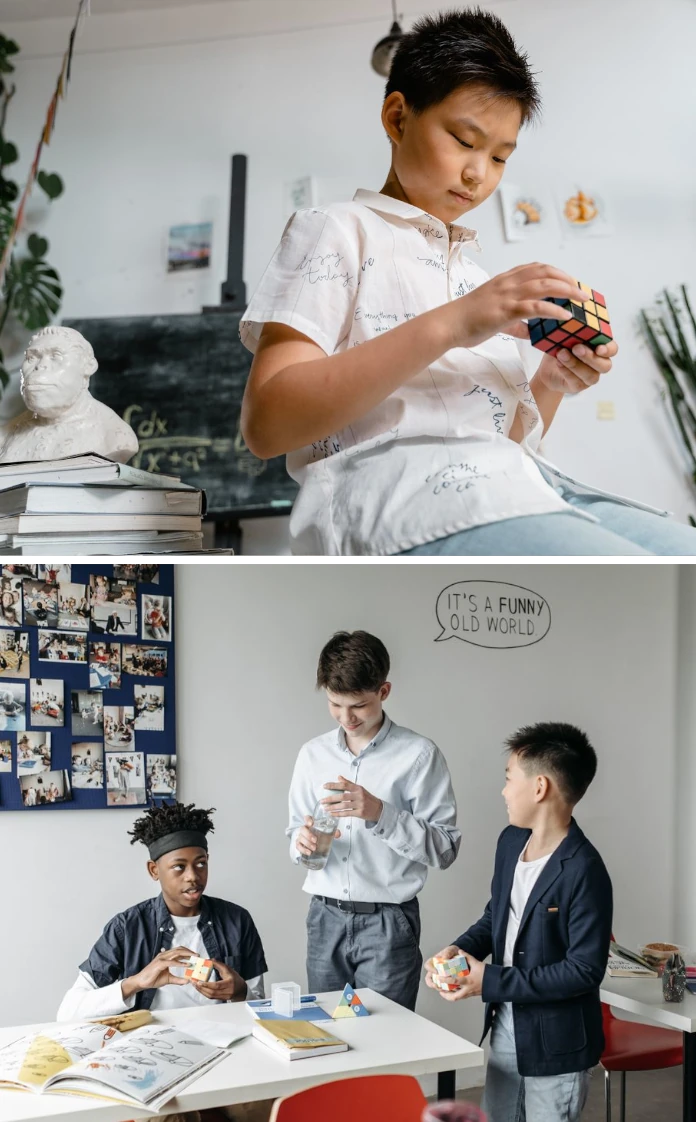
Professional gifted testing in Des Moines – whether your child needs identification for school placement, enrichment programs, or you're an adult seeking Mensa admission, we connect you with licensed psychologists who specialize in gifted assessment.
Last Updated: September 2026
Child Gifted Testing
WISC-V & Stanford-Binet 5 for ages 6–16. Gifted identification, school placement.
Adult Gifted Testing
WAIS-IV & WAIS-5 available. Comprehensive assessments for adults seeking Mensa or career guidance.
WISC-V Test
Wechsler Intelligence Scale for Children® Fifth Edition – the gold standard for child gifted identification.
Stanford-Binet 5
Stanford-Binet Intelligence Scales Fifth Edition – comprehensive cognitive assessment for all ages, often used for gifted identification.
Mensa Testing
Mensa admission testing and preparation for the high-IQ society. Accepts WAIS-IV, WAIS-5, and Stanford-Binet 5 scores.
School Placement Testing
Testing for private school admission and gifted program eligibility using WISC-V or Stanford-Binet 5.
When a giftedness question intersects with anxiety, attention, learning, autism, or school refusal, a focused IQ score can be misleading. A broader evaluation can separate advanced reasoning from barriers that suppress classroom performance and can produce recommendations for both challenge and support.
Hobbies and interests of gifted children
Interests may include mathematics, coding, robotics, astronomy, geology, natural history, hiking, ecology, environmental science, debate, writing, music, theater, visual arts, languages, chess, entrepreneurship, engineering, history, and maker activities. Interests do not prove giftedness and should not be restricted by gender, culture, disability, or family income.
Interpreting Gifted Results in Des Moines
Interpret scores with achievement, language, creativity, motivation, disability, classroom performance, and current program criteria. A high score does not guarantee district gifted identification, Advanced Learning Program admission, Honors placement, or private-school acceptance.
Des Moines Gifted-Service Decision Guide
Identify the receiving program first, confirm accepted evidence, choose an age-appropriate examiner, and decide whether the child needs focused gifted testing or a broader twice-exceptional evaluation.
Gifted Testing in Des Moines: city context
IQ by gender & ethnicity (child population)
Des Moines had an estimated 212,086 residents on July 1, 2025. U.S. Census Bureau 2020–2024 estimates report that 50.0% of residents are female, 23.2% are under age 18, and 12.7% are age 65 or older. The city is 64.1% White alone, 11.3% Black alone, 0.5% American Indian or Alaska Native alone, 6.6% Asian alone, and 11.0% reporting two or more races. 16.3% are Hispanic or Latino; race and Hispanic-origin categories are not mutually exclusive.
These figures describe community context, not intelligence. IQ scores must be interpreted individually in light of age, disability, health, education, language, culture, socioeconomic opportunity, testing conditions, and measurement error. Des Moines is multilingual and internationally connected: 21.9% of residents age five and older speak a language other than English at home, and 14.2% are foreign-born. Language history, literacy in every language, interpreter use, educational continuity, and culturally appropriate test selection may therefore be central to valid interpretation.
- Female residents: 50.0%.
- Children and teens: 23.2% are under 18.
- Older adults: 12.7% are 65 or older.
- Language context: 21.9% speak a language other than English at home.
- Educational context: 87.0% of adults age 25+ completed high school and 29.7% hold a bachelor’s degree or higher.
- Health-access context: 11.2% of residents under age 65 report a disability and 8.2% lack health insurance.
- Interpretation: No gender, racial, ethnic, immigration, language, neighborhood, or income group should be presumed to have a particular IQ profile.
Gifted children in Des Moines: who are they?
Gifted children may show rapid learning, advanced vocabulary, quantitative or visual-spatial reasoning, deep interests, creativity, leadership, memory, or original problem solving. Strengths can appear unevenly and may be masked by ADHD, autism, dyslexia, anxiety, poverty, interrupted schooling, language acquisition, or limited access to advanced work.
Schools and learning settings
Options include district pull-out services, DMPS Advanced Learning services, Central Academy advanced-course, AP, dual credit, Central Campus, private or homeschool programs, university enrichment, arts, and STEM activities.
Advantages of appropriate challenge
Suitable depth, pace, peer contact, and choice can improve engagement and reduce boredom or underachievement.
Hobbies and interests
Common interests include coding, robotics, mathematics, science, agriculture, aviation, medicine, chess, debate, writing, music, visual arts, history, languages, entrepreneurship, ecology, and maker activities.
Twice-exceptional and multilingual learners
Assessment should identify both high-level reasoning and barriers to performance, using multiple evidence sources.
What is giftedness?
Giftedness is a complex and multifaceted construct that goes beyond a single IQ score. In the field of psychology, giftedness is typically defined as an IQ score of 130 or above (the 98th percentile), but it also encompasses exceptional creativity, leadership ability, or talent in specific academic or artistic domains.
However, in Des Moines and across the U.S., the definition of giftedness is evolving. Many psychologists and educators now recognize that giftedness manifests in diverse ways, including:
- Intellectual giftedness: Exceptional reasoning, problem-solving, and abstract thinking.
- Creative giftedness: Unusual originality, imagination, and ability to generate novel ideas.
- Leadership giftedness: Exceptional interpersonal skills, empathy, and ability to inspire others.
- Artistic giftedness: Superior talent in visual arts, music, drama, or dance.
- Twice-exceptional (2E): Gifted individuals who also have a learning disability or neurodivergence such as ADHD or dyslexia.
In Des Moines, where diversity and inclusion are highly valued, there is a growing movement to identify and support gifted students from all backgrounds, including those who may be underserved by traditional testing methods.
Des Moines Gifted Identification Statistics
Des Moines demographics cannot determine how many children are gifted. Identification depends on district definitions, screening and referral methods, grade, achievement, reasoning, creativity, classroom evidence, language access, and disability context.
- Under age 18: 23.2% of residents.
- Multilingual context: 21.9% of residents age five and older speak a non-English language at home.
- District approach: DMPS Advanced Learning emphasizes talent development and multiple evidence sources.
- Private versus school decisions: A psychologist describes the student’s profile; the district or program applies its current criteria.
Des Moines Gifted Testing Timeline
- Confirm the decision: District gifted identification, Advanced Learning Program, private-school admission, enrichment, acceleration, or twice-exceptional planning.
- Obtain current criteria: Ask the district, school, or program which tests and records are accepted and note deadlines.
- Collect records: Achievement, classroom work, language history, teacher observations, prior evaluations, and developmental information.
- Select scope: Focused cognitive testing or a broader psychoeducational/neuropsychological battery.
- Test under valid conditions: Rested, healthy, appropriately accommodated, and without coaching on protected test items.
- Review results: Interpret indices, achievement, behavior, validity, and recommendations—not only FSIQ.
- Submit and plan: The receiving organization applies its own rules and determines services.
Des Moines Gifted Programs by Age Group
- Early childhood: Play, language, music, construction, nature, movement, and social-emotional development; avoid premature labeling from one brief score.
- Grades 2–5: Building-based differentiation and DMPS Advanced Learning services.
- Middle school: DMPS Advanced Learning services, advanced coursework, and Central Academy readiness pathways.
- High school: Honors, AP, dual credit, Central Campus, research, arts, leadership, and subject acceleration.
- Outside school: Science Center of Iowa, libraries, Blank Park Zoo, Des Moines Parks and Recreation nature programs, Drake STEM programs, community education, robotics, music, debate, sports, and Central Iowa Mensa gifted-youth resources.
Unique challenges and nuances of giftedness
Giftedness is not always a straightforward advantage. Many gifted individuals face unique challenges that can impact their well-being and success:
- Asynchronous development: Gifted children often have intellectual abilities that outpace their social and emotional maturity. This can lead to frustration, social isolation, and difficulty relating to peers.
- Perfectionism: Many gifted individuals set unrealistically high standards for themselves, leading to anxiety, burnout, and avoidance of challenges.
- Underachievement: Gifted students may underperform in school if they are not adequately challenged or if their learning needs are not met.
- Social isolation: Gifted individuals may struggle to find peers who share their interests and intellectual intensity, leading to loneliness and depression.
- Twice-exceptionality (2E): Many gifted individuals also have learning disabilities or neurodivergence, such as ADHD, dyslexia, or autism. This can mask their abilities and make it difficult to receive appropriate support.
- Cultural and ethnic disparities: Giftedness is often under-identified in minority and low-income populations due to cultural biases in testing and limited access to enrichment programs. Des Moines is actively working to address these disparities through inclusive identification practices.
Gifted testing can help identify these challenges and provide a roadmap for support. A comprehensive evaluation can reveal not only strengths but also areas where intervention is needed.
Mensa and high-IQ societies
American Mensa accepts qualifying prior evidence from approved standardized tests and also offers supervised admission testing for eligible adults. Children generally qualify through accepted prior evidence under current rules. Des Moines residents may connect with Central Iowa Mensa and central-Iowa activities.
- Verify current rules: Accepted tests, score formats, age rules, sealed records, and fees can change.
- Do not test only for a number: Choose an evaluation that answers the child’s educational or clinical question.
- Privacy: Decide which scores and reports should be shared and with whom.
- Community: Membership can offer events and peer connection but does not replace educational planning or mental-health care.
Areas we serve
We support all areas of Des Moines.
Frequently Asked Questions
Both are excellent tests. WISC-V is more commonly used for school-age children, while Stanford-Binet 5 can be used for ages 2–85. We often recommend WISC-V for school placement and Stanford-Binet 5 for highly gifted individuals.
The test itself takes 60–90 minutes. With the consultation, feedback, and report, the entire process is about 1–2 weeks.
Referral requirements vary. Some private evaluations accept self-referral, while insurance, hospital, school, or neuropsychological services may require an order or authorization.
Some professionally administered scores may be submitted as prior evidence, but acceptance is determined solely by American Mensa under its current rules.
Some plans cover cognitive assessments when there is a clinical indication. Check with your provider.
Get a good night's sleep, eat a healthy meal, and arrive relaxed. No specific preparation is needed.
You'll receive a comprehensive report with your scores and tailored recommendations.
Interviews and feedback may be available remotely, but many standardized cognitive tests require controlled administration and may need an in-person appointment. Confirm the administration format with the selected psychologist before scheduling.
Not exactly. Smartness is a colloquial term, while giftedness is a clinical construct involving specific cognitive abilities and traits.
We specialize in identifying both giftedness and learning disabilities, and we provide tailored recommendations for support.