
IQ Testing in Baltimore
Professional IQ testing in Baltimore – whether you need an assessment for school, employment, gifted program eligibility, or personal insight, we connect you with licensed psychologists in the Baltimore area.
Last Updated: October 2026
Child IQ Testing
WISC-V & Stanford-Binet for ages 6–16. Gifted identification, learning profiles.
Adult IQ Testing
WAIS-IV & WAIS-5 available. Comprehensive adult cognitive assessments. Clinical & occupational.
WISC-V Test
Wechsler Intelligence Scale for Children® Fifth Edition – the gold standard for child IQ testing.
WAIS-IV & WAIS-5 Tests
Wechsler Adult Intelligence Scale® – Fourth Edition (WAIS-IV) and Fifth Edition (WAIS-5) available for adult IQ testing.
Gifted Testing
Identify giftedness for school placement, enrichment, and talent programs using WISC-V or Stanford-Binet.
Stanford-Binet 5
Stanford-Binet Intelligence Scales Fifth Edition – comprehensive cognitive assessment for all ages.
Mensa Testing
Mensa qualification guidance and testing that may provide accepted prior evidence, subject to current American Mensa rules. American Mensa's published prior-evidence list includes WAIS-IV and Stanford-Binet 5; verify current acceptance of WAIS-5 before testing.
Full Evaluation
Combined assessment with detailed report and recommendations. Includes WISC-V, WAIS-IV, WAIS-5, or Stanford-Binet 5 as appropriate.
IQ Testing in Baltimore: city context
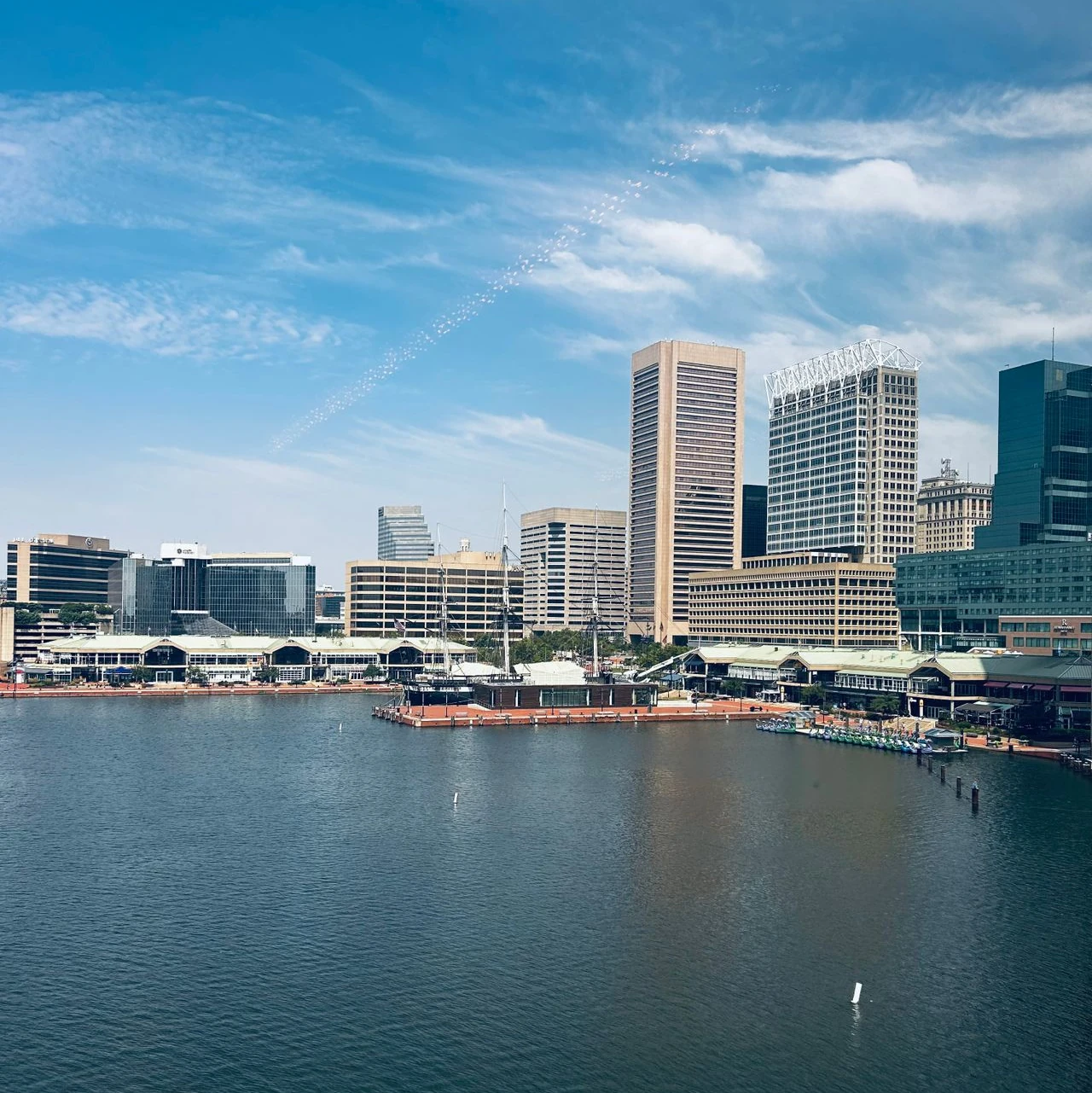
Baltimore is Maryland's largest city and an independent jurisdiction at the center of a major Mid-Atlantic metropolitan region. The U.S. Census Bureau estimated 569,997 residents in 2025. The city covers approximately 80.95 square miles and includes dense waterfront districts, historic rowhouse neighborhoods, university and hospital campuses, industrial and port areas, and lower-density sections near major parks.
The local assessment landscape is shaped by Johns Hopkins University and Johns Hopkins Medicine, Kennedy Krieger Institute, the University of Maryland, Baltimore and University of Maryland Medical Center, Morgan State University, Loyola University Maryland, LifeBridge Health, MedStar Health, Sheppard Pratt, Mount Washington Pediatric Hospital, VA Maryland Health Care System, Baltimore City Public Schools, and licensed private psychologists.
IQ, gender, language, and demographic context
Professional intelligence tests use national age-based norms rather than a separate Baltimore norm for women, men, racial groups, ethnic groups, neighborhoods, or school systems. Overall intelligence distributions overlap substantially by sex. An individual may still show meaningful differences among verbal comprehension, visual-spatial reasoning, fluid reasoning, working memory, and processing speed.
- Female residents: 53.5% of the city population.
- Female civilian labor-force participation: 61.3% among residents age 16 and older in 2020–2024.
- High-school graduate or higher: 87.7% of adults age 25 and older.
- Bachelor's degree or higher: 36.1% of adults age 25 and older.
- Foreign-born residents: 9.3%.
- Language other than English spoken at home: 12.0% of residents age 5 and older.
- Racial and ethnic context: 59.2% Black alone, 26.9% White alone, 2.6% Asian alone, 0.4% American Indian and Alaska Native alone, 6.1% two or more races, and 8.2% Hispanic or Latino; Hispanic origin may overlap with race categories.
No authoritative public dataset establishes valid Baltimore IQ averages by gender, race, ethnicity, ZIP code, income, or neighborhood. Results must be interpreted individually and in light of education, language, culture, disability, health, medication, sleep, anxiety, motivation, sensory needs, and testing conditions.
What is professional IQ testing?
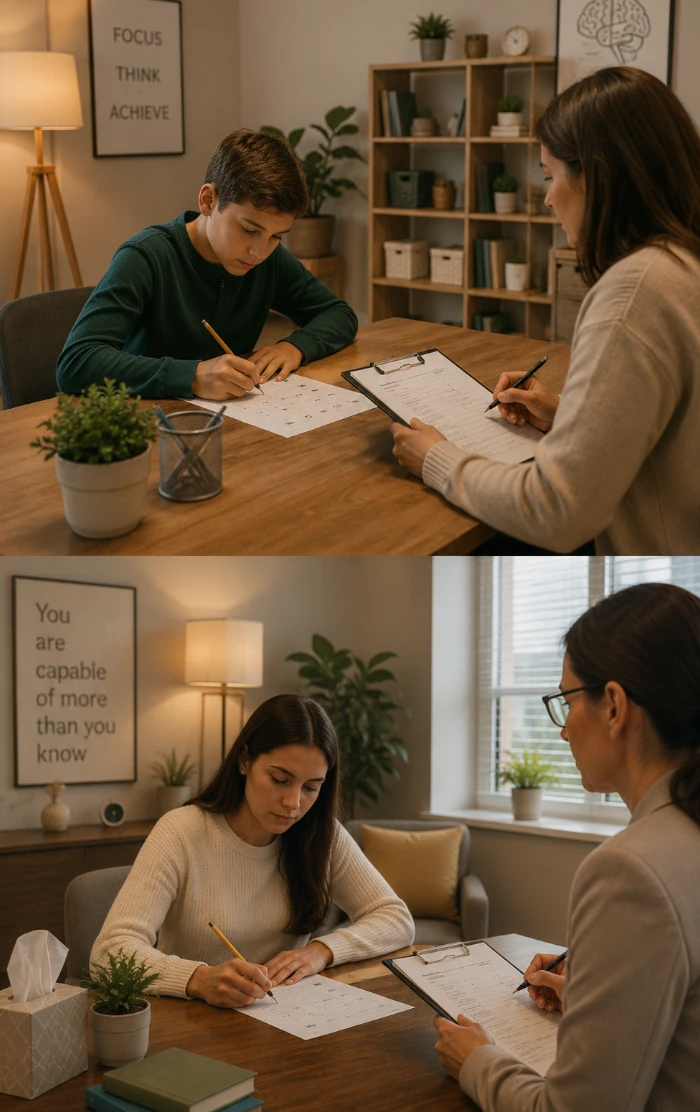
Intelligence quotient (IQ) testing is a standardized method to measure human cognitive abilities and intellectual potential. Professional IQ tests are administered by licensed psychologists in a controlled environment to ensure accuracy and reliability. Unlike online quizzes, clinical assessments provide a full-scale IQ score along with detailed breakdowns of verbal comprehension, perceptual reasoning, working memory, and processing speed.
In Baltimore, IQ testing is commonly used for gifted program admission, learning disability identification, career guidance, neuropsychological evaluation, and personal development. The results are presented in a comprehensive report that includes normative comparisons, strengths and weaknesses, and actionable recommendations.
Who should get tested?
IQ testing can benefit children, adolescents, and adults in various situations:
- Children: Parents often seek testing for school readiness, gifted placement, or to understand learning challenges.
- Adults: Many adults take IQ tests for career advancement, graduate school applications, or personal curiosity.
- Mensa candidates: High-IQ societies require official test scores for membership.
- Clinical referrals: Psychologists may recommend testing as part of a broader neuropsychological evaluation.
Types of IQ tests
We offer the most recognized and scientifically validated intelligence tests in the field:
- WISC-V (Wechsler Intelligence Scale for Children® – Fifth Edition): The gold standard for children aged 6:0–16:11. It provides a Full-Scale IQ and five primary index scores.
- WAIS-IV (Wechsler Adult Intelligence Scale® – Fourth Edition): The most widely used adult IQ test for ages 16–90. It measures cognitive functioning across four domains.
- Stanford-Binet Intelligence Scales – Fifth Edition: A comprehensive assessment for ages 2–85, often used for gifted identification and clinical evaluations.
- Gifted Testing: Often includes the WISC-V or Stanford-Binet, plus additional creativity and achievement measures.
- Mensa Testing: We provide guidance on Mensa qualification routes and can connect consumers with psychologists whose complete reports may be submitted as prior evidence, subject to current American Mensa rules.
How the testing process works
- Initial consultation: Brief phone or video call to discuss your needs and match you with the right psychologist.
- Testing session: In-person or remote testing (depending on the test) with a licensed psychologist. Most sessions last 1–2 hours.
- Scoring and interpretation: The psychologist scores the test and interprets the results in the context of your background and goals.
- Feedback session: A detailed review of your results, including strengths, weaknesses, and practical recommendations.
- Comprehensive report: You receive a written report with all scores, normative comparisons, and actionable next steps.
How much does IQ testing cost in Baltimore?
Fees vary according to the test selected, the referral question, the clinician's credentials, the amount of records review, and whether the service includes only a score summary or a comprehensive written report and feedback session. A stand-alone IQ assessment usually costs less than a full psychoeducational or neuropsychological evaluation.
Request a written estimate covering consultation, testing, scoring, report preparation, feedback, and any additional measures. Insurance is more likely to contribute when testing is medically necessary than when it is requested solely for curiosity, career exploration, school admission, or Mensa documentation.
Intellectual history and educational legacy
Baltimore's educational and intellectual history includes early public education, medicine, public health, engineering, law, literature, art, music, maritime commerce, and civil-rights leadership. The city's institutions have influenced national research and professional training while serving communities with very different educational and healthcare access.
- Public education: Baltimore City Public Schools dates to 1829 and includes historic institutions such as Baltimore City College and Western High School, along with current neighborhood, charter, transformation, and entrance-criteria schools.
- Medicine and public health: Johns Hopkins and the University of Maryland, Baltimore support research and training in medicine, nursing, public health, rehabilitation, neuroscience, psychology, social work, dentistry, pharmacy, and allied fields.
- Historically Black higher education: Morgan State University and Coppin State University have longstanding roles in education, research, public service, and professional preparation.
- Arts and humanities: The Maryland Institute College of Art, Peabody Institute, Walters Art Museum, Baltimore Museum of Art, Enoch Pratt Free Library, and local cultural organizations support creative and scholarly learning.
- Industry and technology: Port activity, railroads, manufacturing, aerospace, cybersecurity, biotechnology, and healthcare have created changing demands for technical reasoning, communication, safety, and executive function.
These institutions create legitimate reasons to seek testing—gifted or special-education planning, disability documentation, rehabilitation, accommodations, career planning, or clinical diagnosis—but institutional prestige does not make an IQ score a measure of personal worth.
Employers and cognitive skill demands
Healthcare, Medicine & Biomedical Research
Johns Hopkins, UMB, University of Maryland Medical Center, Kennedy Krieger, LifeBridge, MedStar, Sheppard Pratt, and related employers rely on scientific reasoning, communication, documentation, memory, quantitative analysis, and precision.
Working memory + fluid reasoningPort, Logistics & Transportation
The Port of Baltimore, freight rail, trucking, warehousing, maritime services, BWI-related operations, and distribution employers use spatial reasoning, scheduling, safety judgment, data interpretation, and sustained attention.
Executive function + processing speedCybersecurity, Engineering & Defense
Regional technology, federal-contractor, cybersecurity, aerospace, and engineering employers require systems thinking, quantitative reasoning, visual-spatial analysis, troubleshooting, and careful documentation.
Fluid reasoning + quantitative analysisEducation, Government, Law & Nonprofits
Schools, universities, courts, city and state agencies, legal organizations, libraries, and nonprofits rely on writing, policy analysis, communication, judgment, memory, and management of complex information.
Verbal reasoning + executive functionFinance, Insurance & Business Services
Banking, insurance, analytics, accounting, real estate, professional services, and customer operations depend on numerical reasoning, verbal analysis, accuracy, and risk judgment.
Quantitative + verbal reasoningArts, Tourism, Hospitality & Entrepreneurship
Museums, music, design, sports, hotels, restaurants, conventions, media, and small businesses use creativity, social communication, scheduling, adaptability, and project management.
Creative reasoning + processing speedIQ testing should not be used as a stand-alone hiring screen or as a claim that one occupation requires a particular IQ. Career decisions should integrate interests, values, credentials, experience, personality, work samples, physical demands, accommodations, and labor-market realities.
Neighborhood and travel considerations for IQ testing
Downtown, Inner Harbor & University of Maryland area
Downtown, the Inner Harbor, Ridgely's Delight, Pigtown, and the UMB medical campus offer access to hospitals, professional offices, MARC, Metro SubwayLink, Light RailLink, local buses, and garages. Confirm event schedules, hospital-campus parking, and walking distance from the chosen station.
Mount Vernon, Station North & Charles Village
These central neighborhoods are comparatively walkable and connect to Penn Station, universities, cultural institutions, buses, and the Charm City Circulator. Street parking, one-way streets, construction, and university events can affect arrival time.
East Baltimore, Canton & Fells Point
Johns Hopkins Hospital, Harbor East, Fells Point, Canton, Patterson Park, and nearby districts are connected by major arterials and bus routes, but waterfront events, narrow streets, and limited parking can add delay.
North Baltimore
Hampden, Roland Park, Guilford, Homeland, Mount Washington, and nearby areas use I-83, Falls Road, Charles Street, York Road, and Light RailLink. Provider addresses marketed as Baltimore may be inside the city or in Baltimore County, so confirm the jurisdiction and exact location.
West and Northwest Baltimore
Bolton Hill, Reservoir Hill, Mondawmin, Forest Park, Howard Park, and Pimlico rely on North Avenue, Liberty Heights Avenue, Reisterstown Road, Edmondson Avenue, and Metro or bus connections. Cross-town trips may be slow despite short mileage.
Baltimore County and surrounding jurisdictions
Towson, Catonsville, Pikesville, Owings Mills, White Marsh, Dundalk, Columbia, and Glen Burnie may be part of the practical provider market. Confirm Maryland licensure, travel time, parking, transit access, and whether the receiving school or institution accepts the report.
Always verify the exact address, accessibility, clinician license, test edition, report type, and whether the provider offers the specific assessment required.
Universities and research institutions
- Johns Hopkins University: Research and graduate education across arts and sciences, engineering, medicine, nursing, public health, education, business, international studies, and music. Its health system and Kennedy Krieger Institute support specialized clinical and neurodevelopmental services.
- University of Maryland, Baltimore: Fall 2025 enrollment was 6,784 across Dentistry, Law, Medicine, Nursing, Pharmacy, Social Work, and the Graduate School.
- Morgan State University: A public urban research university and HBCU with 11,559 students in 2025–26 and more than 150 academic degree programs.
- Loyola University Maryland: Undergraduate and graduate programs in arts and sciences, business, education, counseling, psychology-related fields, and data-driven disciplines.
- University of Baltimore: Programs in law, public affairs, business, applied arts and sciences, counseling, human services, and professional studies.
- Other institutions: Coppin State University, MICA, Notre Dame of Maryland University, Peabody Institute, Baltimore City Community College, and nearby UMBC and Towson University expand regional educational and research options.
- Clinical and research systems: Johns Hopkins Medicine, UMMC, Kennedy Krieger, Sheppard Pratt, LifeBridge, MedStar, Mount Washington Pediatric Hospital, and VA Maryland support specialty care, research, training, and referral networks.
University or hospital affiliation does not automatically mean a clinic offers stand-alone IQ testing to the public. Confirm age range, referral criteria, insurance requirements, waitlist, report type, and whether the service answers the receiving institution's question.
Local economic context
The city's economy combines healthcare and biomedical research, higher education, port and logistics activity, government, cybersecurity and defense, finance and insurance, professional services, manufacturing, tourism, hospitality, arts, and nonprofit organizations.
- Median household income: $62,177 in 2020–2024 Census estimates, measured in 2024 dollars.
- Per-capita income: $40,604 in the previous 12 months, measured in 2024 dollars.
- Residents in poverty: 19.7%.
- Bachelor's degree or higher: 36.1% of adults age 25 and older.
- Mean travel time to work: 29.1 minutes for workers age 16 and older, although cross-city, Beltway, tunnel, bridge, and Washington-region trips can take considerably longer.
- Health and social-assistance activity: Census business data report approximately $15.45 billion in 2022 receipts/revenue within the city.
- Transportation and warehousing: Approximately $1.94 billion in 2022 receipts/revenue reflects port, trucking, rail, warehousing, courier, and distribution activity.
- Retail sales: Approximately $8.06 billion in 2022, or about $14,159 per capita.
- Accommodation and food-service sales: Approximately $1.99 billion in 2022, reflecting restaurants, conventions, sports, waterfront tourism, and hospitality.
- Regional strengths: Healthcare and life sciences, universities and research, the Port of Baltimore, logistics, cybersecurity and defense, finance and insurance, government, advanced manufacturing, tourism, arts, and entrepreneurship.
Economic circumstances can influence access to evaluation, educational opportunity, healthcare, housing stability, sleep, nutrition, transportation, and stress. They should inform interpretation and recommendations but should never be used to infer an individual's intelligence.
Why these figures matter for assessment planning: Cost, insurance, transit access, work schedules, caregiving, and school resources can influence who reaches private testing and when. A clinician should ask about opportunity and functioning without treating socioeconomic status as evidence of lower ability.
Regional labor market: The practical employment area extends into Baltimore County, Anne Arundel County, Howard County, Harford County, and the Washington corridor. Career recommendations should account for commuting, credential portability, physical demands, remote-work options, and licensing requirements.
Data source: U.S. Census Bureau QuickFacts for Baltimore city, Maryland.
Schools and gifted education
- Baltimore City Public Schools: The Gifted and Advanced Learning office uses universal kindergarten screening and ongoing review rather than depending only on parent or teacher referrals.
- Multiple indicators: Identification may incorporate ability and achievement data, classroom evidence, educator input, and other information. Students identified for advanced learning may receive differentiated instruction and individualized planning.
- High-school Choice: City Schools operates a choice process with academic entrance-criteria, specialized, lottery, and placement options. Composite scores for entrance-criteria programs use grades and standardized assessment data under current district rules.
- Examples of selective or specialized pathways: Baltimore City College, Baltimore Polytechnic Institute, Western High School, Baltimore School for the Arts, Baltimore Design School, and other programs have different academic, audition, portfolio, or application requirements.
- Maryland context: Gifted identification and services must follow state and local policy; a private IQ score does not by itself guarantee a program designation, service plan, acceleration, or admission.
- Independent schools: Admissions practices vary at Friends School of Baltimore, Gilman School, Bryn Mawr School, Roland Park Country School, Calvert School, Boys' Latin School of Maryland, St. Paul's Schools, Park School, and other regional schools.
Before scheduling private testing, obtain written confirmation of the receiving program's accepted instruments, age limits, score rules, test-date limits, examiner qualifications, required report format, and whether outside testing will be considered.
An online IQ test offers Baltimore residents a convenient way to explore reasoning questions, whereas school placement, accommodations, or clinical decisions require professionally administered testing.
Local testing centers and psychologists
Assessment may be available through licensed private psychologists, neuropsychologists, hospital-based clinics, developmental and rehabilitation programs, university-affiliated services, school evaluation teams, and specialty practices. Availability changes, and many hospital clinics require a clinical referral rather than offering testing solely for curiosity.
- License verification: Confirm psychologists through the Maryland Board of Examiners of Psychologists. Its online database is the state's official primary source for license status.
- Clinical systems: Johns Hopkins Medicine, Kennedy Krieger, University of Maryland Medical Center, LifeBridge, MedStar, Sheppard Pratt, Mount Washington Pediatric Hospital, and VA Maryland may provide or coordinate specialized assessment when clinically indicated.
- Private practices: Ask who administers the test, which edition is used, what report is included, and whether results are acceptable to the school, disability office, attorney, employer, or membership organization.
- School evaluations: Public-school evaluations may be available at no cost when disability or advanced-learning needs are suspected, but the district controls the referral, instrument selection, timeline, and educational decision.
- Telehealth and cross-jurisdiction work: Confirm that the psychologist is authorized to provide services where the client is physically located and that remote administration is permitted and accepted.
Learning and professional resources
- University programs: Johns Hopkins, UMB, Morgan State, Loyola, University of Baltimore, Coppin State, MICA, and nearby institutions host lectures, continuing education, research events, career programs, and community workshops.
- Clinical education: Major health systems and professional associations offer changing programs in child development, neuroscience, rehabilitation, mental health, public health, and family support.
- School resources: City Schools' Gifted and Advanced Learning office, School Choice, independent schools, libraries, museums, and enrichment organizations publish separate referral, application, camp, and event calendars.
- Mensa: Maryland Mensa serves Baltimore and most of the state outside Montgomery and Prince George's counties. Event schedules and testing opportunities change and should be confirmed directly.
- Cultural learning: Enoch Pratt Free Library, the Maryland Science Center, National Aquarium, Walters Art Museum, Baltimore Museum of Art, Reginald F. Lewis Museum, Port Discovery, B&O Railroad Museum, and local parks provide educational programming for varied ages.
Transportation and accessibility
- Major roads: I-95 is the primary north–south interstate; I-83/Jones Falls Expressway connects downtown with North Baltimore and the Beltway; I-695 circles the metro area; I-895 uses the Harbor Tunnel; I-395 links I-95 with downtown; US 1, US 40, MD 2, MD 295/Baltimore-Washington Parkway, Charles Street, St. Paul Street, Pratt Street, Lombard Street, North Avenue, and Pulaski Highway are major corridors.
- Public transit: MDOT MTA operates BaltimoreLink local and express buses, Light RailLink, Metro SubwayLink, MARC Train, commuter buses, and MobilityLink paratransit. The city also operates the fare-free Charm City Circulator on five routes. Check current schedules and service alerts before an appointment.
- Airport: Baltimore/Washington International Thurgood Marshall Airport (BWI) is south of the city near I-195, MD 295, I-95, Amtrak/MARC, and Light RailLink. More than 25.2 million passengers used BWI in 2025; allow extra time during holidays and construction.
- Distance to other cities: Downtown is roughly 30–45 minutes from Annapolis, about 45–75 minutes from Washington, approximately 1.5–2 hours from Harrisburg, around 1.75–2.25 hours from Philadelphia, roughly 2.5–3 hours from Richmond, and approximately 3–4 hours from New York City under normal conditions. Congestion can add substantial time.
- Walkability: Mount Vernon, Downtown, Fells Point, Little Italy, Federal Hill, Charles Village, Station North, Harbor East, and parts of Canton are among the more walkable districts. Cobblestones, hills, construction, weather, and long hospital-campus distances can still complicate access.
- Bike infrastructure: The Jones Falls Trail, Gwynns Falls Trail, Middle Branch Trail, Herring Run routes, protected cycle tracks, and the developing Baltimore Greenway Trails Network provide important connections. Network continuity and pavement conditions vary, so confirm the safest route.
- Tunnels, bridges, and rail crossings: Harbor Tunnel, Fort McHenry Tunnel, Key Bridge reconstruction activity, freight rail, port operations, and major events can create sudden detours or delays.
- Cross-metro travel: Trips from Towson to South Baltimore, Catonsville to East Baltimore, Owings Mills to Johns Hopkins, or Anne Arundel County to North Baltimore can take much longer than mileage suggests. Build in time for I-95, I-83, I-695, tunnel traffic, school release, and sports events.
- Accessibility: Confirm accessible parking, elevator access, curb cuts, wheelchair routes, restroom access, quiet waiting space, interpreter services, sensory accommodations, and walking distance from transit or parking.
Weather and seasonal planning
Baltimore's official 1991–2020 climate normals are measured at Baltimore/Washington International Thurgood Marshall Airport (BWI). Conditions in the Inner Harbor, higher-elevation neighborhoods, and outer suburbs can differ, but these figures provide a concrete baseline for scheduling.
Exact monthly temperature, precipitation, and snowfall normals
Annual baseline: The monthly normals total approximately 45.00 inches of precipitation and 19.3 inches of snowfall per year. July is the warmest month by normal high and low at 88.8°F / 67.7°F; January is the coldest at 43.2°F / 25.4°F.
What the numbers mean for an appointment
- June through August: Normal highs are 84.4°F, 88.8°F, and 86.5°F. For children, older adults, people taking heat-sensitive medication, or anyone walking from transit or a garage, a morning appointment reduces exposure to afternoon heat and thunderstorms.
- December through February: Normal lows are 29.6°F, 25.4°F, and 26.9°F, with 16.4 inches of normal snowfall across those three months. Check office, Baltimore City Schools, MDOT MTA, and road-status notices before leaving when snow, sleet, or freezing rain is forecast.
- March: The normal high is 54.8°F, the normal low is 33.9°F, and normal snowfall is still 2.8 inches. Do not assume winter disruption is over simply because spring has begun.
- Wettest normal months: July averages 4.48 inches of precipitation and September 4.44 inches. Heavy downpours can slow I-83, I-95, I-695, low-lying streets, underpasses, waterfront routes, and approaches to the Harbor and Fort McHenry tunnels.
- Spring and autumn temperature swings: April averages 66.5°F / 43.6°F, while October averages 68.3°F / 46.5°F. A child arriving cold, overheated, wet, or uncomfortable may need time to settle before testing begins.
- Medication and allergy effects: Antihistamines, decongestants, asthma symptoms, poor sleep, dehydration, and migraine symptoms can affect attention or processing speed. Record what was taken and tell the examiner before testing.
Climate figures use National Weather Service Baltimore/BWI 1991–2020 normals.
Concrete Baltimore scheduling considerations
- Downtown, Inner Harbor, Federal Hill, and Camden Yards: Orioles games, Ravens games, conventions, concerts, road races, and waterfront festivals can change garage availability and close streets. Check the event calendar and reserve parking before a time-sensitive assessment.
- East Baltimore and the Johns Hopkins medical campus: Confirm the exact building, garage, security entrance, elevator route, and walking distance. “Johns Hopkins” may refer to different hospitals, clinics, or university buildings that are not interchangeable.
- UMB and the west side of downtown: Offices near the University of Maryland Medical Center, Lexington Market, or the BioPark may involve garage entry, campus security, construction, and several blocks of walking. Ask for the building name and suite—not only the street address.
- North Baltimore and Towson-area trips: I-83/JFX, Charles Street, York Road, and I-695 can back up during the morning commute, school release, crashes, and bad weather. Add a 30-minute buffer when the appointment has a fixed start time.
- Harbor crossings: I-895 Harbor Tunnel and I-95 Fort McHenry Tunnel delays can affect trips from Dundalk, Essex, southeast Baltimore County, and Anne Arundel County. Check the chosen route shortly before departure rather than relying on the usual travel time.
- Transit trips: Verify the exact BaltimoreLink bus, Metro SubwayLink, Light RailLink, MARC, or Charm City Circulator route in both directions. Evening and weekend frequency may be different from the inbound trip.
- What to bring: Bring prior evaluations, IEP or 504 documents, school records, relevant medical records, medication details, language history, and the receiving organization's current written requirements. These determine whether a brief IQ test or a broader psychoeducational or neuropsychological evaluation is appropriate.
- Before paying a deposit: Confirm the test edition, examiner license, age range, total testing time, written-report contents, feedback session, turnaround time, cancellation policy, and whether the school, disability office, employer, attorney, or Mensa will accept the resulting documentation.
Areas we serve
Service is available throughout the city. Provider availability, travel range, age groups, specialties, and insurance participation vary, so confirm the exact location and service details before scheduling.
Frequently Asked Questions
WISC-V is for children aged 6–16, while WAIS-IV is for adults aged 16–90. Each is normed for its specific age group.
Most IQ tests take between 60 and 90 minutes, plus a feedback session. Allow 2–3 hours total.
No, you can book directly with our psychologists. We serve both self-referred and professionally referred individuals.
A complete psychologist's report may be submitted as prior evidence if the test, score, administration conditions, and documentation satisfy the receiving organization's current rules. Verify requirements before testing.
Some plans cover cognitive assessments when there is a clinical indication. Check with your provider.
Get a good night's sleep, eat a healthy meal, and arrive relaxed. No specific preparation is needed.
You'll receive a comprehensive report with your scores and tailored recommendations.
Remote administration may be possible only in limited circumstances. The evaluator must confirm publisher guidance, test validity, state licensing, technology requirements, and acceptance by the receiving school or organization.