
IQ Testing in Yonkers
Professional IQ testing in Yonkers – whether you need an assessment for school, employment, gifted program eligibility, or personal insight, we connect you with licensed psychologists in the Yonkers area.
Last Updated: September 2026
Child IQ Testing
WISC-V & Stanford-Binet for ages 6–16. Gifted identification, learning profiles.
Adult IQ Testing
WAIS-IV & WAIS-5 available. Comprehensive adult cognitive assessments. Clinical & occupational.
WISC-V Test
Wechsler Intelligence Scale for Children® Fifth Edition – the gold standard for child IQ testing.
WAIS-IV & WAIS-5 Tests
Wechsler Adult Intelligence Scale® – Fourth Edition (WAIS-IV) and Fifth Edition (WAIS-5) available for adult IQ testing.
Gifted Testing
Identify giftedness for school placement, enrichment, and talent programs using WISC-V or Stanford-Binet.
Stanford-Binet 5
Stanford-Binet Intelligence Scales Fifth Edition – comprehensive cognitive assessment for all ages.
Mensa Testing
Mensa admission testing and preparation for the high-IQ society. Accepts WAIS-IV, WAIS-5, and Stanford-Binet 5 scores.
Full Evaluation
Combined assessment with detailed report and recommendations. Includes WISC-V, WAIS-IV, WAIS-5, or Stanford-Binet 5 as appropriate.
IQ Testing in Yonkers: city context
Gender, age and demographic statistics
Yonkers had an estimated 212,603 residents on July 1, 2025, 0.5% above the April 2020 population-estimate base. U.S. Census Bureau 2020–2024 estimates report that 51.6% of residents are female, 19.6% are under age 18, and 17.6% are age 65 or older. The city is 34.6% White alone, 16.7% Black alone, 1.1% American Indian or Alaska Native alone, 5.5% Asian alone, and 17.9% reporting two or more races. 45.2% are Hispanic or Latino; race and Hispanic-origin categories are not mutually exclusive.
These figures describe community context, not intelligence. IQ scores must be interpreted individually in light of age, disability, health, education, language, culture, socioeconomic opportunity, testing conditions, and measurement error. Yonkers is exceptionally multilingual: 50.3% of residents age five and older speak a language other than English at home, and 33.1% are foreign-born. Language history, literacy in every language, interpreter use, educational continuity, and culturally appropriate test selection may therefore be central to valid interpretation.
- Female residents: 51.6%.
- Children and teens: 19.6% are under 18.
- Older adults: 17.6% are 65 or older.
- Language context: 50.3% speak a language other than English at home.
- Educational context: 83.3% of adults age 25+ completed high school and 35.7% hold a bachelor’s degree or higher.
- Health-access context: 10.0% of residents under age 65 report a disability and 7.4% lack health insurance.
- Interpretation: No gender, racial, ethnic, immigration, language, neighborhood, or income group should be presumed to have a particular IQ profile.
What is professional IQ testing?
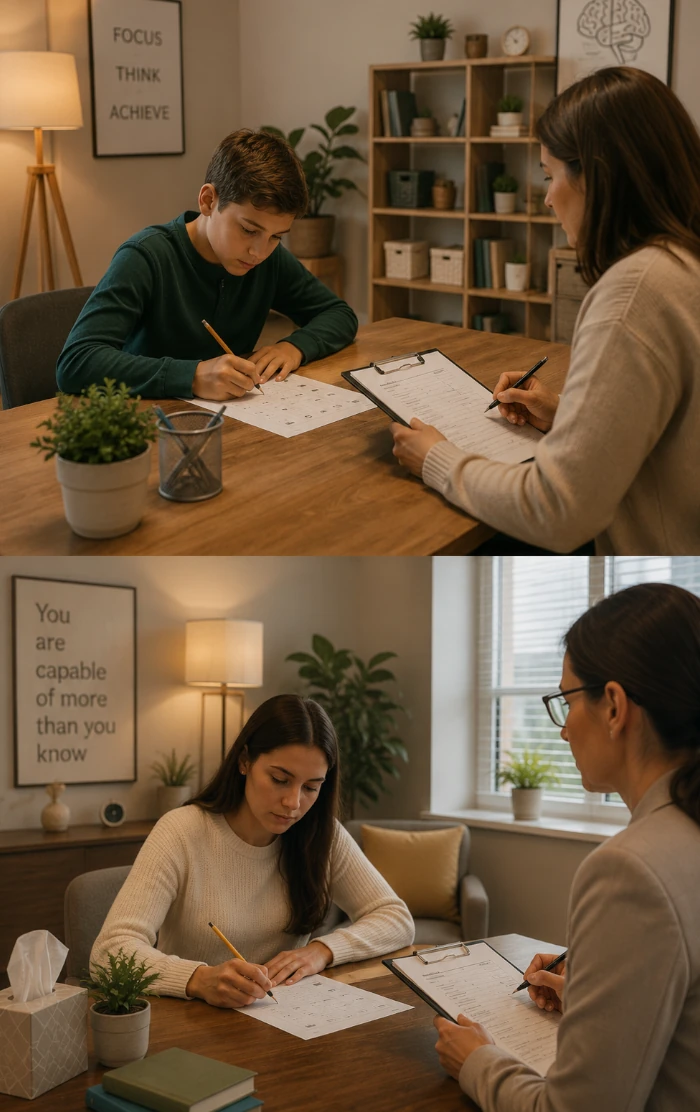
Intelligence quotient (IQ) testing is a standardized method to measure human cognitive abilities and intellectual potential. Professional IQ tests are administered by licensed psychologists in a controlled environment to ensure accuracy and reliability. Unlike online quizzes, clinical assessments provide a full-scale IQ score along with detailed breakdowns of verbal comprehension, perceptual reasoning, working memory, and processing speed.
In Yonkers, IQ testing is commonly used for gifted program admission, learning disability identification, career guidance, neuropsychological evaluation, and personal development. The results are presented in a comprehensive report that includes normative comparisons, strengths and weaknesses, and actionable recommendations.
Who should get tested?
IQ testing can benefit children, adolescents, and adults in various situations:
- Children: Parents often seek testing for school readiness, gifted placement, or to understand learning challenges.
- Adults: Many adults take IQ tests for career advancement, graduate school applications, or personal curiosity.
- Mensa candidates: High-IQ societies require official test scores for membership.
- Clinical referrals: Psychologists may recommend testing as part of a broader neuropsychological evaluation.
Types of IQ tests
We offer the most recognized and scientifically validated intelligence tests in the field:
- WISC-V (Wechsler Intelligence Scale for Children® – Fifth Edition): The gold standard for children aged 6:0–16:11. It provides a Full-Scale IQ and five primary index scores.
- WAIS-IV (Wechsler Adult Intelligence Scale® – Fourth Edition): The most widely used adult IQ test for ages 16–90. It measures cognitive functioning across four domains.
- Stanford-Binet Intelligence Scales – Fifth Edition: A comprehensive assessment for ages 2–85, often used for gifted identification and clinical evaluations.
- Gifted Testing: Often includes the WISC-V or Stanford-Binet, plus additional creativity and achievement measures.
- Mensa Testing: We provide official Mensa admission testing and preparation materials.
How the testing process works
- Initial consultation: Brief phone or video call to discuss your needs and match you with the right psychologist.
- Testing session: In-person or remote testing (depending on the test) with a licensed psychologist. Most sessions last 1–2 hours.
- Scoring and interpretation: The psychologist scores the test and interprets the results in the context of your background and goals.
- Feedback session: A detailed review of your results, including strengths, weaknesses, and practical recommendations.
- Comprehensive report: You receive a written report with all scores, normative comparisons, and actionable next steps.
How much does IQ testing cost in Yonkers?
The cost of IQ testing in Yonkers varies depending on the type of test, the psychologist's experience, and whether a comprehensive report is required. Typical fees range from $200 to $1,200 for a full assessment. Gifted testing and Mensa admission testing are often at the lower end, while neuropsychological evaluations may be higher.
Some insurance plans cover IQ testing when it's deemed medically necessary. We recommend checking with your provider for details. Ask each provider about self-pay rates, payment options, and any available financial-assistance policies.
Yonkers' Intellectual History & Legacy
Yonkers stands on the traditional homelands of Lenape peoples and developed along the Hudson and Saw Mill rivers. Dutch colonial settlement, the Philipse Manor estate, canals, railroads, and industrialization shaped the city’s growth. Yonkers became known for carpet manufacturing, elevators, machinery, sugar refining, rail equipment, and other skilled industries that demanded engineering, design, mathematics, and organized production.
Today, intellectual life is supported by Yonkers Public Schools, Yonkers Public Library, the Hudson River Museum, Sarah Lawrence College, Saint Vladimir’s Orthodox Theological Seminary, SUNY Westchester Community College’s Yonkers Extension Center, hospitals, community organizations, and easy access to New York City universities and research institutions. The city’s multilingual population and strong immigrant traditions make cultural and language context especially important in educational and psychological assessment.
Top Employers in Yonkers Requiring Cognitive Skills
- Healthcare: St. John’s Riverside Hospital and St. Joseph’s Medical Center employ clinicians, technicians, analysts, administrators, and support teams.
- Education and government: Yonkers Public Schools and the City of Yonkers require teaching, public-safety, planning, legal, finance, engineering, and data skills.
- Transportation: Liberty Lines, Metro-North contractors, and regional logistics firms rely on operations, safety, dispatch, maintenance, and route-planning skills.
- Manufacturing and engineering: Kawasaki Rail Car and related suppliers employ engineers, technicians, quality specialists, and production workers.
- Research and media: Consumer Reports, Lionsgate’s studio activity, and local production companies use research, writing, technology, design, and project management.
- Food, retail, and services: American Sugar Refining, major shopping centers, hospitality, construction, and professional services support diverse career pathways.
IQ testing cannot determine job performance. Career decisions should also consider achievement, credentials, interests, personality, practical skills, language, disability accommodations, and work experience.
Yonkers IQ Testing by City Area
- Downtown, Getty Square, and the waterfront: Strong Bee-Line, Metro-North, and Amtrak access, with parking and traffic considerations.
- Northwest Yonkers: Hudson Line stations and Saw Mill River Parkway access can simplify regional appointments.
- Northeast Yonkers and Crestwood: Central Park Avenue, Sprain Brook Parkway, and nearby Harlem Line stations connect residents to Westchester providers.
- Southeast Yonkers and McLean Avenue: Proximity to the Bronx expands access to hospital and university-based services.
- Central and east-side corridors: Tuckahoe Road, Yonkers Avenue, Ridge Hill, and Cross County areas have substantial parking but can be congested.
Choose a provider based on credentials, age range, referral purpose, language competence, accepted test, report quality, and accessibility—not simply proximity.
A brief online IQ test can help Yonkers residents get acquainted with common question formats, but a qualified examiner should handle any assessment intended for school, work, or healthcare decisions.
Yonkers Universities and Research Institutions
- Sarah Lawrence College: A liberal-arts college with a Bronxville mailing address and a campus substantially located in Yonkers, offering strong writing, arts, social-science, and interdisciplinary study.
- Saint Vladimir’s Orthodox Theological Seminary: A graduate theological institution in the Crestwood section of Yonkers.
- SUNY Westchester Community College: The Yonkers Extension Center provides accessible college coursework and workforce preparation.
- Nearby institutions: Iona University, Fordham University, Manhattan University, Mercy University, Columbia University, CUNY campuses, and New York Medical College expand graduate and research options.
- Libraries and museums: Yonkers Public Library and the Hudson River Museum support public learning, cultural programming, research, and youth enrichment.
Yonkers Economic Context
- Median household income: $83,549 in 2020–2024 Census estimates.
- Per-capita income: $44,122.
- Residents in poverty: 13.8%.
- Bachelor’s degree or higher: 35.7% of adults age 25 and older.
- Mean travel time to work: 35.6 minutes, with rail schedules, parkway congestion, and cross-Hudson or Manhattan commutes creating substantial variation.
- Health and social-assistance activity: Census business data report approximately $1.56 billion in 2022 receipts/revenue within the city.
- Transportation and warehousing: Approximately $446.5 million in 2022 receipts/revenue reflects rail, bus, trucking, distribution, and access to the New York metropolitan market.
- Retail sales: Approximately $3.40 billion in 2022, or $16,325 per capita.
- Accommodation and food services: Approximately $376.6 million in 2022 sales.
- Regional strengths: Healthcare, education, public administration, transit and transportation, media production, rail manufacturing, consumer research, retail, construction, professional services, food production, logistics, and hospitality.
Economic and educational statistics provide community context only. They do not establish an individual’s intellectual ability, disability, motivation, creativity, judgment, or future potential.
Yonkers School District Data
Yonkers Public Schools advanced learning
Yonkers Public Schools operates Academically Talented Programs designed for identified students and provides the PEARLS Hawthorne program for academically talented students in prekindergarten through grade 8. Current application, residency, testing, and deadline requirements should be verified directly with the district because procedures can change by school year.
- PEARLS Hawthorne: A dedicated academically talented program with city-residency and application requirements.
- Secondary pathways: Honors, Advanced Placement, International Baccalaureate, early-college, career and technical education, arts, and specialized high-school programs use their own criteria.
- Special education: District evaluations and CSE procedures govern disability eligibility; a private IQ score does not automatically create an IEP, 504 plan, or placement.
- Multilingual learners: Testing should separate language acquisition from disability and consider instruction and literacy across languages.
Local Testing Centers and Psychologists
LifeStance Health Yonkers
LifeStance Health’s office at 1 Executive Boulevard, Suite 178 lists psychological testing and evaluation. LifeStance describes intellectual testing, giftedness, twice-exceptionality, psychoeducational testing, ADHD, autism, and related evaluations among its testing services; because services vary by location, callers should confirm the exact test, age range, examiner, report, and availability.
WJCS Yonkers Certified Community Behavioral Health Clinic
WJCS operates at 487 South Broadway and provides testing, assessment, and evaluation for children and adults with learning disabilities, alongside behavioral-health and disability services. Verify whether a focused IQ evaluation is available for the referral question.
Hospitals and regional specialty centers
St. John’s Riverside Hospital, St. Joseph’s Medical Center, Montefiore, Westchester Medical Center, NewYork-Presbyterian, and nearby private neuropsychology practices may be appropriate for medical, developmental, memory, neurological, or complex diagnostic referrals.
Provider-selection checklist
Verify New York licensure, specialty, age range, test edition, language competence, report format, intended recipient, insurance, fees, turnaround, and whether the service is focused IQ testing or a broader psychological, psychoeducational, or neuropsychological evaluation.
Yonkers Events and Conferences
Learning and professional-development opportunities may be available through Yonkers Public Library, the Hudson River Museum, Sarah Lawrence College, local hospitals, Westchester County organizations, schools, Greater New York Mensa, and nearby New York City universities. Families can also explore science, arts, history, coding, robotics, debate, music, and environmental programs throughout Westchester and the five boroughs.
Event calendars and admission rules change frequently. Confirm dates, accessibility, age limits, transportation, and whether an event is educational, clinical, or simply recreational.
Transportation and Accessibility
- Major roads: I-87/New York State Thruway runs north–south through eastern Yonkers; the Saw Mill River Parkway follows the central-west corridor; the Cross County Parkway connects east–west; the Sprain Brook Parkway serves the eastern side. Major local routes include US-9/Broadway, NY-9A, Central Park Avenue/NY-100, Yonkers Avenue, McLean Avenue, Nepperhan Avenue, and Tuckahoe Road.
- Public transit: Westchester County’s Bee-Line bus network serves Getty Square, major commercial corridors, Metro-North stations, nearby Westchester communities, and connections to the Bronx. MTA express-bus and subway connections may also be useful depending on the route.
- Rail: Metro-North’s Hudson Line serves Ludlow, Yonkers, Glenwood, and Greystone. The accessible Yonkers station also connects with Amtrak and Bee-Line buses. Harlem Line stations just east of the city, including Bronxville, Fleetwood, and Mount Vernon West, may be practical for some residents.
- Airports: Westchester County Airport (HPN) is the closest commercial airport for many trips. LaGuardia (LGA), John F. Kennedy (JFK), Newark Liberty (EWR), and Stewart (SWF) provide additional domestic and international options.
- Distance to other cities: Approximately 15 miles to Midtown Manhattan, 11 miles to White Plains, 18 miles to Stamford, 25 miles to Newark, 35 miles to Greenwich, and about 145 miles to Albany; travel times vary sharply with traffic and rail schedules.
- Walkability: Downtown, Getty Square, the waterfront, South Broadway, McLean Avenue, and station-adjacent areas offer the strongest concentrations of walkable destinations. Central Park Avenue, Ridge Hill, and many hillside neighborhoods are more car-dependent.
- Bike infrastructure: The South County Trailway, Old Croton Aqueduct State Historic Park, Bronx River Pathway connections, Hudson River waterfront segments, and local on-street routes support cycling, but steep grades, traffic, and discontinuous facilities require route planning.
- Accessibility: Confirm elevator status, paratransit eligibility, accessible parking, building entrances, and winter snow or ice conditions before testing. The Yonkers Metro-North station is listed as accessible.
- Testing-day planning: Allow extra time for congestion, parking, rail disruptions, school dismissal, bridge or parkway incidents, and multi-hour testing sessions.
Yonkers Weather and Seasonal Considerations
- Winter: Snow, ice, freezing rain, and cold can affect hills, sidewalks, parking, buses, and rail service.
- Spring: Heavy rain and flooding can affect parkways, low-lying roads, and the Saw Mill River corridor.
- Summer: Heat and humidity can increase fatigue, especially during long testing sessions or transit trips.
- Fall: Generally comfortable, but storms, school schedules, and leaf-related rail conditions can affect travel.
- Preparation: Check weather, MTA and Bee-Line alerts, parking restrictions, school closures, and cancellation policies before the appointment.
Areas we serve
We support all areas of Yonkers.
Frequently Asked Questions
WISC-V is for children aged 6–16, while WAIS-IV is for adults aged 16–90. Each is normed for its specific age group.
Most IQ tests take between 60 and 90 minutes, plus a feedback session. Allow 2–3 hours total.
Referral requirements vary. Some private evaluations accept self-referral, while insurance, hospital, school, or neuropsychological services may require an order or authorization.
Some professionally administered scores may be submitted as prior evidence, but acceptance is determined solely by American Mensa under its current rules.
Some plans cover cognitive assessments when there is a clinical indication. Check with your provider.
Get a good night's sleep, eat a healthy meal, and arrive relaxed. No specific preparation is needed.
You'll receive a comprehensive report with your scores and tailored recommendations.
Interviews and feedback may be available remotely, but many standardized cognitive tests require controlled administration and may need an in-person appointment. Confirm the administration format with the selected psychologist before scheduling.