
Child IQ Testing in Wichita

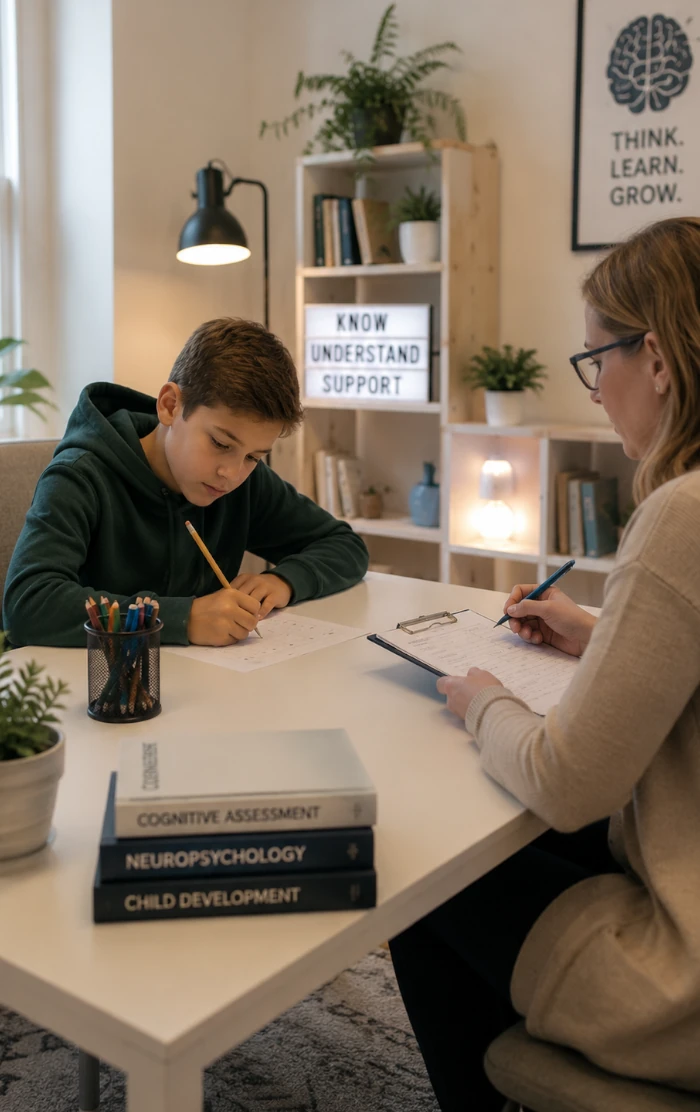
Professional child IQ testing in Wichita – whether you need an assessment for school placement, gifted program eligibility, or to understand your child's learning profile, we connect you with licensed psychologists in the Wichita area.
Last Updated: September 2026
Gifted Testing
Identify giftedness for school placement, enrichment, and talent programs using WISC-V or Stanford-Binet 5.
WISC-V Test
Wechsler Intelligence Scale for Children® Fifth Edition – the gold standard for child IQ testing.
Stanford-Binet 5
Stanford-Binet Intelligence Scales Fifth Edition – comprehensive cognitive assessment for all ages.
Full Evaluation
Combined assessment with detailed report and recommendations. Includes WISC-V or Stanford-Binet 5.
School Placement Testing
Testing for private school admission and gifted program eligibility using WISC-V or Stanford-Binet 5.
Schedule Child IQ Testing
Book your WISC-V & Stanford-Binet 5 for ages 6–16. Gifted identification, learning profiles, etc. with a licensed psychologist in Wichita today.
Child IQ Testing in Wichita: city context
Child IQ testing in Wichita may support gifted identification, learning-disability evaluation, ADHD or autism assessment, school placement, twice-exceptional planning and understanding uneven academic development.
IQ by gender & ethnicity (child population)
- Child population: 24.1% of Wichita residents are under age 18.
- Gender: Intelligence tests use age-based norms; gender should not be used to predict an individual child’s ability.
- Multilingual families: Wichita Public Schools reports 117 home languages, requiring careful language and cultural interpretation.
- Race and ethnicity: Group percentages describe the city, not a child’s expected score.
- Opportunity: School access, poverty, health, disability and educational experience can affect observed performance.
- No neighborhood averages: There are no defensible IQ averages for Wichita neighborhoods or school attendance areas.
Wichita School Districts and Gifted Programs
Wichita Public Schools Gifted Education
- Definition: District gifted services address students performing or showing potential for significantly higher academic accomplishment due to intellectual ability.
- Current service count: WPS reports 626 students receiving gifted services.
- Daily services: Gifted programming is available at 11 elementary schools, two K–8 schools, seven middle schools and eight high schools.
- Team decision: Eligibility and services should use multiple data sources and educational need, not a private score alone.
Wichita Public Schools Advanced Academic Pathways
- Acceleration: Grades 1–5 may be considered using classroom performance, intelligence and achievement tests, staff recommendation and parental consent.
- Secondary acceleration: Grades 6–12 decisions also consider student desire and developmental readiness.
- Options: Full- or part-time gifted placement, grade advancement or classroom enrichment may be considered.
- Magnet and advanced programs: Families should verify current application windows, capacity and transportation.
Maize, Derby and Neighboring District Pathways
- Separate procedures: Maize, Derby, Haysville, Goddard, Andover, Valley Center and Circle use their own referral and identification systems.
- Boundary check: Confirm the child’s legal district before arranging private testing for a school decision.
- Outside reports: Districts may review private evaluations but can require additional district data.
- Transfer rules: Open-enrollment and special-program availability can change annually.
Advanced Academic and Concurrent-Enrollment Options
- High-school options: AP, dual credit, career-technical education and specialized magnet programs may serve advanced learners.
- WSU and WSU Tech: Qualified students may access concurrent or technical coursework under current partnership rules.
- Subject acceleration: A child may need advanced work in one domain without whole-grade acceleration.
- Social-emotional fit: Readiness, motivation, executive functioning and peer context should be considered.
Kansas Gifted Requirements and Family Rights
- Special-education framework: In Kansas, gifted education is delivered within the exceptional-student framework.
- Evaluation: Eligibility decisions require a comprehensive educational evaluation and documentation of need.
- Parent participation: Families should receive procedural information and participate in planning meetings.
- IEP planning: Eligible students receive individualized goals and services rather than a score-only label.
- Dispute resolution: Families can ask the district or Kansas State Department of Education about current procedural safeguards.
Wichita Private Schools and Programs Using Testing Information
- Independent schools: Admissions and placement requirements differ; request the current test list before scheduling.
- Catholic schools: Diocese-area schools may use grades, interviews, achievement tests and records rather than IQ alone.
- Homeschool families: Testing may support curriculum planning, acceleration or documentation.
- Summer enrichment: Exploration Place, libraries, university camps and arts programs may use age, interest or prerequisite criteria.
- Report sharing: Obtain written consent and send only the information necessary for the decision.
Wichita Gifted Identification Statistics
- Known district count: Wichita Public Schools reports 626 students receiving gifted services.
- No citywide total: Private schools, homeschools and neighboring districts are not combined into one Wichita gifted registry.
- Selection rates: Rates vary by district, grade, referral practices and identification methods.
- Equity: Universal screening, local norms and multiple measures can improve access for multilingual and low-income students.
- IQ limits: A high score does not automatically guarantee a specific program or service level.
The child IQ testing process: step by step
Understanding the testing process can help parents prepare their child and reduce anxiety. Here's what to expect:
- Initial consultation (15–20 minutes): A brief phone or video call with the psychologist to discuss your child's background, concerns, and goals. This helps determine the right test and approach.
- Testing session (60–90 minutes): The child meets one-on-one with a licensed psychologist in a quiet, comfortable room. The psychologist administers the WISC-V or Stanford-Binet 5, which includes a series of subtests measuring verbal comprehension, visual-spatial reasoning, fluid reasoning, working memory, and processing speed. Breaks are offered as needed.
- Scoring and interpretation (1–2 days): The psychologist scores the test and analyzes the results. They consider the child's age, background, and any relevant medical or educational history.
- Feedback session (45–60 minutes): The psychologist meets with the parents (and the child, if appropriate) to explain the results. They discuss the Full-Scale IQ, index scores, strengths, and areas for growth. They also provide tailored recommendations for home, school, and extracurriculars.
- Comprehensive written report (5–7 days): You receive a detailed report with all scores, normative comparisons, and actionable next steps. This report can be shared with schools, doctors, or other professionals.
The entire process from consultation to report usually takes 1–2 weeks, depending on scheduling. The testing itself is non-invasive and designed to be engaging for children.
What is the WISC-V test?
The WISC-V (Wechsler Intelligence Scale for Children® – Fifth Edition) is the most widely used IQ test for children aged 6:0–16:11. It provides a Full-Scale IQ and five primary index scores: Verbal Comprehension, Visual-Spatial, Fluid Reasoning, Working Memory, and Processing Speed. The test is administered one-on-one by a trained psychologist and takes about 60–90 minutes.
The WISC-V is normed on a large, representative sample of U.S. children and is updated regularly to ensure accuracy. It is the gold standard for gifted identification, learning disability diagnosis, and school placement.
Why test your child's IQ?
IQ testing provides valuable insights into your child's cognitive strengths and weaknesses. It can help:
- Identify giftedness: For admission to gifted programs, private schools, or enrichment opportunities.
- Diagnose learning disabilities: Such as dyslexia, dyscalculia, or ADHD, which can be masked by high intelligence.
- Guide educational planning: Tailor instruction to your child's unique learning profile.
- Provide reassurance: Understand why your child is different from peers and how to support them.
Wichita Gifted Testing Timeline
- Start early: Contact the school months before placement or IEP deadlines.
- Records: Gather report cards, work samples, prior tests, teacher comments and intervention data.
- Testing day: Choose a rested, healthy day outside major exams and severe-weather disruptions.
- Scoring: Ask whether supplemental subtests, achievement testing or behavior ratings are needed.
- School review: Allow time for district team meetings and possible additional assessment.
- Annual planning: Revisit services as academic demands and developmental needs change.
Wichita Gifted Programs by Age Group
- Early childhood: Focus on developmental observation, language, play, learning pace and readiness rather than premature labeling.
- Elementary: Gifted services, enrichment, subject acceleration and classroom differentiation may be considered.
- Middle school: Advanced courses, compacting, mentorship and executive-function support become increasingly important.
- High school: AP, dual credit, magnet, technical and research opportunities can be combined.
- Twice-exceptional students: Gifted services and disability accommodations may both be necessary.
Wichita Child ADHD and Learning Disability Assessment
- Broader battery: IQ testing alone cannot diagnose ADHD, dyslexia or another learning disorder.
- Achievement testing: Reading, writing and mathematics measures identify academic strengths and weaknesses.
- Behavior ratings: Parent and teacher forms document symptoms across settings.
- Language: Multilingual development and instruction history must be considered.
- Health: Sleep, hearing, vision, seizures, medication and emotional factors can affect performance.
- School eligibility: District teams apply educational criteria, not only clinical diagnoses.
Wichita Summer Programs for Gifted Children
- Wichita State: Academic, engineering, arts and youth programs vary by summer.
- Exploration Place: STEM camps and exhibits support hands-on learning.
- WSU Tech: Career and technical experiences may suit older students.
- Libraries and museums: Reading, maker, history and arts programs provide enrichment without requiring IQ scores.
- Program fit: Match intensity and age expectations to the child’s interests and self-regulation.
Wichita Child Testing Costs by Provider Type
- School evaluation: Eligible public-school evaluations are generally provided without direct family charge.
- Private IQ test: Fees vary by examiner, test and report detail.
- Psychoeducational evaluation: Costs rise when achievement, attention, behavior and learning measures are added.
- Neuropsychological evaluation: Medically complex batteries are usually the most extensive and costly.
- Insurance: Coverage is more likely for medically necessary diagnostic questions than gifted or admissions testing.
- University clinics: Lower-cost supervised options may exist, but availability and wait times vary.
Areas we serve
We coordinate testing for residents throughout Wichita, including central, east, west, north and south Wichita, while keeping location references concise and useful rather than repeating neighborhood names for search engines.
- Central access: Downtown, Delano, Riverside, Midtown and nearby areas.
- East Wichita: College Hill, Crown Heights, Eastborough, Rock Road and Webb Road corridors.
- West Wichita: Westlink, NewMarket Square, Maize Road and airport-area communities.
- Regional access: Families from Derby, Haysville, Goddard, Maize, Andover, Park City and Valley Center can ask about scheduling and travel planning.
- Teacher evidence: Classroom performance, pace of learning, problem-solving and work samples can support interpretation.
- Achievement comparison: Cognitive results should be compared with reading, writing and mathematics data when school performance is the concern.
- Prior testing: Recent exposure to the same test can affect validity and should be disclosed.
- Medication: Families should follow prescribing instructions and document medication timing on testing day.
- Sleep: Shift-working households and early school schedules can affect a child’s rest and attention.
- Hearing and vision: Uncorrected sensory problems should be addressed before interpreting low scores.
- Transportation: Plan around Kellogg, I-135, school dismissal and construction delays.
- Severe weather: Confirm tornado-warning and closure procedures during spring storm season.
- Heat: Hydration and morning scheduling can reduce summer fatigue.
- Report use: Ask whether the school needs the full report, score summary or specific eligibility documentation.
- Reevaluation: Retesting intervals should be based on the question, prior instrument and school requirements.
- Confidentiality: Parents control private-report release unless another legal arrangement applies.
- Recommendations: Effective reports translate scores into classroom, home and enrichment strategies.
- Follow-up: A feedback meeting should address both strengths and support needs.
Frequently Asked Questions
Both are excellent tests. WISC-V is more commonly used for school-age children, while Stanford-Binet 5 can be used for ages 2–85. We often recommend WISC-V for gifted identification.
The test itself takes 60–90 minutes. With the consultation, feedback, and report, the entire process is about 1–2 weeks.
No, you can book directly with our psychologists. We serve both self-referred and professionally referred children.
Yes, our reports are accepted by Wichita Public Schools USD 259, private schools, and other gifted programs.
Some plans cover cognitive assessments when there is a clinical indication. Check with your provider.
Get a good night's sleep, eat a healthy meal, and arrive relaxed. No specific preparation is needed.
You'll receive a comprehensive report with your child's scores and tailored recommendations.
Interviews and feedback may be available remotely, but many standardized cognitive tests require controlled administration and may need an in-person appointment. Contact us for details.