
IQ Testing in Tucson
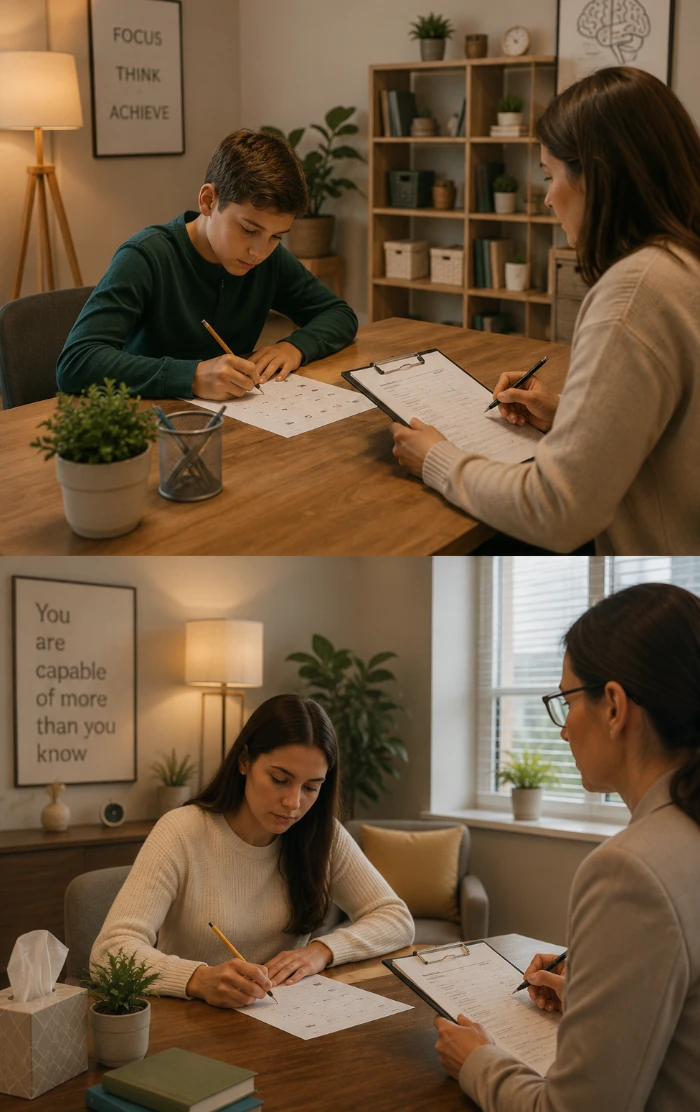
Professional IQ testing in Tucson – whether you need an assessment for school, employment, gifted program eligibility, or personal insight, we connect you with licensed psychologists in the Tucson area.
Last Updated: October 2026
Child IQ Testing
WISC-V & Stanford-Binet for ages 6–16. Gifted identification, learning profiles.
Adult IQ Testing
WAIS-IV & WAIS-5 available. Comprehensive adult cognitive assessments. Clinical & occupational.
WISC-V Test
Wechsler Intelligence Scale for Children® Fifth Edition – the gold standard for child IQ testing.
WAIS-IV & WAIS-5 Tests
Wechsler Adult Intelligence Scale® – Fourth Edition (WAIS-IV) and Fifth Edition (WAIS-5) available for adult IQ testing.
Gifted Testing
Identify giftedness for school placement, enrichment, and talent programs using WISC-V or Stanford-Binet.
Stanford-Binet 5
Stanford-Binet Intelligence Scales Fifth Edition – comprehensive cognitive assessment for all ages.
Mensa Testing
Mensa admission testing and preparation for the high-IQ society. Accepts WAIS-IV, WAIS-5, and Stanford-Binet 5 scores.
Full Evaluation
Combined assessment with detailed report and recommendations. Includes WISC-V, WAIS-IV, WAIS-5, or Stanford-Binet 5 as appropriate.
IQ Testing in Tucson: city context
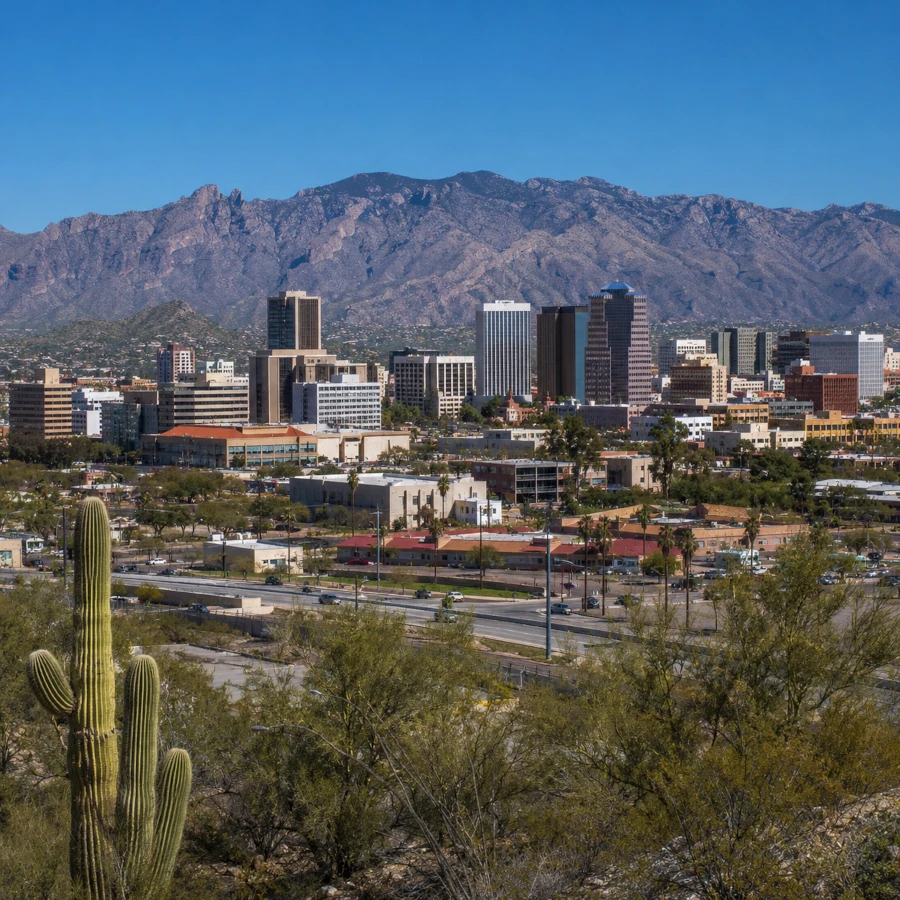
Tucson is Southern Arizona’s largest city, the Pima County seat, and a major center for higher education, aerospace and defense, optics and photonics, healthcare, bioscience, government, tourism, logistics, renewable energy, and cross-border commerce. The U.S. Census Bureau estimated 548,371 residents in 2025. Tucson covers approximately 240.99 square miles and anchors a metropolitan area that includes Oro Valley, Marana, Sahuarita, South Tucson, Catalina Foothills, and other Pima County communities.
Tucson’s assessment ecosystem includes the University of Arizona, Pima Community College, Tucson Unified School District, Banner – University Medical Center Tucson, Banner Children’s at Diamond Children’s Medical Center, Tucson Medical Center, the Southern Arizona VA Health Care System, the University of Arizona Behavioral Health Clinic, the ABLE Clinic, and licensed psychologists in private practice. No authoritative source publishes a scientifically valid citywide “average IQ for Tucson”; cognitive ability must be assessed individually with standardized instruments and appropriate educational, language, cultural, disability, and clinical context.
IQ by gender & ethnicity
Tucson’s population is 50.4% female. Professional intelligence tests use age-based norms and do not support citywide male-versus-female IQ estimates.
Current Tucson demographic context includes:
- Population: 548,371 estimated residents in 2025; 542,629 residents at the 2020 Census.
- Children: 19.3% of residents are under age 18, while 5.1% are under age 5.
- Older adults: 16.2% are age 65 or older.
- Female residents: 50.4% of the population.
- Hispanic or Latino residents: 42.8%.
- White alone, not Hispanic or Latino: 43.3%.
- Black alone: 5.1%.
- American Indian and Alaska Native alone: 2.5%, within a region shaped by the Tohono O’odham Nation and Pascua Yaqui Tribe.
- Asian alone: 3.3%.
- Two or more races: 23.1%.
- Foreign-born residents: 13.4%.
- Language context: 30.1% of residents age five and older speak a language other than English at home.
- Educational attainment: 88.2% of adults age 25 and older are high-school graduates or higher, and 31.1% hold a bachelor’s degree or higher.
- Interpretation principle: Race, ethnicity, gender, neighborhood, income, disability, and language must never be used to infer an individual’s intelligence.
What is professional IQ testing?
Intelligence quotient (IQ) testing is a standardized method to measure human cognitive abilities and intellectual potential. Professional IQ tests are administered by licensed psychologists in a controlled environment to ensure accuracy and reliability. Unlike online quizzes, clinical assessments provide a full-scale IQ score along with detailed breakdowns of verbal comprehension, perceptual reasoning, working memory, and processing speed.
In Tucson, IQ testing is commonly used for gifted program admission, learning disability identification, career guidance, neuropsychological evaluation, and personal development. The results are presented in a comprehensive report that includes normative comparisons, strengths and weaknesses, and actionable recommendations.
Who should get tested?
IQ testing can benefit children, adolescents, and adults in various situations:
- Children: Parents often seek testing for school readiness, gifted placement, or to understand learning challenges.
- Adults: Many adults take IQ tests for career advancement, graduate school applications, or personal curiosity.
- Mensa candidates: High-IQ societies require official test scores for membership.
- Clinical referrals: Psychologists may recommend testing as part of a broader neuropsychological evaluation.
Types of IQ tests
We offer the most recognized and scientifically validated intelligence tests in the field:
- WISC-V (Wechsler Intelligence Scale for Children® – Fifth Edition): The gold standard for children aged 6:0–16:11. It provides a Full-Scale IQ and five primary index scores.
- WAIS-IV (Wechsler Adult Intelligence Scale® – Fourth Edition): The most widely used adult IQ test for ages 16–90. It measures cognitive functioning across four domains.
- Stanford-Binet Intelligence Scales – Fifth Edition: A comprehensive assessment for ages 2–85, often used for gifted identification and clinical evaluations.
- Gifted Testing: Often includes the WISC-V or Stanford-Binet, plus additional creativity and achievement measures.
- Mensa Testing: We provide official Mensa admission testing and preparation materials.
How the testing process works
- Initial consultation: Brief phone or video call to discuss your needs and match you with the right psychologist.
- Testing session: In-person or remote testing (depending on the test) with a licensed psychologist. Most sessions last 1–2 hours.
- Scoring and interpretation: The psychologist scores the test and interprets the results in the context of your background and goals.
- Feedback session: A detailed review of your results, including strengths, weaknesses, and practical recommendations.
- Comprehensive report: You receive a written report with all scores, normative comparisons, and actionable next steps.
How much does IQ testing cost in Tucson?
Fees depend on the test, referral question, provider credentials, record review, interpretation, feedback, and report requirements.
- Focused IQ or gifted assessment: Usually self-pay; request a written quote covering interview, testing, scoring, feedback, and the report.
- Adult WAIS or Stanford-Binet testing: Cost varies according to whether the purpose is personal insight, career guidance, Mensa documentation, disability, or clinical evaluation.
- Psychoeducational evaluation: Costs more because it may combine cognitive, reading, writing, math, attention, executive-function, behavioral, and emotional measures.
- Neuropsychological evaluation: Insurance may contribute when testing is medically necessary and referred, subject to authorization, network, deductible, and benefit rules.
- School-based evaluation: Public schools provide qualifying educational evaluations without charging families when disability eligibility is suspected.
- Private-school or GATE testing: Often treated as an educational service and may not be covered by medical insurance.
- Before scheduling: Confirm the exact instrument, report turnaround, school or organization acceptance, cancellation policy, bilingual capacity, and whether payment plans are available.
Tucson’s Intellectual History & Legacy
Tucson’s intellectual history spans Indigenous knowledge, Spanish and Mexican history, desert ecology, astronomy, optics, archaeology, medicine, aerospace engineering, mining technology, public health, border studies, education, and the arts.
For a quick, informal look at reasoning skills, Tucson residents may explore an online IQ test; official educational or clinical purposes still call for evaluation by a qualified psychologist.
- Indigenous knowledge: Tohono O’odham and Pascua Yaqui communities contribute deep regional knowledge of the Sonoran Desert, agriculture, language, cultural continuity, and community health.
- University of Arizona: Founded in 1885 and now a major research university in astronomy, optical sciences, medicine, psychology, education, public health, engineering, and environmental science.
- Astronomy: Steward Observatory and Southern Arizona observatory partnerships support internationally significant research.
- Optics Valley: The region’s optics and photonics cluster supports imaging, lasers, sensors, defense, medical devices, and space science.
- Aerospace and defense: Davis–Monthan Air Force Base, Raytheon Missiles & Defense, the Arizona Air National Guard, and suppliers support technical careers.
- Medical education: The University of Arizona College of Medicine – Tucson and Banner University Medicine support clinical training and research.
- Desert research: The Arizona-Sonora Desert Museum, Biosphere 2, Tumamoc Hill, and university programs advance ecology and climate science.
- Archaeology: Arizona State Museum and university researchers document the Indigenous and cultural history of the Southwest.
- Literature and public scholarship: The Tucson Festival of Books, libraries, museums, and arts organizations sustain public learning.
- UNESCO City of Gastronomy: The designation recognizes agricultural history, Indigenous crops, food systems, and cross-cultural knowledge.
Top Employers in Tucson and Cognitive-Skill Demands
Employers generally do not publish full hiring batteries, and a clinical IQ test is not a routine employment requirement. Major Tucson employers do include roles involving licensing examinations, aptitude measures, security clearances, structured interviews, technical demonstrations, medical evaluations, or cognitive assessment when clinically indicated.
- University of Arizona: Academic, research, healthcare, administrative, technical, and professional roles.
- Raytheon Missiles & Defense: Engineering, systems analysis, software, manufacturing, cybersecurity, quality, and security-clearance roles.
- Davis–Monthan Air Force Base: Military and civilian aviation, logistics, intelligence, maintenance, medical, and administrative positions.
- Banner Health and Banner – University Medicine: Licensed clinical, research, technical, administrative, and support roles.
- Tucson Unified School District: Teachers, school psychologists, counselors, administrators, special-education professionals, and operations staff.
- Pima County: Public health, courts, libraries, infrastructure, social services, public safety, elections, and administration.
- City of Tucson: Public safety, transportation, planning, utilities, parks, legal, technology, and administration.
- Tucson Medical Center: Nonprofit hospital with licensed clinical and technical positions.
- Southern Arizona VA Health Care System: Medical, psychological, rehabilitation, research, and federal administrative roles.
- Freeport-McMoRan and mining-technology firms: Engineering, geology, environmental science, safety, operations, and data.
- Optics and photonics companies: Optical engineering, physics, lasers, sensors, imaging, software, and precision manufacturing.
- Caterpillar and industrial employers: Technical, engineering, testing, safety, and operational roles.
Tucson IQ Testing by Neighborhood
No scientifically valid dataset supports neighborhood IQ averages. These points describe educational, professional, transportation, and family context that may influence referral needs and access to testing.
- Downtown Tucson: Access to government, courts, culture, Sun Link, and professional offices; parking and event traffic matter.
- West University and Main Gate: University-adjacent areas with students, faculty, researchers, and graduate applicants.
- Sam Hughes: Established residential area near the university and schools.
- Armory Park and Barrio Viejo: Historic central neighborhoods near downtown services and cultural institutions.
- Broadmoor–Broadway Village: Central access to healthcare, schools, arterial roads, and mixed residential services.
- Catalina Foothills: North-side school and residential area with gifted and educational-planning referrals.
- Oro Valley: Northwest community with healthcare, technology, schools, retirees, and professional households.
- Marana and Continental Ranch: Fast-growing northwest communities connected through I-10.
- Rita Ranch and Vail: Southeast communities served by Vail School District, with longer cross-city travel.
- East Tucson and Tanque Verde: Residential, school, and healthcare corridors near the Rincon Mountains.
- South Tucson and south-side neighborhoods: Bilingual communities where language access and culturally responsive assessment are especially important.
- Flowing Wells and northwest Tucson: Areas served by multiple districts and close to Northwest Medical Center.
Tucson Universities and Research Institutions
- University of Arizona: Total enrollment of 54,384 in fall 2025, including 43,294 undergraduates and 11,090 graduate students.
- College of Medicine – Tucson: Medical education and clinical research with Banner University Medicine.
- Department of Psychology: Clinical psychology, cognition, neuroscience, social psychology, and assessment research.
- Behavioral Health Clinic: Supervised psychodiagnostic, ADHD/ADD, memory, and cognitive assessment.
- ABLE Clinic: Psychological, psychoeducational, neuropsychological, ADHD, autism, learning-disorder, vocational, and accommodation evaluations.
- Wyant College of Optical Sciences: Core institution within Tucson’s optics and photonics cluster.
- Steward Observatory: Astronomy research and education with regional observatory connections.
- Arizona Health Sciences: Medicine, nursing, pharmacy, public health, research, and clinical care.
- Pima Community College: Transfer, aviation, health, technology, workforce, and adult-education pathways.
- University of Arizona Tech Park: Research commercialization, technology firms, engineering, bioscience, and optics.
- Arizona State Museum: Anthropology and archaeology focused on the Southwest.
- Biosphere 2: Environmental and Earth-systems research north of Tucson.
Tucson Economic Context
- Median household income: $57,073 in 2020–2024 Census estimates.
- Per-capita income: $32,537.
- Residents in poverty: 18.9%.
- Bachelor’s degree or higher: 31.1% of adults age 25 and older.
- High-school graduate or higher: 88.2%.
- Labor-force participation: 60.7%; female participation is 58.3%.
- Mean travel time to work: 21.9 minutes.
- Homeownership rate: 51.8%.
- Median home value: $266,200.
- Median gross rent: $1,145.
- Health and social assistance: Approximately $6.90 billion in 2022 receipts/revenue.
- Transportation and warehousing: Approximately $1.04 billion in 2022 receipts/revenue.
- Accommodation and food services: Approximately $2.00 billion in 2022 sales.
- Retail sales: Approximately $12.38 billion in 2022, or $22,650 per capita.
- Aerospace and defense: Employment concentration is far above the national average.
- Photonics and optics: Supports astronomy, defense, medical devices, imaging, and manufacturing.
- Regional strengths: Higher education, healthcare, aerospace, optics, bioscience, logistics, mining technology, renewable energy, software, government, tourism, and cross-border commerce.
Tucson School District Data
- Tucson Unified School District: Southern Arizona’s oldest and largest district.
- TUSD GATE: Self-contained, pull-out, advanced academic, and secondary options.
- Arizona threshold: Public districts must serve students scoring at or above the 97th percentile on an approved test.
- TUSD instruments: Published materials reference CogAT and Raven measures.
- Reciprocity: Recent qualifying outside scores may be reviewed under Arizona-approved rules.
- University High School: Selective TUSD high school with a separate admissions process.
- Amphitheater Public Schools: North and northwest Tucson gifted and advanced-learning services.
- Catalina Foothills School District: Advanced academic opportunities and local identification procedures.
- Vail School District: Southeast Tucson and Vail gifted and advanced coursework.
- Marana Unified: Northwest metro gifted identification and services.
- Sunnyside Unified: South-side district under Arizona gifted requirements.
- Flowing Wells Unified: Northwest Tucson advanced-learning services.
- Private and charter schools: Admissions and gifted requirements vary.
- Special-education distinction: Gifted eligibility is separate from ADHD, autism, and learning-disability evaluation.
Local Testing Centers and Psychologists
- University of Arizona Behavioral Health Clinic: Psychodiagnostic, ADHD/ADD, memory, and cognitive assessments.
- ABLE Clinic: Psychological, psychoeducational, neuropsychological, vocational, ADHD, autism, and learning-disorder evaluations.
- Banner – University Medical Center Tucson: Adult neuropsychology and neuroscience services.
- Banner Alzheimer’s Institute – Tucson: Memory and aging-related evaluation.
- Banner Children’s at Diamond Children’s Medical Center: Pediatric specialty referrals.
- Tucson Medical Center: Pediatric, adult, neurological, rehabilitation, and behavioral-health networks.
- Southern Arizona VA: Neuropsychological, rehabilitation, and mental-health services for eligible veterans.
- Northwest Medical Center: Hospital and specialty referrals in northwest Tucson.
- Arizona Psychological Association: State professional organization and referral resource.
- Private psychologists: IQ, gifted, ADHD, learning, autism, psychoeducational, forensic, and neuropsychological assessment.
- School psychologists: Educational eligibility evaluations through local districts.
- Provider verification: Confirm Arizona license, specialty, bilingual capacity, report format, fees, and acceptance.
Tucson Events and Conferences
- Tucson Festival of Books: Major annual University of Arizona event featuring authors, science, literacy, and children’s programming.
- University research events: Psychology, neuroscience, education, optics, astronomy, public health, and medicine.
- Tucson Gem, Mineral & Fossil Showcase: International winter event affecting hotels, traffic, parking, and scheduling.
- Arizona Psychological Association: Continuing education in assessment, ethics, clinical practice, and law.
- Arizona Association for Gifted and Talented: Conferences and family resources.
- Southern Arizona Research, Science and Engineering Foundation: Student science and engineering programming.
- College of Medicine events: Grand rounds, seminars, and community health programs.
- Brain Awareness Week: Neuroscience and cognition events.
- Pima County Fair: Spring traffic and scheduling consideration.
- School events: GATE meetings, magnet information, college fairs, and enrollment deadlines.
- Tour de Tucson: Large cycling event with road closures.
Transportation and Accessibility
- Major roads: I-10, I-19, SR 77/Oracle Road, SR 86/Ajo Way, Grant, Speedway, Broadway, 22nd Street, Campbell, and Kolb.
- Public transit: Sun Tran operates fixed-route bus service throughout Tucson.
- Streetcar: Sun Link’s approximately 3.9-mile route connects the University of Arizona, Fourth Avenue, downtown, and Mercado through 24 stops.
- Paratransit: Sun Van provides ADA complementary service for eligible riders.
- Intercity rail: Amtrak’s Sunset Limited and Texas Eagle serve downtown Tucson on limited weekly schedules.
- Airport: Tucson International Airport (TUS) serves Southern Arizona.
- Distance to other cities: About 20–30 minutes to Oro Valley or Marana, 30–45 minutes to Sahuarita, 1 hour to Nogales, 1.5–2 hours to Phoenix, 4–4.5 hours to El Paso, 5.5–6 hours to San Diego, and 7–8 hours to Los Angeles.
- Walkability: Downtown, Fourth Avenue, Main Gate Square, West University, Barrio Viejo, and Armory Park offer the strongest clusters.
- Bike infrastructure: Bicycle boulevards, protected facilities, Aviation Bikeway, and connections to The Loop.
- Bicycle boulevard plan: 193 miles of future boulevards along 64 corridors.
- The Loop: Shared-use trail system connecting Tucson, Oro Valley, Marana, South Tucson, and Pima County.
- Accessibility: Ask about parking, ramps, elevators, sensory conditions, interpreters, and breaks.
- Scheduling: Allow time for I-10 construction, university traffic, gem-show congestion, monsoon storms, and flash flooding.
Tucson Weather and Seasonal Considerations
- Hot summers: Temperatures commonly exceed 100°F; morning appointments may reduce heat exposure.
- Low humidity: Hydration and avoiding prolonged outdoor activity support comfort and attention.
- Monsoon season: Lightning, dust, intense rain, flash flooding, and power disruptions can delay travel.
- Air quality: Dust, wildfire smoke, ozone, and allergens may affect breathing, sleep, headaches, and concentration.
- Mild winters: Comfortable days, occasional overnight freezes, and mountain snow at higher elevations.
- Spring: Wind and pollen may affect allergies and sleep.
- Fall: Generally favorable, with school testing and major events affecting demand.
- Climate-controlled testing: Professional offices should provide quiet, temperature-controlled settings.
- Peak school-testing periods: Gifted testing, private-school deadlines, and special-education evaluations follow school calendars.
- Graduate and accommodation timing: Begin months before deadlines.
- Best preparation: Sleep, hydration, normal meals, prescribed medication, glasses or hearing aids, and extra travel time.
Areas we serve
We support all areas of Tucson.
Frequently Asked Questions
WISC-V is for children aged 6–16, while WAIS-IV is for adults aged 16–90. Each is normed for its specific age group.
Most IQ tests take between 60 and 90 minutes, plus a feedback session. Allow 2–3 hours total.
No, you can book directly with our psychologists. We serve both self-referred and professionally referred individuals.
Potentially. Confirm current American Mensa accepted-test and documentation requirements before scheduling, because not every score or report qualifies.
Some plans cover cognitive assessments when there is a clinical indication. Check with your provider.
Get a good night's sleep, eat a healthy meal, and arrive relaxed. No specific preparation is needed.
You'll receive a comprehensive report with your scores and tailored recommendations.
Some interviews and feedback may be available by telehealth, but many standardized cognitive tests require controlled administration. Ask the evaluator and receiving organization about current rules.