
Child IQ Testing in Tucson

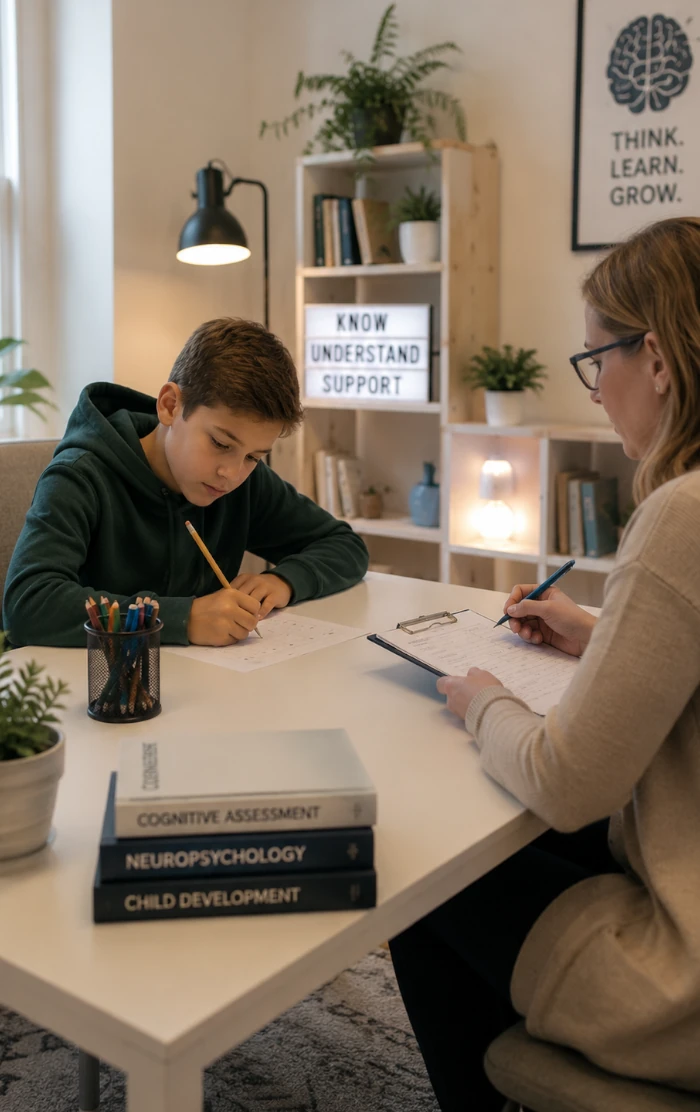
Professional child IQ testing in Tucson – whether you need an assessment for school placement, gifted program eligibility, or to understand your child's learning profile, we connect you with licensed psychologists in the Tucson area.
Last Updated: July 2026
Gifted Testing
Identify giftedness for school placement, enrichment, and talent programs using WISC-V or Stanford-Binet 5.
WISC-V Test
Wechsler Intelligence Scale for Children® Fifth Edition – the gold standard for child IQ testing.
Stanford-Binet 5
Stanford-Binet Intelligence Scales Fifth Edition – comprehensive cognitive assessment for all ages.
Full Evaluation
Combined assessment with detailed report and recommendations. Includes WISC-V or Stanford-Binet 5.
School Placement Testing
Testing for private school admission and gifted program eligibility using WISC-V or Stanford-Binet 5.
Schedule Child IQ Testing
Book your WISC-V & Stanford-Binet 5 for ages 6–16. Gifted identification, learning profiles, etc. with a licensed psychologist in Tucson today.
Child IQ Testing in Tucson: city context
Tucson families seek child cognitive testing for gifted identification, school planning, acceleration, learning concerns, ADHD, twice-exceptionality, private-school applications, disability documentation, and a clearer understanding of how a child learns.
- Child population: 19.3% of Tucson residents are under age 18.
- School systems: Families may attend Tucson Unified, Amphitheater, Catalina Foothills, Flowing Wells, Sunnyside, Marana, Vail, charter, private, tribal, or home-school programs.
- Language diversity: 30.1% of Tucson residents age 5 and older speak a language other than English at home, so language background must be considered during assessment.
- Gifted framework: Arizona public school districts are required to identify and provide services for gifted pupils in kindergarten through grade 12 under a board-approved scope and sequence.
- Clinical referrals: Children may also be evaluated through university clinics, pediatric specialists, private psychologists, neuropsychologists, and behavioral-health providers.
- Testing purpose: The best test and report format depend on whether the referral involves district gifted services, special education, acceleration, diagnosis, accommodations, or private-school planning.
IQ by gender & ethnicity (child population)
Tucson’s overall population is approximately 50.4% female and 42.8% Hispanic or Latino. The city also includes substantial White non-Hispanic, Black, American Indian and Alaska Native, Asian, multiracial, immigrant, refugee, and military-connected communities.
No authoritative Tucson dataset supports separate child IQ averages by sex, race, ethnicity, language, school, or neighborhood. Ethical evaluation uses age-appropriate norms, multiple data sources, language history, educational opportunity, disability information, and culturally responsive interpretation rather than assuming ability from group membership.
Tucson School Districts and Gifted Programs
Tucson Unified Gifted and Talented Education
- District scope: Tucson Unified serves a large and diverse urban student population across elementary, K–8, middle, and high schools.
- Identification standard: The district’s gifted scope-and-sequence materials describe Arizona’s 97th-percentile criterion on approved reasoning measures as a key eligibility pathway.
- Assessment tools: District materials reference cognitive measures such as the Cognitive Abilities Test and Raven’s Progressive Matrices, with the actual instrument determined by district procedures.
- Service models: Services may include cluster grouping, pull-out enrichment, self-contained options, acceleration, advanced coursework, and differentiated instruction.
- Multiple evidence: Academic performance, teacher observations, student work, parent information, language background, and other data may supplement test scores.
- Annual verification: Families should confirm current referral windows, testing dates, score requirements, and school-based service models directly with Tucson Unified.
Tucson Unified Referral, Screening, and Evaluation
- Referral: Parents, teachers, school teams, or other qualified persons may raise concerns about advanced learning needs.
- Screening: Schools may review achievement, classroom performance, prior testing, observations, and demographic or language factors before formal evaluation.
- Permission: Written parent or guardian consent may be required before individual testing.
- Testing conditions: Students should be tested when healthy, rested, and able to understand the directions; accommodations should be documented.
- Outside evaluations: A private WISC-V or Stanford-Binet report may be informative, but the district decides whether it meets current eligibility and documentation rules.
- Appeal or reconsideration: Families should ask the district about retesting intervals, additional evidence, transfer eligibility, and appeal procedures.
Amphitheater, Catalina Foothills, and Northwest Tucson
- Amphitheater Public Schools: Serves north-central Tucson and Oro Valley-area communities with gifted, advanced, honors, and accelerated learning options that vary by school and grade.
- Catalina Foothills School District: Offers advanced academic opportunities and differentiated services in the foothills area; current identification rules should be confirmed with the district.
- Marana Unified: Serves northwest Tucson and Marana with gifted and advanced-learning pathways across elementary and secondary grades.
- Transfer records: Families moving between districts should bring complete score reports, eligibility letters, and service plans rather than only a summary percentile.
- Private testing: Confirm whether a district accepts outside scores, which editions are accepted, and how recent the evaluation must be.
Sunnyside, Flowing Wells, Vail, and Nearby Districts
- Sunnyside Unified: Serves south Tucson and offers advanced-learning opportunities within a multilingual community.
- Flowing Wells Unified: Serves northwest-central Tucson with district-specific gifted identification and service procedures.
- Vail Unified: Serves southeast Tucson-area communities and offers advanced coursework and gifted services across a rapidly growing district.
- Charter schools: Arizona charter-school gifted obligations and service models may differ from district schools, so families should ask each school about identification and programming.
- Private and parochial schools: Admissions and placement requirements are set independently and may involve achievement tests, records, interviews, classroom visits, or cognitive testing.
- Cross-district planning: A score that qualifies in one system may not automatically create the same placement in another system.
Arizona Gifted-Education Framework
- Public-district duty: Arizona public school districts must identify and provide gifted education to qualified pupils in kindergarten through grade 12.
- Local scope and sequence: Each district adopts a governing-board-approved plan describing identification, curriculum, service delivery, professional development, and evaluation.
- 97th-percentile pathway: Arizona law and district plans commonly use the 97th percentile on an approved test of verbal, quantitative, or nonverbal reasoning as a qualifying standard.
- Equitable identification: Districts should use procedures designed to find students from culturally, linguistically, economically, and educationally diverse backgrounds.
- Services are educational: Gifted eligibility is not a medical diagnosis and is separate from special-education disability eligibility.
- Current rules: Families should rely on the receiving district’s current written procedures because instruments, cutoffs, timelines, and service models can change.
Tucson Private Schools and Admission Testing
- Independent requirements: Each private school sets its own admission and placement rules; an IQ test should never be scheduled until the school confirms what it accepts.
- Common materials: Applications may include transcripts, teacher recommendations, interviews, classroom visits, achievement tests, writing samples, and prior psychoeducational reports.
- Examples of Tucson-area schools: Families may explore institutions such as The Gregory School, Green Fields School, BASIS campuses, Salpointe Catholic High School, St. Augustine Catholic High School, and other independent or faith-based programs.
- Accepted tests: WISC-V, Stanford-Binet 5, achievement measures, or school-selected admission tests may be requested depending on age and purpose.
- Report content: Schools may need a full signed report with behavioral observations and index scores rather than a one-page score sheet.
- Deadlines: Begin early enough for consultation, testing, scoring, feedback, report writing, and possible follow-up questions from the school.
- Fair interpretation: Admission decisions should consider the complete application rather than a single number.
- Accommodation needs: Families seeking learning supports should ask what documentation the school requires and what services it can provide.
Tucson Gifted Identification Statistics
- No single citywide count: Tucson-area gifted enrollment is distributed across multiple districts, charters, private schools, and home-school programs, so there is no authoritative unified city total.
- Percentile meaning: A 97th-percentile score means performance equal to or higher than approximately 97% of the relevant norm group, not 97% correct.
- Score variation: Eligibility numbers depend on the test, grade, referral rate, language access, retesting rules, and whether multiple criteria are used.
- Underidentification risk: English learners, students in poverty, twice-exceptional children, rural students, and children from historically underserved groups may be missed by referral-only systems.
- Universal screening: Broad screening can improve access by evaluating students who may not otherwise be referred.
- Private versus district data: A private evaluation may identify advanced ability but does not automatically determine district placement.
- Annual changes: District participation figures, testing windows, and program capacity should be verified each school year.
The child IQ testing process: step by step
Understanding the testing process can help parents prepare their child and reduce anxiety. Here's what to expect:
- Initial consultation (15–20 minutes): A brief phone or video call with the psychologist to discuss your child's background, concerns, and goals. This helps determine the right test and approach.
- Testing session (60–90 minutes): The child meets one-on-one with a licensed psychologist in a quiet, comfortable room. The psychologist administers the WISC-V or Stanford-Binet 5, which includes a series of subtests measuring verbal comprehension, visual-spatial reasoning, fluid reasoning, working memory, and processing speed. Breaks are offered as needed.
- Scoring and interpretation (1–2 days): The psychologist scores the test and analyzes the results. They consider the child's age, background, and any relevant medical or educational history.
- Feedback session (45–60 minutes): The psychologist meets with the parents (and the child, if appropriate) to explain the results. They discuss the Full-Scale IQ, index scores, strengths, and areas for growth. They also provide tailored recommendations for home, school, and extracurriculars.
- Comprehensive written report (5–7 days): You receive a detailed report with all scores, normative comparisons, and actionable next steps. This report can be shared with schools, doctors, or other professionals.
The entire process from consultation to report usually takes 1–2 weeks, depending on scheduling. The testing itself is non-invasive and designed to be engaging for children.
What is the WISC-V test?
The WISC-V (Wechsler Intelligence Scale for Children® – Fifth Edition) is the most widely used IQ test for children aged 6:0–16:11. It provides a Full-Scale IQ and five primary index scores: Verbal Comprehension, Visual-Spatial, Fluid Reasoning, Working Memory, and Processing Speed. The test is administered one-on-one by a trained psychologist and takes about 60–90 minutes.
The WISC-V is normed on a large, representative sample of U.S. children and is updated regularly to ensure accuracy. It is the gold standard for gifted identification, learning disability diagnosis, and school placement.
Why test your child's IQ?
IQ testing provides valuable insights into your child's cognitive strengths and weaknesses. It can help:
- Identify giftedness: For admission to gifted programs, private schools, or enrichment opportunities.
- Diagnose learning disabilities: Such as dyslexia, dyscalculia, or ADHD, which can be masked by high intelligence.
- Guide educational planning: Tailor instruction to your child's unique learning profile.
- Provide reassurance: Understand why your child is different from peers and how to support them.
Tucson Gifted Testing Timeline
- August–September: Review district procedures, gather records, and discuss classroom evidence with the teacher or gifted coordinator.
- Fall testing: Many schools conduct referrals or screening early enough to plan second-semester or next-year services.
- Winter: Families may receive score reports, eligibility decisions, or requests for additional evidence.
- Spring testing: Districts may conduct additional screening or placement testing for the next academic year.
- Private-school deadlines: Admission calendars may begin months before the next school year, so requirements should be confirmed early.
- Private evaluation: Allow time for intake, records review, testing, scoring, feedback, and report preparation.
- Retesting interval: Repeating a cognitive test too soon can create practice effects; follow professional and district guidance.
- Summer: Summer can be convenient for private assessment, but families should confirm that reports will still be considered current for fall placement.
Tucson Gifted Programs by Age Group
- Preschool: Evaluation may focus on developmental profile, language, behavior, and school readiness; very young scores should be interpreted cautiously.
- Kindergarten–grade 2: Enrichment, flexible grouping, early reading or math differentiation, and social-emotional support are common priorities.
- Grades 3–5: Students may receive pull-out enrichment, cluster grouping, subject acceleration, project-based learning, or advanced-content opportunities.
- Middle school: Honors courses, compacted curriculum, advanced math, accelerated language arts, and specialized electives become more prominent.
- High school: Advanced Placement, International Baccalaureate, dual enrollment, career and technical education, research, and early-college options may supplement gifted services.
- Twice-exceptional students: Giftedness and disability can coexist; students may need both advanced instruction and disability-related supports.
- Highly gifted students: Individualized acceleration, mentorship, online coursework, university programs, or cross-grade placement may be considered.
- Social-emotional support: Counseling may address perfectionism, anxiety, peer fit, motivation, executive functioning, or asynchronous development.
Tucson Child ADHD and Learning Disability Assessment
- Comprehensive question: A full evaluation may examine cognition, academic achievement, attention, executive functioning, behavior, mood, language, and developmental history.
- School data: Report cards, work samples, intervention records, attendance, disciplinary history, and teacher ratings help document functioning across settings.
- ADHD diagnosis: No single IQ or attention task diagnoses ADHD; symptoms and impairment must be demonstrated developmentally and across settings.
- Learning disorders: Reading, writing, and math achievement measures are needed when dyslexia, dysgraphia, or dyscalculia is suspected.
- Twice-exceptionality: High reasoning ability can mask academic or attention problems, while disability can suppress a child’s overall score.
- Autism questions: Autism evaluation generally requires developmental history, direct observation, social-communication assessment, and adaptive-functioning data.
- Local resources: University clinics, pediatric specialists, school teams, private psychologists, and neuropsychologists serve Tucson-area families.
- Educational planning: A private diagnosis does not automatically determine an IEP; the school evaluates educational impact and eligibility under applicable rules.
Tucson Summer Programs for Gifted Children
- University programs: The University of Arizona and affiliated units periodically offer youth programs in science, engineering, health, arts, writing, entrepreneurship, and college preparation.
- Desert and environmental learning: Tucson’s museums, observatories, botanical organizations, parks, and conservation groups support hands-on learning in astronomy, ecology, archaeology, and desert science.
- STEM camps: Robotics, coding, mathematics, engineering, aviation, optics, and maker programs may be available through schools, nonprofits, and private providers.
- Arts and humanities: Theater, music, visual arts, writing, history, and language programs can serve creatively gifted students.
- Acceleration: Some students use summer for advanced coursework, credit recovery, dual enrollment, or preparation for a higher-level class.
- Social fit: Programs grouped by interest rather than age can help gifted children meet peers with similar passions.
- Heat planning: Outdoor activities should account for Tucson’s extreme summer heat, hydration, sun protection, and morning scheduling.
- Verify details: Dates, ages, costs, eligibility, transportation, and scholarship availability change annually.
Tucson Child Testing Costs by Setting
- Public-school evaluation: School-conducted evaluations are generally provided without charge when the district determines an evaluation is warranted.
- Single cognitive test: Private fees depend on the instrument, provider, interpretation, feedback, and report length.
- Psychoeducational evaluation: Adding achievement, attention, behavior, language, or executive-functioning measures increases time and cost.
- Neuropsychological evaluation: Complex medical or developmental evaluations may require multiple sessions, extensive records, and a longer report.
- University clinics: Training clinics may offer reduced fees or sliding scales, but availability, supervision model, and waiting lists vary.
- Insurance: Coverage is more likely when testing addresses a medically necessary diagnostic question than when it is solely for gifted or private-school placement.
- Travel and records: Ask whether fees include record review, school consultation, feedback, forms, expedited service, and additional report copies.
- Written estimate: Request a clear description of services, expected hours, cancellation policy, and payment schedule before testing.
Areas we serve
We support all areas of Tucson.
Frequently Asked Questions
Both are excellent tests. WISC-V is more commonly used for school-age children, while Stanford-Binet 5 can be used for ages 2–85. We often recommend WISC-V for gifted identification.
The test itself takes 60–90 minutes. With the consultation, feedback, and report, the entire process is about 1–2 weeks.
No, you can book directly with our psychologists. We serve both self-referred and professionally referred children.
Yes, our reports are accepted by Tucson Unified School District, private schools, and other gifted programs.
Some plans cover cognitive assessments when there is a clinical indication. Check with your provider.
Get a good night's sleep, eat a healthy meal, and arrive relaxed. No specific preparation is needed.
You'll receive a comprehensive report with your child's scores and tailored recommendations.
Some interviews and feedback may be available by telehealth, but many standardized cognitive tests require controlled administration. Ask the evaluator and receiving organization about current rules.