
IQ Testing in Tacoma

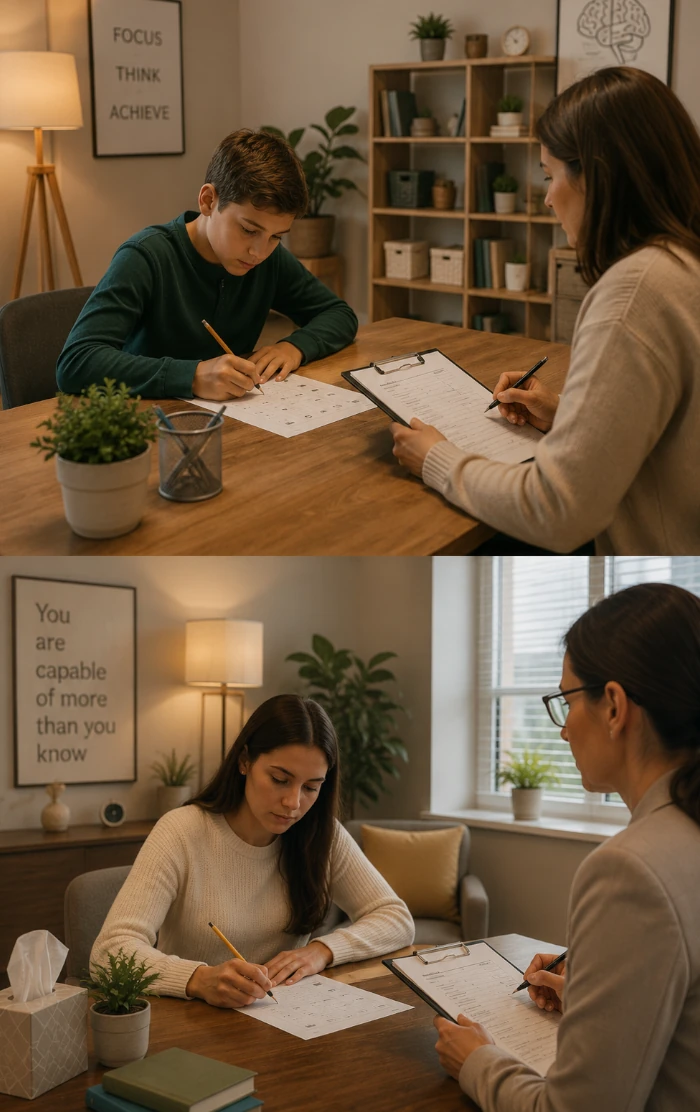
Professional IQ testing in Tacoma – whether you need an assessment for school, employment, gifted program eligibility, or personal insight, we connect you with licensed psychologists in the Tacoma area.
Last Updated: September 2026
Child IQ Testing
WISC-V & Stanford-Binet for ages 6–16. Gifted identification, learning profiles.
Adult IQ Testing
WAIS-IV & WAIS-5 available. Comprehensive adult cognitive assessments. Clinical & occupational.
WISC-V Test
Wechsler Intelligence Scale for Children® Fifth Edition – the gold standard for child IQ testing.
WAIS-IV & WAIS-5 Tests
Wechsler Adult Intelligence Scale® – Fourth Edition (WAIS-IV) and Fifth Edition (WAIS-5) available for adult IQ testing.
Gifted Testing
Identify giftedness for school placement, enrichment, and talent programs using WISC-V or Stanford-Binet.
Stanford-Binet 5
Stanford-Binet Intelligence Scales Fifth Edition – comprehensive cognitive assessment for all ages.
Mensa Testing
Mensa admission testing and preparation for the high-IQ society. Accepts WAIS-IV, WAIS-5, and Stanford-Binet 5 scores.
Full Evaluation
Combined assessment with detailed report and recommendations. Includes WISC-V, WAIS-IV, WAIS-5, or Stanford-Binet 5 as appropriate.
IQ Testing in Tacoma: city context
Tacoma is the Pierce County seat, a major South Puget Sound port city, and an important healthcare, education, logistics, government, military, manufacturing, and cultural center. The U.S. Census Bureau estimated 229,816 residents in 2025, 4.6% above the 2020 estimates base, across approximately 49.71 square miles of land.
Gender, age and demographic statistics
Tacoma’s 2020–2024 Census profile reports 50.5% female residents, 19.8% under age 18, and 15.0% age 65 or older. The city is 58.2% White alone, 9.8% Black alone, 9.6% Asian alone, 1.3% American Indian and Alaska Native alone, 0.9% Native Hawaiian and Other Pacific Islander alone, 15.5% two or more races, and 13.8% Hispanic or Latino. These statistics describe population composition and do not establish cognitive differences. Individual testing must use appropriate national age norms and account for language, culture, disability, education, health, and testing conditions.
Local demand for professional cognitive assessment is shaped by Tacoma Public Schools, nearby Pierce County districts, the University of Washington Tacoma, Tacoma Community College, University of Puget Sound, Pacific Lutheran University, MultiCare and Virginia Mason Franciscan Health, Joint Base Lewis-McChord, Port of Tacoma employers, public agencies, skilled trades, and families seeking Highly Capable identification, accommodations, school planning, career guidance, graduate-school preparation, disability documentation, Mensa evidence, or diagnostic clarification.
The assessment ecosystem includes private licensed psychologists, MultiCare Neuroscience Institute and Tacoma General Hospital, Mary Bridge Children's Hospital, St. Joseph Medical Center, American Lake VA Medical Center, school-based evaluation teams, university disability and counseling resources, and specialty practices serving Tacoma, Lakewood, University Place, Fircrest, Fife, Puyallup, Gig Harbor, and the wider South Puget Sound region.
- Common referral goals: Highly Capable identification, school placement, ADHD and learning evaluation, disability documentation, career decisions, graduate study, neuropsychological questions, Mensa prior evidence, and personal insight.
- Regional access: Residents from Lakewood, University Place, Fircrest, Fife, Puyallup, Gig Harbor, Federal Way, and other Pierce County communities may travel into Tacoma for specialty services.
- Provider matching: The appropriate examiner depends on age, referral question, language, disability, report purpose, school or agency requirements, and whether a stand-alone IQ test or full psychoeducational/neuropsychological evaluation is needed.
What is professional IQ testing?
Intelligence quotient (IQ) testing is a standardized method to measure human cognitive abilities and intellectual potential. Professional IQ tests are administered by licensed psychologists in a controlled environment to ensure accuracy and reliability. Unlike online quizzes, clinical assessments provide a full-scale IQ score along with detailed breakdowns of verbal comprehension, perceptual reasoning, working memory, and processing speed.
In Tacoma, IQ testing is commonly used for gifted program admission, learning disability identification, career guidance, neuropsychological evaluation, and personal development. The results are presented in a comprehensive report that includes normative comparisons, strengths and weaknesses, and actionable recommendations.
Who should get tested?
IQ testing can benefit children, adolescents, and adults in various situations:
- Children: Parents often seek testing for school readiness, gifted placement, or to understand learning challenges.
- Adults: Many adults take IQ tests for career advancement, graduate school applications, or personal curiosity.
- Mensa candidates: High-IQ societies require official test scores for membership.
- Clinical referrals: Psychologists may recommend testing as part of a broader neuropsychological evaluation.
Types of IQ tests
We offer the most recognized and scientifically validated intelligence tests in the field:
- WISC-V (Wechsler Intelligence Scale for Children® – Fifth Edition): The gold standard for children aged 6:0–16:11. It provides a Full-Scale IQ and five primary index scores.
- WAIS-IV (Wechsler Adult Intelligence Scale® – Fourth Edition): The most widely used adult IQ test for ages 16–90. It measures cognitive functioning across four domains.
- Stanford-Binet Intelligence Scales – Fifth Edition: A comprehensive assessment for ages 2–85, often used for gifted identification and clinical evaluations.
- Gifted Testing: Often includes the WISC-V or Stanford-Binet, plus additional creativity and achievement measures.
- Mensa Testing: We provide official Mensa admission testing and preparation materials.
How the testing process works
- Initial consultation: Brief phone or video call to discuss your needs and match you with the right psychologist.
- Testing session: In-person or remote testing (depending on the test) with a licensed psychologist. Most sessions last 1–2 hours.
- Scoring and interpretation: The psychologist scores the test and interprets the results in the context of your background and goals.
- Feedback session: A detailed review of your results, including strengths, weaknesses, and practical recommendations.
- Comprehensive report: You receive a written report with all scores, normative comparisons, and actionable next steps.
How much does IQ testing cost in Tacoma?
The cost of IQ testing in Tacoma varies depending on the type of test, the psychologist's experience, and whether a comprehensive report is required. Typical fees range from $200 to $1,200 for a full assessment. Gifted testing and Mensa admission testing are often at the lower end, while neuropsychological evaluations may be higher.
People in Tacoma who are curious about cognitive problem-solving may begin with an online IQ test, then consult a licensed psychologist when they need standardized scores or a written report.
Some insurance plans cover IQ testing when it's deemed medically necessary. We recommend checking with your provider for details. We also offer affordable payment plans and sliding-scale options for qualifying individuals.
Tacoma's Intellectual History & Legacy
- Puyallup people and Commencement Bay: The Puyallup Tribe's continuing presence, Coast Salish knowledge, fishing traditions, treaty history, and stewardship of land and water are foundational to the region's cultural and intellectual history.
- Railroad terminus and industrial city: Northern Pacific's western terminus helped Tacoma grow as a center for engineering, freight, timber, trade, finance, law, and civic administration.
- Port and maritime systems: The Port of Tacoma and Northwest Seaport Alliance require expertise in logistics, environmental science, cybersecurity, engineering, customs, data, warehousing, and international commerce.
- Military and aerospace: Joint Base Lewis-McChord and the broader Puget Sound aerospace ecosystem support technical, medical, intelligence, logistics, aviation, and public-service careers.
- Downtown knowledge corridor: UW Tacoma, Tacoma Community College, University of Puget Sound, Pacific Lutheran University, museums, courts, hospitals, and government offices support research, healthcare, education, business, law, and workforce development.
- Healthcare and neuroscience: MultiCare, Mary Bridge Children's, Virginia Mason Franciscan Health, American Lake VA, and regional specialty practices support behavioral health, rehabilitation, neurology, neuropsychology, and clinical education.
- Cultural learning: Museum of Glass, Tacoma Art Museum, Washington State History Museum, LeMay–America's Car Museum, Foss Waterway Seaport, Tacoma Public Library, Point Defiance Zoo & Aquarium, and local arts organizations provide broad enrichment.
Top Employers in Tacoma Requiring Cognitive Skills
- Joint Base Lewis-McChord and federal agencies: Aviation, logistics, cybersecurity, intelligence, engineering, healthcare, administration, maintenance, and public-service roles.
- MultiCare Health System: Clinical care, nursing, neuroscience, behavioral health, data, technology, rehabilitation, administration, and research roles.
- Virginia Mason Franciscan Health: Hospital, specialty-care, technical, operational, behavioral-health, rehabilitation, and leadership positions.
- Tacoma Public Schools and regional districts: Teaching, school psychology, assessment, counseling, administration, student services, skilled trades, and information technology.
- City of Tacoma, Pierce County and Tacoma Public Utilities: Engineering, public safety, energy and water systems, planning, analytics, finance, law, environmental work, and public administration.
- Port of Tacoma and Northwest Seaport Alliance employers: Maritime operations, logistics, rail, warehousing, customs, supply-chain analysis, environmental compliance, maintenance, and management.
- UW Tacoma, Tacoma Community College, University of Puget Sound and Pacific Lutheran University: Teaching, research, healthcare education, laboratory, student-services, and technical work.
- Regional manufacturing, aerospace, finance and professional services: Engineering, quality, software, accounting, insurance, marketing, operations research, management, and customer-service roles.
Tacoma IQ Testing by City Area
- Downtown, Hilltop and the Brewery District: Access to UW Tacoma, courthouses, professional offices, hospitals, the T Line, museums, libraries, and Tacoma Dome transportation connections.
- North End, Stadium District and Proctor: Established neighborhoods, schools, medical offices, University of Puget Sound, parks, and walkable commercial districts.
- Central Tacoma and 6th Avenue: Residential communities, schools, healthcare corridors, neighborhood businesses, bicycle connections, and T Line stations.
- South Tacoma, Lincoln and Eastside: Diverse communities, schools, industrial and employment corridors, Pierce Transit routes, and access to I-5 and SR 7.
- Northeast Tacoma and Browns Point: Residential areas with access toward Federal Way, Fife, Port of Tacoma employment, and district schools.
- West End and Point Defiance: Tacoma Community College, parks, waterfront access, neighborhoods near University Place, and connections toward the Tacoma Narrows Bridge.
- Nearby communities: Lakewood, University Place, Fircrest, Fife, Puyallup, Gig Harbor, Federal Way, Steilacoom, and other South Puget Sound communities may use Tacoma providers.
Tacoma Universities and Research Institutions
- University of Washington Tacoma: Offers more than 50 undergraduate majors and minors and graduate programs in accounting, business, analytics, community planning, computer science, cybersecurity, education, nursing, social work, and related fields.
- Tacoma Community College: Provides more than 80 programs across transfer, healthcare, science, technology, education, business, social sciences, creative fields, and workforce pathways.
- University of Puget Sound: A Tacoma-based liberal-arts university with undergraduate study and graduate/professional programs including occupational therapy, physical therapy, education, and counseling-related preparation.
- Pacific Lutheran University: Located nearby in Parkland, with programs in nursing, business, education, psychology, sciences, music, and graduate study.
- Evergreen State College Tacoma and regional institutions: Expand access to interdisciplinary, public-service, education, and adult-degree pathways.
- Regional research ecosystem: UW Tacoma, MultiCare, Virginia Mason Franciscan Health, Port of Tacoma, JBLM, Tacoma Public Utilities, environmental organizations, manufacturers, and technology firms support applied research and workforce development.
Tacoma Economic Context
- Median household income: $85,884 in 2020–2024 Census estimates.
- Per-capita income: $45,650.
- Residents in poverty: 12.4%.
- Bachelor's degree or higher: 34.5% of adults age 25 and older.
- Mean travel time to work: 28.8 minutes, although I-5 congestion, SR 16 traffic, Tacoma Narrows Bridge conditions, port freight, construction, and regional commuting can lengthen travel.
- Health and social-assistance activity: Census business data report approximately $5.01 billion in 2022 receipts/revenue within the city.
- Transportation and warehousing: Approximately $2.19 billion in 2022 receipts/revenue reflects port, rail, trucking, warehousing, maritime, and regional supply-chain activity.
- Accommodation and food services: Approximately $730.2 million in 2022 sales.
- Retail sales: Approximately $4.72 billion in 2022.
- Regional strengths: Healthcare, government, military and defense, port logistics and maritime trade, manufacturing, education, utilities, construction, professional services, technology, tourism, arts, and retail.
Tacoma School District Data
- Universal screening: Tacoma Public Schools provides annual universal screening for all second- and fifth-grade students. Second graders take the NNAT3 in fall; fifth graders are reviewed in spring without additional testing unless more data are needed.
- Referrals: Current students in all grades may be referred by parents, guardians, teachers, community members, or themselves. Referrals are processed for multidisciplinary review, generally for services beginning the following school year.
- Multiple measures: The Multidisciplinary Placement Committee reviews assessment scores, cognitive data, i-Ready, SBA, other district/state assessments, referral information, and relevant evidence. Tacoma states that one score cannot by itself qualify or disqualify a student.
- Elementary services: K–12 students may receive differentiated learning in cluster-grouped general-education classrooms. Identified students in grades 3–5 may also be placed in SAIL, a self-contained multi-grade accelerated model at designated elementary schools.
- Secondary services: Grades 6–8 use annual learning plans and differentiated instruction; middle and high schools may offer accelerated pathways, AP, IB, AVID, specialty schools, dual-credit, and other advanced options.
- Transfers and appeals: New students may submit prior qualification records and assessment data. Appeals must follow district timelines, currently within 15 school days after a non-eligible decision.
- Washington framework: Highly Capable education is part of basic education. Districts must use equitable identification procedures, universal screening and multiple objective criteria under state law and WAC 392-170.
Local Testing Centers and Psychologists
- Private licensed psychologists: Tacoma and Pierce County practices offer different combinations of IQ, gifted, ADHD, learning, autism, disability, forensic, and neuropsychological assessment.
- MultiCare Neuroscience Institute: Tacoma-based neuroscience services can support referrals involving neurological conditions, cognitive changes, rehabilitation, or broader neuropsychological questions.
- Mary Bridge Children's Hospital: Pediatric specialty and behavioral-health resources may help families coordinate complex developmental, medical, or school-related referrals.
- Virginia Mason Franciscan Health: St. Joseph Medical Center and affiliated specialty services provide medical and behavioral-health referral pathways.
- American Lake VA Medical Center: Provides primary, specialty, mental-health, rehabilitation, geriatric, and other services for eligible veterans; testing access depends on clinical referral and eligibility.
- School and university resources: Tacoma Public Schools, UW Tacoma, Tacoma Community College, University of Puget Sound, PLU, and disability-services offices use their own educational evaluation and documentation procedures.
Tacoma Events and Conferences
- Education and family events: Tacoma Public Schools, Tacoma Public Library, museums, colleges, youth organizations, and parent groups offer learning, STEM, arts, college-readiness, and enrichment events.
- University events: UW Tacoma, Tacoma Community College, University of Puget Sound, and PLU host lectures, research presentations, admissions programs, professional workshops, and cultural events.
- Healthcare education: MultiCare, Virginia Mason Franciscan Health, VA Puget Sound, and professional associations offer public-health, clinical, caregiver, and continuing-education programs.
- Industry and career events: Port, maritime, manufacturing, military-transition, technology, public-sector, and workforce organizations hold career fairs and training programs.
- High-IQ community: Mensa of Western Washington and gifted-family organizations may schedule regional gatherings; current calendars and eligibility rules should be verified directly.
Transportation and Accessibility
- Major roads: I-5 runs north–south through Tacoma; SR 16 connects toward Gig Harbor and the Kitsap Peninsula via the Tacoma Narrows Bridge; SR 7/Pacific Avenue, SR 509, SR 167, Schuster Parkway, Ruston Way, and major arterials connect neighborhoods, hospitals, downtown, and the port.
- Public transit: Pierce Transit operates fixed-route buses throughout Tacoma and surrounding Pierce County communities. Runner provides on-demand service in designated zones.
- Light rail and regional transit: Sound Transit's T Line serves Tacoma Dome, downtown, Stadium District, Hilltop, Tacoma General, and St. Joseph. Sounder commuter rail and regional express buses connect Tacoma Dome Station with Seattle and other regional destinations.
- Paratransit: Pierce Transit SHUTTLE provides ADA paratransit for eligible riders whose disability prevents independent use of fixed-route service.
- Airport: Seattle–Tacoma International Airport (SEA) is the principal commercial airport, generally about 25–30 miles north depending on route. Tacoma Narrows Airport in Gig Harbor supports general aviation.
- Distance to other cities: Approximately 35–45 minutes to Seattle without heavy traffic, 35 minutes to Olympia, 20–30 minutes to Federal Way, 20 minutes to Puyallup, and about 45–60 minutes to Bremerton via SR 16, with substantial variation from congestion and bridge conditions.
- Walkability: Downtown, the Brewery District, Stadium District, Hilltop, Proctor, Old Town, 6th Avenue, and parts of the waterfront have comparatively walkable clusters, but citywide access varies by slope, arterial crossings, and sidewalk continuity.
- Bike infrastructure: Tacoma's network includes protected and conventional bike lanes, neighborhood greenways, the Prairie Line Trail, Water Flume Line Trail, Scott Pierson Trail, Ruston Way waterfront paths, and connections toward the Foothills and regional trail systems.
- Appointment planning: Allow extra time for I-5 congestion, port freight traffic, Tacoma Dome events, Tacoma Narrows Bridge backups, construction, rain, winter darkness, and occasional snow or ice.
Tacoma Weather and Seasonal Considerations
- Rain and low clouds: Frequent fall-through-spring rain, wet pavement, low visibility, and early darkness can lengthen travel and parking time.
- Winter: Most winter precipitation is rain, but occasional snow, freezing rain, and black ice can disrupt hills, bridges, buses, schools, and appointments.
- Summer: Summers are typically drier and mild-to-warm, but heat waves and wildfire smoke can affect sleep, attention, respiratory comfort, and travel.
- Marine influence: Puget Sound temperatures, fog, wind, and rapidly changing conditions may differ between waterfront, hilltop, south Tacoma, and outlying Pierce County communities.
- Testing preparation: Schedule at a time consistent with normal sleep and medication routines, and discuss illness, smoke exposure, fatigue, migraine, anxiety, or travel disruption with the examiner.
Areas we serve
We support all areas of Tacoma.
Frequently Asked Questions
WISC-V is for children aged 6–16, while WAIS-IV is for adults aged 16–90. Each is normed for its specific age group.
Most IQ tests take between 60 and 90 minutes, plus a feedback session. Allow 2–3 hours total.
No, you can book directly with our psychologists. We serve both self-referred and professionally referred individuals.
Some professionally administered scores may be submitted as prior evidence, but acceptance is determined solely by American Mensa under its current rules.
Some plans cover cognitive assessments when there is a clinical indication. Check with your provider.
Get a good night's sleep, eat a healthy meal, and arrive relaxed. No specific preparation is needed.
You'll receive a comprehensive report with your scores and tailored recommendations.
Interviews and feedback may be available remotely, but many standardized cognitive tests require controlled administration and may need an in-person appointment. Contact us for details.