
Child IQ Testing in Salinas, CA

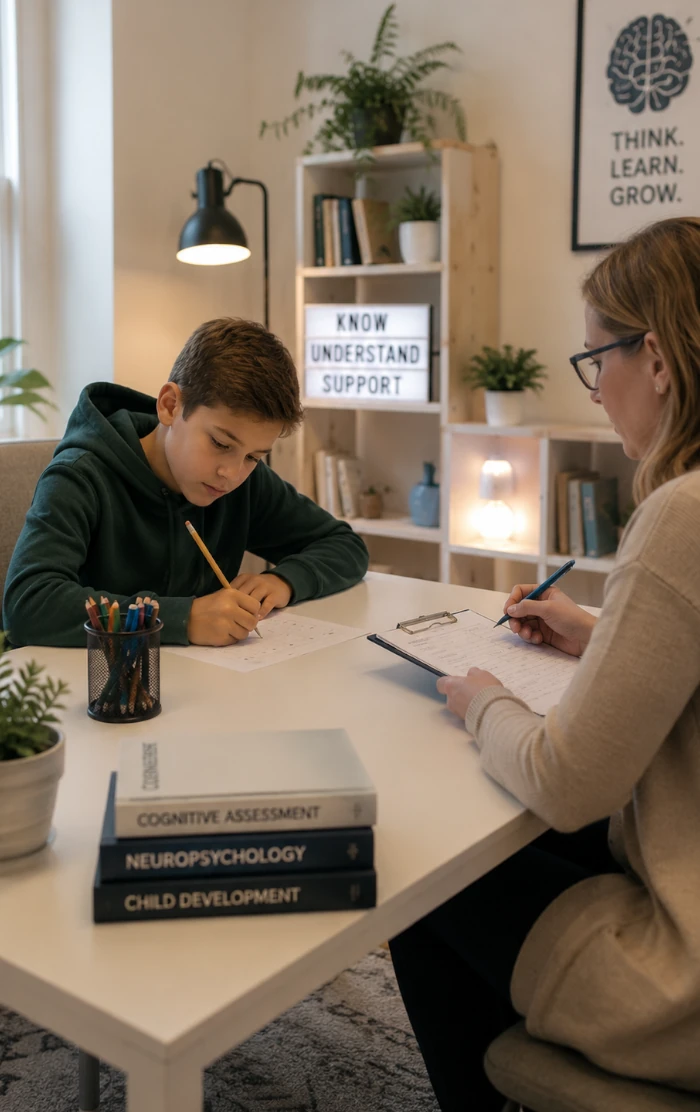
Professional child IQ testing in Salinas, CA – whether you need an assessment for school placement, gifted program eligibility, or to understand your child's learning profile, we connect you with licensed psychologists in the Salinas, CA area.
Last Updated: September 2026
Gifted Testing
Identify giftedness for school placement, enrichment, and talent programs using WISC-V or Stanford-Binet 5.
WISC-V Test
Wechsler Intelligence Scale for Children® Fifth Edition – the gold standard for child IQ testing.
Stanford-Binet 5
Stanford-Binet Intelligence Scales Fifth Edition – comprehensive cognitive assessment for all ages.
Full Evaluation
Combined assessment with detailed report and recommendations. Includes WISC-V or Stanford-Binet 5.
School Placement Testing
Testing for private school admission and gifted program eligibility using WISC-V or Stanford-Binet 5.
Schedule Child IQ Testing
Book your WISC-V & Stanford-Binet 5 for ages 6–16. Gifted identification, learning profiles, etc. with a licensed psychologist in Salinas, CA today.
Child IQ Testing in Salinas, CA: city context
Children represent a substantial share of Salinas: Census estimates place 29.4% of residents under age 18. Families request cognitive testing for gifted identification, learning difficulties, attention concerns, autism or developmental questions, private-school admissions, independent educational evaluations, and planning after a move or school change.
Because 73.4% of residents age five and older speak a language other than English at home, child testing should document the languages used with family and at school, age of English exposure, literacy in each language, educational history, attendance, migration, and access to instruction. A low English-language score should not be treated automatically as low reasoning ability, and a bilingual child should not be labeled gifted or disabled from a single test result.
The examiner should integrate parent and teacher information, records, observations, cognitive scores, academic achievement, behavior, attention, adaptive functioning, and developmental history. Parents should give the psychologist the school or program’s current written requirements before testing begins.
Testing should be scheduled when the child is medically stable and able to participate without unusual fatigue, hunger, acute anxiety, or disruption. Parents should bring current glasses or hearing devices and disclose medication changes, sleep problems, recent illness, head injury, attendance concerns, and major family or school transitions. These factors do not invalidate an evaluation automatically, but they help the psychologist judge whether the scores represent typical functioning.
Age matters. The WPPSI-IV may be considered for younger children, while the WISC-V is commonly used from age 6 through 16 and the Stanford-Binet 5 spans a wider age range. The correct instrument depends on the referral question, developmental level, language, motor or sensory access, prior testing, and the receiving organization’s rules. Repeating the same test too soon can introduce practice effects, so prior reports and dates should be shared before a new battery is selected.
A useful report should explain more than Full Scale IQ. It should describe index-level strengths and weaknesses, confidence intervals, behavior during testing, validity limitations, and how the findings relate to reading, writing, mathematics, attention, classroom pace, social-emotional functioning, or daily living. When a child’s profile is uneven, a single global score can obscure important needs and talents.
Families can ask for a school evaluation in addition to, or instead of, private testing when disability or educational access is the concern. A private psychologist does not replace the school team, and the school is not required to adopt every private recommendation. The strongest process is collaborative: clarify the question, gather records and teacher input, select measures deliberately, and discuss practical supports after results are available.
When the purpose is gifted placement, parents should ask whether the program emphasizes a general ability score, a particular index, achievement, creativity, or demonstrated classroom performance. When the purpose is disability evaluation, the battery should instead be designed around suspected functional needs and legal eligibility criteria. Using the same narrow battery for every question can create an impressive-looking report that still fails to answer the decision the family faces.
Feedback should be understandable to the child as well as the adults. Depending on age, the psychologist can explain that tests show how the child approached certain tasks on one day, not a fixed ceiling on learning. Recommendations should identify what to do at home and school, who is responsible, and how progress will be reviewed.
Salinas School Districts and Gifted Programs
Salinas students may attend Salinas City Elementary School District, Alisal Union School District, Santa Rita Union School District, Salinas Union High School District, charter schools, county programs, or private schools. Each system establishes its own referral calendar, screening process, eligibility rules, services, and appeal options.
Salinas City Elementary School District maintains policy and administrative regulation for gifted and talented students and also offers dual-language, STEAM, migrant-education, and special-education programs. District identification may consider reasoning and achievement measures, classroom performance, teacher or parent referral, work samples, language development, and other evidence. A privately administered WISC-V or Stanford-Binet 5 can provide additional information, but it does not guarantee district qualification or placement.
At the secondary level, Salinas Union High School District offers combinations of honors, Advanced Placement, career academies, career-technical education, dual enrollment, and college-preparation coursework. Families should request the current criteria directly from the student’s school before paying for outside testing.
Because district boundaries do not follow a single citywide pattern, an address in Salinas does not by itself identify the responsible elementary district. Families should verify enrollment jurisdiction and contact the school’s principal, counselor, psychologist, special-education office, or advanced-learning contact. The district can explain whether screening is universal or referral-based, which grades are reviewed, and what evidence is accepted from outside evaluators.
California law and local policy distinguish gifted programming from special-education eligibility. A student can be gifted and also have dyslexia, ADHD, autism, a speech-language disorder, anxiety, or another disability. These “twice-exceptional” students may require both advanced instruction and disability supports. Strong reasoning can mask achievement problems, while a disability can suppress speed, written output, or classroom performance despite high conceptual ability.
Multilingual learners should have meaningful access to identification. District teams should consider language-development data, instruction in each language, nonverbal reasoning where appropriate, local opportunity to learn, work samples, and teacher observations across settings. Parents may ask how the district avoids confusing English acquisition with low ability and how it finds students whose advanced thinking is expressed more clearly in Spanish or another language.
Private testing is most useful when it answers a question the school’s existing data do not resolve. Before testing, ask whether the district will review outside reports, whether it requires a California-licensed psychologist or educational psychologist, and whether it needs specific achievement, adaptive, attention, or social-emotional measures in addition to cognitive scores.
If a student moves between Salinas-area districts, records and prior identification do not always transfer automatically into identical services. Parents should bring previous eligibility documents, test protocols or reports, individualized plans, course records, and examples of advanced work, then ask the receiving district how it reviews prior decisions. The aim is continuity without assuming that program names or grade configurations are the same.
School teams can also consider classroom-based options before or while formal identification is pending: flexible grouping, curriculum compacting, advanced reading or mathematics, independent inquiry, mentorship, and subject acceleration. Appropriate challenge does not have to wait for a label when current performance clearly shows a need.
Salinas, CA Private Schools Requiring IQ Testing
Salinas-area private and parochial schools set their own admissions and placement policies. Some may request school records, teacher recommendations, achievement testing, interviews, readiness measures, or a standardized cognitive evaluation, while others do not require IQ testing at all.
Before scheduling, obtain written confirmation of the accepted test, edition, age norms, examiner license, score-report format, deadline, and whether achievement or social-emotional measures are also required. A private evaluation can inform placement, but the school makes the admission and program decision.
Admissions practices can also vary by grade. Early-childhood programs may emphasize developmental readiness and observation; elementary schools may use achievement or reasoning measures; middle and high schools may focus on records, placement tests, writing samples, interviews, and course prerequisites. A school that asks for an “IQ test” should specify whether it means a complete individual cognitive battery or a shorter group admissions measure.
Ask who receives the report, how scores are stored, whether parents can submit an existing recent evaluation, and whether the school considers confidence intervals and the full profile rather than a single cutoff. Families should also clarify accommodations for multilingual learners and children with motor, sensory, attention, or communication differences. Intensive coaching on secure test items is inappropriate and can make results less valid.
Even when testing is required, admission remains a school decision. A high score does not guarantee acceptance, scholarship support, acceleration, or a particular classroom placement, and a lower score does not define the child’s long-term potential.
Salinas, CA Gifted Identification Statistics
There is no reliable public count of how many Salinas children are gifted, nor a valid citywide average IQ. District identification rates depend on the definition, screening coverage, language access, referral practices, assessment tools, grade levels, and available programs.
Equitable identification should include multiple opportunities and evidence sources, especially for multilingual learners, students from low-income households, children with disabilities, and students whose strengths are not reflected by traditional classroom performance. Parents should ask the district how it monitors representation and whether local norms, universal screening, nonverbal measures, or reconsideration procedures are available.
Published district dashboards may report enrollment and academic outcomes without reporting a comparable gifted-identification rate. Even when a percentage is available, it should not be interpreted as the natural prevalence of giftedness because policies, resources, screening methods, and participation differ. Changes in identification after universal screening often reflect improved access rather than a sudden change in students’ underlying ability.
Families reviewing statistics should ask which grades were screened, whether the denominator includes all students, how multilingual learners and students with disabilities are represented, and whether eligibility leads to actual services. Individual decisions should remain based on the child’s evidence, not on a schoolwide or neighborhood percentage.
The child IQ testing process: step by step
Understanding the testing process can help parents prepare their child and reduce anxiety. Here's what to expect:
- Initial consultation (15–20 minutes): A brief phone or video call with the psychologist to discuss your child's background, concerns, and goals. This helps determine the right test and approach.
- Testing session (60–90 minutes): The child meets one-on-one with a licensed psychologist in a quiet, comfortable room. The psychologist administers the WISC-V or Stanford-Binet 5, which includes a series of subtests measuring verbal comprehension, visual-spatial reasoning, fluid reasoning, working memory, and processing speed. Breaks are offered as needed.
- Scoring and interpretation (1–2 days): The psychologist scores the test and analyzes the results. They consider the child's age, background, and any relevant medical or educational history.
- Feedback session (45–60 minutes): The psychologist meets with the parents (and the child, if appropriate) to explain the results. They discuss the Full-Scale IQ, index scores, strengths, and areas for growth. They also provide tailored recommendations for home, school, and extracurriculars.
- Comprehensive written report (5–7 days): You receive a detailed report with all scores, normative comparisons, and actionable next steps. This report can be shared with schools, doctors, or other professionals.
The full process includes intake, records review, testing, scoring, feedback, and report preparation. Timing varies with provider availability and referral complexity, so confirm deadlines before scheduling. The testing itself is non-invasive and designed to be engaging for children.
What is the WISC-V test?
The WISC-V (Wechsler Intelligence Scale for Children® – Fifth Edition) is the most widely used IQ test for children aged 6:0–16:11. It provides a Full-Scale IQ and five primary index scores: Verbal Comprehension, Visual-Spatial, Fluid Reasoning, Working Memory, and Processing Speed. The test is administered one-on-one by a trained psychologist and takes about 60–90 minutes.
The WISC-V is normed on a large, representative sample of U.S. children and is updated regularly to ensure accuracy. It is the gold standard for gifted identification, learning disability diagnosis, and school placement.
Why test your child's IQ?
IQ testing provides valuable insights into your child's cognitive strengths and weaknesses. It can help:
- Identify giftedness: For admission to gifted programs, private schools, or enrichment opportunities.
- Diagnose learning disabilities: Such as dyslexia, dyscalculia, or ADHD, which can be masked by high intelligence.
- Guide educational planning: Tailor instruction to your child's unique learning profile.
- Provide reassurance: Understand why your child is different from peers and how to support them.
Salinas, CA Gifted Testing Timeline
There is no single Salinas gifted-testing deadline. District screening and referral windows, independent-school admissions calendars, summer-program deadlines, and psychologist availability can differ by year. Families should begin by asking the receiving program for its current written rules.
- Early fall: Confirm school or program requirements, referral windows, accepted measures, accommodations, and whether district screening will occur.
- Fall through winter: Submit referrals and records; schedule private evaluation only when it answers a defined question or supplies accepted documentation.
- Winter through spring: Review eligibility or admissions decisions, request the underlying criteria, and use available reconsideration or appeal processes when appropriate.
- Spring and summer: Plan enrichment, transition supports, dual enrollment, camps, or further evaluation without turning testing into repeated practice sessions.
Private evaluators may have waitlists, and comprehensive reports can take additional time after the final testing session. Build in time for record collection, teacher forms, feedback, school review, and possible follow-up questions. Scheduling at the last moment can lead to use of an unsuitable test, incomplete collateral information, or a report that arrives after the program deadline.
Do not repeatedly test a child simply to obtain a higher score. Ask about recommended retest intervals, prior exposure to the same instrument, and whether updated achievement or classroom data would answer the question more appropriately. Testing should serve educational planning, not become an annual contest.
Salinas, CA Gifted Programs by Age Group
Services differ by age and school system:
- Preschool and transitional kindergarten: Developmental or school-readiness evaluation may be appropriate when there are significant concerns, but very young children’s scores can be less stable and should be interpreted cautiously.
- Elementary grades: District differentiation, gifted identification, dual-language programs, STEAM activities, reading and mathematics enrichment, and special-education evaluation may be relevant.
- Middle school: Advanced coursework, compacting, acceleration, clubs, competitions, and social-emotional support can be considered based on the student’s full profile.
- High school: Honors, Advanced Placement, career academies, career-technical education, dual enrollment with Hartnell College, and individualized college or career planning may provide appropriate challenge.
Acceleration decisions should consider more than IQ: academic mastery, motivation, executive skills, social fit, physical development, the receiving teacher’s plan, and the student’s own preference all matter. Subject acceleration may fit a student who is advanced in one area but not ready for a full-grade move. Enrichment can deepen learning without simply assigning more routine work.
Twice-exceptional students may need explicit instruction, assistive technology, reduced barriers to written output, counseling, or executive-function support while still receiving advanced content. Programming should be reviewed over time because needs can change with puberty, school transitions, increasing workload, and language development.
Outside school, libraries, arts organizations, sports, music, coding, debate, agricultural science, community service, and independent projects can support talent development. A balanced plan protects sleep, friendships, family time, and emotional wellbeing rather than filling every hour with advanced activities.
Salinas, CA Child ADHD and Learning Disability Assessment
ADHD and learning-disability evaluations require more than an IQ test. A comprehensive assessment may include developmental and medical history, parent and teacher rating scales, classroom data, academic achievement, attention and executive-function measures, language assessment, observation, and review of intervention response. Autism, anxiety, trauma, sleep problems, hearing or vision issues, language acquisition, and inconsistent schooling can produce overlapping concerns.
Connections Family and Behavioral Services publicly describes autism, ADHD, mental-health, developmental, and learning-focused assessment in Salinas. Families may also request a school evaluation under applicable education law or seek referral from a pediatrician. Confirm whether the evaluator is qualified for the child’s age, language background, and referral question and whether the report will meet district or insurance requirements.
Cognitive-achievement comparisons must be interpreted cautiously. Modern learning-disability evaluation examines patterns of strengths and needs, educational history, quality of instruction, intervention response, language development, and functional impact; it should not rely on a simple IQ-achievement discrepancy formula. A child may have average or high intelligence and still meet criteria for dyslexia, dysgraphia, dyscalculia, or another learning disorder.
Attention tests are also not diagnostic by themselves. Performance in a quiet one-to-one office can differ from functioning in a busy classroom, and anxiety, sleep deprivation, trauma, medication effects, hearing problems, language demands, or boredom can resemble ADHD. Teacher and parent data across settings are essential.
When autism is a concern, the evaluation may include developmental interviews, direct observation, social-communication measures, adaptive behavior, language, sensory history, and cognitive testing selected for the child’s communication level. The report should identify both support needs and strengths and provide recommendations that are realistic for the family and school.
Salinas, CA Summer Programs for Gifted Children
Summer enrichment may be available through Hartnell College, California State University, Monterey Bay, libraries, parks and recreation, museums, youth organizations, robotics and coding groups, arts programs, agricultural education, and regional science or marine programs. Availability, ages, fees, transportation, and application requirements change annually.
A high IQ score is not required for every enrichment experience. Families should choose programs based on the child’s interests, readiness, social needs, accessibility, and desire for challenge rather than using summer activities as repeated test preparation.
Application dates may open months before summer, and some programs prioritize residents, current students, income eligibility, or particular grade levels. Ask about supervision, staff qualifications, accessibility, meals, transportation, language support, refund rules, and whether financial aid is available.
Independent projects can be equally valuable: reading with a librarian’s guidance, interviewing a local professional, building a garden sensor, documenting family history, writing, art, music, or volunteering. The goal is sustained curiosity and skill development, not a résumé built around a test score.
Salinas, CA Child Testing Costs by District
Public-school screening or evaluation conducted by a district is generally provided without a private testing fee when the district determines it is appropriate under its procedures. Independent evaluations, private-school admissions testing, gifted consultations, and comprehensive clinical evaluations are paid separately unless insurance or another funding source authorizes medically necessary services.
Costs depend on the battery, records, bilingual expertise, report detail, and feedback time. Ask for a written estimate and verify whether the result will be accepted before paying. Families concerned about cost can ask the school district, pediatrician, insurer, county behavioral-health system, university training clinics, or community agencies about available evaluation or referral pathways.
Families requesting a public-school evaluation should submit concerns in writing and keep copies of correspondence, consent forms, assessment plans, records, and meeting notes. Timelines and procedural rights depend on the type of request and applicable law; a local educational advocate or attorney can explain rights when a dispute arises.
For private testing, ask whether the quote includes all rating scales, achievement testing, school observation, feedback, a full written report, and attendance at an IEP, Section 504, or school-planning meeting. Bilingual assessment, urgent deadlines, travel, forensic use, or extensive record review may add cost.
Low-cost options can have narrower scope or longer waits. A university clinic, nonprofit, insurer network, or community provider may be appropriate, but families should still verify supervision, credentials, accepted age range, language services, and whether the resulting report will meet the intended purpose.
Families should receive an itemized explanation of what they are purchasing and should retain the signed consent, invoice, score summary, complete report, and provider credentials. If a report will be translated, ask whether the translation includes technical tables and whether the receiving organization accepts it. When results are disputed, an independent review may be more useful than immediately repeating the same test.
Testing is only the beginning of planning. Budget for recommended tutoring, therapy, assistive technology, transportation, or follow-up consultation when those services are likely, and ask which recommendations can be implemented through existing school or community resources.
Recommendations should be reviewed as the child develops and school demands change.
Areas we serve
Frequently Asked Questions
Both are excellent tests. WISC-V is more commonly used for school-age children, while Stanford-Binet 5 can be used for ages 2–85. We often recommend WISC-V for gifted identification.
The testing session often takes about 60–90 minutes for a focused measure, but broader batteries take longer. Intake, records review, scoring, feedback, and report timing vary by provider and referral complexity.
Referral requirements vary. Contact the psychologist directly and ask whether self-referral is accepted; insurance, school, or agency funding may require authorization or a formal referral.
A private report may be reviewed as one source of information, but Salinas County School District and each private program apply their own current eligibility, score, recency, instrument, and documentation rules. Obtain those requirements before testing; no private report guarantees admission or placement.
Some plans cover cognitive assessments when there is a clinical indication. Check with your provider.
Get a good night's sleep, eat a healthy meal, and arrive relaxed. No specific preparation is needed.
You'll receive a comprehensive report with your child's scores and tailored recommendations.
Some interview and feedback components may be available remotely, but many standardized cognitive tests require in-person administration. Confirm with the psychologist and the organization receiving the report.