
Gifted Testing in Orlando

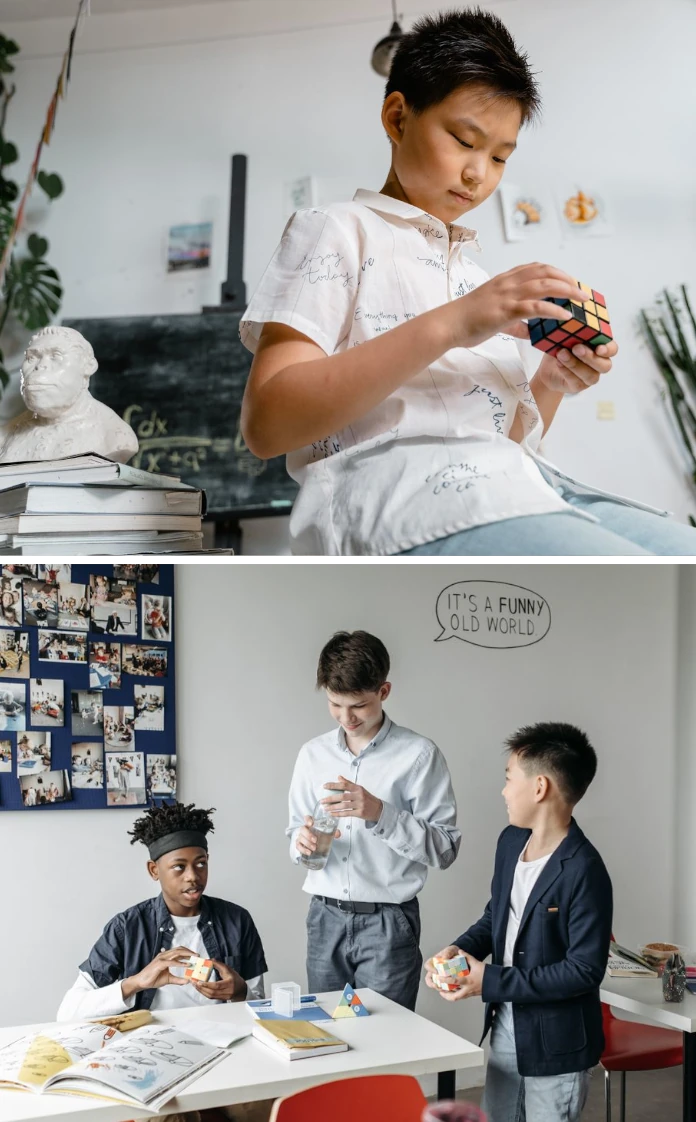
Professional gifted testing in Orlando – whether your child needs identification for school placement, enrichment programs, or you're an adult seeking Mensa admission, we connect you with licensed psychologists who specialize in gifted assessment.
Last Updated: September 2026
Child Gifted Testing
WISC-V & Stanford-Binet 5 for ages 6–16. Gifted identification, school placement.
Adult Gifted Testing
WAIS-IV & WAIS-5 available. Comprehensive assessments for adults seeking Mensa or career guidance.
WISC-V Test
Wechsler Intelligence Scale for Children® Fifth Edition – the gold standard for child gifted identification.
Stanford-Binet 5
Stanford-Binet Intelligence Scales Fifth Edition – comprehensive cognitive assessment for all ages, often used for gifted identification.
Mensa Testing
Mensa admission testing and preparation for the high-IQ society. Accepts WAIS-IV, WAIS-5, and Stanford-Binet 5 scores.
School Placement Testing
Testing for private school admission and gifted program eligibility using WISC-V or Stanford-Binet 5.
Gifted Testing in Orlando: city context
Orlando's gifted-education environment includes OCPS gifted services, Orlando Gifted Academy, school-based Educational Plans, magnet and scholastic academies, honors, AP, IB, Cambridge and dual-enrollment pathways, charter and private schools, UCF and community enrichment, arts and STEM programs, and Central Florida Mensa resources.
IQ by gender & ethnicity (child population)
Orlando is 51.1% female, 21.4% under age 18, 23.4% Black, 5.0% Asian, 35.4% Hispanic or Latino, and 24.2% two or more races. These demographics describe the city but do not establish group-specific IQ averages.
- Gender: Giftedness occurs across genders; referral, behavior expectations, and access can influence identification patterns.
- Culture and language: Testing should consider first language, bilingual development, education, immigration history, and culturally responsive interpretation.
- Disability: Gifted children may also have ADHD, autism, dyslexia, anxiety, medical conditions, motor difficulties, or other disabilities.
- Florida eligibility: OCPS follows state criteria and an ESE process rather than a single Orlando IQ cutoff.
- Individual focus: Planning should use the child's actual strengths, needs, interests, achievement, behavior, and social-emotional development.
Gifted children in Orlando: who are they?
Gifted children demonstrate advanced ability, rapid learning, creativity, or exceptional achievement in one or more areas. A traditional IQ score near the 98th percentile can be one indicator, but Florida eligibility and Orlando-area educational planning require broader evidence and current procedures.
- Advanced reasoning: Quickly recognizing patterns, relationships, causes, systems, or abstract principles.
- Rapid learning: Needing fewer repetitions and moving quickly from examples to general concepts.
- Deep interests: Sustained focus on science, aviation, space, technology, mathematics, language, policy, history, arts, medicine, or other topics.
- Creativity: Producing original questions, designs, stories, performances, experiments, or solutions.
- Asynchronous development: Intellectual development may outpace emotional, social, motor, or executive-function skills.
- Intensity: Some children experience heightened curiosity, perfectionism, sensitivity, or frustration with inappropriate pacing.
- Twice exceptionality: Disability can coexist with giftedness and may conceal both strengths and needs.
- Diversity: Gifted learners come from every racial, cultural, linguistic, gender, socioeconomic, and disability group.
Schools for gifted children in Orlando
- Orlando Gifted Academy: OCPS zoneless magnet for students in grades 2–8 who have an active Florida Gifted Educational Plan and receive a seat through the magnet process.
- Neighborhood OCPS schools: Eligible students may receive school-based gifted services under an Educational Plan without attending OGA.
- Scholastic academies and magnets: Specialized STEM, arts, language, international, legal, medical, aviation, and advanced-learning programs vary by school.
- Secondary pathways: Honors, AP, IB, Cambridge, dual enrollment, career academies, and research can provide depth for older learners.
- Private schools: Lake Highland, The First Academy, Bishop Moore, and other independent schools establish their own admissions and advanced-learning policies.
- Charter schools: Orlando Science Schools and other charters follow public enrollment rules; programming and support should be evaluated individually.
- Regional enrichment: UCF, Orlando Science Center, libraries, arts organizations, Stetson HATS, and community programs supplement school services.
Advantages of gifted education
- Appropriate pace: Reduces unnecessary repetition and permits faster progress when mastery is demonstrated.
- Depth and complexity: Encourages research, analysis, synthesis, debate, design, and original products.
- Advanced peers: Creates opportunities to collaborate with students who share interests or learning pace.
- Talent development: Supports academic, creative, artistic, leadership, technical, or entrepreneurial strengths.
- Engagement: Appropriate challenge can reduce boredom, disengagement, and underachievement.
- Social-emotional support: Educators can address perfectionism, intensity, identity, and asynchronous development.
- Preparation: Advanced coursework can support later AP, IB, dual enrollment, university, research, and career pathways.
Hobbies and interests of gifted children
- Science and engineering: Orlando Science Center, UCF youth programs, robotics, coding, aerospace, environmental science, and maker activities.
- Mathematics: Competitions, enrichment circles, advanced coursework, puzzles, statistics, and data projects.
- Reading and writing: Orange County Library System, debate, journalism, creative writing, history, and language study.
- Arts: Dr. Phillips Center, Orlando Shakes, museums, music, theater, dance, visual art, film, design, and digital media.
- Technology and simulation: Game design, immersive media, animation, virtual reality, aviation, and human-performance projects reflect regional strengths.
- Nature: Wetlands, lakes, parks, ecology, wildlife, gardening, and citizen-science activities.
- Entrepreneurship: Product design, business competitions, social innovation, event production, and maker programs.
- Balanced development: Recreation, friendships, sleep, family time, and unstructured play remain important.
What is giftedness?
Giftedness is a complex and multifaceted construct that goes beyond a single IQ score. In the field of psychology, giftedness is typically defined as an IQ score of 130 or above (the 98th percentile), but it also encompasses exceptional creativity, leadership ability, or talent in specific academic or artistic domains.
However, in Orlando and across the U.S., the definition of giftedness is evolving. Many psychologists and educators now recognize that giftedness manifests in diverse ways, including:
- Intellectual giftedness: Exceptional reasoning, problem-solving, and abstract thinking.
- Creative giftedness: Unusual originality, imagination, and ability to generate novel ideas.
- Leadership giftedness: Exceptional interpersonal skills, empathy, and ability to inspire others.
- Artistic giftedness: Superior talent in visual arts, music, drama, or dance.
- Twice-exceptional (2E): Gifted individuals who also have a learning disability or neurodivergence such as ADHD or dyslexia.
In Orlando, where diversity and inclusion are highly valued, there is a growing movement to identify and support gifted students from all backgrounds, including those who may be underserved by traditional testing methods.
Orlando Gifted Identification Statistics
- No authoritative city percentage: Students attend OCPS, charter, private, virtual, and home schools, so one Orlando gifted-identification rate would be misleading.
- Countywide reporting: OCPS data cover Orange County rather than the municipal population alone.
- OGA enrollment: Orlando Gifted Academy reported 460 students in grades 2–8 for 2025–2026; most gifted OCPS students are served in other settings.
- Identification is not prevalence: Counts reflect referral, eligibility rules, access, family choice, and service models.
- Multiple evidence: Florida's process considers intellectual functioning, characteristics, and need for gifted education.
- Equity: Underrepresentation by race, language, income, disability, or school can affect who is referred and identified.
- Private results: A private IQ score does not automatically establish OCPS eligibility, create an EP, or secure magnet admission.
- Current data: Ask OCPS for current district reports and procedural information rather than relying on marketing estimates.
Orlando Gifted Testing Timeline
- Start with the school: Request current OCPS referral and evaluation procedures before commissioning outside testing.
- Allow for ESE steps: Screening, consent, evaluation, eligibility, and Educational Plan development take time and follow district procedures.
- OGA planning: Students need an active Florida Gifted Educational Plan at application, so eligibility questions should begin well before the magnet window.
- Private appointments: Waits often increase before admissions and school-choice deadlines.
- Report production: Ask how long scoring, feedback, report writing, school forms, and requested revisions take.
- Score age: Schools and organizations may set expiration rules; verify before testing.
- Retesting: Repeat only when clinically or educationally justified and after considering practice effects.
Orlando Gifted Programs by Age Group
- Preschool: Developmental observation, play, language, early academic interests, and readiness are often more useful than a single label.
- Grades K–1: School-based differentiation, enrichment, flexible grouping, and careful monitoring can support advanced learners before OGA entry grades.
- Grades 2–8: Eligible students may apply to Orlando Gifted Academy or receive gifted services in other OCPS schools.
- Middle school: Magnets, advanced mathematics, world languages, research, arts, competitions, and technology provide additional challenge.
- High school: Honors, AP, IB, Cambridge, dual enrollment, career academies, internships, and independent study can develop specialized talent.
- Twice-exceptional learners: Gifted services should be coordinated with an IEP, 504 Plan, therapy, assistive technology, or intervention when appropriate.
- Transition: College admissions and disability offices use their own criteria; an OCPS gifted EP does not automatically create university accommodations.
Unique challenges and nuances of giftedness
Giftedness is not always a straightforward advantage. Many gifted individuals face unique challenges that can impact their well-being and success:
- Asynchronous development: Gifted children often have intellectual abilities that outpace their social and emotional maturity. This can lead to frustration, social isolation, and difficulty relating to peers.
- Perfectionism: Many gifted individuals set unrealistically high standards for themselves, leading to anxiety, burnout, and avoidance of challenges.
- Underachievement: Gifted students may underperform in school if they are not adequately challenged or if their learning needs are not met.
- Social isolation: Gifted individuals may struggle to find peers who share their interests and intellectual intensity, leading to loneliness and depression.
- Twice-exceptionality (2E): Many gifted individuals also have learning disabilities or neurodivergence, such as ADHD, dyslexia, or autism. This can mask their abilities and make it difficult to receive appropriate support.
- Cultural and ethnic disparities: Giftedness is often under-identified in minority and low-income populations due to cultural biases in testing and limited access to enrichment programs. Orlando is actively working to address these disparities through inclusive identification practices.
Gifted testing can help identify these challenges and provide a roadmap for support. A comprehensive evaluation can reveal not only strengths but also areas where intervention is needed.
Mensa and high-IQ societies
Mensa is the largest and oldest high-IQ society in the world, with members in over 100 countries. To qualify for Mensa, individuals must score at or above the 98th percentile on a standardized IQ test, which typically corresponds to an IQ of 130 or above.
In Orlando, there is an active Mensa community that offers social events, intellectual discussions, and networking opportunities. Membership can provide a sense of belonging and community for gifted individuals who may feel isolated in their everyday lives.
We offer official Mensa admission testing and preparation materials. Our psychologists are experienced in administering the tests required for Mensa membership and can help you navigate the application process.
Areas we serve
We support all areas of Orlando.
Frequently Asked Questions
Both are excellent tests. WISC-V is more commonly used for school-age children, while Stanford-Binet 5 can be used for ages 2–85. We often recommend WISC-V for school placement and Stanford-Binet 5 for highly gifted individuals.
The test itself takes 60–90 minutes. With the consultation, feedback, and report, the entire process is about 1–2 weeks.
No, you can book directly with our psychologists. We serve both self-referred and professionally referred individuals.
Some professionally administered scores may be submitted as prior evidence, but acceptance is determined solely by American Mensa under its current rules.
Some plans cover cognitive assessments when there is a clinical indication. Check with your provider.
Get a good night's sleep, eat a healthy meal, and arrive relaxed. No specific preparation is needed.
You'll receive a comprehensive report with your scores and tailored recommendations.
Interviews and feedback may be available remotely, but many standardized cognitive tests require controlled administration and may need an in-person appointment. Contact us for details.
Not exactly. Smartness is a colloquial term, while giftedness is a clinical construct involving specific cognitive abilities and traits.
We specialize in identifying both giftedness and learning disabilities, and we provide tailored recommendations for support.