
IQ Testing in Newark
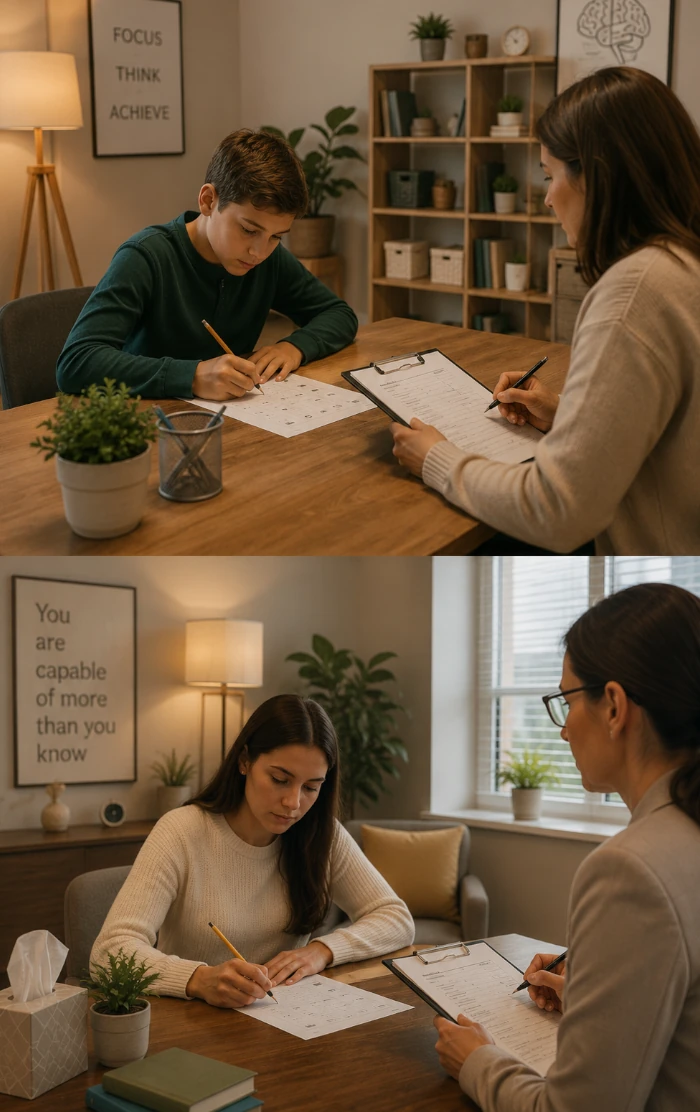
Professional IQ testing in Newark – whether you need an assessment for school, employment, gifted program eligibility, or personal insight, we connect you with licensed psychologists in the Newark area.
Last Updated: September 2026
Child IQ Testing
WISC-V & Stanford-Binet for ages 6–16. Gifted identification, learning profiles.
Adult IQ Testing
WAIS-IV & WAIS-5 available. Comprehensive adult cognitive assessments. Clinical & occupational.
WISC-V Test
Wechsler Intelligence Scale for Children® Fifth Edition – the gold standard for child IQ testing.
WAIS-IV & WAIS-5 Tests
Wechsler Adult Intelligence Scale® – Fourth Edition (WAIS-IV) and Fifth Edition (WAIS-5) available for adult IQ testing.
Gifted Testing
Identify giftedness for school placement, enrichment, and talent programs using WISC-V or Stanford-Binet.
Stanford-Binet 5
Stanford-Binet Intelligence Scales Fifth Edition – comprehensive cognitive assessment for all ages.
Mensa Testing
Mensa admission testing and preparation for the high-IQ society. Accepts WAIS-IV, WAIS-5, and Stanford-Binet 5 scores.
Full Evaluation
Combined assessment with detailed report and recommendations. Includes WISC-V, WAIS-IV, WAIS-5, or Stanford-Binet 5 as appropriate.
IQ Testing in Newark: city context
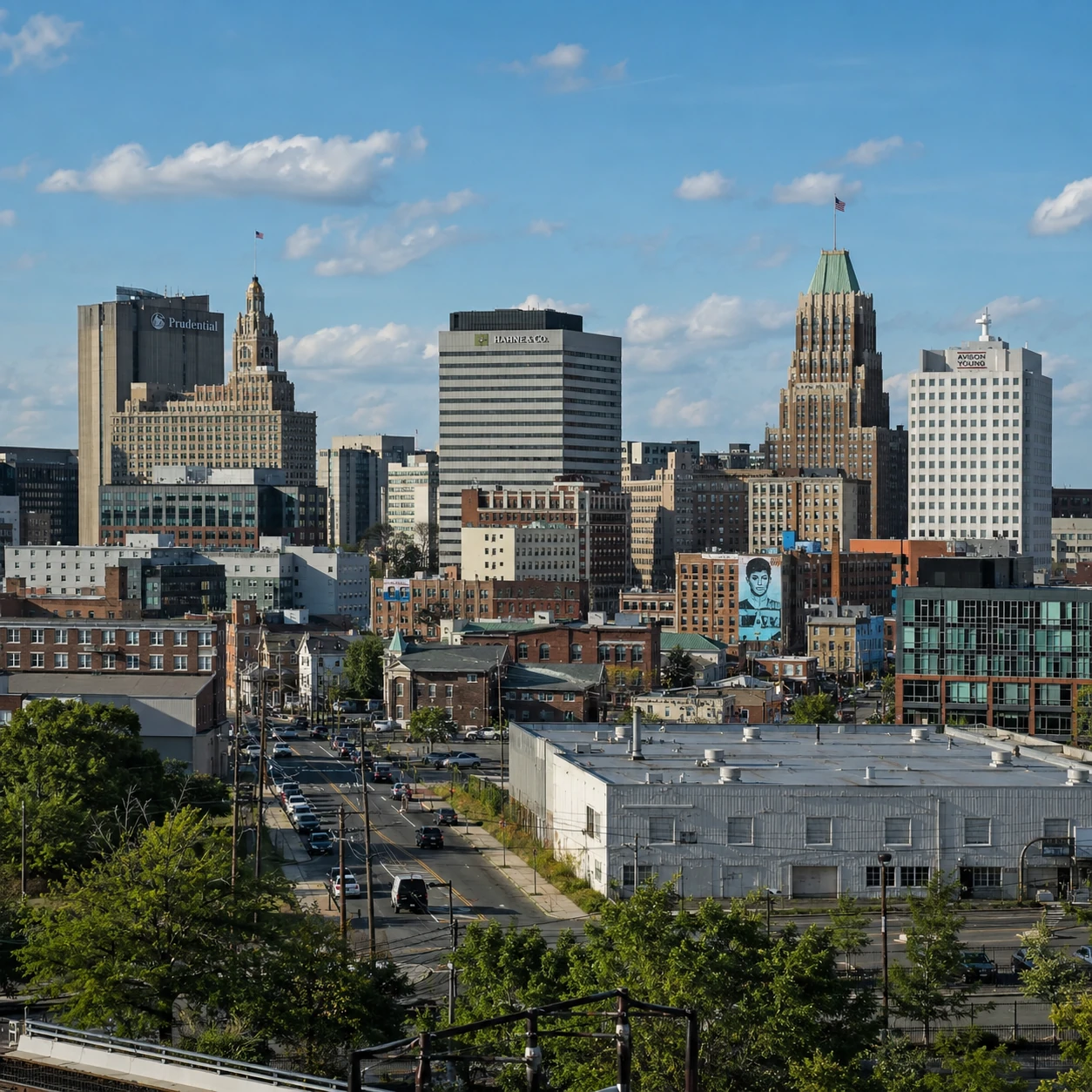
Newark is a compact university city in northern Delaware, about 12 miles southwest of Wilmington and immediately north of I-95. The U.S. Census Bureau estimated 30,359 residents in 2025 across approximately 9.43 square miles of land. The city combines the University of Delaware, a historic Main Street district, research and technology facilities, established neighborhoods, public and charter schools, healthcare access, and direct rail connections to the Philadelphia region.
The local cognitive-assessment environment is shaped by the University of Delaware, Christina School District, Newark Charter School, ChristianaCare, Nemours Children's Hospital Delaware, Delaware Technical Community College, Delaware Department of Education, state professional boards, and a highly educated population of students, faculty, researchers, engineers, healthcare workers, public employees, and families.
Gender, age and demographic statistics
Current Census estimates describe a diverse city whose age profile is strongly influenced by the University of Delaware. These figures provide context but do not establish group-specific IQ averages:
- Female population: 52.7%.
- Residents under age 18: 11.4%; the city population is strongly influenced by university students and young adults.
- Residents age 65 or older: 11.2%.
- White alone: 68.3%.
- Black or African American alone: 10.0%.
- Asian alone: 8.9%.
- Two or more races: 10.8%.
- Hispanic or Latino: 10.3%; Hispanic origin may overlap with racial categories.
- Foreign-born residents: 12.9%.
- Language other than English at home: 17.6% of residents age five and older.
- Education: 97.1% of adults age 25 and older are high-school graduates or higher, and 58.2% hold a bachelor's degree or higher.
- Clinical interpretation: Professional testing uses age-based national norms and considers education, language, culture, disability, health, sleep, attention, mood, and testing conditions rather than assigning ability from demographic categories.
What is professional IQ testing?
Intelligence quotient (IQ) testing is a standardized method to measure human cognitive abilities and intellectual potential. Professional IQ tests are administered by licensed psychologists in a controlled environment to ensure accuracy and reliability. Unlike online quizzes, clinical assessments provide a full-scale IQ score along with detailed breakdowns of verbal comprehension, perceptual reasoning, working memory, and processing speed.
In Newark, IQ testing is commonly used for gifted program admission, learning disability identification, career guidance, neuropsychological evaluation, and personal development. The results are presented in a comprehensive report that includes normative comparisons, strengths and weaknesses, and actionable recommendations.
Who should get tested?
IQ testing can benefit children, adolescents, and adults in various situations:
- Children: Parents often seek testing for school readiness, gifted placement, or to understand learning challenges.
- Adults: Many adults take IQ tests for career advancement, graduate school applications, or personal curiosity.
- Mensa candidates: High-IQ societies require official test scores for membership.
- Clinical referrals: Psychologists may recommend testing as part of a broader neuropsychological evaluation.
Types of IQ tests
We offer the most recognized and scientifically validated intelligence tests in the field:
- WISC-V (Wechsler Intelligence Scale for Children® – Fifth Edition): The gold standard for children aged 6:0–16:11. It provides a Full-Scale IQ and five primary index scores.
- WAIS-IV (Wechsler Adult Intelligence Scale® – Fourth Edition): The most widely used adult IQ test for ages 16–90. It measures cognitive functioning across four domains.
- Stanford-Binet Intelligence Scales – Fifth Edition: A comprehensive assessment for ages 2–85, often used for gifted identification and clinical evaluations.
- Gifted Testing: Often includes the WISC-V or Stanford-Binet, plus additional creativity and achievement measures.
- Mensa Testing: We provide official Mensa admission testing and preparation materials.
How the testing process works
- Initial consultation: Brief phone or video call to discuss your needs and match you with the right psychologist.
- Testing session: In-person or remote testing (depending on the test) with a licensed psychologist. Most sessions last 1–2 hours.
- Scoring and interpretation: The psychologist scores the test and interprets the results in the context of your background and goals.
- Feedback session: A detailed review of your results, including strengths, weaknesses, and practical recommendations.
- Comprehensive report: You receive a written report with all scores, normative comparisons, and actionable next steps.
How much does IQ testing cost in Newark?
The cost of IQ testing in Newark varies depending on the type of test, the psychologist's experience, and whether a comprehensive report is required. Typical fees range from $200 to $1,200 for a full assessment. Gifted testing and Mensa admission testing are often at the lower end, while neuropsychological evaluations may be higher.
People in Newark who are curious about cognitive problem-solving may begin with an online IQ test, then consult a licensed psychologist when they need standardized scores or a written report.
Some insurance plans cover IQ testing when it's deemed medically necessary. We recommend checking with your provider for details. We also offer affordable payment plans and sliding-scale options for qualifying individuals.
Newark's Intellectual History & Legacy
- Colonial origins: Newark developed from an eighteenth-century crossroads community and educational center in northern Delaware.
- University of Delaware: The institution traces its history to 1743 and grew into Delaware's flagship land-grant, sea-grant, and space-grant research university.
- Science and engineering: Newark has long-standing strengths in chemistry, chemical engineering, materials science, energy, environmental science, agriculture, and computing.
- DuPont and advanced materials: Northern Delaware's chemical and industrial history helped shape research, engineering, and professional employment throughout the region.
- Public policy and civic life: Proximity to Wilmington and Dover connects local residents with state government, courts, nonprofit organizations, and public administration.
- Education innovation: University research, teacher preparation, laboratory schools, district programs, charter schools, and statewide initiatives support educational experimentation and assessment.
- Arts and humanities: UD museums, libraries, performances, lectures, and Main Street cultural organizations contribute to the city's intellectual life.
- Regional position: Newark sits on the Northeast Corridor between Philadelphia, Baltimore, and Washington, expanding access to universities, hospitals, employers, and professional networks.
Top Employers in Newark Requiring Cognitive Skills
- University of Delaware: Faculty, research, engineering, information technology, student services, administration, laboratories, healthcare education, and facilities roles require advanced reasoning and communication.
- ChristianaCare: Christiana Hospital and regional clinics employ physicians, nurses, psychologists, therapists, technicians, analysts, administrators, and information-technology professionals.
- Christina School District and charter schools: Education, counseling, special education, gifted services, administration, data, and technology roles rely on judgment, planning, and interpersonal skill.
- State of Delaware: Public administration, law, regulation, education, transportation, finance, public safety, and health programs employ Newark-area residents.
- Advanced materials and life sciences: Companies and research partners in the Newark and Wilmington corridor employ chemists, engineers, biologists, laboratory staff, quality professionals, and project managers.
- Financial and professional services: Northern Delaware's banking, legal, insurance, accounting, cybersecurity, and consulting sectors require analytical and verbal strengths.
- Manufacturing and logistics: I-95 access supports production, distribution, maintenance, quality control, supply-chain, and transportation occupations.
- Retail, hospitality, and small business: Main Street, Christiana-area retail, restaurants, hotels, and independent businesses rely on customer service, operations, management, and entrepreneurship.
- Healthcare and human services: Nemours, behavioral-health providers, rehabilitation services, and nonprofit organizations employ clinical and social-service professionals.
- Research commercialization: UD's Science, Technology and Advanced Research campus and regional innovation organizations support startups, technology transfer, and applied research.
Newark IQ Testing by City Area
- Downtown and Main Street: The compact commercial district offers restaurants, offices, municipal parking, bus service, and walkable access from the University of Delaware.
- University of Delaware campus: Students, faculty, staff, and graduate applicants may seek testing for accommodations, diagnostic clarification, career planning, or personal insight.
- South Newark and DE 896: South College Avenue connects downtown with the rail station, I-95, Christiana-area healthcare, and communities near US 40.
- West Newark and Elkton Road: Neighborhoods and commercial areas near the Maryland line provide access toward Elkton and Cecil County.
- East Newark and Chapel Street: Residential areas connect toward DE 72, Possum Park Road, Pike Creek, and Christiana.
- North Newark and Paper Mill Road: Communities near White Clay Creek State Park and the Pennsylvania line use Paper Mill Road and New London Road corridors.
- Brookside and Ogletown: Nearby unincorporated communities often use Newark addresses and local services but may fall outside city limits or different school boundaries.
- Regional referrals: Clients may also travel from Wilmington, Bear, Glasgow, Hockessin, Middletown, Elkton, Cecil County, southeastern Pennsylvania, and other parts of New Castle County.
Newark Universities and Research Institutions
- University of Delaware: The Newark campus enrolls more than 24,000 students and offers over 150 majors and minors and more than 250 graduate and post-baccalaureate programs.
- UD College of Engineering: Research and education span chemical, biomedical, civil, environmental, computer, electrical, materials, and mechanical engineering.
- STAR Campus: The Science, Technology and Advanced Research campus supports health sciences, biotechnology, mobility, entrepreneurship, and university-industry collaboration.
- Delaware Biotechnology Institute: Provides core facilities and interdisciplinary research in life sciences, agriculture, health, and environmental fields.
- Delaware Geological Survey and environmental research: University-based programs support geology, water, coastal, climate, and geographic research.
- Delaware Technical Community College: Nearby campuses provide associate degrees, workforce education, health programs, technical training, and transfer pathways.
- Regional universities: Wilmington University, Goldey-Beacom College, Lincoln University, West Chester University, and Philadelphia-area institutions broaden graduate and professional options.
- Research distinction: Participation in a study or university laboratory does not automatically provide a clinical diagnosis, school-ready report, or disability documentation.
Newark Economic Context
- Median household income: $76,912 in 2020–2024 Census estimates.
- Per-capita income: $35,264.
- Residents in poverty: 27.7%; this citywide figure is affected by Newark's unusually large student population and should not be interpreted as a simple household hardship measure.
- Bachelor's degree or higher: 58.2% of adults age 25 and older.
- Mean travel time to work: 19.0 minutes, although commuting to Wilmington, Philadelphia, Maryland, or other parts of New Castle County can take substantially longer.
- Health care and social-assistance activity: Census business data report approximately $2.30 billion in 2022 receipts/revenue within the city.
- Transportation and warehousing: Approximately $27.5 million in 2022 receipts/revenue within city limits; Newark also benefits from the wider I-95, rail, port, airport, and distribution economy of northern Delaware.
- Retail sales: Approximately $1.25 billion in 2022, or $41,450 per capita.
- Accommodation and food services: Approximately $219.2 million in 2022 sales.
- Regional strengths: Higher education and research, healthcare, biotechnology and life sciences, chemicals and advanced materials, financial and professional services, public administration, engineering, technology, manufacturing, retail, hospitality, and entrepreneurship.
Newark School District Data
- Christina School District: Serves Newark-area students through elementary, middle, and high schools, including Newark High School, and offers gifted and talented services, dual-language programs, AVID, career pathways, AP, and dual enrollment.
- Elementary gifted services: Christina describes universal critical- and creative-thinking lessons, portfolio and cognitive screening, differentiated instruction, and pull-out advanced academic services for identified students.
- Middle and high school: Honors, advanced coursework, AP, dual enrollment, career and technical education, and specialized programs provide multiple advanced-learning pathways.
- Newark Charter School: A public charter school serving Newark-area students under its own admissions, curriculum, assessment, and enrollment policies.
- School choice: Delaware families may apply to public schools outside their attendance area under statewide choice procedures, subject to deadlines, capacity, and program rules.
- Charter and magnet options: New Castle County includes specialized public schools and programs whose admission may involve applications, lotteries, academic criteria, or district-specific procedures.
- Private schools: Independent and religious schools establish their own admissions, testing, acceleration, learning-support, and documentation policies.
- Boundary verification: A Newark mailing address does not by itself determine city limits, school district, assigned school, or eligibility for a particular program.
Local Testing Centers and Psychologists
- Private licensed psychologists: Independent practices may provide IQ, gifted, ADHD, autism, learning-disability, disability, forensic, and psychoeducational evaluations. Verify licensure through the Delaware Board of Examiners of Psychologists.
- ChristianaCare: Neurology, behavioral health, memory care, rehabilitation, and brain-injury services may incorporate cognitive screening or neuropsychological referral when medically appropriate.
- Nemours Children's Hospital Delaware: Wilmington-based pediatric neuropsychology and behavioral-health services evaluate children with complex medical, developmental, and psychological needs.
- University resources: UD research, training, counseling, accessibility, and educational programs have different scopes; research participation is not a substitute for a clinical evaluation.
- School evaluations: Public schools evaluate suspected disabilities under special-education rules, but their process and purpose differ from private gifted or admissions testing.
- Medical referral: Insurance-funded neuropsychological testing commonly requires medical necessity, referral, authorization, and an appropriate diagnostic question.
- Provider verification: Confirm age specialization, tests used, report purpose, fees, turnaround time, language access, and whether the intended school, employer, court, insurer, or agency will accept the evaluation.
Newark Events and Conferences
- University programs: UD hosts lectures, research symposia, performances, exhibitions, career fairs, graduate showcases, athletics, and continuing-education events.
- Main Street events: Festivals, restaurant events, parades, community celebrations, and downtown programming can affect parking and appointment travel.
- Education events: Christina School District, charter schools, Delaware Department of Education, libraries, and parent organizations offer workshops and student programs.
- Research and industry: STAR Campus, engineering and science centers, healthcare organizations, and professional associations host conferences and networking events.
- Community learning: Newark Free Library, parks, White Clay Creek State Park, museums, arts groups, and nonprofits provide youth and adult enrichment.
- Scheduling advice: Check the UD academic and athletics calendar before appointments during move-in, commencement, home football games, major conferences, and downtown festivals.
Transportation and Accessibility
- Major roads: I-95 runs east–west just south of the city; DE 896/South College Avenue connects the University of Delaware, downtown, I-95, and US 40; DE 72/Chapel Street and Possum Park Road serve eastern Newark; DE 4, DE 2/Kirkwood Highway, Elkton Road, Cleveland Avenue, Main Street, Marrows Road, and Paper Mill Road are important local corridors.
- Public transit: DART First State operates fixed-route bus service in the Newark area, and DART Connect provides app- or phone-requested microtransit within the Newark service zone on weekdays.
- Regional rail: The Newark Regional Transportation Center on South College Avenue is served by SEPTA's Wilmington/Newark Line and selected Amtrak trains, providing direct rail access toward Wilmington and Philadelphia and connections along the Northeast Corridor.
- Airport: Wilmington Airport (ILG) is roughly 10–12 miles away and offers scheduled passenger service; Philadelphia International Airport (PHL) is approximately 30–35 miles away, while Baltimore/Washington International (BWI) is about 65 miles southwest.
- Distance to other cities: Approximately 20–25 minutes to downtown Wilmington, 45–60 minutes to Philadelphia, about 1 hour to Baltimore, roughly 1 hour 45 minutes to Washington, D.C., and around 2 hours to New York City, depending on traffic and rail schedules.
- Walkability: Main Street, the University of Delaware campus, South Main Street, and nearby downtown neighborhoods are the most walkable parts of the city, with restaurants, offices, libraries, parks, and campus services concentrated within a compact area.
- Bike infrastructure: Newark's network includes the James F. Hall Trail, the Pomeroy and Newark Rail Trail, marked bicycle routes, campus facilities, and connections toward White Clay Creek State Park; both major trails have National Recreation Trail recognition.
- Parking: Downtown municipal lots and garages, University of Delaware permit areas, hospital and medical-office lots, and private-practice parking have different rules; allow extra time during university events, move-in, commencement, football games, and Main Street festivals.
- Accessibility: Ask the provider about step-free entry, accessible parking, elevators, sensory needs, language access, rest breaks, and approved testing accommodations before the appointment.
Newark Weather and Seasonal Considerations
- Hot and humid summers: Heat and humidity are common from June through August; hydration and a comfortable indoor testing environment can reduce fatigue.
- Winter weather: Snow, sleet, freezing rain, and rapidly changing road conditions can affect I-95, DE 896, local bridges, and SEPTA or Amtrak operations.
- Heavy rain and thunderstorms: Summer storms and remnants of tropical systems may create localized flooding, downed trees, and travel delays.
- Seasonal allergies: Tree, grass, weed, and mold allergens can affect sleep, medication use, headaches, and concentration.
- University calendar: Move-in, commencement, home football games, and major campus events can increase downtown congestion and parking demand.
- Academic deadlines: Gifted, school-placement, disability-accommodation, and graduate-school evaluations should be scheduled well before application or documentation deadlines.
Areas we serve
We support all areas of Newark.
Frequently Asked Questions
WISC-V is for children aged 6–16, while WAIS-IV is for adults aged 16–90. Each is normed for its specific age group.
Most IQ tests take between 60 and 90 minutes, plus a feedback session. Allow 2–3 hours total.
No, you can book directly with our psychologists. We serve both self-referred and professionally referred individuals.
Some professionally administered scores may be submitted as prior evidence, but acceptance is determined solely by American Mensa under its current rules.
Some plans cover cognitive assessments when there is a clinical indication. Check with your provider.
Get a good night's sleep, eat a healthy meal, and arrive relaxed. No specific preparation is needed.
You'll receive a comprehensive report with your scores and tailored recommendations.
Interviews and feedback may be available remotely, but many standardized cognitive tests require controlled administration and may need an in-person appointment. Contact us for details.