
Child IQ Testing in Lancaster

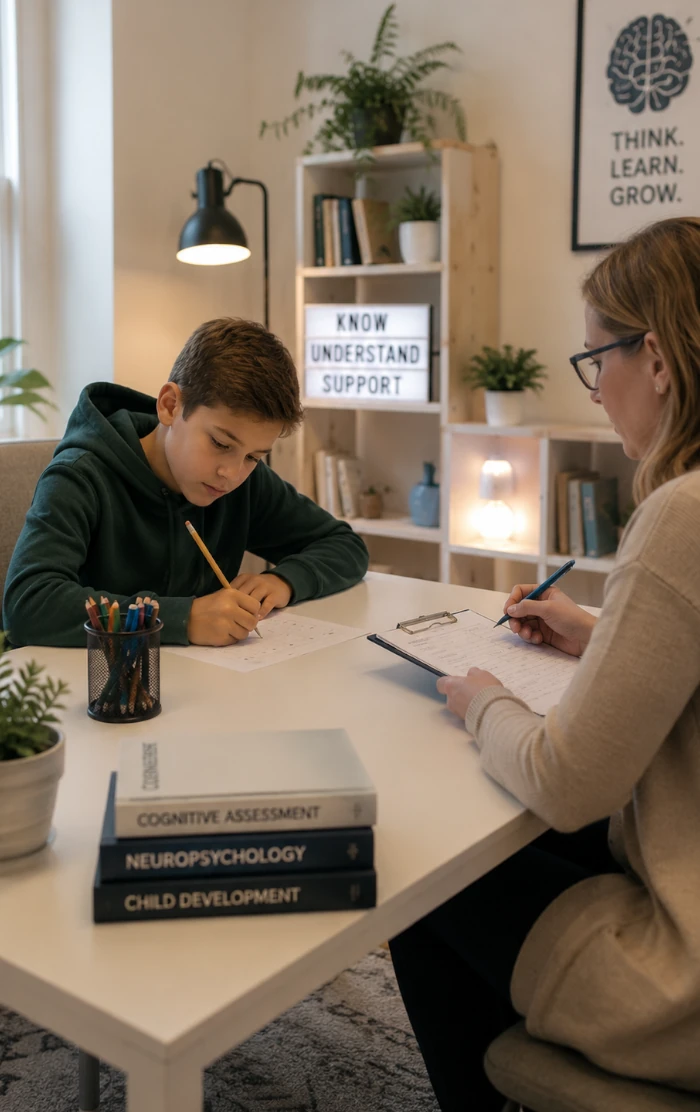
Professional child IQ testing in Lancaster – whether you need an assessment for school placement, gifted program eligibility, or to understand your child's learning profile, we connect you with licensed psychologists in the Lancaster area.
Last Updated: September 2026
Gifted Testing
Identify giftedness for school placement, enrichment, and talent programs using WISC-V or Stanford-Binet 5.
WISC-V Test
Wechsler Intelligence Scale for Children® Fifth Edition – the gold standard for child IQ testing.
Stanford-Binet 5
Stanford-Binet Intelligence Scales Fifth Edition – comprehensive cognitive assessment for all ages.
Full Evaluation
Combined assessment with detailed report and recommendations. Includes WISC-V or Stanford-Binet 5.
School Placement Testing
Testing for private school admission and gifted program eligibility using WISC-V or Stanford-Binet 5.
Schedule Child IQ Testing
Book your WISC-V & Stanford-Binet 5 for ages 6–16. Gifted identification, learning profiles, etc. with a licensed psychologist in Lancaster today.
Child IQ Testing in Lancaster: city context
Child IQ testing in Lancaster is commonly considered for gifted identification, unexplained academic difficulty, learning-disability evaluation, attention concerns, private-school questions, grade placement, or a broader developmental assessment. Testing should answer a clear referral question and should not be used simply to rank children.
Lancaster's multilingual school population makes language history essential. A child may use Spanish, Tagalog, Arabic, or another language at home while learning primarily in English at school. The evaluator should review exposure, proficiency, instruction, and acculturation before interpreting verbal scores.
IQ by gender & ethnicity (child population)
Census estimates indicate that 20.9% of Lancaster residents are under age 18. Modern child IQ tests are normed to reduce broad demographic bias, but individual performance can still be influenced by language, educational opportunity, disability, anxiety, fatigue, culture, and familiarity with the testing setting.
- Gender: Boys and girls show highly overlapping overall score distributions; individual subtest profiles are more informative than generalized claims.
- Ethnicity: City demographic categories do not predict a child's ability. Results require culturally responsive interpretation.
- Multilingual development: Lower English verbal scores may reflect language acquisition rather than lower reasoning ability.
- Multiple data sources: Teacher reports, grades, achievement scores, classroom response, interviews, observations, and developmental history should accompany cognitive data.
Lancaster School District and Gifted Programs
Lancaster School District GATE
Lancaster School District publishes Gifted and Talented Education information, while other local districts and schools use their own advanced-learning procedures. Families should check the current district calendar, eligible grade levels, referral process, assessment method, notification dates, and program options because procedures can change.
School-Based Assessment
When a disability is suspected, parents may request a school evaluation. The district develops an assessment plan based on the educational concern; testing may include cognition, academic achievement, language, processing, attention, behavior, social-emotional functioning, motor skills, or adaptive functioning.
Dual-Language and Multilingual Programs
Lancaster-area schools serve students from many language backgrounds and may offer bilingual, multilingual, or English-language-development services. Giftedness, disability, and English-language development must be considered separately so that emerging bilingual students are not under-identified or misidentified.
Advanced Secondary Options
For middle- and high-school students, honors, Advanced Placement, career-technical education, extracurricular competition, and dual-enrollment opportunities may provide appropriate challenge even when a formal IQ score is not required.
California Rules and Independent Evaluations
A private report may inform school planning, but the district applies federal law, California education requirements, and its own criteria. Before private testing, ask the school which instruments, credentials, report elements, and deadlines are relevant.
Preparing a Useful School Record
Before either district or private testing, organize a concise chronology. Include preschool and school history, attendance, school changes, languages used at home and in instruction, reading and mathematics development, intervention response, report cards, state or district test results, work samples, teacher comments, tutoring, medical diagnoses, hearing and vision results, medication, sleep, and prior evaluations. For a child educated partly outside the United States, note the country, language of instruction, curriculum, and interruptions.
Interpreting a Child's Score Profile
- Full Scale IQ: Useful when index scores are reasonably consistent, but it can hide meaningful differences when the profile is uneven.
- Verbal comprehension: Influenced by vocabulary, knowledge, language exposure, instruction, and the ability to explain reasoning aloud.
- Visual-spatial and fluid reasoning: Reflect pattern analysis and novel problem solving but can be affected by motor, visual, or attention factors.
- Working memory: Important for holding and manipulating information; attention, anxiety, hearing, language, and fatigue may influence it.
- Processing speed: Measures efficient performance on simple visual tasks and is not a measure of creativity, depth, motivation, or overall worth.
- Confidence intervals: Scores are estimates, not exact points. A report should explain the range in which the child's true performance likely falls.
From Evaluation to Educational Action
The practical question is what changes after testing. Recommendations may include subject acceleration, curriculum compacting, enrichment, explicit reading or math intervention, speech-language services, assistive technology, reduced-distraction testing, extended time when justified, counseling, executive-function support, or monitoring. Families should ask who will implement each recommendation, how progress will be measured, and when the plan will be reviewed.
Twice-exceptional children can have very high reasoning alongside dyslexia, ADHD, autism, anxiety, motor difficulties, or slow processing. High scores must not be used to deny support, and weaknesses must not be used to overlook advanced potential. A balanced report describes both.
Lancaster Private Schools and Placement Testing
Private schools in Lancaster and nearby Los Angeles County set their own admissions and placement procedures. Many use records, interviews, classroom visits, teacher recommendations, or achievement tests rather than requiring a clinical IQ test.
- Local options: Families may consider faith-based, independent, Montessori, specialized, and college-preparatory schools in Lancaster, Palmdale, Quartz Hill, Santa Clarita, and other Antelope Valley or northern Los Angeles County communities.
- Ask before testing: Confirm whether the school requires WISC-V, Stanford-Binet 5, an achievement test, a particular age range, a licensed psychologist, and a report completed within a specified period.
- Do not overtest: A school admissions requirement may be narrower than a full clinical evaluation. Conversely, a child with learning, attention, language, or emotional concerns may need a broader battery.
- Confidentiality: Discuss which parts of a report will be shared and whether the school accepts a summary letter instead of the entire clinical record.
Lancaster Gifted Identification Statistics
There is no credible public statistic for the average IQ of Lancaster children, and a citywide estimate should not be invented. In a normal distribution, roughly 2% of people score at or above about 130, but school gifted programs may use different cutoffs, local norms, achievement data, teacher input, creativity, or multiple measures.
- District data: Ask the responsible Lancaster-area school district for current GATE identification and participation figures if needed for planning.
- Equitable identification: Multilingual learners, students from lower-income households, twice-exceptional students, and children with limited prior enrichment may need multiple pathways to demonstrate potential.
- Score uncertainty: Every IQ score has a confidence interval. Test behavior, sleep, illness, anxiety, attention, and language can affect performance.
- Program fit: Eligibility does not by itself determine the best classroom, pace, social environment, or support plan.
The child IQ testing process: step by step
Understanding the testing process can help parents prepare their child and reduce anxiety. Here's what to expect:
- Initial consultation (15–20 minutes): A brief phone or video call with the psychologist to discuss your child's background, concerns, and goals. This helps determine the right test and approach.
- Testing session (60–90 minutes): The child meets one-on-one with a licensed psychologist in a quiet, comfortable room. The psychologist administers the WISC-V or Stanford-Binet 5, which includes a series of subtests measuring verbal comprehension, visual-spatial reasoning, fluid reasoning, working memory, and processing speed. Breaks are offered as needed.
- Scoring and interpretation (1–2 days): The psychologist scores the test and analyzes the results. They consider the child's age, background, and any relevant medical or educational history.
- Feedback session (45–60 minutes): The psychologist meets with the parents (and the child, if appropriate) to explain the results. They discuss the Full-Scale IQ, index scores, strengths, and areas for growth. They also provide tailored recommendations for home, school, and extracurriculars.
- Comprehensive written report (5–7 days): You receive a detailed report with all scores, normative comparisons, and actionable next steps. This report can be shared with schools, doctors, or other professionals.
The entire process from consultation to report usually takes 1–2 weeks, depending on scheduling. The testing itself is non-invasive and designed to be engaging for children.
What is the WISC-V test?
The WISC-V (Wechsler Intelligence Scale for Children® – Fifth Edition) is the most widely used IQ test for children aged 6:0–16:11. It provides a Full-Scale IQ and five primary index scores: Verbal Comprehension, Visual-Spatial, Fluid Reasoning, Working Memory, and Processing Speed. The test is administered one-on-one by a trained psychologist and takes about 60–90 minutes.
The WISC-V is normed on a large, representative sample of U.S. children and is updated regularly to ensure accuracy. It is the gold standard for gifted identification, learning disability diagnosis, and school placement.
Why test your child's IQ?
IQ testing provides valuable insights into your child's cognitive strengths and weaknesses. It can help:
- Identify giftedness: For admission to gifted programs, private schools, or enrichment opportunities.
- Diagnose learning disabilities: Such as dyslexia, dyscalculia, or ADHD, which can be masked by high intelligence.
- Guide educational planning: Tailor instruction to your child's unique learning profile.
- Provide reassurance: Understand why your child is different from peers and how to support them.
Lancaster Gifted Testing Timeline
- First: Clarify whether the purpose is a local district gifted program, private-school placement, acceleration, enrichment, Mensa, or a clinical concern.
- 8–16 weeks before a deadline: Contact the school or receiving organization and obtain written requirements.
- 4–12 weeks before: Schedule a licensed psychologist, allowing time for records, testing, scoring, feedback, and report preparation.
- Testing day: Choose a time when the child is rested and healthy; bring glasses, hearing aids, medication information, and relevant records.
- After the report: Review recommendations with the psychologist and then with the school. Allow time for follow-up questions or an appeal.
- District schedule: the responsible district's annual gifted or advanced-learning calendar controls school-based dates; private testing does not automatically replace district procedures.
Lancaster Gifted Programs by Age Group
- Preschool and kindergarten: Focus on development, language, play, curiosity, self-regulation, and appropriate enrichment; very early scores can be less stable.
- Elementary school: Classroom differentiation, GATE identification, reading and math acceleration, project-based learning, and social-emotional support may be considered.
- Middle school: Advanced coursework, subject acceleration, clubs, competitions, music, coding, and mentorship can provide challenge.
- High school: Honors and AP courses, career-technical pathways, dual enrollment, independent research, arts, athletics, leadership, and college planning become central.
- Twice-exceptional students: Giftedness can coexist with ADHD, autism, dyslexia, anxiety, or other disabilities; both strengths and support needs should be addressed.
Lancaster Child ADHD and Learning Disability Assessment
An IQ test alone does not diagnose ADHD, dyslexia, dyscalculia, language disorder, autism, or emotional conditions. A complete evaluation may compare cognitive and academic skills, review attention and executive functioning, collect parent and teacher ratings, observe behavior, and consider language and medical history.
- School route: Families may request a a responsible school-district evaluation when a suspected disability affects education.
- Private route: A licensed psychologist can provide an independent evaluation, often with more flexible scheduling and a broader written report.
- Medical route: Pediatric, vision, hearing, sleep, neurological, or psychiatric assessment may be needed depending on symptoms.
- Bilingual children: The examiner should distinguish limited English exposure from a language or learning disorder.
- Actionable report: Recommendations should specify classroom strategies, interventions, accommodations, and follow-up rather than only listing scores.
Lancaster Summer Programs for Gifted Children
Summer can provide enrichment without the pressure of a school deadline. Lancaster families may explore local district offerings, city recreation, library programs, arts and theater, STEM camps, language programs, community-college youth activities, and college- and university-sponsored programs across northern Los Angeles County and the wider region.
- Match the child: Select by interest, readiness, social fit, schedule, and sensory needs—not only by an IQ label.
- Regional options: Antelope Valley College, local libraries, MOAH, aerospace and STEM organizations, parks programs, and regional universities may offer seasonal programming.
- Balance: Gifted children also benefit from rest, unstructured play, friendships, movement, family time, and opportunities outside their strongest academic subject.
- Verify details: Age limits, prerequisites, dates, fees, transportation, and financial aid change each year.
Lancaster Child Testing Costs and Funding
- School evaluation: Eligible public-school assessments are generally provided through the district at no direct cost to the family when legally required.
- Private IQ test: Fees commonly depend on the instrument, age, record review, feedback, and report length. Ask for a written estimate.
- Full psychoeducational evaluation: Costs more because it may include cognition, achievement, attention, executive functioning, language, behavior, and extensive documentation.
- Insurance: Plans may cover medically necessary diagnostic evaluation but often exclude testing performed solely for gifted placement, admissions, or Mensa.
- University or training clinics: Regional clinics may offer reduced fees but can have waiting lists and narrower eligibility.
- Before paying: Confirm that the applicable Lancaster-area school district, a private school, testing agency, or other recipient will accept the specific evaluator and report.
Cost-control checklist: Start with the decision-maker. Ask the responsible Lancaster-area school district, the private school, physician, or testing agency whether an evaluation is required and what documentation it accepts. Obtain itemized estimates from more than one qualified provider when time permits. A lower advertised fee may exclude the report, feedback, achievement testing, record review, school consultation, or forms; a larger package may include measures that are not necessary for the referral.
Families can also ask about payment plans, health-savings or flexible-spending eligibility, out-of-network reimbursement, sliding fees, supervised university-clinic services, and whether a school assessment can answer part of the question. Insurance authorization should be confirmed directly with the plan. Even when a service is covered, the deductible or coinsurance can be substantial.
Retesting should be planned carefully. Schools and organizations may impose recency rules, but repeating the same or similar cognitive measure too soon can introduce practice effects. Preserve the complete signed report, score tables, examiner credentials, invoices, and any school correspondence so that valid prior information is not lost. Ask how long records are retained and how future providers can request them securely.
Areas we serve
We support all areas of the City of Lancaster. Confirm the provider's child age range, language capacity, test edition, office accessibility, report turnaround, and school acceptance before scheduling.
Frequently Asked Questions
Both are excellent tests. WISC-V is more commonly used for school-age children, while Stanford-Binet 5 can be used for ages 2–85. We often recommend WISC-V for gifted identification.
The test itself takes 60–90 minutes. With the consultation, feedback, and report, the entire process is about 1–2 weeks.
No, you can book directly with our psychologists. We serve both self-referred and professionally referred children.
Yes, our reports are accepted by Lancaster Public Schools, private schools, and other gifted programs.
Some plans cover cognitive assessments when there is a clinical indication. Check with your provider.
Get a good night's sleep, eat a healthy meal, and arrive relaxed. No specific preparation is needed.
You'll receive a comprehensive report with your child's scores and tailored recommendations.
Some interview and feedback components may be available remotely, but many standardized cognitive tests require in-person administration. Confirm with the psychologist and the organization receiving the report.