
Gifted Testing in Hollywood, FL

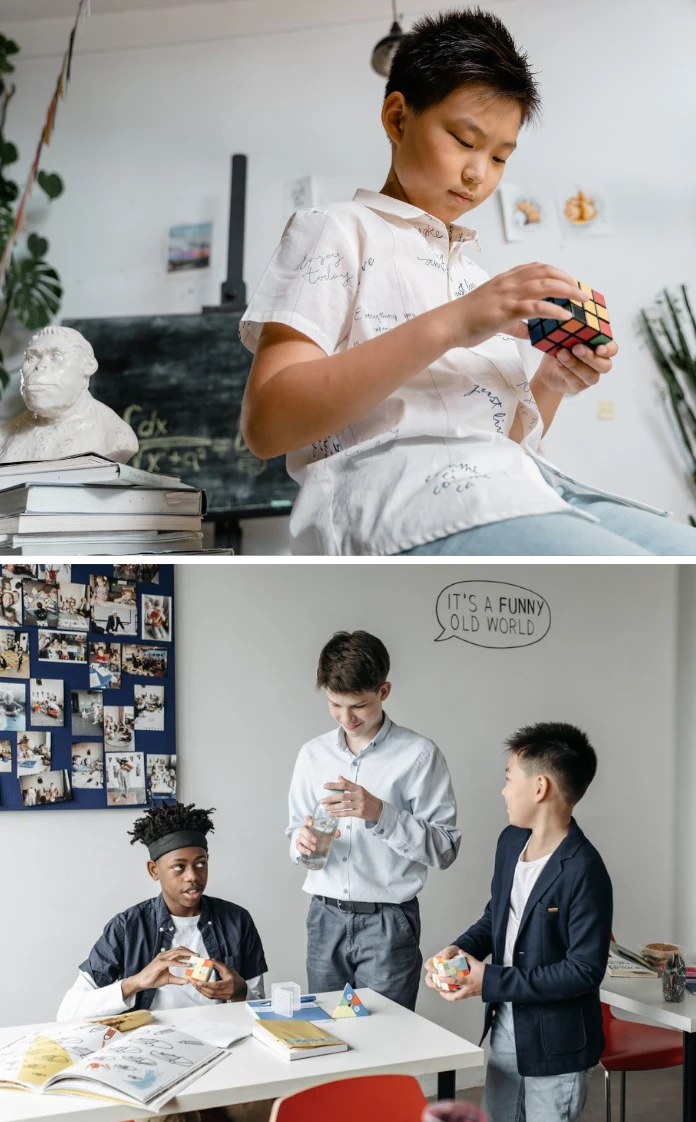
Professional gifted testing in Hollywood, FL – whether your child needs identification for school placement, enrichment programs, or you're an adult seeking Mensa admission, we connect you with licensed psychologists who specialize in gifted assessment.
Last Updated: September 2026
Child Gifted Testing
WISC-V & Stanford-Binet 5 for ages 6–16. Gifted identification, school placement.
Adult Gifted Testing
WAIS-IV & WAIS-5 available. Comprehensive assessments for adults seeking Mensa or career guidance.
WISC-V Test
Wechsler Intelligence Scale for Children® Fifth Edition – the gold standard for child gifted identification.
Stanford-Binet 5
Stanford-Binet Intelligence Scales Fifth Edition – comprehensive cognitive assessment for all ages, often used for gifted identification.
Mensa Testing
Professional cognitive testing for possible Mensa prior-evidence submission; confirm the current accepted test, edition, score, and documentation rules before scheduling.
School Placement Testing
Testing for private school admission and gifted program eligibility using WISC-V or Stanford-Binet 5.
Gifted Testing in Hollywood, FL: city context
Gifted testing in Hollywood can support BCPS referral, private-school planning, acceleration discussions, twice-exceptional evaluation, enrichment decisions, or personal understanding. The purpose and receiving organization’s rules should be established before the psychologist selects a test.
Hollywood’s multilingual population requires careful attention to language dominance, English exposure, schooling, culture, and the fairness of norms. Nonverbal reasoning measures can reduce some language demands but do not remove every cultural or educational influence.
Giftedness is broader than one composite score. Creativity, motivation, specific academic talent, leadership, arts ability, intensity, and educational need may require additional evidence.
Choosing the instrument: the WISC-V is commonly used for school-age children, the WPPSI for younger children, and Stanford-Binet 5 across a broad age range. No test is automatically “easier” or more legitimate. Selection should reflect age, language, disability, referral purpose, prior testing, and the receiving program’s rules.
Composite versus index scores: a Full-Scale IQ can summarize overall performance, but substantial differences among verbal, visual-spatial, fluid-reasoning, working-memory, and processing-speed scores may make the profile more informative than one number. The evaluator should explain confidence intervals and whether an alternative composite is psychometrically and clinically appropriate.
Limits of preparation: enrichment and good education are appropriate; coaching with secure items is not. Repeated exposure can invalidate scores and create a result that does not represent ordinary functioning.
Gifted children in Hollywood, FL: who are they?
Gifted learners in Hollywood come from every neighborhood, language group, income level, racial or ethnic background, and disability status. Some are early readers or advanced mathematicians; others show unusual reasoning, creativity, memory, curiosity, spatial skill, artistic talent, or depth in a narrow interest.
Underachievement, bilingual development, ADHD, dyslexia, autism, anxiety, trauma, limited opportunity, or school mobility can mask advanced potential. Identification should avoid stereotypes and use multiple sources of evidence.
The educational question is not simply whether a score is high, but what pace, depth, support, and environment the child needs.
Asynchronous development: a child may reason at an advanced level while having age-typical handwriting, emotional regulation, organization, or peer skills. Expectations should not be based only on the strongest ability.
Intensity and sensitivity: some gifted children show deep interests, perfectionism, strong reactions to injustice, sensory sensitivities, or fear of failure. These traits are not universal and should not be romanticized; support depends on actual impairment and context.
Underachievement: boredom is only one possible explanation. Learning disability, ADHD, anxiety, depression, sleep, family stress, language mismatch, weak study skills, attendance, or curriculum gaps may also contribute. Comprehensive assessment can prevent advanced ability from hiding a genuine need.
What is giftedness?
Giftedness is a complex and multifaceted construct that goes beyond a single IQ score. In the field of psychology, giftedness is typically defined as an IQ score of 130 or above (the 98th percentile), but it also encompasses exceptional creativity, leadership ability, or talent in specific academic or artistic domains.
However, in Hollywood, FL and across the U.S., the definition of giftedness is evolving. Many psychologists and educators now recognize that giftedness manifests in diverse ways, including:
- Intellectual giftedness: Exceptional reasoning, problem-solving, and abstract thinking.
- Creative giftedness: Unusual originality, imagination, and ability to generate novel ideas.
- Leadership giftedness: Exceptional interpersonal skills, empathy, and ability to inspire others.
- Artistic giftedness: Superior talent in visual arts, music, drama, or dance.
- Twice-exceptional (2E): Gifted individuals who also have a learning disability or neurodivergence such as ADHD or dyslexia.
In Hollywood, FL, where diversity and inclusion are highly valued, there is a growing movement to identify and support gifted students from all backgrounds, including those who may be underserved by traditional testing methods.
Psychometric giftedness is often discussed in terms of very high performance relative to age peers, but educational giftedness is a service decision tied to need. Florida’s definition emphasizes superior intellectual development and capacity for high performance; BCPS then applies state and district procedures.
Giftedness can be general or domain-specific. A child may be exceptionally advanced in mathematics, language, spatial reasoning, music, art, leadership, or creativity without showing the same level in every area. An IQ battery samples important reasoning processes but does not measure every talent.
Scores contain measurement error. Confidence intervals and the full pattern should be considered, especially near a cutoff. Ethical evaluators do not guarantee a particular result or alter interpretation to obtain placement.
Decisions should also be revisited when classroom response, development, or the child’s needs change.
Hollywood, FL Gifted Identification Statistics
No reliable public dataset gives a current gifted-identification rate limited to Hollywood city boundaries. BCPS publishes district procedures, while individual school enrollment and program configurations change over time.
Identification rates can be affected by universal screening, referral practices, language access, socioeconomic opportunity, prior schooling, disability, and the use of Florida’s eligibility pathways. Underrepresentation does not indicate lower ability; it can signal differences in access to screening or evidence.
Families should focus on the child’s educational need and complete profile rather than comparing one score with an estimated city percentage.
Universal screening can identify students who might not be referred through traditional teacher or parent nomination. Even so, identification patterns should be reviewed for differences by language, disability, race, ethnicity, mobility, and economic opportunity.
Plan B procedures are one Florida mechanism intended to broaden equitable identification. Families should rely on current BCPS guidance rather than informal online summaries because local criteria and required evidence can change.
A citywide rate would not determine whether a particular child needs advanced services. The relevant evidence is the child’s profile, performance, rate of learning, and educational response.
Hollywood, FL Gifted Testing Timeline
Start by asking the school whether the child has already been universally screened, whether a formal referral is appropriate, and what the current BCPS calendar requires. Public-school evaluation includes referral, consent, records, assessment, eligibility review, and EP planning; timelines are governed by school procedures and may differ from private evaluation schedules.
Private testing also requires lead time for intake, records, testing, scoring, feedback, and the written report. Contact the receiving school before scheduling to confirm deadlines and retesting rules.
Avoid coaching with secure test items. Normal sleep, breakfast, medication as prescribed, glasses or hearing aids, and an accurate history are more useful.
School route: screening or referral is followed by permission, evaluation, eligibility review, and EP development when the student qualifies. Families should ask for written timelines and keep records of every submission.
Private route: allow time to identify an examiner, obtain records, complete intake, test, score, meet for feedback, finalize the report, and permit the school to review it. Holiday periods and summer schedules can lengthen the process.
Retesting: tests have practice effects and publisher restrictions. Repeating quickly after an undesired score may produce invalid or misleading results and may violate program rules.
Hollywood, FL Gifted Programs by Age Group
- Early childhood: developmental observation, language-rich play, preschool records, and age-appropriate measures may be more informative than pushing for a single number.
- Elementary school: BCPS screening, referral, formal evaluation, differentiated instruction, cluster or resource services, enrichment, and an Education Plan may be relevant.
- Middle school: gifted services can combine with advanced coursework, Cambridge pathways, acceleration, electives, and subject-specific strengths.
- High school: gifted EP services may coexist with honors, AP, IB, dual enrollment, career academies, research, arts, and individualized mentorship.
Program availability varies by school and year. Placement should address pace, depth, social-emotional needs, motivation, and twice-exceptionality rather than IQ alone.
Community enrichment: Hollywood libraries, arts programs, parks, technical education, nearby colleges, museums, marine and environmental programs, and South Florida cultural institutions can complement school services.
Elementary planning: services should move beyond extra worksheets. Appropriate differentiation can change content depth, pace, complexity, independence, and opportunities to work with intellectual peers.
Secondary planning: gifted students may combine EP services with Cambridge, honors, AP, IB, dual enrollment, career academies, arts programs, independent study, mentorship, or research. Course labels alone do not guarantee suitable challenge.
Social-emotional support: counseling may be useful for perfectionism, anxiety, peer difficulties, identity, or twice-exceptional needs, but giftedness itself is not a disorder.
Unique challenges and nuances of giftedness
Giftedness is not always a straightforward advantage. Many gifted individuals face unique challenges that can impact their well-being and success:
- Asynchronous development: Gifted children often have intellectual abilities that outpace their social and emotional maturity. This can lead to frustration, social isolation, and difficulty relating to peers.
- Perfectionism: Many gifted individuals set unrealistically high standards for themselves, leading to anxiety, burnout, and avoidance of challenges.
- Underachievement: Gifted students may underperform in school if they are not adequately challenged or if their learning needs are not met.
- Social isolation: Gifted individuals may struggle to find peers who share their interests and intellectual intensity, leading to loneliness and depression.
- Twice-exceptionality (2E): Many gifted individuals also have learning disabilities or neurodivergence, such as ADHD, dyslexia, or autism. This can mask their abilities and make it difficult to receive appropriate support.
- Cultural and ethnic disparities: Giftedness is often under-identified in minority and low-income populations due to cultural biases in testing and limited access to enrichment programs. Hollywood, FL is actively working to address these disparities through inclusive identification practices.
Gifted testing can help identify these challenges and provide a roadmap for support. A comprehensive evaluation can reveal not only strengths but also areas where intervention is needed.
High ability can coexist with ordinary or impaired executive function. A student may understand advanced concepts yet miss assignments, avoid routine practice, or struggle to organize long projects. Supports should target the functional difficulty without removing access to challenging content.
Perfectionism can be adaptive when it supports careful work and harmful when it leads to avoidance, panic, or self-criticism. Adults should praise strategy, revision, and persistence rather than treating effortless performance as the child’s identity.
Family members may disagree about acceleration, workload, or disclosure of scores. A psychologist can frame decisions around observed needs, risks, supports, and follow-up rather than status.
Mensa and high-IQ societies
Mensa and other high-IQ societies are optional social organizations, not educational diagnoses or treatment programs. American Mensa generally requires accepted evidence at or above the 98th percentile, but accepted tests, editions, dates, and documentation rules can change.
- Confirm current rules before scheduling a private WISC-V or Stanford-Binet evaluation for membership.
- School gifted eligibility and Mensa qualification are separate processes.
- Parents should consider the child's interest, privacy, social comfort, and emotional readiness rather than treating membership as an obligation.
- No reliable Hollywood, FL-city child membership count is publicly available.
Families sometimes pursue high-IQ society membership for peer connection or enrichment. Before testing, verify the organization’s current accepted evidence, age rules, score requirements, and privacy practices. Membership is optional and should not become a child’s identity or a substitute for appropriate schooling.
A qualifying score does not guarantee social fit, emotional maturity, academic achievement, or absence of disability. Children should be involved in the decision in a developmentally appropriate way and should not be pressured to retest repeatedly.
Areas we serve
We support all areas of Hollywood, FL.
Frequently Asked Questions
Both are excellent tests. WISC-V is more commonly used for school-age children, while Stanford-Binet 5 can be used for ages 2–85. We often recommend WISC-V for school placement and Stanford-Binet 5 for highly gifted individuals.
The testing session often takes about 60–90 minutes for a focused measure, but broader batteries take longer. Intake, records review, scoring, feedback, and report timing vary by provider and referral complexity.
Referral requirements vary. Contact the psychologist directly and ask whether self-referral is accepted; insurance, school, court, or agency funding may require authorization or a formal referral.
Potentially. Acceptance depends on the exact test, edition, qualifying score, administration date, examiner credentials, and current Mensa documentation rules. Confirm before testing.
Some plans cover cognitive assessments when there is a clinical indication. Check with your provider.
Get a good night's sleep, eat a healthy meal, and arrive relaxed. No specific preparation is needed.
You'll receive a comprehensive report with your scores and tailored recommendations.
Some interview and feedback components may be available remotely, but many standardized cognitive tests require in-person administration. Confirm with the psychologist and the organization receiving the report.
Not exactly. Smartness is a colloquial term, while giftedness is a clinical construct involving specific cognitive abilities and traits.
We specialize in identifying both giftedness and learning disabilities, and we provide tailored recommendations for support.