
IQ Testing in Hialeah
Professional IQ testing in Hialeah – whether you need an assessment for school, employment, gifted program eligibility, or personal insight, we connect you with licensed psychologists in the Hialeah area.
Last Updated: September 2026
Child IQ Testing
WISC-V & Stanford-Binet for ages 6–16. Gifted identification, learning profiles.
Adult IQ Testing
WAIS-IV & WAIS-5 available. Comprehensive adult cognitive assessments. Clinical & occupational.
WISC-V Test
Wechsler Intelligence Scale for Children® Fifth Edition – the gold standard for child IQ testing.
WAIS-IV & WAIS-5 Tests
Wechsler Adult Intelligence Scale® – Fourth Edition (WAIS-IV) and Fifth Edition (WAIS-5) available for adult IQ testing.
Gifted Testing
Identify giftedness for school placement, enrichment, and talent programs using WISC-V or Stanford-Binet.
Stanford-Binet 5
Stanford-Binet Intelligence Scales Fifth Edition – comprehensive cognitive assessment for all ages.
Mensa Testing
Mensa admission testing and preparation for the high-IQ society. Accepts WAIS-IV, WAIS-5, and Stanford-Binet 5 scores.
Full Evaluation
Combined assessment with detailed report and recommendations. Includes WISC-V, WAIS-IV, WAIS-5, or Stanford-Binet 5 as appropriate.
IQ Testing in Hialeah: city context
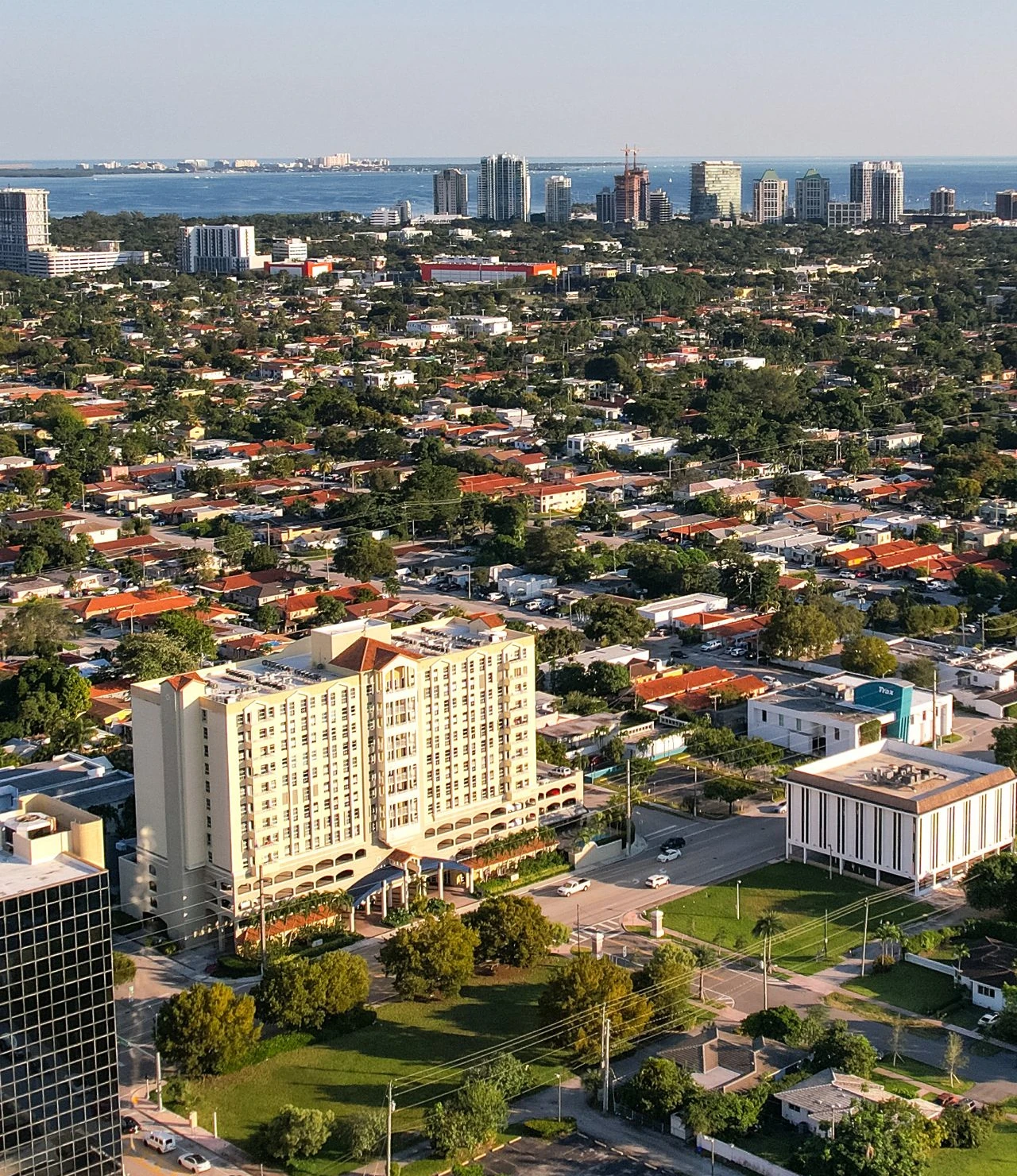
Hialeah is a densely populated, predominantly Hispanic city in northwest Miami-Dade County. The U.S. Census Bureau estimated 230,968 residents on July 1, 2025 across approximately 21.58 square miles of land. Local demand for cognitive assessment is shaped by Miami-Dade County Public Schools, Miami Dade College's Hialeah Campus, Florida National University, multilingual households, healthcare systems, aviation and logistics corridors, manufacturing, retail, hospitality, public services, and adults seeking educational, disability, immigration-adjacent documentation, career or diagnostic clarification.
The assessment ecosystem includes Florida-licensed psychologists, school psychologists, private bilingual psychoeducational and neuropsychological practices, Hialeah Hospital, Palmetto General Hospital, Larkin Community Hospital Palm Springs, Nicklaus Children's and Jackson Health specialty resources, the University of Miami Health System, the Bruce W. Carter VA Medical Center, school-based evaluation teams, and regional specialists throughout Miami-Dade and Broward counties.
- Common referral goals: Gifted identification, school placement, ADHD and learning-disability assessment, autism evaluation, accommodations, disability documentation, career guidance, graduate-school planning, memory or neurological concerns, Mensa prior evidence and personal insight.
- Multilingual context: Spanish is central to daily life, and many families use more than one language. Examiners should distinguish language development, educational opportunity and acculturation from reasoning ability.
- Regional access: Families may travel from Miami Lakes, Hialeah Gardens, Medley, Miami Springs, Opa-locka, Doral, North Miami, Miami and nearby Broward communities for specialized services.
- Provider matching: The correct examiner depends on age, referral purpose, test edition, language, disability, medical complexity, intended report recipient, insurance, school rules and required credentials.
Gender, age and demographic statistics
Current Census estimates describe Hialeah's population but do not establish separate local IQ averages for demographic groups:
- Female population: 51.4%.
- Residents under age 18: 16.8%.
- Residents age 65 and older: 20.3%.
- White alone: 16.8%.
- Black or African American alone: 1.4%.
- American Indian and Alaska Native alone: 0.2%.
- Asian alone: 0.5%.
- Two or more races: 69.2%.
- Hispanic or Latino: 95.1%; Hispanic origin may overlap with racial categories.
- Foreign-born residents: 74.5%.
- Language other than English at home: 92.6% of residents age five and older.
- Education: 76.8% of adults age 25 and older are high-school graduates or higher, and 22.1% hold a bachelor's degree or higher.
- Labor-force participation: 62.1% overall and 55.3% among women age 16 and older.
- Clinical interpretation: Examiners use age-based national norms and consider language proficiency, education, culture, migration history, disability, medical history, attention, mood, sleep, medication and testing conditions rather than inferring ability from demographic membership.
What is professional IQ testing?
Intelligence quotient (IQ) testing is a standardized method to measure human cognitive abilities and intellectual potential. Professional IQ tests are administered by licensed psychologists in a controlled environment to ensure accuracy and reliability. Unlike online quizzes, clinical assessments provide a full-scale IQ score along with detailed breakdowns of verbal comprehension, perceptual reasoning, working memory, and processing speed.
In Hialeah, IQ testing is commonly used for gifted program admission, learning disability identification, career guidance, neuropsychological evaluation, and personal development. The results are presented in a comprehensive report that includes normative comparisons, strengths and weaknesses, and actionable recommendations.
Who should get tested?
IQ testing can benefit children, adolescents, and adults in various situations:
- Children: Parents often seek testing for school readiness, gifted placement, or to understand learning challenges.
- Adults: Many adults take IQ tests for career advancement, graduate school applications, or personal curiosity.
- Mensa candidates: High-IQ societies require official test scores for membership.
- Clinical referrals: Psychologists may recommend testing as part of a broader neuropsychological evaluation.
Types of IQ tests
We offer the most recognized and scientifically validated intelligence tests in the field:
- WISC-V (Wechsler Intelligence Scale for Children® – Fifth Edition): The gold standard for children aged 6:0–16:11. It provides a Full-Scale IQ and five primary index scores.
- WAIS-IV (Wechsler Adult Intelligence Scale® – Fourth Edition): The most widely used adult IQ test for ages 16–90. It measures cognitive functioning across four domains.
- Stanford-Binet Intelligence Scales – Fifth Edition: A comprehensive assessment for ages 2–85, often used for gifted identification and clinical evaluations.
- Gifted Testing: Often includes the WISC-V or Stanford-Binet, plus additional creativity and achievement measures.
- Mensa Testing: We provide official Mensa admission testing and preparation materials.
How the testing process works
- Initial consultation: Brief phone or video call to discuss your needs and match you with the right psychologist.
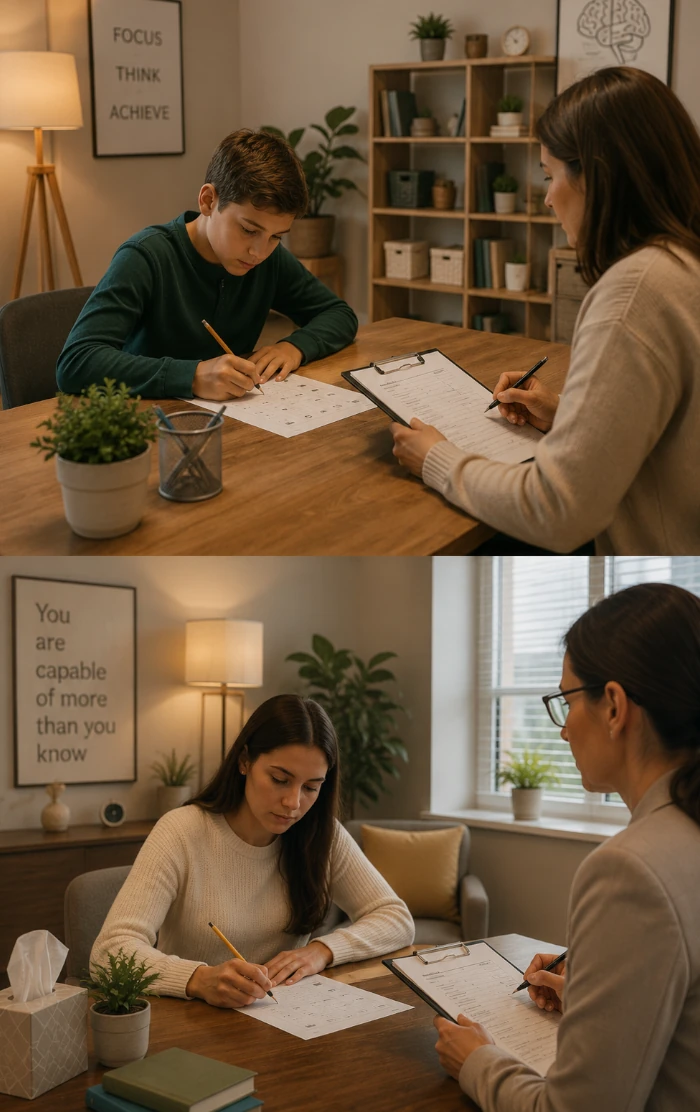
- Testing session: In-person or remote testing (depending on the test) with a licensed psychologist. Most sessions last 1–2 hours.
- Scoring and interpretation: The psychologist scores the test and interprets the results in the context of your background and goals.
- Feedback session: A detailed review of your results, including strengths, weaknesses, and practical recommendations.
- Comprehensive report: You receive a written report with all scores, normative comparisons, and actionable next steps.
How much does IQ testing cost in Hialeah?
The cost of IQ testing in Hialeah varies depending on the type of test, the psychologist's experience, and whether a comprehensive report is required. Typical fees range from $200 to $1,200 for a full assessment. Gifted testing and Mensa admission testing are often at the lower end, while neuropsychological evaluations may be higher.
Some insurance plans cover IQ testing when it's deemed medically necessary. We recommend checking with your provider for details. We also offer affordable payment plans and sliding-scale options for qualifying individuals.
A brief online IQ test can help Hialeah residents get acquainted with common question formats, but a qualified examiner should handle any assessment intended for school, work, or healthcare decisions.
Hialeah's Intellectual History & Legacy
- Aviation origins: Hialeah's modern development is tied to aviation pioneers Glenn Curtiss and James Bright, linking the city to South Florida's early aviation and land-development history.
- Hialeah Park: The historic racetrack and landscaped grounds reflect architecture, animal care, sports management, tourism and preservation.
- Immigrant entrepreneurship: Cuban and broader Latin American migration transformed Hialeah into a center of bilingual commerce, family-owned businesses, manufacturing, food production, retail and professional services.
- Miami Dade College Hialeah Campus: The campus supports university transfer, technology, office systems, electronics, early-childhood education and extensive English-language learning.
- Florida National University: Hialeah-based programs contribute to nursing, allied health, business, technology, education and legal studies.
- Industrial knowledge: Warehousing, aviation support, wholesale trade, fabrication, food processing and distribution require technical reasoning, quality control and logistics planning.
- Bilingual cultural knowledge: Spanish-language media, literature, music, theater, public art and civic organizations sustain intellectual life across generations.
- Regional research access: Residents can reach the University of Miami, Florida International University, Miami Dade College campuses and health-science institutions throughout Miami-Dade.
Top Employers in Hialeah Requiring Cognitive Skills
- Miami-Dade County Public Schools: Teaching, special education, gifted services, psychology, counseling, administration, technology and operations.
- City of Hialeah: Public safety, utilities, planning, engineering, information technology, finance, parks, libraries and transit.
- Hialeah Hospital and Palmetto General Hospital: Clinical decision-making, nursing, diagnostics, pharmacy, rehabilitation, imaging, administration and health information.
- Miami Dade College and Florida National University: Instruction, advising, student services, research support, technology and administration.
- Aviation and airport-related employers: Miami International and Miami-Opa Locka Executive Airport corridors support cargo, maintenance, operations, customs, logistics and safety roles.
- Manufacturing and food production: Local firms require process control, maintenance, engineering, scheduling, compliance and quality-assurance skills.
- Retail, distribution and wholesale trade: Westland Mall, Okeechobee Road and industrial districts support inventory, analytics, purchasing, sales and management.
- Healthcare and social-assistance organizations: Medical practices, home-health agencies, rehabilitation, behavioral health and elder services need clinical and administrative reasoning.
- Small businesses and professional services: Bilingual accounting, legal, insurance, real-estate, technology, construction and consulting firms reward communication, planning and problem-solving.
Hialeah IQ Testing by City Area
- Central and East Hialeah: Close to Hialeah Hospital, Hialeah Park, Metrorail, Tri-Rail and established schools; traffic and rail crossings should be considered.
- West Hialeah and Palm Springs: Dense residential and commercial areas near West 49th Street, Palmetto General, Florida National University and major bus corridors.
- North Hialeah: Access from Gratigny Parkway, I-75 and Hialeah Gardens can be convenient, but peak-hour congestion may lengthen trips.
- Airport and industrial corridors: South and southeast Hialeah are close to Miami International Airport, warehouses, cargo operations and Miami Springs.
- Surrounding communities: Miami Lakes, Hialeah Gardens, Medley, Opa-locka, Miami Springs, Doral and unincorporated northwest Miami-Dade may use Hialeah-area providers.
- Remote intake: Records review and consultation may occur by telehealth when lawful and appropriate, but standardized cognitive testing usually requires controlled in-person administration.
Hialeah Universities and Research Institutions
- Miami Dade College Hialeah Campus: University-transfer, career, technology, early-childhood and English-language programs, plus advising and disability-support resources.
- Florida National University: Hialeah-based undergraduate and graduate education in nursing, allied health, business, technology, education, legal studies and related fields.
- Miami Dade College North Campus: Nearby programs in science, technology, health, teacher education and workforce preparation.
- Florida International University: A major public research university offering psychology, education, engineering, business, health and graduate programs.
- University of Miami: Private research, medical, neuropsychology, education and professional programs accessible from Hialeah.
- Barry University and St. Thomas University: Regional graduate and professional opportunities in psychology, education, law, health, business and social services.
- Medical and research systems: University of Miami Health, Jackson Health, Nicklaus Children's and regional neuroscience programs support specialized clinical training and referrals.
Hialeah Economic Context
- Median household income: $55,594 in 2020–2024 Census estimates.
- Per-capita income: $26,435.
- Residents in poverty: 17.0%.
- Bachelor's degree or higher: 22.1% of adults age 25 and older.
- Mean travel time to work: 29.0 minutes, with longer trips possible on the Palmetto Expressway, Okeechobee Road and airport or downtown corridors.
- Health and social-assistance activity: Census business data report approximately $1.786 billion in 2022 receipts/revenue within the city.
- Transportation and warehousing: Approximately $748.6 million in 2022 receipts/revenue reflects Hialeah's access to MIA cargo, Opa-locka aviation, rail, trucking and industrial distribution.
- Accommodation and food services: Approximately $449.2 million in 2022 sales.
- Retail sales: Approximately $3.802 billion in 2022, or $17,265 per capita.
- Regional strengths: Healthcare, manufacturing, food production, wholesale trade, logistics, aviation support, education, construction, retail, hospitality, public administration, real estate and bilingual professional services.
- Testing relevance: Cognitive profiles may clarify training needs, accommodations, leadership potential and career fit, but they should be interpreted with interests, experience, language, credentials and labor-market realities.
Hialeah School District Data
- Public-school system: Hialeah is served primarily by Miami-Dade County Public Schools, with neighborhood schools, magnets, choice programs, technical education, virtual options and exceptional student services.
- Local schools: Hialeah Senior High, Miami Springs Senior High, Westland Hialeah Senior High, Hialeah-Miami Lakes Senior High, Mater Academy and multiple elementary and middle schools serve different attendance zones and choice pathways.
- Gifted referral: Parents, teachers and school teams may initiate consideration; families should use the current M-DCPS referral and consent process.
- Eligibility evidence: Standard pathways may consider intellectual ability and documented need. The district's Plan B matrix for qualifying underrepresented students in grades 1–3 combines gifted-characteristics, achievement, intellectual and creativity evidence.
- Plan B matrix: The current district form states that a student may be considered eligible with documented need, at least 16 checklist items rated 3 or 4, nine or more matrix points, and at least one intellectual-ability point; current rules and forms should always be confirmed.
- Advanced options: Families may also consider magnet, Cambridge, International Baccalaureate, AP, dual-enrollment, career-technical and school-choice programs, each with separate criteria.
- Bilingual assessment: Language dominance, English acquisition, educational history and cultural context should be documented so that limited English proficiency is not mistaken for limited reasoning ability.
- Private reports: Outside testing can inform educational planning but does not guarantee gifted eligibility, magnet admission, acceleration or a specific school assignment.
Florida Gifted-Education Framework
- State definition: Florida defines gifted students as students with superior intellectual development who are capable of high performance.
- Exceptional student education: Gifted services are part of Florida's Exceptional Student Education system, and eligible students receive an Educational Plan rather than a general-education placement based on one private score.
- Multiple evidence sources: District eligibility work may consider intellectual assessment, achievement, teacher and parent information, gifted characteristics, creativity, language status and documented educational need.
- Plan A and Plan B: Miami-Dade County Public Schools uses its district procedures and may apply a matrix pathway for qualifying underrepresented first-, second- and third-grade students.
- Transfer protections: Florida rules address students who enter with an active gifted Educational Plan from another Florida district or another state, but records and local implementation still must be reviewed.
- Outside testing: A private WISC-V or Stanford-Binet report may be useful evidence, yet it does not automatically create Miami-Dade gifted eligibility, a magnet seat, acceleration or a particular service model.
- Current requirements: Families should verify the current M-DCPS forms, deadlines, tests, matrix rules, school assignments and appeal procedures before scheduling private testing.
Local Testing Centers and Psychologists
- Hialeah Hospital: Acute-care and specialty services; verify whether the referral requires medical neuropsychology, psychiatry, rehabilitation or a private outpatient psychologist.
- Palmetto General Hospital: Hospital and specialty resources in west Hialeah; assessment availability and referral requirements vary by service line.
- Larkin Community Hospital Palm Springs Campus: Behavioral-health, medical and training resources; confirm current outpatient assessment scope.
- Nicklaus Children's Hospital: Regional pediatric neurology, developmental, behavioral and neuropsychological services for appropriate referrals.
- University of Miami Health and Jackson Health: Academic medical, neurological, rehabilitation and specialty evaluation resources accessible from Hialeah.
- Bruce W. Carter VA Medical Center: Eligible veterans may access primary, mental-health, neurological, rehabilitation and specialty referral services under VA procedures.
- Private bilingual psychologists: Miami-Dade practices offer IQ, gifted, ADHD, autism, learning, neuropsychological, disability, forensic and diagnostic evaluations in English, Spanish or bilingual formats depending on clinician competence.
- School-based assessment: M-DCPS evaluates eligible students under educational rules when gifted, disability or school-service questions are involved.
- Credential check: Verify Florida licensure, pediatric or neuropsychology training, language competence, accepted test edition, report purpose, fees and turnaround time.
Hialeah Events and Conferences
- Miami Dade College Hialeah Campus: Academic workshops, career events, cultural programs, technology activities and student-support events.
- Florida National University: Health, business, technology, education and community programs.
- Milander Center for Arts and Entertainment: Civic, arts, cultural, educational and community gatherings.
- Hialeah Public Libraries: Literacy, bilingual learning, technology assistance, youth activities and adult education.
- Amelia Earhart Park: Environmental, recreational, sports and family programs, including a 5.5-mile mountain-bike trail system.
- Regional universities and hospitals: FIU, University of Miami, MDC campuses and health systems host research talks, continuing education and public-health events.
- Miami Mensa: Local-group meetings, testing information, social events and special-interest activities depend on current volunteer schedules.
Transportation and Accessibility
- Major roads: SR 826/Palmetto Expressway runs along the city's west and south side; US 27/Okeechobee Road crosses southeast Hialeah; SR 924/Gratigny Parkway serves north Hialeah; SR 934/NW 74th Street, SR 932/West 49th Street–NW 103rd Street, Le Jeune Road/SR 953, Red Road and Palm Avenue are major local corridors.
- City transit: Hialeah Transit operates the Flamingo and Marlin circulator routes, linking government buildings, hospitals, shopping, schools and rail stations. The city also offers Freebee on-demand electric transportation within its service area.
- Regional public transit: Miami-Dade Transit Metrobus routes connect Hialeah with Miami, Miami Lakes, Doral, North Miami and other county destinations.
- Metrorail: The Green Line serves Hialeah and Okeechobee stations and connects to downtown Miami, the airport system and the broader rail network.
- Commuter rail: Tri-Rail serves Hialeah and Hialeah Market stations, providing north–south access toward Broward and Palm Beach counties and a connection to Miami International Airport.
- Paratransit and accessibility: Miami-Dade Special Transportation Service, accessible buses and rail stations, and local mobility programs have separate eligibility, reservation and service-area rules.
- Airport: Miami International Airport (MIA) is the principal commercial airport and major international passenger and cargo gateway; Miami-Opa Locka Executive Airport (OPF) is a nearby general-aviation and business-aviation facility.
- Distance to other cities: Roughly 15–30 minutes to Miami Springs or Miami Lakes, 20–35 minutes to Doral or downtown Miami, 25–45 minutes to Coral Gables or Miami Beach, 30–50 minutes to Fort Lauderdale, and 1.5–2 hours to West Palm Beach, depending heavily on traffic.
- Walkability: Downtown Hialeah, East 25th Street, Palm Avenue, West 49th Street commercial areas and rail-station surroundings have the strongest concentrations of destinations, but wide arterials and heat can limit comfortable walking.
- Bike infrastructure: Hialeah Transit and Miami-Dade transit support Bike & Ride. Nearby Amelia Earhart Park offers 5.5 miles of woodland mountain-bike trails, while county plans connect riders to regional paths and greenways.
- Traffic constraints: The Palmetto Expressway, Okeechobee Road, Gratigny Parkway, airport cargo corridors, rail crossings, school zones and freight traffic can produce substantial delays.
- Appointment planning: Allow extra time for rush hour, airport traffic, heavy rain, flooding, construction, school dismissal and major events; confirm parking and accessibility before testing day.
Hialeah Weather and Seasonal Considerations
- Hot, humid conditions: Heat and humidity can worsen fatigue, headaches, dehydration and medication side effects, especially after walking or waiting for transit.
- Hurricane season: Tropical storms and hurricanes can interrupt power, schools, transit, flights and appointments from June through November.
- Heavy rain and flooding: Intense downpours can flood low-lying streets, slow the Palmetto and Okeechobee Road, and make rail or bus connections less predictable.
- Thunderstorms: Lightning and sudden rain are common in the warm season and may affect airport operations and driving.
- Extreme heat: Schedule vulnerable children, older adults and medically complex examinees during cooler hours when possible.
- Winter dry season: Milder temperatures often make travel easier, although holiday traffic and seasonal visitors can increase congestion.
- Testing readiness: Arrive rested, hydrated, fed and appropriately medicated, with enough time to recover from traffic, transit transfers or weather delays.
Areas we serve
We support all areas of Hialeah.
Frequently Asked Questions
WISC-V is for children aged 6–16, while WAIS-IV is for adults aged 16–90. Each is normed for its specific age group.
Most IQ tests take between 60 and 90 minutes, plus a feedback session. Allow 2–3 hours total.
No, you can book directly with our psychologists. We serve both self-referred and professionally referred individuals.
Some professionally administered scores may be submitted as prior evidence, but acceptance is determined solely by American Mensa under its current rules.
Some plans cover cognitive assessments when there is a clinical indication. Check with your provider.
Get a good night's sleep, eat a healthy meal, and arrive relaxed. No specific preparation is needed.
You'll receive a comprehensive report with your scores and tailored recommendations.
Interviews and feedback may be available remotely, but many standardized cognitive tests require controlled administration and may need an in-person appointment. Contact us for details.