
IQ Testing in Glendale

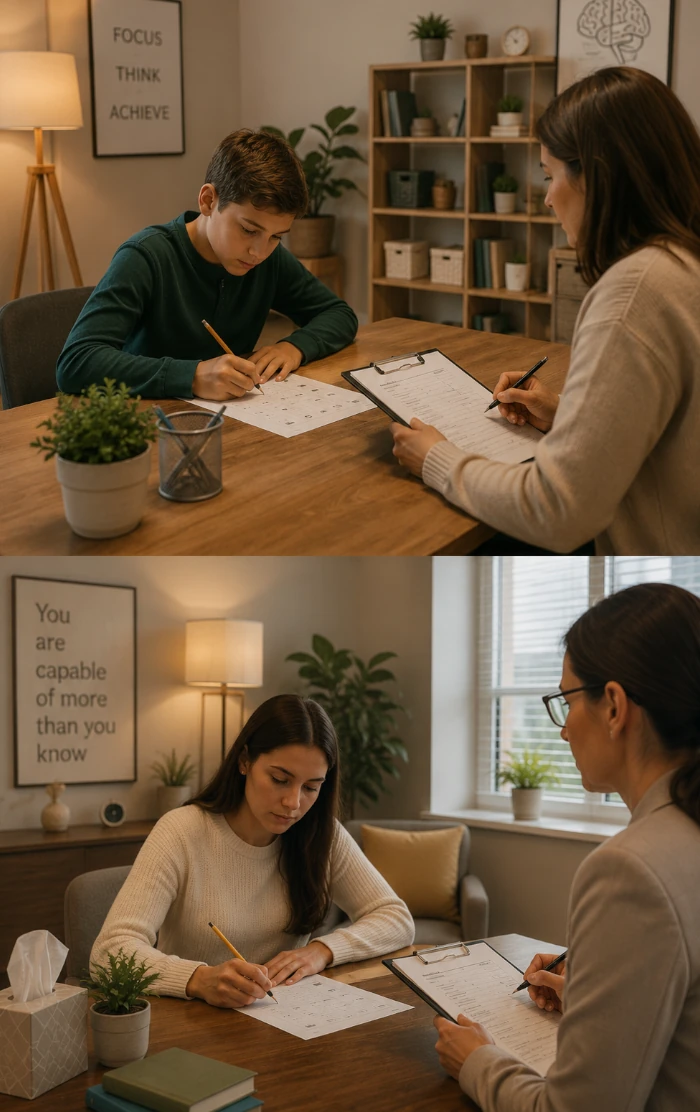
Professional IQ testing in Glendale – whether you need an assessment for school, employment, gifted program eligibility, or personal insight, we connect you with licensed psychologists in the Glendale area.
Last Updated: September 2026
Child IQ Testing
WISC-V & Stanford-Binet for ages 6–16. Gifted identification, learning profiles.
Adult IQ Testing
WAIS-IV & WAIS-5 available. Comprehensive adult cognitive assessments. Clinical & occupational.
WISC-V Test
Wechsler Intelligence Scale for Children® Fifth Edition – the gold standard for child IQ testing.
WAIS-IV & WAIS-5 Tests
Wechsler Adult Intelligence Scale® – Fourth Edition (WAIS-IV) and Fifth Edition (WAIS-5) available for adult IQ testing.
Gifted Testing
Identify giftedness for school placement, enrichment, and talent programs using WISC-V or Stanford-Binet.
Stanford-Binet 5
Stanford-Binet Intelligence Scales Fifth Edition – comprehensive cognitive assessment for all ages.
Mensa Testing
Mensa admission testing and preparation for the high-IQ society. Accepts WAIS-IV, WAIS-5, and Stanford-Binet 5 scores.
Full Evaluation
Combined assessment with detailed report and recommendations. Includes WISC-V, WAIS-IV, WAIS-5, or Stanford-Binet 5 as appropriate.
IQ Testing in Glendale: city context
Glendale is a major West Valley city in the Phoenix metropolitan area. Local demand for cognitive assessment is shaped by multiple school districts, a large bilingual and multicultural population, Midwestern University and Glendale Community College, major healthcare systems, Luke Air Force Base, sports and entertainment employers, industrial growth, veterans' services, and families seeking gifted identification, disability documentation, career guidance, graduate-school planning, or diagnostic clarification.
The assessment ecosystem includes private Arizona-licensed psychologists, Banner Health, Abrazo Health, Midwestern University clinics, school-based evaluation teams, Phoenix-area neuropsychology practices, VA Phoenix Health Care, and specialty providers serving Glendale and surrounding West Valley communities.
- Common referral goals: Gifted identification, school planning, ADHD and learning evaluation, autism assessment, bilingual diagnostic clarification, disability documentation, career guidance, graduate-school preparation, neuropsychological questions, Mensa prior evidence, and personal insight.
- Regional access: Residents from Glendale, Peoria, Phoenix, Surprise, Sun City, Avondale, Goodyear, Tolleson, and other Maricopa County communities may travel to Glendale providers.
- Provider matching: The correct examiner depends on age, referral purpose, test edition, language needs, disability accommodations, report recipient, insurance, and clinical complexity.
Gender, age and demographic statistics
Glendale is a major West Valley city in Maricopa County and part of the Phoenix metropolitan area. The U.S. Census Bureau estimated 260,572 residents in 2025, a 4.9% increase from the 2020 estimates base, across approximately 61.60 square miles of land.
Current population statistics provide context but do not establish separate local IQ averages for demographic groups:
- Female population: 50.9%.
- Residents under age 18: 24.5%.
- Residents age 65 and older: 13.2%.
- White alone: 48.5%.
- Black or African American alone: 6.3%.
- American Indian and Alaska Native alone: 1.6%.
- Asian alone: 4.4%.
- Native Hawaiian and other Pacific Islander alone: 0.1%.
- Two or more races: 28.3%.
- Hispanic or Latino: 42.2%; Hispanic origin may overlap with racial categories.
- Foreign-born residents: 18.1%.
- Language other than English at home: 35.3% of residents age five and older.
- Education: 84.5% of adults age 25 and older are high-school graduates or higher, and 24.3% hold a bachelor's degree or higher.
- Labor-force participation: 65.2% overall and 60.3% among women age 16 and older.
- Clinical interpretation: Examiners use age-based national norms and consider education, language, bilingual development, culture, disability, medical history, attention, mood, sleep, medication, and testing conditions rather than inferring ability from gender, race, ethnicity, income, or neighborhood.
What is professional IQ testing?
Intelligence quotient (IQ) testing is a standardized method to measure human cognitive abilities and intellectual potential. Professional IQ tests are administered by licensed psychologists in a controlled environment to ensure accuracy and reliability. Unlike online quizzes, clinical assessments provide a full-scale IQ score along with detailed breakdowns of verbal comprehension, perceptual reasoning, working memory, and processing speed.
In Glendale, IQ testing is commonly used for gifted program admission, learning disability identification, career guidance, neuropsychological evaluation, and personal development. The results are presented in a comprehensive report that includes normative comparisons, strengths and weaknesses, and actionable recommendations.
Who should get tested?
IQ testing can benefit children, adolescents, and adults in various situations:
- Children: Parents often seek testing for school readiness, gifted placement, or to understand learning challenges.
- Adults: Many adults take IQ tests for career advancement, graduate school applications, or personal curiosity.
- Mensa candidates: High-IQ societies require official test scores for membership.
- Clinical referrals: Psychologists may recommend testing as part of a broader neuropsychological evaluation.
Types of IQ tests
We offer the most recognized and scientifically validated intelligence tests in the field:
- WISC-V (Wechsler Intelligence Scale for Children® – Fifth Edition): The gold standard for children aged 6:0–16:11. It provides a Full-Scale IQ and five primary index scores.
- WAIS-IV (Wechsler Adult Intelligence Scale® – Fourth Edition): The most widely used adult IQ test for ages 16–90. It measures cognitive functioning across four domains.
- Stanford-Binet Intelligence Scales – Fifth Edition: A comprehensive assessment for ages 2–85, often used for gifted identification and clinical evaluations.
- Gifted Testing: Often includes the WISC-V or Stanford-Binet, plus additional creativity and achievement measures.
- Mensa Testing: We provide official Mensa admission testing and preparation materials.
How the testing process works
- Initial consultation: Brief phone or video call to discuss your needs and match you with the right psychologist.
- Testing session: In-person or remote testing (depending on the test) with a licensed psychologist. Most sessions last 1–2 hours.
- Scoring and interpretation: The psychologist scores the test and interprets the results in the context of your background and goals.
- Feedback session: A detailed review of your results, including strengths, weaknesses, and practical recommendations.
- Comprehensive report: You receive a written report with all scores, normative comparisons, and actionable next steps.
How much does IQ testing cost in Glendale?
The cost of IQ testing in Glendale varies depending on the type of test, the psychologist's experience, and whether a comprehensive report is required. Typical fees range from $200 to $1,200 for a full assessment. Gifted testing and Mensa admission testing are often at the lower end, while neuropsychological evaluations may be higher.
Some insurance plans cover IQ testing when it's deemed medically necessary. We recommend checking with your provider for details. We also offer affordable payment plans and sliding-scale options for qualifying individuals.
People in Glendale who are curious about cognitive problem-solving may begin with an online IQ test, then consult a licensed psychologist when they need standardized scores or a written report.
Glendale's Intellectual History & Legacy
- Agricultural and irrigation history: Glendale developed from late-19th-century canal, farming, and railroad activity, linking engineering, water management, and settlement in the Salt River Valley.
- Luke Air Force Base: Military aviation and training have made aerospace, systems thinking, maintenance, logistics, and defense technology central to the West Valley's technical identity.
- Health-professions education: Midwestern University's large professional campus supports medicine, pharmacy, dentistry, optometry, veterinary medicine, psychology, rehabilitation, and biomedical research.
- Community-college access: Glendale Community College has long supported university transfer, technical education, healthcare, arts, sciences, and adult workforce development.
- Sports and event operations: State Farm Stadium, Desert Diamond Arena, spring training, and mega-events create complex work in logistics, engineering, media, security, analytics, hospitality, and venue management.
- Cultural learning: Glendale Public Library, Sahuaro Ranch Park, historic downtown, public art, performing arts, parks, trails, and nearby Phoenix museums and science institutions provide broad enrichment.
- Innovation and industrial growth: Loop 303 and West Valley development support advanced manufacturing, food and beverage production, logistics, data, energy, and business services.
Top Employers in Glendale Requiring Cognitive Skills
- Luke Air Force Base: Military aviation, maintenance, logistics, cybersecurity, engineering, training, administration, and civilian-contractor roles support the West Valley economy.
- Banner Health and Abrazo Health: Clinical care, nursing, behavioral health, imaging, rehabilitation, technology, analytics, operations, and administration require varied cognitive skills.
- City of Glendale and school districts: Public safety, utilities, transportation, planning, finance, education, school psychology, special education, and administration are major employment pathways.
- Manufacturing and industrial employers: Red Bull, Ball, Nestlé, Avient, aerospace and defense suppliers, building-products companies, and Loop 303 industrial operations employ engineers, technicians, quality specialists, analysts, and logistics staff.
- Advanced business services: Financial institutions, credit unions, data centers, corporate operations, insurance, technology, and professional-services employers need analytical, verbal, and executive skills.
- Sports and entertainment: State Farm Stadium, Desert Diamond Arena, the Arizona Cardinals, spring-training operations, Westgate businesses, hotels, event production, security, media, and tourism support a large visitor economy.
- Retail and hospitality: Arrowhead Towne Center, Westgate, downtown businesses, restaurants, resorts, dealerships, and regional retailers provide management, sales, technology, supply-chain, and customer-service careers.
- Higher education: Midwestern University, Glendale Community College, Arizona Christian University, and nearby ASU programs employ faculty, clinicians, researchers, administrators, and student-support professionals.
Glendale IQ Testing by City Area
- Downtown Glendale and Catlin Court: Historic districts, City Hall, courts, libraries, cultural venues, local businesses, and GUS transit connections.
- Central Glendale: Glendale Community College, established residential neighborhoods, schools, medical offices, and corridors along Olive, Northern, and Glendale avenues.
- North Glendale and Arrowhead: Banner Thunderbird, Abrazo Arrowhead, Midwestern University, Arrowhead Towne Center, Peoria Unified schools, and Loop 101 access.
- Westgate and the Sports and Entertainment District: State Farm Stadium, Desert Diamond Arena, hotels, restaurants, retail, major events, and Glendale Municipal Airport access.
- West and southwest growth areas: Loop 303 industrial development, logistics, manufacturing, new housing, Northern Parkway, and connections toward Goodyear, Avondale, and Buckeye.
- Foothills and northwest Glendale: Thunderbird Conservation Park, trails, Deer Valley Unified areas, suburban schools, and access toward Peoria and north Phoenix.
- Nearby communities: Peoria, Phoenix, Sun City, Surprise, Avondale, Goodyear, Tolleson, Litchfield Park, El Mirage, and other West Valley residents may use Glendale providers.
Glendale Universities and Research Institutions
- Midwestern University: The Glendale campus offers professional and graduate education in osteopathic medicine, pharmacy, dental medicine, optometry, veterinary medicine, physician-assistant studies, physical therapy, occupational therapy, speech-language pathology, clinical psychology, biomedical sciences, public health, precision medicine, and related health fields.
- Glendale Community College: GCC provides associate degrees, university-transfer pathways, career and technical programs, nursing and allied health, business, computer and information technology, engineering-related study, arts, sciences, adult education, and workforce training.
- Arizona State University West Valley: Located on the western edge of Phoenix next to Glendale, the campus offers more than 50 undergraduate and graduate degrees across multiple colleges, including interdisciplinary arts and sciences, business, education, health, and public-service fields.
- Arizona Christian University: ACU's Glendale campus offers undergraduate and graduate study in business, education, behavioral health, ministry, communication, sciences, and the liberal arts.
- Regional access: Grand Canyon University, Ottawa University Arizona, Estrella Mountain Community College, Phoenix College, ASU Downtown Phoenix, and other Maricopa County institutions expand transfer, graduate, and professional options.
- Preparation considerations: Applicants should review prerequisites, recommendations, research fit, writing samples, portfolios, entrance-test policies, clinical-placement rules, and disability-documentation standards for the specific program.
Glendale Economic Context
- Median household income: $73,530 in 2020–2024 Census estimates.
- Per-capita income: $33,919.
- Residents in poverty: 15.1%.
- Bachelor's degree or higher: 24.3% of adults age 25 and older.
- Mean travel time to work: 27.7 minutes, although Loop 101 congestion, stadium events, construction, cross-Valley travel, and extreme heat can lengthen trips.
- Health and social-assistance activity: Census business data report approximately $2.47 billion in 2022 receipts/revenue within the city.
- Transportation and warehousing: Approximately $463.6 million in 2022 receipts/revenue reflects logistics, distribution, airport activity, trucking, and West Valley industrial growth.
- Accommodation and food services: Approximately $773.9 million in 2022 sales.
- Retail sales: Approximately $5.52 billion in 2022.
- Regional strengths: Healthcare and bioscience, advanced manufacturing, aerospace and defense, logistics and distribution, business services, higher education, construction, retail, tourism, professional sports, entertainment, hospitality, and public administration.
Glendale School District Data
- Arizona requirement: Public school districts must identify gifted learners and provide appropriate K–12 services through a locally approved scope and sequence. Arizona guidance commonly uses performance at or above the 97th percentile in verbal, quantitative, or nonverbal areas, subject to the district's approved procedures and state-approved tests.
- Glendale Elementary School District: GESD serves pre-K through grade 8 in 12 schools and maintains gifted programming, screening, referral, and service procedures that families should verify for the current school year.
- Glendale Union High School District: GUHSD serves many Glendale high-school students through honors, Advanced Placement, dual-enrollment, career and technical education, performing arts, and other advanced pathways; placement rules vary by school and course.
- Peoria Unified School District: PUSD serves north Glendale and offers comprehensive K–12 gifted education. Copperwood Elementary's Center for Differentiated Instruction is a district gifted-magnet option, while other service models and secondary pathways vary by grade and campus.
- Deer Valley Unified and neighboring districts: Some north Glendale addresses fall within Deer Valley Unified, while nearby families may attend Phoenix-area districts. Each district has separate identification, transfer, service, and acceleration rules.
- Charter schools: Arizona charter schools are not required by the gifted statute to provide gifted services, although some choose to offer advanced programs. Admission generally cannot be based on protected characteristics, and capacity rules may apply.
- Outside evaluations: A private WISC-V, Stanford-Binet, or psychoeducational report may add useful information but does not automatically determine public-school gifted identification, course placement, acceleration, special education, or services.
- Family process: Request the current gifted scope and sequence, screening calendar, referral form, approved-test list, score report, service description, reassessment procedure, and appeal information before scheduling private testing.
Local Testing Centers and Psychologists
- Banner Thunderbird Medical Center: The Glendale hospital provides acute care, neurology, behavioral health, rehabilitation, sleep medicine, pediatrics, imaging, emergency care, and other services; the appropriate pathway depends on whether the question is medical, psychiatric, developmental, or neuropsychological.
- Banner Children's Specialists: A Glendale location on West Thunderbird Road includes pediatric specialty services, including pediatric neuropsychology access through Banner providers; age range, referral, insurance, and testing scope should be confirmed.
- Abrazo Arrowhead Campus: The north Glendale hospital provides cardiovascular, surgical, women's, emergency, and residency services and may refer patients for neurological, behavioral-health, rehabilitation, or specialty evaluation when needed.
- Midwestern University Clinics: University-affiliated clinics and training programs support healthcare, behavioral-health, speech-language, dental, optometry, and other professional services; student-clinic scope and external-report acceptance should be verified.
- Private psychology and neuropsychology practices: West Valley and Phoenix-area providers offer ADHD, autism, learning, cognitive, neuropsychological, forensic, disability, presurgical, and diagnostic evaluations with different age ranges and specialties.
- Veterans: VA Phoenix Health Care operates the Northwest VA Clinic in Surprise and other central-Arizona facilities offering primary care, mental-health, and specialty pathways for eligible veterans.
- Memory and neurological resources: Banner Sun Health Research Institute in nearby Sun City and Phoenix-area neurology centers may address memory, movement, neurological, and aging questions; formal neuropsychological referrals depend on clinical need.
- Credential verification: Confirm Arizona psychologist licensure, neuropsychology or pediatric training, age range, language competence, test edition, report scope, fees, turnaround time, insurance, and receiving-institution requirements before scheduling.
Glendale Events and Conferences
- Midwestern University: Health-professions education, research presentations, admissions events, continuing education, clinical training, and public-health activities occur throughout the year.
- Glendale Community College: Academic events, transfer fairs, career programs, arts performances, lectures, STEM activities, and workforce-development opportunities serve students and adults.
- ASU West Valley and regional universities: Public lectures, research, graduate-program events, cultural programming, and career fairs expand nearby learning opportunities.
- Healthcare systems: Banner, Abrazo, Midwestern clinics, and regional providers offer professional training, health education, support groups, and community programs.
- Libraries, parks, and cultural organizations: Glendale libraries, Sahuaro Ranch Park, Thunderbird Conservation Park, public-art programs, museums, and Phoenix-area science and arts organizations provide family and adult enrichment.
- Sports and entertainment: State Farm Stadium, Desert Diamond Arena, Westgate, spring training, concerts, championship events, and festivals create education, volunteer, operations, and networking opportunities.
- Greater Phoenix Mensa: Official local-group channels provide current information about testing, gifted-youth resources, scholarships, social events, and special-interest activities.
Transportation and Accessibility
- Major roads: Loop 101/Agua Fria Freeway serves north and west Glendale; US-60/Grand Avenue runs diagonally through the city; Northern Parkway supports east–west access in the western growth corridor; I-10 lies south of Glendale; I-17 is east of the city; and Glendale Avenue, Bethany Home Road, Camelback Road, Northern Avenue, Olive Avenue, Peoria Avenue, Bell Road, Thunderbird Road, 43rd Avenue, 51st Avenue, 59th Avenue, 67th Avenue, 75th Avenue, 83rd Avenue, 91st Avenue, and 99th Avenue carry local traffic.
- Public transit: Valley Metro and the City of Glendale support local and express bus routes, evening and weekend service, Glendale Urban Shuttle (GUS) circulators, Dial-A-Ride, taxi-voucher programs, and ADA paratransit. Glendale OnBoard provides shared microtransit/paratransit service, and riders should verify current zones, booking rules, and schedules.
- Airport: Glendale Municipal Airport (GEU) is a general-aviation reliever airport west of central Glendale with a 7,150-foot runway. Phoenix Sky Harbor International Airport (PHX), roughly 18 miles east of the municipal airport and commonly 25–40 minutes from central Glendale, provides extensive domestic and international service. Phoenix Deer Valley Airport also supports general aviation in the north Valley.
- Distance to other cities: Approximately 15–25 minutes to central Phoenix; 20–30 minutes to Peoria or Goodyear; 30–45 minutes to Scottsdale, Tempe, or Sky Harbor Airport; about 45 minutes to Surprise or Buckeye; 1.5–2 hours to Prescott; 2 hours to Tucson; 2.5 hours to Sedona; and roughly 3.5–4 hours to Flagstaff, depending on traffic, route, construction, events, and weather.
- Walkability: Downtown Glendale, the Catlin Court and Old Towne districts, Westgate Entertainment District, areas around Glendale Community College, and selected mixed-use corridors offer the strongest concentrations of destinations and sidewalks; much of the city remains automobile-oriented.
- Bike infrastructure: Thunderbird Paseo, Skunk Creek Linear Park, Grand Canal Linear Park, New River and Arizona Canal connections, neighborhood bike lanes, multiuse paths, and the city's active-transportation network support recreation and commuting. Heat, sun exposure, and long distances require careful planning.
- Event traffic: State Farm Stadium, Desert Diamond Arena, spring-training venues, Westgate, concerts, football games, major tournaments, and holiday events can produce road closures, parking restrictions, and substantial delays near Loop 101 and the Sports and Entertainment District.
- Appointment planning: Allow extra time for Loop 101 and Grand Avenue congestion, school traffic, construction, dust storms, monsoon flooding, intense summer heat, stadium events, and limited shade at some transit stops.
Glendale Weather and Seasonal Considerations
- Sonoran Desert climate: Summers are extremely hot and dry, while winters are generally mild; spring and autumn can still bring sharp temperature swings.
- Extreme heat: Afternoon temperatures can exceed 110°F. Heat exposure, dehydration, medication effects, and a long walk from parking or transit can reduce concentration and testing stamina.
- Monsoon storms: Summer thunderstorms may bring strong wind, blowing dust, lightning, sudden downpours, localized flooding, and road closures.
- Dust storms: Haboobs can rapidly reduce visibility and worsen respiratory symptoms; drivers should avoid stopping in travel lanes and follow current safety guidance.
- Sun and air quality: Intense sun, ozone, wildfire smoke, and particulate pollution may affect headaches, fatigue, asthma, sleep, and alertness.
- Winter travel: Freezing conditions are uncommon in the city, but regional travel toward Prescott, Sedona, or Flagstaff can involve snow and mountain-road restrictions.
- Testing readiness: Schedule when the examinee can arrive rested, hydrated, fed, appropriately medicated, and without rushing from school, work, a long cross-Valley drive, or outdoor heat exposure.
Areas we serve
We support all areas of Glendale.
Frequently Asked Questions
WISC-V is for children aged 6–16, while WAIS-IV is for adults aged 16–90. Each is normed for its specific age group.
Most IQ tests take between 60 and 90 minutes, plus a feedback session. Allow 2–3 hours total.
No, you can book directly with our psychologists. We serve both self-referred and professionally referred individuals.
Some professionally administered scores may be submitted as prior evidence, but acceptance is determined solely by American Mensa under its current rules.
Some plans cover cognitive assessments when there is a clinical indication. Check with your provider.
Get a good night's sleep, eat a healthy meal, and arrive relaxed. No specific preparation is needed.
You'll receive a comprehensive report with your scores and tailored recommendations.
Interviews and feedback may be available remotely, but many standardized cognitive tests require controlled administration and may need an in-person appointment. Contact us for details.