
Child IQ Testing in Charleston, SC

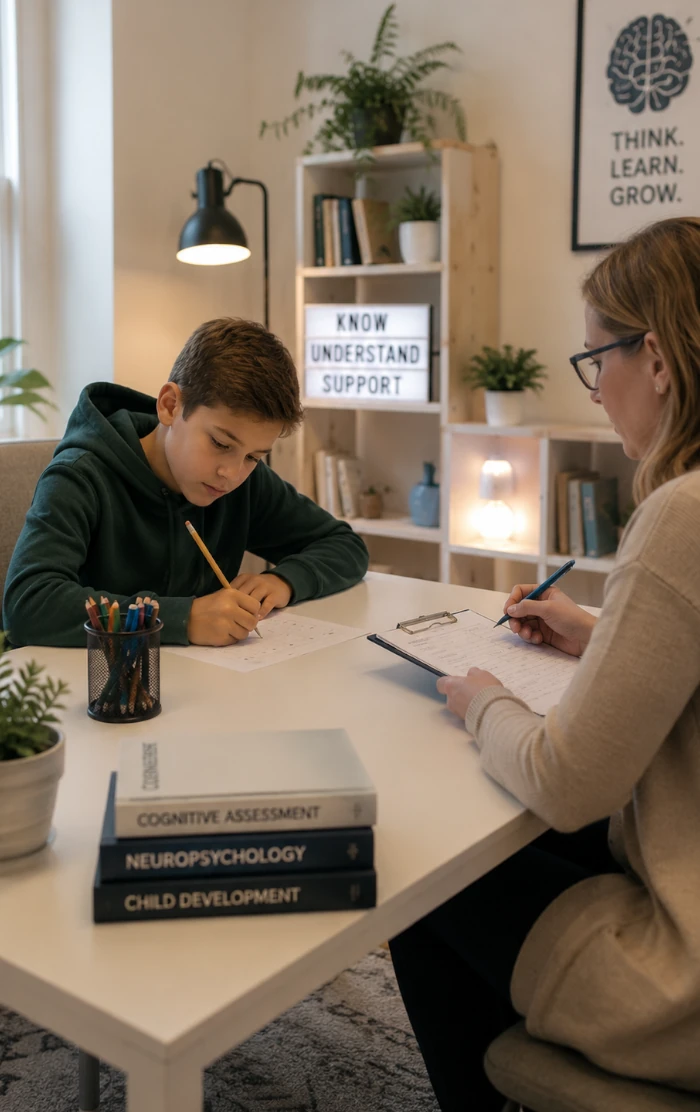
Professional child IQ testing in Charleston, SC – whether you need an assessment for school placement, gifted program eligibility, or to understand your child's learning profile, we connect you with licensed psychologists in the Charleston, SC area.
Last Updated: September 2026
Gifted Testing
Identify giftedness for school placement, enrichment, and talent programs using WISC-V or Stanford-Binet 5.
WISC-V Test
Wechsler Intelligence Scale for Children® Fifth Edition – the gold standard for child IQ testing.
Stanford-Binet 5
Stanford-Binet Intelligence Scales Fifth Edition – comprehensive cognitive assessment for all ages.
Full Evaluation
Combined assessment with detailed report and recommendations. Includes WISC-V or Stanford-Binet 5.
School Placement Testing
Testing for private school admission and gifted program eligibility using WISC-V or Stanford-Binet 5.
Schedule Child IQ Testing
Book your WISC-V & Stanford-Binet 5 for ages 6–16. Gifted identification, learning profiles, etc. with a licensed psychologist in Charleston, SC today.
Child IQ Testing in Charleston, SC: city context
Charleston had an estimated 159,423 residents in 2025, with approximately 17.3% younger than 18. The city’s large geographic footprint includes the peninsula, West Ashley, James Island, Johns Island, Daniel Island, and developing areas connected by bridges and major corridors. Testing appointments may need to be coordinated with Charleston County School District calendars, private-school deadlines, caregiver work schedules, CARTA service, tourism traffic, and coastal-weather disruptions.
Families request child cognitive assessment for gifted-identification questions, possible dyslexia or another learning disability, ADHD, autism or developmental concerns, school admissions, subject or grade acceleration, disability accommodations, treatment planning, or a clearer picture of learning strengths and support needs. A focused IQ measure may be sufficient for a narrowly defined admissions question. A diagnostic, special-education, or twice-exceptional concern usually requires broader achievement, attention, adaptive, behavioral, language, executive-function, and developmental data.
The first decision is not which score a family hopes to obtain, but what question the evaluation must answer. A school-placement request may call for the WPPSI, WISC-V, Stanford-Binet, or a school-specific measure and a concise report. A reading concern may require achievement, phonological-processing, rapid-naming, and language measures. Attention, autism, developmental, or emotional questions require additional history, observations, rating scales, and differential diagnosis. A sudden decline after illness, injury, seizures, or another medical event may call for pediatric medical or neuropsychological referral rather than routine gifted testing.
Charleston’s Census profile shows a smaller multilingual share than many large U.S. cities, but language history still matters for every individual child. Testing should document languages used at home and school, age of English acquisition, literacy development, educational interruptions, interpreter involvement, hearing and vision, and whether standard administration was modified. A nonverbal instrument can reduce some verbal demands, but it does not eliminate cultural, educational, motor, attention, or test-familiarity effects.
Families should plan around sleep, medication, meals, illness, anxiety, sensory needs, and the length of the appointment. Summer heat, hurricane activity, flooding, bridge traffic, and long trips from island or outer-city areas can affect fatigue and punctuality. The most useful report explains confidence intervals, meaningful differences among cognitive domains, observed behavior, limitations, and practical recommendations rather than presenting a single IQ number as a permanent label.
Preparation begins with records, not coaching. Parents can provide report cards, prior evaluations, individualized plans, intervention data, teacher comments, medical and developmental history, and examples of work that illustrate both strengths and difficulties. Children should receive a simple, neutral explanation that they will complete puzzles, questions, and learning activities with a psychologist. Intensive practice with protected test items, promises of rewards for a particular score, or repeated online imitation tests can increase anxiety and reduce interpretability.
Public-school, private-school, and clinical evaluations have different legal and practical roles. CCSD may evaluate a student under IDEA or Section 504 and makes its own eligibility decisions. A private psychologist can diagnose, describe functioning, and recommend supports, but cannot order a school placement. An admissions examiner may answer a narrower question and may not conduct differential diagnosis. Families should make sure the selected service matches the actual decision before paying.
Scores are estimates rather than exact measurements. Confidence intervals, practice effects, effort, fatigue, motor demands, language, anxiety, and differences among subtests all matter. When the profile is highly uneven, the Full Scale IQ may not summarize the child well; index scores, additional composites, achievement, adaptive functioning, and qualitative observations may be more useful. Recommendations should be specific enough to guide instruction, accommodations, intervention, enrichment, and follow-up rather than merely repeating score classifications.
Charleston County School District and Gifted Programs
Charleston County School District (CCSD) follows South Carolina Regulation 43-220 for academically gifted and talented identification. All second-grade students are screened in the fall with the Cognitive Abilities Test for reasoning and the Iowa Assessments for achievement. Students who are not identified through universal screening may be nominated in grades 3–11 by a parent, teacher, administrator, classmate, or the student, subject to the district’s current procedures.
A student may qualify with a composite aptitude score at or above the 96th national age percentile. Students below that composite threshold may qualify by meeting criteria in two of three dimensions: reasoning ability, achievement in reading or mathematics, and intellectual or academic performance. Published dimension thresholds include aptitude scores, nationally normed achievement or SC READY performance, and performance-task or GPA evidence depending on grade. Families should consult the current CCSD chart because state and district cut scores, instruments, and processes can change.
Students can be identified in grades 1–2 under higher thresholds, but South Carolina currently funds gifted services beginning in grade 3. Elementary students may receive SAIL pull-out/resource or special-class services led by gifted-endorsed teachers. Secondary students are served through gifted-endorsed honors, Advanced Placement, and other advanced coursework. Specialty schools, advanced arts and STEM programs, dual enrollment, and career pathways may use separate admissions or prerequisite rules.
Identification and service are related but separate questions. A child can show advanced reasoning without needing the same program, subject, or pace as another student with a similar composite score. CCSD considers the evidence under its own procedures, and the district—not a private psychologist—makes the final gifted-eligibility and placement decision. A privately obtained WISC-V, WPPSI, Stanford-Binet, or achievement report may add useful information but does not automatically establish eligibility, acceleration, special-education services, or a Section 504 plan.
Families should request the current nomination form, annual calendar, consent process, outside-report rules, transfer-student procedures, score-release process, and review or appeal information. They should also ask how multilingual development, disability, interrupted schooling, foster or military mobility, and twice-exceptionality will be considered. When private testing is contemplated, the examiner should know the exact district question and avoid promising an outcome that only the school team can determine.
For students who are both gifted and disabled, records may need to be reviewed through gifted, special-education, and Section 504 processes. Strong reasoning can mask dyslexia, ADHD, autism, anxiety, or written-expression difficulties, while slow output, inconsistent grades, or behavioral stress can conceal advanced potential. A comprehensive profile is often more informative than the Full Scale IQ alone.
Charleston, SC Private Schools Requiring IQ Testing
Charleston and the surrounding Lowcountry include independent, religious, Montessori, college-preparatory, and specialized schools, but there is no reliable citywide list of schools that universally requires a privately purchased IQ test. Admissions practices can change by school, grade, program, and application year. Some programs request the WPPSI, WISC-V, achievement testing, classroom records, teacher recommendations, interviews, play-based visits, or school-specific admissions testing; others do not request cognitive testing at all.
Before scheduling, obtain written requirements directly from the receiving school. Confirm the accepted instrument and edition, age rules, minimum interval after prior testing, evaluator credentials, score or report format, deadline, whether achievement testing is also needed, and whether the psychologist must send results directly. Ask whether the school wants a brief admissions report or a broader clinical evaluation, because these products differ substantially in cost, interpretation, confidentiality, and diagnostic scope.
Families applying to more than one school should compare requirements before purchasing separate assessments. One valid battery may sometimes satisfy multiple applications, but only when each school accepts the test, edition, dates, and report. A psychologist should not tailor scores to an admissions target or guarantee acceptance. The purpose is to provide accurate information about the child’s current functioning and learning profile.
Families should also clarify how the school handles disability accommodations, English-language development, giftedness, retesting, score confidentiality, and appeals. A school may place greater weight on classroom readiness, behavior, prior achievement, or teacher observations than on a composite IQ score. Testing is one part of an admissions decision, not a prediction of long-term success.
Charleston, SC Gifted Identification Statistics
CCSD publishes procedures and program information, but a single current statistic for the percentage of children living specifically inside Charleston city limits who are identified as gifted is not consistently available. District counts cover a countywide system and can change with enrollment, screening, nominations, state rules, service models, student mobility, school assignment, and reporting practices.
Identification totals can differ from the number of students receiving a particular classroom or course service. A child may be eligible but not enrolled in every advanced option, while a student can take honors, AP, dual-enrollment, or specialty courses under rules that are not identical to gifted identification. City population figures therefore should not be combined with district totals to create a misleading local “gifted rate.”
Universal grade-two screening and nomination in grades 3–11 are intended to broaden access. Even so, gifted systems must guard against underidentifying multilingual learners, students from lower-income households, students with disabilities, children who move frequently, and students whose advanced reasoning is not reflected in behavior or grades. Multiple measures, work samples, achievement data, performance tasks, and careful review of opportunity to learn can reduce—but not eliminate—bias.
Identification statistics should never be used to estimate an individual child’s ability. The useful question is whether the child’s current learning needs exceed what the general program provides and which combination of advanced content, acceleration, enrichment, peer grouping, and disability support is appropriate.
The child IQ testing process: step by step
Understanding the testing process can help parents prepare their child and reduce anxiety. Here's what to expect:
- Initial consultation (15–20 minutes): A brief phone or video call with the psychologist to discuss your child's background, concerns, and goals. This helps determine the right test and approach.
- Testing session (60–90 minutes): The child meets one-on-one with a licensed psychologist in a quiet, comfortable room. The psychologist administers the WISC-V or Stanford-Binet 5, which includes a series of subtests measuring verbal comprehension, visual-spatial reasoning, fluid reasoning, working memory, and processing speed. Breaks are offered as needed.
- Scoring and interpretation (1–2 days): The psychologist scores the test and analyzes the results. They consider the child's age, background, and any relevant medical or educational history.
- Feedback session (45–60 minutes): The psychologist meets with the parents (and the child, if appropriate) to explain the results. They discuss the Full-Scale IQ, index scores, strengths, and areas for growth. They also provide tailored recommendations for home, school, and extracurriculars.
- Comprehensive written report (5–7 days): You receive a detailed report with all scores, normative comparisons, and actionable next steps. This report can be shared with schools, doctors, or other professionals.
The full process includes intake, records review, testing, scoring, feedback, and report preparation. Timing varies with provider availability and referral complexity, so confirm deadlines before scheduling. The testing itself is non-invasive and designed to be engaging for children.
What is the WISC-V test?
The WISC-V (Wechsler Intelligence Scale for Children® – Fifth Edition) is the most widely used IQ test for children aged 6:0–16:11. It provides a Full-Scale IQ and five primary index scores: Verbal Comprehension, Visual-Spatial, Fluid Reasoning, Working Memory, and Processing Speed. The test is administered one-on-one by a trained psychologist and takes about 60–90 minutes.
The WISC-V is normed on a large, representative sample of U.S. children and is updated regularly to ensure accuracy. It is the gold standard for gifted identification, learning disability diagnosis, and school placement.
Why test your child's IQ?
IQ testing provides valuable insights into your child's cognitive strengths and weaknesses. It can help:
- Identify giftedness: For admission to gifted programs, private schools, or enrichment opportunities.
- Diagnose learning disabilities: Such as dyslexia, dyscalculia, or ADHD, which can be masked by high intelligence.
- Guide educational planning: Tailor instruction to your child's unique learning profile.
- Provide reassurance: Understand why your child is different from peers and how to support them.
Charleston, SC Gifted Testing Timeline
CCSD screens second graders in the fall. Students in grades 3–11 who are not already identified can be nominated during the district’s published nomination window, which is coordinated by gifted teachers, counselors, or testing staff. Exact annual opening dates, deadlines, test dates, makeup dates, and notification schedules should be confirmed directly with CCSD because they can change.
- Clarify the decision: Determine whether the goal is CCSD gifted identification, private-school admission, acceleration, twice-exceptional evaluation, or educational planning.
- Review existing evidence: Gather screening scores, report cards, SC READY or other achievement data, work samples, teacher comments, intervention records, and prior evaluations before deciding whether additional testing is necessary.
- Check prior testing: Many instruments and receiving programs restrict how soon the same test can be repeated. Give the psychologist exact test names, editions, and dates.
- Complete school procedures: Follow current nomination, consent, accessibility, and testing requirements, including the deadline for outside documents.
- Use private testing strategically: Obtain written confirmation that the outside test and report will answer the receiving program’s question and allow enough time for intake, testing, scoring, and report preparation.
- Prepare for the decision: Ask how results will be communicated, how services are selected, and what review or appeal options exist.
Private testing should not be rushed when illness, sleep loss, anxiety, language mismatch, medication changes, hurricane disruption, or recent exposure to the same instrument would reduce validity. If a deadline is close, contact the school or program first. A late but valid report may be more useful than a rushed score that cannot be interpreted confidently.
Charleston, SC Gifted Programs by Age Group
- Grades 1–2: Students may be identified under state criteria, but funded gifted services generally begin in grade 3. Classroom differentiation, library programs, arts, science activities, and family enrichment can support emerging strengths without treating an early score as permanent.
- Grades 3–5: CCSD elementary services may include SAIL pull-out/resource programming or special classes led by gifted-endorsed teachers. Program decisions should consider subject-specific achievement, classroom behavior, peer fit, and the child’s tolerance for increased pace and independence.
- Grades 6–8: Honors courses, specialty programs, advanced arts and STEM work, academic competitions, and subject acceleration may become available. Executive-function demands and uneven profiles matter; a student may need advanced mathematics and writing support at the same time.
- Grades 9–12: Honors, AP, dual enrollment, specialty-school programs, advanced arts, STEM, career and technical education, research, and mentorship provide increasing specialization. Readiness, prerequisites, workload, transportation, mental health, and graduation planning should guide choices.
- Outside-school enrichment: College of Charleston, The Citadel, MUSC, Trident Technical College, Charleston County Public Library, museums, historic and arts organizations, marine-science programs, recreation programs, camps, coding and robotics providers, and South Carolina Governor’s School opportunities offer interest-based learning.
Families should compare pace, depth, peer group, workload, executive-function demands, emotional readiness, disability supports, transportation, heat and storm plans, and the child’s interests. A higher score does not automatically identify the best program. Some children need subject acceleration, others need deeper project work or mentorship, and some benefit most from disability support combined with advanced content.
Program decisions should be reviewed over time. Interests, achievement, mental health, school fit, and executive-function skills can change. Retesting is appropriate only when a new question cannot be answered from existing data and the interval meets professional and publisher guidelines.
Charleston, SC Child ADHD and Learning Disability Assessment
An ADHD or learning-disability evaluation is broader than a stand-alone IQ test. It may include cognitive and achievement measures, attention and executive-function tasks, behavior ratings, developmental and medical history, classroom records, teacher input, and assessment of emotional, language, motor, sensory, or sleep factors. Under IDEA or Section 504, CCSD follows its own referral, consent, eligibility, and service procedures.
ADHD is diagnosed from a persistent pattern of symptoms and impairment across settings, not from one attention task or a processing-speed score. Dyslexia and other specific learning disorders require evidence about academic skills, instruction, intervention response, and the relationship between achievement and the broader profile. Autism assessment may require developmental interview, direct observation, adaptive measures, and information from multiple settings.
SC Neuro at 29 Leinbach Drive, Suite D4, Charleston, SC 29407 can be reached at (843) 509-6521. Its public information describes child and adult neuropsychological or psychological evaluation, standardized measurement of intelligence and other cognitive functions, ADHD and autism assessment, and academic-skills evaluation. Families should confirm the proposed battery, referral requirements, age limits, teacher-form needs, language services, cost, and whether the report format meets the receiving school’s needs.
A private diagnosis does not automatically determine an IEP, Section 504 plan, gifted placement, or specific classroom service. The school team reviews educational impact and applicable legal criteria. A useful private report connects findings to concrete recommendations, identifies limitations, and explains which conclusions require school, medical, speech-language, occupational-therapy, or other follow-up.
When symptoms are new or worsening, medical factors should be considered. Hearing or vision problems, sleep disorders, seizures, medication effects, concussion, chronic illness, anxiety, depression, trauma, and attendance disruption can mimic or intensify learning and attention difficulties. The referral should be broad enough to avoid overlooking these explanations.
Charleston, SC Summer Programs for Gifted Children
Summer and enrichment options may be available through CCSD, Charleston County Public Library, city and county recreation, College of Charleston, The Citadel, MUSC, Trident Technical College, museums, historic organizations, arts groups, camps, marine-science programs, coding and robotics providers, and South Carolina Governor’s School opportunities. Offerings change yearly and may focus on STEM, humanities, history, languages, visual and performing arts, leadership, entrepreneurship, research, or academic support.
Most enrichment programs use age, interest, prerequisites, application materials, auditions, grades, teacher recommendations, or open enrollment rather than a clinical IQ cutoff. Families should compare supervision, staff qualifications, accessibility, transportation, cost, heat and hurricane plans, pace, social-emotional fit, and accommodations.
A program labeled “gifted” is not automatically appropriate for every advanced learner. Some children thrive in fast-paced group work; others prefer focused mentorship, independent projects, arts, outdoor science, or mixed-age activities. The best choice connects the child’s interests and readiness with a safe, well-supported learning environment.
Charleston, SC Child Testing Costs by District
Evaluation provided by CCSD under applicable special-education procedures is different from a privately purchased clinical or admissions assessment. Eligible public-school evaluations are conducted through district procedures rather than billed to the family as private testing. Private fees vary with the number of instruments, examiner time, records review, teacher forms, consultation, language services, and report detail.
Before paying, ask CCSD or the receiving private school whether outside testing is required, accepted, or potentially reimbursable. Obtain a written estimate and confirm insurance, authorization, cancellation, feedback, and report policies. Gifted or admissions testing is often not covered by health insurance because it may not be medically necessary.
A focused intelligence measure usually costs less than a comprehensive psychoeducational, ADHD, autism, or neuropsychological evaluation. The lower price may be appropriate for a narrow admissions question but insufficient for diagnosis, special-education planning, or a complex twice-exceptional profile. Families should ask exactly which tests, records, consultations, feedback, and report components are included.
Insurance coverage depends on medical necessity, diagnosis, network status, prior authorization, deductibles, and exclusions. School admission, gifted placement, career curiosity, and Mensa documentation are commonly self-pay. Even when insurance contributes, families may owe significant amounts for noncovered educational testing, reports, or consultation.
Families should also ask whether a school evaluation, focused screening, records consultation, or staged approach can answer the immediate question. Cost should never be used as a reason to overstate what a brief IQ test can establish, and a more expensive battery should not be purchased without a referral question that requires it.
Areas we serve
Frequently Asked Questions
Both are excellent tests. WISC-V is more commonly used for school-age children, while Stanford-Binet 5 can be used for ages 2–85. We often recommend WISC-V for gifted identification.
The testing session often takes about 60–90 minutes for a focused measure, but broader batteries take longer. Intake, records review, scoring, feedback, and report timing vary by provider and referral complexity.
Referral requirements vary. Contact the psychologist directly and ask whether self-referral is accepted; insurance, school, or agency funding may require authorization or a formal referral.
A private report may be reviewed as one source of information, but Charleston County School District and each private program apply their own current eligibility, score, recency, instrument, and documentation rules. Obtain those requirements before testing; no private report guarantees admission or placement.
Some plans cover cognitive assessments when there is a clinical indication. Check with your provider.
Get a good night's sleep, eat a healthy meal, and arrive relaxed. No specific preparation is needed.
You'll receive a comprehensive report with your child's scores and tailored recommendations.
Some interview and feedback components may be available remotely, but many standardized cognitive tests require in-person administration. Confirm with the psychologist and the organization receiving the report.