
IQ Testing in Charleston, SC
Professional IQ testing in Charleston, SC – whether you need an assessment for school, employment, gifted program eligibility, or personal insight, we connect you with licensed psychologists in the Charleston, SC area.
Last Updated: September 2026
Child IQ Testing
WISC-V & Stanford-Binet for ages 6–16. Gifted identification, learning profiles.
Adult IQ Testing
WAIS-IV & WAIS-5 available. Comprehensive adult cognitive assessments. Clinical & occupational.
WISC-V Test
Wechsler Intelligence Scale for Children® Fifth Edition – the gold standard for child IQ testing.
WAIS-IV & WAIS-5 Tests
Wechsler Adult Intelligence Scale® – Fourth Edition (WAIS-IV) and Fifth Edition (WAIS-5) available for adult IQ testing.
Gifted Testing
Identify giftedness for school placement, enrichment, and talent programs using WISC-V or Stanford-Binet.
Stanford-Binet 5
Stanford-Binet Intelligence Scales Fifth Edition – comprehensive cognitive assessment for all ages.
Mensa Testing
Professional cognitive testing for possible Mensa prior-evidence submission; confirm the current accepted test, edition, score, and documentation rules before scheduling.
Full Evaluation
Combined assessment with detailed report and recommendations. Includes WISC-V, WAIS-IV, WAIS-5, or Stanford-Binet 5 as appropriate.
IQ Testing in Charleston, SC: city context
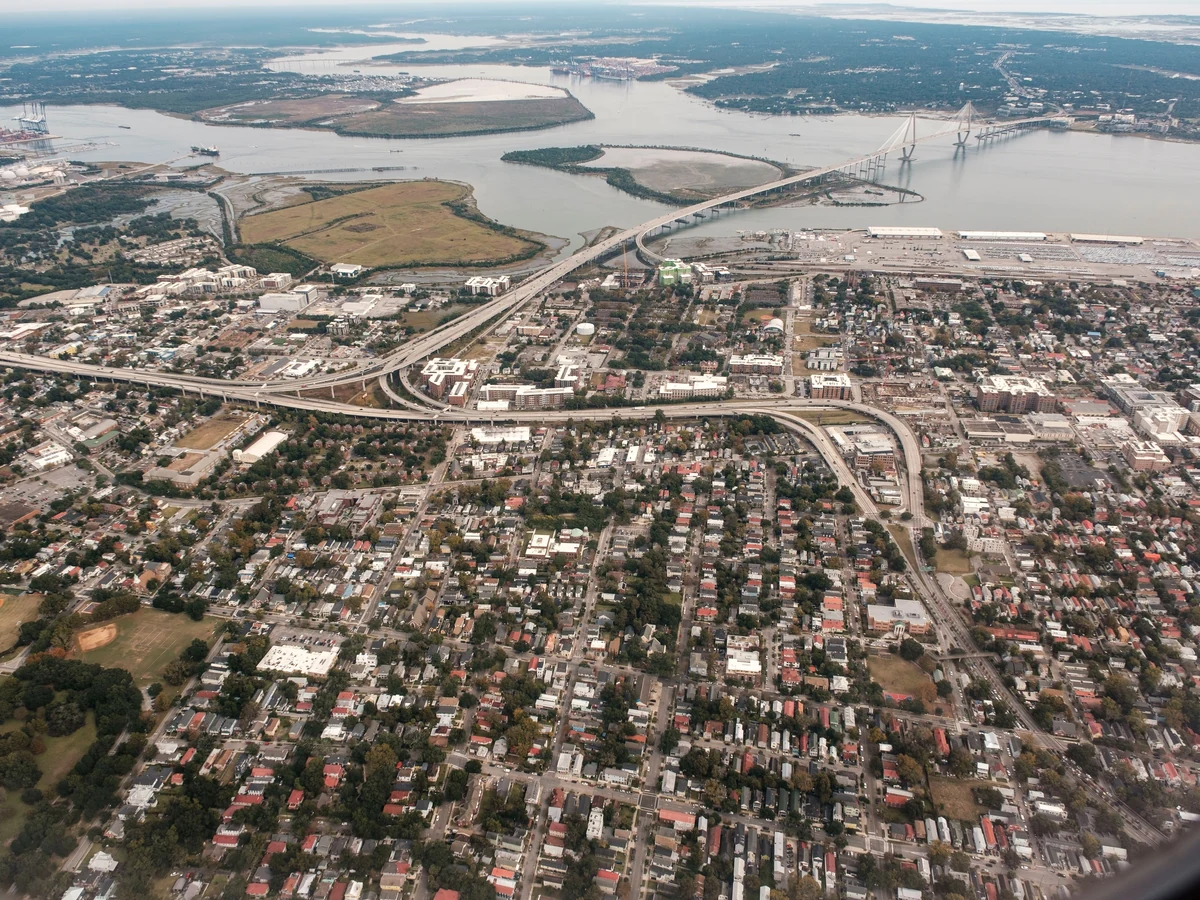
Charleston is a coastal South Carolina city whose boundaries include the historic peninsula as well as substantial areas west of the Ashley River and on James, Johns, and Daniel islands. The U.S. Census Bureau estimated 159,423 residents on July 1, 2025, compared with 150,227 counted in the 2020 Census, across approximately 114.76 square miles of land. About 17.3% of residents are younger than 18, while the city also includes college students, healthcare professionals, military-connected families, port and logistics workers, hospitality employees, retirees, and commuters.
Charleston children and adults seek cognitive assessment for Charleston County School District gifted-identification questions, private-school admissions, learning and attention concerns, developmental clarification, disability documentation, college or licensing-exam accommodations, career planning, Mensa prior-evidence questions, and changes in memory or everyday functioning. The correct evaluation should be selected for the examinee’s age, referral question, language background, educational opportunity, disability status, and the written rules of the organization that will use the report.
The city’s educational, medical, maritime, military, tourism, technology, and professional-services environment creates highly varied learning and occupational histories. Community statistics are useful for planning access and interpretation, but they cannot predict an individual resident’s intelligence, giftedness, disability, achievement, or career potential.
IQ by gender & ethnicity
Charleston’s population is approximately 52.3% female. Census QuickFacts reports that 73.7% of residents identify as White alone, 15.8% as Black alone, 1.9% as Asian alone, 0.7% as American Indian or Alaska Native alone, 0.1% as Native Hawaiian or Other Pacific Islander alone, and 5.9% as two or more races; 6.1% identify as Hispanic or Latino. Race and Hispanic-origin categories can overlap and must never be treated as biological explanations for an individual test score.
About 6.0% of Charleston residents are foreign born, and 7.8% of people age five and older speak a language other than English at home. A valid evaluation should document language dominance, age of English acquisition, educational history, interpreter involvement, hearing or vision needs, and any departure from standardized administration. Nonverbal measures may reduce some language demands, but they are not culture-free.
Research does not support using gender, race, ethnicity, neighborhood, occupation, income, military status, or household language as a shortcut for intelligence. Group differences can reflect unequal educational access, health, poverty, test familiarity, language exposure, stereotype threat, sampling, and the cultural demands of a particular instrument. Interpretation should emphasize confidence intervals, patterns across subtests, behavior during testing, records, and the referral question.
What is professional IQ testing?
Intelligence quotient (IQ) testing is a standardized method to measure human cognitive abilities and intellectual potential. Professional IQ tests are administered by licensed psychologists in a controlled environment to ensure accuracy and reliability. Unlike online quizzes, clinical assessments provide a full-scale IQ score along with detailed breakdowns of verbal comprehension, perceptual reasoning, working memory, and processing speed.
In Charleston, IQ testing is commonly used for gifted program admission, learning disability identification, career guidance, neuropsychological evaluation, and personal development. The results are presented in a comprehensive report that includes normative comparisons, strengths and weaknesses, and actionable recommendations.
Who should get tested?
IQ testing can benefit children, adolescents, and adults in various situations:
- Children: Parents often seek testing for school readiness, gifted placement, or to understand learning challenges.
- Adults: Many adults take IQ tests for career advancement, graduate school applications, or personal curiosity.
- Mensa candidates: High-IQ societies require official test scores for membership.
- Clinical referrals: Psychologists may recommend testing as part of a broader neuropsychological evaluation.
Types of IQ tests
Commonly requested, professionally administered IQ tests include:
- WISC-V (Wechsler Intelligence Scale for Children® – Fifth Edition): The gold standard for children aged 6:0–16:11. It provides a Full-Scale IQ and five primary index scores.
- WAIS-IV (Wechsler Adult Intelligence Scale® – Fourth Edition): The most widely used adult IQ test for ages 16–90. It measures cognitive functioning across four domains.
- Stanford-Binet Intelligence Scales – Fifth Edition: A comprehensive assessment for ages 2–85, often used for gifted identification and clinical evaluations.
- Gifted Testing: Often includes the WISC-V or Stanford-Binet, plus additional creativity and achievement measures.
- Mensa Testing: We can help clarify professional testing options, but American Mensa determines whether any test and documentation qualify under its current rules.
A professionally administered IQ test should be selected for the examinee’s age, language background, referral question, and the documentation rules of the school or organization receiving the report.
How the testing process works
- Initial consultation: Brief phone or video call to discuss your needs and match you with the right psychologist.
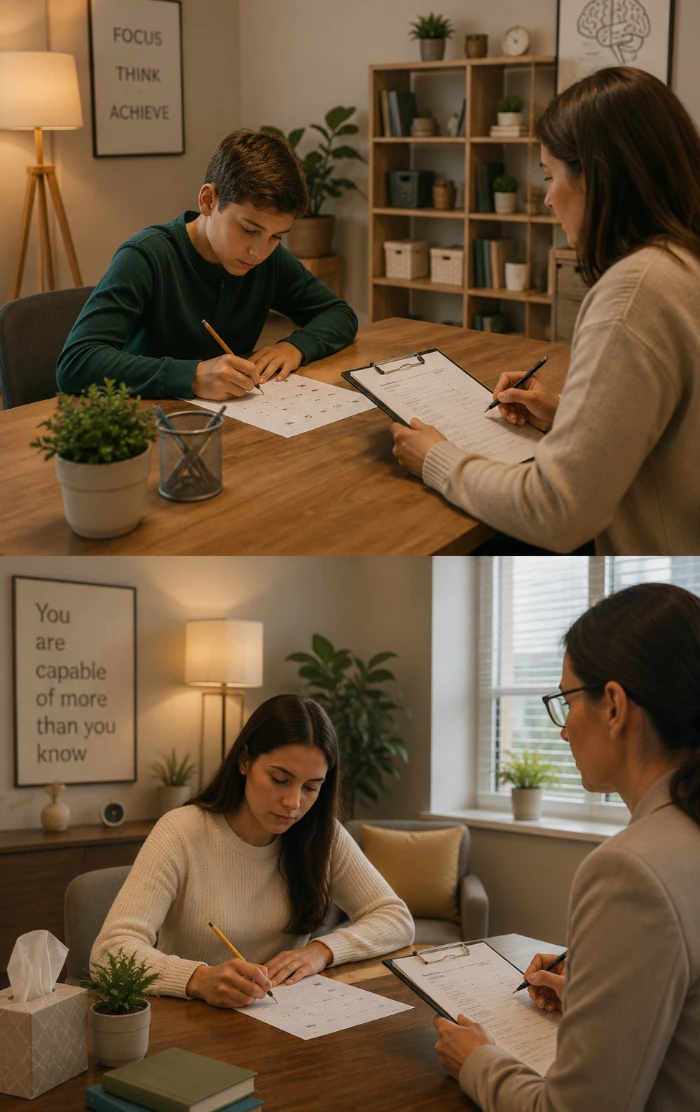
- Testing session: In-person or remote testing (depending on the test) with a licensed psychologist. Most sessions last 1–2 hours.
- Scoring and interpretation: The psychologist scores the test and interprets the results in the context of your background and goals.
- Feedback session: A detailed review of your results, including strengths, weaknesses, and practical recommendations.
- Comprehensive report: You receive a written report with all scores, normative comparisons, and actionable next steps.
How much does IQ testing cost in Charleston, SC?
The cost of IQ testing in Charleston, SC varies by the test selected, the examiner's credentials, the purpose of the evaluation, and the amount of record review and written reporting required. A focused cognitive assessment may commonly fall in the $200 to $1,200 range, while a broad psychoeducational or neuropsychological evaluation can cost substantially more.
Insurance is more likely to contribute when testing is medically necessary for a clinical question than when it is requested only for gifted placement, Mensa, admissions, or personal curiosity. Before scheduling, ask for a written estimate, what the fee includes, whether a feedback session and full report are included, cancellation terms, and whether the psychologist is in network.
Charleston, South Carolina’s Intellectual History & Legacy
Charleston’s intellectual history is inseparable from its role as an Atlantic port, its colonial and early national institutions, its Gullah Geechee heritage, and the difficult history of slavery and the transatlantic slave trade. Libraries, archives, museums, preservation organizations, churches, schools, and cultural institutions continue to examine that history while supporting scholarship, public education, and the arts.
College of Charleston, founded in 1770, is among the nation’s oldest institutions of higher education. Medical University of South Carolina, founded in Charleston in 1824, combines health-professions education, biomedical research, and patient care. The Citadel, founded in 1842, contributes military, leadership, engineering, cybersecurity, and professional education. Trident Technical College’s Palmer Campus provides downtown access to technical, transfer, and workforce pathways.
Institutions such as the Avery Research Center for African American History and Culture, the International African American Museum, Charleston Library Society, Charleston County Public Library, and the city’s arts and preservation organizations broaden opportunities for historical, literary, scientific, and civic learning. This legacy provides context for educational opportunity; it does not justify assumptions about any resident’s cognitive ability.
Top Employers in Charleston, SC and Cognitive-Testing Context
Charleston’s employment base combines city institutions with a wider tri-county economy. Major sectors include healthcare and biomedical research, public education and higher education, tourism and hospitality, port activity and logistics, aerospace and advanced manufacturing, defense and cybersecurity, technology and professional services, construction, retail, government, and small business.
- Healthcare and life sciences: MUSC Health, Roper St. Francis Healthcare, clinics, rehabilitation providers, research laboratories, and social-service organizations support clinical, scientific, technical, administrative, and support careers.
- Education and research: Charleston County School District, College of Charleston, The Citadel, MUSC, Trident Technical College, libraries, museums, and private schools employ educators, researchers, counselors, technicians, and operations staff.
- Port, logistics, and transportation: South Carolina Ports, warehousing, freight, maritime services, trucking, aviation, and supply-chain businesses connect Charleston to regional and global commerce.
- Aerospace, defense, and technology: Boeing South Carolina, Joint Base Charleston, NIWC Atlantic, engineering firms, cybersecurity companies, and regional manufacturers support technical and project-based careers.
- Tourism, hospitality, arts, and small business: Hotels, restaurants, historic sites, event organizations, retail districts, construction trades, creative businesses, and professional services are central to the city’s economy.
Employers ordinarily use education, licenses, experience, work samples, interviews, background checks, and job-specific assessments—not clinical IQ testing—for hiring. Cognitive evaluation may support rehabilitation, disability documentation, or career counseling, but results should be disclosed only for a clear and lawful purpose.
Charleston, SC IQ Testing by Neighborhood
Charleston’s geography can affect appointment planning more than the choice of test. The peninsula offers access to hospitals, colleges, and professional offices but may involve limited parking and event traffic. West Ashley residents may travel through busy U.S. 17 corridors, while James Island, Johns Island, Daniel Island, and Cainhoy-area residents may cross bridges or rely on routes affected by congestion, construction, tides, and severe weather.
A psychologist should not infer intelligence, diagnosis, or educational opportunity from a neighborhood. Families should compare examiner qualifications, age range, referral fit, language access, accessibility, parking, transit, total travel time, and whether the report meets the receiving organization’s requirements.
Charleston, SC Universities and Research Institutions
- College of Charleston: A public university with liberal-arts, sciences, business, education, computing, arts, and graduate programs on the peninsula.
- Medical University of South Carolina: South Carolina’s comprehensive academic health system, with six colleges, biomedical research, clinical training, and specialty care.
- The Citadel: A public senior military college offering undergraduate and graduate education in engineering, science, cybersecurity, business, education, humanities, and leadership.
- Trident Technical College, Palmer Campus: A downtown location supporting technical education, transfer preparation, adult learning, and workforce development.
- Regional institutions: Charleston Southern University and other Lowcountry colleges expand bachelor’s, graduate, professional, and continuing-education options beyond city limits.
Universities generally use transcripts, prerequisites, standardized admissions tests where applicable, portfolios, recommendations, and program-specific criteria. A clinical IQ score is usually relevant only when it helps document a disability, clarify a learning profile, or answer another defined clinical question.
Charleston, SC Economic Context
U.S. Census Bureau 2020–2024 estimates and 2022 business data provide the following city context:
- Median household income: $92,414.
- Per-capita income: $59,875.
- Residents in poverty: 12.3%.
- Bachelor’s degree or higher: 58.3% of adults age 25 and older.
- High-school graduate or higher: 96.1% of adults age 25 and older.
- Mean travel time to work: 24.2 minutes, although bridge crossings, tourist traffic, construction, and regional commutes can be longer.
- Health and social-assistance activity: Approximately $3.715 billion in 2022 receipts/revenue within the city.
- Transportation and warehousing: Approximately $700.4 million in 2022 receipts/revenue.
- Retail sales: Approximately $4.889 billion in 2022.
- Accommodation and food-service sales: Approximately $1.550 billion in 2022.
- Regional strengths: Healthcare and life sciences, tourism and hospitality, port logistics, aerospace, advanced manufacturing, technology, education, military and defense, construction, professional services, arts, and small business.
Income, education, and industry data describe access and economic conditions; they are not measures of individual intelligence. Cost, insurance coverage, transportation, time away from work, and report requirements should be discussed before testing begins.
Charleston, SC School District Data
Charleston County School District serves a geographically large county that includes the city of Charleston and surrounding communities. South Carolina’s gifted-identification rules use multiple dimensions rather than a privately purchased IQ score alone. CCSD screens all second-grade students in the fall with the Cognitive Abilities Test for reasoning and the Iowa Assessments for achievement.
Students not identified through grade-two screening may be nominated in grades 3–11. A student can qualify with a composite aptitude score at or above the 96th national age percentile, or by meeting qualifying criteria in two of three dimensions: reasoning ability, academic achievement, and intellectual or academic performance. Published thresholds and procedures can change, so families should obtain current district guidance before scheduling private testing.
Elementary services are commonly delivered through SAIL pull-out/resource programs or special-class models led by gifted-endorsed teachers. Secondary services include honors and Advanced Placement coursework and other advanced pathways. Private testing may provide useful clinical or educational information, but CCSD makes its own eligibility and placement decisions.
Local Testing Centers and Psychologists
SC Neuro is a Charleston neuropsychology and psychology practice at 29 Leinbach Drive, Suite D4, Charleston, SC 29407, with the local telephone number (843) 509-6521. Its public service information states that a licensed clinical neuropsychologist evaluates children and adults and uses standardized measures of intelligence, attention, memory, problem solving, visual-spatial skills, language, functional abilities, and other cognitive domains. The practice also describes psychological, academic-skills, ADHD, autism, dementia, capacity, and forensic assessment services.
Because a neuropsychological battery is selected around the referral question, callers should confirm the examinee’s age, the exact cognitive or intelligence instrument, whether achievement or adaptive measures are included, referral requirements, total fee, insurance or authorization rules, report turnaround, language and disability accommodations, and whether the school, university, employer, court, licensing body, or high-IQ organization receiving the report will accept the documentation.
Charleston, SC Events and Conferences
Charleston hosts academic, professional, cultural, and public events throughout the year. Examples include College of Charleston and MUSC lectures, The Citadel programs, the Charleston Conference for libraries and scholarly communication, STEM and entrepreneurship events, Spoleto Festival USA, the Southeastern Wildlife Exposition, museum programming, and healthcare continuing education.
Schedules and venues change. Large festivals, college events, cruise activity, and downtown conferences can affect hotel availability, parking, bridge traffic, and noise. Testing clients should verify the office location, allow additional travel time, and avoid scheduling a demanding assessment immediately after late-night travel or a major event.
Transportation and Accessibility
Charleston Area Regional Transportation Authority operates fixed bus routes and the free Downtown Area Shuttle on the peninsula. Driving routes commonly include I-26, U.S. 17, the Arthur Ravenel Jr. Bridge, Ashley River crossings, and island connectors. Charleston International Airport and the Amtrak station are in North Charleston, so air or rail travel to a city appointment requires additional ground transportation.
- Parking: Peninsula offices may rely on garages, metered spaces, or limited private parking. Confirm instructions before the appointment.
- Bridge and corridor congestion: Allow extra time during weekday peaks, tourism periods, school traffic, construction, or incidents.
- Flooding: Heavy rain, high tides, tropical systems, and drainage problems can close or slow low-lying streets.
- Accessibility: Confirm elevators, accessible parking, restroom access, quiet waiting areas, service-animal policies, and mobility accommodations.
- Remote components: Intake and feedback may sometimes be virtual, but standardized cognitive testing usually requires controlled in-person administration unless the examiner and test publisher permit another method.
Charleston, SC Weather and Seasonal Considerations
Charleston has hot, humid summers, mild winters, frequent thunderstorms, heavy-rain events, coastal flooding, and a hurricane season that can disrupt travel and utilities. The city also faces risks from high winds, lightning, occasional winter weather, and rare earthquakes. Heat, allergies, illness, evacuation activity, poor sleep, and medication changes can affect concentration and test validity.
- Summer heat and humidity: Hydrate, avoid extended outdoor waiting, and confirm that the testing room is comfortably cooled.
- Hurricanes and tropical storms: Follow official guidance, confirm office status, and reschedule rather than travel during unsafe conditions.
- High tides and heavy rain: Check road and flood information, particularly for low-lying peninsula and coastal routes.
- Seasonal illness and allergies: Acute symptoms, poor sleep, or sedating medication can make results less representative.
Testing should be postponed when acute illness, unsafe travel, severe sleep loss, evacuation, or another temporary condition would materially reduce valid participation.
Areas we serve
Frequently Asked Questions
WISC-V is for children aged 6–16, while WAIS-IV is for adults aged 16–90. Each is normed for its specific age group.
Most IQ tests take between 60 and 90 minutes, plus a feedback session. Allow 2–3 hours total.
Referral requirements vary. Contact the psychologist directly and ask whether self-referral is accepted; insurance, school, court, or agency funding may require authorization or a formal referral.
Potentially. Acceptance depends on the exact test, edition, qualifying score, administration date, examiner credentials, and current Mensa documentation rules. Confirm before testing.
Some plans cover cognitive assessments when there is a clinical indication. Check with your provider.
Get a good night's sleep, eat a healthy meal, and arrive relaxed. No specific preparation is needed.
You'll receive a comprehensive report with your scores and tailored recommendations.
Some interview and feedback components may be available remotely, but many standardized cognitive tests require in-person administration. Confirm with the psychologist and the organization receiving the report.