
Child IQ Testing in Anchorage

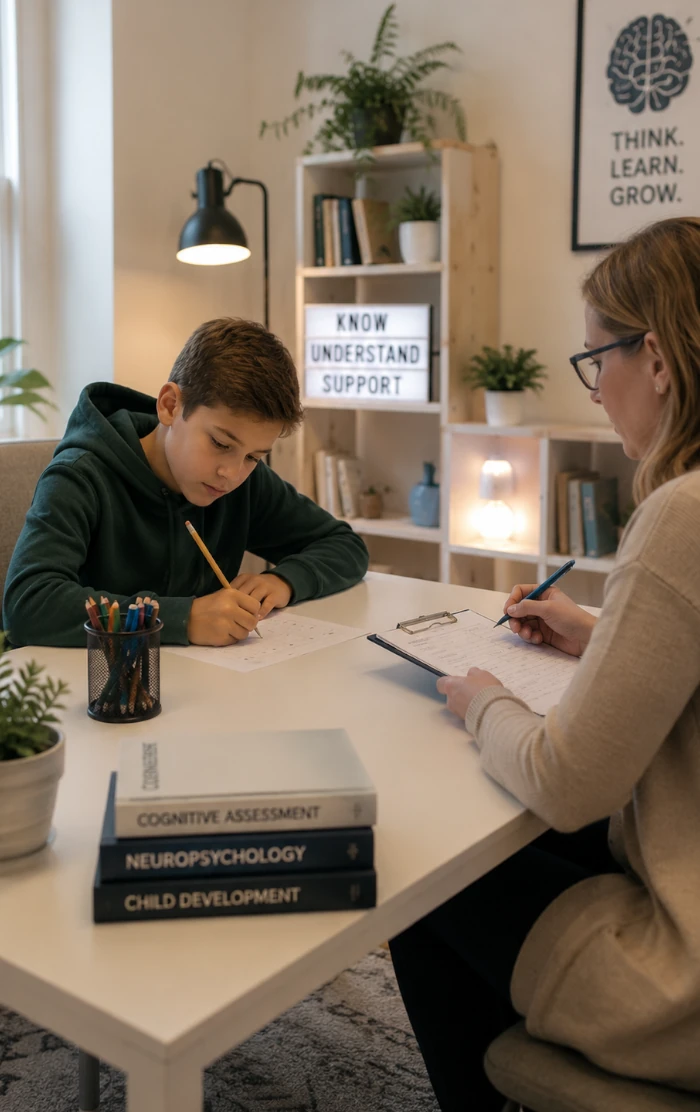
Professional child IQ testing locally – whether you need an assessment for school placement, gifted program eligibility, or to understand your child's learning profile, we connect you with licensed psychologists in the the city area.
Last Updated: September 2026
Gifted Testing
Identify giftedness for school placement, enrichment, and talent programs using WISC-V or Stanford-Binet 5.
WISC-V Test
Wechsler Intelligence Scale for Children® Fifth Edition – the gold standard for child IQ testing.
Stanford-Binet 5
Stanford-Binet Intelligence Scales Fifth Edition – comprehensive cognitive assessment for all ages.
Full Evaluation
Combined assessment with detailed report and recommendations. Includes WISC-V or Stanford-Binet 5.
School Placement Testing
Testing for private school admission and gifted program eligibility using WISC-V or Stanford-Binet 5.
Schedule Child IQ Testing
Book your WISC-V & Stanford-Binet 5 for ages 6–16. Gifted identification, learning profiles, etc. with a licensed psychologist locally today.
Alaska Gifted Education Framework
- Local implementation: Anchorage School District establishes its gifted identification and service procedures under Alaska law and district policy.
- Multiple programs: IGNITE, Highly Gifted magnet services, Advanced Academy classes and high-school mentorships serve different needs.
- Universal screening: ASD screens second-grade students as part of equitable identification.
- Referral: Parents and school staff may request evaluation; criteria vary by program.
- Current guidance: Families should use ASD's current testing pages and gifted office rather than relying on old cutoffs.
Transfer, Appeals and Documentation
- Transfers: Prior gifted identification from another state or district may require records review under ASD procedures.
- Private reports: Outside WISC-V or Stanford-Binet results may add context but do not automatically establish eligibility.
- Placement: Magnet admission, lotteries, transportation and school assignment are separate from identification.
- Records: Ask what scores, subtests, dates and examiner credentials ASD needs.
- Review: Contact the school IGNITE teacher or gifted identification team for questions about reconsideration or updated testing.
Child IQ Testing in Anchorage: city context
Children attend ASD neighborhood, charter, optional and alternative schools, private schools, homeschool programs and statewide correspondence programs. Families seek testing for IGNITE or Highly Gifted questions, learning disabilities, ADHD, autism, twice exceptionality, school placement and medical concerns.
IQ by gender & ethnicity (child population)
Current Census estimates show 23.5% of residents are under age 18 and 48.9% of the total population is female. There is no valid Anchorage average IQ for boys, girls or demographic groups.
- American Indian and Alaska Native population: 7.3%.
- Asian population: 10.0%.
- Native Hawaiian and Pacific Islander population: 3.1%.
- Two or more races: 14.6%.
- Language other than English at home: 17.2%.
- Assessment fairness: Examiners should consider Alaska Native language and culture, multilingual development, educational opportunity, disability, hearing or vision, medical history, fatigue and travel.
- Individual focus: A child's complete profile and functioning matter more than demographic averages.
Anchorage School Districts and Gifted Programs
Anchorage School District Gifted Education
- IGNITE: Enrichment-based services for eligible elementary students.
- Universal screening: Second-grade students receive districtwide screening.
- Highly Gifted elementary: Rogers Park houses a self-contained magnet pathway.
- Middle school: Advanced Academy classes are available broadly; Romig provides a Highly Gifted magnet pathway.
- High school: West High houses Highly Gifted services, and qualifying juniors and seniors may pursue gifted mentorships.
- Eligibility: Criteria differ by program and may include ability and achievement evidence.
Charter, Optional and Alternative Programs
- ASD options: Charter, optional, immersion, career-technical and alternative programs have separate applications and missions.
- Acceleration: Advanced coursework, AP, dual credit and CTE may supplement gifted services.
- Transportation: Some zone-exempt or magnet placements do not include transportation.
- Capacity: Eligibility does not guarantee a seat when lotteries or space limits apply.
Private, Homeschool and Statewide Options
- Private schools: Each school controls admissions and testing requirements.
- Homeschool and correspondence: Families may use testing for curriculum planning, but program rules vary.
- Rural families: Children traveling to Anchorage may need coordinated appointments and school-record transfer.
- Receiving institution: Confirm accepted tests, score age, report components and deadlines before scheduling.
- Family checklist: Confirm the child's assigned school, referral deadline, required records and whether transportation is available.
- Score interpretation: Ask how ability, achievement and classroom evidence are weighed for the specific program.
- Program fit: Consider social-emotional readiness and daily commute in addition to eligibility.
Anchorage Private Schools and Programs Using Testing Information
- Independent schools: Some may request admissions, achievement or psychoeducational records; policies change.
- Specialized services: Programs serving dyslexia, ADHD, autism or twice-exceptional learners may request comprehensive evaluations.
- Early entrance or acceleration: Decisions may consider achievement, maturity, classroom readiness and social-emotional functioning.
- Outside testing: A private IQ score does not guarantee admission, scholarship or grade placement.
- Verification: Obtain written requirements before testing.
Anchorage Gifted Identification Statistics
- No single municipal rate: Public reports do not establish one authoritative percentage of all Anchorage children identified as gifted.
- Program counts: Participation reflects referral, screening, criteria, available services and family decisions.
- Universal screening: Second-grade screening is intended to improve equitable access.
- Multiple pathways: IGNITE and Highly Gifted services use different criteria and delivery models.
- Private results: Outside testing may inform planning but does not automatically override district procedures.
- Current data: Ask ASD for the latest identification, participation and demographic reports.
The child IQ testing process: step by step
Understanding the testing process can help parents prepare their child and reduce anxiety. Here's what to expect:
- Initial consultation (15–20 minutes): A brief phone or video call with the psychologist to discuss your child's background, concerns, and goals. This helps determine the right test and approach.
- Testing session (60–90 minutes): The child meets one-on-one with a licensed psychologist in a quiet, comfortable room. The psychologist administers the WISC-V or Stanford-Binet 5, which includes a series of subtests measuring verbal comprehension, visual-spatial reasoning, fluid reasoning, working memory, and processing speed. Breaks are offered as needed.
- Scoring and interpretation (1–2 days): The psychologist scores the test and analyzes the results. They consider the child's age, background, and any relevant medical or educational history.
- Feedback session (45–60 minutes): The psychologist meets with the parents (and the child, if appropriate) to explain the results. They discuss the Full-Scale IQ, index scores, strengths, and areas for growth. They also provide tailored recommendations for home, school, and extracurriculars.
- Comprehensive written report (5–7 days): You receive a detailed report with all scores, normative comparisons, and actionable next steps. This report can be shared with schools, doctors, or other professionals.
The entire process from consultation to report usually takes 1–2 weeks, depending on scheduling. The testing itself is non-invasive and designed to be engaging for children.
What is the WISC-V test?
The WISC-V (Wechsler Intelligence Scale for Children® – Fifth Edition) is the most widely used IQ test for children aged 6:0–16:11. It provides a Full-Scale IQ and five primary index scores: Verbal Comprehension, Visual-Spatial, Fluid Reasoning, Working Memory, and Processing Speed. The test is administered one-on-one by a trained psychologist and takes about 60–90 minutes.
The WISC-V is normed on a large, representative sample of U.S. children and is updated regularly to ensure accuracy. It is the gold standard for gifted identification, learning disability diagnosis, and school placement.
Why test your child's IQ?
IQ testing provides valuable insights into your child's cognitive strengths and weaknesses. It can help:
- Identify giftedness: For admission to gifted programs, private schools, or enrichment opportunities.
- Diagnose learning disabilities: Such as dyslexia, dyscalculia, or ADHD, which can be masked by high intelligence.
- Guide educational planning: Tailor instruction to your child's unique learning profile.
- Provide reassurance: Understand why your child is different from peers and how to support them.
Anchorage Gifted Testing Timeline
- Start with the school: Contact the classroom teacher and IGNITE teacher.
- Referral windows: Confirm annual deadlines with the district gifted office.
- Testing: ASD administers universal screening and referred ability or achievement testing.
- Review: Allow time for scoring, committee review and records requests.
- Magnet applications: Placement timelines may be separate from testing.
- Private evaluation: Begin months before school deadlines when specialist waitlists or travel are likely.
Anchorage Gifted Programs by Age Group
- Kindergarten–grade 1: Classroom differentiation and Highly Gifted pathways where eligibility is established.
- Grades 2–5: IGNITE enrichment and Rogers Park Highly Gifted services.
- Grade 6: Verify current elementary or middle-level service transition.
- Middle school: Advanced Academy classes and Romig Highly Gifted services.
- High school: West High Highly Gifted services, AP, dual credit, CTE and mentorships.
- Outside school: UAA, museums, libraries, robotics, science, arts and outdoor programs can supplement instruction.
Anchorage Child ADHD and Learning Disability Assessment
- Comprehensive battery: May include cognitive, achievement, attention, executive-function, language and emotional measures.
- School evaluation: ASD evaluates suspected disabilities under special-education rules; private testing is a separate pathway.
- Medical factors: Sleep, hearing, vision, trauma, prenatal history and neurological conditions should be considered.
- Culture and language: Alaska Native and multilingual development require culturally informed interpretation.
- Twice exceptionality: High reasoning ability can coexist with ADHD, autism or learning disability.
Anchorage Summer Programs for Gifted Children
- UAA and university programs: Offer changing youth opportunities in STEM, arts, athletics and college preparation.
- Anchorage Museum and Alaska Native Heritage Center: Provide cultural, science and arts learning.
- Outdoor education: Camps and programs use Alaska's ecology, mountains and coastal environment.
- Libraries and nonprofits: Offer reading, coding, maker and enrichment activities.
- Planning: Confirm age, cost, transportation, accessibility and whether a program is enrichment rather than formal gifted service.
Anchorage Child Testing Costs by Provider Type
- School evaluation: Eligible public-school evaluations are provided through district procedures without family payment.
- Focused private IQ testing: Usually lower cost than a comprehensive psychoeducational evaluation.
- Comprehensive evaluation: Higher fees reflect achievement, attention, behavior, records and detailed recommendations.
- Medical neuropsychology: Insurance may cover medically necessary testing with referral and authorization.
- Travel: Rural families should include airfare, lodging and weather contingencies.
Areas we serve
We support all areas of Anchorage.
Frequently Asked Questions
Both are excellent tests. WISC-V is more commonly used for school-age children, while Stanford-Binet 5 can be used for ages 2–85. We often recommend WISC-V for gifted identification.
The test itself takes 60–90 minutes. With the consultation, feedback, and report, the entire process is about 1–2 weeks.
No, you can book directly with our psychologists. We serve both self-referred and professionally referred children.
A report may be considered only if the receiving district, school, or program accepts the test, examiner credentials, score date, and report format. Obtain written requirements before scheduling.
Some plans cover cognitive assessments when there is a clinical indication. Check with your provider.
Get a good night's sleep, eat a healthy meal, and arrive relaxed. No specific preparation is needed.
You'll receive a comprehensive report with your child's scores and tailored recommendations.
Interviews and feedback may be available remotely, but many standardized cognitive tests require controlled administration and may need an in-person appointment. Contact us for details.