
IQ Testing in Anchorage

Professional IQ testing locally – whether you need an assessment for school, employment, gifted program eligibility, or personal insight, we connect you with licensed psychologists in the the city area.
Last Updated: September 2026
Child IQ Testing
WISC-V & Stanford-Binet for ages 6–16. Gifted identification, learning profiles.
Adult IQ Testing
WAIS-IV & WAIS-5 available. Comprehensive adult cognitive assessments. Clinical & occupational.
WISC-V Test
Wechsler Intelligence Scale for Children® Fifth Edition – the gold standard for child IQ testing.
WAIS-IV & WAIS-5 Tests
Wechsler Adult Intelligence Scale® – Fourth Edition (WAIS-IV) and Fifth Edition (WAIS-5) available for adult IQ testing.
Gifted Testing
Identify giftedness for school placement, enrichment, and talent programs using WISC-V or Stanford-Binet.
Stanford-Binet 5
Stanford-Binet Intelligence Scales Fifth Edition – comprehensive cognitive assessment for all ages.
Mensa Testing
Mensa qualification guidance and professionally administered testing that may be submitted as prior evidence, subject to American Mensa’s current rules.
Full Evaluation
Combined assessment with detailed report and recommendations. Includes WISC-V, WAIS-IV, WAIS-5, or Stanford-Binet 5 as appropriate.
IQ Testing in Anchorage: city context
Anchorage is Alaska's largest population center and a consolidated municipality extending from the urban Anchorage Bowl to Eagle River, Chugiak, Girdwood and extensive mountain and coastal lands. The U.S. Census Bureau estimated 287,155 residents in 2025, compared with 291,247 in the 2020 Census, across approximately 1,706.8 square miles of land. The local testing population includes military families, Alaska Native and multilingual households, aviation and logistics workers, healthcare professionals, public employees, university students, energy-sector specialists and residents who travel from remote communities for specialized services.
The assessment environment is shaped by Anchorage School District, the University of Alaska Anchorage, Alaska Pacific University, Joint Base Elmendorf-Richardson, Providence Alaska Medical Center, Alaska Native Medical Center, Alaska Regional Hospital, the Alaska VA Healthcare System and a comparatively limited statewide supply of specialty psychologists and neuropsychologists.
Gender, age and demographic statistics
Current Census estimates show that 48.9% of residents are female, 23.5% are under age 18, and 12.9% are age 65 or older. Relevant local context includes:
- White alone: 56.8%.
- Black or African American alone: 5.0%.
- American Indian and Alaska Native alone: 7.3%.
- Asian alone: 10.0%.
- Native Hawaiian and Other Pacific Islander alone: 3.1%.
- Two or more races: 14.6%.
- Hispanic or Latino: 9.5%; Hispanic origin may overlap racial categories.
- Foreign-born residents: 10.9%.
- Language other than English at home: 17.2% of residents age five and older.
- Education: 94.1% of adults age 25 and older are high-school graduates or higher, and 38.7% hold a bachelor's degree or higher.
- Veterans: Census estimates report 23,058 veterans, reflecting the importance of JBER and military-connected families.
- Gender interpretation: Professional IQ tests use age-based norms rather than separate Anchorage male or female averages. Examiners consider education, language, culture, disability, medical history, sleep, mood and testing conditions.
- Group statistics: No authoritative dataset establishes average IQ by Anchorage neighborhood, gender, race, ethnicity or Alaska Native identity; community percentages should never be used to infer an individual's ability.
What is professional IQ testing?
Intelligence quotient (IQ) testing is a standardized method to measure human cognitive abilities and intellectual potential. Professional IQ tests are administered by licensed psychologists in a controlled environment to ensure accuracy and reliability. Unlike online quizzes, clinical assessments provide a full-scale IQ score along with detailed breakdowns of verbal comprehension, perceptual reasoning, working memory, and processing speed.
In the city, IQ testing is commonly used for gifted program admission, learning disability identification, career guidance, neuropsychological evaluation, and personal development. The results are presented in a comprehensive report that includes normative comparisons, strengths and weaknesses, and actionable recommendations.
Who should get tested?
IQ testing can benefit children, adolescents, and adults in various situations:
- Children: Parents often seek testing for school readiness, gifted placement, or to understand learning challenges.
- Adults: Many adults take IQ tests for career advancement, graduate school applications, or personal curiosity.
- Mensa candidates: High-IQ societies require official test scores for membership.
- Clinical referrals: Psychologists may recommend testing as part of a broader neuropsychological evaluation.
Types of IQ tests
We offer the most recognized and scientifically validated intelligence tests in the field:
- WISC-V (Wechsler Intelligence Scale for Children® – Fifth Edition): The gold standard for children aged 6:0–16:11. It provides a Full-Scale IQ and five primary index scores.
- WAIS-IV (Wechsler Adult Intelligence Scale® – Fourth Edition): The most widely used adult IQ test for ages 16–90. It measures cognitive functioning across four domains.
- Stanford-Binet Intelligence Scales – Fifth Edition: A comprehensive assessment for ages 2–85, often used for gifted identification and clinical evaluations.
- Gifted Testing: Often includes the WISC-V or Stanford-Binet, plus additional creativity and achievement measures.
- Mensa Testing: We provide professionally administered cognitive testing and Mensa qualification guidance; American Mensa alone determines whether evidence is accepted.
How the testing process works
- Initial consultation: Brief phone or video call to discuss your needs and match you with the right psychologist.
- Testing session: In-person or remote testing (depending on the test) with a licensed psychologist. Most sessions last 1–2 hours.
- Scoring and interpretation: The psychologist scores the test and interprets the results in the context of your background and goals.
- Feedback session: A detailed review of your results, including strengths, weaknesses, and practical recommendations.
- Comprehensive report: You receive a written report with all scores, normative comparisons, and actionable next steps.
How much does IQ testing cost in Anchorage?
The cost of IQ testing locally varies depending on the type of test, the psychologist's experience, and whether a comprehensive report is required. Typical fees range from $200 to $1,200 for a full assessment. Gifted testing and Mensa admission testing are often at the lower end, while neuropsychological evaluations may be higher.
Some insurance plans cover IQ testing when it's deemed medically necessary. We recommend checking with your provider for details. We also offer affordable payment plans and sliding-scale options for qualifying individuals.
Anchorage's Intellectual History & Legacy
Anchorage's intellectual identity reflects Dena'ina history, aviation, military service, public health, Arctic science, resource development, logistics and statewide government and nonprofit work.
- Dena'ina homeland: Anchorage is located within Dena'ina Ełnena, and local education increasingly incorporates Alaska Native languages, knowledge and cultural perspectives.
- Aviation gateway: Ted Stevens Anchorage International Airport links Alaska communities with national and international passenger and cargo networks.
- Military and federal presence: JBER, the Alaska VA and federal agencies support careers in aviation, engineering, cybersecurity, medicine, logistics and emergency response.
- Arctic and environmental research: UAA and statewide partners study climate, engineering, public health, geology, Indigenous studies, transportation and rural service delivery.
- Healthcare hub: Anchorage hospitals and specialty clinics serve residents from across Alaska, creating demand for culturally responsive and travel-aware evaluation practices.
- Resource and transportation economy: Oil, gas, mining support, air cargo, maritime activity and construction require technical reasoning and safety-critical decision-making.
- Arts and public institutions: The Anchorage Museum, Alaska Native Heritage Center, libraries and performing-arts organizations support cultural and intellectual life.
Top Employers in Anchorage Requiring Cognitive Skills
- Healthcare systems: Providence Alaska, Alaska Native Tribal Health Consortium, Southcentral Foundation, Alaska Regional Hospital and the VA employ clinicians, psychologists, analysts and administrators.
- Military and federal government: JBER and federal agencies require technical, intelligence, aviation, engineering and public-safety skills.
- Aviation and logistics: Alaska Airlines, cargo carriers, airport operators, freight companies and air-service businesses depend on rapid, accurate decision-making.
- Education: Anchorage School District, UAA and Alaska Pacific University employ educators, researchers, counselors, school psychologists and technology staff.
- State and municipal government: Public agencies recruit in planning, law, finance, public health, emergency management, utilities and transportation.
- Energy and engineering: Oil-and-gas support, construction, utilities and environmental consulting require quantitative and spatial reasoning.
- Alaska Native organizations: Regional corporations, tribal health organizations and nonprofits employ professionals across finance, law, healthcare, lands and community services.
- Tourism and outdoor industries: Operators require logistics, safety, weather awareness, communication and small-business management.
Anchorage IQ Testing by Neighborhood
Testing decisions should be based on the referral question and examiner qualifications, not neighborhood stereotypes. Geography matters because the municipality is unusually large and winter conditions can change travel time.
People in Anchorage who are curious about cognitive problem-solving may begin with an online IQ test, then consult a licensed psychologist when they need standardized scores or a written report.
- Downtown, South Addition and Government Hill: Central access to public offices, hospitals and transit, with parking and event considerations.
- Midtown, Rogers Park and University-Medical District: Close to Providence, ANMC, UAA, Alaska Pacific University and many behavioral-health offices.
- East Anchorage and Muldoon: Diverse, multilingual communities with access to JBER, schools and the Muldoon Transit Hub.
- South Anchorage, Abbott Loop and Hillside: Travel may depend on the Seward Highway, Lake Otis Parkway and winter road conditions.
- Turnagain, Spenard and Sand Lake: Convenient to Ted Stevens Anchorage International Airport and west-side medical and professional offices.
- Eagle River and Chugiak: Appointments in the Anchorage Bowl may require Glenn Highway travel and extra winter time.
- Girdwood: Specialty assessment often involves a substantially longer Seward Highway trip or coordinated multi-session scheduling.
- Clinical interpretation: Address, housing value, school reputation and distance from downtown are not measures of cognitive ability.
Anchorage Universities and Research Institutions
- University of Alaska Anchorage: Alaska's largest public university reported more than 10,000 students in fall 2025 and offers over 40 graduate degrees and certificates, including health, engineering, business, education, social science and public-policy pathways.
- Alaska Pacific University: A private university with programs connected to counseling psychology, health sciences, business, environmental studies and Alaska-focused education.
- Alaska Native Tribal Health Consortium: Supports clinical care, workforce development, public-health programs and research relevant to Alaska Native communities.
- UAA research centers: Work spans Arctic engineering, health workforce, human development, justice, economics, transportation and community resilience.
- Providence and ANMC: Major clinical systems support training, specialty care and quality-improvement work.
- Important distinction: Research participation, university screening or academic advising does not automatically produce a clinical diagnosis, school-eligibility decision or accommodation-ready report.
Anchorage Economic Context
- Median household income: $103,284 in 2020–2024 Census estimates.
- Per-capita income: $51,144.
- Residents in poverty: 8.9%.
- Bachelor's degree or higher: 38.7% of adults age 25 and older.
- Mean travel time to work: 18.8 minutes, although winter weather, crashes and trips from Eagle River, Chugiak or Girdwood can be much longer.
- Health and social-assistance activity: Approximately $5.81 billion in 2022 receipts/revenue.
- Transportation and warehousing: Approximately $4.14 billion in 2022 receipts/revenue, reflecting air cargo, freight, port and statewide distribution roles.
- Retail sales: Approximately $6.13 billion in 2022.
- Accommodation and food services: Approximately $1.59 billion in 2022 sales, reflecting tourism and business travel.
- Regional strengths: Aviation and logistics, military and government, healthcare, Alaska Native organizations, oil-and-gas support, construction, tourism, education, professional services and Arctic research.
Anchorage School District Data
- District scale: Anchorage School District reports more than 100 schools and about 43,000 students.
- Universal screening: ASD's gifted identification team conducts universal screening for second-grade students as part of an equitable identification process.
- IGNITE: Enrichment-based gifted services are available in elementary grades for students who meet district eligibility criteria.
- Highly Gifted: Rogers Park Elementary houses a K–5 magnet program; Romig Middle and West High provide later highly gifted pathways.
- Middle-school services: Advanced Academy science and language-arts options are available at regular middle schools, subject to current scheduling and qualification.
- High-school opportunities: AP, dual-credit, Career and Technical Education, accelerated coursework and gifted mentorships may support advanced learners.
- Private testing: Outside reports can contribute useful information but do not automatically determine ASD gifted eligibility, lottery placement or school assignment.
- Current policy: Families should verify referral windows, instruments, criteria, transportation and placement directly with ASD.
Local Testing Centers and Psychologists
- Providence Behavioral Health Anchorage: Offers neuropsychological and psychodiagnostic assessment for adults and adolescents age 16 and older.
- Providence pediatric specialists: Pediatric neuropsychology and related services may address developmental, neurological and educational questions.
- Alaska Native health systems: ANTHC and Southcentral Foundation provide culturally grounded care for eligible Alaska Native and American Indian patients; referral pathways vary.
- Alaska Regional and neurology practices: Provide neurological evaluation and referral options for medical cognitive concerns.
- Private psychologists: Offer IQ, ADHD, autism, learning-disability, gifted and psychoeducational evaluations, with scope and age ranges varying by provider.
- Licensure: Verify credentials through the Alaska Board of Psychologist and Psychological Associate Examiners.
- Travel planning: Families from rural Alaska may need coordinated appointments, lodging, records transfer and telehealth follow-up where clinically appropriate.
Anchorage Events and Conferences
- UAA lectures and research events: Public talks span health, Arctic policy, engineering, Alaska Native studies, business and education.
- Alaska Brain Injury Network and Project ECHO: Training and professional-development opportunities may address rehabilitation and cognitive health.
- Anchorage Museum and Alaska Native Heritage Center: Offer educational programs in history, science, art and Indigenous cultures.
- ASD family events: Gifted, college, career and special-education information sessions vary by school year.
- Professional associations: Alaska psychology, counseling, education and medical groups hold continuing-education events.
- Seasonal planning: Event schedules and travel may be affected by weather, school calendars and statewide travel costs.
Transportation and Accessibility
- Major roads: Glenn Highway connects downtown with JBER, Eagle River and the Mat-Su Valley; Seward Highway connects Midtown and South Anchorage with Girdwood and the Kenai Peninsula; Minnesota Drive, Northern Lights Boulevard, Tudor Road, Lake Otis Parkway and Muldoon Road are major urban corridors.
- Public transit: People Mover operates municipal bus service, while AnchorRIDES provides paratransit and coordinated transportation for eligible riders.
- Airport: Ted Stevens Anchorage International Airport (ANC) is Alaska's primary passenger and cargo gateway, serving about 5.4 million passengers in FY2023 and dozens of passenger and cargo destinations.
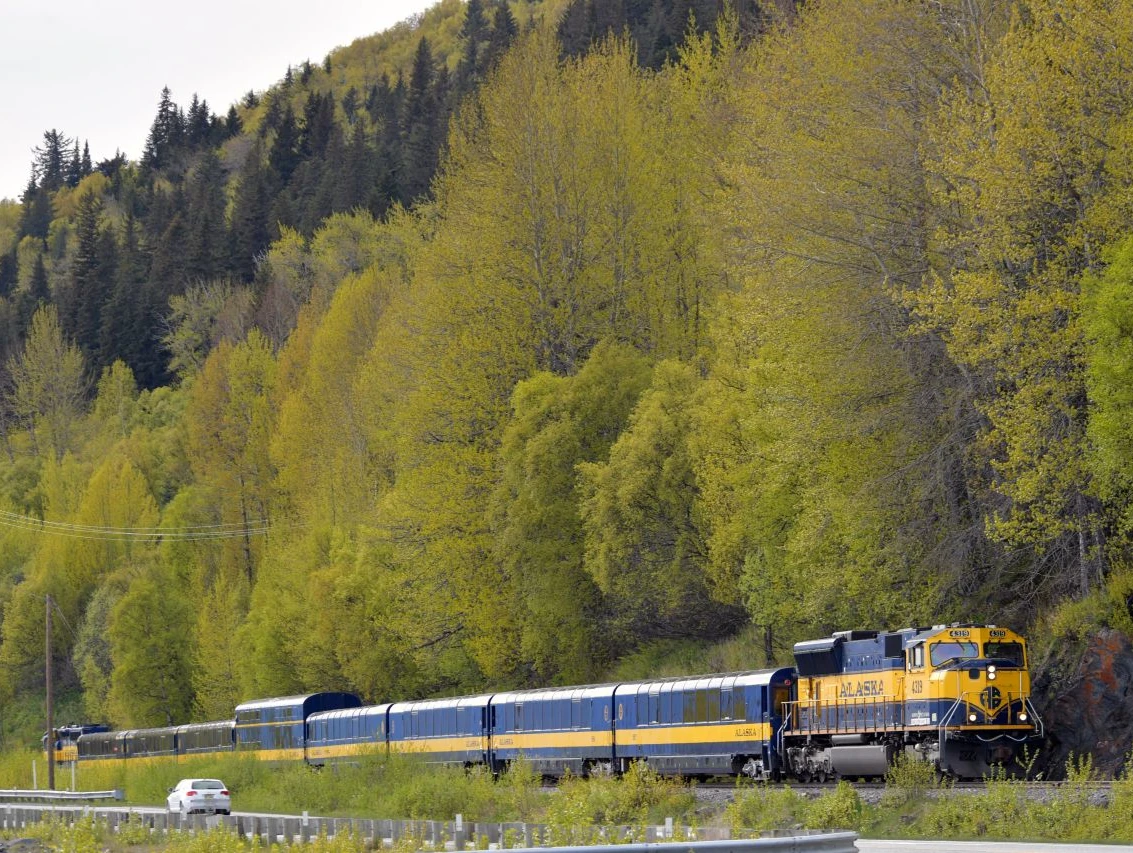
- Rail and regional travel: Alaska Railroad service connects Anchorage with communities including Wasilla, Talkeetna, Denali, Fairbanks and Seward on seasonal or scheduled routes.
- Distance to other cities: Approximately 45 minutes to Palmer, 50–70 minutes to Wasilla depending on traffic, about 2.5 hours to Seward, roughly 2.5–3 hours to Kenai and around 6–7 hours to Fairbanks by road in favorable conditions.
- Walkability: Downtown, parts of Midtown, the University-Medical District and trail-adjacent neighborhoods offer the strongest concentrations of destinations, but the municipality overall is geographically dispersed.
- Bike infrastructure: Municipal statistics report more than 120 miles of paved bike and multi-use trails, including the Tony Knowles Coastal Trail, Chester Creek Trail, Campbell Creek Trail and connections through the greenbelt network.
- Accessibility: Snow, ice, darkness, moose activity and limited winter maintenance on some routes can affect appointment access; confirm accessible entrances and allow extra time.
- Appointment planning: Check People Mover schedules, parking, winter road reports and clinic accessibility before travel.
- Rural arrivals: Leave buffer time between flights and testing, especially after overnight travel.
- Weather contingency: Ask about rescheduling policies when highways or flights are disrupted.
Anchorage Weather and Seasonal Considerations
- Winter travel: Snow, ice, reduced visibility and occasional major storms can lengthen travel and cause school or clinic closures.
- Daylight: Very short winter days and long summer daylight can influence sleep, alertness and appointment timing.
- Cold-weather preparation: Bring medications, eyewear and assistive devices, and avoid arriving after a stressful or unsafe commute when possible.
- Summer construction: Roadwork is concentrated in the short construction season and can affect major corridors.
- Wildfire smoke: Regional smoke can occasionally affect respiratory health and concentration.
- Remote travel: Weather may disrupt flights from rural communities; ask about rescheduling, record transfer and coordinated multi-day testing.
- Testing validity: Significant fatigue, illness, jet lag or sleep disruption should be discussed with the examiner before testing.
Areas we serve
We support all areas of Anchorage.
Frequently Asked Questions
WISC-V is for children aged 6–16, while WAIS-IV is for adults aged 16–90. Each is normed for its specific age group.
Most IQ tests take between 60 and 90 minutes, plus a feedback session. Allow 2–3 hours total.
No, you can book directly with our psychologists. We serve both self-referred and professionally referred individuals.
Some professionally administered scores may be submitted as prior evidence, but acceptance is determined solely by American Mensa under its current rules.
Some plans cover cognitive assessments when there is a clinical indication. Check with your provider.
Get a good night's sleep, eat a healthy meal, and arrive relaxed. No specific preparation is needed.
You'll receive a comprehensive report with your scores and tailored recommendations.
Interviews and feedback may be available remotely, but many standardized cognitive tests require controlled administration and may need an in-person appointment. Contact us for details.