
Child IQ Testing in Portsmouth
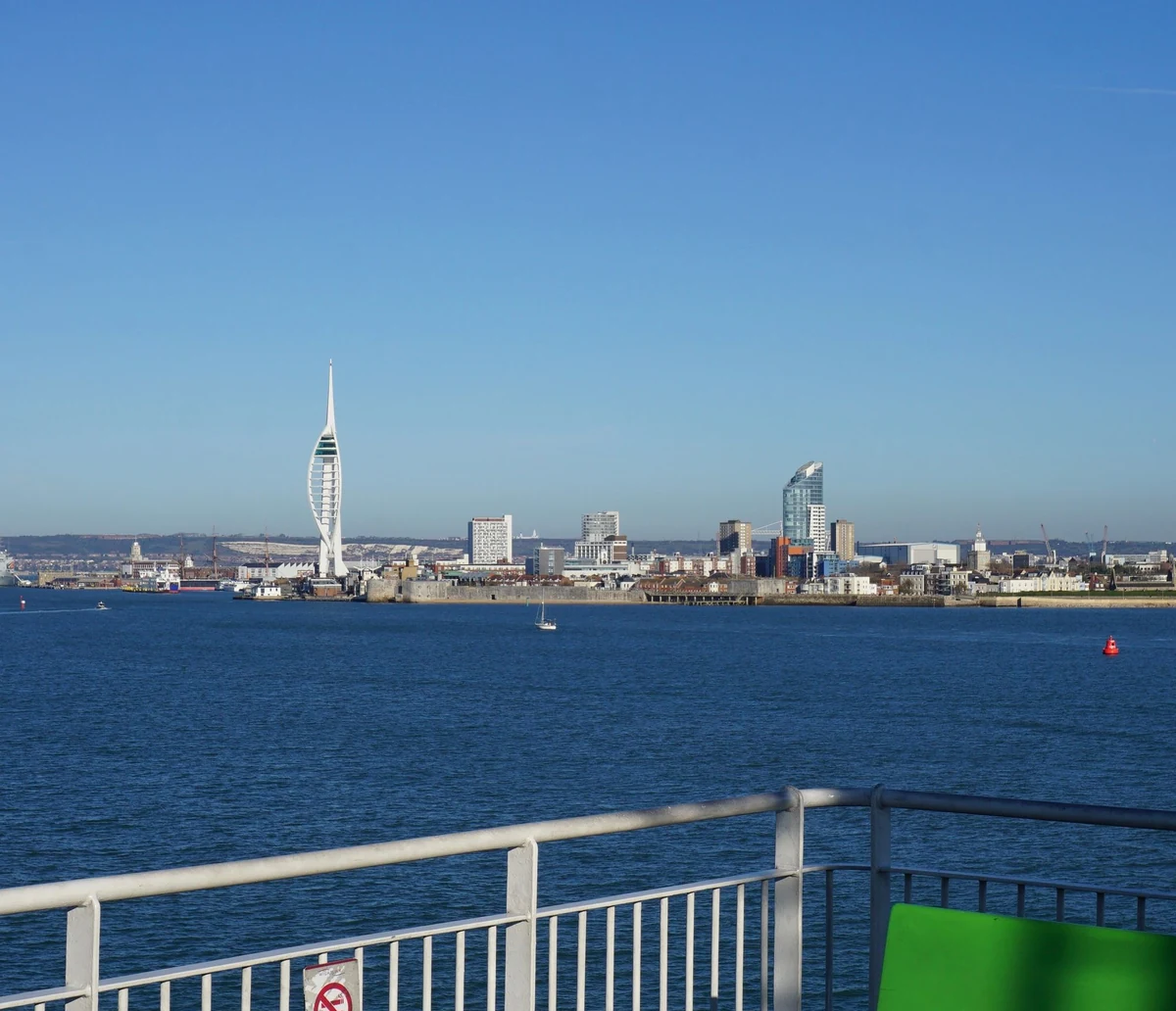
Professional child IQ testing in Portsmouth – whether you need an assessment for school placement, advanced-learning provision eligibility, or to understand your child's learning profile, we connect you with HCPC-registered psychologists in the Portsmouth area.
Last Updated: October 2026
Gifted Testing
Identify giftedness for school placement, enrichment, and talent programmes using WISC-V or Stanford-Binet 5.
WISC-V Test
Wechsler Intelligence Scale for Children® Fifth Edition – the gold standard for child IQ testing.
Stanford-Binet 5
Stanford-Binet Intelligence Scales Fifth Edition – comprehensive cognitive assessment for all ages.
Full Evaluation
Combined assessment with detailed report and recommendations. Includes WISC-V or Stanford-Binet 5.
School Placement Testing
Testing for independent school admission and advanced-learning provision eligibility using WISC-V or Stanford-Binet 5.
Schedule Child IQ Testing
Book your WISC-V & Stanford-Binet 5 for ages 6–16. Gifted identification, learning profiles, etc. with a HCPC-registered psychologist in Portsmouth today.
Child IQ Testing in Portsmouth: city context
City of Portsmouth covers approximately 15.6 square miles of land. The population figure supplied for this location is 215,781, with a listed growth figure of 0.34%. This page uses the City of Portsmouth boundary consistently for demographic, education, transport and service context.
Current demographic context uses the 2021 Census broad ethnic-group profile. These figures help frame language, migration, schooling and equitable access to assessment; they are not evidence that any ethnic group, sex or gender has a particular IQ.
IQ by gender & ethnicity (child population)
Sex profile: approximately 49.2% female and 50.8% male. Contemporary Wechsler and Stanford–Binet interpretation uses age-referenced norms rather than a local male-versus-female adjustment. There is no authoritative City of Portsmouth dataset establishing a meaningful IQ difference by sex or gender.
Relevant demographic and educational context includes:
- White residents: about 85.2%
- Asian residents: about 6.9%
- Black residents: about 3.4%
- Mixed ethnic groups: about 2.6%
- Other ethnic groups: about 1.8%
- Geographic context: City of Portsmouth sits within South East England, while residents may have educational and language histories from elsewhere in the UK or overseas.
For children and young people, school experience, developmental history, first language, SEND, sensory or motor needs and emotional wellbeing should be considered alongside standardised scores. Demographic statistics should guide accessible service planning, never predictions about an individual score.
Portsmouth School Systems and High-Ability Provision
Portsmouth state-funded education and advanced learning
- Portsmouth schools and inclusion services work within England’s SEND and EHCP framework;
- educational psychology combines learning evidence, observation and development with any cognitive measures selected for the referral question.
Admissions, choice and specialist provision
- Published admissions criteria differ between schools and can change annually.
- Entrance papers, prior attainment, catchment, faith criteria, sibling priority, selective testing and specialist placement procedures must be checked with the relevant institution.
Further and higher education pathways
- University of Portsmouth, City of Portsmouth College and regional links to Southampton universities and health-research institutions form part of the local or regional progression landscape.
SEND or additional-support assessment
- Educational psychology can contribute where a defined learning or developmental question exists, but provision decisions require broader educational and functional evidence and the child or young person’s views.
Other school options in Portsmouth
- Independent, faith, academy, specialist and alternative provision can operate different assessment and support procedures;
- families should verify current rules rather than assume a private IQ report is required.
Portsmouth Independent Schools and Admissions Testing
Examples of schools in the local education landscape include The Portsmouth Grammar School, Priory School, Admiral Lord Nelson School, Trafalgar School, Mayfield School, UTC Portsmouth. Their admissions policies are not interchangeable, and there is no sound basis for claiming that every independent or selective school requires a privately obtained IQ score.
- Where a school uses entrance examinations, those papers usually assess curriculum attainment or school-specific reasoning under admissions rules, which differs from a clinical WISC or Stanford–Binet evaluation.
Portsmouth Gifted Identification Statistics
- There is no official count of “gifted” children in City of Portsmouth based on one IQ definition.
- A score around the 98th percentile is sometimes used as one high-ability reference point, but translating that statistical threshold directly into a local headcount would ignore test choice, measurement error, participation and differing definitions of giftedness.
- Schools can identify high attainment through curriculum performance, teacher evidence, subject-specific talent and rate of learning without requiring a clinical IQ label.
The child IQ testing process: step by step
Understanding the testing process can help parents prepare their child and reduce anxiety. Here's what to expect:
- Initial consultation (15–20 minutes): A brief phone or video call with the psychologist to discuss your child's background, concerns, and goals. This helps determine the right test and approach.
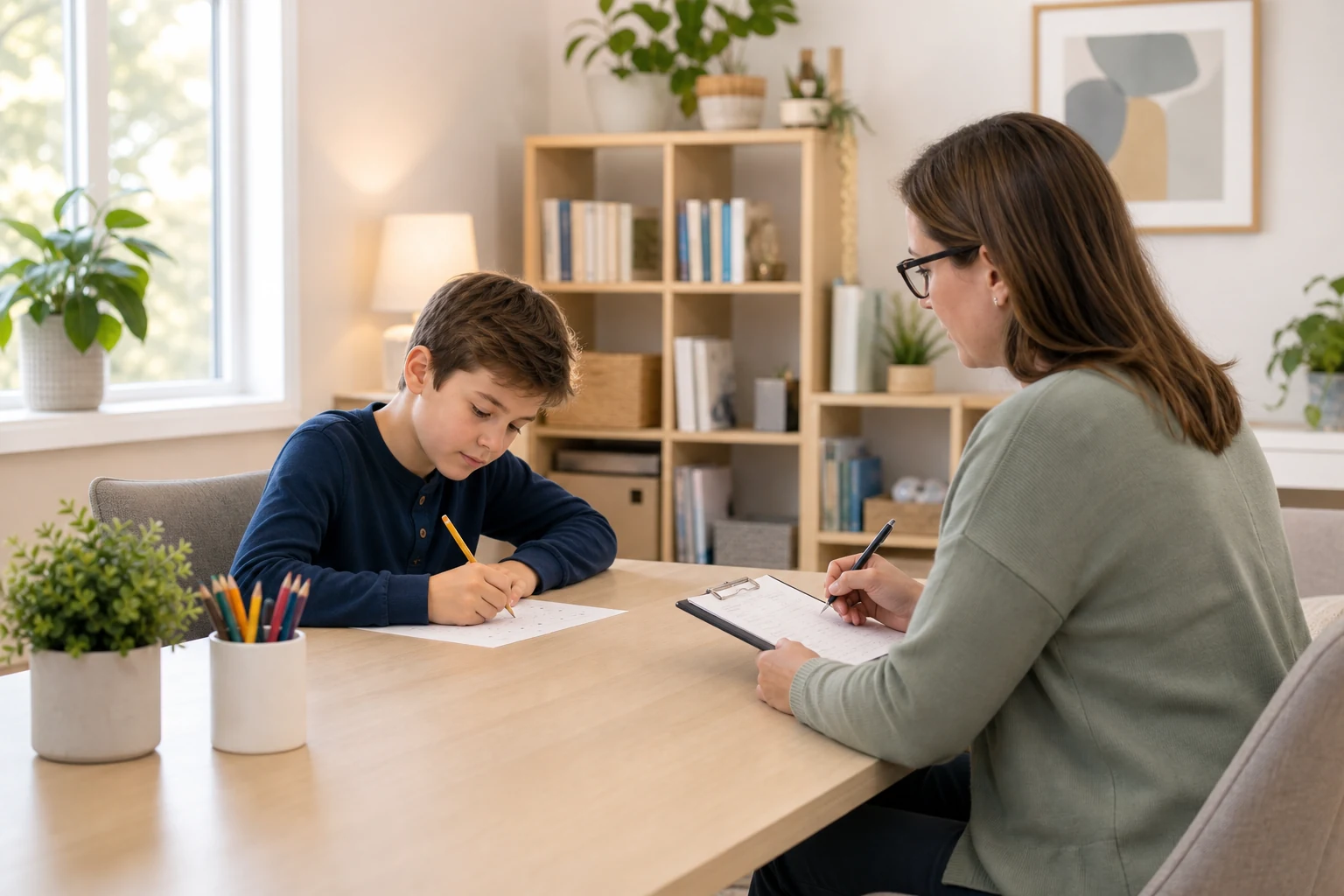
- Testing session (60–90 minutes): The child meets one-on-one with a HCPC-registered psychologist in a quiet, comfortable room. The psychologist administers the WISC-V or Stanford-Binet 5, which includes a series of subtests measuring verbal comprehension, visual-spatial reasoning, fluid reasoning, working memory, and processing speed. Breaks are offered as needed.
- Scoring and interpretation (1–2 days): The psychologist scores the test and analyses the results. They consider the child's age, background, and any relevant medical or educational history.
- Feedback session (45–60 minutes): The psychologist meets with the parents (and the child, if appropriate) to explain the results. They discuss the Full-Scale IQ, index scores, strengths, and areas for growth. They also provide tailored recommendations for home, school, and extracurriculars.
- Comprehensive written report (5–7 days): You receive a detailed report with all scores, normative comparisons, and actionable next steps. This report can be shared with schools, doctors, or other professionals.
The entire process from consultation to report usually takes 1–2 weeks, depending on scheduling. The testing itself is non-invasive and designed to be engaging for children.
What is the WISC-V test?
The WISC-V (Wechsler Intelligence Scale for Children® – Fifth Edition) is the most widely used IQ test for children aged 6:0–16:11. It provides a Full-Scale IQ and five primary index scores: Verbal Comprehension, Visual-Spatial, Fluid Reasoning, Working Memory, and Processing Speed. The test is administered one-on-one by a trained psychologist and takes about 60–90 minutes.
The WISC-V is normed on a large, representative sample of UK children and is updated regularly to ensure accuracy. It is the gold standard for gifted identification, learning disability diagnosis, and school placement.
Why test your child's IQ?
IQ testing provides valuable insights into your child's cognitive strengths and weaknesses. It can help:
- Identify giftedness: For admission to advanced-learning provisions, independent schools, or enrichment opportunities.
- Diagnose learning disabilities: Such as dyslexia, dyscalculia, or ADHD, which can be masked by high intelligence.
- Guide educational planning: Tailor instruction to your child's unique learning profile.
- Provide reassurance: Understand why your child is different from peers and how to support them.
Portsmouth Gifted Testing Timeline
- Before testing: define the question—advanced curriculum, uneven attainment, possible twice-exceptionality, school placement or personal understanding.
- School evidence: collect recent work, teacher observations, attainment data and information about challenge already provided.
- Assessment: the psychologist selects an age-appropriate battery and documents behaviour, language and any accommodations during testing.
- Feedback: interpret confidence intervals and index patterns rather than treating the Full Scale IQ as the only result.
- Action: agree realistic school, home or enrichment steps and a review point to see whether the recommendations are helping.
Portsmouth High-Ability Provision by Age Group
- Early years: focus on play, language, curiosity, social-emotional development and developmentally appropriate challenge rather than formal IQ ranking.
- Primary age: curriculum differentiation, reading or mathematics extension and subject-specific enrichment may be more useful than acceleration based on one score.
- Secondary age: schools can use subject attainment, GCSE pathways, clubs, competitions and mentoring alongside any psychological evidence.
- Post-16: sixth forms, colleges and universities increasingly rely on qualifications, course prerequisites and individual support needs rather than gifted labels.
Portsmouth Child ADHD and Learning Disability Assessment
- WISC or other cognitive testing can contribute to a broader child assessment, but neither ADHD nor a specific learning disorder is diagnosed from IQ alone.
- A robust evaluation may integrate developmental history, attainment, behaviour across settings, language, attention measures and school evidence.
- Families in City of Portsmouth should clarify whether the question is about SEND support, diagnosis, school planning or a private learning profile because the referral pathway and required professionals can differ.
Portsmouth Summer Programmes for Gifted Children
- Summer enrichment is best chosen by the child’s interests, readiness and wellbeing rather than by attaching a prestige label to an IQ result.
- Local museums, libraries, schools, universities, sports organisations and arts providers can offer subject-specific activities, while regional universities may run outreach programmes.
- The Historic Dockyard hosts major heritage, naval and public events.
- Guildhall and Southsea venues support cultural, music and community programmes.
- Together, these local examples illustrate the variety of learning environments that can complement school without implying that participation is restricted to children with a particular score.
Portsmouth Child Testing Costs by Area
- Private child cognitive-assessment fees should depend on the battery, professional time, report depth and referral complexity, not on which neighbourhood of City of Portsmouth the child lives in.
- Travel or venue charges can vary, especially where a practitioner works across a wide authority or uses school visits.
- Focused cognitive assessment: a practical private planning range can be roughly £450–£900, subject to provider and scope.
- Broader psychoeducational evaluation: combined cognitive, attainment and behavioural work may be £900–£2,000 or more depending on complexity.
- Before paying: ask the school, local authority, examination body or other recipient exactly what evidence and professional credentials it requires.
- Public pathways: council or NHS assessment is based on need and referral criteria rather than a consumer request for an IQ number.
Areas we serve
We support all areas of Portsmouth.
Frequently Asked Questions
A focused cognitive battery often requires roughly 60–120 minutes of direct testing, while a broader evaluation can take several sessions. The psychologist should give an estimate based on age, referral question and breaks.
Private psychologists may accept self-referrals, while council and NHS services usually have defined referral pathways. Ask Portsmouth Educational Psychology Team which referral route and age range apply before relying on the service.
Possibly, but only if the exact test, edition, qualifying score, administration and documentation meet British Mensa’s current rules. Confirm those requirements before testing.
Some interviews and feedback can be remote, but many standardised cognitive tests have controlled-administration requirements. Use only a format permitted by the test publisher and accepted by the organisation receiving the report.
Prioritise normal sleep, food, prescribed medication as directed, glasses or hearing aids if used, and an unhurried arrival. Coaching on test items can undermine validity.
A good feedback session explains the score profile, limitations and practical implications. If a written report is needed, agree its intended audience and delivery date before the assessment.
Both are excellent tests. WISC-V is more commonly used for school-age children, while Stanford-Binet 5 can be used for ages 2–85. We often recommend WISC-V for gifted identification.
Direct cognitive testing often takes around 60–90 minutes, but consultation, additional measures, feedback and report preparation vary by referral question and clinician. Ask for the expected report turnaround before booking.