
Child IQ Testing in Peterborough
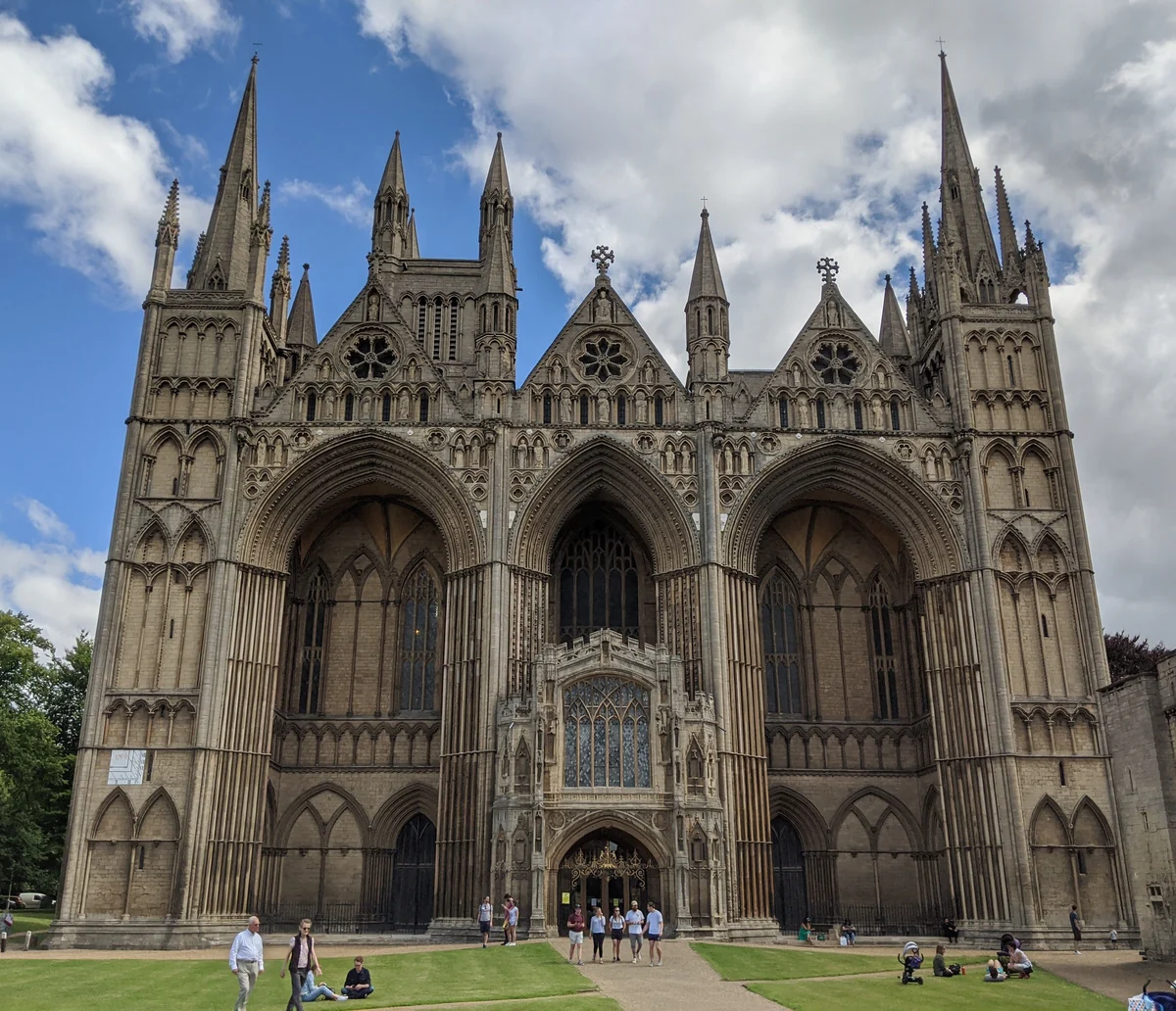

Professional child IQ testing in Peterborough – whether you need an assessment for school placement, advanced-learning provision eligibility, or to understand your child's learning profile, we connect you with HCPC-registered psychologists in the Peterborough area.
Last Updated: October 2026
Gifted Testing
Identify giftedness for school placement, enrichment, and talent programmes using WISC-V or Stanford-Binet 5.
WISC-V Test
Wechsler Intelligence Scale for Children® Fifth Edition – the gold standard for child IQ testing.
Stanford-Binet 5
Stanford-Binet Intelligence Scales Fifth Edition – comprehensive cognitive assessment for all ages.
Full Evaluation
Combined assessment with detailed report and recommendations. Includes WISC-V or Stanford-Binet 5.
School Placement Testing
Testing for independent school admission and advanced-learning provision eligibility using WISC-V or Stanford-Binet 5.
Schedule Child IQ Testing
Book your WISC-V & Stanford-Binet 5 for ages 6–16. Gifted identification, learning profiles, etc. with a HCPC-registered psychologist in Peterborough today.
Child IQ Testing in Peterborough: city context
Peterborough covers approximately 132.6 square miles of land. The population figure supplied for this location is 229,218, with a growth figure of 1.24%. This guide uses the Peterborough unitary-authority area for local context rather than treating nearby places as if they were inside the same authority.
For child assessment, local population data provide service-planning context only. They must never be used to assign expected intelligence to a pupil by sex, ethnicity, language or postcode. Census data are included because fair psychometric interpretation may depend on language history, migration, educational opportunity and access to support.
IQ by gender & ethnicity (child population)
Sex profile: approximately 50.5% female and 49.5% male. Modern intelligence tests use age-referenced normative procedures; there is no defensible basis for adding a local male/female or gender adjustment to a person’s score.
Current demographic context includes:
- White residents: 75.4%.
- Asian, Asian British or Asian Welsh residents: 14.3%.
- Black, Black British, Black Welsh, Caribbean or African residents: 4.1%.
- Mixed or Multiple ethnic groups: 3.5%.
- Other ethnic groups: 2.7%.
- Migration and birthplace context: 69.8% reported England as country of birth in Census 2021; Poland, Lithuania, other EU countries and Pakistan were among common other birthplaces.
- Language context: Peterborough is multilingual, with eastern-European and South Asian language communities particularly relevant to school and adult assessment histories.
- Education context: The city combines university expansion, further education, apprenticeships and a large logistics/manufacturing workforce; education level should be treated as context, not an IQ proxy.
For a resident of Peterborough, the psychologist should consider first language, language of schooling, disability, sensory or motor needs, neurodevelopmental and medical history, emotional state, previous test exposure, educational opportunity and the exact referral purpose. None of the population percentages above should be converted into a presumed cognitive level.
Peterborough School Systems and High-Ability Provision
Peterborough has a comprehensive state-school system and does not use a city-wide clinical IQ threshold for secondary admission.
Peterborough state-funded education and advanced learning
- Academies and maintained schools publish their own oversubscription criteria within local admissions arrangements.
- High-attaining pupils may access subject extension, enrichment, competitions and sixth-form or college pathways.
Admissions, choice and specialist provision
- Educational Psychology can contribute when SEND, development or complex learning questions require specialist assessment.
- The Peterborough School and other independent options set their own admissions procedures, which should be checked before commissioning any cognitive report.
Further and higher education pathways
ARU Peterborough and Peterborough College have expanded local academic, vocational and apprenticeship progression.
SEND or additional-support assessment
Educational Psychology can contribute when SEND, development or complex learning questions require specialist assessment.
Other school options in Peterborough
For pupils with multilingual or internationally mobile backgrounds, an evaluator should distinguish English acquisition and curriculum exposure from underlying reasoning performance.
Peterborough Independent Schools and Admissions Testing
School placement in Peterborough should begin with the receiving school’s current admissions rules. A psychologist-administered cognitive test may clarify a learning profile, but it does not override statutory admissions procedures or guarantee a place.
Independent Schools
The Peterborough School
Use the school’s published admissions information and confirm whether any external assessment is useful.
Local preparatory options
Entry procedures vary with age and available places.
Nearby independent schools
Some families consider schools outside the unitary area, which introduces separate admissions rules.
Faith-based independent provision
Criteria can include ethos and school-specific requirements rather than IQ.
Specialist education
Placement should be needs-led and based on multidisciplinary evidence where applicable.
Sixth-form transition
Academic subject requirements normally matter more than intelligence testing.
State-Funded School and Advanced-Learning Pathways
- Local point: Peterborough has a comprehensive state-school system and does not use a city-wide clinical IQ threshold for secondary admission.
- Local point: Academies and maintained schools publish their own oversubscription criteria within local admissions arrangements.
- Local point: High-attaining pupils may access subject extension, enrichment, competitions and sixth-form or college pathways.
- Local point: Educational Psychology can contribute when SEND, development or complex learning questions require specialist assessment.
- Local point: The Peterborough School and other independent options set their own admissions procedures, which should be checked before commissioning any cognitive report.
- Local point: ARU Peterborough and Peterborough College have expanded local academic, vocational and apprenticeship progression.
- Local point: For pupils with multilingual or internationally mobile backgrounds, an evaluator should distinguish English acquisition and curriculum exposure from underlying reasoning performance.
Peterborough Gifted Identification Statistics
There is no authoritative Peterborough-wide census of “gifted IQ”. Schools use attainment, teacher evidence, curriculum performance and locally chosen identification practices. A psychometric score can add information when a clear question exists, but it should not be converted into a claim that a fixed percentage of local children is gifted.
Because access to private testing is uneven, published testing numbers would also reflect who was assessed rather than the underlying distribution of ability.
The child IQ testing process: step by step
Understanding the testing process can help parents prepare their child and reduce anxiety. Here's what to expect:
- Initial consultation (15–20 minutes): A brief phone or video call with the psychologist to discuss your child's background, concerns, and goals. This helps determine the right test and approach.
- Testing session (60–90 minutes): The child meets one-on-one with a HCPC-registered psychologist in a quiet, comfortable room. The psychologist administers the WISC-V or Stanford-Binet 5, which includes a series of subtests measuring verbal comprehension, visual-spatial reasoning, fluid reasoning, working memory, and processing speed. Breaks are offered as needed.
- Scoring and interpretation (1–2 days): The psychologist scores the test and analyses the results. They consider the child's age, background, and any relevant medical or educational history.
- Feedback session (45–60 minutes): The psychologist meets with the parents (and the child, if appropriate) to explain the results. They discuss the Full-Scale IQ, index scores, strengths, and areas for growth. They also provide tailored recommendations for home, school, and extracurriculars.
- Comprehensive written report (5–7 days): You receive a detailed report with all scores, normative comparisons, and actionable next steps. This report can be shared with schools, doctors, or other professionals.
The entire process from consultation to report usually takes 1–2 weeks, depending on scheduling. The testing itself is non-invasive and designed to be engaging for children.
What is the WISC-V test?
The WISC-V (Wechsler Intelligence Scale for Children® – Fifth Edition) is the most widely used IQ test for children aged 6:0–16:11. It provides a Full-Scale IQ and five primary index scores: Verbal Comprehension, Visual-Spatial, Fluid Reasoning, Working Memory, and Processing Speed. The test is administered one-on-one by a trained psychologist and takes about 60–90 minutes.
The WISC-V is normed on a large, representative sample of UK children and is updated regularly to ensure accuracy. It is the gold standard for gifted identification, learning disability diagnosis, and school placement.
Why test your child's IQ?
IQ testing provides valuable insights into your child's cognitive strengths and weaknesses. It can help:
- Identify giftedness: For admission to advanced-learning provisions, independent schools, or enrichment opportunities.
- Diagnose learning disabilities: Such as dyslexia, dyscalculia, or ADHD, which can be masked by high intelligence.
- Guide educational planning: Tailor instruction to your child's unique learning profile.
- Provide reassurance: Understand why your child is different from peers and how to support them.
Peterborough Gifted Testing Timeline
- Clarify the decision first: identify the school, programme or support question before choosing a test.
- Collect school evidence: recent attainment, teacher observations and examples of advanced work provide context.
- Confirm acceptance: ask the receiving organisation which test editions and report dates it accepts.
- Schedule when the child is well: avoid major illness, severe sleep disruption or a day dominated by stressful travel.
- Review recommendations: use the profile to plan pace, depth, enrichment or support rather than focusing only on the Full Scale IQ.
Peterborough High-Ability Provision by Age Group
- Early years: focus on broad development, language, play, curiosity and asynchronous strengths rather than premature labelling.
- Primary age: curriculum differentiation, reading/mathematics depth and enrichment can be adjusted using school evidence and, when needed, formal assessment.
- Secondary age: subject-specific acceleration, qualifications, competitions and mentoring may be more useful than a general “gifted” label.
- Post-16: college, sixth-form, apprenticeship and university routes should match interests, attainment and wellbeing as well as cognitive strengths.
Peterborough Child ADHD and Learning Disability Assessment
ADHD and learning-disability assessment in Peterborough requires broader developmental, educational and clinical evidence than an IQ score. Cognitive testing can help describe strengths and weaknesses, but diagnosis or statutory support decisions depend on functional evidence and the relevant education/health framework.
Use Peterborough Educational Psychology Service for local public educational-psychology route information where appropriate, and confirm separate clinical pathways for medical diagnosis.
Peterborough Summer Programmes for Gifted Children
Families in Peterborough can consider library, museum, university outreach, coding, arts, sport, STEM and subject-specific programmes during school holidays. The strongest choice is one matched to the child’s interests and readiness, not one marketed solely around an IQ cutoff.
Regional travel may expand options, but enrichment should remain proportionate and should not displace rest, peer relationships or ordinary family time.
Peterborough Child Testing Costs by Area
Private fees do not have a reliable neighbourhood tariff within Peterborough. Cost is driven more by the psychologist’s qualifications, test battery, records reviewed, report depth, travel and feedback than by the examinee’s postcode.
- Focused cognitive assessment: ask for a written quotation stating the exact test and whether feedback/reporting are included.
- Broader psychoeducational evaluation: expect higher fees when attainment, attention, adaptive behaviour or diagnostic measures are added.
- Public route: council, NHS or Education Authority assessment is governed by referral criteria and commissioned need rather than private fee schedules.
Areas we serve
We support all areas of Peterborough.
Frequently Asked Questions
A focused cognitive battery often requires roughly 60–120 minutes of direct testing, while a broader evaluation can take several sessions. The psychologist should give an estimate based on age, referral question and breaks.
Private psychologists may accept self-referrals, while council and NHS services usually have defined referral pathways. Ask Peterborough Educational Psychology Service which referral route and age range apply before relying on the service.
Possibly, but only if the exact test, edition, qualifying score, administration and documentation meet British Mensa’s current rules. Confirm those requirements before testing.
Some interviews and feedback can be remote, but many standardised cognitive tests have controlled-administration requirements. Use only a format permitted by the test publisher and accepted by the organisation receiving the report.
Prioritise normal sleep, food, prescribed medication as directed, glasses or hearing aids if used, and an unhurried arrival. Coaching on test items can undermine validity.
A good feedback session explains the score profile, limitations and practical implications. If a written report is needed, agree its intended audience and delivery date before the assessment.
Both are excellent tests. WISC-V is more commonly used for school-age children, while Stanford-Binet 5 can be used for ages 2–85. We often recommend WISC-V for gifted identification.
Direct cognitive testing often takes around 60–90 minutes, but consultation, additional measures, feedback and report preparation vary by referral question and clinician. Ask for the expected report turnaround before booking.