
IQ Testing in Brighton and Hove
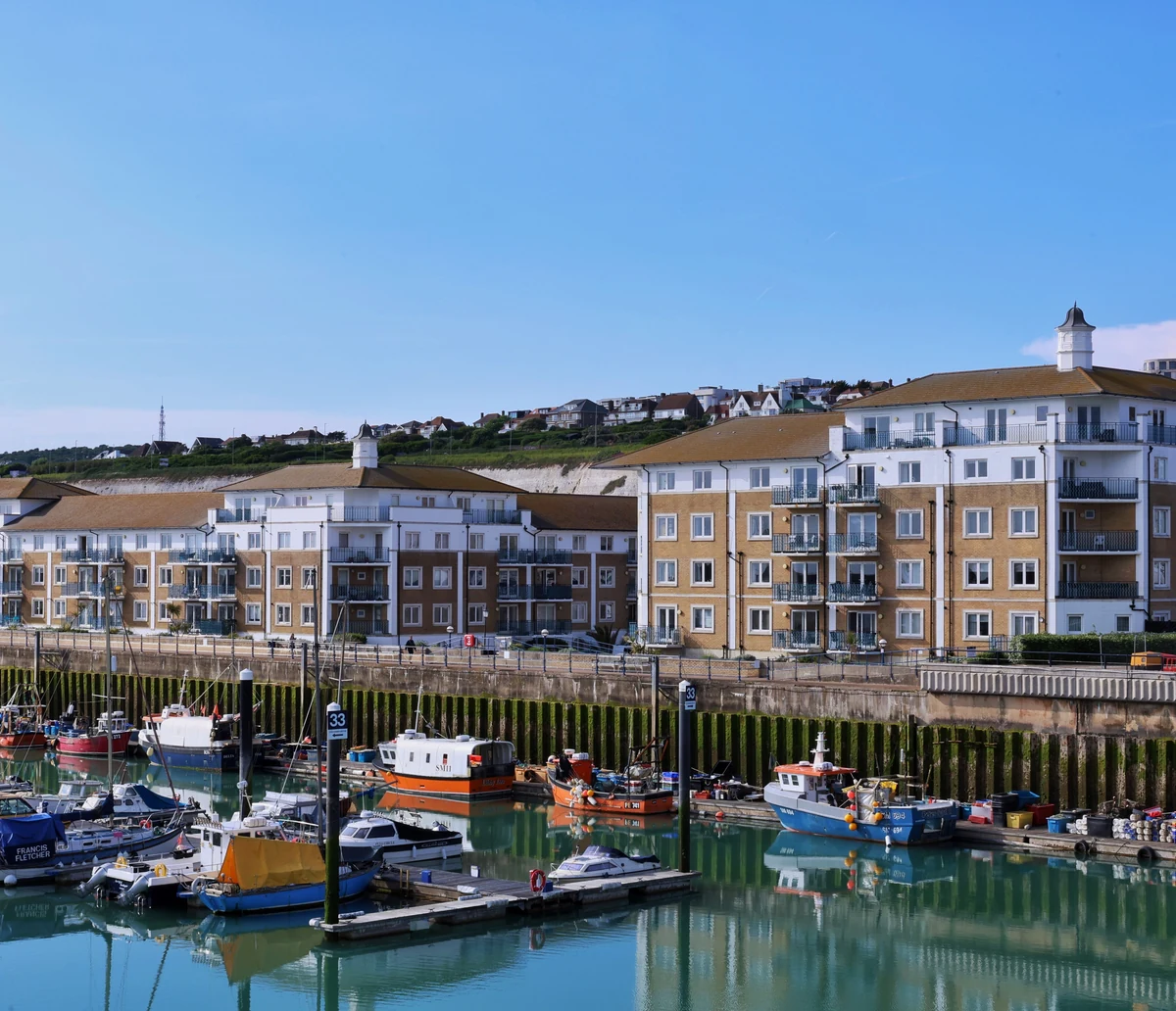

Professional IQ testing in Brighton and Hove – whether you need an assessment for school, employment, advanced-learning provision eligibility, or personal insight, we connect you with HCPC-registered psychologists in the Brighton and Hove area.
Last Updated: October 2026
Child IQ Testing
WISC-V & Stanford-Binet for ages 6–16. Gifted identification, learning profiles.
Adult IQ Testing
WAIS assessment options vary by provider. Adult cognitive assessment information; confirm local scope and referral route.
WISC-V Test
Wechsler Intelligence Scale for Children® Fifth Edition – the gold standard for child IQ testing.
WAIS-IV & WAIS-5 Tests
Wechsler Adult Intelligence Scale® – Fourth Edition (WAIS-IV) and Fifth Edition (WAIS-5) available for adult IQ testing.
Gifted Testing
Identify giftedness for school placement, enrichment, and talent programmes using WISC-V or Stanford-Binet.
Stanford-Binet 5
Stanford-Binet Intelligence Scales Fifth Edition – comprehensive cognitive assessment for all ages.
Mensa Testing
Mensa admission testing and preparation for the high-IQ society. Accepts WAIS-IV, WAIS-5, and Stanford-Binet 5 scores.
Full Evaluation
Combined assessment with detailed report and recommendations. Includes WISC-V, WAIS-IV, WAIS-5, or Stanford-Binet 5 as appropriate.
IQ Testing in Brighton and Hove: city context
Brighton and Hove covers approximately 33.8 square miles of land within the Brighton and Hove boundary. The population figure supplied for this build is 285,339, with the supplied growth figure of 0.26%.
Current demographic context uses 2021 Census broad ethnic-group data. These figures matter for culturally informed history-taking, language choice, educational context and equitable access to assessment; they are not evidence that any group has a particular intelligence level.
IQ by gender & ethnicity
Sex profile: 51.0% female and 49.0% male. Modern Wechsler and Stanford–Binet interpretation relies on age-referenced normative procedures and individual clinical context, not a local male-versus-female adjustment. No responsible assessment should predict a person’s score from sex or gender.
The 2021 Census broad ethnic-group profile for Brighton and Hove is:
- White: 85.4%
- Asian, Asian British or Asian Welsh: 4.8%
- Black, Black British, Black Welsh, Caribbean or African: 2.0%
- Mixed or Multiple: 4.8%
- Other: 3.1%
For an individual referral in Brighton and Hove, interpretation should consider language history, quality and continuity of education, disability, sensory or motor needs, neurodevelopmental history, physical and mental health, fatigue, test familiarity, socioeconomic opportunity and the purpose for which the report will be used. Demographic statistics describe a population; they do not determine an individual result.
What is professional IQ testing?
Intelligence quotient (IQ) testing is a standardised method to measure human cognitive abilities and intellectual potential. Professional IQ tests are administered by HCPC-registered psychologists in a controlled environment to ensure accuracy and reliability. Unlike online quizzes, clinical assessments provide a full-scale IQ score along with detailed breakdowns of verbal comprehension, perceptual reasoning, working memory, and processing speed.
In Brighton and Hove, IQ testing is commonly used for advanced-learning provision admission, learning disability identification, career guidance, neuropsychological evaluation, and personal development. The results are presented in a comprehensive report that includes normative comparisons, strengths and weaknesses, and actionable recommendations.
Who should get tested?
IQ testing can benefit children, adolescents, and adults in various situations:
- Children: Parents often seek testing for school readiness, gifted placement, or to understand learning challenges.
- Adults: Many adults take IQ tests for career advancement, graduate study applications, or personal curiosity.
- Mensa candidates: High-IQ societies require official test scores for membership.
- Clinical referrals: Psychologists may recommend testing as part of a broader neuropsychological evaluation.
Some Brighton and Hove residents first try an informal IQ test to understand the kinds of reasoning tasks involved; formal decisions still require appropriately standardised professional evidence.
Types of IQ tests
We offer the most recognized and scientifically validated intelligence tests in the field:
- WISC-V (Wechsler Intelligence Scale for Children® – Fifth Edition): The gold standard for children aged 6:0–16:11. It provides a Full-Scale IQ and five primary index scores.
- WAIS-IV (Wechsler Adult Intelligence Scale® – Fourth Edition): The most widely used adult IQ test for ages 16–90. It measures cognitive functioning across four domains.
- Stanford-Binet Intelligence Scales – Fifth Edition: A comprehensive assessment for ages 2–85, often used for gifted identification and clinical evaluations.
- Gifted Testing: Often includes the WISC-V or Stanford-Binet, plus additional creativity and achievement measures.
- Mensa Testing: We explain British Mensa’s supervised-testing and prior-evidence pathways, including when a professionally administered cognitive report may be relevant.
How the testing process works
- Initial consultation: Brief phone or video call to discuss your needs and match you with the right psychologist.
- Testing session: In-person or remote testing (depending on the test) with a HCPC-registered psychologist. Most sessions last 1–2 hours.
- Scoring and interpretation: The psychologist scores the test and interprets the results in the context of your background and goals.
- Feedback session: A detailed review of your results, including strengths, weaknesses, and practical recommendations.
- Comprehensive report: You receive a written report with all scores, normative comparisons, and actionable next steps.
How much does IQ testing cost in Brighton and Hove?
Private IQ assessment prices in Brighton and Hove vary according to the psychologist’s professional registration, test battery, age of the client, complexity of the referral question and the amount of written interpretation required. As a practical UK planning range, a focused standardised cognitive assessment may often fall around £450–£900, while a broader psychoeducational or neuropsychological evaluation can be £900–£2,000+. These are planning ranges, not quotes from the local contact.
Ask what is included: testing time, scoring, feedback, report length, school or workplace recommendations and follow-up calls may be priced differently. Check the receiving organisation first: schools, universities, employers, examination bodies and high-IQ societies can impose different rules about accepted tests, editions, recency and examiner credentials.
NHS or council pathways: publicly funded psychological assessment is normally based on clinical or educational need and referral criteria rather than a consumer request for an IQ number. VAT and cancellation terms: confirm the final written fee, deposit, cancellation policy and any charge for additional letters before the appointment.
Brighton and Hove's Intellectual History & Legacy
Brighton and Hove combines the historic resort economy of Brighton, Hove’s residential and commercial development, Regency architecture and a long tradition of arts, publishing and higher education. Its contemporary identity is strongly shaped by creative industries, universities, tourism and a highly mobile population.
- Education and knowledge base: University of Brighton, University of Sussex at Falmer and Brighton Metropolitan College shape local routes into further study, research and professional training.
- Assessment relevance: a city’s industrial or academic history does not establish the intelligence of its residents. It does, however, influence the kinds of educational, occupational and neuropsychological questions that may lead someone to seek assessment.
- Historical caution: intelligence testing has a complex history. Modern practice should use validated instruments, informed consent, appropriate norms, disability adjustments and interpretation that avoids stereotyping by class, ethnicity, gender or occupation.
Top Employers in Brighton and Hove and Cognitive Testing
Important employment activity in Brighton and Hove includes digital and creative industries, higher education, healthcare, tourism and hospitality, retail, finance and professional services, public administration and a substantial visitor economy. Recruitment assessments used by employers are not equivalent to an individually administered clinical IQ test.
- Job relevance: any aptitude or psychometric screen should measure capabilities genuinely related to the role and be applied consistently under UK equality and employment law.
- Neurodiversity and adjustments: a cognitive profile may help an employee understand strengths, processing differences or support needs, but workplace decisions should focus on functional evidence and reasonable adjustments rather than requiring a global IQ score.
- Career planning: useful interpretation combines cognitive results with interests, qualifications, experience, health, values, preferred working conditions and realistic local labour-market information.
- Clinical versus occupational tools: WAIS, WISC and Stanford–Binet batteries answer clinical or educational questions; employer selection tools are designed for a different purpose and should not be represented as interchangeable.
Brighton and Hove IQ Testing by Area
Residents seek assessment from across Brighton and Hove. The page deliberately avoids repeating long neighbourhood lists for SEO purposes; the following examples are included only to explain practical travel and referral context.
- central Brighton: access should be planned around the exact provider location, public transport, parking and any accessibility requirements.
- Hove: access should be planned around the exact provider location, public transport, parking and any accessibility requirements.
- Kemptown: access should be planned around the exact provider location, public transport, parking and any accessibility requirements.
- Preston Park: access should be planned around the exact provider location, public transport, parking and any accessibility requirements.
- Patcham: access should be planned around the exact provider location, public transport, parking and any accessibility requirements.
- Portslade: access should be planned around the exact provider location, public transport, parking and any accessibility requirements.
Provider choice should be based on competence, test edition, age range, report purpose and referral route—not on repeatedly matching a neighbourhood name in search text.
Brighton and Hove Universities and Research Institutions
Brighton and Hove residents have access to several education and research routes. Research testing must be distinguished from an individual psychologist-led assessment because consent, battery selection, scoring and the document produced at the end can be very different.
- University of Brighton: contributes local higher-education, research or professional-study routes relevant to learning and cognitive science.
- University of Sussex at Falmer: adds further education, specialist training or regional university pathways.
- Brighton Metropolitan College: broadens the regional study and research network available to residents.
- Student support: disability and learning-support teams normally require evidence linked to functional impact; an IQ score by itself is rarely the whole evidential picture.
- Research interpretation: a measure selected for a research protocol may not be the same battery a psychologist would choose for an individual clinical, educational or occupational question.
Brighton and Hove Economic Context
- Population and land context: 285,339 residents in the requested population dataset across approximately 33.8 square miles of land.
- Growth context: the supplied population-growth figure is 0.26%.
- Economic strengths: digital and creative industries, higher education, healthcare, tourism and hospitality, retail, finance and professional services, public administration and a substantial visitor economy.
- Education and skills: Brighton Metropolitan College, University of Brighton and related local training routes support academic, vocational and adult learning.
- Health economy: Royal Sussex County Hospital and University Hospitals Sussex NHS Foundation Trust are important parts of the local health and public-service environment.
- Transport and labour-market reach: Brighton and Hove rail stations with direct services toward London, Gatwick and the South Coast; A23 and A27 strategic road connections. These connections affect commuting and access to specialist assessment.
- Household and deprivation context: income, occupation, housing and deprivation data describe access to resources, not intelligence. A psychologist should never infer cognitive ability from postcode or socioeconomic status.
- Access inequality: fees, shift work, caring responsibilities, disability, language needs and travel time can influence who obtains private assessment; unequal access must not be mistaken for unequal ability.
- Assessment relevance: local technical, health, educational, public-service and professional roles can generate questions about learning, neurodiversity, career planning or cognition, but a clinical IQ score is not a universal employment screen.
Brighton and Hove School and Education Data
- Local framework: Brighton and Hove schools operate within England’s SEND and EHC-plan framework. Cognitive assessment should answer a defined learning question and sit alongside attainment, classroom evidence, development and the learner’s own views.
- Education institutions: Brighton Metropolitan College, University of Brighton, University of Sussex, local schools and sixth forms form the principal progression landscape.
- High attainment: schools generally use curriculum evidence, teacher assessment and individual learning needs rather than a single authority-wide IQ threshold for advanced learning.
- SEND assessment: cognitive measures can clarify aspects of a learning profile, but should be integrated with attainment, adaptive functioning, developmental history, observation and other specialist evidence when relevant.
- Exam access arrangements: IQ alone does not establish entitlement. Evidence must match the relevant examination body’s rules and demonstrate functional impact.
- Independent education: Brighton College and other independent schools set their own admissions and support procedures. Families should verify whether an independently obtained cognitive report will actually be used before commissioning one.
- Transition planning: a report is most useful when its recommendations translate into practical teaching, study, workplace or support strategies rather than merely repeating a Full Scale IQ.
Local Testing Centres and Psychologists
- Local assessment contact: Brighton & Hove Inclusion Support Service Educational Psychology Service.
- Telephone: 01273 293481.
- Address: Brighton & Hove Music & Arts Building, County Oak Avenue, Brighton BN1 8DJ.
- Assessment scope: the service is locally based and provides psychological or educational-psychology assessment. Ask specifically whether the exact WISC, WAIS, Stanford–Binet or other cognitive battery required for your purpose is currently available.
- Referral route: council and school-linked services often work through education, SEND or statutory pathways rather than unrestricted self-referral. Confirm who can refer, eligible ages and whether a privately requested standalone IQ assessment is offered.
- Report purpose: explain whether evidence is needed for education, clinical clarification, workplace support, a high-IQ society or personal understanding, because test selection and report wording may differ.
- Professional checks: when a protected practitioner-psychologist title is used, verify current HCPC registration and ask about competence with the relevant age group, instrument and referral question.
Brighton and Hove Events and Conferences
- Local calendar: Brighton Festival, Brighton Fringe, Pride, university events and year-round conferences create a dense calendar that can affect travel and appointment planning.
- Higher education: University of Brighton and related institutions may host public lectures, research events or professional development relevant to learning, psychology, health or education.
- Health-sector learning: University Hospitals Sussex NHS Foundation Trust contributes to the local professional environment for health, neurodevelopmental and multidisciplinary practice.
- School and family workshops: SEND, learning, neurodiversity and transition events can help families understand support pathways without implying that every learner needs an IQ test.
- Scheduling: major city events can change public transport demand, parking and journey times, so allow extra time for appointments on high-traffic dates.
Transportation and Accessibility
- Main rail and rapid transit: Brighton and Hove rail stations with direct services toward London, Gatwick and the South Coast.
- Strategic roads: A23 and A27 strategic road connections.
- Bus network: Brighton & Hove bus services across the city and coast.
- Regional connections: rail links toward London, Gatwick, Lewes, Worthing and coastal Sussex.
- Test-day planning: leave enough time to arrive rested and settled rather than rushing from work, school or a transport connection.
- Accessibility: confirm step-free access, accessible parking, interpreter arrangements, sensory requirements and other reasonable adjustments before the appointment.
- Remote components: history-taking or feedback may sometimes be remote, but many standardised cognitive measures have administration rules requiring controlled or in-person conditions.
Brighton and Hove Weather and Seasonal Considerations
- Climate: a maritime South Coast climate with relatively mild winters, sea breezes, bright summer periods and changeable coastal rain or wind.
- Testing environment: room temperature, lighting, noise control, access to water and appropriately timed breaks matter more to validity than the season itself.
- Travel: check severe-weather warnings, rail engineering work, strikes or road disruption before an in-person appointment.
- Seasonal functioning: if sleep, allergies, pain, medication changes or seasonal mood materially affect concentration, tell the psychologist so the testing context can be documented.
Areas we serve
We support all areas of Brighton and Hove.
Frequently Asked Questions
A focused cognitive battery often requires roughly 60–120 minutes of direct testing, while a broader evaluation can take several sessions. The psychologist should give an estimate based on age, referral question and breaks.
Private psychologists may accept self-referrals, while council and NHS services usually have defined referral pathways. Ask Brighton & Hove Inclusion Support Service Educational Psychology Service which referral route and age range apply before relying on the service.
Possibly, but only if the exact test, edition, qualifying score, administration and documentation meet British Mensa’s current rules. Confirm those requirements before testing.
Some interviews and feedback can be remote, but many standardised cognitive tests have controlled-administration requirements. Use only a format permitted by the test publisher and accepted by the organisation receiving the report.
Prioritise normal sleep, food, prescribed medication as directed, glasses or hearing aids if used, and an unhurried arrival. Coaching on test items can undermine validity.
A good feedback session explains the score profile, limitations and practical implications. If a written report is needed, agree its intended audience and delivery date before the assessment.
WISC-V is for children aged 6–16, while WAIS-IV is for adults aged 16–90. Each is normed for its specific age group.
Most IQ tests take between 60 and 90 minutes, plus a feedback session. Allow 2–3 hours total.