
IQ Testing in Worcester
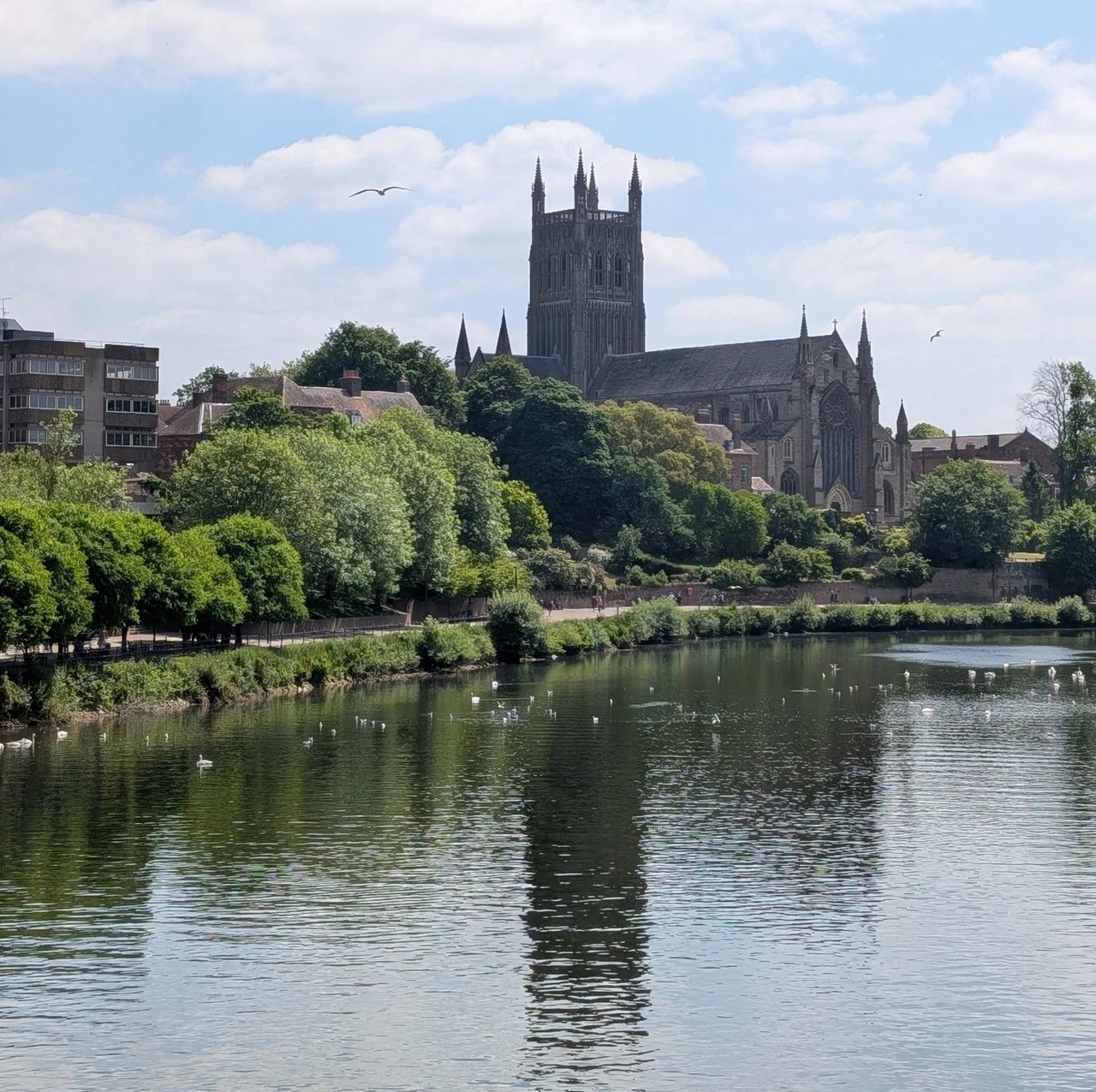
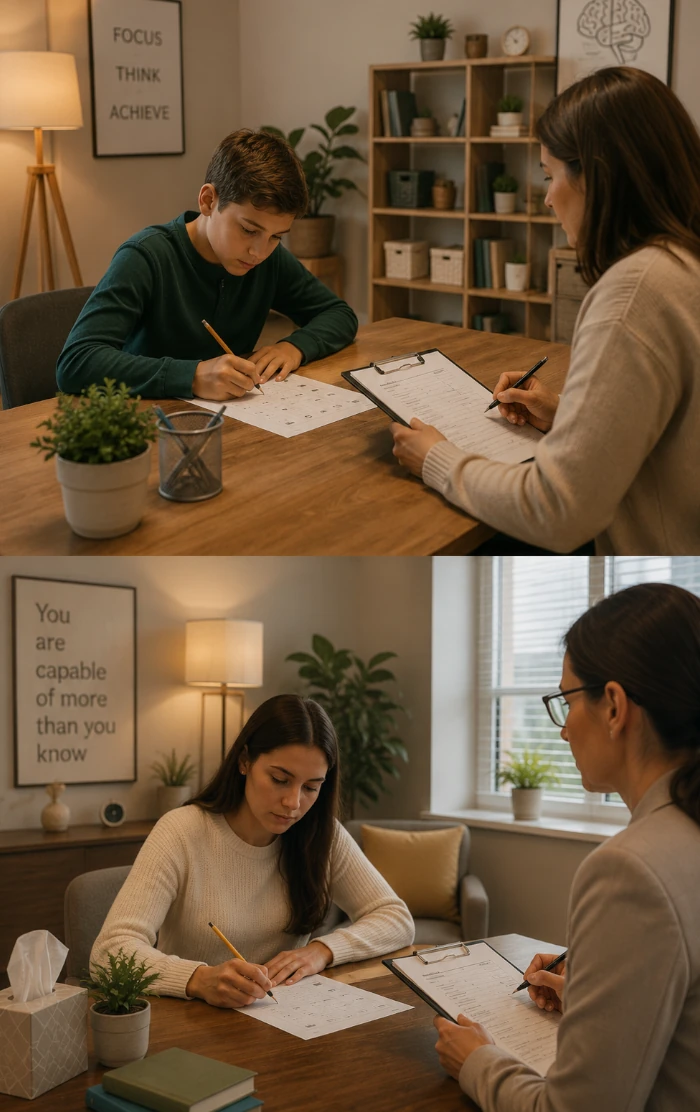
Professional IQ testing in Worcester – whether you need an assessment for school, employment, gifted program eligibility, or personal insight, we connect you with licensed psychologists in the Worcester area.
Last Updated: September 2026
Child IQ Testing
WISC-V & Stanford-Binet for ages 6–16. Gifted identification, learning profiles.
Adult IQ Testing
WAIS-IV & WAIS-5 available. Comprehensive adult cognitive assessments. Clinical & occupational.
WISC-V Test
Wechsler Intelligence Scale for Children® Fifth Edition – the gold standard for child IQ testing.
WAIS-IV & WAIS-5 Tests
Wechsler Adult Intelligence Scale® – Fourth Edition (WAIS-IV) and Fifth Edition (WAIS-5) available for adult IQ testing.
Gifted Testing
Identify giftedness for school placement, enrichment, and talent programs using WISC-V or Stanford-Binet.
Stanford-Binet 5
Stanford-Binet Intelligence Scales Fifth Edition – comprehensive cognitive assessment for all ages.
Mensa Testing
Mensa admission testing and preparation for the high-IQ society. Accepts WAIS-IV, WAIS-5, and Stanford-Binet 5 scores.
Full Evaluation
Combined assessment with detailed report and recommendations. Includes WISC-V, WAIS-IV, WAIS-5, or Stanford-Binet 5 as appropriate.
IQ Testing in Worcester: city context
Gender, age and demographic statistics
Worcester had an estimated 213,862 residents on July 1, 2025. U.S. Census Bureau 2020–2024 estimates report that 50.4% of residents are female, 19.6% are under age 18, and 13.3% are age 65 or older. The city is 53.3% White alone, 12.9% Black alone, 0.5% American Indian or Alaska Native alone, 7.2% Asian alone, 0.1% Native Hawaiian or Other Pacific Islander alone, and 18.1% reporting two or more races. 25.3% of residents are Hispanic or Latino; race and Hispanic-origin categories are not mutually exclusive.
These figures describe community context, not intelligence. IQ results must be interpreted individually in light of age, education, disability, health, culture, language exposure, educational opportunity, and testing conditions. Worcester is highly multilingual: 39.5% of residents age five and older speak a language other than English at home, and 25.1% are foreign-born. Spanish, Portuguese, Vietnamese, Albanian, Arabic, African, Caribbean, and other language histories may affect test selection, interpreter needs, literacy measures, and the limits placed on verbal-score interpretation.
- Female residents: 50.4%.
- Children and teens: 19.6% are under 18.
- Older adults: 13.3% are 65 or older.
- Language context: 39.5% speak a language other than English at home.
- Educational context: 85.7% of adults age 25+ completed high school and 35.2% hold a bachelor’s degree or higher.
- Health-access context: 12.1% of residents under age 65 report a disability and 4.4% lack health insurance.
- Interpretation: No gender, racial, ethnic, immigration, language, neighborhood, or income group should be presumed to have a particular IQ profile.
What is professional IQ testing?
Intelligence quotient (IQ) testing is a standardized method to measure human cognitive abilities and intellectual potential. Professional IQ tests are administered by licensed psychologists in a controlled environment to ensure accuracy and reliability. Unlike online quizzes, clinical assessments provide a full-scale IQ score along with detailed breakdowns of verbal comprehension, perceptual reasoning, working memory, and processing speed.
In Worcester, IQ testing is commonly used for gifted program admission, learning disability identification, career guidance, neuropsychological evaluation, and personal development. The results are presented in a comprehensive report that includes normative comparisons, strengths and weaknesses, and actionable recommendations.
Who should get tested?
IQ testing can benefit children, adolescents, and adults in various situations:
- Children: Parents often seek testing for school readiness, gifted placement, or to understand learning challenges.
- Adults: Many adults take IQ tests for career advancement, graduate school applications, or personal curiosity.
- Mensa candidates: High-IQ societies require official test scores for membership.
- Clinical referrals: Psychologists may recommend testing as part of a broader neuropsychological evaluation.
Types of IQ tests
We offer the most recognized and scientifically validated intelligence tests in the field:
- WISC-V (Wechsler Intelligence Scale for Children® – Fifth Edition): The gold standard for children aged 6:0–16:11. It provides a Full-Scale IQ and five primary index scores.
- WAIS-IV (Wechsler Adult Intelligence Scale® – Fourth Edition): The most widely used adult IQ test for ages 16–90. It measures cognitive functioning across four domains.
- Stanford-Binet Intelligence Scales – Fifth Edition: A comprehensive assessment for ages 2–85, often used for gifted identification and clinical evaluations.
- Gifted Testing: Often includes the WISC-V or Stanford-Binet, plus additional creativity and achievement measures.
- Mensa Testing: We provide official Mensa admission testing and preparation materials.
How the testing process works
- Initial consultation: Brief phone or video call to discuss your needs and match you with the right psychologist.
- Testing session: In-person or remote testing (depending on the test) with a licensed psychologist. Most sessions last 1–2 hours.
- Scoring and interpretation: The psychologist scores the test and interprets the results in the context of your background and goals.
- Feedback session: A detailed review of your results, including strengths, weaknesses, and practical recommendations.
- Comprehensive report: You receive a written report with all scores, normative comparisons, and actionable next steps.
How much does IQ testing cost in Worcester?
The cost of IQ testing in Worcester varies depending on the type of test, the psychologist's experience, and whether a comprehensive report is required. Typical fees range from $200 to $1,200 for a full assessment. Gifted testing and Mensa admission testing are often at the lower end, while neuropsychological evaluations may be higher.
Some insurance plans cover IQ testing when it's deemed medically necessary. We recommend checking with your provider for details. We also offer affordable payment plans and sliding-scale options for qualifying individuals.
Worcester's Intellectual History & Legacy
Worcester’s intellectual history combines Indigenous homelands, abolition and social reform, industrial engineering, psychology, medicine, higher education, immigration, and modern biotechnology. The city’s “Heart of the Commonwealth” identity reflects its position as a Central Massachusetts center for learning, manufacturing, healthcare, and civic life.
- Industrial innovation: The Blackstone Canal, railroads, wire, machinery, abrasives, textiles, and precision manufacturing helped make Worcester a major nineteenth- and twentieth-century industrial city.
- Worcester Polytechnic Institute: Founded in 1865, WPI developed a project-based approach connecting engineering and science with practical problems.
- Clark University and psychology: G. Stanley Hall helped establish organized American psychology at Clark; the university hosted Sigmund Freud’s only U.S. lectures in 1909 and became influential in psychology, geography, and developmental research.
- Robert H. Goddard: The Worcester-born physicist and WPI/Clark scholar pioneered liquid-fueled rocketry and helped lay foundations for modern spaceflight.
- Medical and biomedical research: UMass Chan Medical School, UMass Memorial Health, WPI, and regional biotechnology organizations support neuroscience, genetics, clinical research, public health, and medical-device development.
- Diverse knowledge traditions: Worcester’s immigrant and refugee communities contribute multilingual, cultural, entrepreneurial, artistic, and professional expertise.
- Ethical testing: Modern psychology rejects ranking neighborhoods, races, ethnicities, languages, or social classes by IQ. Valid assessment requires individual interpretation, multiple evidence sources, measurement error, and cultural and linguistic context.
Top Employers in Worcester Requiring Cognitive Skills
Worcester’s employment base combines healthcare, education, biotechnology, advanced manufacturing, insurance, government, logistics, construction, hospitality, and professional services. Major institutions include UMass Memorial Health, UMass Chan Medical School, Worcester Public Schools, the City of Worcester, Saint Vincent Hospital, WPI, Clark University, College of the Holy Cross, Worcester State University, Hanover Insurance, and manufacturing and life-science employers.
- Healthcare and biomedical work: Clinical reasoning, documentation, laboratory analysis, patient communication, research, rehabilitation, and quality systems.
- Higher education and research: Teaching, engineering, psychology, data analysis, grant administration, scientific communication, and project-based problem solving.
- Advanced manufacturing: Materials, abrasives, machining, robotics, quality control, maintenance, safety, and production planning.
- Insurance and financial services: Risk analysis, actuarial work, compliance, claims reasoning, cybersecurity, and client communication.
- Government and public service: Planning, law, public safety, utilities, transportation, education, social services, and multilingual communication.
- Logistics and distribution: Routing, scheduling, warehouse systems, inventory, transportation safety, and supply-chain analysis.
- Hospitality, arts, and events: Customer service, operations, performance, technical production, marketing, and event management.
Worcester IQ Testing by City Area
Testing decisions should be based on referral purpose, examiner qualifications, accepted instruments, language needs, accessibility, and travel burden—not assumptions about a neighborhood. Worcester includes dense urban districts, college and medical areas, historic residential neighborhoods, industrial corridors, and hillside communities.
Before arranging a formal evaluation in Worcester, adults and families can try an online IQ test to become familiar with common reasoning tasks, keeping in mind that it cannot replace professional assessment.
- Downtown and the Canal District: Access to Union Station, WRTA routes, courts, offices, cultural institutions, restaurants, and professional services; parking and event traffic should be checked.
- Shrewsbury Street and the medical corridor: Close to UMass Memorial’s Memorial Campus, medical practices, and east-side services.
- University Park and Main South: Near Clark University, community organizations, schools, and multilingual neighborhoods.
- West Side, Tatnuck, and Salisbury Street: Residential and college areas near Worcester State, Assumption University, parks, and private schools.
- Burncoat, Greendale, and Indian Lake: Northern neighborhoods with highway access, schools, healthcare, and commercial services.
- Grafton Hill and Vernon Hill: Diverse residential areas where language access, bus schedules, and school coordination may be important.
- Quinsigamond Village and South Worcester: Access to Route 146, manufacturing and logistics corridors, Worcester Technical High School, and regional connections.
Footer and service-area language is intentionally limited to supporting all areas of the city rather than repeating neighborhood names for search-engine targeting.
Worcester Universities and Research Institutions
- Worcester Polytechnic Institute: Engineering, computing, robotics, data science, life sciences, business, and project-based research.
- Clark University: Psychology, geography, education, management, environmental science, international development, and liberal arts.
- UMass Chan Medical School: Medicine, biomedical sciences, nursing, public health, neuroscience, genetics, and clinical research.
- College of the Holy Cross: Liberal arts, sciences, pre-health, education, social sciences, and humanities.
- Worcester State University: Public undergraduate and graduate programs in education, psychology, health, business, sciences, and liberal arts.
- Assumption University: Undergraduate and graduate study in counseling psychology, rehabilitation counseling, education, business, health, and liberal arts.
- Quinsigamond Community College: Transfer, workforce, health, technology, adult-learning, and certificate pathways.
- MCPHS University Worcester: Pharmacy, nursing, physician-assistant, optometry, and other health-profession programs.
Worcester Economic Context
- Median household income: $70,102 in 2020–2024 Census estimates.
- Per-capita income: $37,221.
- Residents in poverty: 19.6%.
- Bachelor’s degree or higher: 35.2% of adults age 25 and older.
- Mean travel time to work: 24.1 minutes, although winter weather, construction, and Boston-area commutes can be much longer.
- Health and social-assistance activity: Census business data report approximately $5.99 billion in 2022 receipts/revenue within the city.
- Transportation and warehousing: Approximately $151.5 million in 2022 receipts/revenue.
- Retail sales: Approximately $2.45 billion in 2022.
- Accommodation and food services: Approximately $559.6 million in 2022 sales.
- Regional strengths: Healthcare, higher education, biotechnology, advanced manufacturing, insurance, government, logistics, construction, hospitality, professional services, and arts and culture.
Worcester School District Data
Worcester Public Schools advanced learning
Worcester Public Schools serves a large, multilingual urban district. The Goddard Scholars Academy provides a rigorous accelerated pathway beginning at Sullivan Middle School and continuing at South High Community School. Families should use the district’s current application, records, assessment, and placement procedures rather than assume a private IQ score guarantees admission.
Secondary pathways
Honors, Advanced Placement, career and technical education at Worcester Technical High School, dual enrollment, arts programs, International Baccalaureate options at participating schools, and subject acceleration can support advanced learners. The Massachusetts Academy of Math and Science at WPI is a statewide public program for academically advanced high-school students and has its own admissions process.
Private and independent options
Worcester Academy, Bancroft School, Notre Dame Academy, St. Paul Diocesan Junior/Senior High School, Abby Kelley Foster Charter Public School, homeschool programs, and specialized learning settings establish their own admission and testing rules. Ask for the accepted test, examiner qualifications, report age, deadline, and whether achievement or school records are required.
Local Testing Centers and Psychologists
- Baker Mental Health Consulting: Located at 51 Union Street, Suite 214, Worcester. Its testing page explicitly lists intelligence testing, ADHD evaluation, general diagnostic evaluation, trauma evaluation, and related psychological assessment. The practice states that it works with adults rather than children or adolescents; callers should verify the exact instrument, documentation purpose, fee, and availability.
- Attention, Behavior & Cognition: Its Worcester office at 30 Park Avenue provides psychological and neuropsychological assessment for school-aged children, adolescents, and adults, including evaluation of academic and cognitive strengths and weaknesses.
- Cornerstone Behavioral Health: The Worcester office at 397 Grove Street provides face-to-face neuropsychological assessments; confirm age range and referral scope.
- UMass Memorial and UMass Chan: Medical and neuropsychological referrals may be appropriate for brain injury, neurological disease, cognitive decline, complex developmental questions, or rehabilitation.
- School evaluations: Worcester Public Schools conducts evaluations under special-education procedures when a student is suspected of having a disability; families should not be required to purchase private testing for the district to evaluate.
Worcester Events and Conferences
Worcester’s colleges, medical institutions, museums, libraries, theaters, and professional organizations host lectures, research presentations, career events, science programs, educational workshops, and community discussions. Schedules change, so verify the current event calendar directly.
- WPI, Clark, Holy Cross, Worcester State, Assumption, and UMass Chan: Academic lectures, research symposia, public science events, graduate fairs, and professional development.
- DCU Center and Mechanics Hall: Large conferences, performances, civic events, and professional gatherings.
- The Hanover Theatre and Conservatory: Performing arts, youth education, technical theater, and creative programming.
- EcoTarium and Worcester Public Library: Science, technology, reading, maker, family, and lifelong-learning programs.
- Boston Mensa and regional gifted organizations: Activities and events may be available to qualifying adults, families, and gifted youth across eastern and central Massachusetts.
Transportation and Accessibility
- Major roads: I-290 crosses Worcester east–west; I-190 connects north toward Leominster; I-90/Massachusetts Turnpike is accessed just south of the city; Route 9, Route 12, Route 122, Route 122A, and Route 146 connect city neighborhoods and Central Massachusetts.
- Public transit: Worcester Regional Transit Authority buses connect the city and surrounding communities. WRTA fixed-route and paratransit services are currently fare-free through June 30, 2027.
- Passenger rail: Union Station is the western terminal for the MBTA Worcester Line to Boston and also serves intercity rail and regional bus connections.
- Airport: Worcester Regional Airport (ORH) is within the city and provides scheduled commercial service; airline routes change seasonally. Boston Logan International Airport and Rhode Island T. F. Green International Airport provide broader options.
- Distance to other cities: Roughly 45–50 miles to Boston, about 40 miles to Providence, about 50–55 miles to Springfield, and about 65 miles to Hartford; actual travel varies with weather and traffic.
- Walkability: Downtown, the Canal District, Main Street, Shrewsbury Street, Highland Street, and areas around major campuses offer clusters of walkable destinations, although hills, winter conditions, and wide arterials affect accessibility.
- Bike infrastructure: Worcester’s Mobility Action Plan and Vision Zero work are expanding bicycle facilities, safer intersections, and connections. Riders should check current routes because the network is developing and hills are significant.
- Accessibility: Ask the examiner about elevators, parking, quiet waiting space, accessible restrooms, sensory needs, mobility accommodations, interpreter arrangements, and remote intake or feedback options.
Worcester Weather and Seasonal Considerations
- Winter: Snow, ice, steep streets, school delays, and parking restrictions can affect arrival time. Reschedule rather than test after a stressful or unsafe trip.
- Spring: Rapid temperature changes, allergies, rain, and road work may affect comfort and attention.
- Summer: Heat and humidity can influence sleep, medication effects, hydration, and fatigue; confirm air conditioning.
- Autumn: College move-in, school schedules, leaf-related road conditions, and major events can change travel patterns.
- Testing validity: Illness, poor sleep, acute stress, pain, weather disruption, and travel fatigue should be documented and may justify postponement.
Areas we serve
We support all areas of Worcester.
Frequently Asked Questions
WISC-V is for children aged 6–16, while WAIS-IV is for adults aged 16–90. Each is normed for its specific age group.
Most IQ tests take between 60 and 90 minutes, plus a feedback session. Allow 2–3 hours total.
No, you can book directly with our psychologists. We serve both self-referred and professionally referred individuals.
Some professionally administered scores may be submitted as prior evidence, but acceptance is determined solely by American Mensa under its current rules.
Some plans cover cognitive assessments when there is a clinical indication. Check with your provider.
Get a good night's sleep, eat a healthy meal, and arrive relaxed. No specific preparation is needed.
You'll receive a comprehensive report with your scores and tailored recommendations.
Interviews and feedback may be available remotely, but many standardized cognitive tests require controlled administration and may need an in-person appointment. Contact us for details.