
Gifted Testing in Surprise

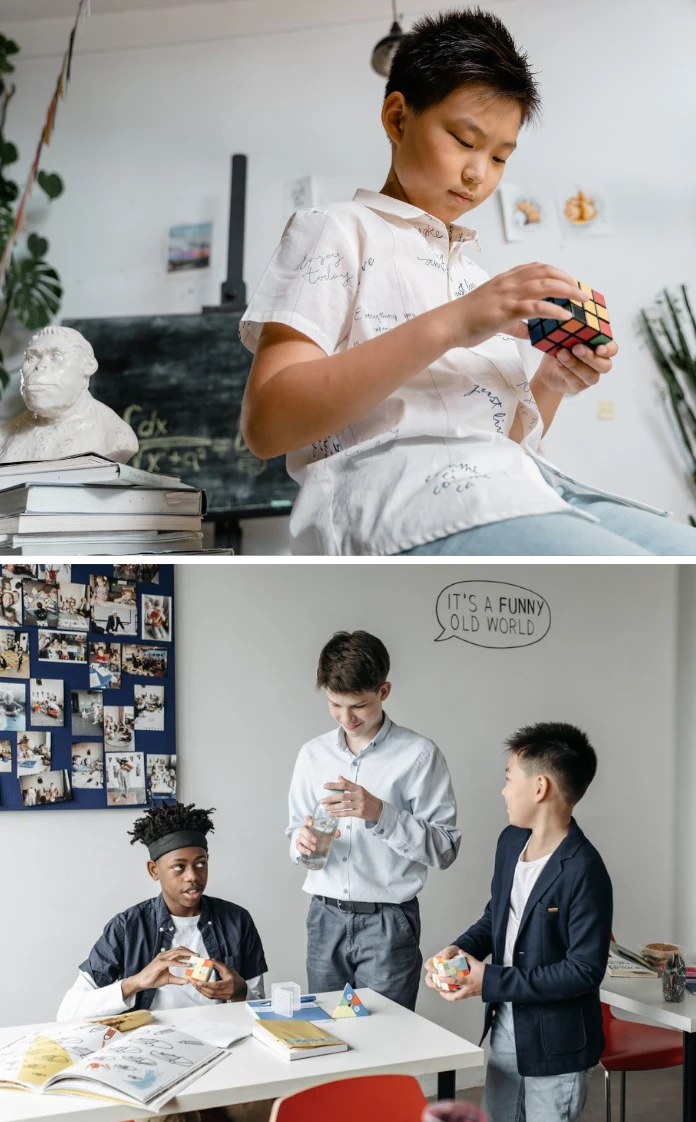
Professional gifted testing in Surprise – whether your child needs identification for school placement, enrichment programs, or you're an adult seeking Mensa admission, we connect you with licensed psychologists who specialize in gifted assessment.
Last Updated: September 2026
Child Gifted Testing
WISC-V & Stanford-Binet 5 for ages 6–16. Gifted identification, school placement.
Adult Gifted Testing
WAIS-IV & WAIS-5 available. Comprehensive assessments for adults seeking Mensa or career guidance.
WISC-V Test
Wechsler Intelligence Scale for Children® Fifth Edition – the gold standard for child gifted identification.
Stanford-Binet 5
Stanford-Binet Intelligence Scales Fifth Edition – comprehensive cognitive assessment for all ages, often used for gifted identification.
Mensa Testing
Guidance on psychologist-administered testing that may qualify as prior evidence, subject to American Mensa’s current accepted-test, score and documentation rules.
School Placement Testing
Testing for private school admission and gifted program eligibility using WISC-V or Stanford-Binet 5.
Gifted Testing in Surprise: city context
Children under 18 represent 23.1% of Surprise's population. Arizona gifted identification is not controlled by one private IQ score. Dysart Unified identifies students through district procedures and Arizona-approved cognitive measures; Nadaburg Unified, charter schools and independent schools maintain their own referral, documentation and placement processes.
Dysart's published gifted scope and sequence states that a student scoring at or above the 97th percentile on an approved cognitive measure may qualify for gifted services. The district uses group measures including CogAT and NNAT and offers scheduled testing windows. A privately administered WISC-V or Stanford-Binet report may provide valuable information but should not be assumed to replace the district's required process.
IQ by gender & ethnicity (child population)
Surprise is 52.5% female and 47.5% male. Giftedness occurs across genders, racial and ethnic groups, income levels, languages and disability categories. Identification should rely on valid individual evidence rather than stereotypes about who appears gifted. Race and ethnicity do not determine intelligence; language exposure, cultural experience, disability, educational opportunity and test validity must be considered.
Gifted children in Surprise: who are they?
Gifted learners may demonstrate rapid learning, unusual curiosity, advanced vocabulary, strong spatial reasoning, intense interests, creative problem-solving or exceptional memory. Others may underperform, mask abilities, have ADHD, autism, dyslexia or anxiety, or show advanced reasoning in one domain and average performance in another.
Gifted-learning options in Surprise
- Dysart Unified gifted services: school teams accept referrals and use approved testing to identify qualifying students. Services and delivery models vary by grade and campus, so families should review the district's current gifted scope and sequence.
- Nadaburg Unified: northern Surprise families should confirm the district's current gifted, advanced-course and evaluation procedures because boundaries and program offerings differ from Dysart.
- Charter and specialized schools: schools in the West Valley may offer accelerated curricula, STEM programs, honors courses or advanced academies, but admission and gifted identification are separate decisions.
- Advanced secondary study: honors, Advanced Placement, dual-enrollment and online courses may provide subject acceleration. Prerequisites, placement measures and credit rules are controlled by the school and college.
- Twice-exceptional support: gifted students with ADHD, autism, dyslexia, anxiety or another disability may need both advanced instruction and individualized supports.
Advantages of gifted education
- Greater academic challenge and reduced repetition.
- Opportunities for deeper inquiry, creativity and independent projects.
- Peer interaction with students who share advanced interests.
- Better planning for uneven or twice-exceptional learning profiles.
- Support for motivation, study habits and healthy social-emotional development.
Hobbies and interests of gifted children
Surprise families can use the Surprise Public Library System, city parks and recreation, STEM and robotics programs, music and visual arts, youth sports, Surprise Stadium activities, astronomy and desert ecology, and nearby White Tank Mountain Regional Park. The best activities fit the child's genuine interests, friendships and wellbeing rather than functioning only as résumé building.
What is giftedness?
Giftedness is a complex and multifaceted construct that goes beyond a single IQ score. In the field of psychology, giftedness is typically defined as an IQ score of 130 or above (the 98th percentile), but it also encompasses exceptional creativity, leadership ability, or talent in specific academic or artistic domains.
However, in Surprise and across the U.S., the definition of giftedness is evolving. Many psychologists and educators now recognize that giftedness manifests in diverse ways, including:
- Intellectual giftedness: Exceptional reasoning, problem-solving, and abstract thinking.
- Creative giftedness: Unusual originality, imagination, and ability to generate novel ideas.
- Leadership giftedness: Exceptional interpersonal skills, empathy, and ability to inspire others.
- Artistic giftedness: Superior talent in visual arts, music, drama, or dance.
- Twice-exceptional (2E): Gifted individuals who also have a learning disability or neurodivergence such as ADHD or dyslexia.
In Surprise, equitable identification is especially important because students come from varied cultural, linguistic, disability, and socioeconomic backgrounds. Universal screening, nonverbal measures, multiple criteria, and review of educational opportunity can reduce under-identification.
Gifted programs in Surprise
Public-school gifted services in Surprise depend on the student's district and campus. Dysart Unified publishes referral, testing and qualification procedures and uses Arizona-approved cognitive measures; Nadaburg Unified and charter schools maintain separate processes. Private and independent schools may use records, achievement data, interviews, observations or their own entrance measures.
No private IQ score automatically guarantees gifted eligibility, admission, honors placement, acceleration or admission to a particular school. Before purchasing testing, ask the receiving program which instrument, score, examiner qualification, report format and deadline it accepts. A comprehensive private evaluation can still be useful when the goal is to understand a child's full cognitive, academic, attention and social-emotional profile.
Who should get gifted testing?
Gifted testing is beneficial for a wide range of individuals, including:
- Children: Parents often seek testing for school readiness, gifted placement, or to understand their child's unique learning needs. Early identification can open doors to enrichment programs and prevent underachievement.
- Adults: Many adults pursue gifted testing for career advancement, graduate school applications, or personal insight. Understanding one's cognitive strengths can help guide career choices and life decisions.
- Twice-exceptional individuals: Testing can help identify both giftedness and learning disabilities, ensuring that individuals receive appropriate support.
- Mensa candidates: High-IQ societies like Mensa require official test scores for membership. We provide testing and preparation for Mensa admission.
Types of gifted tests
We offer the most recognized and scientifically validated gifted tests in the field:
- WISC-V (Wechsler Intelligence Scale for Children® – Fifth Edition): The gold standard for children aged 6:0–16:11. It provides a Full-Scale IQ and five primary index scores, making it ideal for gifted identification and school placement.
- Stanford-Binet Intelligence Scales – Fifth Edition: A comprehensive assessment for ages 2–85, often used for gifted identification and clinical evaluations. It is particularly useful for highly gifted individuals.
- WAIS-IV (Wechsler Adult Intelligence Scale® – Fourth Edition) and WAIS-5: The most widely used adult IQ tests for ages 16–90. They measure cognitive functioning across multiple domains and are often used for Mensa admission.
- Creativity and achievement tests: We also offer supplementary measures of creativity, leadership, and academic achievement to provide a holistic picture of giftedness.
The gifted testing process: step by step
Understanding the testing process can help reduce anxiety and prepare you or your child for a successful assessment:
- Initial consultation (15–20 minutes): A brief phone or video call with the psychologist to discuss your goals, concerns, and background. This helps determine the right test and approach.
- Testing session (60–90 minutes): The individual meets one-on-one with a licensed psychologist in a quiet, comfortable room. The psychologist administers the chosen test, which includes a series of subtests measuring various cognitive domains. Breaks are offered as needed.
- Scoring and interpretation (1–2 days): The psychologist scores the test and analyzes the results. They consider the individual's age, background, and any relevant medical or educational history.
- Feedback session (45–60 minutes): The psychologist meets with the individual and/or parents to explain the results. They discuss the Full-Scale IQ, index scores, strengths, and areas for growth. They also provide tailored recommendations for home, school, and extracurriculars.
- Comprehensive written report (5–7 days): You receive a detailed report with all scores, normative comparisons, and actionable next steps. This report can be shared with schools, doctors, or other professionals.
The entire process from consultation to report usually takes 1–2 weeks, depending on scheduling.
Unique challenges and nuances of giftedness
Giftedness is not always a straightforward advantage. Many gifted individuals face unique challenges that can impact their well-being and success:
- Asynchronous development: Gifted children often have intellectual abilities that outpace their social and emotional maturity. This can lead to frustration, social isolation, and difficulty relating to peers.
- Perfectionism: Many gifted individuals set unrealistically high standards for themselves, leading to anxiety, burnout, and avoidance of challenges.
- Underachievement: Gifted students may underperform in school if they are not adequately challenged or if their learning needs are not met.
- Social isolation: Gifted individuals may struggle to find peers who share their interests and intellectual intensity, leading to loneliness and depression.
- Twice-exceptionality (2E): Many gifted individuals also have learning disabilities or neurodivergence, such as ADHD, dyslexia, or autism. This can mask their abilities and make it difficult to receive appropriate support.
- Cultural and ethnic disparities: Giftedness can be under-identified in multilingual, low-income, disabled, and culturally diverse populations. Universal screening, nonverbal measures, multiple criteria, and careful review of educational opportunity can support more equitable identification in Surprise.
Gifted testing can help identify these challenges and provide a roadmap for support. A comprehensive evaluation can reveal not only strengths but also areas where intervention is needed.
Mensa and high-IQ societies
Mensa is the largest and oldest high-IQ society in the world, with members in over 100 countries. To qualify for Mensa, individuals must score at or above the 98th percentile on a standardized IQ test, which typically corresponds to an IQ of 130 or above.
Surprise residents can use American Mensa's official local-group directory and testing calendar for the Greater Phoenix area and nearby regional options. Events and testing locations change and may be outside the city, so current details should be confirmed before making travel plans.
A psychologist can administer a clinically appropriate cognitive test and provide documentation that may be submitted as prior evidence. American Mensa—not the psychologist or this website—determines whether the instrument, score, norms and documentation meet its current admission rules.
Areas we serve
We support gifted and twice-exceptional learners throughout all areas of Surprise. Families should verify the exact Dysart Unified, Nadaburg Unified, charter or independent-school requirements before purchasing a private evaluation.
Frequently Asked Questions
Both are excellent tests. WISC-V is more commonly used for school-age children, while Stanford-Binet 5 can be used for ages 2–85. We often recommend WISC-V for school placement and Stanford-Binet 5 for highly gifted individuals.
The test itself takes 60–90 minutes. With the consultation, feedback, and report, the entire process is about 1–2 weeks.
No, you can book directly with our psychologists. We serve both self-referred and professionally referred individuals.
A qualifying score from an accepted, fully administered test may be submitted to American Mensa as prior evidence. American Mensa individually reviews the instrument, score, administration conditions and documentation, so confirm its current requirements before scheduling.
Some plans cover cognitive assessments when there is a clinical indication. Check with your provider.
Get a good night's sleep, eat a healthy meal, and arrive relaxed. No specific preparation is needed.
You'll receive a comprehensive report with your scores and tailored recommendations.
Some interviews, record reviews and feedback sessions may be completed remotely when permitted, but many standardized cognitive subtests require secure materials and controlled in-person administration. The psychologist should determine the valid format for the specific referral.
Not exactly. Smartness is a colloquial term, while giftedness is a clinical construct involving specific cognitive abilities and traits.
We specialize in identifying both giftedness and learning disabilities, and we provide tailored recommendations for support.