
Child IQ Testing in Sunnyvale
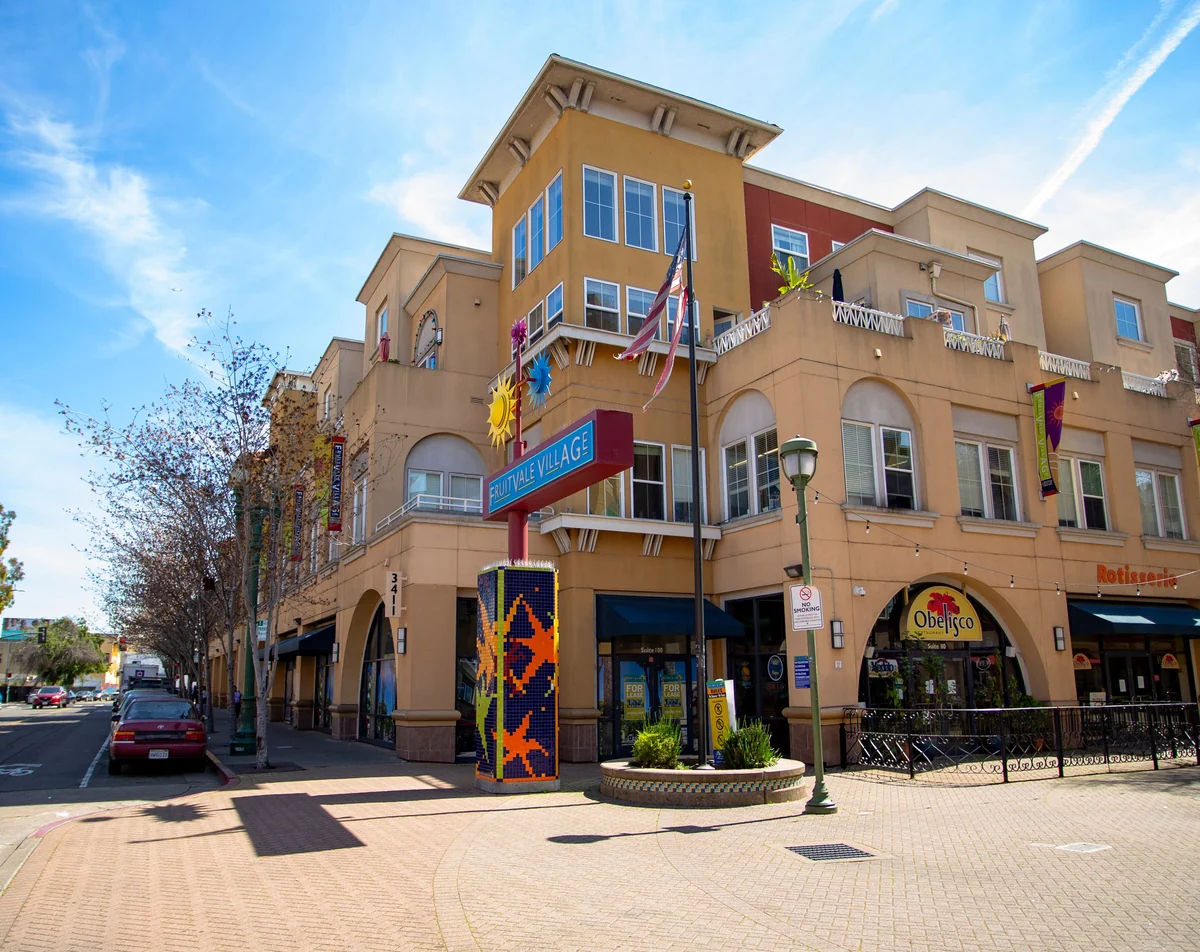
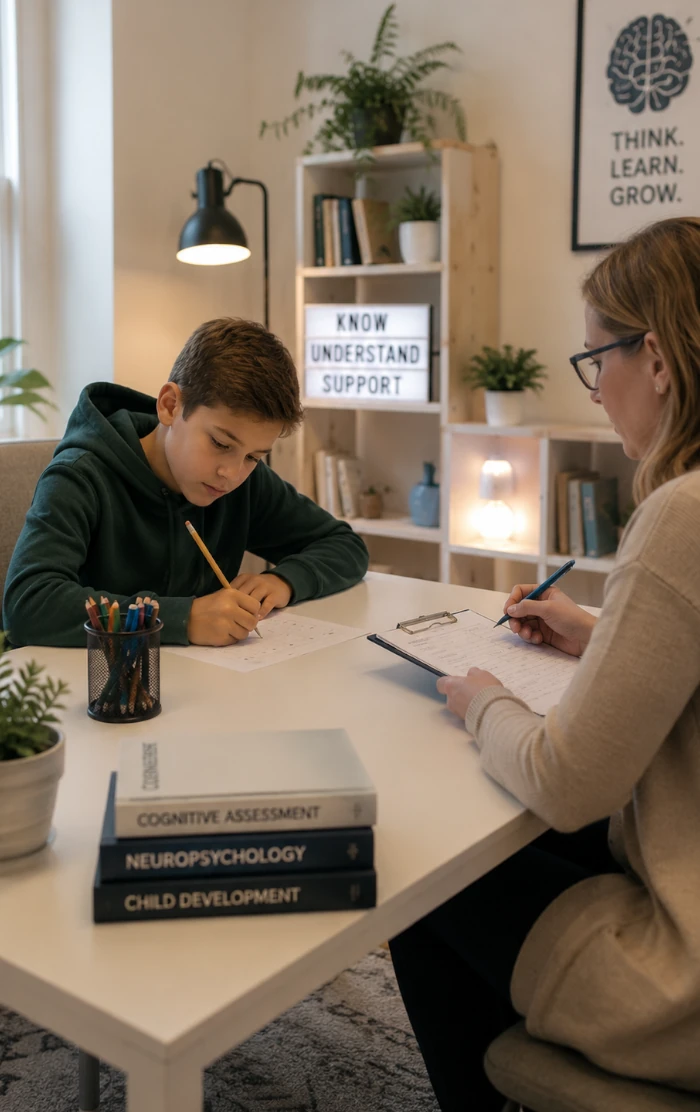
Professional child IQ testing in Sunnyvale – whether you need an assessment for school placement, gifted program eligibility, or to understand your child's learning profile, we connect you with licensed psychologists in the Sunnyvale area.
Last Updated: September 2026
Gifted Testing
Identify giftedness for school placement, enrichment, and talent programs using WISC-V or Stanford-Binet 5.
WISC-V Test
Wechsler Intelligence Scale for Children® Fifth Edition – the gold standard for child IQ testing.
Stanford-Binet 5
Stanford-Binet Intelligence Scales Fifth Edition – comprehensive cognitive assessment for all ages.
Full Evaluation
Combined assessment with detailed report and recommendations. Includes WISC-V or Stanford-Binet 5.
School Placement Testing
Testing for private school admission and gifted program eligibility using WISC-V or Stanford-Binet 5.
Schedule Child IQ Testing
Book your WISC-V & Stanford-Binet 5 for ages 6–16. Gifted identification, learning profiles, etc. with a licensed psychologist in Sunnyvale today.
Child IQ Testing in Sunnyvale, California: city context
Sunnyvale is a Santa Clara County city in the heart of Silicon Valley, extending from residential areas near Cupertino and Los Altos to major employment districts along US 101, State Route 237, Mathilda Avenue, Java Drive, and the Moffett Park area. The U.S. Census Bureau's July 1, 2025 estimate lists 156,577 residents, and the city covers approximately 22.06 square miles of land. Its population combines long-established families, international professionals, students, entrepreneurs, and workers in technology, aerospace, health care, education, manufacturing, public service, and small business.
Child and family requests for cognitive assessment commonly involve gifted-school admission, psychoeducational evaluation, ADHD or learning-disability questions, disability accommodations, career planning, graduate-school documentation, adult diagnostic clarification, and admission to high-IQ organizations. A licensed examiner should interpret results in light of education, language history, cultural background, sensory or medical factors, attention, motivation, and the testing environment rather than treating one composite score as a complete description of a person.
IQ by gender & ethnicity (child population)
Sunnyvale's population is approximately 47.6% female. Properly standardized intelligence tests are designed so broad male and female averages are comparable, although individuals may show very different profiles across verbal comprehension, visual-spatial reasoning, fluid reasoning, working memory, and processing speed. No authoritative dataset establishes separate Sunnyvale IQ averages by sex, race, ethnicity, neighborhood, immigration history, or home language.
Current Census demographic context includes:
- White alone: 28.4% of residents.
- Black or African American alone: 1.6%.
- American Indian and Alaska Native alone: 0.6%.
- Asian alone: 49.6%.
- Native Hawaiian and Other Pacific Islander alone: 0.4%.
- Two or more races: 9.9%.
- Hispanic or Latino residents: 17.0%; White alone, not Hispanic or Latino, 26.5%.
- Foreign-born residents: 50.2%.
- Language other than English at home: 60.5% of residents age five and older.
- Educational attainment: 94.4% of adults age 25 and older are high-school graduates or higher, and 69.3% hold a bachelor's degree or higher.
These figures describe the community, not intellectual ability. Examiners should document relevant linguistic, educational, cultural, medical, and accessibility considerations and use interpreters or bilingual assessment approaches only when professionally appropriate.
Sunnyvale School Districts and Advanced Learning
Sunnyvale children may attend schools in several districts depending on their address, including Sunnyvale School District, Cupertino Union School District, Santa Clara Unified School District, Fremont Union High School District, and Mountain View–Los Altos Union High School District. Each district sets its own policies for evaluation, enrichment, acceleration, honors courses, program-of-choice placement, and use of private reports.
Public-School Evaluation
When a suspected disability affects school functioning, a district evaluation may examine cognitive processing, achievement, language, attention, behavior, adaptive functioning, motor or sensory needs, and other relevant areas. A private IQ score alone does not establish special-education eligibility.
Advanced Learning and Acceleration
California districts may use classroom performance, local assessments, teacher input, achievement data, readiness, and other evidence for advanced learning or acceleration decisions. Families should request the current written policy from the assigned district before purchasing outside testing.
Choice, Charter, and Private Schools
Admission and placement rules vary. Helios School in Sunnyvale is an independent K–8 school for gifted learners and uses a Wechsler IQ assessment within its admissions process. Confirm the accepted edition, examiner qualifications, report deadline, and whether supplemental achievement or developmental information is required.
Sunnyvale Private and Choice Schools: When Testing May Be Requested
Some independent schools request cognitive testing for admission or placement; others rely on school records, interviews, classroom observations, achievement testing, or developmental readiness. Helios School publishes a Wechsler IQ-assessment requirement as part of a broader admissions picture for gifted learners. Families should obtain the current written policy directly from every receiving school because acceptable tests, age norms, score-report rules, and deadlines can change.
Sunnyvale Gifted Identification Context
There is no single citywide gifted-identification system. Public districts, independent schools, talent programs, and high-IQ societies use different definitions and evidence. A comprehensive approach may consider reasoning, achievement, creativity, motivation, classroom performance, interests, language development, and social-emotional needs. Twice-exceptional children may show advanced reasoning alongside ADHD, autism, dyslexia, anxiety, or other challenges.
The child IQ testing process: step by step
Understanding the testing process can help parents prepare their child and reduce anxiety. Here's what to expect:
- Initial consultation (15–20 minutes): A brief phone or video call with the psychologist to discuss your child's background, concerns, and goals. This helps determine the right test and approach.
- Testing session (60–90 minutes): The child meets one-on-one with a licensed psychologist in a quiet, comfortable room. The psychologist administers the WISC-V or Stanford-Binet 5, which includes a series of subtests measuring verbal comprehension, visual-spatial reasoning, fluid reasoning, working memory, and processing speed. Breaks are offered as needed.
- Scoring and interpretation (1–2 days): The psychologist scores the test and analyzes the results. They consider the child's age, background, and any relevant medical or educational history.
- Feedback session (45–60 minutes): The psychologist meets with the parents (and the child, if appropriate) to explain the results. They discuss the Full-Scale IQ, index scores, strengths, and areas for growth. They also provide tailored recommendations for home, school, and extracurriculars.
- Comprehensive written report (5–7 days): You receive a detailed report with all scores, normative comparisons, and actionable next steps. This report can be shared with schools, doctors, or other professionals.
The entire process from consultation to report usually takes 1–2 weeks, depending on scheduling. The testing itself is non-invasive and designed to be engaging for children.
What is the WISC-V test?
The WISC-V (Wechsler Intelligence Scale for Children® – Fifth Edition) is the most widely used IQ test for children aged 6:0–16:11. It provides a Full-Scale IQ and five primary index scores: Verbal Comprehension, Visual-Spatial, Fluid Reasoning, Working Memory, and Processing Speed. The test is administered one-on-one by a trained psychologist and takes about 60–90 minutes.
The WISC-V is normed on a large, representative sample of U.S. children and is updated regularly to ensure accuracy. It is the gold standard for gifted identification, learning disability diagnosis, and school placement.
Why test your child's IQ?
IQ testing provides valuable insights into your child's cognitive strengths and weaknesses. It can help:
- Identify giftedness: For admission to gifted programs, private schools, or enrichment opportunities.
- Diagnose learning disabilities: Such as dyslexia, dyscalculia, or ADHD, which can be masked by high intelligence.
- Guide educational planning: Tailor instruction to your child's unique learning profile.
- Provide reassurance: Understand why your child is different from peers and how to support them.
Sunnyvale Gifted Testing Timeline
- Before booking: Obtain the receiving program's written requirements and deadline.
- Four to twelve weeks before a deadline: Contact qualified examiners; Bay Area demand can be high during admissions season.
- Testing day: Schedule when the child is healthy, rested, fed, and not rushing from another demanding activity.
- After testing: Allow time for scoring, feedback, report preparation, and any requested clarification.
- Submission: Send only the documentation requested and preserve a complete copy for future educational planning.
Sunnyvale Gifted Programs by Age Group
- Preschool and early elementary: Developmental enrichment, play-based problem solving, library programs, and carefully considered school admission or acceleration.
- Elementary and middle school: Classroom differentiation, advanced mathematics or language arts, project-based learning, independent study, academic competitions, and gifted-focused independent schools such as Helios.
- High school: Honors, Advanced Placement, dual enrollment, research, robotics, arts, internships, and subject acceleration, depending on district and school offerings.
- Social-emotional support: Counseling, peer connection, executive-function support, and twice-exceptional services may be as important as academic acceleration.
Sunnyvale Child ADHD and Learning-Disability Assessment
An IQ test alone does not diagnose ADHD, dyslexia, dysgraphia, dyscalculia, autism, anxiety, or an intellectual disability. A complete child evaluation may include developmental history, parent and teacher input, classroom data, achievement testing, attention and executive-function measures, language or motor assessment, adaptive functioning, and observation. The battery should match the specific referral question and the child's age, language background, and educational history.
Sunnyvale Summer and Enrichment Options
- Sunnyvale Public Library and city recreation: Reading, STEM, arts, sports, camps, and community programs vary by season.
- Regional colleges and museums: De Anza, Foothill, Mission College, The Tech Interactive, Computer History Museum, NASA-related programs, and universities offer changing youth opportunities.
- School and nonprofit programs: Robotics, coding, debate, mathematics, music, visual arts, language, and service-learning options are widely available across Silicon Valley.
- Fit over prestige: Choose enrichment based on the child's interests, stamina, social needs, accessibility, and desired level of challenge.
Sunnyvale Child Testing Costs and Funding
- School evaluation: When a public school district initiates an evaluation under special-education procedures, eligible school-based assessment is provided through the school system.
- Private testing: Fees vary from a focused cognitive assessment to a multi-thousand-dollar comprehensive psychoeducational or neuropsychological evaluation.
- RebLearn: Call (669) 248-6602 to confirm the current scope, child age range, testing location, fee, and report format.
- Insurance: Gifted or admissions testing is often self-pay; clinically necessary diagnostic testing may have different coverage rules.
- Financial planning: Ask whether feedback, the written report, school consultation, forms, and follow-up letters are included.
Areas we serve
We support all areas of the City of Sunnyvale. Provider location, age range, specialty, accessibility, language capacity, and in-person requirements vary, so confirm those details before scheduling.
Frequently Asked Questions
Both are excellent tests. WISC-V is more commonly used for school-age children, while Stanford-Binet 5 can be used for ages 2–85. We often recommend WISC-V for gifted identification.
The test itself takes 60–90 minutes. With the consultation, feedback, and report, the entire process is about 1–2 weeks.
No, you can book directly with our psychologists. We serve both self-referred and professionally referred children.
A private report may be submitted to local district or another school, but acceptance and eligibility are determined by the receiving organization. Confirm the required test, edition, evidence, examiner credentials, and deadline before testing.
Some plans cover cognitive assessments when there is a clinical indication. Check with your provider.
Get a good night's sleep, eat a healthy meal, and arrive relaxed. No specific preparation is needed.
You'll receive a comprehensive report with your child's scores and tailored recommendations.
Some interview and feedback components may be available remotely, but many standardized cognitive tests require in-person administration. Confirm with the psychologist and the organization receiving the report.