
IQ Testing in Sioux Falls
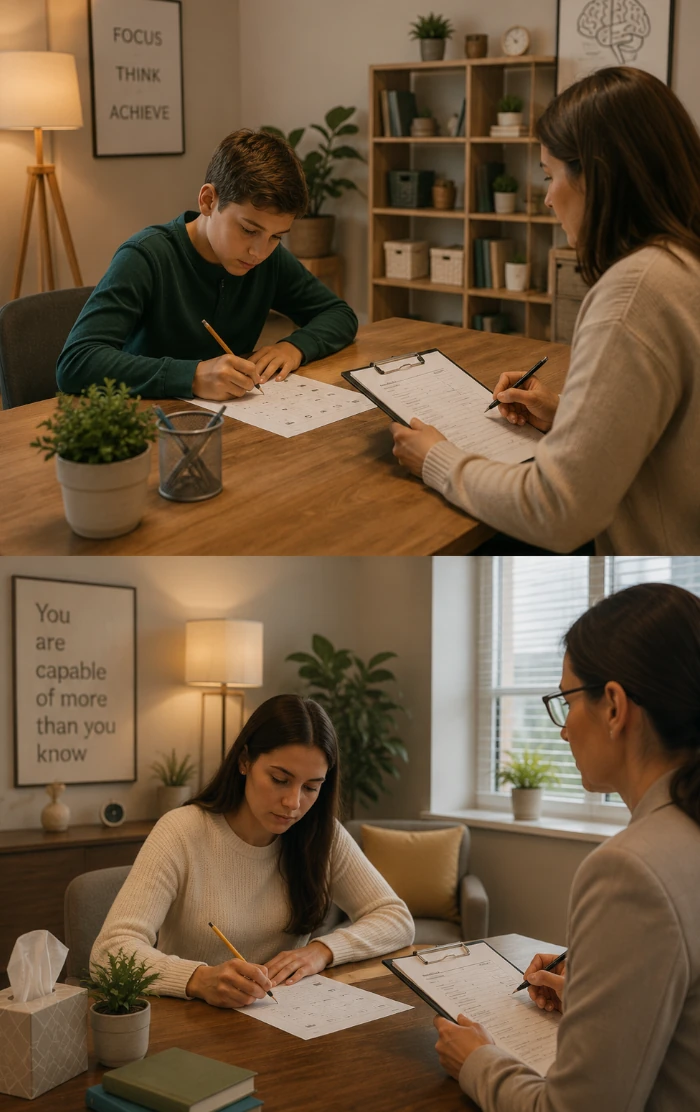
Professional IQ testing in Sioux Falls – whether you need an assessment for school, employment, gifted program eligibility, or personal insight, we connect you with licensed psychologists in the Sioux Falls area.
Last Updated: September 2026
Child IQ Testing
WISC-V & Stanford-Binet for ages 6–16. Gifted identification, learning profiles.
Adult IQ Testing
WAIS-IV & WAIS-5 available. Comprehensive adult cognitive assessments. Clinical & occupational.
WISC-V Test
Wechsler Intelligence Scale for Children® Fifth Edition – the gold standard for child IQ testing.
WAIS-IV & WAIS-5 Tests
Wechsler Adult Intelligence Scale® – Fourth Edition (WAIS-IV) and Fifth Edition (WAIS-5) available for adult IQ testing.
Gifted Testing
Identify giftedness for school placement, enrichment, and talent programs using WISC-V or Stanford-Binet.
Stanford-Binet 5
Stanford-Binet Intelligence Scales Fifth Edition – comprehensive cognitive assessment for all ages.
Mensa Testing
Mensa admission testing and preparation for the high-IQ society. Accepts WAIS-IV, WAIS-5, and Stanford-Binet 5 scores.
Full Evaluation
Combined assessment with detailed report and recommendations. Includes WISC-V, WAIS-IV, WAIS-5, or Stanford-Binet 5 as appropriate.
IQ Testing in Sioux Falls: city context
Gender, age and demographic statistics
Sioux Falls had an estimated 213,748 residents on July 1, 2025, an increase of 10.9% from the April 2020 population-estimate base. U.S. Census Bureau 2020–2024 estimates report that 49.5% of residents are female, 24.4% are under age 18, and 14.1% are age 65 or older. The city is 79.1% White alone, 6.9% Black alone, 1.9% American Indian or Alaska Native alone, 2.1% Asian alone, and 7.7% reporting two or more races. 6.5% are Hispanic or Latino; race and Hispanic-origin categories are not mutually exclusive.
These figures describe community context, not intelligence. IQ scores must be interpreted individually in light of age, disability, health, education, language, culture, socioeconomic opportunity, testing conditions, and measurement error. Sioux Falls schools report more than 100 languages spoken by students, while Census estimates show 11.2% of residents age five and older speak a language other than English at home and 8.7% are foreign-born. Language history, interpreter use, literacy, tribal and cultural context, and educational continuity may therefore be central to valid interpretation.
- Female residents: 49.5%.
- Children and teens: 24.4% are under 18.
- Older adults: 14.1% are 65 or older.
- Language context: 11.2% speak a language other than English at home; local schools serve highly multilingual families.
- Educational context: 92.9% of adults age 25+ completed high school and 38.1% hold a bachelor’s degree or higher.
- Health-access context: 7.7% of residents under age 65 report a disability and 9.4% lack health insurance.
- Interpretation: No gender, racial, ethnic, tribal, immigration, language, neighborhood, or income group should be presumed to have a particular IQ profile.
What is professional IQ testing?
Intelligence quotient (IQ) testing is a standardized method to measure human cognitive abilities and intellectual potential. Professional IQ tests are administered by licensed psychologists in a controlled environment to ensure accuracy and reliability. Unlike online quizzes, clinical assessments provide a full-scale IQ score along with detailed breakdowns of verbal comprehension, perceptual reasoning, working memory, and processing speed.
In Sioux Falls, IQ testing is commonly used for gifted program admission, learning disability identification, career guidance, neuropsychological evaluation, and personal development. The results are presented in a comprehensive report that includes normative comparisons, strengths and weaknesses, and actionable recommendations.
Who should get tested?
IQ testing can benefit children, adolescents, and adults in various situations:
- Children: Parents often seek testing for school readiness, gifted placement, or to understand learning challenges.
- Adults: Many adults take IQ tests for career advancement, graduate school applications, or personal curiosity.
- Mensa candidates: High-IQ societies require official test scores for membership.
- Clinical referrals: Psychologists may recommend testing as part of a broader neuropsychological evaluation.
Types of IQ tests
We offer the most recognized and scientifically validated intelligence tests in the field:
- WISC-V (Wechsler Intelligence Scale for Children® – Fifth Edition): The gold standard for children aged 6:0–16:11. It provides a Full-Scale IQ and five primary index scores.
- WAIS-IV (Wechsler Adult Intelligence Scale® – Fourth Edition): The most widely used adult IQ test for ages 16–90. It measures cognitive functioning across four domains.
- Stanford-Binet Intelligence Scales – Fifth Edition: A comprehensive assessment for ages 2–85, often used for gifted identification and clinical evaluations.
- Gifted Testing: Often includes the WISC-V or Stanford-Binet, plus additional creativity and achievement measures.
- Mensa Testing: We provide official Mensa admission testing and preparation materials.
How the testing process works
- Initial consultation: Brief phone or video call to discuss your needs and match you with the right psychologist.
- Testing session: In-person or remote testing (depending on the test) with a licensed psychologist. Most sessions last 1–2 hours.
- Scoring and interpretation: The psychologist scores the test and interprets the results in the context of your background and goals.
- Feedback session: A detailed review of your results, including strengths, weaknesses, and practical recommendations.
- Comprehensive report: You receive a written report with all scores, normative comparisons, and actionable next steps.
How much does IQ testing cost in Sioux Falls?
The cost of IQ testing in Sioux Falls varies depending on the type of test, the psychologist's experience, and whether a comprehensive report is required. Typical fees range from $200 to $1,200 for a full assessment. Gifted testing and Mensa admission testing are often at the lower end, while neuropsychological evaluations may be higher.
Some insurance plans cover IQ testing when it's deemed medically necessary. We recommend checking with your provider for details. Ask each provider about self-pay rates, payment options, and any available financial-assistance policies.
Before arranging a formal evaluation in Sioux Falls, adults and families can try an online IQ test to become familiar with common reasoning tasks, keeping in mind that it cannot replace professional assessment.
Sioux Falls' Intellectual History & Legacy
Sioux Falls developed at the falls of the Big Sioux River on the homelands of Dakota, Lakota, and Nakota peoples. Its intellectual and economic history combines Indigenous knowledge, agriculture, rail and regional trade, healthcare, finance, engineering, education, and public service.
- Falls and regional geography: The quartzite falls and Big Sioux River shaped settlement, transportation, industry, parks, and the city’s identity.
- Agriculture and food systems: Regional farming, livestock, food processing, agricultural finance, and logistics require scientific, quantitative, and operational knowledge.
- Healthcare and biomedical research: Sanford Health, Avera Health, Sanford Research, universities, and specialty clinics support medicine, nursing, psychology, neuroscience, genetics, public health, and rehabilitation.
- Finance and business services: South Dakota banking law and Sioux Falls’ growth helped build major financial-services, compliance, data, and customer-operations sectors.
- Higher education: Augustana University, University of Sioux Falls, USD–Sioux Falls, Southeast Technical College, and regional institutions support research, professional preparation, and workforce development.
- Technology and engineering: Raven Industries and other advanced manufacturers connect precision agriculture, aerospace, materials, data, and engineering.
- Ethical testing: Modern psychology rejects ranking racial, ethnic, tribal, language, neighborhood, or income groups by IQ. Valid assessment focuses on the individual and explicitly states limitations.
Top Employers in Sioux Falls Requiring Cognitive Skills
Major employers include Sanford Health, Avera Health, Sioux Falls School District, Smithfield Foods, Hy-Vee, the City of Sioux Falls, Wells Fargo, Amazon, the Department of Veterans Affairs, and regional manufacturers and professional-service organizations.
- Healthcare and biomedical work: Clinical reasoning, laboratory analysis, patient communication, documentation, research, rehabilitation, and quality systems.
- Education: Teaching, special education, assessment, administration, technology, counseling, and multilingual family communication.
- Financial services: Risk, compliance, fraud prevention, analytics, cybersecurity, operations, and client support.
- Food processing and agribusiness: Production planning, food safety, maintenance, quality control, logistics, and regulatory work.
- Advanced manufacturing: Engineering, precision agriculture, automation, materials, fabrication, electronics, and technical service.
- Government and public service: Planning, utilities, public safety, courts, transportation, social services, and administration.
- Retail, hospitality, and logistics: Inventory, scheduling, customer service, distribution, aviation, and operations management.
Sioux Falls IQ Testing by City Area
Choose an evaluator based on purpose, age range, instrument, language, accessibility, and report requirements—not neighborhood stereotypes. Sioux Falls’ rapid growth creates meaningful differences in travel time and access.
- Downtown and central Sioux Falls: Concentrated medical, legal, cultural, government, and transit destinations; verify parking and construction.
- West and southwest: Major healthcare campuses, commercial corridors, residential growth, and LifeScape’s W. 41st Street outpatient location.
- South and southeast: Rapid residential and commercial development, schools, clinics, and access via I-229, Louise Avenue, 57th/69th Streets, and Veterans Parkway.
- East and northeast: Growing neighborhoods, industrial and distribution areas, and evolving road connections.
- North: Airport, industrial, logistics, and interstate access; consider freight and construction traffic.
- Regional clients: Families from Brandon, Harrisburg, Tea, Hartford, Crooks, Lennox, Dell Rapids, and surrounding counties should confirm whether the office serves their age and referral purpose.
Sioux Falls Universities and Research Institutions
- Augustana University: Undergraduate and graduate programs, including nursing, education, business, sports leadership, special education, and physical therapy.
- University of Sioux Falls: Undergraduate, MBA, education master’s, and doctoral pathways.
- USD–Sioux Falls: University of South Dakota programs from associate-level through doctoral study, with health sciences, business, education, and professional options.
- Southeast Technical College: More than 65 career-focused associate, diploma, and certificate pathways.
- Sanford Research and health systems: Biomedical, clinical, genetics, public-health, and translational research connections.
- Regional access: South Dakota State University, Dakota State University, and the University of South Dakota main campus broaden research and graduate options within driving distance.
Sioux Falls Economic Context
- Median household income: $75,970 in 2020–2024 Census estimates.
- Per-capita income: $44,604.
- Residents in poverty: 9.6%.
- Bachelor’s degree or higher: 38.1% of adults age 25 and older.
- Mean travel time to work: 17.0 minutes, although weather, construction, suburban growth, and cross-metro trips can make individual commutes longer.
- Health and social-assistance activity: Census business data report approximately $4.68 billion in 2022 receipts/revenue within the city.
- Transportation and warehousing: Approximately $874.4 million in 2022 receipts/revenue reflects regional distribution, trucking, aviation, and interstate access.
- Retail sales: Approximately $7.09 billion in 2022, or $35,097 per capita.
- Accommodation and food services: Approximately $867.1 million in 2022 sales.
- Regional strengths: Healthcare and biomedical services, financial services, education, food processing, retail, logistics, advanced manufacturing, agribusiness, technology, government, construction, and hospitality.
Economic and educational statistics provide community context only. They do not establish an individual’s intellectual ability, disability, motivation, creativity, judgment, or future potential.
Sioux Falls School District Data
Sioux Falls School District reports more than 24,000 students, more than 100 languages spoken, gifted education, advanced classes, specialized programs, career and technical education, and multiple high schools and middle schools. Enrollment, boundaries, and program rules change as the city grows.
Sioux Falls Public Schools advanced learning
The district identifies gifted students using a matrix that incorporates standardized test data and other evidence. Elementary services include pull-out programming and the full-day Challenge Center at Robert Frost Elementary for highly gifted students in grades 2–5. Middle-school pathways include Gifted Education Encore at home schools and an accelerated Honors Program at Patrick Henry Middle School.
- Referral: Parents, guardians, teachers, principals, or students may initiate identification questions.
- Private testing: An outside IQ report may inform planning but does not automatically create district eligibility or placement.
- Secondary options: Honors, AP, dual credit, CTE Academy, fine arts, athletics, and subject acceleration use their own criteria.
- Equity: Multilingual, Native, rural-transfer, low-income, and twice-exceptional students require multiple evidence sources and careful access review.
Local Testing Centers and Psychologists
- LifeScape Clinical Psychology: 7220 W. 41st Street, Sioux Falls; its official service page lists IQ/cognitive and achievement evaluations, ADHD assessment, and clinical psychology. Published details emphasize children and families, so adults must verify scope.
- Teachwell Therapy & Evaluation Center: Lists academic-achievement and IQ testing, dyslexia testing, assistive technology, and autism evaluations; verify examiner credential and accepted report format.
- Sanford Health: Psychiatry, psychology, pediatric psychology, and neuropsychological assessment routes for cognitive, neurological, and behavioral questions.
- Avera Behavioral Health: Psychology, psychiatry, psychological testing, cognitive testing, and neuropsychological evaluation routes.
- Sioux Falls Psychological Services and private psychologists: Psychological evaluation services vary by provider, purpose, age, and test battery.
Before scheduling, confirm the exact test, age range, evaluator license, language and disability accommodations, report contents, turnaround, fees, insurance status, and whether the receiving school, agency, employer, or Mensa accepts the documentation.
Sioux Falls Events and Conferences
Educational and professional events are hosted by Augustana University, University of Sioux Falls, USD–Sioux Falls, Southeast Technical College, Sanford Research, Avera, the Washington Pavilion, public libraries, museums, professional associations, and community organizations. Topics may include healthcare, neuroscience, education, technology, agriculture, finance, entrepreneurship, arts, and gifted youth.
Schedules change. Verify dates, registration, age restrictions, accessibility, continuing-education credit, and whether an event is educational rather than a clinical service.
Transportation and Accessibility
- Major roads: I-29 runs north–south along the west side; I-90 runs east–west north of the city; I-229 forms an eastern and southern beltway. Key urban corridors include 10th/12th Street (SD-42), 41st Street, Minnesota Avenue, Louise Avenue, Cliff Avenue, Western Avenue, and Veterans Parkway/SD-100.
- Public transit: Sioux Area Metro (SAM) operates fixed-route bus service, paratransit, and evolving shared-ride/on-demand services. Check current routes, detours, eligibility, fares, and evening service before scheduling.
- Airport: Sioux Falls Regional Airport/Joe Foss Field (FSD), at 2801 Jaycee Lane, provides nonstop service to major U.S. hubs and leisure destinations, with connections to more than 200 domestic cities.
- Distance to other cities: Approximately 1 hour to Brookings, 1 hour 10 minutes to Mitchell, 1.5 hours to Sioux City, 2.75 hours to Omaha, 3.75 hours to Minneapolis–Saint Paul, and about 5 hours to Rapid City, subject to weather and traffic.
- Walkability: Downtown, Phillips Avenue, the East Bank, Falls Park, and parts of the central neighborhoods offer the strongest concentration of walkable destinations; outer commercial and residential areas are generally more car-dependent.
- Bike infrastructure: The city reports more than 45 miles of paved recreation trail, including the 19.13-mile Big Sioux River Greenway main loop, plus sidepaths, bicycle routes, bike lanes, and Complete Streets planning.
- Winter accessibility: Snow, ice, wind, and extreme cold can affect travel time, mobility devices, bus access, and appointment reliability. Confirm snow policies and accessible entrances.
- Testing-day planning: Verify parking, construction, transit connections, childcare, breaks, and return travel before a long assessment session.
Sioux Falls Weather and Seasonal Considerations
- Winter: Snow, ice, strong winds, and dangerous cold can affect concentration, travel, school schedules, and accessibility.
- Spring: Rapid temperature changes, thunderstorms, flooding concerns, and severe-weather alerts can disrupt appointments.
- Summer: Heat, humidity, storms, allergies, and outdoor schedules may affect sleep and stamina.
- Autumn: Generally favorable travel conditions can change quickly with early freezes or storms.
- Testing preparation: Confirm cancellation policies, allow extra travel time, bring needed eyewear or hearing devices, and reschedule when illness, sleep loss, or acute weather stress would invalidate results.
Areas we serve
We support all areas of Sioux Falls.
Frequently Asked Questions
WISC-V is for children aged 6–16, while WAIS-IV is for adults aged 16–90. Each is normed for its specific age group.
Most IQ tests take between 60 and 90 minutes, plus a feedback session. Allow 2–3 hours total.
Referral requirements vary. Some private evaluations accept self-referral, while insurance, hospital, school, or neuropsychological services may require an order or authorization.
Some professionally administered scores may be submitted as prior evidence, but acceptance is determined solely by American Mensa under its current rules.
Some plans cover cognitive assessments when there is a clinical indication. Check with your provider.
Get a good night's sleep, eat a healthy meal, and arrive relaxed. No specific preparation is needed.
You'll receive a comprehensive report with your scores and tailored recommendations.
Interviews and feedback may be available remotely, but many standardized cognitive tests require controlled administration and may need an in-person appointment. Confirm the administration format with the selected psychologist before scheduling.