
Child IQ Testing in Scottsdale

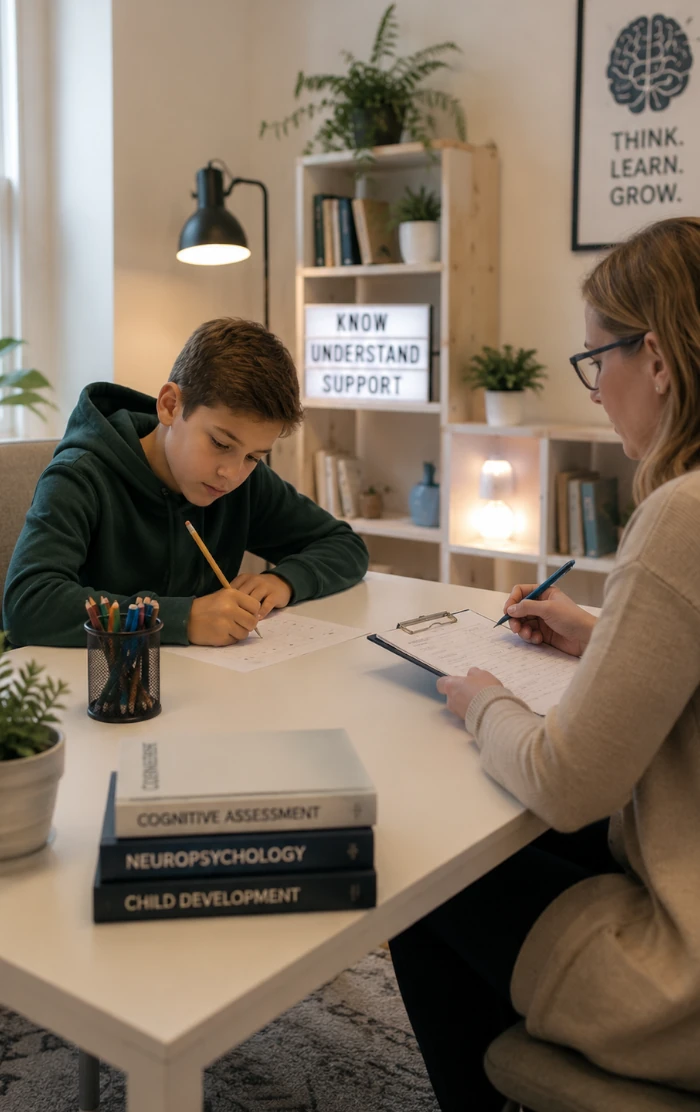
Professional child IQ testing in Scottsdale – whether you need an assessment for school placement, gifted program eligibility, or to understand your child's learning profile, we connect you with licensed psychologists in the Scottsdale area.
Last Updated: September 2026
Gifted Testing
Identify giftedness for school placement, enrichment, and talent programs using WISC-V or Stanford-Binet 5.
WISC-V Test
Wechsler Intelligence Scale for Children® Fifth Edition – the gold standard for child IQ testing.
Stanford-Binet 5
Stanford-Binet Intelligence Scales Fifth Edition – comprehensive cognitive assessment for all ages.
Full Evaluation
Combined assessment with detailed report and recommendations. Includes WISC-V or Stanford-Binet 5.
School Placement Testing
Testing for private school admission and gifted program eligibility using WISC-V or Stanford-Binet 5.
Schedule Child IQ Testing
Book your WISC-V & Stanford-Binet 5 for ages 6–16. Gifted identification, learning profiles, etc. with a licensed psychologist in Scottsdale today.
Child IQ Testing in Scottsdale: city context
Scottsdale children attend Scottsdale Unified School District, portions of neighboring districts depending on residence, charter schools, private and faith-based schools, home schools and specialized programs. Families seek testing for gifted identification, acceleration, school placement, twice-exceptional needs, learning disabilities, ADHD, autism and educational planning.
IQ by gender & ethnicity (child population)
Current Census estimates show that 13.9% of Scottsdale residents are under age 18 and 51.8% of the total population is female. There is no valid local average IQ for boys, girls or racial and ethnic groups.
- Asian population: 4.9%.
- Hispanic or Latino population: 10.6%.
- Two or more races: 9.9%.
- Foreign-born residents: 11.4%.
- Language other than English at home: 13.0%.
- Assessment fairness: Examiners consider language exposure, education, disability, culture, medical history, attention, anxiety and test familiarity.
- Individual interpretation: A child's complete profile and real-world functioning matter more than demographic group averages.
Scottsdale School Districts and Gifted Programs
Scottsdale Unified Gifted Identification
- Testing opportunities: SUSD offers gifted testing multiple times each year and uses state-approved instruments, including CogAT and Naglieri measures.
- Referral: Parents, teachers and staff may initiate referral under district procedures.
- Outside testing: Scores from a licensed outside provider may be submitted for review; acceptance and service decisions remain with the district.
- Eligibility versus placement: Identification establishes eligibility, but services are matched to age, school and individual needs rather than guaranteeing one class or campus.
SUSD Elementary and K–8 Services
- Cluster grouping: Gifted students may be grouped in mixed-ability K–5 classrooms with teachers trained in gifted instruction.
- Accelerated mathematics: Grades 3–5 may receive faster-paced and above-grade-level math instruction from gifted specialists.
- Integrated ELA: Advanced reading and writing services may be offered in grades 4 and/or 5.
- Comprehensive Gifted Program: CGP serves highly gifted K–8 students whose needs extend significantly beyond typical school-based services, with interdisciplinary work generally one to two years beyond grade level.
Middle- and High-School Advanced Pathways
- Advanced coursework: Honors, accelerated, Advanced Placement, dual-enrollment and career-technical pathways vary by campus.
- Specialized options: Programs such as Scottsdale Math and Science Academy and arts, world-language and CTE offerings have separate eligibility or enrollment rules.
- Acceleration: Subject or grade acceleration requires individualized review of achievement, ability, maturity and school policy.
Nearby District Options
- Paradise Valley Unified: Some north and west Scottsdale addresses may fall within PVSchools boundaries and follow that district's identification and service plan.
- Cave Creek Unified: Far-north addresses may be served by Cave Creek Unified under separate gifted-testing and program procedures.
- Charter and private choices: Admissions, acceleration and gifted services vary by organization and may not follow SUSD rules.
- Residence: District responsibility follows official boundaries and enrollment, not a Scottsdale mailing address alone.
Arizona Gifted Education Framework
- State requirement: Arizona districts must identify gifted pupils and provide appropriate K–12 services through locally adopted plans.
- Approved assessment: Districts use state-approved ability measures and locally defined referral and testing procedures.
- Service design: Cluster grouping, acceleration, specialist instruction, advanced courses and self-contained options may be used according to local plans.
- Current information: Families should rely on the current district plan rather than old cut scores or another district's policy.
Scottsdale Private Schools and Programs Using Testing Information
- Independent and faith-based schools: BASIS Scottsdale, Notre Dame Preparatory, International School of Arizona, Pardes Jewish Day School and other schools establish their own admission and placement policies.
- Charter schools: Public charter admission generally follows enrollment and lottery law rather than IQ selection; testing may guide services after enrollment.
- Specialized programs: Schools serving dyslexia, ADHD, autism, learning disabilities or twice-exceptional learners may request comprehensive records.
- Verification: Obtain written confirmation of accepted tests, examiner qualifications, report age, subtests, deadlines and whether outside scores affect placement.
- Educational fit: Curriculum, support services, social-emotional environment, commute, cost and student interests matter alongside scores.
Scottsdale Gifted Identification Statistics
- No single city rate: Scottsdale does not publish one authoritative citywide gifted-identification percentage because students attend multiple districts, charters, private schools and home schools.
- Identification is not prevalence: Participation reflects local criteria, screening schedules, referrals, access and available services.
- SUSD instruments: District testing includes CogAT and Naglieri measures under current procedures.
- Multiple service levels: Cluster services, acceleration, advanced courses and CGP serve different needs and should not be treated as one category.
- National reference: The 98th percentile is often associated with traditional high-IQ definitions, but school identification follows Arizona and local procedures.
- Private testing: Outside results may add information but do not automatically override district decisions.
- Equity: Multiple testing opportunities and careful review can help identify bilingual, twice-exceptional and under-referred students.
The child IQ testing process: step by step
Understanding the testing process can help parents prepare their child and reduce anxiety. Here's what to expect:
- Initial consultation (15–20 minutes): A brief phone or video call with the psychologist to discuss your child's background, concerns, and goals. This helps determine the right test and approach.
- Testing session (60–90 minutes): The child meets one-on-one with a licensed psychologist in a quiet, comfortable room. The psychologist administers the WISC-V or Stanford-Binet 5, which includes a series of subtests measuring verbal comprehension, visual-spatial reasoning, fluid reasoning, working memory, and processing speed. Breaks are offered as needed.
- Scoring and interpretation (1–2 days): The psychologist scores the test and analyzes the results. They consider the child's age, background, and any relevant medical or educational history.
- Feedback session (45–60 minutes): The psychologist meets with the parents (and the child, if appropriate) to explain the results. They discuss the Full-Scale IQ, index scores, strengths, and areas for growth. They also provide tailored recommendations for home, school, and extracurriculars.
- Comprehensive written report (5–7 days): You receive a detailed report with all scores, normative comparisons, and actionable next steps. This report can be shared with schools, doctors, or other professionals.
The entire process from consultation to report usually takes 1–2 weeks, depending on scheduling. The testing itself is non-invasive and designed to be engaging for children.
What is the WISC-V test?
The WISC-V (Wechsler Intelligence Scale for Children® – Fifth Edition) is the most widely used IQ test for children aged 6:0–16:11. It provides a Full-Scale IQ and five primary index scores: Verbal Comprehension, Visual-Spatial, Fluid Reasoning, Working Memory, and Processing Speed. The test is administered one-on-one by a trained psychologist and takes about 60–90 minutes.
The WISC-V is normed on a large, representative sample of U.S. children and is updated regularly to ensure accuracy. It is the gold standard for gifted identification, learning disability diagnosis, and school placement.
Why test your child's IQ?
IQ testing provides valuable insights into your child's cognitive strengths and weaknesses. It can help:
- Identify giftedness: For admission to gifted programs, private schools, or enrichment opportunities.
- Diagnose learning disabilities: Such as dyslexia, dyscalculia, or ADHD, which can be masked by high intelligence.
- Guide educational planning: Tailor instruction to your child's unique learning profile.
- Provide reassurance: Understand why your child is different from peers and how to support them.
Scottsdale Gifted Testing Timeline
- Start with the receiving program: Obtain current SUSD, charter or private-school deadlines and accepted instruments before scheduling.
- SUSD schedule: The district provides multiple gifted-testing windows during the school year; registration and grade eligibility vary by cycle.
- Private assessment: Allow time for intake, testing, scoring, feedback and a written report, especially before school or CGP deadlines.
- Outside-score review: District review may require complete score reports, examiner credentials and additional information.
- Retesting: Avoid unnecessary practice or rapid retesting; follow publisher, district and psychologist guidance.
Scottsdale Gifted Programs by Age Group
- Pre-K and kindergarten: Selected SUSD locations may offer gifted-cluster options; availability and testing procedures should be confirmed.
- Elementary: Cluster grouping, accelerated math, integrated ELA, enrichment and CGP provide different levels of challenge.
- Middle school: Advanced coursework, gifted support, CGP through grade 8 and subject acceleration vary by campus.
- High school: Honors, AP, dual enrollment, CTE, Scottsdale Math and Science Academy and arts or language pathways support advanced students.
- Outside school: Libraries, Scottsdale Arts, McDowell Sonoran Conservancy, SCC, ASU and regional museums provide enrichment.
Scottsdale Child ADHD and Learning Disability Assessment
- School evaluation: SUSD and other public districts evaluate eligible students under IDEA and Section 504 educational rules.
- Private evaluation: Psychologists may combine WISC-V or Stanford-Binet with achievement, attention, executive-function, language, emotional and behavioral measures.
- Twice exceptionality: Giftedness can coexist with dyslexia, ADHD, autism, anxiety, motor or medical conditions.
- Medical coordination: Mayo Clinic, HonorHealth, pediatric practices and specialists may address neurological, developmental or health questions.
- Report purpose: Clarify whether the report is for diagnosis, treatment, school eligibility, accommodations, admissions or family planning.
Scottsdale Summer Programs for Gifted Children
- Scottsdale Public Library: Reading, technology, maker, arts and youth programs support enrichment.
- Scottsdale Arts and museums: Visual arts, performance, architecture, design and history programs are available through city cultural institutions and Taliesin West.
- McDowell Sonoran Conservancy: Nature, desert ecology, citizen science and outdoor-learning opportunities connect students with the preserve.
- Scottsdale Community College and ASU: Camps, dual enrollment, workshops and regional university programs vary by year.
- Regional STEM resources: Arizona Science Center, Phoenix Zoo, Desert Botanical Garden, MIM and university programs expand options.
- Heat planning: Summer programs should account for extreme temperatures, hydration, transportation and indoor alternatives.
Scottsdale Child Testing Costs by Provider Type
- District testing: SUSD gifted testing is offered under district procedures; optional community testing or outside evaluation may involve fees.
- Standalone private IQ test: Fees commonly vary from several hundred dollars to more than $1,000 depending on test, report and feedback.
- Psychoeducational evaluation: Cognitive, achievement, attention and emotional testing often costs substantially more because of professional time and report depth.
- Hospital or neuropsychological evaluation: Medical necessity, referral, insurance authorization and scope affect cost.
- Before paying: Confirm the receiving school's accepted instruments, examiner credentials, score age and report requirements.
Areas we serve
We support all areas of Scottsdale.
Frequently Asked Questions
Both are excellent tests. WISC-V is more commonly used for school-age children, while Stanford-Binet 5 can be used for ages 2–85. We often recommend WISC-V for gifted identification.
The test itself takes 60–90 minutes. With the consultation, feedback, and report, the entire process is about 1–2 weeks.
No, you can book directly with our psychologists. We serve both self-referred and professionally referred children.
Professional results may be considered by public districts, private schools, and enrichment programs, but each organization sets its own accepted tests, score age, report requirements, and eligibility rules.
Some plans cover cognitive assessments when there is a clinical indication. Check with your provider.
Get a good night's sleep, eat a healthy meal, and arrive relaxed. No specific preparation is needed.
You'll receive a comprehensive report with your child's scores and tailored recommendations.
Interviews and feedback may be available remotely, but many standardized cognitive tests require controlled administration and may need an in-person appointment. Contact us for details.