
IQ Testing in San Bernardino
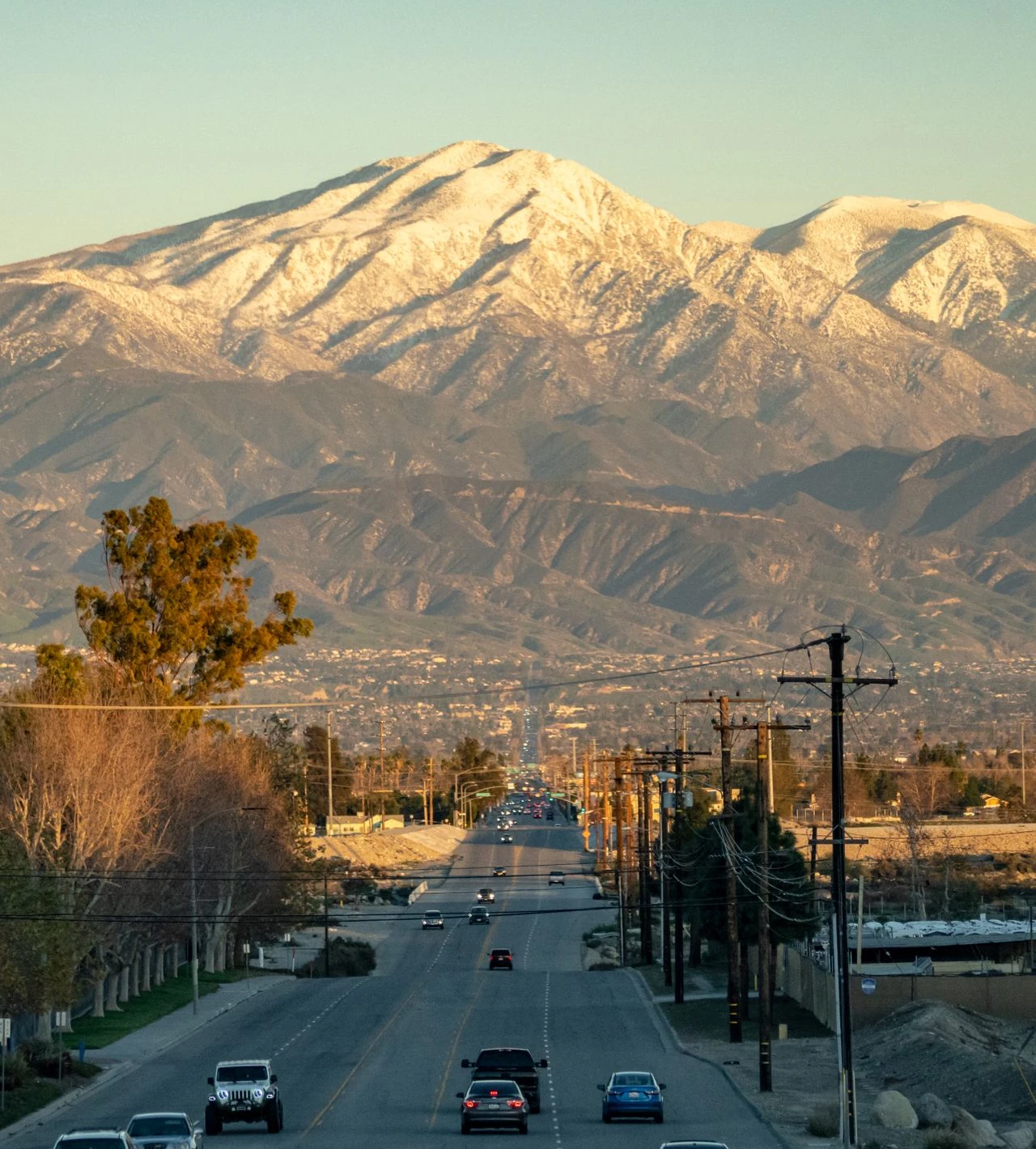

Professional IQ testing in San Bernardino – whether you need an assessment for school, employment, gifted program eligibility, or personal insight, we connect you with licensed psychologists in the San Bernardino area.
Last Updated: September 2026
Child IQ Testing
WISC-V & Stanford-Binet for ages 6–16. Gifted identification, learning profiles.
Adult IQ Testing
WAIS-IV & WAIS-5 available. Comprehensive adult cognitive assessments. Clinical & occupational.
WISC-V Test
Wechsler Intelligence Scale for Children® Fifth Edition – the gold standard for child IQ testing.
WAIS-IV & WAIS-5 Tests
Wechsler Adult Intelligence Scale® – Fourth Edition (WAIS-IV) and Fifth Edition (WAIS-5) available for adult IQ testing.
Gifted Testing
Identify giftedness for school placement, enrichment, and talent programs using WISC-V or Stanford-Binet.
Stanford-Binet 5
Stanford-Binet Intelligence Scales Fifth Edition – comprehensive cognitive assessment for all ages.
Mensa Testing
Mensa admission testing and preparation for the high-IQ society. Accepts WAIS-IV, WAIS-5, and Stanford-Binet 5 scores.
Full Evaluation
Combined assessment with detailed report and recommendations. Includes WISC-V, WAIS-IV, WAIS-5, or Stanford-Binet 5 as appropriate.
IQ Testing in San Bernardino: city context
Gender, age and demographic statistics
San Bernardino had an estimated 222,044 residents on July 1, 2025. U.S. Census Bureau 2020–2024 estimates report that 50.0% of residents are female, 26.7% are under age 18, and 10.8% are age 65 or older. The city is 20.3% White alone, 11.2% Black alone, 1.3% American Indian or Alaska Native alone, 3.8% Asian alone, 0.6% Native Hawaiian or Other Pacific Islander alone, and 17.8% reporting two or more races. 70.2% of residents are Hispanic or Latino; race and Hispanic-origin categories are not mutually exclusive.
These figures describe community context, not intelligence. IQ scores must be interpreted individually in light of age, education, disability, health, culture, language exposure, educational opportunity, and testing conditions. San Bernardino is strongly multilingual: 54.3% of residents age five and older speak a language other than English at home, and 23.3% are foreign-born. English-Spanish bilingual history, literacy in each language, interpreter use, and the limits of verbal-score interpretation may therefore be central to a valid evaluation.
- Female residents: 50.0%.
- Children and teens: 26.7% are under 18.
- Older adults: 10.8% are 65 or older.
- Language context: 54.3% speak a language other than English at home.
- Educational context: 74.2% of adults age 25+ completed high school and 13.1% hold a bachelor’s degree or higher.
- Health-access context: 10.1% of residents under age 65 report a disability and 11.2% lack health insurance.
- Interpretation: No gender, racial, ethnic, immigration, language, neighborhood, or income group should be presumed to have a particular IQ profile.
What is professional IQ testing?
Intelligence quotient (IQ) testing is a standardized method to measure human cognitive abilities and intellectual potential. Professional IQ tests are administered by licensed psychologists in a controlled environment to ensure accuracy and reliability. Unlike online quizzes, clinical assessments provide a full-scale IQ score along with detailed breakdowns of verbal comprehension, perceptual reasoning, working memory, and processing speed.
In San Bernardino, IQ testing is commonly used for gifted program admission, learning disability identification, career guidance, neuropsychological evaluation, and personal development. The results are presented in a comprehensive report that includes normative comparisons, strengths and weaknesses, and actionable recommendations.
Who should get tested?
IQ testing can benefit children, adolescents, and adults in various situations:
- Children: Parents often seek testing for school readiness, gifted placement, or to understand learning challenges.
- Adults: Many adults take IQ tests for career advancement, graduate school applications, or personal curiosity.
- Mensa candidates: High-IQ societies require official test scores for membership.
- Clinical referrals: Psychologists may recommend testing as part of a broader neuropsychological evaluation.
Types of IQ tests
We offer the most recognized and scientifically validated intelligence tests in the field:
- WISC-V (Wechsler Intelligence Scale for Children® – Fifth Edition): The gold standard for children aged 6:0–16:11. It provides a Full-Scale IQ and five primary index scores.
- WAIS-IV (Wechsler Adult Intelligence Scale® – Fourth Edition): The most widely used adult IQ test for ages 16–90. It measures cognitive functioning across four domains.
- Stanford-Binet Intelligence Scales – Fifth Edition: A comprehensive assessment for ages 2–85, often used for gifted identification and clinical evaluations.
- Gifted Testing: Often includes the WISC-V or Stanford-Binet, plus additional creativity and achievement measures.
- Mensa Testing: We provide official Mensa admission testing and preparation materials.
How the testing process works
- Initial consultation: Brief phone or video call to discuss your needs and match you with the right psychologist.
- Testing session: In-person or remote testing (depending on the test) with a licensed psychologist. Most sessions last 1–2 hours.
- Scoring and interpretation: The psychologist scores the test and interprets the results in the context of your background and goals.
- Feedback session: A detailed review of your results, including strengths, weaknesses, and practical recommendations.
- Comprehensive report: You receive a written report with all scores, normative comparisons, and actionable next steps.
How much does IQ testing cost in San Bernardino?
The cost of IQ testing in San Bernardino varies depending on the type of test, the psychologist's experience, and whether a comprehensive report is required. Typical fees range from $200 to $1,200 for a full assessment. Gifted testing and Mensa admission testing are often at the lower end, while neuropsychological evaluations may be higher.
Some insurance plans cover IQ testing when it's deemed medically necessary. We recommend checking with your provider for details. We also offer affordable payment plans and sliding-scale options for qualifying individuals.
San Bernardino's Intellectual History & Legacy
San Bernardino has an unusually direct connection to the history of intelligence testing. Educational psychologist Lewis Terman worked as a school principal in San Bernardino in 1905 before later adapting the Binet-Simon scale at Stanford University into the Stanford-Binet. His technical influence on testing was substantial, while his eugenic claims and racial interpretations are rejected by modern psychology. That history makes ethical, culturally responsive interpretation especially important when discussing IQ testing in a diverse city.
For San Bernardino residents who want an informal introduction to reasoning questions, an online IQ test can be a useful starting point, while a licensed psychologist is necessary when formal documentation or diagnosis is required.
- Rail and Route 66 history: Santa Fe, Union Pacific, Southern Pacific, and historic Route 66 helped make San Bernardino a transportation and labor hub requiring technical, mechanical, scheduling, and logistical skills.
- Aviation legacy: Norton Air Force Base was redeveloped into San Bernardino International Airport and an aviation, maintenance, cargo, and logistics employment center.
- Higher education: California State University, San Bernardino and San Bernardino Valley College support psychology, education, business, public administration, healthcare, engineering, computing, and workforce training.
- Modern interpretation: Current assessment emphasizes measurement error, validity, language and disability context, multiple evidence sources, and practical recommendations—not ranking communities or assigning fixed potential.
Top Employers in San Bernardino Requiring Cognitive Skills
San Bernardino’s employment base combines government, education, healthcare, logistics, aviation, distribution, retail, and public safety. City economic-development materials identify several employers with 1,000–4,999 workers, including Amazon Fulfillment Center, Burlington Distribution Center, California State University San Bernardino, Dignity Health Community Hospital of San Bernardino, the San Bernardino County Superintendent of Schools, the San Bernardino County Sheriff, and Caltrans.
- Logistics and fulfillment: Inventory systems, routing, automation, quality control, safety, equipment operation, and shift coordination.
- Government and public administration: Policy analysis, records, budgeting, social services, courts, planning, emergency management, and regulatory work.
- Healthcare and behavioral health: Clinical reasoning, patient communication, documentation, medication safety, rehabilitation, and interdisciplinary care.
- Education: Teaching, school psychology, counseling, administration, special education, bilingual services, and instructional technology.
- Aviation and airport services: Aircraft maintenance, ground operations, security, dispatch, cargo systems, and regulatory compliance.
- Construction, transportation, and utilities: Spatial reasoning, technical mathematics, project management, inspection, and safety-critical decision-making.
IQ results alone do not establish job suitability. Work samples, training, licenses, language skills, judgment, reliability, physical requirements, interests, and experience are usually more important for hiring and advancement.
San Bernardino IQ Testing by City Area
Testing needs vary more by referral question, school, workplace, transportation, language, and health history than by neighborhood. The following areas are useful for appointment planning without treating geography as a proxy for ability:
- Downtown and Civic Center: Close to county and city offices, courts, the San Bernardino Transit Center, Metrolink, Arrow rail, and many public-service employers.
- University District and north San Bernardino: Centered on CSUSB, Kendall Drive, Northpark, Verdemont, and foothill communities; university schedules and I-215 traffic can affect travel time.
- Del Rosa, Arrowhead, and northeast neighborhoods: Access commonly uses Waterman Avenue, Del Rosa Avenue, Highland Avenue, and SR-18 corridors.
- Westside and Mount Vernon corridor: Families may coordinate testing with SBCUSD schools, community services, and Omnitrans routes serving west San Bernardino.
- South San Bernardino, Hospitality Lane, and airport area: I-10, I-215, Tippecanoe Avenue, the airport, warehouses, hospitals, and regional employers shape appointment logistics.
- Inland Center and central commercial areas: Parking and traffic can change around shopping, events, and freeway interchanges.
The footer intentionally avoids long neighborhood lists: services support all areas of the city, and location terms should be used only when they help a reader plan access.
San Bernardino Universities and Research Institutions
- California State University, San Bernardino: Offers more than 70 bachelor’s and master’s programs, credentials, certificates, and a doctoral program. Psychology, education, social sciences, business, public administration, cybersecurity, data, and computer science can provide assessment-related training or referral resources.
- San Bernardino Valley College: Provides associate degrees, certificates, transfer preparation, career education, counseling, disability support, and pathways in health, technology, public service, manufacturing, transportation, arts, and STEM.
- San Manuel Gateway College: Located in San Bernardino and connected to Loma Linda University Health, it integrates health-career training with clinical experience.
- Regional institutions: Loma Linda University, University of Redlands, UC Riverside, Cal Poly Pomona, and other Inland Southern California programs may offer specialty training, research, clinics, or graduate study within commuting distance.
- School and community research: SBCUSD, county agencies, hospitals, logistics employers, and city departments generate practical questions in bilingual education, public health, transportation, workforce development, and community psychology.
San Bernardino Economic Context
- Median household income: $67,415 in 2020–2024 Census estimates.
- Per-capita income: $25,328.
- Residents in poverty: 18.6%.
- Bachelor’s degree or higher: 13.1% of adults age 25 and older.
- Mean travel time to work: 29.7 minutes, although freeway incidents, warehouse shifts, mountain traffic, and longer regional commutes can add substantial time.
- Health and social-assistance activity: Census business data report approximately $2.04 billion in 2022 receipts/revenue within the city.
- Transportation and warehousing: Approximately $900.1 million in 2022 receipts/revenue reflects the city’s logistics, airport, rail, and freeway role.
- Retail sales: Approximately $5.75 billion in 2022, or about $25,997 per resident.
- Accommodation and food-service sales: Approximately $518.3 million in 2022.
- Regional strengths: County and city government, education, healthcare, behavioral health, logistics and fulfillment, aviation, warehousing, construction, public safety, retail, hospitality, and workforce training.
Income, education, occupation, or neighborhood statistics must never be used as substitutes for individual assessment. They are relevant only for understanding access, educational opportunity, transportation, and the practical recommendations a report may need.
San Bernardino School District Data
San Bernardino City Unified School District reports approximately 44,192 enrolled students, 8,769 employees, 74 schools, a 93.5% graduation rate, 21.4% English learners, 24 dual-immersion schools, and 51 Linked Learning pathways. These figures show the scale and linguistic diversity of the system, not a predicted distribution of intelligence.
- GATE services: SBCUSD lists GATE magnet programming for grades 4–6, GATE cluster classes for grades 4–8, and district identification procedures.
- Identification evidence: The district’s Advanced Learners materials list NNAT3 nonverbal testing, CAASPP scores, district assessments, observation, and student work samples among the evidence considered.
- Advanced pathways: Accelerated Kindergarten/Vanguard, Advanced Placement, International Baccalaureate, dual immersion, career pathways, and dual enrollment may be relevant at different ages.
- Private reports: A WISC-V, Stanford-Binet, achievement, or full psychoeducational report may inform planning but does not automatically determine district eligibility or placement.
- Equity and language: Identification should account for bilingual development, disability, interrupted schooling, access to enrichment, and the risk of under-referral.
Local Testing Centers and Psychologists
- Dr. Kwon’s Office for Mental Health: San Bernardino, CA 92401; (909) 403-7522. The licensed psychologist’s listing explicitly describes individualized testing of intelligence, academic achievement, adaptive functioning, neurocognitive status, personality, and differential diagnosis. Confirm the exact test edition, age range, report purpose, fees, and current in-person location before scheduling.
- Community Hospital of San Bernardino: Provides hospital and behavioral-health services at 1805 Medical Center Drive; formal cognitive or neuropsychological testing should be confirmed with the appropriate department.
- St. Bernardine Medical Center: A major acute-care hospital within city limits; medical, neurological, and rehabilitation needs may lead to specialty referrals.
- San Bernardino County Department of Behavioral Health: Offers assessment, treatment, crisis, youth, adult, and substance-use services; program eligibility and psychological-testing scope vary.
- San Bernardino Vet Center: Provides confidential counseling and referral support for eligible veterans, service members, and families at 356 East Vanderbilt Way.
- Regional specialty systems: Loma Linda University Health, Arrowhead Regional Medical Center, UC Riverside-affiliated resources, and Inland Empire neuropsychology practices may be appropriate for complex medical, developmental, epilepsy, brain injury, memory, autism, or rehabilitation questions.
- Referral check: Confirm California licensure, examiner training, age range, English/Spanish capability, instrument, validity procedures, report recipient, turnaround, insurance, and whether school, disability, court, workplace, or Mensa requirements will be met.
San Bernardino Events and Conferences
Educational and professional-development opportunities may be offered through CSUSB, San Bernardino Valley College, SBCUSD, the San Bernardino Public Library, county agencies, hospitals, workforce programs, the National Orange Show Events Center, the California Theatre, and regional psychology or education associations.
- College and career events: Graduate fairs, transfer workshops, career expos, employer sessions, public-service recruitment, and workforce training.
- Education and family programs: GATE meetings, AP/IB information, bilingual-family events, library programs, STEM showcases, arts activities, and summer learning.
- Healthcare and behavioral health: Community classes, support groups, continuing education, and county outreach.
- Technology, logistics, and aviation: Airport, distribution, cybersecurity, public administration, and supply-chain events may support career exploration.
- Planning: Dates, eligibility, and venues change. Verify current calendars rather than treating an IQ-testing page as an event listing.
Transportation and Accessibility
- Major roads: I-215 runs north–south through the city; I-10 crosses the southern side; SR-210 runs east–west across north San Bernardino; SR-18/Waterman Avenue connects toward the mountain communities. Historic Route 66/Foothill Boulevard, Base Line Street, Highland Avenue, E Street, Arrowhead Avenue, Mount Vernon Avenue, and Tippecanoe Avenue are important local corridors.
- Public transit: Omnitrans operates local and express bus service throughout San Bernardino. The 15.7-mile sbX Green Line follows the E Street corridor between CSUSB and Loma Linda, with the San Bernardino Transit Center serving as a major connection point.
- Passenger rail: Metrolink’s San Bernardino Line connects the city with Los Angeles-area destinations. Arrow rail connects San Bernardino-Downtown and Tippecanoe stations with Redlands, with transfers at the Downtown station.
- Airport: San Bernardino International Airport (SBD), at 1601 East Third Street, serves passenger flights, aviation, cargo, maintenance, and airport employment. Ontario International Airport is another major regional option roughly 20–25 miles west, depending on route.
- Distance to other cities: Central San Bernardino is roughly 10–15 minutes from Highland or Colton, 15–25 minutes from Redlands or Loma Linda, 20–30 minutes from Riverside, 25–40 minutes from Ontario, about 55–70 minutes from Palm Springs, and commonly 60–90+ minutes from central Los Angeles depending on traffic.
- Walkability: Downtown near the Transit Center, civic buildings, Seccombe Lake, and portions of the E Street corridor are among the easier areas to combine walking and transit. Much of the city remains spread out, with heat, wide roads, freeway barriers, and uneven sidewalk conditions affecting access.
- Bike infrastructure: The city is developing an Active Transportation Plan focused on safer walking, bicycling, and school routes. Existing practical routes vary by corridor; riders should check current facilities, traffic speeds, heat, and construction before using a bicycle for an appointment.
- Accessibility: Ask about step-free entry, elevators, accessible parking, paratransit, sensory needs, breaks, and remote intake. Transit availability does not guarantee that a testing office is accessible.
San Bernardino Weather and Seasonal Considerations
- Summer heat: Inland temperatures frequently become very hot. Morning appointments, hydration, shade, and a properly cooled testing room can protect attention and stamina.
- Santa Ana winds: Strong dry winds may affect sleep, allergies, power reliability, driving, and wildfire danger.
- Wildfire and smoke: Foothill and regional fires can produce unhealthy air, headaches, fatigue, anxiety, evacuations, or road closures. Testing should be postponed when safety or air quality is poor.
- Winter rain and mountain weather: Rain can slow I-215, I-10, SR-210, and local streets. Snow and chain controls in the San Bernardino Mountains can affect SR-18 and regional travel even when the valley is clear.
- Air quality and allergies: Ozone, particulate pollution, pollen, and dust can influence comfort and performance; unusual symptoms should be documented.
- Testing principle: Scores obtained during illness, severe sleep loss, heat stress, smoke exposure, medication changes, or acute distress should be interpreted cautiously.
Areas we serve
Appointments support residents throughout San Bernardino, subject to provider availability and the needs of the evaluation.
Frequently Asked Questions
WISC-V is for children aged 6–16, while WAIS-IV is for adults aged 16–90. Each is normed for its specific age group.
Most IQ tests take between 60 and 90 minutes, plus a feedback session. Allow 2–3 hours total.
No, you can book directly with our psychologists. We serve both self-referred and professionally referred individuals.
Some professionally administered scores may be submitted as prior evidence, but acceptance is determined solely by American Mensa under its current rules.
Some plans cover cognitive assessments when there is a clinical indication. Check with your provider.
Get a good night's sleep, eat a healthy meal, and arrive relaxed. No specific preparation is needed.
You'll receive a comprehensive report with your scores and tailored recommendations.
Interviews and feedback may be available remotely, but many standardized cognitive tests require controlled administration and may need an in-person appointment. Contact us for details.