
Adult IQ Testing in Port St. Lucie

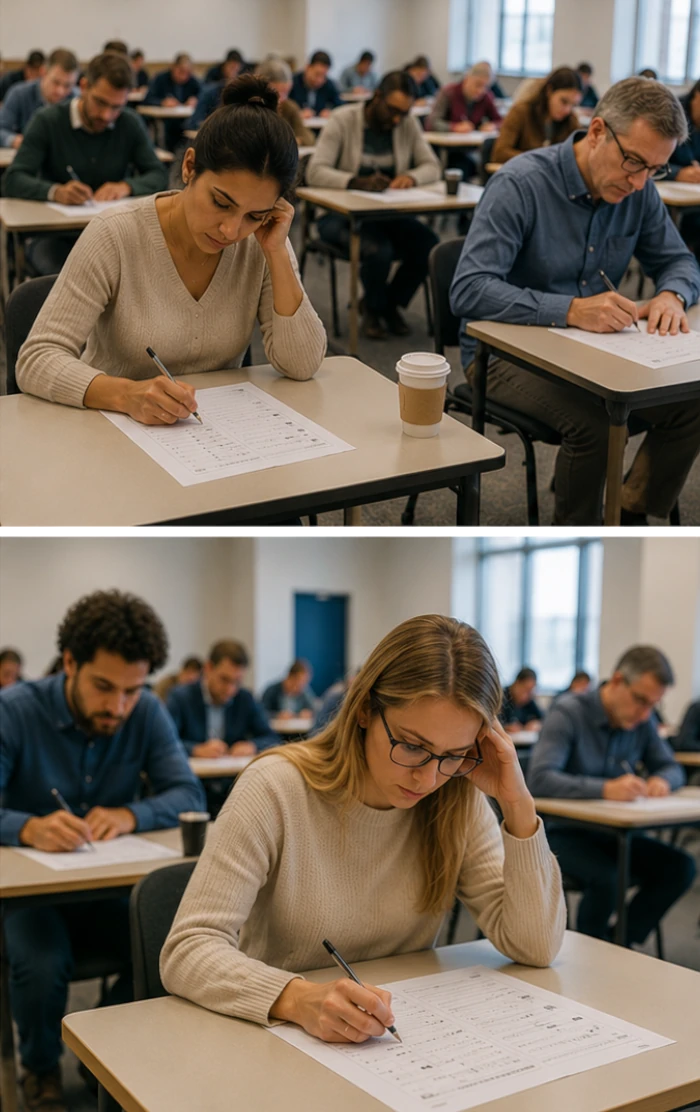
Professional adult IQ testing in Port St. Lucie – whether you need an assessment for career advancement, graduate school applications, Mensa admission, or personal insight, we connect you with licensed psychologists in the Port St. Lucie area.
Last Updated: September 2026
WAIS-IV & WAIS-5 Tests
Wechsler Adult Intelligence Scale® – Fourth Edition (WAIS-IV) and Fifth Edition (WAIS-5) available for adult IQ testing.
Mensa Testing
Official Mensa admission testing and preparation for the high-IQ society. Accepts WAIS-IV, WAIS-5, and Stanford-Binet 5 scores.
Career Guidance
Use IQ testing to identify career paths that align with your cognitive strengths.
Graduate School Preparation Testing
IQ testing for graduate program applications and academic planning using WAIS-IV or WAIS-5.
Full Evaluation
Comprehensive assessment with detailed report and actionable recommendations. Includes WAIS-IV or WAIS-5.
Schedule Adult IQ Testing
Book your WAIS-IV & WAIS-5 - a comprehensive adult cognitive assessments with a licensed psychologist in Port St. Lucie today.
Adult IQ Testing in Port St. Lucie: city context
Port St. Lucie's adult-testing population includes healthcare professionals, educators, public employees, construction and logistics workers, engineers, technology staff, retirees, veterans, university students, managers, entrepreneurs, career changers, and adults seeking diagnostic clarification or accommodations.
The city has a mixed-age and diverse adult population: 28.1% of residents age 25 and older hold a bachelor's degree or higher, 21.8% of residents are age 65 or older, and 51.0% of residents are female. Professional adult IQ testing uses age-based national norms rather than a separate male, female, retirement-age, or local average.
IQ by gender & ethnicity (adult population)
There is no authoritative Port St. Lucie dataset establishing separate average IQ scores by gender, race, ethnicity, age group, or neighborhood. Relevant context includes:
- Female population: 51.0%.
- Black population: 20.0%.
- Asian population: 2.1%.
- Hispanic or Latino population: 24.0%.
- Foreign-born population: 19.7%.
- Language other than English at home: 26.7%.
- Bachelor's degree or higher: 28.1%.
- Labor-force participation: 58.9% overall and 53.9% among women age 16 and older.
- Clinical interpretation: Education, language, culture, disability, medical and neurological history, attention, mood, sleep, medication, sensory functioning, and testing conditions are considered when interpreting scores.
What is adult IQ testing?
Adult IQ testing is a standardized method to measure cognitive abilities and intellectual potential in individuals aged 16 and older. Professional IQ tests are administered by licensed psychologists in a controlled environment to ensure accuracy and reliability. Unlike online quizzes, clinical assessments provide a full-scale IQ score along with detailed breakdowns of verbal comprehension, perceptual reasoning, working memory, and processing speed.
In Port St. Lucie, adult IQ testing is commonly used for:
- Career guidance: Identifying cognitive strengths to inform career decisions and professional development.
- Graduate school applications: Some programs require cognitive assessments for admission or scholarship consideration.
- Mensa admission: High-IQ societies require official test scores for membership.
- Neuropsychological evaluation: Assessing cognitive function following injury, illness, or as part of a clinical evaluation.
- Personal insight: Understanding your cognitive profile for personal growth and self-awareness.
Who should get adult IQ testing?
Adult IQ testing is beneficial for a wide range of individuals in various situations:
- Career changers: Adults exploring new career paths who want to understand their cognitive strengths and how they align with different professions.
- Graduate school applicants: Individuals applying to graduate programs that require or recommend cognitive assessments.
- Mensa candidates: Those seeking admission to Mensa or other high-IQ societies.
- Executive coaching clients: Professionals working with coaches to maximize their leadership potential.
- Individuals with ADHD or learning disabilities: Adults who suspect they may have an undiagnosed condition that affects their cognitive performance.
- Curious individuals: Anyone who wants to better understand their intellectual strengths and weaknesses.
The WAIS-IV and WAIS-5: gold standard tests for adults
The WAIS-IV (Wechsler Adult Intelligence Scale® – Fourth Edition) and the newer WAIS-5 (Fifth Edition) are the most widely used IQ tests for adults aged 16–90. They provide a Full-Scale IQ (FSIQ) and multiple index scores:
- Verbal Comprehension Index (VCI): Measures verbal reasoning, vocabulary, and knowledge.
- Perceptual Reasoning Index (PRI) / Visual Spatial & Fluid Reasoning: Assesses non-verbal reasoning, visual-spatial processing, and problem-solving.
- Working Memory Index (WMI): Measures attention, concentration, and the ability to hold and manipulate information in memory.
- Processing Speed Index (PSI): Assesses the speed of processing visual information and performing mental tasks.
Both tests are normed on large, representative samples of U.S. adults and are updated regularly to ensure accuracy. The test takes approximately 60–90 minutes to administer and is conducted one-on-one by a trained psychologist.
The adult IQ testing process: step by step
Understanding the testing process can help reduce anxiety and prepare you for a successful assessment:
- Initial consultation (15–20 minutes): A brief phone or video call with the psychologist to discuss your goals, concerns, and background. This helps determine the right test and approach.
- Testing session (60–90 minutes): You meet one-on-one with a licensed psychologist in a quiet, comfortable room. The psychologist administers the WAIS-IV or WAIS-5, which includes a series of subtests measuring various cognitive domains. Breaks are offered as needed.
- Scoring and interpretation (1–2 days): The psychologist scores the test and analyzes the results. They consider your age, background, and any relevant medical or educational history.
- Feedback session (45–60 minutes): The psychologist meets with you to explain the results. They discuss your Full-Scale IQ, index scores, strengths, and areas for growth. They also provide tailored recommendations for career, education, or personal development.
- Comprehensive written report (5–7 days): You receive a detailed report with all scores, normative comparisons, and actionable next steps. This report can be shared with employers, schools, or other professionals.
The entire process from consultation to report usually takes 1–2 weeks, depending on scheduling. The testing itself is non-invasive and designed to be engaging for adults.
IQ testing for career guidance
One of the most common reasons adults pursue IQ testing is to gain clarity about their career path. Your cognitive profile can reveal strengths that you may not have fully leveraged in your professional life.
For example:
- High verbal comprehension: May indicate strength in roles involving communication, writing, teaching, or law.
- High perceptual reasoning: May indicate strength in roles involving design, engineering, architecture, or technology.
- High working memory: May indicate strength in roles requiring complex problem-solving, programming, or data analysis.
- High processing speed: May indicate strength in roles requiring rapid decision-making, clerical work, or emergency response.
Understanding your cognitive strengths can help you make informed decisions about career changes, promotions, or additional education.
Mensa testing for adults
Mensa is the largest and oldest high-IQ society in the world, with members in over 100 countries. To qualify for Mensa, individuals must score at or above the 98th percentile on a standardized IQ test, which typically corresponds to an IQ of 130 or above.
In Port St. Lucie, there is an active Mensa community that offers social events, intellectual discussions, and networking opportunities. Membership can provide a sense of belonging and community for gifted adults who may feel isolated in their everyday lives.
We offer official Mensa admission testing and preparation materials. Our psychologists are experienced in administering the tests required for Mensa membership and can help you navigate the application process.
Neuropsychological assessment for adults
In some cases, adult IQ testing is part of a broader neuropsychological evaluation. This may be recommended if you have experienced:
- A traumatic brain injury (TBI)
- A stroke or other neurological event
- Memory concerns or cognitive decline
- ADHD or other attention-related difficulties
- A learning disability that was not identified in childhood
Our licensed psychologists are trained to distinguish between normal cognitive variation and conditions that may require intervention. A comprehensive evaluation can provide clarity and guide treatment recommendations.
How much does adult IQ testing cost in Port St. Lucie?
- Focused adult IQ assessment: Fees commonly reflect interview time, WAIS administration, scoring, feedback, and the level of written documentation requested.
- Brief score documentation: A limited report may cost less but may not satisfy universities, disability programs, employers, courts, or licensing bodies.
- Comprehensive psychoeducational evaluation: Adding achievement, attention, executive, emotional, or diagnostic measures increases testing and report time.
- Medical neuropsychology: Hospital or specialty evaluations are broader than a stand-alone WAIS and may involve referral, insurance authorization, and separate billing procedures.
- Typical planning range: Focused private assessments may range from several hundred dollars to more than $1,500, while comprehensive evaluations can cost substantially more.
- Insurance: Coverage is more likely when testing is medically necessary than when the purpose is personal curiosity, career guidance, Mensa, or general self-knowledge.
- Before paying: Request a written estimate identifying tests, interview, records review, feedback, report length, turnaround time, cancellation terms, and any additional forms.
Port St. Lucie Adult Education and Degree Attainment
- Educational attainment: Census estimates report 91.7% high-school completion and 28.1% bachelor's-degree attainment among adults age 25 and older.
- Indian River State College: The Pruitt and Massey campuses provide associate, bachelor's, technical, nursing, STEM, public-safety, business, education, and workforce programs.
- Keiser University: The Port St. Lucie campus offers career-focused programs and formats designed for traditional and working-adult students.
- Adult education: St. Lucie Public Schools and regional providers offer GED, English-language, workforce, career, and continuing-education pathways.
- Clinical use: Adult testing may support accommodations, return-to-school planning, disability documentation, career transition, or understanding a longstanding learning profile.
- Documentation: Colleges and testing agencies may require a comprehensive evaluation rather than IQ testing alone, current measures, functional evidence, and specific recommendations.
Port St. Lucie Neuropsychological Services
- Cleveland Clinic neurological care: Tradition, Stuart, and regional locations provide evaluation and treatment for dementia, stroke, epilepsy, movement disorders, headache, multiple sclerosis, and other neurological conditions.
- HCA Florida hospitals: St. Lucie and Lawnwood hospitals provide acute, rehabilitation, stroke, emergency, and specialty pathways that may generate cognitive referrals.
- Private neuropsychology: Regional clinicians assess memory, attention, executive functioning, traumatic brain injury, dementia, neurological illness, disability, and return-to-work questions.
- Older adults: Port St. Lucie's sizable senior population increases demand for differential diagnosis of normal aging, mild cognitive impairment, dementia, mood, sleep, medication, and medical effects.
- Veterans: The Port Saint Lucie VA Clinic and VA West Palm Beach system can coordinate mental-health, rehabilitation, specialty, compensation, and referral services for eligible veterans.
- Travel: Highly specialized cases may require Stuart, West Palm Beach, Weston, Miami, or Orlando appointments.
Port St. Lucie Mensa Adult Members
- Local group: Palm Beach Area Mensa serves Palm Beach, Martin, and St. Lucie counties within American Mensa's Florida region.
- Membership count: No authoritative public source publishes a stable Port St. Lucie-only total, so population-based estimates should be avoided.
- Prior evidence: Adults may submit qualifying scores from accepted professionally administered tests under current American Mensa rules.
- Admission testing: Testing availability depends on authorized proctors, current procedures, venues, and regional schedules.
- Clinical distinction: Mensa eligibility testing does not diagnose ADHD, learning disabilities, autism, dementia, or neurological conditions and generally does not replace a full psychological report.
Port St. Lucie Adult ADHD Assessment
- Evaluation scope: Adult ADHD assessment may include developmental history, clinical interview, symptom ratings, collateral information, attention and executive-function measures, and cognitive or academic testing when relevant.
- Differential diagnosis: Anxiety, depression, trauma, sleep disorders, menopause, medication effects, substance use, chronic illness, pain, hearing or vision problems, and neurological conditions can resemble or worsen ADHD symptoms.
- Work and school context: Long commutes, remote work, shift schedules, college demands, caregiving, and rapid career changes may expose previously compensated weaknesses.
- Documentation: Employers, colleges, professional boards, and testing agencies may require evidence of functional impairment and specific accommodation recommendations.
- Provider selection: Confirm that the clinician evaluates adults, can address coexisting conditions, and prepares reports suitable for the intended recipient.
Port St. Lucie Graduate School Preparation
- Local pathways: Indian River State College and Keiser University provide bachelor's, graduate, professional, and workforce programs, while nearby universities expand specialized options.
- Regional choices: Florida Atlantic, Nova Southeastern, Barry, Palm Beach Atlantic, Florida Institute of Technology, and Orlando-area universities offer health, psychology, education, engineering, business, public administration, and research programs.
- Application planning: Applicants should verify prerequisites, test policies, accreditation, internships, clinical placements, residency requirements, and whether a cognitive report is relevant.
- Accommodations: IQ testing alone may be insufficient; current comprehensive documentation and evidence of functional limitation are often required.
- Career fit: Cognitive results should be considered with interests, values, academic history, finances, family responsibilities, and labor-market demand.
Areas we serve
We support all areas of Port St. Lucie.
Frequently Asked Questions
WAIS-5 is the newest version, released in late 2024. It offers updated norms, a five-factor model, and additional ancillary indices. We offer both WAIS-IV and WAIS-5 depending on your needs and the psychologist's recommendation.
The WAIS-IV or WAIS-5 takes 60–90 minutes to administer. With the consultation, feedback, and report, the entire process is about 1–2 weeks.
No, you can book directly with our psychologists. We serve both self-referred and professionally referred adults.
Some professionally administered scores may be submitted as prior evidence, but acceptance is determined solely by American Mensa under its current rules. Both WAIS-IV and WAIS-5 scores are accepted.
Some plans cover cognitive assessments when there is a clinical indication. Check with your provider.
Get a good night's sleep, eat a healthy meal, and arrive relaxed. No specific preparation is needed.
You'll receive a comprehensive report with your scores and tailored recommendations for career, education, or personal development.
Interviews and feedback may be available remotely, but many standardized cognitive tests require controlled administration and may need an in-person appointment. Contact us for details.
Absolutely. Understanding your cognitive strengths can help you identify career paths that align with your natural abilities.
While IQ is relatively stable, some cognitive abilities (like processing speed) may decline with age, while others (like verbal comprehension) may improve. Testing provides a snapshot of your current cognitive functioning.