
IQ Testing in Pomona

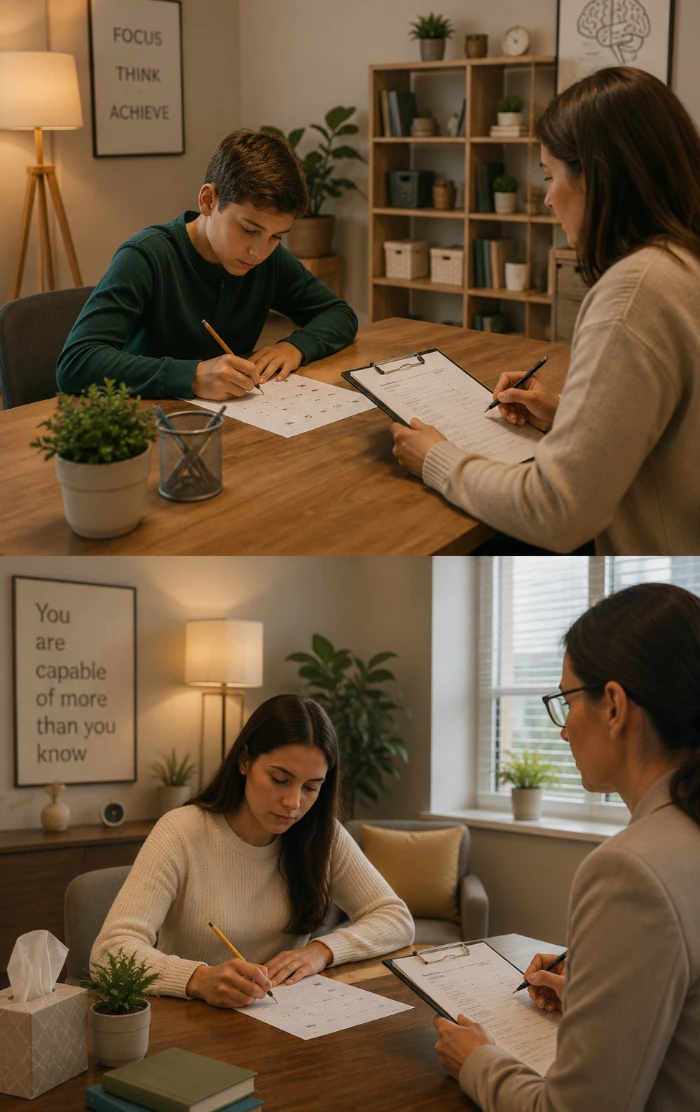
Professional IQ testing in Pomona – whether you need an assessment for school, employment, gifted program eligibility, or personal insight, we connect you with licensed psychologists in the Pomona area.
Last Updated: September 2026
Child IQ Testing
WISC-V & Stanford-Binet for ages 6–16. Gifted identification, learning profiles.
Adult IQ Testing
WAIS-IV & WAIS-5 available. Comprehensive adult cognitive assessments. Clinical & occupational.
WISC-V Test
Wechsler Intelligence Scale for Children® Fifth Edition – the gold standard for child IQ testing.
WAIS-IV & WAIS-5 Tests
Wechsler Adult Intelligence Scale® – Fourth Edition (WAIS-IV) and Fifth Edition (WAIS-5) available for adult IQ testing.
Gifted Testing
Identify giftedness for school placement, enrichment, and talent programs using WISC-V or Stanford-Binet.
Stanford-Binet 5
Stanford-Binet Intelligence Scales Fifth Edition – comprehensive cognitive assessment for all ages.
Mensa Testing
Mensa admission testing and preparation for the high-IQ society. Accepts WAIS-IV, WAIS-5, and Stanford-Binet 5 scores.
Full Evaluation
Combined assessment with detailed report and recommendations. Includes WISC-V, WAIS-IV, WAIS-5, or Stanford-Binet 5 as appropriate.
IQ Testing in Pomona: city context
Pomona is a diverse eastern Los Angeles County city in the Pomona Valley, positioned near the Los Angeles, San Bernardino, and Orange County employment regions. The 2020 Census counted 151,713 residents across 22.99 square miles of land. Downtown institutions, residential districts, healthcare campuses, Fairplex, industrial areas, and Cal Poly Pomona create different travel and service-access conditions.
The city includes multigenerational families, students, healthcare and education workers, commuters, recent arrivals, and residents with varied cultural, linguistic, educational, and socioeconomic experiences. A qualified examiner should document language history, schooling, disability, health, sensory or motor needs, and the exact decision a report must support before selecting instruments.
IQ by gender & ethnicity
Pomona's population is approximately 50.1% female. Properly normed intelligence scales are designed so broad male and female averages are similar, while individuals may show different patterns across verbal, visual-spatial, fluid-reasoning, working-memory, and processing-speed tasks. No authoritative source publishes separate Pomona IQ averages by gender, race, ethnicity, neighborhood, income, occupation, immigration history, or home language.
- Language: Census estimates indicate that 64.0% of residents age 5 and older speak a language other than English at home; English-only testing can understate ability when English is not the examinee's strongest academic language.
- Language access: Proficiency, literacy, context of acquisition, and educational opportunity should guide selection and interpretation.
- Culture and schooling: Familiarity with test tasks, interrupted education, socioeconomic conditions, and access to instruction can affect performance.
- Individual decisions: School, clinical, disability, and employment decisions should use the complete record rather than demographic assumptions.
What is professional IQ testing?
Intelligence quotient (IQ) testing is a standardized method to measure human cognitive abilities and intellectual potential. Professional IQ tests are administered by licensed psychologists in a controlled environment to ensure accuracy and reliability. Unlike online quizzes, clinical assessments provide a full-scale IQ score along with detailed breakdowns of verbal comprehension, perceptual reasoning, working memory, and processing speed.
In Pomona, IQ testing is commonly used for gifted program admission, learning disability identification, career guidance, neuropsychological evaluation, and personal development. The results are presented in a comprehensive report that includes normative comparisons, strengths and weaknesses, and actionable recommendations.
Pomona students and adults exploring their cognitive strengths can begin with an online IQ test, then consult a qualified psychologist whenever the result will be used for education, diagnosis, accommodations, or formal documentation.
Who should get tested?
IQ testing can benefit children, adolescents, and adults in various situations:
- Children: Parents often seek testing for school readiness, gifted placement, or to understand learning challenges.
- Adults: Many adults take IQ tests for career advancement, graduate school applications, or personal curiosity.
- Mensa candidates: High-IQ societies require official test scores for membership.
- Clinical referrals: Psychologists may recommend testing as part of a broader neuropsychological evaluation.
Types of IQ tests
Licensed psychologists may select from recognized, scientifically validated intelligence tests according to age, referral question, language, and the organization receiving the report:
- WISC-V (Wechsler Intelligence Scale for Children® – Fifth Edition): The gold standard for children aged 6:0–16:11. It provides a Full-Scale IQ and five primary index scores.
- WAIS-IV (Wechsler Adult Intelligence Scale® – Fourth Edition): The most widely used adult IQ test for ages 16–90. It measures cognitive functioning across four domains.
- Stanford-Binet Intelligence Scales – Fifth Edition: A comprehensive assessment for ages 2–85, often used for gifted identification and clinical evaluations.
- Gifted Testing: Often includes the WISC-V or Stanford-Binet, plus additional creativity and achievement measures.
- Mensa qualification: A psychologist may document results from an accepted test, but applicants should verify American Mensa's current test, edition, score, and documentation rules before scheduling.
How the testing process works
- Initial consultation: Brief phone or video call to discuss your needs and match you with the right psychologist.
- Testing session: In-person or remote testing (depending on the test) with a licensed psychologist. Most sessions last 1–2 hours.
- Scoring and interpretation: The psychologist scores the test and interprets the results in the context of your background and goals.
- Feedback session: A detailed review of your results, including strengths, weaknesses, and practical recommendations.
- Comprehensive report: You receive a written report with all scores, normative comparisons, and actionable next steps.
How much does IQ testing cost in Pomona?
The cost of IQ testing in Pomona depends on the referral question, test battery, examiner's qualifications, records reviewed, feedback, and report detail. A focused cognitive assessment may cost several hundred dollars, while a comprehensive psychoeducational or neuropsychological evaluation can cost substantially more. Request a written estimate rather than relying on a citywide price range.
Insurance may cover assessment when it is medically necessary, but gifted, school-admission, employment, Mensa, or personal-interest testing is often excluded. Ask the psychologist and insurer about authorization, reimbursement, payment plans, cancellation rules, and whether the receiving organization accepts the proposed report.
Pomona's Intellectual History & Legacy
Pomona's development connects Tongva homelands, Spanish and Mexican-era land history, the arrival of railroads, citrus agriculture, manufacturing, county fairs, healthcare, education, and the growth of inland Southern California. The city incorporated in 1888 and took its name from the Roman goddess of fruit, reflecting the region's agricultural ambitions.
- Cal Poly Pomona: The public polytechnic university emphasizes learning by doing across engineering, science, agriculture, business, education, hospitality, environmental design, and the humanities.
- Western University of Health Sciences: Downtown Pomona's graduate health-sciences university supports medicine, dentistry, pharmacy, nursing, veterinary medicine, allied health, and biomedical research.
- Pomona College history: Pomona College began in the city in 1887 before relocating to nearby Claremont; its original name preserves this local connection.
- Pomona Public Library: Library collections, technology, literacy, local history, youth programming, and workforce resources support lifelong learning.
- Arts and civic learning: The American Museum of Ceramic Art, dA Center for the Arts, Fairplex educational programs, and downtown galleries connect art, design, community history, and public participation.
- Responsible testing: A professionally administered IQ test is useful only when the instrument, language, norms, accessibility, and report match the real referral question.
Major Pomona Employment Sectors and Cognitive Assessment
Most Pomona employers do not require clinical IQ testing. Hiring generally relies on education, licenses, interviews, work samples, background checks, and job-specific aptitude or safety measures. Clinical cognitive evaluation may be relevant only to a lawful accommodation, disability, rehabilitation, fitness, or diagnostic question.
- Healthcare: Pomona Valley Hospital Medical Center, Casa Colina, Western University clinics, and community practices support clinical, technical, rehabilitation, research, and administrative work.
- Education: Pomona Unified School District, Cal Poly Pomona, Western University of Health Sciences, and nearby colleges employ educators, researchers, counselors, technical staff, and operations teams.
- Government and community services: City, county, social-service, public-safety, library, and nonprofit organizations serve a large multilingual population.
- Manufacturing, logistics, and construction: Industrial districts and regional freeway and rail connections support production, warehousing, distribution, skilled trades, and building activity.
- Fairplex, arts, retail, and hospitality: Events, exhibitions, downtown businesses, restaurants, cultural organizations, and visitor services diversify the economy.
- Accommodation: Employees should obtain the employer's written documentation standard before testing so the evaluator addresses functional limitations rather than supplying an irrelevant score.
Pomona IQ Testing by Travel Corridor
Testing access is more accurately described through major corridors than by repeating neighborhood names. Examiner qualifications, accessibility, language competence, and report acceptance matter more than the shortest drive.
- Downtown and civic center: Garey Avenue, Mission Boulevard, the Western University campus, civic offices, transit connections, and cultural institutions create weekday and event traffic.
- North Pomona: Towne Avenue, Bonita Avenue, Casa Colina, Pomona Valley Hospital, and the Pomona North transit area connect medical and residential destinations.
- West Pomona and Fairplex: Fairplex Drive, McKinley Avenue, and the LA County Fairgrounds can experience major event-related congestion.
- Cal Poly and freeway area: I-10, SR 57, Temple Avenue, and university schedules shape access in southwestern Pomona.
- South and east Pomona: Mission Boulevard, Holt Avenue, Phillips Boulevard, Garey Avenue, and SR 71 connect residential, school, industrial, and commercial areas.
- City-edge addresses: Postal labels, municipal boundaries, school districts, and neighboring communities do not always align; verify the exact address.
Pomona Universities and Research Institutions
- Cal Poly Pomona: Undergraduate and graduate education spans engineering, computing, agriculture, science, business, education, hospitality, environmental design, and the liberal arts.
- Western University of Health Sciences: Graduate professional programs and research connect medicine, pharmacy, dentistry, veterinary medicine, nursing, optometry, physical therapy, and biomedical sciences.
- Casa Colina Hospital and Centers for Healthcare: Rehabilitation medicine and neuropsychology connect clinical care with training and research involving brain injury, stroke, spinal cord injury, and neurological conditions.
- Mt. San Antonio College: Nearby transfer, career, technical, health, public-safety, arts, and continuing-education pathways serve Pomona-area students.
- The Claremont Colleges: Nearby undergraduate and graduate institutions expand regional access to research, libraries, psychology, education, public policy, science, and the arts; Pomona College itself is in Claremont, not the city of Pomona.
- Clinical training limits: University clinics and research programs may have narrow eligibility, referral requirements, or waitlists and should not be assumed to provide routine private IQ testing.
Pomona Economic Context
- Median household income: $79,479 in 2020–2024 Census estimates (2024 dollars).
- Per-capita income: $29,252.
- Residents in poverty: 14.3%.
- Bachelor's degree or higher: 20.3% of adults age 25 and older.
- Mean travel time to work: 31.8 minutes, although freeway incidents, construction, rail crossings, and Fairplex events can lengthen trips.
- Healthcare and social-assistance activity: Census business data report approximately $1.91 billion in 2022 receipts/revenue within the city.
- Transportation and warehousing: Approximately $605.0 million in 2022 receipts/revenue reflects freight, delivery, distribution, and regional transportation activity.
- Retail sales: Approximately $1.66 billion in 2022.
- Accommodation and food services: Approximately $351.6 million in 2022 sales.
- Labor-force participation: 62.9% of residents age 16 and older.
- Language context: 64.0% of residents age 5 and older speak a language other than English at home; that is an access consideration, not a measure of ability.
- Regional strengths: Healthcare, higher education, public schools, government, rehabilitation, manufacturing, logistics, construction, professional services, arts, fairs and events, retail, and hospitality.
Pomona School District Data
- Pomona Unified School District: PUSD serves Pomona and portions of nearby Diamond Bar through neighborhood schools, academies, career and technical education, dual-language programs, advanced courses, and specialized services.
- GATE program: The district states that Gifted and Talented Education serves identified elementary through high-school students with differentiated, research-based instruction.
- Referral: PUSD publishes a current referral window and forms for GATE testing; dates, grade eligibility, screening, and identification procedures should be verified directly each year.
- Multiple measures: A private IQ score may provide useful information but does not automatically establish district identification, placement, or services.
- Equitable interpretation: Language development, disability, educational opportunity, cultural context, and twice-exceptional profiles require careful review.
- Special education: Families may request evaluation when a disability is suspected; a multidisciplinary team determines the needed domains, eligibility, and services under California and federal procedures.
- Other schools: Charter, private, faith-based, and neighboring public schools maintain their own admissions, gifted, readiness, acceleration, and accommodation requirements.
- Private reports: Before paying, obtain written requirements for examiner credentials, test edition, recency, scores, and supporting documentation.
Local Testing Centers and Psychologists
- The New Mind / Dennis W. Wallstrom, PhD: The practice is at 833 Hillcrest Drive, Pomona, CA 91768. A professional directory lists general psychological testing for children through older adults; call (909) 630-4332 to confirm stand-alone IQ testing, current instruments, ages, fees, languages, and report turnaround.
- Casa Colina Neuropsychology: The Pomona hospital documents comprehensive outpatient neuropsychological evaluation for medical and developmental referral questions; this is broader than routine personal-interest IQ testing.
- Pomona Valley Hospital Medical Center: Medical, rehabilitation, neurological, and behavioral-health services may identify cognitive questions and generate an appropriate referral.
- Pomona Unified School District: School psychologists and multidisciplinary teams conduct public-school evaluations under district, California, and federal procedures; GATE identification is a separate process.
- University and regional services: Western University, Cal Poly Pomona, nearby universities, pediatric specialists, and rehabilitation programs may participate in complex referrals, research, or training.
- Provider verification: Confirm California licensure, examiner role, exact office address, test edition, age range, language competence, fees, insurance, report turnaround, and receiving-organization acceptance.
Pomona Events and Learning Opportunities
- LA County Fair and Fairplex: Exhibitions, competitions, agriculture, arts, education, and major events draw regional visitors and can significantly change traffic patterns.
- Cal Poly Pomona: Lectures, exhibitions, performances, athletics, research presentations, Innovation Brew Works programs, and public events vary through the academic year.
- Western University of Health Sciences: Health education, research, outreach, and professional events connect residents with clinical and scientific topics.
- Downtown arts: The American Museum of Ceramic Art, dA Center for the Arts, galleries, and cultural organizations support exhibitions and community learning.
- Pomona Public Library: Literacy, technology, youth, language, workforce, and lifelong-learning programs provide accessible enrichment.
- Regional nature and history: The nearby Claremont Hills, Rancho Santa Ana Botanic Garden programs, historical societies, and parks broaden environmental and cultural learning.
- Professional organizations: California psychology, education, disability, and Mensa organizations maintain changing calendars; verify details with the organizer.
Transportation and Accessibility
- Rail: Downtown Pomona and Pomona North stations provide different Metrolink and regional rail connections; verify the correct station, line, schedule, and transfer before traveling.
- Bus service: Foothill Transit, Omnitrans, and other regional services connect parts of Pomona with neighboring cities, colleges, rail stations, and employment centers.
- Major roads: I-10, SR 57, SR 60, SR 71, Garey Avenue, Holt Avenue, Mission Boulevard, and Temple Avenue shape city and regional access.
- Event traffic: LA County Fair, Fairplex events, university schedules, rail crossings, freeway incidents, and construction can materially alter travel times.
- Air access: Ontario International Airport is the closest major passenger airport; airport traffic can affect eastern routes.
- Paratransit: Eligible riders should verify current ADA or local demand-response providers, service boundaries, reservations, and visitor eligibility.
- Testing-day access: Confirm parking, elevators, mobility accommodations, sensory needs, language access, and rest breaks before arrival.
Pomona Weather and Seasonal Considerations
- Heat: Long, hot, humid seasons can affect hydration, sleep, medication tolerance, travel, and concentration.
- Rain and flooding: Winter storms can bring heavy rain, localized street flooding, debris, and difficult freeway travel.
- Wildfire and wind: Santa Ana winds, regional wildfire smoke, power interruptions, and foothill fire activity can affect air quality, travel, and appointments even when flames are outside city limits.
- Air and allergies: Pollen, mold, dust, smoke, salt air, ozone, and asthma symptoms may influence stamina or medication use.
- Wildfire and drought: Dry periods can bring brush-fire risk and smoke, especially near undeveloped or conservation land.
- Preparation: Sleep normally, eat, hydrate, use prescribed medications unless directed otherwise, bring glasses or hearing aids, and report illness or sleep loss.
- Rescheduling: Contact the office when severe weather, illness, or travel disruption would threaten safety or score validity.
Areas we serve
We support all areas of Pomona.
Frequently Asked Questions
WISC-V is for children aged 6–16, while WAIS-IV is for adults aged 16–90. Each is normed for its specific age group.
Most IQ tests take between 60 and 90 minutes, plus a feedback session. Allow 2–3 hours total.
Many private psychologists accept self-referrals, but insurance plans, schools, courts, employers, and disability programs may impose separate referral or authorization rules. Confirm before booking.
Potentially. Acceptance depends on the exact test, edition, qualifying score, administration date, examiner credentials, and current Mensa documentation rules. Confirm before testing.
Some plans cover cognitive assessments when there is a clinical indication. Check with your provider.
Get a good night's sleep, eat a healthy meal, and arrive relaxed. No specific preparation is needed.
You'll receive a comprehensive report with your scores and tailored recommendations.
Some interview and feedback components may be available remotely, but many standardized cognitive tests require in-person administration. Confirm with the psychologist and the organization receiving the report.