
IQ Testing in Pittsburgh

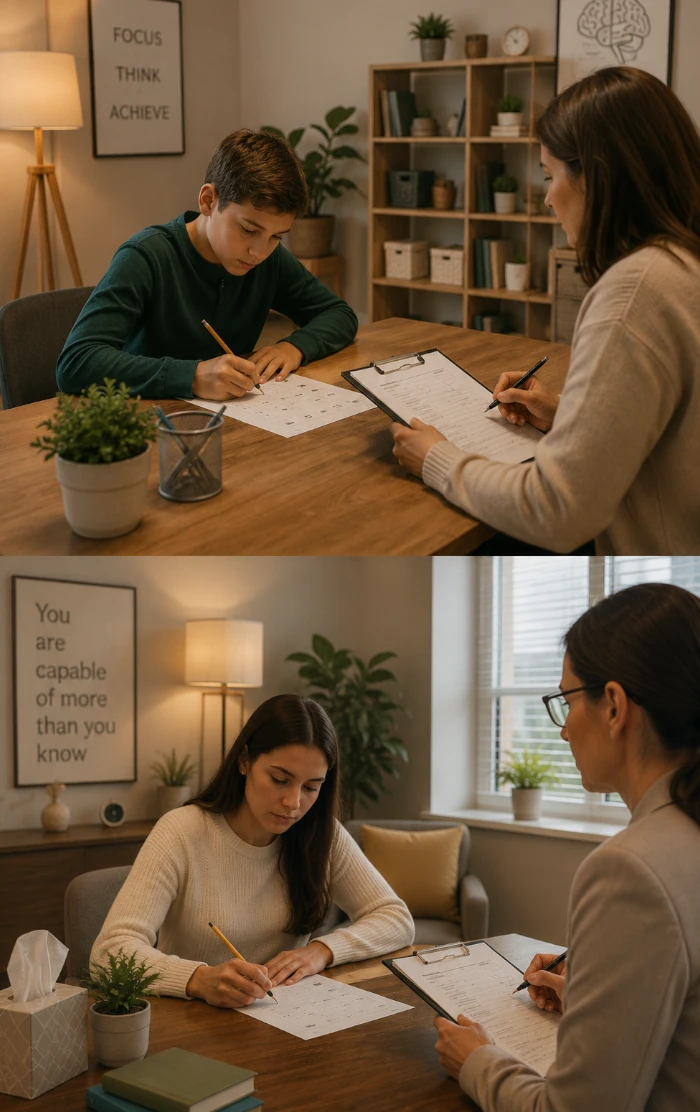
Professional IQ testing in Pittsburgh – whether you need an assessment for school, employment, gifted program eligibility, or personal insight, we connect you with licensed psychologists in the Pittsburgh area.
Last Updated: September 2026
Child IQ Testing
WISC-V & Stanford-Binet for ages 6–16. Gifted identification, learning profiles.
Adult IQ Testing
WAIS-IV & WAIS-5 available. Comprehensive adult cognitive assessments. Clinical & occupational.
WISC-V Test
Wechsler Intelligence Scale for Children® Fifth Edition – the gold standard for child IQ testing.
WAIS-IV & WAIS-5 Tests
Wechsler Adult Intelligence Scale® – Fourth Edition (WAIS-IV) and Fifth Edition (WAIS-5) available for adult IQ testing.
Gifted Testing
Identify giftedness for school placement, enrichment, and talent programs using WISC-V or Stanford-Binet.
Stanford-Binet 5
Stanford-Binet Intelligence Scales Fifth Edition – comprehensive cognitive assessment for all ages.
Mensa Testing
Mensa admission testing and preparation for the high-IQ society. Accepts WAIS-IV, WAIS-5, and Stanford-Binet 5 scores.
Full Evaluation
Combined assessment with detailed report and recommendations. Includes WISC-V, WAIS-IV, WAIS-5, or Stanford-Binet 5 as appropriate.
IQ Testing in Pittsburgh: city context
Pittsburgh is the center of a seven-county southwestern Pennsylvania region built around health care, higher education, advanced manufacturing, finance, energy, robotics, artificial intelligence, life sciences, and public-sector institutions. The U.S. Census Bureau estimated 307,632 residents in 2025, up 1.5% from the 2020 estimates base, across approximately 55.38 square miles of land.
The local assessment ecosystem includes licensed private psychologists, Pittsburgh Public Schools, the Pittsburgh Gifted Center, the University of Pittsburgh, Carnegie Mellon University, UPMC, UPMC Children's Hospital of Pittsburgh, Allegheny Health Network, VA Pittsburgh Healthcare System, Western Pennsylvania Mensa, and specialty practices throughout Allegheny County.
Gender, age and demographic statistics
Current Census estimates describe Pittsburgh's population but do not establish separate local IQ averages by gender, race, ethnicity, neighborhood, or income:
- Female population: 51.3%.
- Residents under age 18: 14.6%.
- Residents age 65 and older: 15.6%.
- White alone: 62.7%.
- Black or African American alone: 22.3%.
- American Indian and Alaska Native alone: 0.2%.
- Asian alone: 6.2%.
- Two or more races: 6.8%.
- Hispanic or Latino: 4.5%; Hispanic origin may overlap with racial categories.
- Foreign-born residents: 9.5% in 2020–2024 estimates.
- Language other than English at home: 12.5% of residents age five and older.
- Education: 94.4% of adults age 25 and older are high-school graduates or higher, and 49.1% hold a bachelor's degree or higher.
- Labor-force participation: 64.3% overall and 62.7% among women age 16 and older.
- Clinical interpretation: Examiners use age-based national norms and consider education, language, culture, disability, medical history, attention, mood, sleep, and testing conditions rather than inferring ability from demographic identity.
What is professional IQ testing?
Intelligence quotient (IQ) testing is a standardized method to measure human cognitive abilities and intellectual potential. Professional IQ tests are administered by licensed psychologists in a controlled environment to ensure accuracy and reliability. Unlike online quizzes, clinical assessments provide a full-scale IQ score along with detailed breakdowns of verbal comprehension, perceptual reasoning, working memory, and processing speed.
In Pittsburgh, IQ testing is commonly used for gifted program admission, learning disability identification, career guidance, neuropsychological evaluation, and personal development. The results are presented in a comprehensive report that includes normative comparisons, strengths and weaknesses, and actionable recommendations.
Who should get tested?
IQ testing can benefit children, adolescents, and adults in various situations:
A brief online IQ test can help Pittsburgh residents get acquainted with common question formats, but a qualified examiner should handle any assessment intended for school, work, or healthcare decisions.
- Children: Parents often seek testing for school readiness, gifted placement, or to understand learning challenges.
- Adults: Many adults take IQ tests for career advancement, graduate school applications, or personal curiosity.
- Mensa candidates: High-IQ societies require official test scores for membership.
- Clinical referrals: Psychologists may recommend testing as part of a broader neuropsychological evaluation.
Types of IQ tests
We offer the most recognized and scientifically validated intelligence tests in the field:
- WISC-V (Wechsler Intelligence Scale for Children® – Fifth Edition): The gold standard for children aged 6:0–16:11. It provides a Full-Scale IQ and five primary index scores.
- WAIS-IV (Wechsler Adult Intelligence Scale® – Fourth Edition): The most widely used adult IQ test for ages 16–90. It measures cognitive functioning across four domains.
- Stanford-Binet Intelligence Scales – Fifth Edition: A comprehensive assessment for ages 2–85, often used for gifted identification and clinical evaluations.
- Gifted Testing: Often includes the WISC-V or Stanford-Binet, plus additional creativity and achievement measures.
- Mensa Testing: We provide official Mensa admission testing and preparation materials.
How the testing process works
- Initial consultation: Brief phone or video call to discuss your needs and match you with the right psychologist.
- Testing session: In-person or remote testing (depending on the test) with a licensed psychologist. Most sessions last 1–2 hours.
- Scoring and interpretation: The psychologist scores the test and interprets the results in the context of your background and goals.
- Feedback session: A detailed review of your results, including strengths, weaknesses, and practical recommendations.
- Comprehensive report: You receive a written report with all scores, normative comparisons, and actionable next steps.
How much does IQ testing cost in Pittsburgh?
Fees vary by test, examiner experience, report depth, and purpose. A focused IQ assessment may cost several hundred dollars, while a full psychoeducational, ADHD, autism, forensic, or neuropsychological evaluation can cost substantially more because it includes interviews, records, multiple instruments, scoring, interpretation, and a detailed report.
Insurance may cover medically necessary evaluation components but often does not cover testing requested only for gifted admission, Mensa, career planning, or personal curiosity. Confirm authorization, deductible, network status, report fees, cancellation rules, and payment policies before scheduling.
Pittsburgh's Intellectual History & Legacy
- Industrial engineering: Pittsburgh's steel, glass, electrical, rail, bridge, and manufacturing history produced major advances in applied science, management, materials, and infrastructure.
- Carnegie institutions: Carnegie Mellon University, Carnegie Museums, Carnegie Library of Pittsburgh, and Carnegie Science Center connect education, research, arts, and public learning.
- University research: The University of Pittsburgh and Carnegie Mellon support medicine, neuroscience, psychology, engineering, computing, robotics, artificial intelligence, public policy, business, and the humanities.
- Medical innovation: UPMC, Pitt's health-sciences schools, Allegheny Health Network, and UPMC Children's Hospital contribute transplantation, rehabilitation, neuroscience, pediatrics, and clinical research.
- Robotics and autonomy: The region is internationally associated with robotics, autonomous systems, computer science, machine learning, and advanced manufacturing.
- Libraries and culture: Museums, libraries, theaters, orchestras, historical organizations, and neighborhood arts groups provide broad enrichment opportunities.
- Economic reinvention: The shift from heavy industry toward education, medicine, technology, finance, and research shapes modern career and assessment needs.
Top Employers in Pittsburgh Requiring Cognitive Skills
- UPMC and University of Pittsburgh: Medicine, research, nursing, rehabilitation, data, administration, education, and clinical specialties.
- Allegheny Health Network and Highmark: Health care, insurance, analytics, information systems, and clinical operations.
- Carnegie Mellon University: Computer science, robotics, engineering, design, policy, business, research, and education.
- PNC Financial Services and BNY: Banking, risk, compliance, cybersecurity, analytics, operations, and technology.
- PPG and advanced manufacturers: Materials science, chemistry, engineering, production, quality, and supply-chain roles.
- Technology and autonomy companies: Robotics, artificial intelligence, software, cybersecurity, mobility, and product-development employers recruit across the region.
- Public agencies and nonprofits: City and county government, schools, authorities, foundations, and social-service organizations require analytical, communication, and leadership skills.
Pittsburgh IQ Testing by City Area
- Downtown and the Strip District: Central access for office workers, government employees, visitors, and people using transit or intercity rail.
- Oakland: University, hospital, research, graduate-student, medical, and academic communities.
- Shadyside, Squirrel Hill, Point Breeze, and East Liberty: Dense residential, school, university, and professional-service areas.
- Lawrenceville, Bloomfield, Garfield, and Friendship: Medical, technology, arts, and neighborhood business corridors.
- North Side and North Shore: Residential communities, hospitals, cultural institutions, sports venues, and transit connections.
- South Side, Mount Washington, Brookline, and Carrick: Hillside and river communities with varied transit, parking, and school-access considerations.
- Allegheny County suburbs: Families and adults also travel from Mt. Lebanon, Upper St. Clair, Bethel Park, Monroeville, Penn Hills, Fox Chapel, Ross, McCandless, Robinson, and other communities; requirements vary by school district and institution.
Pittsburgh Universities and Research Institutions
- University of Pittsburgh: The Pittsburgh campus reported 31,237 students in fall 2025 and supports graduate and professional education in medicine, psychology, public health, education, engineering, law, business, social work, computing, and the sciences.
- Carnegie Mellon University: Internationally recognized programs in computer science, artificial intelligence, robotics, engineering, design, business, public policy, drama, music, and the humanities.
- Duquesne University: Graduate and professional programs in psychology, education, health sciences, pharmacy, law, business, music, and liberal arts.
- Point Park, Carlow, Chatham, and Robert Morris: Additional pathways in business, education, psychology-related fields, health care, communications, arts, technology, and leadership.
- Community College of Allegheny County: Transfer, health, technical, and workforce programs for traditional and returning students.
- Research ecosystem: UPMC, Pitt, Carnegie Mellon, the Pittsburgh Supercomputing Center, robotics institutes, medical centers, foundations, and corporate laboratories expand research and internship opportunities.
Pittsburgh Economic Context
- Median household income: $65,742 in 2020–2024 Census estimates.
- Per-capita income: $45,385.
- Residents in poverty: 20.1%.
- Bachelor's degree or higher: 49.1% of adults age 25 and older.
- Mean travel time to work: 22.7 minutes, although bridge, tunnel, university, and suburban commuting patterns can create longer trips.
- Health and social-assistance activity: Census business data report approximately $10.71 billion in 2022 receipts/revenue within the city.
- Transportation and warehousing: Approximately $1.08 billion in 2022 receipts/revenue.
- Retail sales: Approximately $42.34 billion in 2022; this figure should be interpreted using Census business-geography definitions.
- Accommodation and food services: Approximately $1.90 billion in 2022 sales.
- Regional strengths: Health care, universities, robotics and artificial intelligence, finance, advanced manufacturing, energy, life sciences, software, education, government, nonprofits, construction, logistics, tourism, arts, and professional services.
Pittsburgh School District Data
- Pittsburgh Public Schools: The largest district in Allegheny County and second largest in Pennsylvania, serving PreK–12 students through neighborhood, magnet, specialized, and career pathways.
- Gifted identification: Pennsylvania treats gifted education under Chapter 16. PPS uses psychological evaluation and multiple criteria, not an IQ score alone, and develops a Gifted Written Report and GIEP when eligibility and need are established.
- Pittsburgh Gifted Center: Eligible K–8 students with GIEPs generally attend one day per week for accelerated and enriched courses while receiving support at their home schools.
- High-school advanced study: Centers for Advanced Study, Advanced Placement, International Baccalaureate, magnet programs, dual enrollment, and specialized schools provide different pathways.
- Nearby districts: Mt. Lebanon, Upper St. Clair, North Allegheny, Fox Chapel, Woodland Hills, Penn Hills, and other districts have separate screening, evaluation, service, and outside-report policies.
- Private and charter schools: Admission and placement policies vary; families should confirm accepted tests, examiner credentials, report age, deadlines, and whether cognitive testing is actually required.
Local Testing Centers and Psychologists
- UPMC adult neuropsychology: Hospital and outpatient services evaluate cognitive changes associated with neurologic conditions, injury, illness, rehabilitation, and aging.
- UPMC Children's Hospital: Pediatric neuropsychology in Lawrenceville evaluates children and adolescents with medical, developmental, neurologic, and learning concerns.
- Allegheny Health Network: Behavioral-health and neuropsychology services include outpatient assessment for cognitive and emotional concerns.
- VA Pittsburgh Healthcare System: Eligible veterans may access neuropsychology and related specialty services through VA referral pathways.
- Private psychologists: Practices may offer IQ, gifted, ADHD, autism, learning-disability, disability, career, forensic, and psychoeducational evaluations.
- Credential verification: Confirm Pennsylvania licensure, specialty, test edition, report scope, language competence, receiving-institution requirements, fees, and turnaround time before scheduling.
Pittsburgh Events and Conferences
- Pitt and Carnegie Mellon: Public lectures, research symposia, graduate-program events, career fairs, engineering demonstrations, arts performances, and continuing education occur throughout the year.
- Carnegie Science Center and museums: Science, technology, history, art, and family learning programs provide enrichment across age groups.
- Robotics and technology community: Conferences, meetups, startup events, hackathons, and industry programs reflect the region's computing and autonomy strengths.
- Healthcare education: UPMC, AHN, universities, and professional associations offer medical, rehabilitation, behavioral-health, and neuroscience programs.
- Libraries and cultural organizations: Carnegie Library branches, museums, theaters, music organizations, and neighborhood groups support reading, arts, and civic learning.
- Western Pennsylvania Mensa: Social, discussion, testing, scholarship, gifted-youth, and special-interest activities depend on current volunteer schedules.
Transportation and Accessibility
- Major roads: I-376 connects Downtown, Oakland, the East End, the airport corridor, and Monroeville; I-279 serves the North Side and northern suburbs; I-579 links Downtown with I-279; I-79 carries north–south regional traffic; PA 28 follows the Allegheny River; and US-19, PA 51, PA 65, and the Parkway corridors serve major residential and employment areas.
- Public transit: Pittsburgh Regional Transit operates buses, the light-rail system, the East Busway and other busways, and the Monongahela Incline. Paratransit and shared-ride services have separate eligibility and reservation rules.
- Rail and intercity connections: Amtrak serves Pittsburgh Union Station with the Pennsylvanian toward Harrisburg, Philadelphia, and New York and the Capitol Limited corridor toward Washington and Chicago, subject to current schedules.
- Airport: Pittsburgh International Airport (PIT) is west of the city in Findlay and Moon townships. Travelers should allow extra time for the Parkway West, Fort Pitt Tunnel, security, and weather.
- Distance to other cities: Approximately 1.25 hours to Morgantown, 2 hours to Erie, 2 to 2.5 hours to Cleveland, about 3 hours to Columbus, and roughly 3.5 to 4.5 hours to Washington or Philadelphia, depending on traffic, weather, and destination.
- Walkability: Downtown, the Strip District, Oakland, Shadyside, Squirrel Hill, East Liberty, Lawrenceville, Bloomfield, the North Shore, and sections of the South Side support many short trips, although steep hills, bridges, stairs, and winter conditions affect accessibility.
- Bike infrastructure: The Three Rivers Heritage Trail, Great Allegheny Passage connection, Eliza Furnace Trail, riverfront trails, neighborhood bike lanes, and traffic-calmed routes form the core network. River crossings and hills make route planning important.
- Appointment planning: Allow extra time for bridge and tunnel congestion, sports and convention traffic, university events, construction, snow or ice, and limited parking in Oakland, Downtown, the North Shore, and dense neighborhood business districts.
Pittsburgh Weather and Seasonal Considerations
- Four-season climate: Summers are warm and humid, while winters are cold with snow, ice, and frequent freeze–thaw cycles.
- Hills and bridges: Snow, freezing rain, fog, and heavy rain can affect steep streets, bridges, ramps, tunnels, and neighborhood access.
- River flooding: Heavy rain and snowmelt can affect low-lying riverfront roads, trails, and parking areas.
- Construction season: Road, bridge, tunnel, utility, and university projects can significantly change travel times.
- Seasonal allergies: Tree, grass, mold, and ragweed exposure may affect sleep, breathing, medication use, and concentration.
- Testing readiness: Schedule when the examinee can arrive rested, fed, appropriately medicated, and without rushing from school, work, or a long regional drive.
Areas we serve
We support all areas of Pittsburgh.
Frequently Asked Questions
WISC-V is for children aged 6–16, while WAIS-IV is for adults aged 16–90. Each is normed for its specific age group.
Most IQ tests take between 60 and 90 minutes, plus a feedback session. Allow 2–3 hours total.
No, you can book directly with our psychologists. We serve both self-referred and professionally referred individuals.
Some professionally administered scores may be submitted as prior evidence, but acceptance is determined solely by American Mensa under its current rules.
Some plans cover cognitive assessments when there is a clinical indication. Check with your provider.
Get a good night's sleep, eat a healthy meal, and arrive relaxed. No specific preparation is needed.
You'll receive a comprehensive report with your scores and tailored recommendations.
Interviews and feedback may be available remotely, but many standardized cognitive tests require controlled administration and may need an in-person appointment. Contact us for details.