
IQ Testing in Overland Park
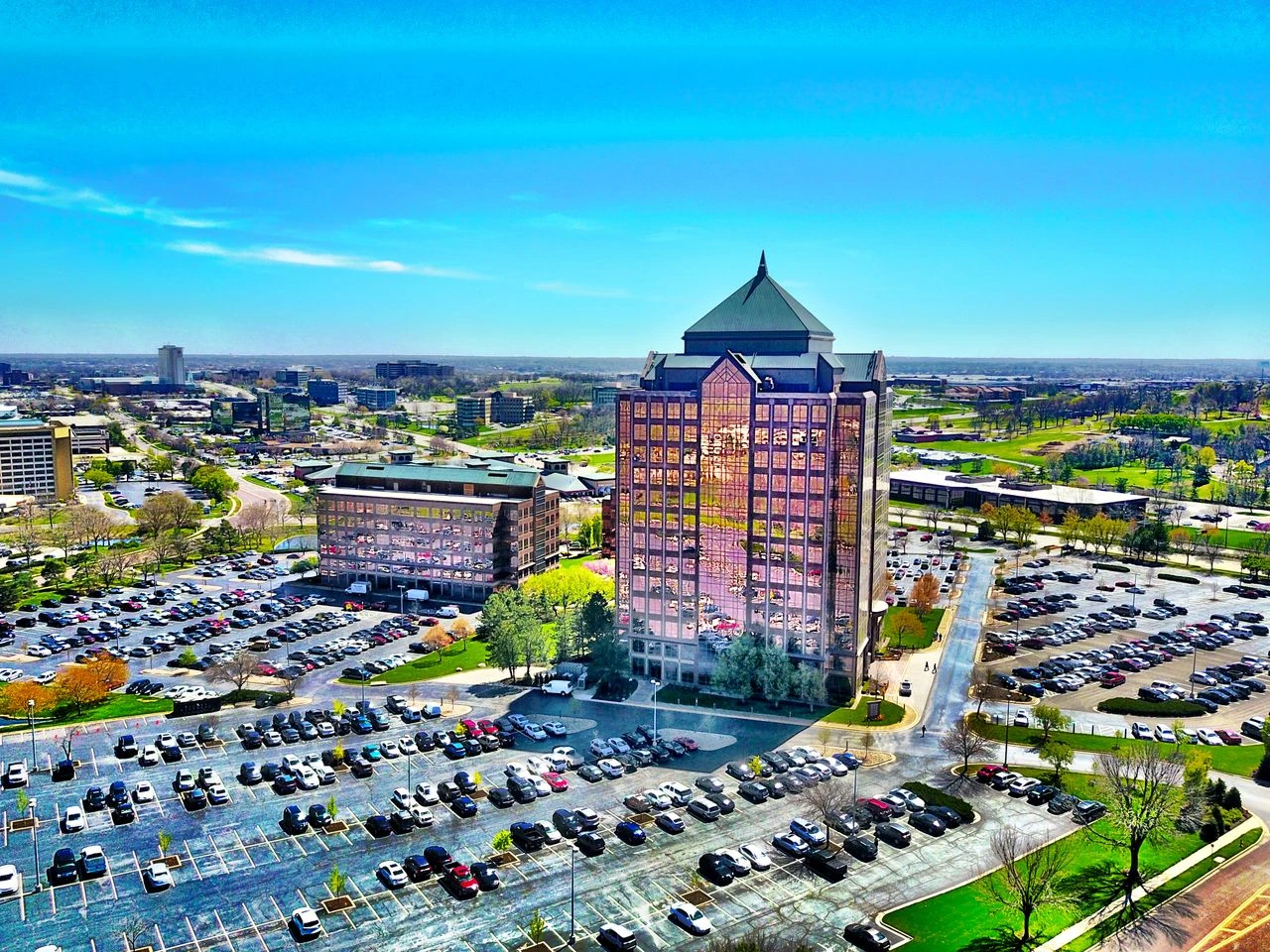
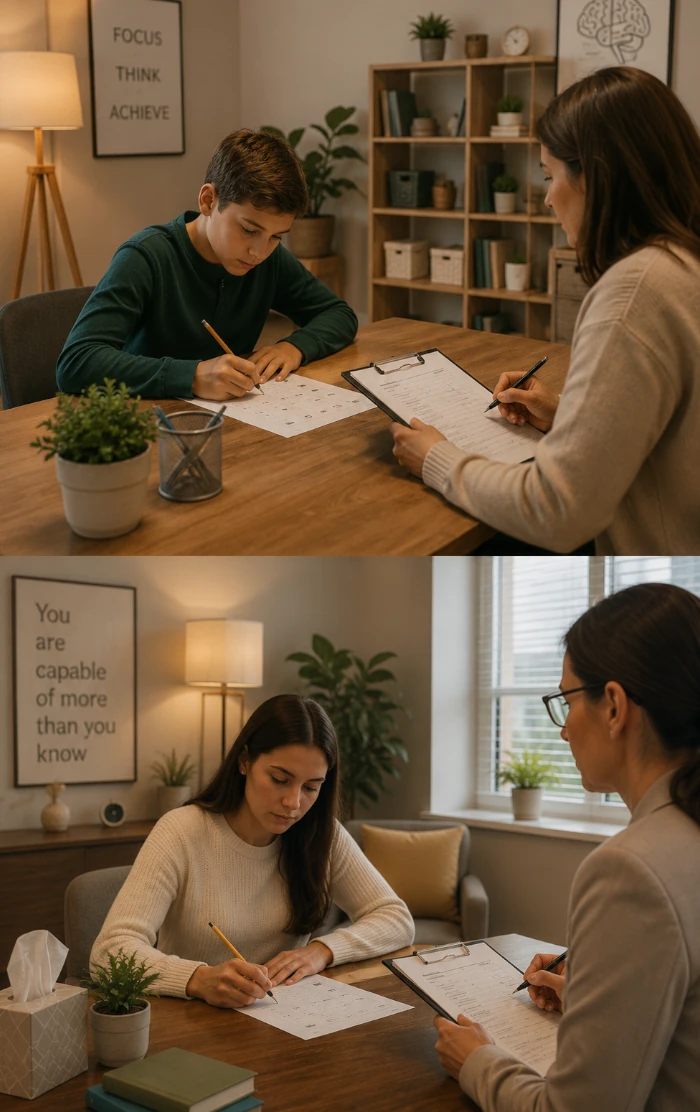
Professional IQ testing in Overland Park – whether you need an assessment for school, employment, gifted program eligibility, or personal insight, we connect you with licensed psychologists in the Overland Park area.
Last Updated: September 2026
Child IQ Testing
WISC-V & Stanford-Binet for ages 6–16. Gifted identification, learning profiles.
Adult IQ Testing
WAIS-IV & WAIS-5 available. Comprehensive adult cognitive assessments. Clinical & occupational.
WISC-V Test
Wechsler Intelligence Scale for Children® Fifth Edition – the gold standard for child IQ testing.
WAIS-IV & WAIS-5 Tests
Wechsler Adult Intelligence Scale® – Fourth Edition (WAIS-IV) and Fifth Edition (WAIS-5) available for adult IQ testing.
Gifted Testing
Identify giftedness for school placement, enrichment, and talent programs using WISC-V or Stanford-Binet.
Stanford-Binet 5
Stanford-Binet Intelligence Scales Fifth Edition – comprehensive cognitive assessment for all ages.
Mensa Testing
Mensa admission testing and preparation for the high-IQ society. Accepts WAIS-IV, WAIS-5, and Stanford-Binet 5 scores.
Full Evaluation
Combined assessment with detailed report and recommendations. Includes WISC-V, WAIS-IV, WAIS-5, or Stanford-Binet 5 as appropriate.
IQ Testing in Overland Park: city context
Gender, age and demographic statistics
Overland Park had an estimated 203,677 residents on July 1, 2025. Census 2020–2024 estimates report that 50.8% of residents are female, 21.9% are under age 18, and 16.5% are age 65 or older. The city is 75.8% White alone, 9.0% Asian alone, 5.0% Black alone, 0.3% American Indian or Alaska Native alone, 8.0% reporting two or more races, and 8.5% Hispanic or Latino; race and Hispanic-origin categories are not mutually exclusive.
These figures describe community context, not intelligence. IQ scores must be interpreted individually in light of age, education, disability, health, culture, language exposure, test validity, and the purpose of the evaluation. Overland Park is part of the Kansas City metropolitan area: 14.7% of residents age five and older speak a language other than English at home, and 11.7% are foreign-born. A valid evaluation may therefore require careful language-history review, culturally responsive interpretation, and clear limits on verbal-score conclusions.
- Female residents: 50.8%.
- Children and teens: 21.9% are under 18.
- Older adults: 16.5% are age 65 or older.
- Language context: 14.7% speak a language other than English at home.
- Educational context: 97.4% of adults age 25+ completed high school and 63.7% hold a bachelor’s degree or higher.
- Interpretation: No gender, racial, ethnic, immigration, income, school-district, or language group should be presumed to have a particular IQ profile.
What is professional IQ testing?
Intelligence quotient (IQ) testing is a standardized method to measure human cognitive abilities and intellectual potential. Professional IQ tests are administered by licensed psychologists in a controlled environment to ensure accuracy and reliability. Unlike online quizzes, clinical assessments provide a full-scale IQ score along with detailed breakdowns of verbal comprehension, perceptual reasoning, working memory, and processing speed.
In Overland Park, IQ testing is commonly used for gifted program admission, learning disability identification, career guidance, neuropsychological evaluation, and personal development. The results are presented in a comprehensive report that includes normative comparisons, strengths and weaknesses, and actionable recommendations.
Who should get tested?
IQ testing can benefit children, adolescents, and adults in various situations:
- Children: Parents often seek testing for school readiness, gifted placement, or to understand learning challenges.
- Adults: Many adults take IQ tests for career advancement, graduate school applications, or personal curiosity.
- Mensa candidates: High-IQ societies require official test scores for membership.
- Clinical referrals: Psychologists may recommend testing as part of a broader neuropsychological evaluation.
Types of IQ tests
We offer the most recognized and scientifically validated intelligence tests in the field:
- WISC-V (Wechsler Intelligence Scale for Children® – Fifth Edition): The gold standard for children aged 6:0–16:11. It provides a Full-Scale IQ and five primary index scores.
- WAIS-IV (Wechsler Adult Intelligence Scale® – Fourth Edition): The most widely used adult IQ test for ages 16–90. It measures cognitive functioning across four domains.
- Stanford-Binet Intelligence Scales – Fifth Edition: A comprehensive assessment for ages 2–85, often used for gifted identification and clinical evaluations.
- Gifted Testing: Often includes the WISC-V or Stanford-Binet, plus additional creativity and achievement measures.
- Mensa Testing: We provide official Mensa admission testing and preparation materials.
How the testing process works
- Initial consultation: Brief phone or video call to discuss your needs and match you with the right psychologist.
- Testing session: In-person or remote testing (depending on the test) with a licensed psychologist. Most sessions last 1–2 hours.
- Scoring and interpretation: The psychologist scores the test and interprets the results in the context of your background and goals.
- Feedback session: A detailed review of your results, including strengths, weaknesses, and practical recommendations.
- Comprehensive report: You receive a written report with all scores, normative comparisons, and actionable next steps.
How much does IQ testing cost in Overland Park?
Fees depend on the referral question, age, test battery, records, report length, and whether the service is a focused IQ assessment or a full psychoeducational or neuropsychological evaluation. A brief cognitive assessment may cost several hundred dollars; comprehensive evaluations can exceed $1,500–$3,000. Ask for a written estimate covering intake, testing, scoring, report, feedback, school or physician consultation, cancellation, and rush fees. Insurance is more likely to cover medically necessary diagnostic testing than gifted, school-admission, career, or personal-interest testing.
Overland Park's Intellectual History & Legacy
Overland Park grew from a planned suburban community into Kansas’s second-largest city and one of the principal employment and education centers of metropolitan Kansas City. Its intellectual and professional culture is shaped by Johnson County’s schools, Johnson County Community College, the University of Kansas Edwards Campus, major engineering and technology employers, healthcare systems, entrepreneurial organizations, and the city’s long investment in libraries, parks, arts, and workforce development.
- Education: JCCC and KU Edwards provide transfer, workforce, graduate, professional, and research pathways.
- Engineering and technology: Black & Veatch, health-technology firms, software companies, telecom operations, and professional services rely on analytical and collaborative skills.
- Schools: Blue Valley and Shawnee Mission offer gifted, honors, AP, career-ready, arts, STEM, and dual-credit opportunities.
- Regional access: UMKC, KU Medical Center, the University of Kansas in Lawrence, Kansas State University Olathe, and Kansas City research and cultural institutions broaden opportunities.
- Assessment principle: Civic achievement and education levels describe opportunity structures; they do not establish an individual’s intelligence.
Top Employers in Overland Park Requiring Cognitive Skills
Overland Park’s workforce spans professional services, engineering, healthcare, technology, finance, insurance, education, corporate operations, logistics, retail, and hospitality. Cognitive testing should not be used as a stand-alone employment screen, but a detailed profile may support career counseling and disability planning.
- Engineering and infrastructure: Black & Veatch and related firms use quantitative reasoning, design, systems thinking, writing, and project management.
- Technology and telecommunications: T-Mobile-area operations, software, data, cybersecurity, health technology, and managed services require rapid learning and problem solving.
- Healthcare: Overland Park Regional, Menorah, AdventHealth, Saint Luke’s, rehabilitation, behavioral health, and specialty clinics employ clinical, technical, administrative, and analytical staff.
- Finance and insurance: Corporate offices, banking, claims, underwriting, risk, benefits, and investment services rely on accuracy and judgment.
- Education: Blue Valley, Shawnee Mission, JCCC, KU Edwards, and private schools employ teachers, counselors, administrators, researchers, and support professionals.
- Retail, hospitality, and events: Oak Park Mall, Prairiefire, the convention center, hotels, restaurants, and youth-sports venues require customer service, logistics, scheduling, and leadership.
Career decisions should combine cognitive data with interests, values, credentials, personality, work samples, disability accommodations, ethics, teamwork, and realistic labor-market information.
A brief online IQ test can help Overland Park residents get acquainted with common question formats, but a qualified examiner should handle any assessment intended for school, work, or healthcare decisions.
Overland Park IQ Testing by City Area
- Downtown and northern Overland Park: Access via I-35, 75th Street, Metcalf, Antioch, and Shawnee Mission Parkway; older neighborhoods may offer shorter trips to Kansas City and nearby medical systems.
- College Boulevard and Corporate Woods: Central employment, education, healthcare, and office corridors near I-435, JCCC, and major professional services.
- 119th Street and southern commercial districts: Jordan Psychological Center, Menorah, Saint Luke’s South, Town Center-area destinations, and U.S. 69 access.
- Prairiefire and 135th Street: Mixed-use, recreation, museum, restaurant, and residential destinations with growing trail and roadway connections.
- Blue Valley and far southern Overland Park: School, residential, sports, and medical destinations along 151st, 159th, Metcalf, Antioch, and U.S. 69.
- Access principle: Choose a provider for qualifications, instrument, scope, language access, report quality, and fit—not repeated neighborhood keywords.
Overland Park Universities and Research Institutions
- Johnson County Community College: A 245-acre Overland Park campus supporting transfer, career, continuing education, arts, science, technology, and community programming.
- University of Kansas Edwards Campus: Career-focused undergraduate, graduate, professional, hybrid, and online programs, including the KU School of Professional Studies.
- Regional universities: UMKC, KU Medical Center, the University of Kansas in Lawrence, Kansas State University Olathe, Rockhurst, Avila, and other Kansas City institutions provide research and graduate pathways.
- School-district innovation: Blue Valley CAPS, Shawnee Mission signature programs, career academies, advanced courses, and industry partnerships connect secondary education with regional employers.
- Clinical training and research: Hospitals, universities, behavioral-health practices, and professional associations provide continuing education, internships, and referral networks.
Overland Park Economic Context
- Median household income: $104,834 in 2020–2024 Census estimates.
- Per-capita income: $60,602.
- Residents in poverty: 5.6%.
- Bachelor's degree or higher: 63.7% of adults age 25 and older.
- Mean travel time to work: 19.7 minutes, although U.S. 69 construction, I-435 congestion, school traffic, Kansas City events, and cross-metro commutes can take longer.
- Health and social-assistance activity: Census business data report approximately $4.07 billion in 2022 receipts/revenue within the city.
- Transportation and warehousing: Approximately $949.8 million in 2022 receipts/revenue.
- Retail sales: Approximately $4.17 billion in 2022.
- Accommodation and food services: Approximately $901.1 million in 2022 sales.
- Regional strengths: Professional and technical services, engineering, telecommunications, software and health technology, finance and insurance, healthcare, education, corporate operations, retail, hospitality, construction, logistics, and public services.
Economic and education statistics affect access to private evaluation, tutoring, transportation, insurance, and enrichment, but they do not determine intellectual potential. Reports should focus on the examinee’s direct performance, validity evidence, functional needs, and the decisions the assessment must support.
Overland Park Public Schools Data
Blue Valley gifted education
Much of southern Overland Park is served by Blue Valley Schools. Gifted education is provided through Kansas special-education procedures, with evaluation based on multiple sources rather than one private IQ score. Families should verify referral steps, prior interventions, consent, evaluation components, eligibility criteria, the individualized education program process, and current service delivery with the district.
Shawnee Mission SEEK services
Northern and central parts of Overland Park are served by the Shawnee Mission School District. Its gifted program is called SEEK—Students Exploring and Extending Knowledge. Services are offered K–12, and the district explains that identification begins with classroom evidence and multiple data sources before a formal special-education evaluation.
Kansas identification framework
Kansas treats giftedness as an exceptionality within special education. Eligibility is an educational decision made by a multidisciplinary team. Cognitive testing may contribute, but achievement, classroom performance, rate of learning, educational need, creativity, observation, and other data may also matter. A private report can inform the team but does not automatically create eligibility, an IEP, acceleration, or a specific placement.
Advanced, accelerated, and career-ready pathways
Overland Park students may access honors and Advanced Placement courses, advanced mathematics, world languages, performing arts, STEM, career and technical education, dual credit, Blue Valley CAPS, Shawnee Mission signature programs, research experiences, and subject-specific acceleration. Admission rules and prerequisites vary by school and year.
Private, independent, homeschool, and regional options
Families also investigate independent and faith-based schools, homeschool programs, Johnson County Community College youth and dual-enrollment opportunities, KU Edwards Campus programs, museums, libraries, robotics, debate, music, coding, and Kansas City-area enrichment. Each organization sets its own testing, score-age, examiner-credential, deadline, and admission rules.
Local Testing Centers and Psychologists
Local testing contact: Jordan Psychological Center, 6720 W. 121st Street, Suite 101, Overland Park, KS 66209, (913) 647-7990. The center’s official information describes psychological and psychoeducational assessment for children, adolescents, and adults. Its child and teen services explicitly include tests of intellectual abilities, gifted and intellectual testing, academic achievement, memory, learning, school readiness, school placement, ADHD, autism, and learning-disability questions. Confirm the exact instrument, age range, report purpose, wait time, fees, insurance, and recipient requirements before scheduling.
- Jordan Psychological Center: Comprehensive assessment across age groups, including cognitive, behavioral, personality, psychoeducational, and neuropsychological measures selected for the referral question.
- Responsive Centers: Overland Park psychological testing that may include cognitive/IQ, academic, ADHD, autism, and broader psychological assessment for children, teens, and adults.
- Armstrong Family Counseling: Its Overland Park clinic publicly lists IQ testing, cognitive testing, pediatric and adult ADHD testing, autism testing, and personality assessment.
- Hospital and neuropsychology routes: Overland Park Regional Medical Center, Menorah Medical Center, AdventHealth South Overland Park, Saint Luke’s South Hospital, KU Medical Center, and regional specialty practices may support medical, neurological, rehabilitation, or complex diagnostic referrals.
- School evaluations: Blue Valley, Shawnee Mission, and other responsible districts conduct evaluations under Kansas special-education procedures; public-school teams are not required to adopt a private score automatically.
- Selection checklist: Verify Kansas licensure, examiner training, age range, test edition, language capability, report recipient, accommodations, fees, insurance, turnaround, and whether the assessment meets Mensa, school, disability, legal, or workplace rules.
Overland Park Events and Conferences
Education and professional-development opportunities are available through JCCC, KU Edwards, Blue Valley, Shawnee Mission, the Overland Park Chamber, hospitals, libraries, the convention center, Museum at Prairiefire, the Johnson County Arts & Heritage Center, and Kansas City-area universities and professional organizations.
- Education and career events: College fairs, employer events, STEM showcases, career academies, continuing education, and university open houses.
- Research and healthcare: Public lectures, clinical conferences, professional workshops, and health-technology events.
- Gifted-family enrichment: Coding, robotics, debate, math, science, writing, music, arts, museums, libraries, and university youth programs.
- Major-event planning: Convention-center events, youth sports, holidays, Kansas City games, and U.S. 69 construction can affect parking and travel.
- Verification: Dates, fees, eligibility, and locations change; use the organizer’s current calendar.
Transportation and Accessibility
- Major roads: I-35 crosses the northern part of Overland Park; I-435 forms a major east–west and north–south metro connection; U.S. 69 is the city’s central north–south highway and is undergoing major capacity improvements. Key surface corridors include Metcalf Avenue, Antioch Road, Nall Avenue, Roe Avenue, Quivira Road, College Boulevard, 75th Street, 87th Street, 95th Street, 103rd Street, 119th Street, 135th Street, 151st Street, and 159th Street.
- Public transit: Eight RideKC routes serve Overland Park. Route 403 connects Johnson County Community College with the 75th Street corridor, while other routes link employment, shopping, education, and transfer points. Frequency, evening, and weekend service vary, so use current RideKC schedules for appointment planning.
- Paratransit and flexible mobility: Eligible riders may use ADA paratransit and Johnson County mobility services. Rideshare, taxi, employer shuttles, and private transportation are important because many parts of the city remain automobile-oriented.
- Airport: Kansas City International Airport (MCI) is the region’s primary commercial airport and is generally less than 45 minutes from Overland Park in normal traffic. Johnson County Executive Airport and New Century AirCenter serve general aviation and business travel.
- Distance to other cities: Downtown Kansas City, Missouri is roughly 12–18 miles away depending on origin; Lawrence about 40 miles; Topeka about 65–75 miles; St. Joseph about 75 miles; Wichita and Omaha about 180–200 miles; and St. Louis roughly 250 miles. Travel time varies with weather, construction, and metro traffic.
- Walkability: Downtown Overland Park and Prairiefire provide the strongest clusters of shops, restaurants, sidewalks, and destinations. Johnson County Community College, parts of College Boulevard, and selected mixed-use districts can also support short walking trips, while much of the city is suburban and car-oriented.
- Bike infrastructure: Overland Park reports approximately 163 miles of bicycle infrastructure, including about 61 miles of dedicated bike lanes, more than 800 miles of sidewalks, and an interconnected trail system. Indian Creek and Tomahawk Creek trails link parks, neighborhoods, schools, and regional Johnson County routes.
- Accessibility and testing-day planning: Confirm accessible parking, curb cuts, entrance routes, elevators, restrooms, sensory conditions, and break policies. Allow extra time during U.S. 69 and I-435 construction, winter weather, severe thunderstorms, major tournaments, and school arrival or dismissal periods.
Overland Park Weather and Seasonal Considerations
- Hot summers: Heat and humidity can affect hydration, sleep, headaches, medication tolerance, and stamina. Morning appointments and a well-cooled testing room may improve comfort.
- Severe thunderstorms: Spring and summer storms can bring lightning, hail, damaging wind, flash flooding, power interruptions, and rapidly changing driving conditions.
- Tornado risk: Watches and warnings should be taken seriously. Confirm the office’s shelter procedure and postpone travel when conditions are unsafe.
- Winter snow and ice: Freezing rain, black ice, wind chill, and plowed-snow delays can disrupt transit and make parking lots or sidewalks hazardous.
- Seasonal allergies: Tree, grass, ragweed, and mold exposure can affect sleep, attention, and medication use. Unusual symptoms should be documented.
- Testing principle: Acute illness, severe sleep loss, heat stress, storm anxiety, medication changes, or unsafe travel should be recorded and may justify postponement or cautious interpretation.
Areas we serve
We support all areas of Overland Park.
Frequently Asked Questions
WISC-V is for children aged 6–16, while WAIS-IV is for adults aged 16–90. Each is normed for its specific age group.
Most IQ tests take between 60 and 90 minutes, plus a feedback session. Allow 2–3 hours total.
No, you can book directly with our psychologists. We serve both self-referred and professionally referred individuals.
Some professionally administered scores may be submitted as prior evidence, but acceptance is determined solely by American Mensa under its current rules.
Some plans cover cognitive assessments when there is a clinical indication. Check with your provider.
Get a good night's sleep, eat a healthy meal, and arrive relaxed. No specific preparation is needed.
You'll receive a comprehensive report with your scores and tailored recommendations.
Interviews and feedback may be available remotely, but many standardized cognitive tests require controlled administration and may need an in-person appointment. Contact us for details.