
IQ Testing in North Las Vegas
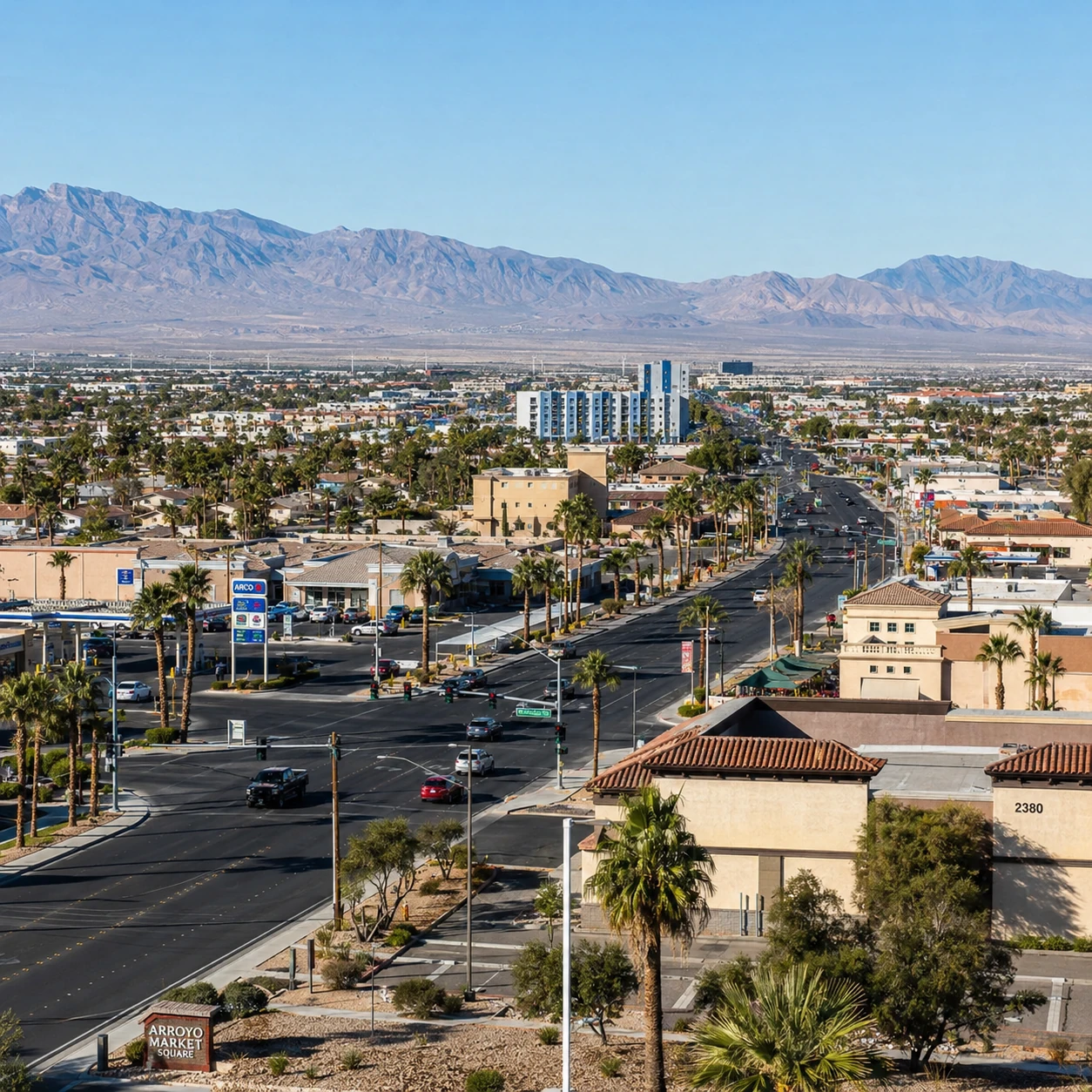

Professional IQ testing locally – whether you need an assessment for school, employment, gifted program eligibility, or personal insight, we connect you with licensed psychologists in the the city area.
Last Updated: September 2026
Child IQ Testing
WISC-V & Stanford-Binet for ages 6–16. Gifted identification, learning profiles.
Adult IQ Testing
WAIS-IV & WAIS-5 available. Comprehensive adult cognitive assessments. Clinical & occupational.
WISC-V Test
Wechsler Intelligence Scale for Children® Fifth Edition – the gold standard for child IQ testing.
WAIS-IV & WAIS-5 Tests
Wechsler Adult Intelligence Scale® – Fourth Edition (WAIS-IV) and Fifth Edition (WAIS-5) available for adult IQ testing.
Gifted Testing
Identify giftedness for school placement, enrichment, and talent programs using WISC-V or Stanford-Binet.
Stanford-Binet 5
Stanford-Binet Intelligence Scales Fifth Edition – comprehensive cognitive assessment for all ages.
Mensa Testing
Mensa qualification guidance and professionally administered testing that may be submitted as prior evidence, subject to American Mensa’s current rules.
Full Evaluation
Combined assessment with detailed report and recommendations. Includes WISC-V, WAIS-IV, WAIS-5, or Stanford-Binet 5 as appropriate.
IQ Testing in North Las Vegas: city context
the city is a separate incorporated city in the Las Vegas Valley and one of Nevada's fastest-growing communities. The U.S. Census Bureau estimated 296,653 residents in 2025, a 14.3% increase from the 2020 estimates base, across approximately 102 square miles of land. The city combines established neighborhoods, the Aliante and Tule Springs growth areas, the Apex industrial corridor, public institutions, military-adjacent employment, logistics, manufacturing, healthcare, construction, and service-sector work.
The local assessment environment is shaped by the Clark County School District, College of Southern Nevada's North Las Vegas campus, UNLV and other regional universities, the VA Southern Nevada Healthcare System, North Vista Hospital, University Medical Center, Cleveland Clinic Lou Ruvo Center for Brain Health, private psychologists, and specialty providers across the Las Vegas Valley.
Gender, age and demographic statistics
Current Census estimates describe a young, multilingual and diverse population. These figures provide cultural and service-planning context but do not establish average IQ scores for any gender, race, ethnicity, language group, or neighborhood:
- Female population: 50.8%.
- Residents under age 18: 25.5%.
- Residents age 65 or older: 12.1%.
- White alone: 31.3%.
- Black or African American alone: 21.3%.
- Asian alone: 7.2%.
- American Indian and Alaska Native alone: 1.8%.
- Native Hawaiian and Other Pacific Islander alone: 0.9%.
- Two or more races: 21.8%.
- Hispanic or Latino: 41.7%; Hispanic origin may overlap with racial categories.
- Foreign-born residents: 20.4%.
- Language other than English at home: 37.9% of residents age five and older.
- Education: 82.9% of adults age 25 and older are high-school graduates or higher, and 18.9% hold a bachelor's degree or higher.
- Clinical interpretation: Examiners consider education, language, culture, disability, medical history, attention, mood, sleep and testing conditions when interpreting scores.
What is professional IQ testing?
Intelligence quotient (IQ) testing is a standardized method to measure human cognitive abilities and intellectual potential. Professional IQ tests are administered by licensed psychologists in a controlled environment to ensure accuracy and reliability. Unlike online quizzes, clinical assessments provide a full-scale IQ score along with detailed breakdowns of verbal comprehension, perceptual reasoning, working memory, and processing speed.
In the city, IQ testing is commonly used for gifted program admission, learning disability identification, career guidance, neuropsychological evaluation, and personal development. The results are presented in a comprehensive report that includes normative comparisons, strengths and weaknesses, and actionable recommendations.
Who should get tested?
IQ testing can benefit children, adolescents, and adults in various situations:
- Children: Parents often seek testing for school readiness, gifted placement, or to understand learning challenges.
- Adults: Many adults take IQ tests for career advancement, graduate school applications, or personal curiosity.
- Mensa candidates: High-IQ societies require official test scores for membership.
- Clinical referrals: Psychologists may recommend testing as part of a broader neuropsychological evaluation.
Types of IQ tests
We offer the most recognized and scientifically validated intelligence tests in the field:
- WISC-V (Wechsler Intelligence Scale for Children® – Fifth Edition): The gold standard for children aged 6:0–16:11. It provides a Full-Scale IQ and five primary index scores.
- WAIS-IV (Wechsler Adult Intelligence Scale® – Fourth Edition): The most widely used adult IQ test for ages 16–90. It measures cognitive functioning across four domains.
- Stanford-Binet Intelligence Scales – Fifth Edition: A comprehensive assessment for ages 2–85, often used for gifted identification and clinical evaluations.
- Gifted Testing: Often includes the WISC-V or Stanford-Binet, plus additional creativity and achievement measures.
- Mensa Testing: We provide professionally administered cognitive testing and Mensa qualification guidance; American Mensa alone determines whether evidence is accepted.
How the testing process works
- Initial consultation: Brief phone or video call to discuss your needs and match you with the right psychologist.
- Testing session: In-person or remote testing (depending on the test) with a licensed psychologist. Most sessions last 1–2 hours.
- Scoring and interpretation: The psychologist scores the test and interprets the results in the context of your background and goals.
- Feedback session: A detailed review of your results, including strengths, weaknesses, and practical recommendations.
- Comprehensive report: You receive a written report with all scores, normative comparisons, and actionable next steps.
How much does IQ testing cost in North Las Vegas?
The cost of IQ testing locally varies depending on the type of test, the psychologist's experience, and whether a comprehensive report is required. Typical fees range from $200 to $1,200 for a full assessment. Gifted testing and Mensa admission testing are often at the lower end, while neuropsychological evaluations may be higher.
Some insurance plans cover IQ testing when it's deemed medically necessary. We recommend checking with your provider for details. We also offer affordable payment plans and sliding-scale options for qualifying individuals.
Before arranging a formal evaluation in North Las Vegas, adults and families can try an online IQ test to become familiar with common reasoning tasks, keeping in mind that it cannot replace professional assessment.
North Las Vegas's Intellectual History & Legacy
- Separate city identity: the city was incorporated in 1946 and has its own municipal government, police, fire, libraries and development systems distinct from the City of Las Vegas.
- Desert growth: Rapid population and housing growth has transformed a compact industrial community into one of Nevada's largest cities.
- Military and aviation context: Nearby Nellis Air Force Base, North Las Vegas Airport and regional aerospace activity influence technical, security and logistics careers.
- Industrial development: Apex Industrial Park and southern industrial corridors support distribution, advanced manufacturing, food production and large-scale infrastructure.
- Education: CCSD, CSN's North Las Vegas campus, libraries, magnet programs and regional universities create academic and workforce pathways.
- Healthcare: North Vista Hospital, the VA medical center and valley-wide specialty systems support clinical and allied-health employment.
- Cultural diversity: A large Hispanic or Latino population, substantial Black and Asian communities, Pacific Islander residents and multilingual households shape educational and clinical practice.
- Regional innovation: Southern Nevada's work in water management, desert planning, hospitality technology, logistics, renewable energy and urban growth creates demand for analytical skills.
Top Employers in North Las Vegas Requiring Cognitive Skills
- City of North Las Vegas: Public administration, planning, utilities, engineering, public safety, finance, libraries and information technology.
- Clark County School District: Education, psychology, special education, gifted services, administration, transportation and operations.
- VA Southern Nevada Healthcare System: Medicine, nursing, psychology, neuropsychology, rehabilitation, research and administration at the the city medical center.
- College of Southern Nevada: Teaching, technical education, student services, laboratories, workforce development and administration.
- Logistics and distribution: Amazon, Kroger, footwear, building-products and other distribution operations require analytics, automation, inventory, safety and management skills.
- Manufacturing: Food production, vehicle and bus manufacturing, packaging, printing, beauty products and advanced industrial operations.
- Apex Industrial Park: Expanding logistics, utilities, construction, engineering and light-manufacturing activity.
- Healthcare systems: North Vista Hospital and valley-wide providers employ clinicians, technicians, analysts and administrators.
- Construction and infrastructure: Residential growth, industrial sites, utilities, transportation and water systems support engineering and skilled trades.
- Regional employers: Nellis Air Force Base, UNLV, Clark County, hospitality companies and technology firms broaden the local labor market.
North Las Vegas IQ Testing by Neighborhood
Testing decisions should be based on examiner qualifications, purpose, accessibility and report requirements—not on a neighborhood label. These geographic distinctions are useful primarily for travel planning:
- Downtown and Civic Center: Central access to City Hall, municipal services, libraries and established commercial corridors; parking and bus access vary by office.
- North 5th Street and Las Vegas Boulevard North: Older mixed-use corridors with direct routes toward downtown Las Vegas and RTC service.
- Cheyenne and Craig Road corridors: Major east–west commercial and healthcare routes; peak traffic can be substantial.
- Aliante: Master-planned residential and commercial area in the northwest with access to the 215 Beltway and North 5th Street.
- Tule Springs and Deer Springs: Fast-growing northern areas where travel distance to central or southwest-valley specialists may be significant.
- Sunrise Manor and northeast valley: Nearby unincorporated communities may use many of the same schools, clinics and transportation routes but are not within North Las Vegas city limits.
- Apex and industrial northeast: Logistics and manufacturing districts require careful appointment planning because destinations are dispersed and transit options may be limited.
- Citywide service: We support all areas of the city.
North Las Vegas Universities and Research Institutions
- College of Southern Nevada—the city Campus: Provides transfer education, workforce programs, technical training, adult education and student services; CSN lists more than 189 programs of study systemwide.
- CSN High School: The North Las Vegas campus hosts a dual-credit high-school program through the CCSD-CSN partnership.
- University of Nevada, Las Vegas: A major research university offering more than 190 graduate degrees and certificates and serving more than 5,000 graduate and professional students.
- Nevada State University: Located in Henderson, it expands regional pathways in education, nursing, business, liberal arts and sciences.
- Touro University Nevada: Offers health-professions and graduate education in Henderson.
- Roseman University of Health Sciences: Provides regional programs in pharmacy, nursing, dentistry and health-related fields.
- Research and industry links: Southern Nevada research spans hospitality, public health, engineering, water, energy, education, psychology, neuroscience, gaming technology, transportation and urban growth.
- Research distinction: Participation in a study may produce research data but does not necessarily provide a clinical diagnosis, school-ready report or accommodation documentation.
North Las Vegas Economic Context
- Median household income: $79,542 in 2020–2024 Census estimates.
- Per-capita income: $31,935.
- Residents in poverty: 12.1%.
- Bachelor's degree or higher: 18.9% of adults age 25 and older.
- Mean travel time to work: 26.7 minutes, although Strip traffic, freeway incidents, construction and cross-valley trips can make travel substantially longer.
- Accommodation and food services: Approximately $794.93 million in 2022 sales.
- Health care and social assistance: Approximately $1.48 billion in 2022 receipts/revenue.
- Transportation and warehousing: Approximately $704.95 million in 2022 receipts/revenue.
- Retail sales: Approximately $3.80 billion in 2022.
- Regional strengths: Logistics and distribution, manufacturing, construction, defense-related activity, government, healthcare, education, retail, hospitality, food production, technology, renewable-energy support, and the Apex Industrial Park.
North Las Vegas School District Data
- Clark County School District: CCSD serves the city and the wider county; school assignment, magnet admission, gifted eligibility and transportation follow district rules rather than city boundaries alone.
- Universal screening: CCSD Gifted Education Services reports universal screening of all full-time second-grade students.
- GATE: Identified students in grades 3–5 receive at least 150 minutes per week of Gifted and Talented Education services under the district's current model.
- Highly gifted services: CCSD provides services for students identified as highly gifted beginning at age seven.
- TAGS: Title I Alternative Gifted Services provide at least 50 minutes per week for eligible students in participating Title I schools.
- Magnet programs: CCSD magnet and career-and-technical programs use separate applications, qualification rules where applicable, and a computerized lottery for available seats.
- Northeast Career and Technical Academy: Located on West Dorrell Lane locally, the academy offers specialized career and technical pathways through the district magnet process.
- Private reports: A privately administered WISC-V, Stanford-Binet or psychoeducational evaluation may provide useful evidence but does not automatically determine CCSD gifted eligibility, magnet admission, grade acceleration or placement.
Local Testing Centers and Psychologists
- Private psychologists: Practices across the city and the Las Vegas Valley may offer IQ, gifted, ADHD, autism, learning-disability, disability and forensic evaluations.
- Licensure: Verify psychologists through the Nevada State Board of Psychological Examiners and confirm their experience with the requested age group and referral question.
- North Vista Hospital: Provides hospital and behavioral-health services; hospital care is not automatically equivalent to a private psychoeducational assessment.
- North Las Vegas VA Medical Center: Eligible veterans may access behavioral-health and neuropsychology-related services through VA referral pathways.
- Cleveland Clinic Lou Ruvo Center: Las Vegas specialty center for brain health, neurology and neuropsychology, especially for cognitive and neurological disorders.
- University Medical Center and UNLV Health: Regional medical and specialty resources; referral and service scope vary.
- School evaluations: CCSD evaluations answer educational questions and follow district procedures; families may also seek independent evaluations at their own expense.
- Before scheduling: Confirm test version, examiner credentials, report format, turnaround time, language access, cost and whether the receiving organization will accept the results.
North Las Vegas Events and Conferences
- CCSD information events: Gifted, magnet, career-and-technical and school-choice events provide current application and program guidance.
- UNLV lectures and conferences: Public events cover science, health, education, business, policy, technology and the arts.
- CSN workshops: Workforce, transfer, technical and student-success programming is available across the college system.
- Southern Nevada Mensa: Local events may include games, discussions, meals and special-interest activities; schedules depend on volunteers.
- Library programming: North Las Vegas Library District offers literacy, tutoring, technology, youth and adult programs.
- Healthcare education: VA, Cleveland Clinic, hospitals and nonprofits offer public education on brain health, disability and caregiving.
- Technology and industry: Logistics, manufacturing, construction, hospitality technology and entrepreneurship events reflect the regional economy.
- Current schedules: Verify dates, eligibility, registration and venue details with the organizer.
Transportation and Accessibility
- Major roads: I-15 is the principal north–south freeway; the Clark County 215 Beltway serves the northern valley; US 95/I-11 is accessible to the west; Las Vegas Boulevard North, Lake Mead Boulevard, Cheyenne Avenue, Craig Road, Ann Road, Camino Al Norte, North 5th Street and Simmons Street are major local corridors.
- Public transit: RTC Southern Nevada operates fixed-route buses through the city and the wider valley, including service along Las Vegas Boulevard North, Lake Mead, Cheyenne, Craig, Losee, North 5th and nearby transfer corridors; paratransit is available under current eligibility rules.
- Local airport: North Las Vegas Airport is a general-aviation and reliever airport on the west side of the city and is not the region's primary scheduled-airline airport.
- Commercial airport: Harry Reid International Airport serves the Las Vegas Valley with extensive domestic and international flights; travel time from the city varies greatly with freeway and resort-corridor traffic.
- Distance to nearby cities: Downtown Las Vegas is immediately south; Henderson is roughly 25–35 minutes; Boulder City about 40–55 minutes; Mesquite about 75–90 minutes; St. George, Utah about 1.5–2 hours; and Los Angeles or Phoenix generally require about 4–5 hours under normal conditions.
- Walkability: Downtown North Las Vegas, the Civic Center area, portions of North 5th Street and mixed-use nodes near established commercial corridors are the most practical for short walks; most residential and industrial areas remain automobile-oriented.
- Bike infrastructure: The city maintains pedestrian and bicycle plans and connects to regional routes, but heat exposure, wide arterials and discontinuous facilities require careful route selection.
- Trail network: Approximately 15 miles of multi-use trail are available along the Lower and Upper Las Vegas Wash regional trail system, with connections to parks and the broader valley network.
- Appointment planning: Allow extra time for I-15 congestion, school-zone traffic, major events, construction, extreme heat and monsoon-related flooding.
- Accessibility: Confirm parking, elevator access, sensory accommodations, interpreter needs and paratransit timing before a multi-hour evaluation.
North Las Vegas Weather and Seasonal Considerations
- Extreme summer heat: Daytime temperatures can exceed 110°F; schedule testing early, hydrate and avoid leaving testing materials or children in parked vehicles.
- Air conditioning: Strong indoor cooling can feel cold after outdoor heat; layered clothing may improve comfort during long sessions.
- Monsoon storms: Summer thunderstorms can produce sudden downpours, lightning, dust and street flooding, especially near washes and low crossings.
- Winter: Days are generally mild, but mornings can be near freezing and mountain passes may have winter conditions.
- Wind and dust: High winds and blowing dust can affect driving, allergies and attention.
- Air quality: Ozone, wildfire smoke and dust may affect people with respiratory or neurological sensitivities.
- Event traffic: Major conventions, sports and resort events can affect I-15 and airport travel even when the appointment is outside the Strip corridor.
- Rescheduling: Contact the examiner when illness, sleep disruption, heat exposure or hazardous travel could make results less representative.
Areas we serve
We support clients throughout the city. Recommendations are based on referral purpose, age, examiner qualifications, accessibility, language needs, and the requirements of the school, employer, agency, court, or testing organization receiving the report.
- Children and families: Gifted identification, school planning, learning concerns, ADHD, autism, and twice-exceptional questions.
- Adults: Career planning, graduate study, Mensa evidence, diagnostic clarification, disability documentation, and personal insight.
- Regional access: Clark County and nearby communities may use the city providers while confirming travel, licensure, and receiving-agency requirements.
- Citywide statement: We support all areas of the city.
Frequently Asked Questions
WISC-V is for children aged 6–16, while WAIS-IV is for adults aged 16–90. Each is normed for its specific age group.
Most IQ tests take between 60 and 90 minutes, plus a feedback session. Allow 2–3 hours total.
No, you can book directly with our psychologists. We serve both self-referred and professionally referred individuals.
Some professionally administered scores may be submitted as prior evidence, but acceptance is determined solely by American Mensa under its current rules.
Some plans cover cognitive assessments when there is a clinical indication. Check with your provider.
Get a good night's sleep, eat a healthy meal, and arrive relaxed. No specific preparation is needed.
You'll receive a comprehensive report with your scores and tailored recommendations.
Interviews and feedback may be available remotely, but many standardized cognitive tests require controlled administration and may need an in-person appointment. Contact us for details.