
IQ Testing in Norfolk

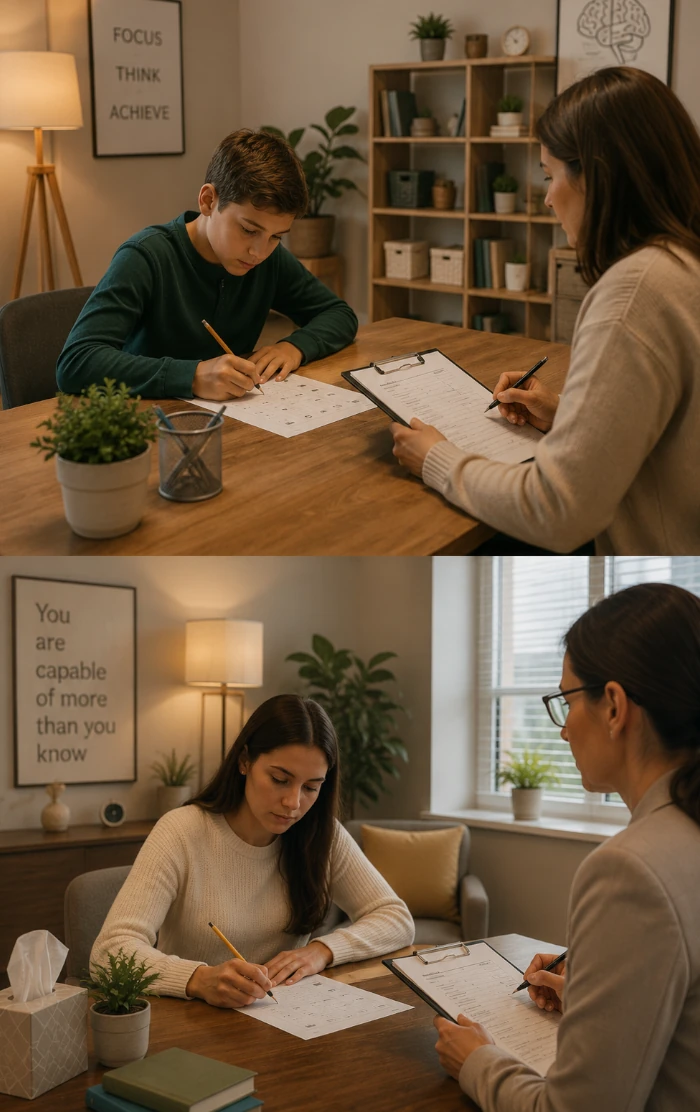
Professional IQ testing in Norfolk – whether you need an assessment for school, employment, gifted program eligibility, or personal insight, we connect you with licensed psychologists in the Norfolk area.
Last Updated: September 2026
Child IQ Testing
WISC-V & Stanford-Binet for ages 6–16. Gifted identification, learning profiles.
Adult IQ Testing
WAIS-IV & WAIS-5 available. Comprehensive adult cognitive assessments. Clinical & occupational.
WISC-V Test
Wechsler Intelligence Scale for Children® Fifth Edition – the gold standard for child IQ testing.
WAIS-IV & WAIS-5 Tests
Wechsler Adult Intelligence Scale® – Fourth Edition (WAIS-IV) and Fifth Edition (WAIS-5) available for adult IQ testing.
Gifted Testing
Identify giftedness for school placement, enrichment, and talent programs using WISC-V or Stanford-Binet.
Stanford-Binet 5
Stanford-Binet Intelligence Scales Fifth Edition – comprehensive cognitive assessment for all ages.
Mensa Testing
Mensa admission testing and preparation for the high-IQ society. Accepts WAIS-IV, WAIS-5, and Stanford-Binet 5 scores.
Full Evaluation
Combined assessment with detailed report and recommendations. Includes WISC-V, WAIS-IV, WAIS-5, or Stanford-Binet 5 as appropriate.
IQ Testing in Norfolk: city context
Norfolk is an independent city and major maritime, military, medical and university center in South Hampton Roads. The U.S. Census Bureau estimated 231,013 residents in 2025 across approximately 53.3 square miles of land. Demand for cognitive assessment is shaped by Norfolk Public Schools, military-connected families, Old Dominion University, Norfolk State University, Tidewater Community College, regional medical systems, the Port of Virginia, Naval Station Norfolk, and adults navigating disability documentation, career transitions, graduate education or diagnostic clarification.
The local assessment ecosystem includes private licensed psychologists, school-based evaluation teams, Sentara Norfolk General Hospital and Sentara neuroscience services, Children's Hospital of The King's Daughters, Macon & Joan Brock Virginia Health Sciences at Old Dominion University, Norfolk Community Services Board resources, and specialty practices throughout Hampton Roads.
- Common referral goals: Gifted identification, school planning, ADHD and learning-disability assessment, autism evaluation, military or workplace documentation, graduate-school preparation, memory and neurological concerns, Mensa prior evidence, and personal insight.
- Military and maritime context: Testing may involve active-duty service members, veterans, military spouses and children, port and logistics professionals, engineers, healthcare workers, educators, students and public employees.
- Regional access: People from Virginia Beach, Chesapeake, Portsmouth, Suffolk, Hampton, Newport News and the Eastern Shore may travel to Norfolk for specialized services.
- Provider matching: The correct examiner depends on age, referral purpose, test edition, language, disability, medical complexity, intended report recipient, insurance and required credentials.
Gender, age and demographic statistics
Census estimates describe Norfolk's population but do not establish separate local IQ averages for demographic groups:
- Female population: 49.3%.
- Residents under age 18: 20.3%.
- Residents age 65 and older: 13.0%.
- White alone: 43.2%.
- Black or African American alone: 39.6%.
- American Indian and Alaska Native alone: 0.7%.
- Asian alone: 3.7%.
- Two or more races: 9.0%.
- Hispanic or Latino: 10.1%; Hispanic origin may overlap with racial categories.
- Foreign-born residents: 7.9%.
- Language other than English at home: 11.8% of residents age five and older.
- Education: 90.2% of adults age 25 and older are high-school graduates or higher, and 33.5% hold a bachelor's degree or higher.
- Labor-force participation: 57.2% overall and 58.7% among women age 16 and older.
- Clinical interpretation: Examiners use age-based national norms and consider education, language, culture, disability, medical history, military experience, attention, mood, sleep, medication and testing conditions rather than inferring ability from demographic membership.
What is professional IQ testing?
Intelligence quotient (IQ) testing is a standardized method to measure human cognitive abilities and intellectual potential. Professional IQ tests are administered by licensed psychologists in a controlled environment to ensure accuracy and reliability. Unlike online quizzes, clinical assessments provide a full-scale IQ score along with detailed breakdowns of verbal comprehension, perceptual reasoning, working memory, and processing speed.
In Norfolk, IQ testing is commonly used for gifted program admission, learning disability identification, career guidance, neuropsychological evaluation, and personal development. The results are presented in a comprehensive report that includes normative comparisons, strengths and weaknesses, and actionable recommendations.
Who should get tested?
IQ testing can benefit children, adolescents, and adults in various situations:
- Children: Parents often seek testing for school readiness, gifted placement, or to understand learning challenges.
- Adults: Many adults take IQ tests for career advancement, graduate school applications, or personal curiosity.
- Mensa candidates: High-IQ societies require official test scores for membership.
- Clinical referrals: Psychologists may recommend testing as part of a broader neuropsychological evaluation.
Types of IQ tests
We offer the most recognized and scientifically validated intelligence tests in the field:
- WISC-V (Wechsler Intelligence Scale for Children® – Fifth Edition): The gold standard for children aged 6:0–16:11. It provides a Full-Scale IQ and five primary index scores.
- WAIS-IV (Wechsler Adult Intelligence Scale® – Fourth Edition): The most widely used adult IQ test for ages 16–90. It measures cognitive functioning across four domains.
- Stanford-Binet Intelligence Scales – Fifth Edition: A comprehensive assessment for ages 2–85, often used for gifted identification and clinical evaluations.
- Gifted Testing: Often includes the WISC-V or Stanford-Binet, plus additional creativity and achievement measures.
- Mensa Testing: We provide official Mensa admission testing and preparation materials.
How the testing process works
- Initial consultation: Brief phone or video call to discuss your needs and match you with the right psychologist.
- Testing session: In-person or remote testing (depending on the test) with a licensed psychologist. Most sessions last 1–2 hours.
- Scoring and interpretation: The psychologist scores the test and interprets the results in the context of your background and goals.
- Feedback session: A detailed review of your results, including strengths, weaknesses, and practical recommendations.
- Comprehensive report: You receive a written report with all scores, normative comparisons, and actionable next steps.
How much does IQ testing cost in Norfolk?
The cost of IQ testing in Norfolk varies depending on the type of test, the psychologist's experience, and whether a comprehensive report is required. Typical fees range from $200 to $1,200 for a full assessment. Gifted testing and Mensa admission testing are often at the lower end, while neuropsychological evaluations may be higher.
Some insurance plans cover IQ testing when it's deemed medically necessary. We recommend checking with your provider for details. We also offer affordable payment plans and sliding-scale options for qualifying individuals.
A brief online IQ test can help Norfolk residents get acquainted with common question formats, but a qualified examiner should handle any assessment intended for school, work, or healthcare decisions.
Norfolk's Intellectual History & Legacy
- Maritime and naval innovation: Norfolk's harbor, naval facilities, ship repair, ocean transportation and port terminals have created generations of work in navigation, engineering, logistics, cybersecurity, communications and complex operations.
- Naval Station Norfolk: The world's largest naval base supports fleet readiness, aviation, maintenance, intelligence, administration and technical careers.
- Port of Virginia: Norfolk International Terminals connects container shipping, rail, trucking, customs, warehousing and supply-chain analytics.
- Old Dominion University: ODU is an R1 research university with strengths in engineering, cybersecurity, data science, logistics, ocean and earth sciences, education, psychology, business and health sciences.
- Norfolk State University: NSU contributes education, social work, cybersecurity, materials science, engineering technology, arts, public health and community research.
- Medical education: Macon & Joan Brock Virginia Health Sciences at ODU, Sentara Norfolk General and CHKD support medical, neuroscience, pediatric and health-professions education.
- Arts and culture: Chrysler Museum of Art, Virginia Symphony Orchestra, Virginia Opera, Nauticus, MacArthur Memorial, libraries, theaters and festivals broaden local learning opportunities.
- Coastal resilience: Sea-level rise, recurrent flooding and storm-water management drive research and planning in engineering, public policy, environmental science and urban design.
Top Employers in Norfolk Requiring Cognitive Skills
- U.S. Navy and Naval Station Norfolk: Operations, engineering, aviation, intelligence, logistics, cybersecurity, healthcare, communications and program management.
- Sentara Health: Clinical care, nursing, neuroscience, rehabilitation, analytics, information technology, administration and research.
- Norfolk Public Schools and City of Norfolk: Teaching, school psychology, special education, planning, public safety, engineering, finance, technology and public administration.
- Old Dominion University: Research, education, computing, engineering, health sciences, business, student services and administration.
- Children's Hospital of The King's Daughters: Pediatric medicine, developmental care, behavioral health, rehabilitation, research and hospital operations.
- Norfolk State University: Education, research, student support, public health, social work, science and technology.
- Port of Virginia and maritime employers: Terminal operations, supply chain, rail, trucking, customs, freight forwarding, ship services and data analysis.
- NATO Allied Command Transformation and federal contractors: Strategic planning, interoperability, modeling, training, information systems and defense support.
- Hospitality, tourism and cultural institutions: Hotels, restaurants, events, museums, entertainment, visitor services and venue operations.
Norfolk IQ Testing by City Area
- Downtown, Waterside and Freemason: Access to offices, courts, government, cultural institutions, The Tide, ferry service and I-264.
- Ghent and the medical district: Proximity to Sentara Norfolk General, CHKD, Brock Virginia Health Sciences, professional offices, restaurants and the Elizabeth River Trail.
- Old Dominion and Larchmont–Edgewater: University, research, military and residential access along Hampton Boulevard.
- Norfolk State and east-central Norfolk: University, light-rail, school and community-service connections.
- Ocean View and Willoughby: Chesapeake Bay communities with access via Granby Street, Tidewater Drive, I-64 and HRT routes.
- Military Highway, JANAF and Military Circle area: Regional retail, bus and light-rail connections, airport access and cross-city travel.
- Naval Station and Wards Corner: Military, federal, residential and medical travel affected by base gates and I-564 traffic.
- SEO and clinical fit: Provider credentials, referral purpose, report requirements and accessibility matter more than repeating neighborhood names.
Norfolk Universities and Research Institutions
- Old Dominion University: Undergraduate, graduate and doctoral programs in psychology, education, engineering, cybersecurity, data science, logistics, business, sciences, arts and health-related fields.
- Macon & Joan Brock Virginia Health Sciences at ODU: Medical and health-professions education integrated with regional clinical and research partnerships.
- Norfolk State University: Graduate and undergraduate programs in social work, education, computer science, cybersecurity, materials science, engineering, public health, communications and the arts.
- Tidewater Community College Norfolk Campus: Transfer pathways, general education, workforce development, tutoring, accessibility services and downtown transit access.
- Eastern Virginia research ecosystem: Sentara, CHKD and ODU health-sciences partners support clinical education, neuroscience, pediatrics and community health.
- Regional options: Regent University, Virginia Wesleyan University, Hampton University, Christopher Newport University and William & Mary expand graduate and professional choices within driving distance.
- Military education: Active-duty and veteran learners may use military training, tuition benefits, online programs and regional university partnerships.
Norfolk Economic Context
- Median household income: $66,109 in 2020–2024 Census estimates.
- Per-capita income: $39,457.
- Residents in poverty: 16.5%.
- Bachelor's degree or higher: 33.5% of adults age 25 and older.
- Mean travel time to work: 23.0 minutes, although bridge-tunnel congestion, base gates, port traffic and cross-Hampton Roads trips can be much longer.
- Health and social-assistance activity: Census business data report approximately $4.07 billion in 2022 receipts/revenue within the city.
- Transportation and warehousing: Approximately $4.17 billion in 2022 receipts/revenue reflects Norfolk's port, rail, trucking, maritime and military-logistics role.
- Accommodation and food services: Approximately $826.6 million in 2022 sales.
- Retail sales: Approximately $3.37 billion in 2022.
- Regional strengths: Defense, naval operations, ports and logistics, healthcare, higher education, engineering, ship repair, cybersecurity, financial and professional services, tourism, arts and public administration.
Norfolk School District Data
Norfolk Public Schools Gifted Identification and Services
- Ongoing K–12 screening: Norfolk Public Schools describes screening as annual, multifaceted and ongoing across grades K–12.
- Universal first-grade screening: All first-grade students receive a universal screener during the second half of the school year.
- Elementary measures: Elementary screening uses the Cognitive Abilities Test (CogAT) together with additional locally approved evidence.
- Secondary measures: Grades 6–8 may be screened with Iowa Tests of Basic Skills evidence, while grades 9–12 may use the Iowa Tests of Educational Development.
- Referral sources: Parents, teachers, gifted resource teachers, students, community members and school staff may refer a student.
- Referral packet: A completed referral includes permission to test plus parent and teacher gifted-behavior rating forms.
- Service levels: Screening may lead to talent-pool services that develop potential or formal gifted identification with more accelerated content and autonomous learning.
- Appeals: Families should follow the current written appeal procedure; NPS states that an appeal must be requested within two weeks or 15 instructional days after receiving the decision.
Specialty, Advanced and Enrichment Pathways
- Young Scholars: A middle-years magnet program for identified gifted learners housed at Rosemont Middle School, using differentiated, accelerated and autonomous-learning approaches.
- NORSTAR: A STEM-infused pathway emphasizing innovation, leadership, laboratory work and creative problem solving for qualified secondary students.
- Camp Einstein: Summer enrichment for younger students with classes spanning science, technology, engineering, mathematics, art, athletics, leadership, coding and other interests.
- Middle-school specialty programs: NPS lists international studies, pre-medical and engineering, International Baccalaureate, STEM and other pathways with separate application rules.
- High-school specialty programs: Options include arts, leadership and military science, IB, science and engineering, and medical and health specialties.
- Advanced Placement: AP courses are available across Norfolk high schools, subject to prerequisites and current course offerings.
Virginia Gifted-Education Framework
- Local plan requirement: Every Virginia school division must maintain a School Board-approved comprehensive Local Plan for the Education of the Gifted.
- Identification areas: Divisions may identify general intellectual aptitude, specific academic aptitude, visual or performing arts aptitude, or other areas authorized by state rules.
- Multiple criteria: No single score should be treated as the sole basis for identification; divisions use locally approved evidence and procedures.
- K–12 services: Virginia regulations require differentiated instructional opportunities for identified gifted students across kindergarten through grade 12.
- Local differences: Instruments, timelines, cut points, service models, transfer procedures and appeals may differ among Norfolk, Virginia Beach, Chesapeake, Portsmouth and other divisions.
- Outside testing: A private WISC-V or Stanford-Binet report may contribute useful information but does not automatically determine public-school eligibility or placement.
Local Testing Centers and Psychologists
- Sentara Norfolk General Hospital and Sentara Neurosciences: Neurology, memory and cognition, stroke, movement-disorder, epilepsy and neuropsychology pathways; confirm whether the referral requires medical neuropsychology or general psychological testing.
- Children's Hospital of The King's Daughters: Pediatric developmental, behavioral, neurological and specialty services; referral scope and testing availability should be verified.
- Macon & Joan Brock Virginia Health Sciences at ODU: Medical and health-professions education connected with regional clinical services and research.
- Norfolk Community Services Board: Public behavioral-health, developmental and substance-use services; program eligibility and assessment scope vary.
- Hampton VA Medical Center and VA clinics: Eligible veterans may access mental-health, rehabilitation, neurological and referral services under VA procedures.
- Military health system: Active-duty families may use Naval Station Norfolk branch health services, Naval Medical Center Portsmouth and TRICARE referral networks.
- Private psychologists: Hampton Roads practices provide IQ, ADHD, autism, learning, neuropsychological, disability, forensic and diagnostic evaluations with different age ranges and specialties.
- School-based assessment: Norfolk Public Schools evaluates eligible students under educational rules when disability or school-service questions are involved.
- Credential check: Verify Virginia licensure, neuropsychology or pediatric training, accepted test edition, language competence, report purpose, fees and turnaround time.
Norfolk Events and Conferences
- Old Dominion University: Research talks, graduate events, career fairs, public lectures, arts programs, cybersecurity, engineering and health-science activities.
- Norfolk State University: Academic conferences, public-health and social-work programs, arts performances, research presentations and community events.
- Healthcare institutions: Sentara, CHKD and ODU health-sciences partners offer professional education, support groups and community health programs.
- Nauticus and maritime organizations: Science, naval, environmental, port and maritime programs support youth and adult learning.
- Norfolk Public Library and cultural institutions: Literacy, technology, history, art, music and family programs occur throughout the year.
- Military and veteran programs: Naval commands, transition services, veteran organizations and universities provide education and career resources.
- Tidewater Mensa: Monthly gatherings, meals, discussions, testing information and special-interest activities depend on current volunteer schedules.
Transportation and Accessibility
- Major roads: I-64 crosses north and east Norfolk; I-264 connects downtown with Virginia Beach and Portsmouth; I-564 serves Naval Station Norfolk; US-460, US-60/Ocean View Avenue, Hampton Boulevard, Granby Street, Tidewater Drive, Brambleton Avenue and Military Highway handle major local travel.
- Public transit: Hampton Roads Transit operates an extensive Norfolk bus network connecting downtown, Naval Station Norfolk, ODU, Ocean View, Norfolk State, Sentara Norfolk General, Military Circle, Virginia Beach, Portsmouth and Chesapeake.
- Light rail: The Tide is Virginia's first light-rail system, extending 7.4 miles with 11 stations from the medical complex through downtown and Norfolk State University to Newtown Road.
- Ferry: The wheelchair-accessible Elizabeth River Ferry connects Norfolk's Waterside area with Portsmouth; bicycles are permitted, and service frequency varies by schedule and season.
- Paratransit and mobility: HRT paratransit, discounted fares, park-and-ride lots and regional mobility programs require current eligibility and reservation review.
- Airport: Norfolk International Airport (ORF) is the primary commercial airport, offering nonstop flights to major hubs and leisure destinations; Newport News/Williamsburg International is a secondary regional option.
- Distance to other cities: Approximately 10–25 minutes to Portsmouth, 20–35 minutes to central Virginia Beach or Chesapeake, 35–50 minutes to Newport News, 50–70 minutes to Williamsburg, 1.5–2 hours to the Outer Banks, and about 1.75–2.25 hours to Richmond, depending on traffic and tunnel conditions.
- Walkability: Downtown, Freemason, Ghent, the NEON District, the medical campus, ODU-adjacent areas and selected Ocean View corridors offer the strongest concentrations of destinations and sidewalks.
- Bike infrastructure: Norfolk reports nearly 60 miles of bike-friendly paths and roadways. The 10.5-mile Elizabeth River Trail links the naval-base area, ODU, Ghent, downtown and Norfolk State University.
- Bridge and tunnel delays: The Midtown Tunnel, Downtown Tunnel, Hampton Roads Bridge-Tunnel, military gates, port terminals, rail crossings and special events can create unpredictable travel times.
- Appointment planning: Allow extra time for base shifts, ship arrivals, construction, flooding, tunnel incidents, beach-season traffic and major downtown or waterfront events.
Norfolk Weather and Seasonal Considerations
- Hot, humid summers: Heat and humidity can worsen fatigue, headaches, dehydration, medication side effects and attention after a long commute.
- Hurricanes and tropical storms: Wind, heavy rain, school closures, power interruptions and evacuation traffic can disrupt appointments from June through November.
- Tidal and recurrent flooding: Low-lying roads near the Elizabeth River, Lafayette River, Chesapeake Bay and downtown waterfront can become difficult to use during high tides and intense rain.
- Thunderstorms: Lightning, downpours and localized street flooding are common warm-season hazards.
- Winter weather: Snow and ice are less frequent than farther inland, but small events can affect bridges, ramps, school schedules and regional travel.
- Coastal wind and fog: Wind, fog and salt-air conditions can affect bridges, waterfront roads and airport operations.
- Testing readiness: Schedule when the examinee can arrive rested, fed, appropriately medicated and without rushing from school, work, a naval base or a cross-region trip.
Areas we serve
We support all areas of Norfolk.
Frequently Asked Questions
WISC-V is for children aged 6–16, while WAIS-IV is for adults aged 16–90. Each is normed for its specific age group.
Most IQ tests take between 60 and 90 minutes, plus a feedback session. Allow 2–3 hours total.
No, you can book directly with our psychologists. We serve both self-referred and professionally referred individuals.
Some professionally administered scores may be submitted as prior evidence, but acceptance is determined solely by American Mensa under its current rules.
Some plans cover cognitive assessments when there is a clinical indication. Check with your provider.
Get a good night's sleep, eat a healthy meal, and arrive relaxed. No specific preparation is needed.
You'll receive a comprehensive report with your scores and tailored recommendations.
Interviews and feedback may be available remotely, but many standardized cognitive tests require controlled administration and may need an in-person appointment. Contact us for details.