
IQ Testing in Mobile

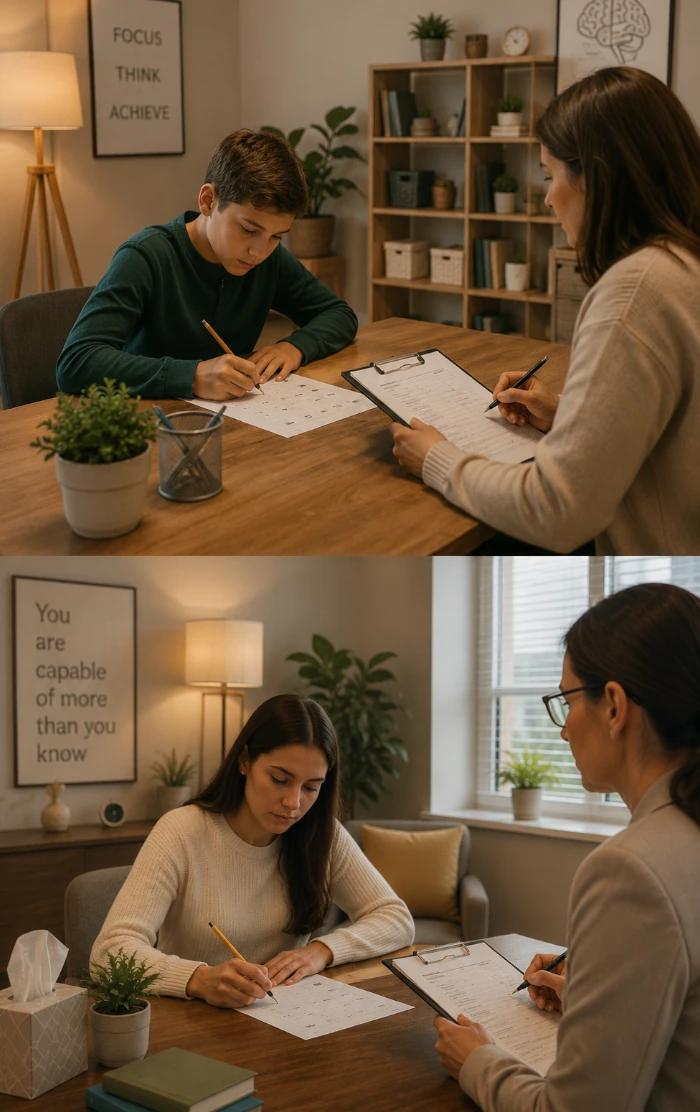
Professional IQ testing in Mobile – whether you need an assessment for school, employment, gifted program eligibility, or personal insight, we connect you with licensed psychologists in the Mobile area.
Last Updated: September 2026
Child IQ Testing
WISC-V & Stanford-Binet for ages 6–16. Gifted identification, learning profiles.
Adult IQ Testing
WAIS-IV & WAIS-5 available. Comprehensive adult cognitive assessments. Clinical & occupational.
WISC-V Test
Wechsler Intelligence Scale for Children® Fifth Edition – the gold standard for child IQ testing.
WAIS-IV & WAIS-5 Tests
Wechsler Adult Intelligence Scale® – Fourth Edition (WAIS-IV) and Fifth Edition (WAIS-5) available for adult IQ testing.
Gifted Testing
Identify giftedness for school placement, enrichment, and talent programs using WISC-V or Stanford-Binet.
Stanford-Binet 5
Stanford-Binet Intelligence Scales Fifth Edition – comprehensive cognitive assessment for all ages.
Mensa Testing
Mensa admission testing and preparation for the high-IQ society. Accepts WAIS-IV, WAIS-5, and Stanford-Binet 5 scores.
Full Evaluation
Combined assessment with detailed report and recommendations. Includes WISC-V, WAIS-IV, WAIS-5, or Stanford-Binet 5 as appropriate.
IQ Testing in Mobile: city context
Gender, age and demographic statistics
Mobile had an estimated 200,824 residents on July 1, 2025. Census 2020–2024 estimates report that 53.3% of residents are female, 22.2% are under age 18, and 17.4% are age 65 or older. The city is 41.9% White alone, 50.4% Black alone, 0.1% American Indian or Alaska Native alone, 2.2% Asian alone, 0.0% Native Hawaiian or Other Pacific Islander alone, 4.0% reporting two or more races, and 3.7% Hispanic or Latino; race and Hispanic-origin categories are not mutually exclusive.
These figures describe community context, not intelligence. IQ scores must be interpreted individually in light of age, education, disability, health, culture, language exposure, and testing conditions. In Mobile, 5.6% of residents age five and older speak a language other than English at home, 4.3% are foreign-born, and 9.1% of residents under age 65 report a disability. Examiners should document language history, educational opportunity, hearing or vision needs, medical factors, and any accommodations that affect score interpretation.
- Female residents: 53.3%.
- Children and teens: 22.2% are under 18.
- Older adults: 17.4% are 65 or older.
- Language context: 5.6% speak a language other than English at home.
- Educational context: 91.0% of adults age 25+ completed high school and 32.0% hold a bachelor’s degree or higher.
- Interpretation: No gender, racial, ethnic, immigration, age, disability, neighborhood, or language group should be presumed to have a particular IQ profile.
What is professional IQ testing?
Intelligence quotient (IQ) testing is a standardized method to measure human cognitive abilities and intellectual potential. Professional IQ tests are administered by licensed psychologists in a controlled environment to ensure accuracy and reliability. Unlike online quizzes, clinical assessments provide a full-scale IQ score along with detailed breakdowns of verbal comprehension, perceptual reasoning, working memory, and processing speed.
In Mobile, IQ testing is commonly used for gifted program admission, learning disability identification, career guidance, neuropsychological evaluation, and personal development. The results are presented in a comprehensive report that includes normative comparisons, strengths and weaknesses, and actionable recommendations.
Who should get tested?
IQ testing can benefit children, adolescents, and adults in various situations:
- Children: Parents often seek testing for school readiness, gifted placement, or to understand learning challenges.
- Adults: Many adults take IQ tests for career advancement, graduate school applications, or personal curiosity.
- Mensa candidates: High-IQ societies require official test scores for membership.
- Clinical referrals: Psychologists may recommend testing as part of a broader neuropsychological evaluation.
Types of IQ tests
We offer the most recognized and scientifically validated intelligence tests in the field:
- WISC-V (Wechsler Intelligence Scale for Children® – Fifth Edition): The gold standard for children aged 6:0–16:11. It provides a Full-Scale IQ and five primary index scores.
- WAIS-IV (Wechsler Adult Intelligence Scale® – Fourth Edition): The most widely used adult IQ test for ages 16–90. It measures cognitive functioning across four domains.
- Stanford-Binet Intelligence Scales – Fifth Edition: A comprehensive assessment for ages 2–85, often used for gifted identification and clinical evaluations.
- Gifted Testing: Often includes the WISC-V or Stanford-Binet, plus additional creativity and achievement measures.
- Mensa Testing: We provide official Mensa admission testing and preparation materials.
How the testing process works
- Initial consultation: Brief phone or video call to discuss your needs and match you with the right psychologist.
- Testing session: In-person or remote testing (depending on the test) with a licensed psychologist. Most sessions last 1–2 hours.
- Scoring and interpretation: The psychologist scores the test and interprets the results in the context of your background and goals.
- Feedback session: A detailed review of your results, including strengths, weaknesses, and practical recommendations.
- Comprehensive report: You receive a written report with all scores, normative comparisons, and actionable next steps.
How much does IQ testing cost in Mobile?
Fees vary according to the referral question, age, test edition, records reviewed, report detail, and whether the service is a focused IQ assessment or a broader psychoeducational or neuropsychological evaluation. Mobile families should request a written estimate before scheduling.
- Focused individual cognitive assessment: Often several hundred dollars to roughly $1,500, depending on the test, feedback, and report.
- Gifted or school-placement evaluation: Cost depends on whether the receiving school needs only an accepted ability score or also achievement, behavior, executive-function, and classroom data.
- Comprehensive psychoeducational evaluation: Commonly costs more because it may include IQ, achievement, attention, processing, social-emotional measures, records, diagnosis, feedback, and school recommendations.
- Neuropsychological evaluation: Complex medical, neurological, developmental, or forensic batteries may cost several thousand dollars and require multiple appointments.
- University training clinic: The University of South Alabama Psychological Clinic publishes reduced-fee evaluation services, subject to current capacity and referral fit.
- Insurance: Coverage is more likely when testing is medically necessary than when it is solely for gifted placement, Mensa, career curiosity, or private-school admission.
- Before paying: Confirm the exact test, examiner license, report recipient, deposit, cancellation policy, records fees, feedback session, school meeting, turnaround, and whether the result will be accepted for the intended purpose.
Mobile’s Intellectual History & Legacy
Mobile’s intellectual history reflects more than three centuries of Gulf Coast exchange. French, Spanish, British, African, Creole, Indigenous, Caribbean, and American influences shaped the city’s language, law, architecture, trade, education, and cultural institutions. The city’s archives, historic districts, museums, churches, and libraries preserve records that reach back to the colonial Gulf Coast.
- Maritime and engineering knowledge: The Port of Mobile, shipbuilding, navigation, logistics, and coastal infrastructure have long required mathematics, spatial reasoning, technical training, and systems thinking.
- Aerospace and advanced manufacturing: Airbus, the Mobile Aeroplex at Brookley, aviation suppliers, and maintenance operations support engineering, quality, safety, data, and skilled-trade pathways.
- Medical and psychological education: The University of South Alabama and USA Health support clinical training, behavioral science, neuroscience, medicine, nursing, rehabilitation, and public-health research.
- Africatown and the Clotilda: Community scholarship, archaeology, oral history, genealogy, environmental justice, and preservation connect local history with national and international research.
- Arts and literature: Mobile’s Carnival traditions, visual arts, theater, music, architecture, journalism, and public history create pathways for creative and verbal strengths.
- Testing implication: A cognitive score should be interpreted alongside the person’s education, culture, language, health, opportunity, practical expertise, and goals—not as a measure of Mobile’s communities or traditions.
Major Mobile Employers and Cognitive-Skill Pathways
- Airbus and aerospace suppliers: Engineering, avionics, quality assurance, manufacturing systems, safety, logistics, cybersecurity, and technical documentation.
- Austal USA and maritime industry: Naval architecture, shipbuilding, welding, electrical systems, procurement, project controls, software, testing, and production leadership.
- Alabama Port Authority and logistics employers: Vessel operations, cargo planning, rail and truck coordination, warehousing, customs, data analysis, and supply-chain management.
- USA Health, Infirmary Health, and regional care systems: Medicine, nursing, pharmacy, imaging, laboratory science, rehabilitation, behavioral health, health administration, and informatics.
- University of South Alabama, Spring Hill College, Bishop State, and schools: Teaching, research, student services, laboratory work, technology, administration, and public outreach.
- Manufacturing and chemical industries: Process control, maintenance, environmental compliance, instrumentation, safety, laboratory analysis, and engineering across the Mobile region.
- Government, public safety, and utilities: City and county operations, planning, emergency management, fire, police, water, infrastructure, communications, and public administration.
- Tourism, conventions, and hospitality: Mardi Gras, cruise activity, museums, hotels, restaurants, events, and visitor services depend on communication, planning, creativity, and rapid problem-solving.
IQ results can describe relative cognitive strengths, but employers also evaluate credentials, experience, judgment, reliability, communication, teamwork, physical requirements, and job-specific performance.
For a quick, informal look at reasoning skills, Mobile residents may explore an online IQ test; official educational or clinical purposes still call for evaluation by a qualified psychologist.
IQ Testing Across Mobile
Appointments may be relevant to residents throughout Mobile, including Downtown and LoDa, De Tonti Square, Church Street East, Oakleigh Garden, Midtown, Spring Hill, Dauphin Acres, Crichton, Toulminville, Maysville, Plateau and Africatown, Navco, Brookley and the Aeroplex, Cottage Hill, the Airport Boulevard corridor, and West Mobile. The purpose of naming areas is practical travel planning—not search-engine repetition.
- Downtown and Midtown: Consider parking, one-way streets, events, Mardi Gras routes, and older-building accessibility.
- Spring Hill and university areas: Account for school and university traffic along Old Shell Road, Spring Hill Avenue, and University Boulevard.
- West Mobile: Schillinger Road, Airport Boulevard, Cottage Hill Road, and I-65 congestion can add travel time.
- Brookley and south Mobile: I-10, Michigan Avenue, port traffic, and airport construction or operations may affect appointments.
- North and east Mobile: I-165, US-45/St. Stephens Road, US-98/Moffett Road, and industrial traffic may influence routes.
- Accessibility: Confirm accessible parking, elevators, quiet waiting space, restroom access, sensory conditions, and break policies before arrival.
Mobile Universities and Research Institutions
- University of South Alabama: A major public research university with graduate programs, health sciences, engineering, computing, education, psychology, business, arts and sciences, and the USA Psychological Clinic.
- USA Health: Academic medical services and training across University Hospital, Children’s & Women’s Hospital, the Mitchell Cancer Institute, clinics, and specialty programs.
- Spring Hill College: A historic Jesuit college offering liberal arts, sciences, business, nursing, and professional preparation.
- Bishop State Community College: Academic transfer, workforce, technical, health, and career programs with multiple Mobile campuses.
- University of Mobile: Undergraduate and graduate programs serving the wider Mobile area, including business, education, health, arts, and ministry-related fields.
- Alabama School of Mathematics and Science: A public residential high school in Mobile for academically advanced Alabama students, with rigorous STEM and humanities study.
- Dauphin Island Sea Lab and coastal research: Regional marine-science, estuary, fisheries, ecology, and environmental-education resources support Gulf Coast research and enrichment.
Mobile Economic Context
- Median household income: $53,558 in 2020–2024 Census estimates.
- Per-capita income: $33,935.
- Residents in poverty: 18.4%.
- Bachelor's degree or higher: 32.0% of adults age 25 and older.
- Mean travel time to work: 22.8 minutes, although I-10, I-65, tunnel, bridge, port, and cross-bay trips can take much longer.
- Health and social-assistance activity: Census business data report approximately $3.125 billion in 2022 receipts/revenue within the city.
- Transportation and warehousing: Approximately $1.305 billion in 2022 receipts/revenue reflects the importance of the port, rail, trucking, warehousing, aviation, and distribution.
- Retail sales: Approximately $5.394 billion in 2022.
- Accommodation and food services: Approximately $763 million in 2022 sales.
- Regional strengths: Aerospace, shipbuilding, maritime commerce, port logistics, healthcare, education, chemical and advanced manufacturing, construction, government, tourism, hospitality, and Gulf Coast services.
Economic statistics describe access and opportunity, not intelligence. Financial stress, shift work, transportation, caregiving, educational disruption, disability, and healthcare access can all affect testing conditions and should be considered during interpretation.
Mobile Public Schools and Advanced Programs
Mobile County Public Schools
Most public-school students in the city are served by Mobile County Public Schools. The district provides special education, magnet programs, career and technical education, Advanced Placement, International Baccalaureate pathways, dual-enrollment options, and gifted education through the PACE program—Pursuing Academics, Creativity, and Excellence.
PACE gifted education
PACE referrals and evaluations follow Alabama and district procedures. MCPSS states that students must be enrolled in public school and at least six years old to be referred, evaluated, and served; standard referrals may occur at different points, and current forms, timelines, and eligibility rules should be confirmed directly with the district.
Magnet and advanced pathways
Mobile-area options include elementary and middle magnet programs, Phillips Preparatory, Clark-Shaw, Dunbar Creative and Performing Arts, Davidson’s International Baccalaureate pathway, Advanced Placement, career academies, robotics, arts, and technical programs. Admission criteria differ by program and are not automatically satisfied by a private IQ score.
Private and independent schools
St. Paul’s Episcopal, UMS-Wright, McGill-Toolen Catholic, St. Luke’s Episcopal, faith-based schools, homeschool programs, and specialized settings use their own records, interviews, entrance tests, achievement measures, recommendations, and deadlines. Families should obtain written requirements before purchasing private testing.
Equity and interpretation
Giftedness, learning disabilities, ADHD, autism, language acquisition, trauma, sensory needs, and educational opportunity can overlap. Multiple data sources are more defensible than a single score, particularly for twice-exceptional, multilingual, mobile, or medically complex students.
Local Testing Centers and Psychologists
- Dr. Amber Krempa: Her Mobile practice lists psychological testing, including educational assessment for gifted abilities, learning disorders, and ADHD. The office is at 1015 Montlimar Drive, Suite C3, Mobile, AL 36609, with phone 251-586-4225.
- University of South Alabama Psychological Clinic: The clinic lists gifted and talented, psychoeducational, neuropsychological, autism, and comprehensive psychological evaluations for youth and adults, subject to training-clinic capacity and referral fit.
- USA Health and medical referrals: Neurology, rehabilitation, developmental, oncology, pediatric, and other medical services may refer for cognitive or neuropsychological assessment when clinically appropriate.
- School-based evaluation: MCPSS evaluations follow education law and district procedures. Families generally should not be required to buy a private IQ test to request a special-education evaluation.
- Provider-selection checklist: Verify Alabama licensure, age range, test edition, examiner experience, language procedures, report recipient, disability accommodations, fees, turnaround, and whether the result meets school, Mensa, legal, workplace, or clinical requirements.
Mobile Events, Learning, and Professional Development
- Mardi Gras and downtown events: Parade schedules, street closures, parking limits, and crowds can significantly affect access to downtown appointments.
- University programs: The University of South Alabama, Spring Hill College, Bishop State, and University of Mobile host lectures, open houses, research events, performances, career fairs, and continuing education.
- STEM and enrichment: Gulf Coast Exploreum, GulfQuest, Dauphin Island Sea Lab, Mobile Public Library, Mobile Museum of Art, Alabama Contemporary Art Center, robotics, coding, maker, and science programs offer changing schedules.
- Workforce events: Mobile Chamber, aerospace, shipbuilding, port, healthcare, construction, and manufacturing organizations hold hiring, supplier, credential, and technical-training events.
- Clinical and parent education: Hospitals, schools, professional associations, disability organizations, and community providers may offer workshops on ADHD, autism, learning, giftedness, parenting, mental health, and accommodations.
- Planning: Verify dates directly; hurricane threats, severe weather, Carnival season, cruise traffic, conventions, and road projects can change schedules.
Transportation and Accessibility
- Major roads: I-10 runs east-west through Mobile and the Wallace Tunnel/Bayway corridor; I-65 runs north-south; I-165 links downtown with I-65; US-90/Government Boulevard, US-98/Moffett Road and Spring Hill Avenue, US-45/St. Stephens Road, Airport Boulevard, Dauphin Street, Old Shell Road, Cottage Hill Road, University Boulevard, and Schillinger Road are major local routes.
- Public transit: The Wave Transit System operates fixed-route bus service in Mobile. Routes, transfer points, fares, holiday schedules, and service frequency can change, so check the current trip before an appointment.
- Paratransit and accessibility: ADA paratransit is available for eligible riders through the local transit system. Confirm certification, reservation deadlines, pickup windows, companion rules, and visitor eligibility in advance.
- Airport: Mobile Regional Airport (MOB) remains the city’s commercial passenger airport in July 2026, with nonstop connections through major hubs. The new Mobile International Airport terminal at Brookley (BFM), off I-10 near downtown, is scheduled to open in fall 2026, with first commercial flights anticipated by November.
- Distance to other cities: Pensacola is roughly 60 miles or about 1 hour east; Gulfport is roughly 75 miles or about 1 hour 15 minutes west; New Orleans is roughly 145 miles or about 2 hours 15 minutes west; Montgomery is roughly 170 miles or about 2.5 hours northeast; Baton Rouge is roughly 200 miles or about 3 hours west; and Birmingham is roughly 260 miles or about 4 hours north. Weather, tunnel congestion, beach traffic, crashes, and construction can add substantial time.
- Walkability: Downtown Mobile, Lower Dauphin Street, De Tonti Square, Church Street East, Oakleigh Garden, and parts of Midtown have the strongest concentration of destinations within walking distance. Much of West Mobile and the Airport Boulevard corridor remains automobile-oriented.
- Bike infrastructure: The Three Mile Creek Greenway Trail, Broad Street bicycle improvements, developing Crepe Myrtle Trail connections, neighborhood streets, and park paths support recreation and selected practical trips. Heat, humidity, rain, lighting, and high-speed arterials require route planning.
- Port, bridge, and tunnel traffic: I-10 traffic near the Wallace Tunnel, Bayway, downtown exits, cruise terminal, and port can change quickly. Allow extra time when crossing Mobile Bay or traveling during freight peaks.
- Appointment accessibility: Confirm accessible parking, curb cuts, elevators, quiet waiting space, sensory conditions, restroom access, and break policies. Bring mobility, communication, hearing, vision, or medication information that may affect testing.
Mobile Weather and Seasonal Considerations
- Heat and humidity: Summer heat, high humidity, dehydration, and poor sleep can reduce stamina and processing efficiency. Morning appointments may be easier for some clients.
- Hurricanes and tropical storms: Atlantic hurricane season can bring evacuations, closures, power outages, flooding, and rapid schedule changes. Follow official emergency information and reschedule when travel is unsafe.
- Heavy rain and flooding: Intense Gulf Coast rainfall can flood low-lying streets and slow I-10, I-65, downtown, Midtown, and waterfront routes.
- Thunderstorms and tornado risk: Lightning, wind, hail, and severe-weather warnings may interrupt travel or testing. Anxiety and sleep disruption should be documented.
- Pollen, mold, and air quality: Allergies, damp conditions, smoke, and respiratory symptoms can affect concentration and medication use.
- Mardi Gras and event season: Downtown routes, parking, noise, and crowds change during Carnival and major events.
- Testing principle: Acute illness, unsafe weather, severe sleep loss, medication changes, evacuation stress, or power disruption may justify postponing an assessment so results better reflect typical functioning.
Areas we serve
We support all areas of Mobile.
Frequently Asked Questions
WISC-V is for children aged 6–16, while WAIS-IV is for adults aged 16–90. Each is normed for its specific age group.
Most IQ tests take between 60 and 90 minutes, plus a feedback session. Allow 2–3 hours total.
No, you can book directly with our psychologists. We serve both self-referred and professionally referred individuals.
Some professionally administered scores may be submitted as prior evidence, but acceptance is determined solely by American Mensa under its current rules.
Some plans cover cognitive assessments when there is a clinical indication. Check with your provider.
Get a good night's sleep, eat a healthy meal, and arrive relaxed. No specific preparation is needed.
You'll receive a comprehensive report with your scores and tailored recommendations.
Interviews and feedback may be available remotely, but many standardized cognitive tests require controlled administration and may need an in-person appointment. Contact us for details.