
IQ Testing in Lubbock

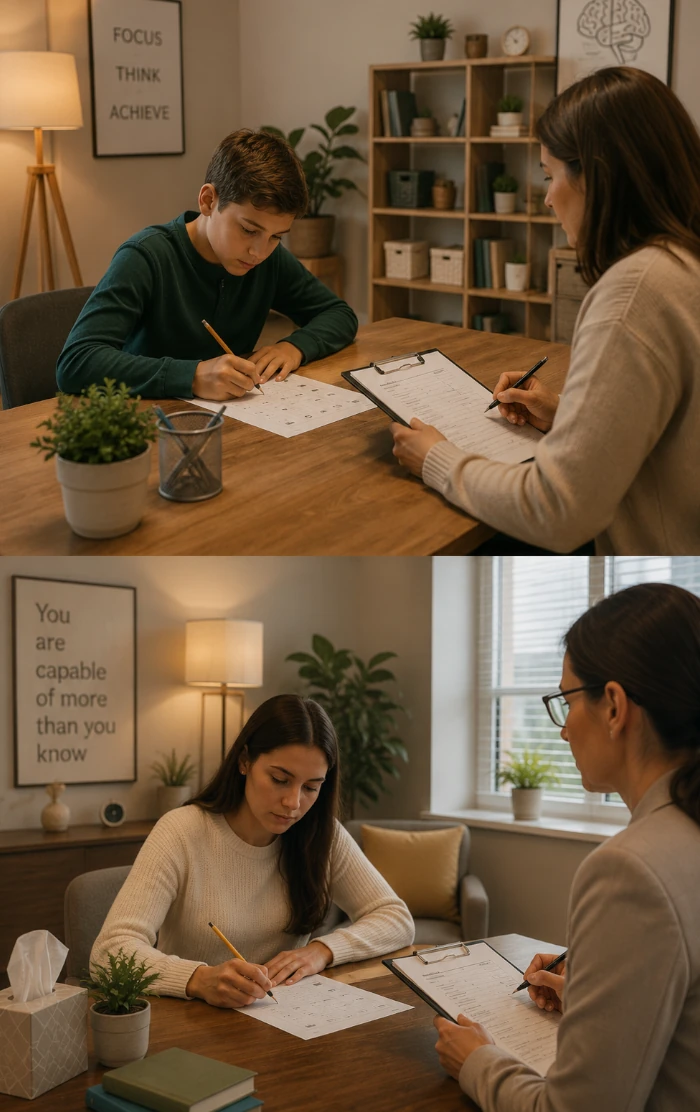
Professional IQ testing in Lubbock – whether you need an assessment for school, employment, gifted program eligibility, or personal insight, we connect you with licensed psychologists in the Lubbock area.
Last Updated: September 2026
Child IQ Testing
WISC-V & Stanford-Binet for ages 6–16. Gifted identification, learning profiles.
Adult IQ Testing
WAIS-IV & WAIS-5 available. Comprehensive adult cognitive assessments. Clinical & occupational.
WISC-V Test
Wechsler Intelligence Scale for Children® Fifth Edition – the gold standard for child IQ testing.
WAIS-IV & WAIS-5 Tests
Wechsler Adult Intelligence Scale® – Fourth Edition (WAIS-IV) and Fifth Edition (WAIS-5) available for adult IQ testing.
Gifted Testing
Identify giftedness for school placement, enrichment, and talent programs using WISC-V or Stanford-Binet.
Stanford-Binet 5
Stanford-Binet Intelligence Scales Fifth Edition – comprehensive cognitive assessment for all ages.
Mensa Testing
Mensa admission testing and preparation for the high-IQ society. Accepts WAIS-IV, WAIS-5, and Stanford-Binet 5 scores.
Full Evaluation
Combined assessment with detailed report and recommendations. Includes WISC-V, WAIS-IV, WAIS-5, or Stanford-Binet 5 as appropriate.
IQ Testing in Lubbock: city context
Lubbock is the seat of Lubbock County and the regional center of the South Plains and much of West Texas. The U.S. Census Bureau estimated 273,071 residents on July 1, 2025, compared with 257,141 residents in the 2020 Census, across approximately 134.61 square miles of land. Local demand for cognitive assessment is shaped by Lubbock ISD and neighboring districts, Texas Tech University, Texas Tech University Health Sciences Center, major healthcare systems, agricultural and technology employers, veterans, and families seeking gifted identification, disability documentation, career planning, graduate-school preparation, or diagnostic clarification.
The local assessment ecosystem includes Texas-licensed psychologists, school-based evaluation teams, Texas Tech Physicians and TTUHSC programs, the Garrison Institute on Aging Memory Clinic, the Relational Health Center partnership with Covenant Children's Hospital, UMC Health System, private psychological and neuropsychological practices, and providers serving clients from across the South Plains, West Texas, and eastern New Mexico.
- Common referral goals: Gifted and talented assessment, school planning, ADHD and learning-disability evaluation, disability accommodations, career guidance, graduate-school preparation, Mensa prior evidence, neuropsychological questions, and personal insight.
- Regional access: Clients may travel from Wolfforth, Shallowater, Slaton, Levelland, Brownfield, Plainview, Post, Littlefield, and rural South Plains communities for specialized services.
- Provider matching: The appropriate examiner depends on age, referral purpose, test edition, language needs, disability status, report recipient, insurance requirements, and whether the question is educational, clinical, occupational, forensic, or medical.
Gender, age and demographic statistics
Current Census estimates describe Lubbock's population but do not establish separate local IQ averages for demographic groups:
- Female population: 51.0%.
- Residents under age 18: 22.9%.
- Residents age 65 and older: 12.8%.
- White alone: 61.1%.
- Black or African American alone: 8.5%.
- American Indian and Alaska Native alone: 0.6%.
- Asian alone: 2.8%.
- Native Hawaiian and Other Pacific Islander alone: 0.1%.
- Two or more races: 19.1%.
- Hispanic or Latino: 36.6%; Hispanic origin may overlap with racial categories.
- Foreign-born residents: 6.3%.
- Language other than English at home: 20.0% of residents age five and older.
- Education: 89.4% of adults age 25 and older are high-school graduates or higher, and 35.1% hold a bachelor's degree or higher.
- Labor-force participation: 66.4% overall and 62.5% among women age 16 and older.
- Clinical interpretation: Examiners use age-based national norms and consider education, language, culture, disability, medical history, attention, mood, sleep, medication, and testing conditions rather than inferring ability from gender, race, ethnicity, income, or neighborhood.
What is professional IQ testing?
Intelligence quotient (IQ) testing is a standardized method to measure human cognitive abilities and intellectual potential. Professional IQ tests are administered by licensed psychologists in a controlled environment to ensure accuracy and reliability. Unlike online quizzes, clinical assessments provide a full-scale IQ score along with detailed breakdowns of verbal comprehension, perceptual reasoning, working memory, and processing speed.
In Lubbock, IQ testing is commonly used for gifted program admission, learning disability identification, career guidance, neuropsychological evaluation, and personal development. The results are presented in a comprehensive report that includes normative comparisons, strengths and weaknesses, and actionable recommendations.
Who should get tested?
IQ testing can benefit children, adolescents, and adults in various situations:
- Children: Parents often seek testing for school readiness, gifted placement, or to understand learning challenges.
- Adults: Many adults take IQ tests for career advancement, graduate school applications, or personal curiosity.
- Mensa candidates: High-IQ societies require official test scores for membership.
- Clinical referrals: Psychologists may recommend testing as part of a broader neuropsychological evaluation.
Types of IQ tests
We offer the most recognized and scientifically validated intelligence tests in the field:
- WISC-V (Wechsler Intelligence Scale for Children® – Fifth Edition): The gold standard for children aged 6:0–16:11. It provides a Full-Scale IQ and five primary index scores.
- WAIS-IV (Wechsler Adult Intelligence Scale® – Fourth Edition): The most widely used adult IQ test for ages 16–90. It measures cognitive functioning across four domains.
- Stanford-Binet Intelligence Scales – Fifth Edition: A comprehensive assessment for ages 2–85, often used for gifted identification and clinical evaluations.
- Gifted Testing: Often includes the WISC-V or Stanford-Binet, plus additional creativity and achievement measures.
- Mensa Testing: We provide official Mensa admission testing and preparation materials.
How the testing process works
- Initial consultation: Brief phone or video call to discuss your needs and match you with the right psychologist.
- Testing session: In-person or remote testing (depending on the test) with a licensed psychologist. Most sessions last 1–2 hours.
- Scoring and interpretation: The psychologist scores the test and interprets the results in the context of your background and goals.
- Feedback session: A detailed review of your results, including strengths, weaknesses, and practical recommendations.
- Comprehensive report: You receive a written report with all scores, normative comparisons, and actionable next steps.
How much does IQ testing cost in Lubbock?
The cost of IQ testing in Lubbock varies depending on the type of test, the psychologist's experience, and whether a comprehensive report is required. Typical fees range from $200 to $1,200 for a full assessment. Gifted testing and Mensa admission testing are often at the lower end, while neuropsychological evaluations may be higher.
An online IQ test offers Lubbock residents a convenient way to explore reasoning questions, whereas school placement, accommodations, or clinical decisions require professionally administered testing.
Some insurance plans cover IQ testing when it's deemed medically necessary. We recommend checking with your provider for details. We also offer affordable payment plans and sliding-scale options for qualifying individuals.
Lubbock's Intellectual History & Legacy
- Texas Tech University: Founded in 1923, Texas Tech anchors the city's academic life and supports research in engineering, agriculture, wind science, computing, business, education, psychology, law, veterinary medicine, and the arts.
- Texas Tech University Health Sciences Center: TTUHSC expanded medical, nursing, pharmacy, public-health, rehabilitation, neuroscience, and rural-health education across West Texas.
- Agricultural science: Cotton, sorghum, livestock, irrigation, soil science, food production, and agricultural engineering have long shaped research and technical problem-solving on the South Plains.
- Wind science: Texas Tech's wind research tradition grew from the region's severe-weather experience and supports engineering, atmospheric science, hazard mitigation, and renewable-energy work.
- Lubbock Lake Landmark: The archaeological and natural-history site documents thousands of years of human activity on the Southern High Plains and supports research, education, and public interpretation.
- Ranching heritage: The National Ranching Heritage Center preserves structures, technologies, and stories connected to ranching and settlement across the American West.
- Music and creative culture: Buddy Holly's legacy, the Buddy Holly Center, Buddy Holly Hall, local studios, universities, and performance organizations contribute to Lubbock's national cultural identity.
- Aviation history: The Silent Wings Museum preserves the history of the World War II military glider program and the South Plains Army Airfield.
Top Employers in Lubbock Requiring Cognitive Skills
- Texas Tech University: Teaching, research, engineering, data, administration, student services, law, agriculture, veterinary medicine, and technology roles.
- Texas Tech University Health Sciences Center: Medicine, nursing, pharmacy, public health, rehabilitation, research, informatics, and clinical education.
- Covenant Health: Clinical care, nursing, behavioral health, operations, analytics, information technology, administration, and leadership.
- UMC Health System: Trauma care, specialty medicine, nursing, rehabilitation, finance, data, technology, and hospital operations.
- United Supermarkets: Corporate management, supply chain, merchandising, pharmacy, data, finance, technology, and retail operations.
- Lubbock ISD: Teaching, school psychology, special education, counseling, assessment, administration, and student-support services.
- City of Lubbock and Lubbock County: Engineering, utilities, planning, public safety, finance, law, data, transportation, and public administration.
- X-FAB Texas: Semiconductor manufacturing, process engineering, equipment maintenance, quality, automation, and technical operations.
- Johnson Controls: Manufacturing, engineering, quality, supply chain, maintenance, and operations.
- Technology and professional-services employers: Tyler Technologies, CoNetrix, financial institutions, agribusiness firms, logistics companies, and regional service organizations employ software, cybersecurity, analytical, accounting, legal, and management talent.
Lubbock IQ Testing by City Area
- Downtown and the Depot District: Access to government offices, the main library, cultural venues, professional offices, hotels, restaurants, and major east-west streets.
- Texas Tech, Overton, and Tech Terrace: University students, faculty, medical trainees, families, and professionals have access to campus services, Citibus routes, and nearby clinical resources.
- Medical district: TTUHSC, UMC, Covenant facilities, Texas Tech Physicians, specialty clinics, and rehabilitation services cluster around 4th Street and nearby corridors.
- South and southwest Lubbock: Rapid residential growth, schools, medical offices, retail centers, Loop 289, Slide Road, Quaker Avenue, Indiana Avenue, and Milwaukee Avenue shape appointment travel.
- West Lubbock and the Wolfforth edge: Frenship-area families, new subdivisions, schools, and commercial development use US-62/82, 19th Street, 82nd Street, and the Marsha Sharp Freeway.
- North and northeast Lubbock: Airport access, industrial districts, Lubbock Lake Landmark, neighborhoods, and I-27 connections influence travel patterns.
- East Lubbock and Canyon Lakes: Community institutions, schools, parks, Mackenzie Park, Canyon Lakes, and major routes such as Broadway, 19th Street, Parkway Drive, and MLK Boulevard serve local residents.
- Citywide service: We support all areas of Lubbock and do not treat neighborhood, ZIP code, school, language, race, or income as a proxy for cognitive ability.
Lubbock Universities and Research Institutions
- Texas Tech University: A Carnegie Very High Research Activity university with more than 150 undergraduate programs and extensive graduate, professional, online, and research opportunities.
- Texas Tech Graduate School: Offers more than 120 master's programs, 65 doctoral programs, and 70 graduate certificate options across the university.
- Texas Tech University Health Sciences Center: Provides education and research through medicine, nursing, pharmacy, health professions, biomedical sciences, public health, and interprofessional programs.
- Texas Tech School of Law and School of Veterinary Medicine: Add professional education, clinics, applied research, and regional service pathways.
- Lubbock Christian University: Offers undergraduate and graduate study in business, education, nursing, behavioral sciences, ministry, and other professional fields.
- South Plains College: Provides transfer courses, workforce credentials, technical education, nursing and allied-health programs, and Lubbock-area instructional centers.
- Research ecosystem: The National Wind Institute, Innovation Hub at Research Park, Garrison Institute on Aging, F. Marie Hall Institute for Rural and Community Health, agricultural research centers, and TTU/TTUHSC laboratories support applied and basic research.
- Regional institutions: Wayland Baptist University, West Texas A&M University, Eastern New Mexico University, and other colleges expand specialized options within driving distance.
Lubbock Economic Context
- Median household income: $60,895 in 2020–2024 Census estimates, stated in 2024 dollars.
- Per-capita income: $35,237.
- Residents in poverty: 18.9%.
- Bachelor's degree or higher: 35.1% of adults age 25 and older.
- Mean travel time to work: 16.3 minutes, although construction, university events, hospital traffic, rural travel, blowing dust, and severe weather can lengthen trips.
- Health and social-assistance activity: Census business data report approximately $3.45 billion in 2022 receipts/revenue within the city.
- Transportation and warehousing: Approximately $612.4 million in 2022 receipts/revenue reflects distribution, trucking, air cargo, agricultural supply chains, and regional commerce.
- Accommodation and food services: Approximately $1.19 billion in 2022 sales.
- Retail sales: Approximately $7.50 billion in 2022, or about $28,409 per capita.
- Regional strengths: Healthcare and life sciences, higher education, agribusiness and food processing, advanced manufacturing, semiconductors, financial and professional services, technology, logistics, energy, government, construction, tourism, and hospitality.
Lubbock School District Data
- Lubbock ISD Gifted and Talented identification: The district uses multiple quantitative and qualitative sources, including ability or creativity measures and parent or teacher information, rather than one universal private IQ cutoff.
- Referral timing: Lubbock ISD's published information identifies a fall referral and evaluation process for grades 1–12 and a spring process for kindergarten; current dates must be confirmed each school year.
- Second-grade screening: District parent resources state that all second graders are screened, with testing requiring parent permission.
- Service model: Gifted services are primarily delivered through general-education core classrooms, with differentiated depth, complexity, pace, and advanced-learning opportunities.
- Advanced academics: Lubbock ISD also offers Advanced Placement, dual credit, OnRamps, magnet or specialty options, UIL academics, Academic Decathlon and related competitions, and other college-readiness pathways.
- Nearby districts: Frenship ISD, Lubbock-Cooper ISD, Shallowater ISD, Slaton ISD, and other districts maintain separate identification, transfer, appeal, acceleration, and service procedures.
- Texas framework: Texas districts must identify and serve gifted and talented students in kindergarten through grade 12, use multiple data sources, and make final selections through trained local committees.
- Private and charter schools: Private schools establish their own admissions and placement rules; open-enrollment charter schools are not automatically required to operate G/T services unless included in their charter.
- Outside evaluations: A private WISC-V, Stanford-Binet, or psychoeducational report may provide useful evidence but does not automatically control a public-school identification or placement decision.
Local Testing Centers and Psychologists
- Texas Tech Physicians Neurology: TTUHSC neurology addresses memory disorders, epilepsy, movement disorders, stroke, traumatic brain injury, and other neurological conditions; referral needs and neuropsychological availability should be confirmed.
- Garrison Institute on Aging Memory Clinic: The TTUHSC clinic provides comprehensive assessment and care planning for memory and thinking concerns through a multidisciplinary team that includes neurology, geriatric psychiatry, neuropsychology, speech-language pathology, and social work.
- Relational Health Center: TTUHSC child and adolescent psychology and psychiatry services operate in partnership with Covenant Children's Hospital and include evidence-based assessment and treatment pathways.
- UMC Health System and Covenant Health: Hospital, neurology, rehabilitation, behavioral-health, pediatric, and specialty-care services may coordinate cognitive evaluation or external referral when clinically indicated.
- Your Life Behavioral Health and Wellness Clinic: TTUHSC Health Professions advertises diagnostic assessment and behavioral-health services for children and adults, in person and through telehealth where appropriate.
- Lubbock VA Clinic: Eligible veterans receive outpatient care through the VA Amarillo Health Care System; cognitive or neuropsychological referrals follow VA eligibility, clinical, and community-care procedures.
- School-based assessment: Lubbock ISD and neighboring districts evaluate eligible students under educational rules when special-education or school-service questions are involved.
- Private psychologists: Local practices vary in child, adult, gifted, ADHD, autism, learning-disability, forensic, disability, presurgical, and neuropsychological expertise.
- Credential verification: Confirm Texas psychology licensure, neuropsychology training when relevant, test edition, age range, language competence, report scope, fees, turnaround time, and receiving-institution requirements.
Lubbock Events and Conferences
- Texas Tech University: Public lectures, research symposia, graduate-program events, career fairs, competitions, performances, and continuing education occur throughout the year.
- Texas Tech University Health Sciences Center: Health, neuroscience, rural-health, aging, behavioral-health, and professional-education events support clinicians, students, caregivers, and the public.
- Innovation Hub and research institutes: Entrepreneurship, technology, engineering, agriculture, wind science, and commercialization programs connect students, researchers, and employers.
- Buddy Holly Hall and local arts organizations: Music, theater, dance, lectures, touring productions, and school performances support creative learning.
- Museum of Texas Tech University, Science Spectrum, Lubbock Lake Landmark, and National Ranching Heritage Center: STEM, history, archaeology, natural-science, and family programs provide enrichment across age groups.
- Lubbock Public Library: Literacy, research, technology, youth, genealogy, language-learning, and community programs serve children and adults.
- School and community competitions: UIL academics, robotics, Destination Imagination, science fairs, Academic Decathlon, arts programs, and other activities vary by school and season.
- Mensa activities: Lubbock-area members may participate in local, regional, or virtual American Mensa events; schedules and group coverage should be verified through current official directories.
Transportation and Accessibility
- Major roads: I-27 runs north–south; Loop 289 circles much of the city; the Marsha Sharp Freeway carries US-62/82 east–west; US-84 connects northwest and southeast; US-87 runs south; SH-114 extends west; major city corridors include 19th Street, 34th Street, 50th Street, 82nd Street, University Avenue, Quaker Avenue, Indiana Avenue, Slide Road, and Milwaukee Avenue.
- Public transit: Citibus operates fixed-route service, Texas Tech campus routes, Citibus On-Demand, and other mobility services within Lubbock.
- Paratransit: CitiAccess provides ADA demand-response transportation for eligible riders who cannot use regular fixed-route service; advance eligibility and scheduling rules apply.
- Airport: Lubbock Preston Smith International Airport (LBB), north of the city, provides scheduled commercial service through major airline hubs as well as cargo and general-aviation operations; current routes should be checked before travel.
- Intercity travel: Lubbock has intercity bus and highway connections but no local passenger-rail station, so rail travelers must arrange ground transportation to a served city.
- Distance to other cities: Approximately 35–45 minutes to Levelland or Slaton; about 50 minutes to Plainview; roughly 2 hours to Amarillo or Midland; about 2.5 hours to Abilene; approximately 5 hours to Albuquerque or the Dallas–Fort Worth area, depending on route, traffic, construction, and weather.
- Walkability: Downtown, the Depot District, Texas Tech's campus, Overton, and parts of Tech Terrace have the strongest concentrations of destinations and sidewalks, although Lubbock remains largely car-oriented.
- Bike infrastructure: City bicycle lanes, Texas Tech routes, the Canyon Lakes system, Mackenzie Park connections, neighborhood paths, and projects identified in the Lubbock Walk and Bike Master Plan support cycling and recreation.
- Appointment planning: Allow extra time for Loop 289 and Marsha Sharp construction, Texas Tech games, hospital-campus traffic, school zones, high winds, blowing dust, hail, heavy rain, snow, or ice.
Lubbock Weather and Seasonal Considerations
- High Plains climate: Lubbock has hot summers, cool to cold winters, low humidity much of the year, large temperature swings, and abundant sunshine.
- Wind and blowing dust: Strong spring winds and dust can reduce visibility, delay regional travel, worsen allergies, and contribute to fatigue or headaches.
- Thunderstorms, hail, and tornado risk: Severe storms can develop quickly in spring and early summer and may affect travel, power, attention, and appointment timing.
- Heat: Summer heat can worsen dehydration, medication side effects, sleep disruption, migraines, and concentration after a long drive.
- Winter weather: Snow, freezing rain, black ice, and rapidly falling temperatures occasionally disrupt roads, schools, airports, and clinic schedules.
- Seasonal allergies: Grass, weeds, dust, mold, and agricultural exposure can affect sleep, breathing, alertness, and test readiness.
- Testing readiness: Schedule when the examinee can arrive rested, fed, appropriately medicated, and without rushing from school, work, a Texas Tech event, or a long rural commute.
Areas we serve
We support all areas of Lubbock.
Frequently Asked Questions
WISC-V is for children aged 6–16, while WAIS-IV is for adults aged 16–90. Each is normed for its specific age group.
Most IQ tests take between 60 and 90 minutes, plus a feedback session. Allow 2–3 hours total.
No, you can book directly with our psychologists. We serve both self-referred and professionally referred individuals.
Some professionally administered scores may be submitted as prior evidence, but acceptance is determined solely by American Mensa under its current rules.
Some plans cover cognitive assessments when there is a clinical indication. Check with your provider.
Get a good night's sleep, eat a healthy meal, and arrive relaxed. No specific preparation is needed.
You'll receive a comprehensive report with your scores and tailored recommendations.
Interviews and feedback may be available remotely, but many standardized cognitive tests require controlled administration and may need an in-person appointment. Contact us for details.