
IQ Testing in Long Beach

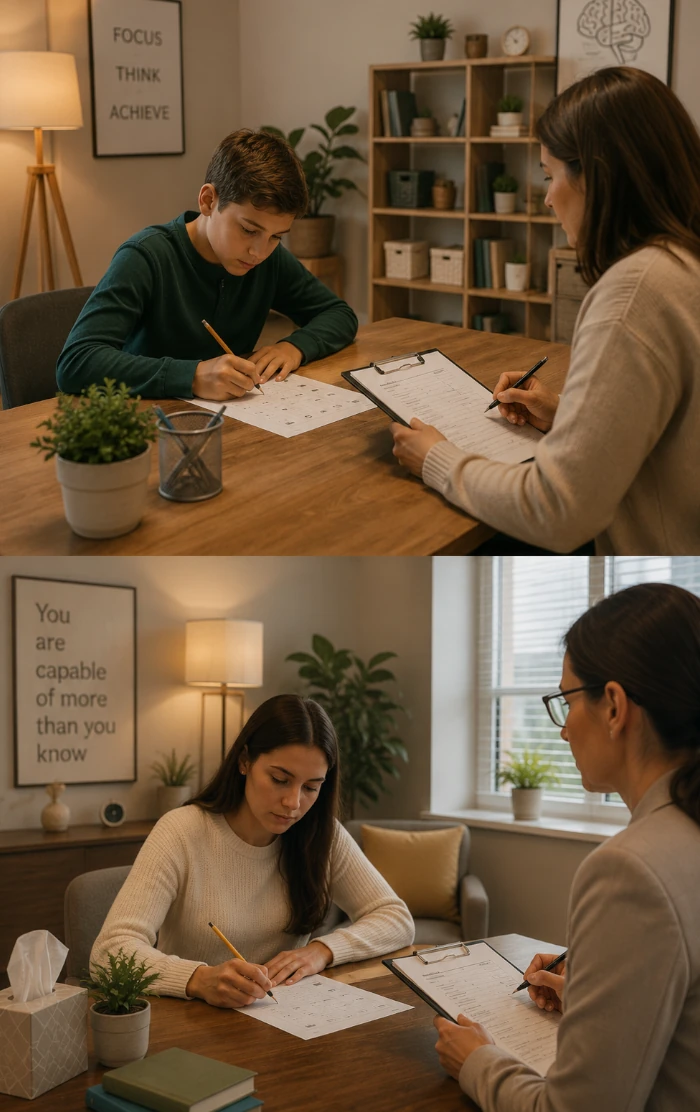
Professional IQ testing in Long Beach – whether you need an assessment for school, employment, gifted program eligibility, or personal insight, we connect you with licensed psychologists in the Long Beach area.
Last Updated: October 2026
Child IQ Testing
WISC-V & Stanford-Binet for ages 6–16. Gifted identification, learning profiles.
Adult IQ Testing
WAIS-IV & WAIS-5 available. Comprehensive adult cognitive assessments. Clinical & occupational.
WISC-V Test
Wechsler Intelligence Scale for Children® Fifth Edition – the gold standard for child IQ testing.
WAIS-IV & WAIS-5 Tests
Wechsler Adult Intelligence Scale® – Fourth Edition (WAIS-IV) and Fifth Edition (WAIS-5) available for adult IQ testing.
Gifted Testing
Identify giftedness for school placement, enrichment, and talent programs using WISC-V or Stanford-Binet.
Stanford-Binet 5
Stanford-Binet Intelligence Scales Fifth Edition – comprehensive cognitive assessment for all ages.
Mensa Testing
Mensa admission testing and preparation for the high-IQ society. Accepts WAIS-IV, WAIS-5, and Stanford-Binet 5 scores.
Full Evaluation
Combined assessment with detailed report and recommendations. Includes WISC-V, WAIS-IV, WAIS-5, or Stanford-Binet 5 as appropriate.
IQ Testing in Long Beach: city context
Long Beach is a major coastal city in Los Angeles County with a 2025 Census population estimate of 450,469. The city covers approximately 50.71 square miles of land and combines a dense urban core, internationally significant port operations, established residential neighborhoods, higher-education campuses, healthcare systems, aerospace activity, and direct access to the broader Los Angeles and Orange County economies.
Long Beach is especially diverse and multilingual. About 44.7% of residents age five and older speak a language other than English at home, and 24.8% of residents are foreign-born. Professional cognitive assessment should therefore consider language proficiency, educational history, cultural context, disability access, and whether bilingual or nonverbal measures are appropriate.
IQ by gender & ethnicity
Long Beach’s population is approximately 50.9% female and 49.1% male. Reliable city-level evidence does not support assigning different average IQ figures to Long Beach men and women. Professional interpretation focuses on the individual’s complete score profile, confidence intervals, educational opportunity, health, language, and testing conditions rather than assumptions based on gender.
Current Census race and ethnicity indicators for Long Beach include:
- Hispanic or Latino: 43.8% of residents.
- White alone: 38.3%; White alone, not Hispanic or Latino: 26.2%.
- Asian alone: 13.1%.
- Black or African American alone: 11.8%.
- American Indian and Alaska Native alone: 1.6%.
- Native Hawaiian and Other Pacific Islander alone: 0.6%.
- Two or more races: 16.4%.
These are population characteristics, not measures of intelligence. No responsible evaluator should infer an individual’s cognitive ability from race, ethnicity, home language, neighborhood, or gender.
What is professional IQ testing?
Intelligence quotient (IQ) testing is a standardized method to measure human cognitive abilities and intellectual potential. Professional IQ tests are administered by licensed psychologists in a controlled environment to ensure accuracy and reliability. Unlike online quizzes, clinical assessments provide a full-scale IQ score along with detailed breakdowns of verbal comprehension, perceptual reasoning, working memory, and processing speed.
In Long Beach, IQ testing is commonly used for gifted program admission, learning disability identification, career guidance, neuropsychological evaluation, and personal development. The results are presented in a comprehensive report that includes normative comparisons, strengths and weaknesses, and actionable recommendations.
Who should get tested?
IQ testing can benefit children, adolescents, and adults in various situations:
- Children: Parents often seek testing for school readiness, gifted placement, or to understand learning challenges.
- Adults: Many adults take IQ tests for career advancement, graduate school applications, or personal curiosity.
- Mensa candidates: High-IQ societies require official test scores for membership.
- Clinical referrals: Psychologists may recommend testing as part of a broader neuropsychological evaluation.
Types of IQ tests
We offer the most recognized and scientifically validated intelligence tests in the field:
- WISC-V (Wechsler Intelligence Scale for Children® – Fifth Edition): The gold standard for children aged 6:0–16:11. It provides a Full-Scale IQ and five primary index scores.
- WAIS-IV (Wechsler Adult Intelligence Scale® – Fourth Edition): The most widely used adult IQ test for ages 16–90. It measures cognitive functioning across four domains.
- Stanford-Binet Intelligence Scales – Fifth Edition: A comprehensive assessment for ages 2–85, often used for gifted identification and clinical evaluations.
- Gifted Testing: Often includes the WISC-V or Stanford-Binet, plus additional creativity and achievement measures.
- Mensa Testing: We provide official Mensa admission testing and preparation materials.
How the testing process works
- Initial consultation: Brief phone or video call to discuss your needs and match you with the right psychologist.
- Testing session: In-person or remote testing (depending on the test) with a licensed psychologist. Most sessions last 1–2 hours.
- Scoring and interpretation: The psychologist scores the test and interprets the results in the context of your background and goals.
- Feedback session: A detailed review of your results, including strengths, weaknesses, and practical recommendations.
- Comprehensive report: You receive a written report with all scores, normative comparisons, and actionable next steps.
How much does IQ testing cost in Long Beach?
The cost of IQ testing in Long Beach varies depending on the type of test, the psychologist's experience, and whether a comprehensive report is required. Typical fees range from $200 to $1,200 for a full assessment. Gifted testing and Mensa admission testing are often at the lower end, while neuropsychological evaluations may be higher.
Some insurance plans cover IQ testing when it's deemed medically necessary. We recommend checking with your provider for details. We also offer affordable payment plans and sliding-scale options for qualifying individuals.
Long Beach's Intellectual History & Legacy
The California State University, Long Beach, founded in 1925, anchors major research in medicine, neuroscience, psychology, aging, marine science, climate, engineering, law, and public health. Its Miller School of Medicine and affiliated institutions in Long Beach's Health District connect academic research with clinical care at MemorialCare, Jackson Memorial Hospital, Holtz Children's Hospital, the Long Beach VA, and the Sylvester Comprehensive Cancer Center.
California State University, Long Beach is Long Beach's public research university, serving more than 54,000 students and offering over 190 degree programs. Long Beach City College operates multiple campuses across the county and supports university transfer, workforce training, nursing, technology, business, and public-service pathways. Together with California State University, Dominguez Hills, Long Beach City College, Nova Southeastern University's regional programs, the Rosenstiel School, and numerous research institutes, these institutions make Long Beach a major center for multilingual education and applied research.
Top Employers in Long Beach Requiring Cognitive Testing
Routine hiring generally does not require a clinical IQ test. Major Long Beach employers may instead use job-related skills tests, licensing examinations, safety assessments, medical fitness evaluations, structured interviews, or leadership-development tools. Important employment settings include:
- Long Beach Unified School District: A major education employer with teaching, school psychology, counseling, special education, technology, transportation, operations, and administrative roles.
- City of Long Beach: Employs professionals across public health, public safety, libraries, planning, engineering, technology, parks, airport operations, harbor services, and municipal administration.
- Port of Long Beach: Supports harbor administration, engineering, environmental planning, security, logistics, rail, trade analysis, construction, and supply-chain careers.
- MemorialCare Long Beach Medical Center: Major healthcare employer for physicians, nurses, rehabilitation specialists, psychologists, researchers, technicians, and administrative staff.
- Miller Children’s & Women’s Hospital Long Beach: Pediatric and maternal-care roles include developmental, behavioral, neurological, rehabilitation, and family-support services.
- VA Long Beach Healthcare System: Employs clinical, neuropsychological, rehabilitation, research, social-work, and administrative professionals serving veterans.
- California State University, Long Beach: Large higher-education employer with faculty, research, student-support, information-technology, laboratory, and administrative positions.
- Long Beach City College: Employs faculty and staff across transfer education, nursing, trades, technology, workforce development, counseling, and student services.
- Boeing and aerospace operations: Long Beach’s aviation history and remaining regional aerospace presence support engineering, maintenance, systems, manufacturing, quality, and technical roles.
- Relativity Space and space-industry employers: Aerospace manufacturing and launch-technology work may involve engineering competency, technical certification, and safety-sensitive requirements.
- Molina Healthcare: Long Beach-founded healthcare organization with roles in clinical operations, analytics, finance, technology, compliance, and member services.
- Maritime, trucking, rail, and warehousing firms: Port-related employers use role-specific safety, licensing, dispatch, equipment, and logistics assessments rather than clinical IQ testing.
- Hospitality and visitor economy: Convention, hotel, restaurant, cruise, waterfront-attraction, and event employers hire across operations, management, culinary, technology, and guest services.
Long Beach IQ Testing by Neighborhood
No credible dataset supports neighborhood-level IQ averages. Neighborhood context is relevant for transportation, school options, language access, employment, and proximity to assessment services.
People in Long Beach who are curious about cognitive problem-solving may begin with an online IQ test, then consult a licensed psychologist when they need standardized scores or a written report.
- Downtown Long Beach: Dense government, convention, hospitality, legal, healthcare, and professional activity with Metro A Line and Long Beach Transit access.
- East Village Arts District: Walkable creative district near Downtown, galleries, cultural organizations, small businesses, and transit services.
- Belmont Shore: Coastal residential and commercial district with walkable Second Street, beach access, schools, and professional services.
- Naples and Alamitos Bay: Waterfront communities near recreation, schools, medical offices, and southeast Long Beach employment centers.
- Belmont Heights and Bluff Heights: Established residential neighborhoods near Retro Row, parks, schools, bicycle routes, and the coastal corridor.
- Bixby Knolls and Los Cerritos: North-central neighborhoods with schools, professional offices, Atlantic Avenue businesses, and access to the 405 and 710 corridors.
- Wrigley: Residential community near the Los Angeles River, Long Beach Boulevard, regional trails, and north-south transit routes.
- West Long Beach: Port-adjacent community where freight traffic, industrial land uses, air quality, and travel times may affect appointment planning.
- North Long Beach: Large multilingual area connected to Lakewood, Compton, Bellflower, and regional transit; families may compare providers across city boundaries.
- East Long Beach and Los Altos: Residential and educational areas near CSULB, Long Beach Airport, medical offices, and the 405 freeway.
- Signal Hill: Independent city surrounded by Long Beach with convenient access to medical, retail, and professional services.
- Lakewood and Seal Beach: Nearby communities whose residents commonly use Long Beach schools, hospitals, employment centers, airport, and psychological providers.
Long Beach Universities and Research Institutions
- California State University, Long Beach: Public research university on a 322-acre campus enrolling more than 42,000 students annually, with undergraduate, graduate, credential, doctoral, and research programs.
- CSULB College of Liberal Arts: Houses psychology and related social-science programs supporting research in cognition, development, behavior, language, and mental health.
- CSULB College of Education: Prepares educators, counselors, school leaders, and student-development professionals and supports research on learning and educational practice.
- CSULB College of Health and Human Services: Includes nursing, social work, health science, physical therapy, recreation, and related applied programs.
- Long Beach City College: Two-campus community college offering transfer education, career technical programs, nursing, technology, business, counseling, and adult education.
- California State University, Dominguez Hills: Nearby public university in Carson with education, psychology, health, business, sciences, and graduate programs.
- UCLA, USC, and UC Irvine: Major regional research universities reachable from Long Beach for specialized graduate study, medical care, and research participation.
- MemorialCare and VA research programs: Clinical settings contribute to medical education, rehabilitation, neurological care, quality improvement, and research.
- Port and environmental research partnerships: Universities and public agencies study freight, air quality, sustainability, transportation, logistics, and coastal resilience.
Long Beach Economic Context
- Population estimate: 450,469 residents as of July 1, 2025.
- Median household income: $87,430 in 2020–2024 Census estimates.
- Per-capita income: $44,575.
- Residents in poverty: 14.8%.
- Bachelor’s degree or higher: 35.6% of adults age 25 and older.
- High-school graduate or higher: 82.4% of adults age 25 and older.
- Mean travel time to work: 29.9 minutes, with longer trips possible across Los Angeles and Orange counties.
- Healthcare and social-assistance activity: Approximately $5.60 billion in 2022 receipts/revenue within the city.
- Transportation and warehousing: Approximately $4.86 billion in 2022 receipts/revenue, reflecting the Port of Long Beach, trucking, rail, warehousing, aviation, and logistics.
- Retail sales: Approximately $4.87 billion in 2022.
- Accommodation and food services: Approximately $1.74 billion in 2022 sales.
- Labor-force participation: 66.2% of residents age 16 and older; female labor-force participation was 61.7%.
- Homeownership: 41.2%, with a median owner-occupied home value of $806,600 and median gross rent of $1,871.
- Language and global ties: 44.7% speak a language other than English at home and 24.8% are foreign-born.
- Regional strengths: International trade, port logistics, aerospace and space technology, healthcare, education, public administration, tourism, hospitality, manufacturing, energy, creative industries, and professional services.
Long Beach School District Data
- Long Beach Unified School District: Serves Long Beach, Signal Hill, Lakewood, and Avalon through elementary, K–8, middle, comprehensive high-school, alternative, and specialized campuses.
- Advanced learning: California districts develop local approaches to gifted and advanced instruction; parents should verify current LBUSD referral, screening, course, and school-placement procedures directly with the district.
- PACE at Long Beach Polytechnic High School: Competitive college-preparatory pathway known for accelerated coursework and strong university preparation.
- CIC at Long Beach Poly: Center for International Curriculum offers an academically rigorous program with globally oriented studies.
- QUEST at Millikan High School: Advanced academic pathway that combines honors and Advanced Placement opportunities with a structured cohort experience.
- California Academy of Mathematics and Science: LBUSD-managed public magnet high school located on the CSU Dominguez Hills campus with a strong mathematics and science focus.
- Sato Academy of Mathematics and Science: Specialized LBUSD high school emphasizing biomedical, engineering, and technology pathways.
- McBride High School: Career-themed pathways include engineering, health and medical, and public-service preparation.
- Advanced Placement and dual enrollment: High schools offer AP, honors, pathway, and college-credit options; availability differs by campus and year.
- Long Beach College Promise: Partnership among LBUSD, Long Beach City College, CSULB, and the city supports college preparation and transition.
- School psychologists: District teams evaluate suspected disabilities and educational needs through legally defined school processes; these evaluations are different from private gifted or Mensa testing.
- Language access: Assessment planning should consider multilingual history, English proficiency, interpreter needs, and whether a nonverbal measure is appropriate.
- Private and charter schools: Admission and cognitive-testing requirements vary; families should obtain the current written policy before scheduling an outside assessment.
- Nearby district options: Families may also evaluate programs in Los Alamitos, ABC, Bellflower, Paramount, Compton, and other surrounding districts depending on residency and transfer rules.
Local Testing Centers and Psychologists
- MemorialCare Long Beach Medical Center: Major hospital with neurological, rehabilitation, behavioral-health, and specialty-care resources; referral and testing availability vary.
- Miller Children’s & Women’s Hospital Long Beach: Pediatric specialty services include developmental, neurological, rehabilitation, behavioral, and family-centered care.
- VA Long Beach Healthcare System: Provides neurological, mental-health, rehabilitation, and specialty services for eligible veterans.
- Dignity Health – St. Mary Medical Center: Long Beach hospital offering medical, rehabilitation, and behavioral-health services.
- UCI Health and regional academic centers: Nearby Orange County programs may provide specialized neuropsychology, memory, neurology, developmental, and rehabilitation services.
- CSULB psychology and education programs: University faculty and training programs support research, education, and possible study participation; they should not be assumed to provide every clinical service.
- Long Beach Unified School District: School psychologists conduct educational evaluations after referral through the district’s special-education or student-support process.
- Private licensed psychologists: Providers in Long Beach and nearby communities offer WISC-V, WAIS-IV/WAIS-5, Stanford-Binet, ADHD, learning-disability, autism, neuropsychological, and psychoeducational evaluations.
- Bilingual and culturally responsive assessment: Families should ask about Spanish, Khmer, Tagalog, and other language competencies, interpreter policies, and nonverbal testing options.
- Provider verification: Confirm California licensure, age specialization, test qualifications, report scope, school or Mensa acceptance, fees, insurance status, and whether in-person administration is required.
Long Beach Events and Conferences
- CSULB research talks and conferences: Psychology, education, health, engineering, science, and social-science departments host academic events throughout the year.
- Long Beach College Promise events: College-readiness, transfer, career, and family programs support students moving from LBUSD to LBCC and CSULB.
- Long Beach Unified family workshops: District and school events address advanced coursework, magnet pathways, special education, college planning, and student support.
- California Psychological Association programs: State and regional continuing education addresses assessment, ethics, diversity, neuropsychology, telehealth, and professional practice.
- MemorialCare and VA education: Medical grand rounds and professional programs may cover neurology, rehabilitation, behavioral health, pediatrics, and aging.
- Aquarium of the Pacific: Public science programming supports marine biology, environmental literacy, data interpretation, and STEM interest.
- Long Beach events: The Grand Prix, port programs, cultural festivals, library lectures, and 2028 Olympic planning create public-learning and volunteer opportunities.
- Mensa activities: Greater Los Angeles and Southern California Mensa calendars may include games, discussions, lectures, youth activities, and regional gatherings; verify current schedules.
Transportation and Accessibility
- Major roads: I-710/Long Beach Freeway, I-405/San Diego Freeway, SR-91, SR-22, Pacific Coast Highway/SR-1, Lakewood Boulevard, Long Beach Boulevard, Atlantic Avenue, Anaheim Street, and Ocean Boulevard.
- Public transit: Long Beach Transit operates an extensive bus network serving Long Beach and nearby communities, including frequent corridors to CSULB, Downtown, Lakewood, Carson, and regional rail stations.
- Downtown Passport: Long Beach Transit’s Passport service connects major Downtown and waterfront destinations; current fares and routing should be confirmed before travel.
- Dial-A-Lift: Paratransit service supports eligible riders whose disabilities prevent use of regular fixed-route buses.
- Metro A Line: Light rail connects Downtown Long Beach with Compton, South Los Angeles, Downtown Los Angeles, and onward Metro transfers.
- Water transit: Seasonal or scheduled water-taxi services may connect waterfront destinations; service changes with schedules and weather.
- Airport: Long Beach Airport (LGB) provides domestic commercial service, cargo, and general aviation with convenient access from the 405 and Lakewood Boulevard.
- Other airports: Los Angeles International Airport and John Wayne Airport are regional alternatives; travel time varies substantially with traffic.
- Port and freight traffic: Truck, rail, and terminal activity can affect I-710, Downtown approaches, West Long Beach, and appointment travel near shift changes.
- Distance to other cities: Roughly 25 miles to Downtown Los Angeles, 25 miles to Anaheim, 30 miles to Irvine, about 110 miles to San Diego, and about 120 miles to Santa Barbara; freeway travel times vary widely.
- Walkability: Downtown, East Village, Belmont Shore, Retro Row, Naples, and waterfront districts offer walkable destinations, but distances across the city are substantial.
- Bike infrastructure: The Shoreline Pedestrian/Bicycle Path, Los Angeles River path, San Gabriel River trail, protected lanes, neighborhood bikeways, and beach connections support active travel.
- Accessibility: Confirm elevator access, parking, quiet waiting areas, restroom access, and accommodation needs with the testing office in advance.
- Appointment planning: Allow extra time for port traffic, freeway congestion, Downtown events, beach crowds, school arrival periods, and construction.
Long Beach Weather and Seasonal Considerations
- Climate: Long Beach has a coastal Mediterranean climate with mild winters, dry summers, and cooler conditions than many inland Los Angeles County communities.
- Marine layer: Late spring and early summer mornings can be cloudy and cool before afternoon clearing.
- Summer conditions: Coastal areas are often moderate, while east and north Long Beach can be warmer; hydration and climate-controlled testing remain important.
- Winter rain: Most rainfall occurs from late fall through early spring, occasionally causing flooding, traffic delays, and slippery travel conditions.
- Santa Ana winds: Hot, dry wind events can increase heat, allergies, wildfire risk, and travel disruptions.
- Air quality: Port, freeway, wildfire-smoke, and regional pollution conditions may affect sensitive individuals; check alerts when needed.
- Coastal events: Major waterfront festivals, conventions, cruise activity, and the Long Beach Grand Prix can affect parking and Downtown access.
- Earthquake preparedness: Providers should maintain emergency plans, and families should follow local guidance after significant seismic events.
- Peak school-testing periods:
- August–October: New-school-year referrals, advanced-course planning, and accommodation requests.
- November–January: Private-school, magnet, and application deadlines.
- January–April: Graduate admissions, spring evaluations, and accommodation documentation.
- May–July: Summer testing with fewer school-day conflicts.
- Preparation: Adequate sleep, a normal meal, prescribed medication taken as directed, water, glasses or hearing devices, and early arrival are more useful than test coaching.
Areas we serve
We support clients throughout the City of Long Beach and coordinate with providers serving nearby communities. Appointment location, age range, language capacity, specialty, and in-person requirements vary by psychologist, so confirm those details before scheduling.
Frequently Asked Questions
WISC-V is for children aged 6–16, while WAIS-IV is for adults aged 16–90. Each is normed for its specific age group.
Most IQ tests take between 60 and 90 minutes, plus a feedback session. Allow 2–3 hours total.
No, you can book directly with our psychologists. We serve both self-referred and professionally referred individuals.
Potentially. Acceptance depends on the exact test, edition, qualifying score, administration date, examiner credentials, and current Mensa documentation rules. Confirm before testing.
Some plans cover cognitive assessments when there is a clinical indication. Check with your provider.
Get a good night's sleep, eat a healthy meal, and arrive relaxed. No specific preparation is needed.
You'll receive a comprehensive report with your scores and tailored recommendations.
Some interview and feedback components may be available remotely, but many standardized cognitive tests require in-person administration. Confirm with the psychologist and the organization receiving the report.