
IQ Testing in Little Rock

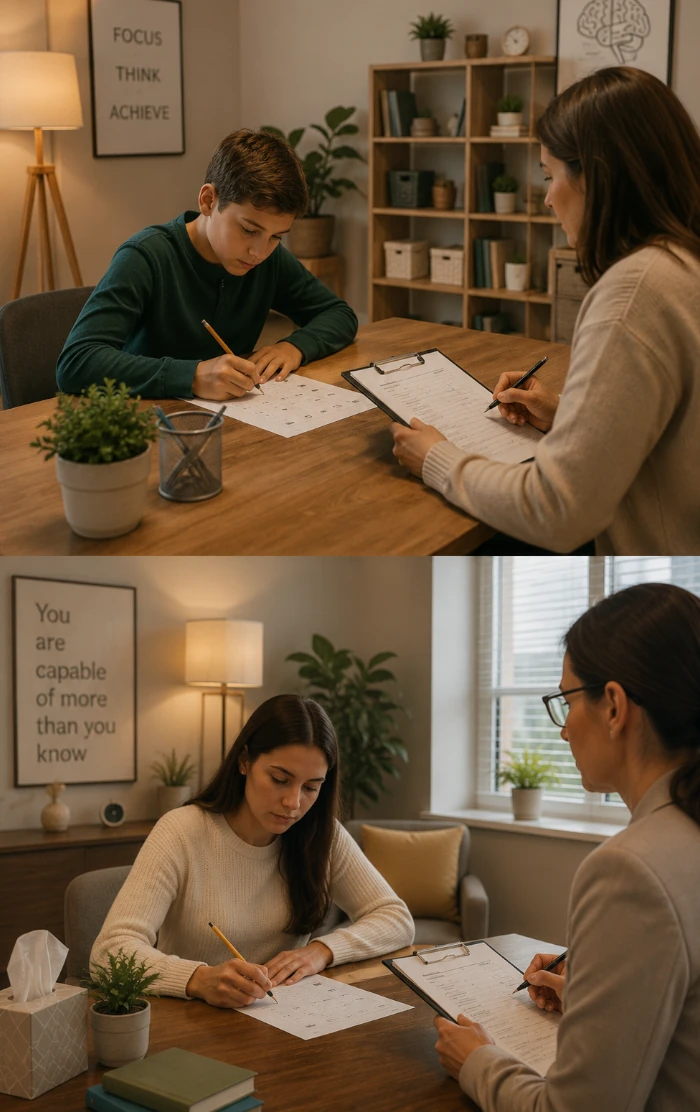
Professional IQ testing in Little Rock – whether you need an assessment for school, employment, gifted program eligibility, or personal insight, we connect you with licensed psychologists in the Little Rock area.
Last Updated: September 2026
Child IQ Testing
WISC-V & Stanford-Binet for ages 6–16. Gifted identification, learning profiles.
Adult IQ Testing
WAIS-IV & WAIS-5 available. Comprehensive adult cognitive assessments. Clinical & occupational.
WISC-V Test
Wechsler Intelligence Scale for Children® Fifth Edition – the gold standard for child IQ testing.
WAIS-IV & WAIS-5 Tests
Wechsler Adult Intelligence Scale® – Fourth Edition (WAIS-IV) and Fifth Edition (WAIS-5) available for adult IQ testing.
Gifted Testing
Identify giftedness for school placement, enrichment, and talent programs using WISC-V or Stanford-Binet.
Stanford-Binet 5
Stanford-Binet Intelligence Scales Fifth Edition – comprehensive cognitive assessment for all ages.
Mensa Testing
Mensa admission testing and preparation for the high-IQ society. Accepts WAIS-IV, WAIS-5, and Stanford-Binet 5 scores.
Full Evaluation
Combined assessment with detailed report and recommendations. Includes WISC-V, WAIS-IV, WAIS-5, or Stanford-Binet 5 as appropriate.
IQ Testing in Little Rock: city context
Gender, age and demographic statistics
Little Rock had an estimated 206,427 residents on July 1, 2025. Census 2020–2024 estimates report that 53.1% of residents are female, 24.3% are under age 18, and 15.6% are age 65 or older. The city is 44.0% White alone, 39.8% Black alone, 3.1% Asian alone, 0.3% American Indian or Alaska Native alone, 0.1% Native Hawaiian or Other Pacific Islander alone, 7.6% reporting two or more races, and 10.6% Hispanic or Latino; race and Hispanic-origin categories are not mutually exclusive.
These figures describe community context, not intelligence. IQ scores must be interpreted individually in light of age, education, disability, health, culture, language exposure, and testing conditions. In Little Rock, 13.5% of residents age five and older speak a language other than English at home, and 8.3% are foreign-born. Examiners should document language history, educational opportunity, sensory or motor needs, and whether verbal, nonverbal, or bilingual procedures are appropriate.
- Female residents: 53.1%.
- Children and teens: 24.3% are under 18.
- Older adults: 15.6% are 65 or older.
- Language context: 13.5% speak a language other than English at home.
- Educational context: 92.6% of adults age 25+ completed high school and 44.6% hold a bachelor’s degree or higher.
- Interpretation: No gender, racial, ethnic, immigration, disability, or language group should be presumed to have a particular IQ profile.
What is professional IQ testing?
Intelligence quotient (IQ) testing is a standardized method to measure human cognitive abilities and intellectual potential. Professional IQ tests are administered by licensed psychologists in a controlled environment to ensure accuracy and reliability. Unlike online quizzes, clinical assessments provide a full-scale IQ score along with detailed breakdowns of verbal comprehension, perceptual reasoning, working memory, and processing speed.
In Little Rock, IQ testing is commonly used for gifted program admission, learning disability identification, career guidance, neuropsychological evaluation, and personal development. The results are presented in a comprehensive report that includes normative comparisons, strengths and weaknesses, and actionable recommendations.
Who should get tested?
IQ testing can benefit children, adolescents, and adults in various situations:
- Children: Parents often seek testing for school readiness, gifted placement, or to understand learning challenges.
- Adults: Many adults take IQ tests for career advancement, graduate school applications, or personal curiosity.
- Mensa candidates: High-IQ societies require official test scores for membership.
- Clinical referrals: Psychologists may recommend testing as part of a broader neuropsychological evaluation.
Types of IQ tests
We offer the most recognized and scientifically validated intelligence tests in the field:
- WISC-V (Wechsler Intelligence Scale for Children® – Fifth Edition): The gold standard for children aged 6:0–16:11. It provides a Full-Scale IQ and five primary index scores.
- WAIS-IV (Wechsler Adult Intelligence Scale® – Fourth Edition): The most widely used adult IQ test for ages 16–90. It measures cognitive functioning across four domains.
- Stanford-Binet Intelligence Scales – Fifth Edition: A comprehensive assessment for ages 2–85, often used for gifted identification and clinical evaluations.
- Gifted Testing: Often includes the WISC-V or Stanford-Binet, plus additional creativity and achievement measures.
- Mensa Testing: We provide official Mensa admission testing and preparation materials.
How the testing process works
- Initial consultation: Brief phone or video call to discuss your needs and match you with the right psychologist.
- Testing session: In-person or remote testing (depending on the test) with a licensed psychologist. Most sessions last 1–2 hours.
- Scoring and interpretation: The psychologist scores the test and interprets the results in the context of your background and goals.
- Feedback session: A detailed review of your results, including strengths, weaknesses, and practical recommendations.
- Comprehensive report: You receive a written report with all scores, normative comparisons, and actionable next steps.
How much does IQ testing cost in Little Rock?
The cost of IQ testing in Little Rock varies depending on the type of test, the psychologist's experience, and whether a comprehensive report is required. Typical fees range from $200 to $1,200 for a full assessment. Gifted testing and Mensa admission testing are often at the lower end, while neuropsychological evaluations may be higher.
Some insurance plans cover IQ testing when it's deemed medically necessary. We recommend checking with your provider for details. We also offer affordable payment plans and sliding-scale options for qualifying individuals.
Little Rock's Intellectual History & Legacy
- State-capital learning environment: Little Rock’s government, legal, policy, nonprofit, and civic institutions create substantial demand for analytical reasoning, writing, public administration, and data interpretation.
- Central High and civil-rights history: Little Rock Central High School National Historic Site connects local education with national constitutional, social, and civic history.
- Medical and scientific education: UAMS, Arkansas Children’s, the Arkansas Children’s Research Institute, and affiliated clinics support medicine, public health, neuroscience, rehabilitation, and behavioral research.
- Higher education: UA Little Rock, the Clinton School of Public Service, Philander Smith University, Arkansas Baptist College, and nearby institutions support undergraduate, graduate, professional, and adult learning.
- Gifted-education leadership: UA Little Rock’s Jodie Mahony Center for Gifted Education provides professional development, research, graduate preparation, and pre-collegiate programming.
- Cultural learning: The Clinton Presidential Center, Arkansas Museum of Fine Arts, Museum of Discovery, Historic Arkansas Museum, Mosaic Templars Cultural Center, libraries, and Riverfront Park provide broad enrichment.
Top Employers in Little Rock Requiring Cognitive Skills
- State of Arkansas and local government: Public administration, law, budgeting, policy, IT, planning, communications, and regulatory work.
- UAMS and Arkansas Children’s: Medicine, nursing, research, public health, rehabilitation, psychology, data, administration, and clinical operations.
- Baptist Health and CHI St. Vincent: Healthcare, diagnostics, behavioral health, technology, finance, and hospital operations.
- Dillard’s: Retail management, merchandising, analytics, logistics, finance, technology, and corporate operations.
- Bank OZK, Stephens, and other financial firms: Banking, investment, risk, accounting, compliance, economics, and client services.
- Dassault Falcon Jet and aerospace employers: Engineering, avionics, manufacturing, quality, technical documentation, and skilled trades.
- Entergy Arkansas, utilities, and infrastructure firms: Engineering, grid operations, safety, cybersecurity, and project management.
- Schools, universities, and nonprofits: Teaching, research, counseling, administration, community services, and program evaluation.
IQ scores should never be used as a stand-alone hiring screen. Career planning should combine cognitive results with interests, education, credentials, work samples, personality, disability accommodations, and practical experience.
Little Rock IQ Testing by City Area
- Downtown and River Market: Government, courts, the Clinton Presidential Center, museums, hotels, and transit connections.
- Midtown and the medical corridor: UAMS, hospitals, clinics, schools, and established residential neighborhoods.
- West Little Rock and Chenal: Medical offices, professional services, shopping, corporate sites, and newer residential development.
- Hillcrest and the Heights: Compact neighborhood centers, schools, small businesses, and easier walk-and-transit combinations in selected areas.
- South Main and the Quapaw Quarter: Historic neighborhoods, arts, restaurants, civic organizations, and downtown access.
- Southwest Little Rock: Diverse residential communities, schools, employers, and multilingual service needs.
- East Little Rock and the airport corridor: Aviation, logistics, industrial activity, and access to Clinton National Airport.
These areas are listed for practical access planning, not SEO repetition. Testing quality depends on examiner qualifications, appropriate instruments, valid administration, and a report designed for the referral question.
Little Rock Universities and Research Institutions
- University of Arkansas at Little Rock: Psychology, education, engineering, computer science, business, social science, law, and graduate research.
- University of Arkansas for Medical Sciences: Medicine, nursing, public health, pharmacy, health professions, biomedical research, and clinical training.
- Clinton School of Public Service: Public-service graduate education, field projects, policy, leadership, and community problem solving.
- Philander Smith University: Liberal arts, social sciences, business, education, and civic leadership.
- Arkansas Baptist College: Undergraduate education and community-focused programming.
- Arkansas Children’s Research Institute: Pediatric research and clinical collaboration connected to Arkansas Children’s and UAMS.
- Jodie Mahony Center for Gifted Education: Gifted-education research, training, graduate study, AP institutes, and pre-collegiate opportunities.
Little Rock Economic Context
- Median household income: $63,003 in 2020–2024 Census estimates.
- Per-capita income: $43,712.
- Residents in poverty: 17.5%.
- Bachelor's degree or higher: 44.6% of adults age 25 and older.
- Mean travel time to work: 18.5 minutes, although river crossings, interstate construction, school traffic, and regional commutes can take longer.
- Health and social-assistance activity: Census business data report approximately $8.44 billion in 2022 receipts/revenue within the city.
- Transportation and warehousing: Approximately $822.0 million in 2022 receipts/revenue reflects Little Rock’s central location and distribution role.
- Retail sales: Approximately $5.80 billion in 2022.
- Accommodation and food services: Approximately $989.4 million in 2022 sales.
- Regional strengths: State government, healthcare, education, finance, insurance, law, aerospace, manufacturing, logistics, utilities, technology, nonprofit services, and tourism.
Economic context can affect access to private testing, transportation, insurance, tutoring, and enrichment, but it does not determine intellectual potential. Reports should focus on the individual’s demonstrated performance and practical support needs.
For Little Rock residents who want an informal introduction to reasoning questions, an online IQ test can be a useful starting point, while a licensed psychologist is necessary when formal documentation or diagnosis is required.
Little Rock Public Schools Data
Little Rock School District gifted services
Little Rock School District maintains a Gifted and Talented department and follows Arkansas requirements for identifying and serving students with advanced potential. Families should request the current referral calendar, screening steps, appeal process, grade-level service model, and accepted outside documentation directly from the district.
Differentiation, grouping, and enrichment
Depending on grade and school, advanced learners may receive greater depth and complexity, compacted work, flexible grouping, enriched projects, advanced content, or support from gifted-education staff. Services are instructional responses and should not be described as a guaranteed separate class at every campus.
Arkansas identification framework
Arkansas gifted education uses multiple sources of evidence rather than one IQ score alone. Depending on the program and grade, evidence may include ability, achievement, creativity, motivation, work samples, teacher or parent observations, and documented need for advanced instruction. A private report can inform planning but does not automatically create district eligibility.
Magnet, advanced, and specialized pathways
Little Rock students may pursue magnet, Advanced Placement, concurrent-credit, arts, STEM, career-technical, International Baccalaureate, or subject-acceleration opportunities through district, charter, private, and regional programs. Current prerequisites, lotteries, attendance rules, and application deadlines should be verified with the receiving school.
Private, charter, and regional options
Families may consider eStem Public Charter Schools, LISA Academy, Episcopal Collegiate School, Pulaski Academy, Little Rock Christian Academy, The Anthony School, Catholic High School for Boys, Mount St. Mary Academy, homeschool programs, and other central Arkansas options. Each program sets its own admission and testing requirements.
Local Testing Centers and Psychologists
Local testing contact: Integrated Psych Solutions, 218 N. McKinley, Little Rock, AR 72205, (501) 615-8838. Its published materials describe cognitive evaluations and testing of intellectual and cognitive ability for adults and children. Before scheduling, confirm the exact instrument, age range, referral question, report recipient, insurance status, turnaround time, and whether the result will meet school, Mensa, disability, legal, or workplace requirements.
- Integrated Psych Solutions: Cognitive, neuropsychological, ADHD, autism, memory, and other evaluations at a Little Rock office.
- UAMS and Arkansas Children’s: Psychological and pediatric neuropsychological evaluations for clinical, developmental, learning, behavioral, and medical questions.
- Arkansas Neuropsychology and Behavioral Health: Diagnostic and neuropsychological services; confirm age range and referral requirements.
- Expert Psychological Evaluations and other private practices: Intelligence, academic, forensic, personality, and diagnostic assessments may be available depending on the referral question.
- Little Rock School District: School evaluations follow special-education and gifted-education procedures and are not replaced by a private IQ score.
- Selection checklist: Verify Arkansas licensure, examiner training, age range, test edition, language capability, report purpose, fees, insurance, turnaround, and score-recipient rules.
Little Rock Events and Conferences
Learning and professional-development opportunities may be offered through UA Little Rock, UAMS, the Clinton School, the Jodie Mahony Center for Gifted Education, Little Rock School District, Central Arkansas Library System, the Museum of Discovery, Arkansas Museum of Fine Arts, healthcare systems, professional associations, and civic organizations.
- Education and career events: College fairs, graduate-school information sessions, STEM showcases, teacher institutes, career expos, and employer programs.
- Healthcare and research events: UAMS lectures, public-health programs, pediatric research events, continuing education, and clinical conferences.
- Gifted-family resources: Jodie Mahony Center programs, library events, coding, mathematics, science, arts, debate, and Arkansas Mensa activities when scheduled.
- Planning: Dates and eligibility change; verify current calendars rather than treating an IQ-testing page as an event listing.
Transportation and Accessibility
- Major roads: I-30 crosses the Arkansas River and connects downtown with southwest Little Rock; I-630 runs east–west through central Little Rock; I-430 forms a western bypass; I-440 serves the airport and eastern industrial areas; I-530 heads toward Pine Bluff; US 67/167 and I-40 are reached across the river in North Little Rock. Major city corridors include University Avenue, Markham Street, Cantrell Road/AR 10, Chenal Parkway, Colonel Glenn Road, Baseline Road, Broadway, Main Street, and Roosevelt Road.
- Public transit: Rock Region METRO operates fixed-route buses throughout Pulaski County, with routes serving downtown, UAMS, Baptist Medical Center, UA Little Rock, southwest Little Rock, west Little Rock, and other employment and residential areas.
- Streetcar and on-demand service: The fare-free METRO Streetcar connects downtown Little Rock and North Little Rock. METRO also operates on-demand and accessibility services in designated areas; riders should check current eligibility, booking, and service-zone rules.
- Airport: Bill and Hillary Clinton National Airport (LIT), at 1 Airport Road inside Little Rock, is the city’s commercial airport. It offers service from major U.S. airlines and nonstop connections to multiple hubs and destinations.
- Distance to other cities: Approximately 3 miles to central North Little Rock, 33 miles to Conway, 45 miles to Pine Bluff, 55 miles to Hot Springs, 137 miles to Memphis, about 190 miles to Fayetteville, and roughly 320 miles to Dallas; actual drive time varies with construction and weather.
- Walkability: Downtown, the River Market, South Main/SoMa, the Quapaw Quarter, Hillcrest, and portions of the Heights are among the easiest areas for combining walking with dining, civic services, or appointments. Much of west and southwest Little Rock remains car-oriented.
- Bike infrastructure: The Arkansas River Trail forms a 15.6-mile loop on both sides of the river, anchored by the Big Dam Bridge and Clinton Presidential Park Bridge. City facilities also include trails, bike lanes, sharrows, sidepaths, and developing connections such as the Southeast Trail.
- Accessibility and appointment planning: Ask about accessible entrances, elevators, parking, bus stops, paratransit eligibility, sensory needs, and rest breaks. Allow extra time for I-30 crossing work, I-630 congestion, severe thunderstorms, flash flooding, ice, heat, or major downtown events.
Little Rock Weather and Seasonal Considerations
- Summer heat and humidity: Hot, humid conditions can affect sleep, hydration, medication tolerance, and stamina. Morning appointments and a temperature-controlled testing room may help.
- Severe thunderstorms and tornado risk: Spring and fall storms can interrupt travel, electricity, schools, and concentration. Reschedule when warnings or unsafe road conditions are present.
- Heavy rain and flooding: Intense rain can create localized street flooding and delays near low-lying roads and creek crossings.
- Winter ice: Snow is usually limited, but freezing rain and ice can create disproportionate travel disruption, especially on bridges and hills.
- Allergies: Tree pollen, grass, mold, and seasonal air-quality issues may affect comfort and attention; unusual symptoms should be documented.
- Testing principle: Results obtained during acute illness, severe sleep loss, heat stress, storm anxiety, medication changes, or unsafe travel should be interpreted cautiously.
Areas we serve
We support all areas of Little Rock.
Frequently Asked Questions
WISC-V is for children aged 6–16, while WAIS-IV is for adults aged 16–90. Each is normed for its specific age group.
Most IQ tests take between 60 and 90 minutes, plus a feedback session. Allow 2–3 hours total.
No, you can book directly with our psychologists. We serve both self-referred and professionally referred individuals.
Some professionally administered scores may be submitted as prior evidence, but acceptance is determined solely by American Mensa under its current rules.
Some plans cover cognitive assessments when there is a clinical indication. Check with your provider.
Get a good night's sleep, eat a healthy meal, and arrive relaxed. No specific preparation is needed.
You'll receive a comprehensive report with your scores and tailored recommendations.
Interviews and feedback may be available remotely, but many standardized cognitive tests require controlled administration and may need an in-person appointment. Contact us for details.