
IQ Testing in Lincoln
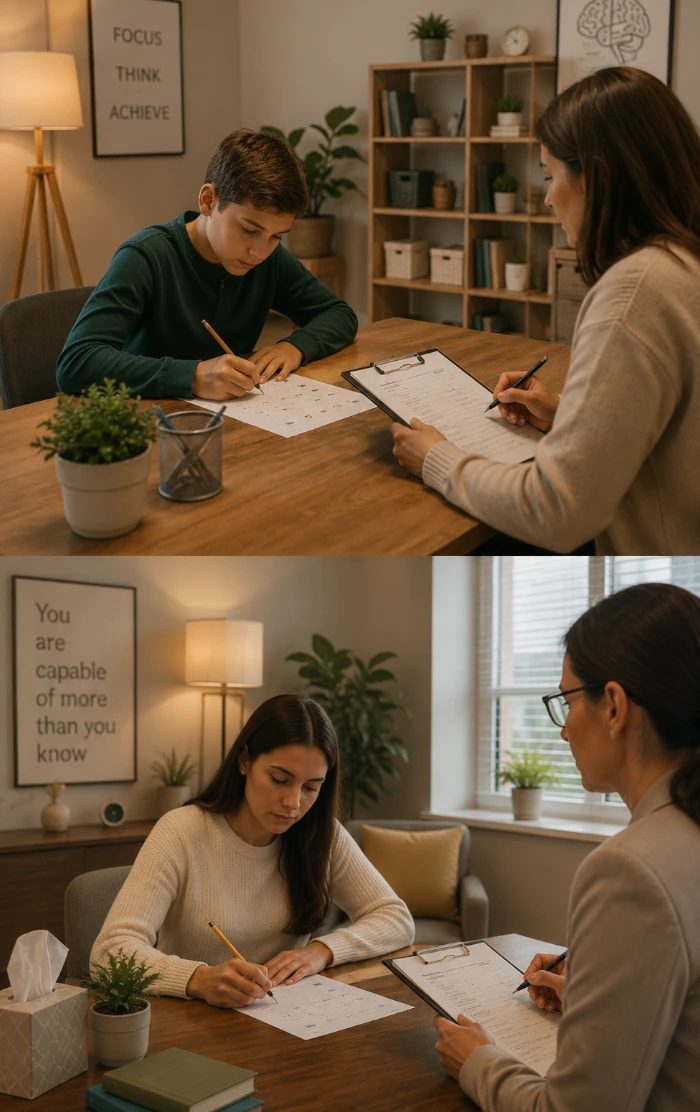
Professional IQ testing in Lincoln – whether you need an assessment for school, employment, gifted program eligibility, or personal insight, we connect you with licensed psychologists in the Lincoln area.
Last Updated: September 2026
Child IQ Testing
WISC-V & Stanford-Binet for ages 6–16. Gifted identification, learning profiles.
Adult IQ Testing
WAIS-IV & WAIS-5 available. Comprehensive adult cognitive assessments. Clinical & occupational.
WISC-V Test
Wechsler Intelligence Scale for Children® Fifth Edition – the gold standard for child IQ testing.
WAIS-IV & WAIS-5 Tests
Wechsler Adult Intelligence Scale® – Fourth Edition (WAIS-IV) and Fifth Edition (WAIS-5) available for adult IQ testing.
Gifted Testing
Identify giftedness for school placement, enrichment, and talent programs using WISC-V or Stanford-Binet.
Stanford-Binet 5
Stanford-Binet Intelligence Scales Fifth Edition – comprehensive cognitive assessment for all ages.
Mensa Testing
Mensa qualification guidance and professionally administered testing that may be submitted as prior evidence, subject to American Mensa’s current rules.
Full Evaluation
Combined assessment with detailed report and recommendations. Includes WISC-V, WAIS-IV, WAIS-5, or Stanford-Binet 5 as appropriate.
IQ Testing in Lincoln: city context
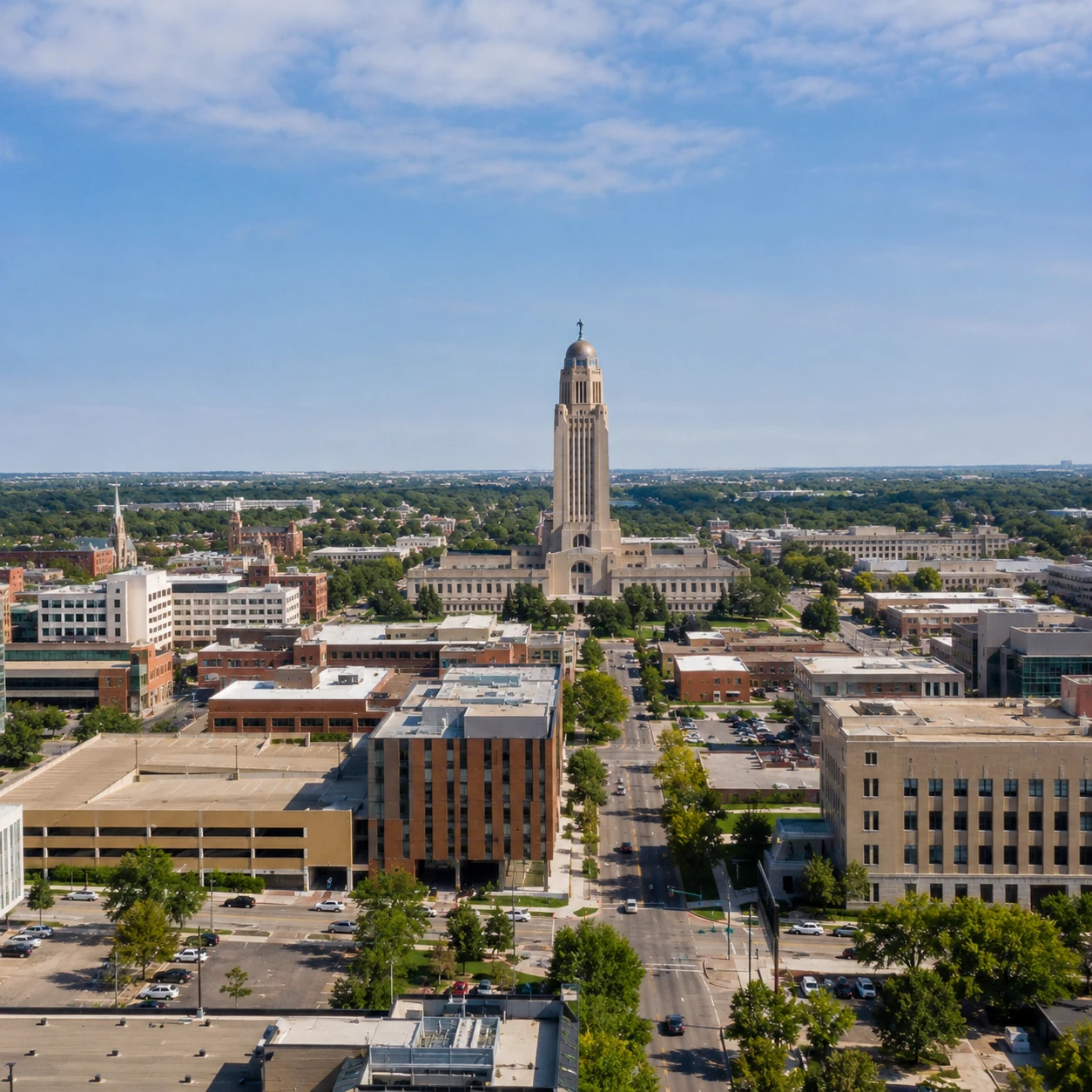
Lincoln is Nebraska's capital and the center of Lancaster County. The U.S. Census Bureau estimated 301,522 residents in 2025, up 3.5% from the 2020 estimates base, across approximately 97.69 square miles of land. The city combines state government, the University of Nebraska–Lincoln, healthcare and rehabilitation systems, public schools, technology and insurance employers, manufacturing, and a growing research and entrepreneurship ecosystem.
The local assessment environment is shaped by Lincoln Public Schools, the University of Nebraska–Lincoln, Nebraska Wesleyan University, Southeast Community College, Bryan Health, Madonna Rehabilitation Hospitals, state agencies, private psychologists, and regional specialty providers in Omaha.
Gender, age and demographic statistics
Current Census estimates describe a diverse city, but demographic percentages do not establish group-specific IQ averages or predict an individual's cognitive ability:
- Female population: 49.8%.
- Residents under age 18: 21.9%.
- Residents age 65 or older: 14.8%.
- White alone: 79.2%.
- Black or African American alone: 4.1%.
- American Indian and Alaska Native alone: 0.7%.
- Asian alone: 4.5%.
- Native Hawaiian and Other Pacific Islander alone: 0.1%.
- Two or more races: 8.9%.
- Hispanic or Latino: 9.0%; Hispanic origin may overlap with racial categories.
- Foreign-born residents: 9.4% in 2020–2024 estimates.
- Language other than English at home: 13.2% of residents age five and older.
- Education: 93.2% of adults age 25 and older are high-school graduates or higher, and 41.8% hold a bachelor's degree or higher.
- Gender interpretation: Professional tests use age-based national norms rather than separate Lincoln male or female IQ averages.
- Individual interpretation: Education, language, culture, disability, medical history, attention, mood, sleep, and testing conditions are considered when scores are interpreted.
What is professional IQ testing?
Intelligence quotient (IQ) testing is a standardized method to measure human cognitive abilities and intellectual potential. Professional IQ tests are administered by licensed psychologists in a controlled environment to ensure accuracy and reliability. Unlike online quizzes, clinical assessments provide a full-scale IQ score along with detailed breakdowns of verbal comprehension, perceptual reasoning, working memory, and processing speed.
In Lincoln, IQ testing is commonly used for gifted program admission, learning disability identification, career guidance, neuropsychological evaluation, and personal development. The results are presented in a comprehensive report that includes normative comparisons, strengths and weaknesses, and actionable recommendations.
Who should get tested?
IQ testing can benefit children, adolescents, and adults in various situations:
- Children: Parents often seek testing for school readiness, gifted placement, or to understand learning challenges.
- Adults: Many adults take IQ tests for career advancement, graduate school applications, or personal curiosity.
- Mensa candidates: High-IQ societies require official test scores for membership.
- Clinical referrals: Psychologists may recommend testing as part of a broader neuropsychological evaluation.
Types of IQ tests
We offer the most recognized and scientifically validated intelligence tests in the field:
- WISC-V (Wechsler Intelligence Scale for Children® – Fifth Edition): The gold standard for children aged 6:0–16:11. It provides a Full-Scale IQ and five primary index scores.
- WAIS-IV (Wechsler Adult Intelligence Scale® – Fourth Edition): The most widely used adult IQ test for ages 16–90. It measures cognitive functioning across four domains.
- Stanford-Binet Intelligence Scales – Fifth Edition: A comprehensive assessment for ages 2–85, often used for gifted identification and clinical evaluations.
- Gifted Testing: Often includes the WISC-V or Stanford-Binet, plus additional creativity and achievement measures.
- Mensa Testing: We provide professionally administered cognitive testing and Mensa qualification guidance; American Mensa alone determines whether evidence is accepted.
How the testing process works
- Initial consultation: Brief phone or video call to discuss your needs and match you with the right psychologist.
- Testing session: In-person or remote testing (depending on the test) with a licensed psychologist. Most sessions last 1–2 hours.
- Scoring and interpretation: The psychologist scores the test and interprets the results in the context of your background and goals.
- Feedback session: A detailed review of your results, including strengths, weaknesses, and practical recommendations.
- Comprehensive report: You receive a written report with all scores, normative comparisons, and actionable next steps.
How much does IQ testing cost in Lincoln?
The cost of IQ testing in Lincoln varies depending on the type of test, the psychologist's experience, and whether a comprehensive report is required. Typical fees range from $200 to $1,200 for a full assessment. Gifted testing and Mensa admission testing are often at the lower end, while neuropsychological evaluations may be higher.
A brief online IQ test can help Lincoln residents get acquainted with common question formats, but a qualified examiner should handle any assessment intended for school, work, or healthcare decisions.
Some insurance plans cover IQ testing when it's deemed medically necessary. We recommend checking with your provider for details. We also offer affordable payment plans and sliding-scale options for qualifying individuals.
Lincoln's Intellectual History & Legacy
- State capital: Lincoln has served as Nebraska's capital since statehood, concentrating public administration, law, policy, archives, museums, and statewide professional organizations.
- Land-grant university: The University of Nebraska–Lincoln anchors research in agriculture, engineering, computing, education, business, social sciences, natural resources, and the humanities.
- Agricultural innovation: Nebraska Innovation Campus, university extension, crop and livestock research, water science, and food systems connect academic work with statewide economic needs.
- Education: Lincoln Public Schools, Nebraska Wesleyan University, Southeast Community College, and private institutions support academic, technical, and professional pathways.
- Rehabilitation science: Madonna Rehabilitation Hospitals and its research activity contribute expertise in brain injury, stroke, spinal cord injury, movement, communication, and assistive technology.
- Government and civic life: The Nebraska Legislature, courts, agencies, nonprofits, libraries, and museums create pathways in policy, law, public service, and community leadership.
- Arts and culture: The Lied Center, Sheldon Museum of Art, International Quilt Museum, local theaters, music organizations, and literary programs support creative talent.
- Technology and entrepreneurship: Software, insurance technology, bioscience, ag-tech, startups, and university-industry partnerships broaden the city's cognitive and professional landscape.
Top Employers in Lincoln Requiring Cognitive Skills
- State of Nebraska: Public administration, law, policy analysis, finance, data, engineering, healthcare, and regulatory roles.
- University of Nebraska–Lincoln: Teaching, research, computing, laboratory science, extension, administration, and student services.
- Lincoln Public Schools: Education, psychology, special education, gifted services, administration, technology, and operations.
- Bryan Health: Medicine, nursing, neurology, behavioral health, diagnostics, information systems, and healthcare administration.
- Madonna Rehabilitation Hospitals: Rehabilitation medicine, therapy, nursing, neuropsychology, research, engineering, and assistive technology.
- Nelnet and financial-services employers: Software, analytics, compliance, customer operations, finance, cybersecurity, and project management.
- Insurance and banking: Underwriting, actuarial work, risk analysis, accounting, auditing, lending, and regulatory compliance.
- Manufacturing: Kawasaki Motors Manufacturing, Lincoln Industries, and other firms require engineering, quality, logistics, automation, and skilled technical work.
- City and Lancaster County government: Planning, public safety, engineering, utilities, health, transportation, and public administration.
- Research and startups: Nebraska Innovation Campus and private technology firms support data science, software, agriculture, bioscience, and product development.
Lincoln IQ Testing by Neighborhood
Testing decisions should be based on examiner qualifications, purpose, accessibility, and report requirements—not on a neighborhood label. The following geographic distinctions are useful mainly for travel planning:
- Downtown and Haymarket: Central access to government, UNL, restaurants, parking garages, bus routes, and event venues; game days and arena events can affect traffic.
- City Campus and Near South: Convenient for university students, faculty, state employees, and residents using central corridors.
- East and southeast Lincoln: Large residential areas with healthcare, schools, professional offices, and access through O Street, 48th, 70th, 84th, and Nebraska 2.
- South Lincoln: Growing residential and commercial areas near Pine Lake, Yankee Hill, SouthPointe, and major north–south arterials.
- North Lincoln: Access through Cornhusker Highway, Superior Street, 27th Street, and I-80 connections.
- Havelock and University Place: Established districts with local services and connections to northeast Lincoln and Wesleyan University.
- West Lincoln and Air Park: Airport, industrial, residential, and I-80 access; appointment times should account for rail crossings and construction.
- Citywide service: We support all areas of Lincoln without using repetitive neighborhood lists in the footer.
Lincoln Universities and Research Institutions
- University of Nebraska–Lincoln: Fall 2025 enrollment was 23,954 students, including 19,378 undergraduates, 3,959 graduate students, and 617 professional students.
- Nebraska Innovation Campus: Connects university research, private companies, laboratories, entrepreneurship, food innovation, and technology development.
- Nebraska Wesleyan University: Offers undergraduate and graduate pathways in the liberal arts, sciences, business, education, nursing, social work, and professional fields.
- Southeast Community College: Provides technical programs, transfer education, adult learning, workforce credentials, and applied training at its Lincoln campus and regional sites.
- Union Adventist University: Offers undergraduate and professional education with a health-science and liberal-arts tradition.
- University research centers: Work spans water, agriculture, climate, computing, materials, education, psychology-related research, statistics, transportation, and public policy.
- Extension and statewide service: UNL extension connects research with agriculture, families, youth, communities, and economic development across Nebraska.
- Research distinction: Participation in a study may generate research data but does not necessarily provide a clinical diagnosis, school-ready report, or accommodation documentation.
Lincoln Economic Context
- Median household income: $71,867 in 2020–2024 Census estimates.
- Per-capita income: $39,672.
- Residents in poverty: 12.7%.
- Bachelor's degree or higher: 41.8% of adults age 25 and older.
- Mean travel time to work: 18.4 minutes, although university events, construction, winter weather, and cross-city trips can increase travel time.
- Accommodation and food services: Approximately $969.96 million in 2022 sales.
- Health care and social assistance: Approximately $3.67 billion in 2022 receipts/revenue.
- Transportation and warehousing: Approximately $1.68 billion in 2022 receipts/revenue.
- Retail sales: Approximately $6.61 billion in 2022.
- Regional strengths: State government, higher education, healthcare, insurance and financial services, advanced manufacturing, agriculture and food technology, software, research, logistics, construction, and professional services.
Lincoln School District Data
- Lincoln Public Schools: LPS is Nebraska's second-largest public school district and serves more than 42,000 students in over 70 schools and programs.
- Gifted identification: LPS describes a multiple-criteria process that can include outstanding performance, standardized measures, behavioral checklists, and product review.
- School-based service: Identified students receive differentiated curriculum, enrichment, acceleration, advanced coursework, and support from classroom teachers and gifted facilitators.
- Advanced secondary options: AP, dual credit, honors, Career Academy pathways, independent study, competitions, and subject acceleration may be available depending on school and student readiness.
- Nebraska High Ability Learners: State Rule 3 and Nebraska Department of Education guidance address local identification, equitable access, programming, and services for high-ability learners.
- Private and parochial schools: Schools establish their own admissions, acceleration, gifted, and testing policies; requirements should be confirmed in writing.
- Home education: Families may use testing for curriculum planning, progress documentation, or transition decisions, subject to Nebraska requirements.
- Outside evaluations: A private WISC-V or Stanford-Binet report can add useful information but does not automatically determine LPS identification, placement, or services.
- Verification: Before testing, ask the receiving school which instrument, score age, examiner credentials, report components, and deadlines it accepts.
Local Testing Centers and Psychologists
- Private licensed psychologists: Lincoln-area practices may offer IQ, gifted, ADHD, autism, learning-disability, disability, forensic, and psychoeducational evaluations.
- Bryan Health: Bryan Neurology and behavioral-health services support neurological and psychiatric referral pathways; the exact assessment requested should be confirmed before scheduling.
- Madonna Rehabilitation Hospitals: The Lincoln campus provides rehabilitation services and may include neuropsychology within multidisciplinary care for brain injury, stroke, spinal cord injury, and other conditions.
- University resources: UNL counseling, training, and research programs may provide referrals or limited services, but scope, eligibility, supervision, and report use vary.
- School evaluations: LPS completes school-based evaluations under educational rules when disability or service eligibility is being considered.
- Veterans: Eligible veterans may use VA Nebraska–Western Iowa referral pathways, including Lincoln and Omaha services.
- Regional specialty care: Nebraska Medicine, Children's Nebraska, and other Omaha providers expand options for complex pediatric, adult, medical, and neuropsychological questions.
- Credential check: Verify Nebraska licensure, specialty training, accepted tests, report format, insurance participation, and whether the examiner meets the receiving institution's rules.
Lincoln Events and Conferences
- University lectures and symposia: UNL colleges, centers, libraries, museums, and Nebraska Innovation Campus host academic and professional events throughout the year.
- Education events: LPS, Nebraska Department of Education, Nebraska Association for the Gifted, and professional groups offer training and family resources.
- Research and innovation: Entrepreneurship, agriculture, computing, engineering, water, health, and public-policy events connect university and industry participants.
- Arts and humanities: Lied Center performances, Sheldon exhibitions, Humanities Nebraska programs, and literary events provide enrichment beyond formal testing.
- Science and museums: Morrill Hall, the International Quilt Museum, Pioneers Park Nature Center, and university programs support youth and adult learning.
- Career development: Job fairs, state-agency events, professional associations, chambers, and workforce programs provide networking and training.
- Mensa activities: Nebraska Western-Iowa Mensa schedules social, discussion, testing, and special-interest events subject to current volunteer calendars.
- Schedule verification: Event dates, eligibility, costs, age limits, and registration requirements should be confirmed with organizers.
Transportation and Accessibility
- Major roads: I-80 runs east–west along northern Lincoln; I-180 links downtown with I-80; US 77 serves north–south travel; Nebraska 2, US 34, O Street, Cornhusker Highway, 27th Street, 48th Street, and 84th Street are major local corridors.
- Public transit: StarTran operates fixed-route buses and complementary paratransit throughout Lincoln; route frequency, transfers, service hours, and construction detours should be checked before a testing appointment.
- Airport: Lincoln Airport (LNK) is northwest of downtown and provides commercial passenger service, general aviation, rental cars, taxis, and ground transportation. Omaha's Eppley Airfield offers additional flight options about an hour away under normal conditions.
- Intercity travel: Amtrak's California Zephyr stops in Lincoln, while intercity bus options and I-80 connect the city with Omaha and destinations across Nebraska and the central United States.
- Distance to other cities: Roughly 55–60 minutes to Omaha, about 2.5–3 hours to Kansas City, approximately 2.5 hours to Des Moines, and about 2 hours to Grand Island, depending on route, traffic, and weather.
- Walkability: Downtown, the Haymarket, the University of Nebraska–Lincoln City Campus area, and selected mixed-use corridors are the most practical places to combine appointments with walking; most outer neighborhoods remain car-oriented.
- Bike infrastructure: The city reports 185 miles of trails, including Billy Wolff, Rock Island, MoPac, Jamaica North, Salt Creek Levee, John Dietrich/Murdock, Bison, Prairie Corridor, and Wilderness Park routes, plus on-street bicycle facilities.
- Appointment planning: Allow extra time during Husker events, legislative sessions, downtown construction, severe thunderstorms, snow, ice, or high-wind conditions.
Lincoln Weather and Seasonal Considerations
- Winter: Snow, ice, wind chill, and refreezing can affect streets, sidewalks, parking, and travel from outside the city.
- Spring: Severe thunderstorms, hail, high winds, and tornado warnings may disrupt appointments and school schedules.
- Summer: Heat and humidity can affect fatigue, hydration, medication routines, and comfort during longer evaluations.
- Autumn: Generally comfortable conditions coincide with football games, university events, and increased downtown traffic.
- Allergy season: Pollen, smoke, and respiratory symptoms may affect concentration or sleep; discuss significant symptoms with the examiner.
- Weather cancellations: Ask about rescheduling policies, school closures, and remote intake options while preserving standardized in-person test conditions when required.
- Preparation: Keep normal sleep, meals, medication, corrective lenses, hearing aids, and assistive devices unless a clinician advises otherwise.
- Travel buffer: Build in extra time during storms, road work, Husker events, legislative sessions, and peak university move-in periods.
Areas we serve
We support clients throughout Lincoln. Recommendations are based on referral purpose, age, examiner qualifications, accessibility, language needs, and the requirements of the school, employer, agency, court, or testing organization receiving the report.
- Children and families: Gifted identification, school planning, learning concerns, ADHD, autism, and twice-exceptional questions.
- Adults: Career planning, graduate study, Mensa evidence, diagnostic clarification, disability documentation, and personal insight.
- Regional access: Lancaster County and nearby communities may use Lincoln providers while confirming travel, licensure, and receiving-agency requirements.
- Citywide statement: We support all areas of Lincoln.
Frequently Asked Questions
WISC-V is for children aged 6–16, while WAIS-IV is for adults aged 16–90. Each is normed for its specific age group.
Most IQ tests take between 60 and 90 minutes, plus a feedback session. Allow 2–3 hours total.
No, you can book directly with our psychologists. We serve both self-referred and professionally referred individuals.
Some professionally administered scores may be submitted as prior evidence, but acceptance is determined solely by American Mensa under its current rules.
Some plans cover cognitive assessments when there is a clinical indication. Check with your provider.
Get a good night's sleep, eat a healthy meal, and arrive relaxed. No specific preparation is needed.
You'll receive a comprehensive report with your scores and tailored recommendations.
Interviews and feedback may be available remotely, but many standardized cognitive tests require controlled administration and may need an in-person appointment. Contact us for details.