
IQ Testing in Lafayette
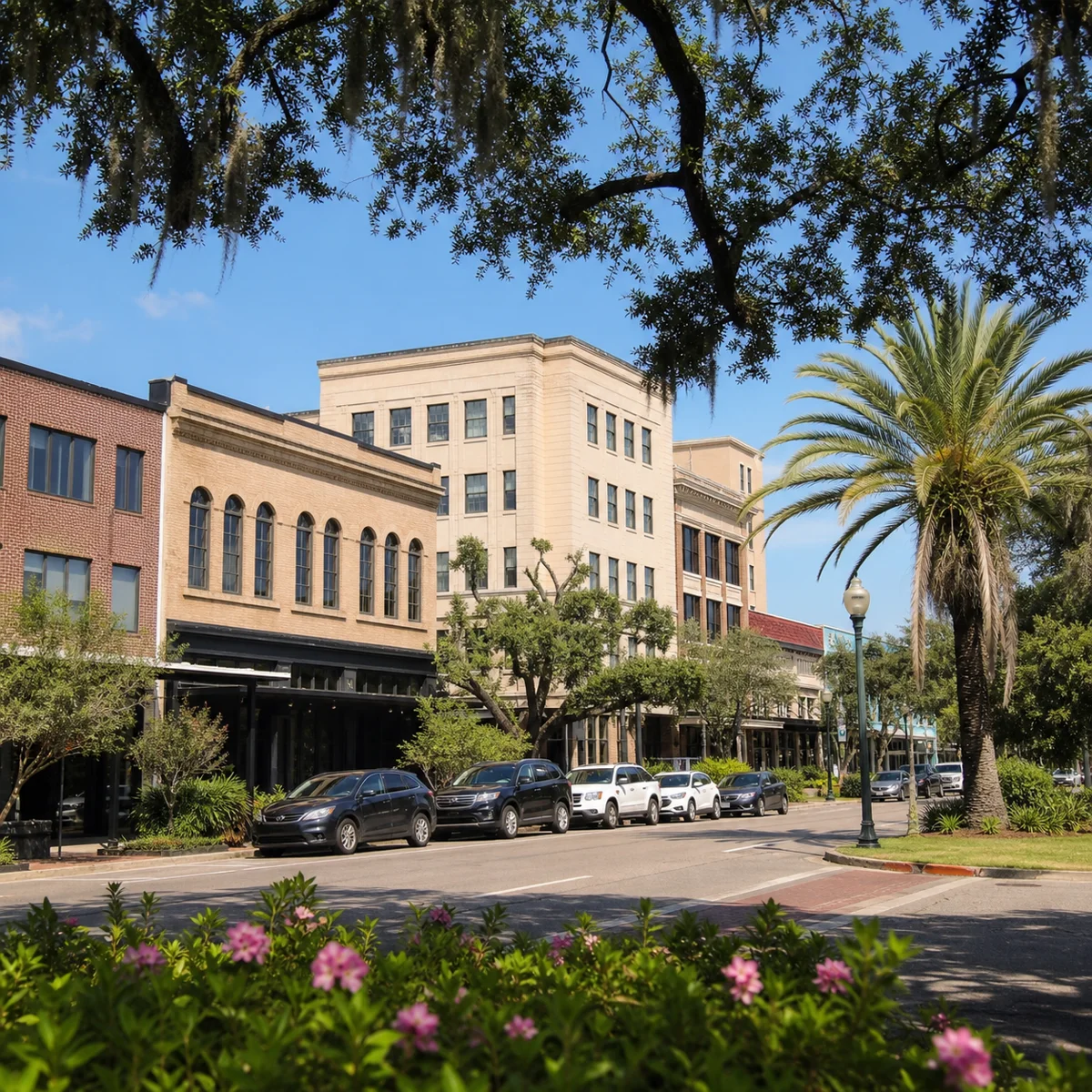

Professional IQ testing in Lafayette – whether you need an assessment for school, employment, gifted program eligibility, or personal insight, we connect you with licensed psychologists in the Lafayette area.
Last Updated: September 2026
Child IQ Testing
WISC-V & Stanford-Binet for ages 6–16. Gifted identification, learning profiles.
Adult IQ Testing
WAIS-IV & WAIS-5 available. Comprehensive adult cognitive assessments. Clinical & occupational.
WISC-V Test
Wechsler Intelligence Scale for Children® Fifth Edition – the gold standard for child IQ testing.
WAIS-IV & WAIS-5 Tests
Wechsler Adult Intelligence Scale® – Fourth Edition (WAIS-IV) and Fifth Edition (WAIS-5) available for adult IQ testing.
Gifted Testing
Identify giftedness for school placement, enrichment, and talent programs using WISC-V or Stanford-Binet.
Stanford-Binet 5
Stanford-Binet Intelligence Scales Fifth Edition – comprehensive cognitive assessment for all ages.
Mensa Testing
Mensa admission testing and preparation for the high-IQ society. Accepts WAIS-IV, WAIS-5, and Stanford-Binet 5 scores.
Full Evaluation
Combined assessment with detailed report and recommendations. Includes WISC-V, WAIS-IV, WAIS-5, or Stanford-Binet 5 as appropriate.
IQ Testing in Lafayette: city context
Lafayette, LA has approximately 121,715 residents and 55.82 square miles of land. Located in Lafayette Parish, the city is part of Acadiana and combines healthcare, energy services, education, technology.
Local assessment needs include gifted and school placement, learning and attention questions, disability accommodations, graduate education, neuropsychological referrals, and adult career planning. Results should be interpreted in light of language, schooling, culture, health, and the specific referral question.
IQ by gender & ethnicity (child population)
Lafayette is approximately 51.0% female, and about 25,466 residents are under age 18. Properly standardized intelligence tests are not intended to rank demographic groups, and no authoritative city dataset establishes IQ averages by sex, race, ethnicity, neighborhood, or language.
Current Lafayette demographic context includes:
- Hispanic or Latino residents: 8.1% of the city population.
- Black, non-Hispanic residents: 29.0%.
- Asian, non-Hispanic residents: 2.2%.
- White, non-Hispanic residents: 56.1%.
- Foreign-born residents: 7.0%; language and schooling history can affect test selection and interpretation.
- Language other than English at home: 10.9% of residents age five and older.
- Educational attainment: 90.9% of adults age 25+ are high-school graduates or higher, and 41.1% hold a bachelor’s degree or higher.
These community statistics describe populations, not individual ability. A licensed psychologist considers the person’s complete background and behavioral observations when choosing and interpreting tests.
What is professional IQ testing?
Intelligence quotient (IQ) testing is a standardized method to measure human cognitive abilities and intellectual potential. Professional IQ tests are administered by licensed psychologists in a controlled environment to ensure accuracy and reliability. Unlike online quizzes, clinical assessments provide a full-scale IQ score along with detailed breakdowns of verbal comprehension, perceptual reasoning, working memory, and processing speed.
In Lafayette, IQ testing is commonly used for gifted program admission, learning disability identification, career guidance, neuropsychological evaluation, and personal development. The results are presented in a comprehensive report that includes normative comparisons, strengths and weaknesses, and actionable recommendations.
Who should get tested?
IQ testing can benefit children, adolescents, and adults in various situations:
- Children: Parents often seek testing for school readiness, gifted placement, or to understand learning challenges.
- Adults: Many adults take IQ tests for career advancement, graduate school applications, or personal curiosity.
- Mensa candidates: High-IQ societies require official test scores for membership.
- Clinical referrals: Psychologists may recommend testing as part of a broader neuropsychological evaluation.
Types of IQ tests
We offer the most recognized and scientifically validated intelligence tests in the field:
- WISC-V (Wechsler Intelligence Scale for Children® – Fifth Edition): The gold standard for children aged 6:0–16:11. It provides a Full-Scale IQ and five primary index scores.
- WAIS-IV (Wechsler Adult Intelligence Scale® – Fourth Edition): The most widely used adult IQ test for ages 16–90. It measures cognitive functioning across four domains.
- Stanford-Binet Intelligence Scales – Fifth Edition: A comprehensive assessment for ages 2–85, often used for gifted identification and clinical evaluations.
- Gifted Testing: Often includes the WISC-V or Stanford-Binet, plus additional creativity and achievement measures.
- Mensa Testing: We provide official Mensa admission testing and preparation materials.
How the testing process works
- Initial consultation: Brief phone or video call to discuss your needs and match you with the right psychologist.
- Testing session: In-person or remote testing (depending on the test) with a licensed psychologist. Most sessions last 1–2 hours.
- Scoring and interpretation: The psychologist scores the test and interprets the results in the context of your background and goals.
- Feedback session: A detailed review of your results, including strengths, weaknesses, and practical recommendations.
- Comprehensive report: You receive a written report with all scores, normative comparisons, and actionable next steps.
How much does IQ testing cost in Lafayette?
The cost of IQ testing in Lafayette varies depending on the type of test, the psychologist's experience, and whether a comprehensive report is required. Typical fees range from $200 to $1,200 for a full assessment. Gifted testing and Mensa admission testing are often at the lower end, while neuropsychological evaluations may be higher.
Some insurance plans cover IQ testing when it's deemed medically necessary. We recommend checking with your provider for details. We also offer affordable payment plans and sliding-scale options for qualifying individuals.
Lafayette's Intellectual History & Legacy
University of Louisiana at Lafayette, South Louisiana Community College, and Louisiana State University and regional programs shape local education, research, professional training, and workforce development. Their current program catalogs and disability-service requirements should be checked directly because offerings change.
Lafayette also draws intellectual life from its schools, libraries, medical systems, civic organizations, employers, and regional professional networks. Together these institutions support learning across the lifespan without implying that a single IQ score defines academic, creative, technical, or professional potential.
Top Employers in Lafayette Requiring Cognitive Testing
Routine employers generally do not require clinical IQ tests. Some roles use lawful skills tests, licensing exams, safety evaluations, medical fitness procedures, or job-related aptitude measures. Major local employment settings include:
- Healthcare: Employers may value role-specific knowledge, judgment, communication, attention, technical skill, licensing, or safety performance; these are not equivalent to a clinical intelligence score.
- Energy Services: Employers may value role-specific knowledge, judgment, communication, attention, technical skill, licensing, or safety performance; these are not equivalent to a clinical intelligence score.
- Education: Employers may value role-specific knowledge, judgment, communication, attention, technical skill, licensing, or safety performance; these are not equivalent to a clinical intelligence score.
- Technology: Employers may value role-specific knowledge, judgment, communication, attention, technical skill, licensing, or safety performance; these are not equivalent to a clinical intelligence score.
- Hospitality: Employers may value role-specific knowledge, judgment, communication, attention, technical skill, licensing, or safety performance; these are not equivalent to a clinical intelligence score.
- Manufacturing: Employers may value role-specific knowledge, judgment, communication, attention, technical skill, licensing, or safety performance; these are not equivalent to a clinical intelligence score.
- Logistics: Employers may value role-specific knowledge, judgment, communication, attention, technical skill, licensing, or safety performance; these are not equivalent to a clinical intelligence score.
- Professional Services: Employers may value role-specific knowledge, judgment, communication, attention, technical skill, licensing, or safety performance; these are not equivalent to a clinical intelligence score.
Lafayette IQ Testing by Neighborhood
No credible dataset supports neighborhood IQ averages. Practical differences concern travel, schools, language access, medical referrals, and appointment availability.
- Downtown: Residents should compare provider travel time, parking or transit, accessibility, age range, and whether the report will meet the intended school, clinical, workplace, or membership purpose.
- River Ranch: Residents should compare provider travel time, parking or transit, accessibility, age range, and whether the report will meet the intended school, clinical, workplace, or membership purpose.
- Freetown-Port Rico: Residents should compare provider travel time, parking or transit, accessibility, age range, and whether the report will meet the intended school, clinical, workplace, or membership purpose.
- Saint Streets: Residents should compare provider travel time, parking or transit, accessibility, age range, and whether the report will meet the intended school, clinical, workplace, or membership purpose.
- Broadmoor: Residents should compare provider travel time, parking or transit, accessibility, age range, and whether the report will meet the intended school, clinical, workplace, or membership purpose.
- Greenbriar: Residents should compare provider travel time, parking or transit, accessibility, age range, and whether the report will meet the intended school, clinical, workplace, or membership purpose.
- Upper Lafayette: Residents should compare provider travel time, parking or transit, accessibility, age range, and whether the report will meet the intended school, clinical, workplace, or membership purpose.
- Acadiana Mall corridor: Residents should compare provider travel time, parking or transit, accessibility, age range, and whether the report will meet the intended school, clinical, workplace, or membership purpose.
Lafayette Universities and Research Institutions
- University of Louisiana at Lafayette: A major local or regional institution supporting higher education, workforce preparation, research, and community partnerships.
- South Louisiana Community College: Provides additional academic, scientific, professional, or transfer pathways for area learners.
- Louisiana State University and regional programs: Expands access to certificates, undergraduate or graduate education, continuing education, or specialized regional programs.
- Disability and testing services: Students seeking accommodations should ask each institution which documentation, recency, tests, and evaluator credentials it requires.
- Research participation: Psychology, education, medicine, neuroscience, or human-development studies may be available, but research testing is not automatically a clinical diagnosis or accepted accommodation report.
- Graduate preparation: Admissions examinations measure specific academic skills and are not interchangeable with clinical IQ tests.
- Career pathways: Local programs connect cognitive strengths with health care, technology, education, public service, business, and the region’s major industries.
A short IQ test can give Lafayette learners a structured snapshot of reasoning tasks and a clearer vocabulary for discussing next steps with an evaluator.
Lafayette Economic Context
- Median household income: $61,915 in 2020–2024 Census estimates.
- Per-capita income: $40,517.
- Residents in poverty: 18.3%.
- Bachelor’s degree or higher: 41.1% of adults age 25 and older.
- Mean travel time to work: 20.0 minutes; cross-region trips can take longer.
- Health care and social assistance: approximately $4.02 billion in 2022 Census receipts/revenue within the city.
- Transportation and warehousing: approximately $969.94 million in 2022 Census receipts/revenue.
- Retail sales: approximately $4.49 billion in 2022.
- Regional strengths: healthcare, energy services, education, technology, hospitality, manufacturing, logistics, professional services.
- Assessment relevance: Local schools, licensed occupations, technical work, advanced study, health systems, and career transitions create varied reasons for evidence-based cognitive and psychoeducational evaluation.
Lafayette School District Data
- Primary public-school systems: Lafayette Parish School System.
- Gifted education: Identification follows Louisiana rules and local procedures; a school team considers standardized assessment with achievement, classroom, developmental, and language information.
- Referral: Parents, teachers, or school teams may raise concerns, but eligibility and service decisions are not based on an online score.
- Special education: School-based evaluations address educational eligibility; a private clinical report may answer broader diagnostic questions but does not automatically determine placement.
- Advanced pathways: Families should verify current honors, acceleration, dual-enrollment, magnet, academy, and career-technical options directly with the district.
- College connections: University of Louisiana at Lafayette, South Louisiana Community College, and Louisiana State University and regional programs support transfer, dual enrollment, workforce preparation, or regional higher education.
- Language and access: Teams should document language exposure, English proficiency, disability accommodations, and assistive needs before testing.
- Records: Bring prior evaluations, IEP or 504 documents, transcripts, intervention data, and current teacher observations when relevant.
Local Testing Centers and Psychologists
- Dr. Amy Cavanaugh & Associates: 3312 Kaliste Saloom Road, Building 1, Lafayette, LA 70508; (337) 534-0727. The practice advertises psychological, cognitive, neuropsychological, educational, or related standardized assessment. Confirm the exact IQ instrument, ages served, report purpose, availability, and current fees before booking.
- Ochsner Lafayette General Medical Center: A local or regional medical system that may provide neurology, behavioral health, rehabilitation, developmental, or referral services; access requirements vary.
- Our Lady of Lourdes Regional Medical Center: Additional medical or specialty resources may support pediatric, adult, developmental, or neuropsychological referrals.
- Women's and Children's Hospital: Regional specialty care can be relevant when cognitive concerns follow illness, injury, developmental conditions, or neurological change.
- Lafayette Parish School System: School psychologists conduct education-focused evaluations when a referral is accepted through district procedures.
- University of Louisiana at Lafayette: University or college departments may offer training clinics, research participation, disability services, or referral information depending on current programs.
- Private licensed psychologists: Confirm Louisiana licensure, training with the proposed instrument, in-person requirements, age range, language competence, report format, and whether the receiving school, insurer, court, or organization will accept the results.
- Scope check: Ask whether the appointment is a stand-alone intelligence test or a broader psychoeducational, autism, ADHD, neuropsychological, or diagnostic evaluation.
Lafayette Events and Conferences
- University programs: University of Louisiana at Lafayette and South Louisiana Community College may host public lectures, research presentations, continuing education, or student events.
- School information sessions: Lafayette Parish School System may provide current guidance on gifted services, special education, advanced coursework, and family referrals.
- Professional education: State psychological, school-psychology, neuropsychology, counseling, and education associations announce workshops through their own calendars.
- Health-system education: Ochsner Lafayette General Medical Center and regional partners may offer talks or training related to cognition, development, rehabilitation, or behavioral health.
- Libraries and museums: Local public-learning programs can support STEM, literacy, creativity, and lifelong education without functioning as clinical assessment.
- Mensa activities: Verify current local-group boundaries, testing opportunities, and events through American Mensa rather than relying on unofficial city estimates.
Transportation and Accessibility
- Major roads: I-10, I-49, US 90, and Johnston Street.
- Public and regional transportation: Lafayette Transit System, regional transportation, and paratransit.
- Airport: Lafayette Regional Airport (LFT) provides regional or national air access.
- Driving: Allow extra time for peak commuting, school arrival and dismissal, construction, major events, and weather.
- Accessibility: Confirm step-free access, elevators, accessible restrooms, parking, paratransit timing, interpreter needs, sensory accommodations, and break policies.
- Testing-day travel: Arrive early enough to settle without rushing; fatigue or travel stress should be reported to the examiner.
- Remote components: Intake and feedback may sometimes occur by video, but many standardized cognitive instruments still require controlled in-person administration.
- Regional referrals: When local availability is limited, compare the benefit of a specialist with the added travel burden and verify that the provider is licensed for the service location.
Lafayette Weather and Seasonal Considerations
- Local conditions: hot humid summers, heavy rain, flash flooding, hurricanes, and mild winters.
- Testing environment: A quiet, well-lit, temperature-controlled room supports standardized administration.
- Travel disruptions: Check road, transit, school, and provider notices when severe weather is expected.
- Health effects: Poor sleep, dehydration, acute illness, smoke exposure, medication changes, or migraine can affect comfort and should be discussed with the examiner.
- School-year demand: Referral volume often rises after classes begin and before application or accommodation deadlines.
- Summer scheduling: School breaks may offer flexibility, but records and teacher input can be harder to obtain.
- Preparation: Follow normal routines, take prescribed medication as directed, eat beforehand, bring glasses or hearing aids, and avoid coaching on protected test items.
Areas we serve
We support all areas of Lafayette.
Frequently Asked Questions
WISC-V is for children aged 6–16, while WAIS-IV is for adults aged 16–90. Each is normed for its specific age group.
Most IQ tests take between 60 and 90 minutes, plus a feedback session. Allow 2–3 hours total.
No, you can book directly with our psychologists. We serve both self-referred and professionally referred individuals.
Potentially. Acceptance depends on the exact test, edition, qualifying score, administration date, examiner credentials, and current Mensa documentation rules. Confirm before testing.
Some plans cover cognitive assessments when there is a clinical indication. Check with your provider.
Get a good night's sleep, eat a healthy meal, and arrive relaxed. No specific preparation is needed.
You'll receive a comprehensive report with your scores and tailored recommendations.
Some interview and feedback components may be available remotely, but many standardized cognitive tests require in-person administration. Confirm with the psychologist and the organization receiving the report.