
IQ Testing in Kansas City, KS

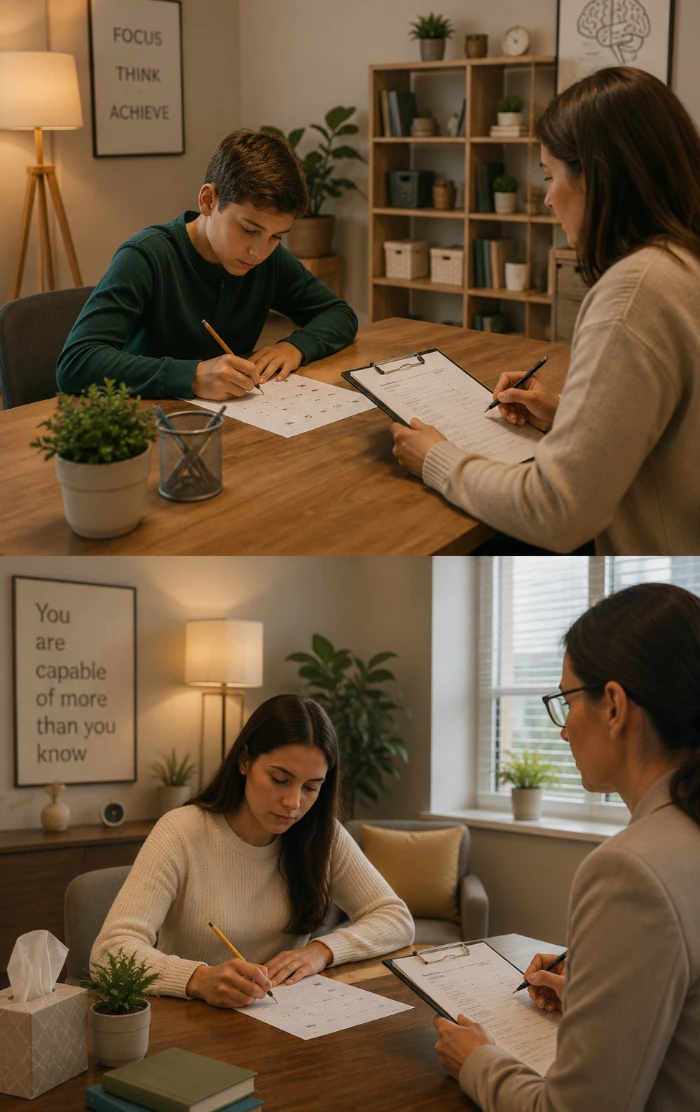
Professional IQ testing in Kansas City, KS – whether you need an assessment for school, employment, gifted program eligibility, or personal insight, we connect you with licensed psychologists in the Kansas City, KS area.
Last Updated: September 2026
Child IQ Testing
WISC-V & Stanford-Binet for ages 6–16. Gifted identification, learning profiles.
Adult IQ Testing
WAIS-IV & WAIS-5 available. Comprehensive adult cognitive assessments. Clinical & occupational.
WISC-V Test
Wechsler Intelligence Scale for Children® Fifth Edition – the gold standard for child IQ testing.
WAIS-IV & WAIS-5 Tests
Wechsler Adult Intelligence Scale® – Fourth Edition (WAIS-IV) and Fifth Edition (WAIS-5) available for adult IQ testing.
Gifted Testing
Identify giftedness for school placement, enrichment, and talent programs using WISC-V or Stanford-Binet.
Stanford-Binet 5
Stanford-Binet Intelligence Scales Fifth Edition – comprehensive cognitive assessment for all ages.
Mensa Testing
Professional cognitive testing for possible Mensa prior-evidence submission; confirm the current accepted test, edition, score, and documentation rules before scheduling.
Full Evaluation
Combined assessment with detailed report and recommendations. Includes WISC-V, WAIS-IV, WAIS-5, or Stanford-Binet 5 as appropriate.
IQ Testing in Kansas City, KS: city context
Kansas City, Kansas is the county seat of Wyandotte County and the Kansas-side core of the larger Kansas City metropolitan area. The U.S. Census Bureau estimated 157,805 residents on July 1, 2025, compared with 156,607 counted in 2020, across about 124.74 square miles. Approximately 27.6% of residents are younger than 18, making school identification, developmental assessment, learning evaluations, and transition planning important local concerns.
Residents seek cognitive testing for gifted or advanced-learning questions, learning and attention concerns, disability documentation, independent-school admissions, college accommodations, career planning, adult diagnostic clarification, medical or neuropsychological referrals, and high-IQ-society documentation. A sound evaluation begins with the receiving school, agency, employer, court, university, licensing body, or organization’s current written requirements so the psychologist can select the correct test, norms, supporting measures, and report format.
Kansas City, KS is multilingual and culturally diverse. Census estimates report that 33.4% of residents age five and older speak a language other than English at home and 18.8% are foreign-born. Examiners should document language history, literacy, educational opportunity, disability access, cultural context, and whether bilingual or nonverbal procedures are appropriate. Interpreted or translated testing has limitations that must be explained in the report.
IQ by gender & ethnicity
Census data describe Kansas City, KS as 49.8% female. Sex and gender do not determine an individual’s intelligence. Modern intelligence tests are normed to reduce systematic group differences, and interpretation should focus on the individual profile, measurement error, developmental history, education, health, language, and testing conditions rather than stereotypes.
The city’s population includes White, Black, Hispanic or Latino, Asian, American Indian and Alaska Native, multiracial, immigrant, and refugee communities. Group averages cannot be used to infer any person’s ability. Fair assessment requires valid norms, qualified examiners, appropriate language procedures, and consideration of unequal access to schooling, healthcare, technology, nutrition, and test familiarity.
Because Kansas City, Kansas shares a name and metropolitan identity with Kansas City, Missouri, clients should verify the state and street address before traveling. Licensing, insurance networks, school jurisdiction, and court requirements may differ across the state line even when a provider markets to the entire metro area.
What is professional IQ testing?
Intelligence quotient (IQ) testing is a standardized method to measure human cognitive abilities and intellectual potential. Professional IQ tests are administered by licensed psychologists in a controlled environment to ensure accuracy and reliability. Unlike online quizzes, clinical assessments provide a full-scale IQ score along with detailed breakdowns of verbal comprehension, perceptual reasoning, working memory, and processing speed.
In Kansas City, IQ testing is commonly used for gifted program admission, learning disability identification, career guidance, neuropsychological evaluation, and personal development. The results are presented in a comprehensive report that includes normative comparisons, strengths and weaknesses, and actionable recommendations.
Who should get tested?
IQ testing can benefit children, adolescents, and adults in various situations:
- Children: Parents often seek testing for school readiness, gifted placement, or to understand learning challenges.
- Adults: Many adults take IQ tests for career advancement, graduate school applications, or personal curiosity.
- Mensa candidates: High-IQ societies require official test scores for membership.
- Clinical referrals: Psychologists may recommend testing as part of a broader neuropsychological evaluation.
Types of IQ tests
Commonly requested, professionally administered IQ tests include:
- WISC-V (Wechsler Intelligence Scale for Children® – Fifth Edition): The gold standard for children aged 6:0–16:11. It provides a Full-Scale IQ and five primary index scores.
- WAIS-IV (Wechsler Adult Intelligence Scale® – Fourth Edition): The most widely used adult IQ test for ages 16–90. It measures cognitive functioning across four domains.
- Stanford-Binet Intelligence Scales – Fifth Edition: A comprehensive assessment for ages 2–85, often used for gifted identification and clinical evaluations.
- Gifted Testing: Often includes the WISC-V or Stanford-Binet, plus additional creativity and achievement measures.
- Mensa Testing: We can help clarify professional testing options, but American Mensa determines whether any test and documentation qualify under its current rules.
A professionally administered IQ test should be selected for the examinee’s age, language background, referral question, and the documentation rules of the school or organization receiving the report.
How the testing process works
- Initial consultation: Brief phone or video call to discuss your needs and match you with the right psychologist.
- Testing session: In-person or remote testing (depending on the test) with a licensed psychologist. Most sessions last 1–2 hours.
- Scoring and interpretation: The psychologist scores the test and interprets the results in the context of your background and goals.
- Feedback session: A detailed review of your results, including strengths, weaknesses, and practical recommendations.
- Comprehensive report: You receive a written report with all scores, normative comparisons, and actionable next steps.
How much does IQ testing cost in Kansas City, KS?
Fees vary according to the referral question, test battery, record review, scoring, feedback time, report length, and whether bilingual, disability, legal, or neuropsychological expertise is required. A focused adult cognitive assessment may cost less than a comprehensive evaluation that includes achievement, attention, memory, executive functioning, personality, adaptive behavior, or collateral interviews.
Before paying, request a written estimate that identifies the test edition, professional credentials, number of sessions, cancellation policy, insurance or authorization process, report turnaround, and whether follow-up communication with a school, attorney, physician, employer, or agency is included. Insurance is more likely to consider medically necessary diagnostic evaluation than testing performed solely for curiosity, career exploration, or high-IQ society admission.
Kansas City, Kansas’s Intellectual History & Legacy
Kansas City, Kansas grew at the confluence of the Kansas and Missouri rivers, on land with deep Indigenous history and later shaped by river commerce, railroads, meatpacking, manufacturing, migration, civil-rights organizing, and metropolitan expansion. The city’s practical intellectual legacy includes transportation engineering, public health, medicine, education, industrial production, logistics, architecture, and community leadership.
The University of Kansas Medical Center anchors biomedical education, clinical care, and research in the city. Kansas City Kansas Community College and Donnelly College expand transfer, workforce, nursing, technical, and liberal-arts pathways. The Strawberry Hill Museum, Wyandotte County Historical Museum, public libraries, and local arts organizations preserve the experiences of Indigenous, African American, Latino, Slavic, Eastern European, and other communities.
This history shows why intelligence should never be reduced to one number. Verbal reasoning, quantitative analysis, visual-spatial problem solving, memory, processing efficiency, creativity, persistence, practical judgment, cultural knowledge, and collaboration all matter in local classrooms, laboratories, clinics, plants, rail yards, and public agencies.
Top Employers in Kansas City, KS and Cognitive-Testing Context
- Healthcare, medicine, and research: The University of Kansas Health System and KU Medical Center support clinical, scientific, technical, administrative, and educational roles.
- Education and government: Kansas City, Kansas Public Schools, Kansas City Kansas Community College, Donnelly College, the Unified Government of Wyandotte County/Kansas City, Kansas, and public agencies employ educators, analysts, counselors, public-safety staff, planners, and operations personnel.
- Manufacturing and transportation: General Motors Fairfax Assembly, rail, trucking, warehousing, food production, utilities, construction, and advanced manufacturing require technical reasoning, safety awareness, coordination, and skilled trades.
- Retail, tourism, sports, and hospitality: Village West, Kansas Speedway, Children’s Mercy Park, retail centers, hotels, restaurants, and entertainment venues support service, management, logistics, security, and event roles.
- Professional and community services: Financial, legal, nonprofit, behavioral-health, technology, and small-business organizations contribute to the city economy.
Employers generally use education, licenses, interviews, background checks, work samples, and job-specific aptitude or skills measures—not a clinical IQ test—for hiring. Cognitive evaluation may be relevant to disability accommodation, vocational rehabilitation, return-to-work planning, or diagnostic clarification, and results should be disclosed only for a defined lawful purpose with informed consent.
Kansas City, KS IQ Testing by Neighborhood
Appointment logistics vary among Downtown Kansas City, Strawberry Hill, Riverview, Armourdale, Argentine, Rosedale, Turner, Piper, and western Kansas City near Village West. Travel time can increase around school arrival and dismissal, hospital shift changes, Sporting Kansas City or Kansas Speedway events, bridge work, and congestion on Interstates 70, 35, 635, and 435.
Neighborhood is not a measure of intelligence or potential. Compare examiner credentials, age range, testing language, accessibility, parking, transit, total travel time, fees, and whether the report satisfies the receiving organization. Families should avoid selecting a provider solely because a marketing page repeats neighborhood names.
Kansas City, KS Universities and Research Institutions
- University of Kansas Medical Center: A major academic health center in Kansas City, KS with medicine, nursing, health professions, graduate education, clinical research, psychology, psychiatry, and neuropsychology resources.
- Kansas City Kansas Community College: Provides transfer programs, adult education, career and technical education, nursing and allied health, business, arts, public safety, and workforce training.
- Donnelly College: A private college in Kansas City, KS offering associate and bachelor’s pathways, nursing education, and support for first-generation and multilingual students.
- Regional institutions: The University of Kansas in Lawrence, University of Missouri–Kansas City, Johnson County Community College, and other metro institutions broaden undergraduate, graduate, research, and professional options.
Colleges ordinarily use transcripts, prerequisites, placement information, portfolios, recommendations, and program-specific admissions criteria. Clinical IQ testing is generally relevant only when it documents a disability, clarifies a learning profile, or answers another defined clinical or accommodation question.
Kansas City, KS Economic Context
U.S. Census Bureau 2020–2024 estimates and 2022 business data provide the following Kansas City, KS context:
- Median household income: $62,401.
- Per-capita income: $29,317.
- Residents in poverty: 16.0%.
- Bachelor’s degree or higher: 20.8% of adults age 25 and older.
- High-school graduate or higher: 81.4% of adults age 25 and older.
- Mean travel time to work: 22.4 minutes, although cross-metro commutes, bridge congestion, construction, and event traffic may take longer.
- Health and social-assistance activity: Approximately $2.012 billion in 2022 receipts/revenue within the city.
- Transportation and warehousing: Approximately $1.299 billion in 2022 receipts/revenue.
- Retail sales: Approximately $2.546 billion in 2022.
- Accommodation and food-service sales: Approximately $430.6 million in 2022.
- Regional strengths: Healthcare and biomedical research, advanced manufacturing, automotive production, rail and logistics, food processing, education, government, construction, sports and tourism, retail, hospitality, professional services, and small business.
Income, education, and industry statistics describe access and economic conditions; they do not measure any individual’s intelligence. Testing plans should account for cost, insurance or authorization rules, transportation, time away from work or school, language access, and the exact documentation required by the receiving organization.
Kansas City, KS School District Data
Most students living in the city attend Kansas City, Kansas Public Schools (USD 500), while portions of the city may be served by Turner USD 202, Piper USD 203, or Bonner Springs–Edwardsville USD 204; charter, private, parochial, and state-approved programs also serve local families. Boundaries, grade spans, referral windows, and eligibility procedures differ, so families should contact the student’s actual district and school.
Kansas treats giftedness as an exceptionality within special education. Identification therefore uses an evaluation process and educational-need determination rather than a single private cutoff score. District teams may review classroom performance, achievement, reasoning or cognitive measures, teacher and parent information, creativity, rate of learning, and other evidence. A private WISC-V or Stanford-Binet report may contribute information, but the public-school team retains responsibility for eligibility and services under current Kansas rules.
Kansas City, Kansas Public Schools also offers advanced coursework, career and technical education, dual-credit opportunities, and selective programs such as Sumner Academy. Families should request current written criteria, deadlines, accepted test editions, score-report requirements, appeals, and accommodations before paying for private testing.
Public-school evaluation, private clinical diagnosis, selective-program admission, and college accommodation are separate decisions. Families should ask which team makes each decision, what evidence it may consider, and how long results remain current. This prevents a valid clinical report from being used for a purpose it was never designed to answer.
Local Testing Centers and Psychologists
The University of Kansas Health System provides psychology, psychological evaluation and testing, and neuropsychology services at locations including the Medical Pavilion, 2000 Olathe Boulevard, Kansas City, KS 66160. The local scheduling number is (913) 588-1227. Its official materials describe evaluation and testing by psychologists and cognitive or neuropsychological assessment of attention, memory, language, reasoning, and problem-solving.
The public information does not guarantee that every referral includes a WISC-V, WAIS-IV/WAIS-5, Stanford-Binet 5, or a stand-alone IQ assessment, and some neuropsychology services are medically focused. Before scheduling, confirm the examinee’s age, referral purpose, required instrument, provider credentials, insurance or referral rules, testing language, accessibility, total fees, report turnaround, and acceptance by the school, agency, employer, court, university, licensing body, or high-IQ organization receiving the report.
Kansas City, KS Events and Conferences
Kansas City, KS hosts educational, cultural, sports, and civic events throughout the year. Examples include Kansas City Kansas Community College programs, library workshops, Wyandotte County community festivals, Sporting Kansas City matches at Children’s Mercy Park, Kansas Speedway events, Village West activities, job fairs, and KU Medical Center lectures or health programs.
Dates and venues change, and major events can affect traffic, parking, hotel demand, and transit schedules. Testing clients should verify the office location, allow extra travel time, and avoid scheduling a demanding assessment immediately after overnight travel, a late event, or an unusually long work shift.
Transportation and Accessibility
Kansas City, KS is connected by Interstates 70, 35, 635, and 435, U.S. 69, State Avenue, and multiple bridges across the Kansas and Missouri rivers. RideKC provides bus and paratransit services, and the 7th Street Transit Center supports local connections. Amtrak service is available across the state line at Kansas City Union Station, while Kansas City International Airport is north of the metro in Missouri.
Traffic: Allow extra time during weekday peaks, hospital and industrial shift changes, school travel, construction, winter weather, and major events. Parking and accessibility: Ask about accessible parking, elevators, quiet waiting space, and accommodations for mobility, sensory, hearing, or visual needs. Transit planning: Check current routes and return schedules before a long session. Fatigue: Cross-metro travel can affect attention and processing speed; schedule accordingly.
Kansas City, KS Weather and Seasonal Considerations
Kansas City, KS has four distinct seasons, with hot humid summers, cold winters, rapid temperature changes, thunderstorms, heavy rain, occasional tornado risk, ice, and snow. River and creek flooding, severe storms, extreme heat, and winter road conditions can disrupt travel, sleep, school schedules, and health.
Testing rooms should be comfortable and quiet, and examinees should arrive rested, hydrated, and wearing prescribed glasses or hearing devices. During severe weather, respiratory illness, power outages, or unsafe road conditions, follow official guidance and reschedule when the circumstances would make standardized results less representative.
Areas we serve
Frequently Asked Questions
WISC-V is for children aged 6–16, while WAIS-IV is for adults aged 16–90. Each is normed for its specific age group.
Most IQ tests take between 60 and 90 minutes, plus a feedback session. Allow 2–3 hours total.
Referral requirements vary. Contact the psychologist directly and ask whether self-referral is accepted; insurance, school, court, or agency funding may require authorization or a formal referral.
Potentially. Acceptance depends on the exact test, edition, qualifying score, administration date, examiner credentials, and current Mensa documentation rules. Confirm before testing.
Some plans cover cognitive assessments when there is a clinical indication. Check with your provider.
Get a good night's sleep, eat a healthy meal, and arrive relaxed. No specific preparation is needed.
You'll receive a comprehensive report with your scores and tailored recommendations.
Some interview and feedback components may be available remotely, but many standardized cognitive tests require in-person administration. Confirm with the psychologist and the organization receiving the report.