
IQ Testing in Grand Rapids

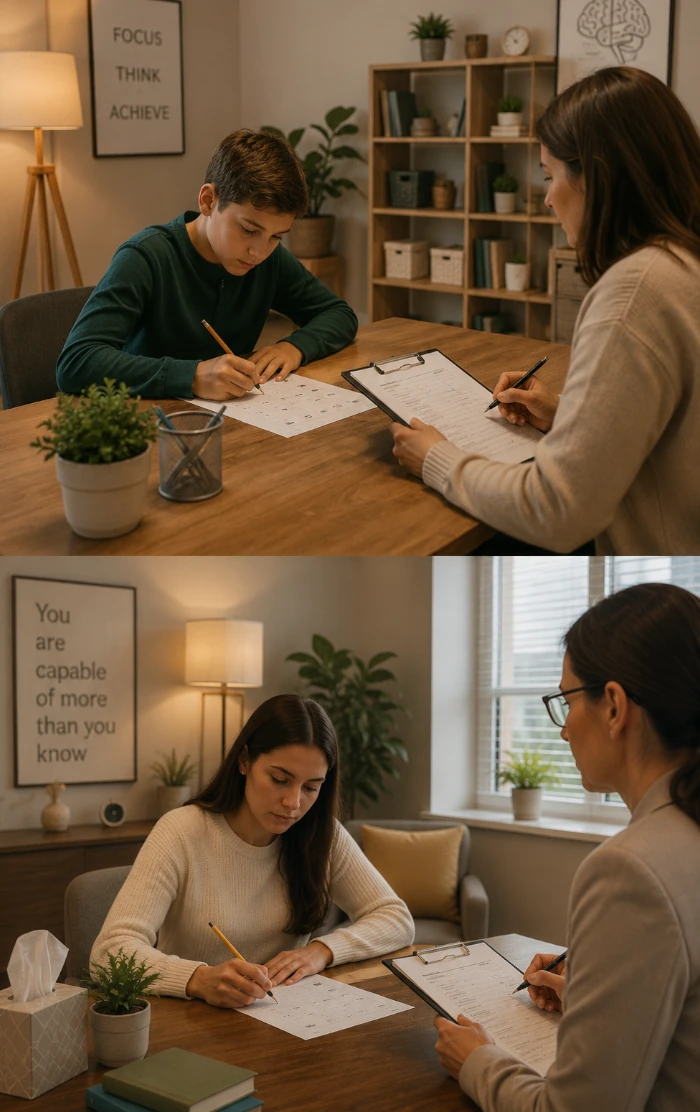
Professional IQ testing in Grand Rapids – whether you need an assessment for school, employment, gifted program eligibility, or personal insight, we connect you with licensed psychologists in the Grand Rapids area.
Last Updated: September 2026
Child IQ Testing
WISC-V & Stanford-Binet for ages 6–16. Gifted identification, learning profiles.
Adult IQ Testing
WAIS-IV & WAIS-5 available. Comprehensive adult cognitive assessments. Clinical & occupational.
WISC-V Test
Wechsler Intelligence Scale for Children® Fifth Edition – the gold standard for child IQ testing.
WAIS-IV & WAIS-5 Tests
Wechsler Adult Intelligence Scale® – Fourth Edition (WAIS-IV) and Fifth Edition (WAIS-5) available for adult IQ testing.
Gifted Testing
Identify giftedness for school placement, enrichment, and talent programs using WISC-V or Stanford-Binet.
Stanford-Binet 5
Stanford-Binet Intelligence Scales Fifth Edition – comprehensive cognitive assessment for all ages.
Mensa Testing
Mensa admission testing and preparation for the high-IQ society. Accepts WAIS-IV, WAIS-5, and Stanford-Binet 5 scores.
Full Evaluation
Combined assessment with detailed report and recommendations. Includes WISC-V, WAIS-IV, WAIS-5, or Stanford-Binet 5 as appropriate.
IQ Testing in Grand Rapids: city context
Gender, age and demographic statistics
Grand Rapids had an estimated 201,183 residents on July 1, 2025. Census 2020–2024 estimates report that 51.0% of residents are female, 21.0% are under age 18, and 12.9% are age 65 or older. The city is 60.2% White alone, 18.0% Black alone, 2.8% Asian alone, 0.7% American Indian or Alaska Native alone, 14.1% reporting two or more races, and 16.3% Hispanic or Latino; race and Hispanic-origin categories are not mutually exclusive.
These figures describe community context, not intelligence. Scores must be interpreted individually in light of age, educational opportunity, disability, health, culture, language exposure, trauma, sleep, medication, and testing conditions. Census estimates indicate that 16.4% of residents age five and older speak a language other than English at home and 11.1% are foreign-born, making language history and culturally appropriate interpretation important for many evaluations.
- Female residents: 51.0%.
- Children and teens: 21.0% are under 18.
- Older adults: 12.9% are 65 or older.
- Language context: 16.4% speak a language other than English at home.
- Educational context: 89.5% of adults age 25+ completed high school and 41.6% hold a bachelor’s degree or higher.
- Disability context: 9.3% of residents under 65 report a disability.
- Interpretation: No gender, racial, ethnic, neighborhood, income, immigration, or language group should be presumed to have a particular IQ profile.
What is professional IQ testing?
Intelligence quotient (IQ) testing is a standardized method to measure human cognitive abilities and intellectual potential. Professional IQ tests are administered by licensed psychologists in a controlled environment to ensure accuracy and reliability. Unlike online quizzes, clinical assessments provide a full-scale IQ score along with detailed breakdowns of verbal comprehension, perceptual reasoning, working memory, and processing speed.
In Grand Rapids, IQ testing is commonly used for gifted program admission, learning disability identification, career guidance, neuropsychological evaluation, and personal development. The results are presented in a comprehensive report that includes normative comparisons, strengths and weaknesses, and actionable recommendations.
Who should get tested?
IQ testing can benefit children, adolescents, and adults in various situations:
- Children: Parents often seek testing for school readiness, gifted placement, or to understand learning challenges.
- Adults: Many adults take IQ tests for career advancement, graduate school applications, or personal curiosity.
- Mensa candidates: High-IQ societies require official test scores for membership.
- Clinical referrals: Psychologists may recommend testing as part of a broader neuropsychological evaluation.
Types of IQ tests
We offer the most recognized and scientifically validated intelligence tests in the field:
An online IQ test offers Grand Rapids residents a convenient way to explore reasoning questions, whereas school placement, accommodations, or clinical decisions require professionally administered testing.
- WISC-V (Wechsler Intelligence Scale for Children® – Fifth Edition): The gold standard for children aged 6:0–16:11. It provides a Full-Scale IQ and five primary index scores.
- WAIS-IV (Wechsler Adult Intelligence Scale® – Fourth Edition): The most widely used adult IQ test for ages 16–90. It measures cognitive functioning across four domains.
- Stanford-Binet Intelligence Scales – Fifth Edition: A comprehensive assessment for ages 2–85, often used for gifted identification and clinical evaluations.
- Gifted Testing: Often includes the WISC-V or Stanford-Binet, plus additional creativity and achievement measures.
- Mensa Testing: We provide official Mensa admission testing and preparation materials.
How the testing process works
- Initial consultation: Brief phone or video call to discuss your needs and match you with the right psychologist.
- Testing session: In-person or remote testing (depending on the test) with a licensed psychologist. Most sessions last 1–2 hours.
- Scoring and interpretation: The psychologist scores the test and interprets the results in the context of your background and goals.
- Feedback session: A detailed review of your results, including strengths, weaknesses, and practical recommendations.
- Comprehensive report: You receive a written report with all scores, normative comparisons, and actionable next steps.
How much does IQ testing cost in Grand Rapids?
Fees depend on age, referral question, test battery, records, report length, and whether the service is a focused IQ assessment or a full psychoeducational or neuropsychological evaluation. A focused cognitive assessment may cost several hundred dollars; comprehensive evaluations can exceed $1,500–$3,000. Ask for a written estimate covering intake, testing, scoring, report, feedback, school or physician consultation, cancellation, and rush fees. Insurance is more likely to cover medically necessary diagnostic testing than gifted, school-admission, career, Mensa, or personal-interest testing.
Grand Rapids’s Intellectual History & Legacy
Grand Rapids combines a long furniture-design and manufacturing tradition with a growing healthcare, medical-research, higher-education, arts, and technology economy. The Medical Mile links hospitals, professional education, and biomedical research, while the city’s design heritage continues through office-furniture, architecture, engineering, and advanced manufacturing.
- Healthcare and research: Corewell Health, Van Andel Institute, MSU College of Human Medicine, GVSU health programs, and rehabilitation systems.
- Design and manufacturing: Steelcase, MillerKnoll, Haworth, automotive suppliers, plastics, metals, food production, and automation.
- Libraries and culture: Grand Rapids Public Library, Grand Rapids Art Museum, Public Museum, Frederik Meijer Gardens, performing arts, ArtPrize, and community organizations.
- Assessment principle: A city’s universities, employers, or cultural reputation describe opportunity—not any resident’s individual intelligence.
Top Employers in Grand Rapids Requiring Cognitive Skills
Grand Rapids’ economy includes healthcare, life sciences, higher education, furniture and design, advanced manufacturing, food distribution, insurance, finance, logistics, construction, tourism, and public service. IQ results should never be a stand-alone hiring screen, but a cognitive profile may support career counseling or accommodation planning.
- Healthcare: Corewell Health, Trinity Health, Mary Free Bed, Pine Rest, Hope Network, and UM Health-West employ clinical, technical, administrative, research, and analytical staff.
- Manufacturing and design: Steelcase, MillerKnoll, Haworth, Gentex, automotive suppliers, plastics, metals, and automation firms use spatial reasoning, quality systems, engineering, and technical learning.
- Food and distribution: Meijer, Gordon Food Service, SpartanNash, and regional logistics operations rely on forecasting, supply-chain planning, technology, and rapid operational decisions.
- Education and research: GVSU, GRCC, Calvin, MSU College of Human Medicine, Van Andel Institute, and school systems employ teaching, laboratory, writing, data, and project-management skills.
- Finance, insurance, and professional services: Banks, insurers, accounting, legal, consulting, and technology employers value quantitative reasoning, communication, and executive function.
Career decisions should combine cognitive data with interests, values, education, personality, work samples, disability needs, ethics, teamwork, and current labor-market evidence.
Grand Rapids IQ Testing by City Area
- Downtown, Heartside, and Medical Mile: Dense access to hospitals, GVSU facilities, MSU medical education, The Rapid, DASH, parking ramps, and cultural institutions.
- Heritage Hill, Eastown, and Uptown: Walkable mixed-use districts with neighborhood services, schools, and access to Fulton, Wealthy, and Lake Drive corridors.
- Southeast and East Beltline: M-44/East Beltline, Cascade Road, 28th Street, I-96, and office corridors connect many private practices and medical services, including the selected provider’s Orchard Vista address.
- North and Northeast Grand Rapids: Plainfield, Northland Drive, Leonard, Knapp, and East Beltline connect schools, hospitals, and assessment centers.
- West Side and Walker corridors: U.S. 131, I-196, Lake Michigan Drive, Alpine Avenue, and 3 Mile Road provide access from the west and northwest metro.
- Selection principle: Choose an evaluator for credentials, instrument, scope, language access, report quality, and fit—not repeated neighborhood keywords.
Grand Rapids Universities and Research Institutions
- Grand Valley State University: The Pew Grand Rapids Campus and health-sciences facilities support business, education, public administration, engineering, healthcare, social work, and graduate study.
- Michigan State University College of Human Medicine: The Secchia Center anchors medical education and research on the Medical Mile.
- Grand Rapids Community College: Transfer, technical, workforce, health, business, manufacturing, and prerequisite preparation.
- Calvin University, Aquinas College, Cornerstone University, and Davenport University: Undergraduate, graduate, professional, and continuing-education pathways across the metro.
- Van Andel Institute: Biomedical research and graduate education in cancer, neurodegeneration, epigenetics, and related fields.
- Ferris State University and Western Michigan University programs: Pharmacy, counseling, social work, occupational therapy, engineering technology, and employer-aligned graduate offerings in Grand Rapids.
Grand Rapids Economic Context
- Median household income: $69,108 in 2020–2024 Census estimates.
- Per-capita income: $35,921.
- Residents in poverty: 16.9%.
- Bachelor’s degree or higher: 41.6% of adults age 25 and older.
- Mean travel time to work: 19.0 minutes, though snow, construction, suburban commuting, and event traffic can lengthen trips.
- Health and social-assistance activity: Approximately $5.49 billion in 2022 receipts/revenue within the city.
- Transportation and warehousing: Approximately $478.2 million in 2022 receipts/revenue.
- Retail sales: Approximately $2.90 billion in 2022, or $14,732 per capita.
- Accommodation and food services: Approximately $804.8 million in 2022.
- Regional strengths: Healthcare and life sciences, medical research, office furniture and design, advanced manufacturing, food distribution, insurance and finance, higher education, logistics, construction, tourism, arts, and professional services.
Economic statistics describe access to education, employment, healthcare, and transportation; they do not determine any individual’s intelligence. Evaluators should consider whether financial stress, work schedules, housing instability, health access, or unequal educational opportunity affected testing conditions or background.
Grand Rapids Public Schools Data
Grand Rapids Public Schools and advanced pathways
Grand Rapids Public Schools serves the city through neighborhood, theme, Montessori, International Baccalaureate, arts, environmental, career, and college-preparatory options. City High Middle School offers IB Middle Years and Diploma Programmes, while Grand Rapids Montessori serves preschool through grade 12. Placement rules vary by program and grade.
Michigan identification framework
Michigan does not operate one uniform statewide gifted-identification mandate that makes a private IQ score automatic placement. Districts and schools determine how they identify and serve advanced learners, often using achievement, classroom performance, ability measures, teacher input, readiness, and program-specific criteria.
Regional gifted and accelerated options
Forest Hills Public Schools, serving parts of the Grand Rapids area, uses annual ability testing for a gifted cluster model and accelerated mathematics. Its published model uses district-approved testing and school procedures; outside reports may provide context but do not substitute for district eligibility rules.
Advanced secondary pathways
Families may investigate IB, Advanced Placement, dual enrollment at Grand Rapids Community College or local universities, advanced mathematics, STEM, arts, career technical education, robotics, debate, music, research, and subject acceleration. Course prerequisites and demonstrated achievement commonly matter more than one IQ score.
Responsible use of results
A psychological report should explain the student’s profile, validity, language history, educational needs, and practical recommendations. It should not promise placement or substitute for the receiving school’s decision process.
Local Testing Centers and Psychologists
- Hope Network: 3075 Orchard Vista Drive SE, Grand Rapids, MI 49546; (616) 301-8000. Hope Network lists intelligence testing, personality testing, and cognitive testing within its outpatient services. Confirm the exact instrument, age range, examiner credential, report format, insurance, and current availability before scheduling.
- North Kent Guidance Services Assessment Center: 5250 Northland Drive NE, Suite A, Grand Rapids; psychological testing, academic and learning difficulties, gifted eligibility and placement, memory, and career assessment.
- Integral Psychological Services: Grand Rapids locations offering cognitive, academic, ADHD, autism, personality, and diagnostic testing; confirm the exact age and instrument.
- Corewell Health, Mary Free Bed, and regional neuropsychology: Medical and rehabilitation referrals for neurological, injury, concussion, developmental, memory, or functional questions.
- Grand Rapids Public Schools and Kent ISD: Public-school evaluations follow education law and district procedures and are not replaced by a privately purchased score.
- Selection checklist: Verify Michigan licensure, test edition, age range, language procedures, purpose, report recipient, accommodations, fees, insurance, turnaround, and whether results meet school, Mensa, disability, legal, or workplace rules.
Grand Rapids Events and Conferences
Educational and professional-development opportunities are available through GVSU, GRCC, Calvin University, MSU College of Human Medicine, Van Andel Institute, hospitals, libraries, museums, chambers, and professional associations.
- Education and career events: College fairs, employer events, research symposia, STEM showcases, design conferences, and university open houses.
- Healthcare and psychology: Grand rounds, continuing education, disability workshops, public lectures, and clinical conferences on the Medical Mile.
- Gifted-family enrichment: Coding, robotics, debate, math, science, writing, music, visual arts, museums, libraries, and university youth programs.
- Travel planning: ArtPrize, concerts, conventions, Griffins and Gold games, festivals, road races, and downtown construction can significantly affect parking and travel.
Transportation and Accessibility
- Major roads: I-96 crosses the northern and eastern metro; I-196 connects downtown with Holland and I-96; U.S. 131 is the primary north-south freeway through the city; M-6 provides a southern bypass; M-11/28th Street, M-37, M-44/East Beltline, Fulton Street, Michigan Street, Leonard Street, and Wealthy Street are major local corridors.
- Public transit: The Rapid operates regional fixed-route buses serving Grand Rapids and neighboring communities. The Silver Line bus rapid transit route follows the Division Avenue corridor, while the Laker Line connects downtown, Grand Valley State University’s Pew Campus, and Allendale. The City’s free DASH circulator serves downtown with frequent loops.
- Paratransit: GO!Bus provides ADA complementary paratransit and senior transportation for eligible riders. Eligibility, reservation windows, pickup ranges, and visitor status should be confirmed before testing day.
- Airport: Gerald R. Ford International Airport (GRR) is roughly 13 miles southeast of downtown and provides nonstop service to major U.S. hubs and leisure destinations.
- Distance to other cities: Holland is about 30 miles or 35–45 minutes; Muskegon about 40 miles or 45–55 minutes; Kalamazoo about 50 miles or around one hour; Lansing about 65 miles or roughly one hour; Detroit about 155 miles or 2.5 hours; and Chicago about 180 miles or approximately three hours. Snow, construction, lake-effect weather, and rush-hour traffic can change travel times.
- Walkability: Downtown, Heartside, Heritage Hill, Eastown, Uptown, and portions of the Medical Mile have the strongest concentration of walkable destinations. Many outer neighborhoods and suburban office corridors remain automobile-oriented.
- Bike infrastructure: Grand Rapids continues to expand bike lanes and trails. Kent Trails, the White Pine Trail connection, Plaster Creek Greenway, Grand River Edges Trail, shared e-bikes, and shared e-scooters support recreation and some practical trips; on-street comfort varies by route and season.
- Accessibility and appointment planning: Confirm accessible parking, curb cuts, entrance routes, elevators, restrooms, quiet waiting space, sensory conditions, and break policies. Allow extra time during ArtPrize, concerts, conventions, winter storms, bridge work, Medical Mile traffic, and downtown events.
Grand Rapids Weather and Seasonal Considerations
- Lake-effect snow: Snow bands can create sharp differences across the metro, reducing visibility and slowing I-96, I-196, U.S. 131, and local roads.
- Winter ice and cold: Black ice, snow-covered sidewalks, parking-lot conditions, and cold-related medication or fatigue can affect travel and performance.
- Spring storms: Thunderstorms, flooding, wind, hail, and occasional tornado warnings may disrupt travel and power.
- Summer heat and humidity: Dehydration, allergies, headaches, and poor sleep can reduce stamina; morning appointments may improve comfort.
- Seasonal allergies: Tree, grass, ragweed, and mold exposure can affect sleep, attention, and medication use.
- Testing principle: Acute illness, unsafe travel, severe sleep loss, storm anxiety, or major medication changes should be documented and may justify postponement.
Areas we serve
We support all areas of Grand Rapids.
Frequently Asked Questions
WISC-V is for children aged 6–16, while WAIS-IV is for adults aged 16–90. Each is normed for its specific age group.
Most IQ tests take between 60 and 90 minutes, plus a feedback session. Allow 2–3 hours total.
No, you can book directly with our psychologists. We serve both self-referred and professionally referred individuals.
Some professionally administered scores may be submitted as prior evidence, but acceptance is determined solely by American Mensa under its current rules.
Some plans cover cognitive assessments when there is a clinical indication. Check with your provider.
Get a good night's sleep, eat a healthy meal, and arrive relaxed. No specific preparation is needed.
You'll receive a comprehensive report with your scores and tailored recommendations.
Interviews and feedback may be available remotely, but many standardized cognitive tests require controlled administration and may need an in-person appointment. Contact us for details.