
IQ Testing in Fresno
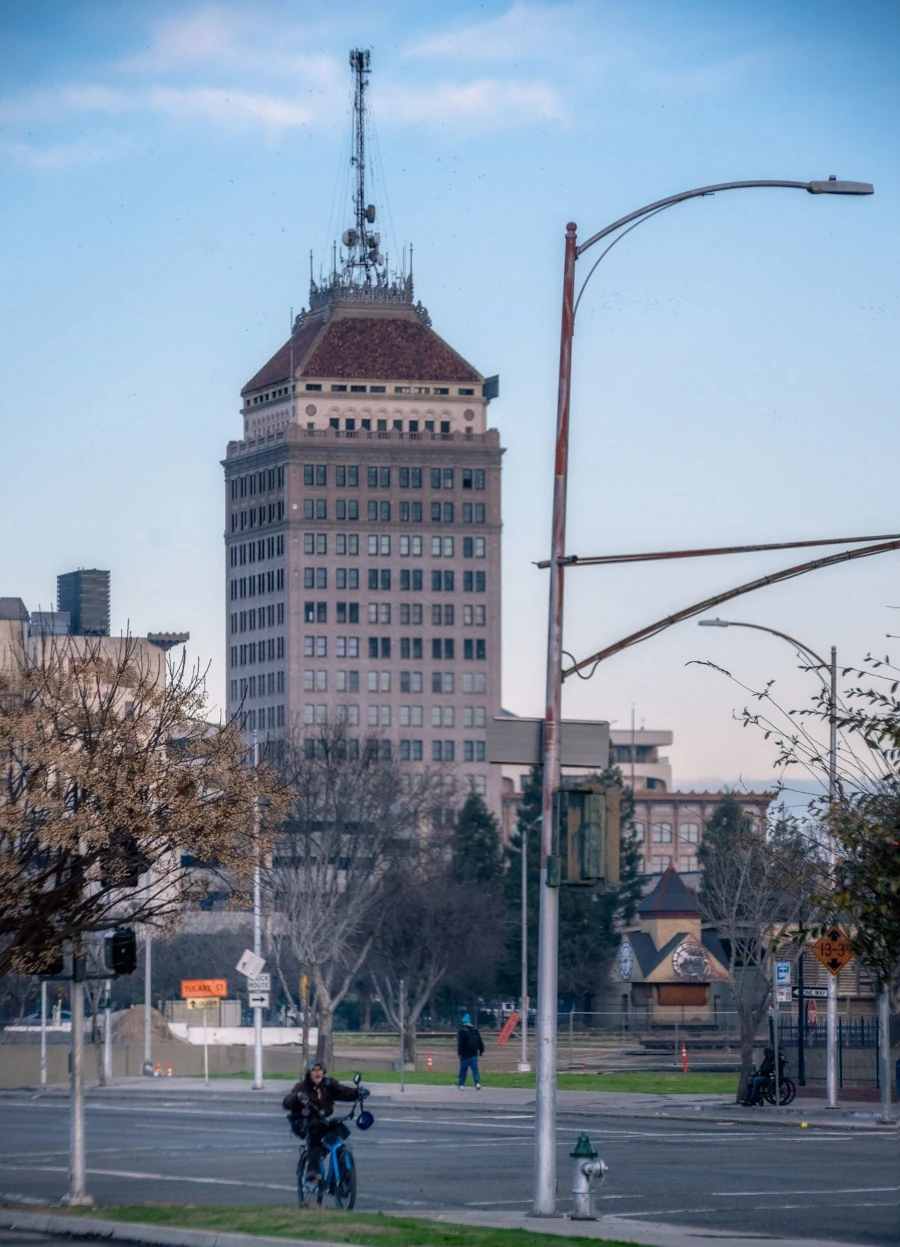
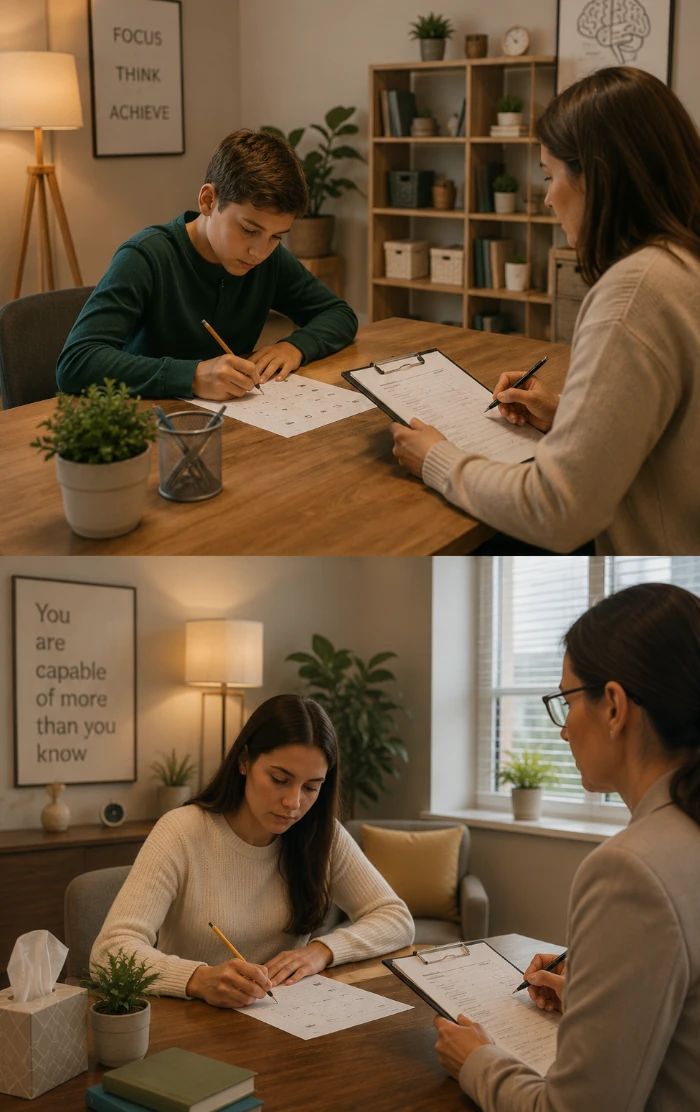
Professional IQ testing in Fresno – whether you need an assessment for school, employment, gifted program eligibility, or personal insight, we connect you with licensed psychologists in the Fresno area.
Last Updated: October 2026
Child IQ Testing
WISC-V & Stanford-Binet for ages 6–16. Gifted identification, learning profiles.
Adult IQ Testing
WAIS-IV & WAIS-5 available. Comprehensive adult cognitive assessments. Clinical & occupational.
WISC-V Test
Wechsler Intelligence Scale for Children® Fifth Edition – the gold standard for child IQ testing.
WAIS-IV & WAIS-5 Tests
Wechsler Adult Intelligence Scale® – Fourth Edition (WAIS-IV) and Fifth Edition (WAIS-5) available for adult IQ testing.
Gifted Testing
Identify giftedness for school placement, enrichment, and talent programs using WISC-V or Stanford-Binet.
Stanford-Binet 5
Stanford-Binet Intelligence Scales Fifth Edition – comprehensive cognitive assessment for all ages.
Mensa Testing
Mensa admission testing and preparation for the high-IQ society. Accepts WAIS-IV, WAIS-5, and Stanford-Binet 5 scores.
Full Evaluation
Combined assessment with detailed report and recommendations. Includes WISC-V, WAIS-IV, WAIS-5, or Stanford-Binet 5 as appropriate.
IQ Testing in Fresno: city context
Fresno is the largest city in California’s Central San Joaquin Valley and a major center for healthcare, education, agriculture, logistics, government, professional services, and regional commerce. The U.S. Census Bureau estimated 555,549 residents in 2025. Fresno covers approximately 115.18 square miles and connects dense historic neighborhoods, expanding northern communities, university and medical campuses, major highway corridors, and agricultural and industrial districts.
Fresno’s assessment ecosystem includes Fresno State, Fresno City College, Fresno Unified School District, UCSF Fresno, Community Medical Centers, Saint Agnes Medical Center, Kaiser Permanente Fresno, Valley Children’s Healthcare, the VA Central California Health Care System, and licensed psychologists in private practice. No authoritative source publishes a scientifically valid citywide “average IQ for Fresno”; cognitive ability must be assessed individually using standardized tests and appropriate educational, language, cultural, and clinical context.
IQ by gender & ethnicity
Fresno’s population is 49.8% female. Available data do not support separate male-versus-female IQ averages, and professional tests are interpreted through age-based norms rather than citywide gender estimates.
Current Fresno demographic context includes:
- Hispanic or Latino: 50.9% of residents; this category may overlap with racial categories.
- White alone: 31.6%; White alone, not Hispanic or Latino, 23.8%.
- Asian alone: 14.5%, reflecting Fresno’s substantial Hmong, Southeast Asian, Punjabi, and other Asian communities.
- Black or African American alone: 6.8%.
- American Indian and Alaska Native alone: 1.6%.
- Native Hawaiian and Other Pacific Islander alone: 0.2%.
- Two or more races: 26.1%.
- Foreign-born residents: 19.3%.
- Language other than English at home: 42.7% of residents age five and older.
- Under age 18: 27.4%, which creates substantial demand for school, gifted, learning, and developmental assessment.
- Educational context: 80.4% of adults age 25 and older are high-school graduates or higher; 25.5% hold a bachelor’s degree or higher.
These statistics describe Fresno’s population and do not establish group IQ values. Ethical assessment avoids assigning intelligence estimates to genders, racial groups, ethnic groups, languages, or neighborhoods and instead evaluates each person’s complete profile.
What is professional IQ testing?
Intelligence quotient (IQ) testing is a standardized method to measure human cognitive abilities and intellectual potential. Professional IQ tests are administered by licensed psychologists in a controlled environment to ensure accuracy and reliability. Unlike online quizzes, clinical assessments provide a full-scale IQ score along with detailed breakdowns of verbal comprehension, perceptual reasoning, working memory, and processing speed.
In Fresno, IQ testing is commonly used for gifted program admission, learning disability identification, career guidance, neuropsychological evaluation, and personal development. The results are presented in a comprehensive report that includes normative comparisons, strengths and weaknesses, and actionable recommendations.
Who should get tested?
IQ testing can benefit children, adolescents, and adults in various situations:
- Children: Parents often seek testing for school readiness, gifted placement, or to understand learning challenges.
- Adults: Many adults take IQ tests for career advancement, graduate school applications, or personal curiosity.
- Mensa candidates: High-IQ societies require official test scores for membership.
- Clinical referrals: Psychologists may recommend testing as part of a broader neuropsychological evaluation.
Types of IQ tests
We offer the most recognized and scientifically validated intelligence tests in the field:
- WISC-V (Wechsler Intelligence Scale for Children® – Fifth Edition): The gold standard for children aged 6:0–16:11. It provides a Full-Scale IQ and five primary index scores.
- WAIS-IV (Wechsler Adult Intelligence Scale® – Fourth Edition): The most widely used adult IQ test for ages 16–90. It measures cognitive functioning across four domains.
- Stanford-Binet Intelligence Scales – Fifth Edition: A comprehensive assessment for ages 2–85, often used for gifted identification and clinical evaluations.
- Gifted Testing: Often includes the WISC-V or Stanford-Binet, plus additional creativity and achievement measures.
- Mensa Testing: We provide official Mensa admission testing and preparation materials.
How the testing process works
- Initial consultation: Brief phone or video call to discuss your needs and match you with the right psychologist.
- Testing session: In-person or remote testing (depending on the test) with a licensed psychologist. Most sessions last 1–2 hours.
- Scoring and interpretation: The psychologist scores the test and interprets the results in the context of your background and goals.
- Feedback session: A detailed review of your results, including strengths, weaknesses, and practical recommendations.
- Comprehensive report: You receive a written report with all scores, normative comparisons, and actionable next steps.
How much does IQ testing cost in Fresno?
Fees depend on the test, referral question, provider credentials, record review, interpretation, feedback, and report requirements.
- Focused IQ or gifted assessment: Usually self-pay; request a written quote covering interview, testing, scoring, feedback, and the report.
- Adult WAIS or Stanford-Binet testing: Cost varies according to whether the purpose is personal insight, career guidance, Mensa documentation, disability, or clinical evaluation.
- Psychoeducational evaluation: Costs more because it may combine cognitive, reading, writing, math, attention, executive-function, behavioral, and emotional measures.
- Neuropsychological evaluation: Insurance may contribute when testing is medically necessary and referred, subject to authorization, network, deductible, and benefit rules.
- School-based evaluation: Public schools provide qualifying educational evaluations without charging families when disability eligibility is suspected.
- Private-school or GATE testing: Often treated as an educational service and may not be covered by medical insurance.
- Before scheduling: Confirm the exact instrument, report turnaround, school or organization acceptance, cancellation policy, bilingual capacity, and whether payment plans are available.
Fresno’s Intellectual History & Legacy
Fresno developed as the commercial and transportation center of one of the world’s most productive agricultural regions. Its intellectual and technical history now spans agricultural science, water management, medicine, education, engineering, logistics, public administration, food processing, entrepreneurship, and the arts.
- Fresno State: Founded in 1911 and now serving roughly 24,000–25,000 students, with programs in agriculture, engineering, psychology, education, business, health, public policy, and the arts.
- UCSF Fresno: A major regional medical-education and clinical-training campus affiliated with Community Regional Medical Center and other teaching sites.
- Fresno City College: One of California’s oldest community colleges, serving academic-transfer, career-technical, health, and workforce-development pathways.
- Agricultural innovation: Fresno County’s economy supports research and applied expertise in crops, irrigation, food processing, environmental science, and agricultural technology.
- Water and environmental expertise: The region’s professionals address groundwater, drought, irrigation, air quality, wildfire smoke, and sustainable land use.
- Medical and behavioral-health training: Community Medical Centers, UCSF Fresno, Valley Children’s, Saint Agnes, Kaiser, and the VA support regional clinical education.
- Cultural and linguistic knowledge: Fresno’s Hispanic, Hmong, Punjabi, Armenian, African American, Native, and immigrant communities contribute multilingual and cross-cultural expertise.
Top Employers in Fresno and Cognitive-Skill Demands
Employers do not generally publish complete hiring batteries, and a clinical IQ test is not a routine job requirement. However, major Fresno employers include roles involving professional examinations, validated aptitude measures, licensing, structured interviews, technical competency testing, or clinical cognitive evaluation.
- Fresno Unified School District: One of California’s largest districts, employing educators, school psychologists, administrators, technical staff, and operational teams across more than 100 schools.
- Community Medical Centers: The region’s major health system, with clinical, laboratory, research, technology, administration, and medical-education roles.
- Fresno County: A major public employer with healthcare, behavioral health, social services, public safety, legal, planning, engineering, and administrative positions.
- California State University, Fresno: Employs faculty, researchers, student-services professionals, analysts, clinicians, technical staff, and administrators.
- City of Fresno: Public-sector positions may involve civil-service testing, job-specific assessments, professional licensing, and public-safety standards.
- Saint Agnes Medical Center: Clinical, diagnostic, technical, nursing, information-technology, and administrative roles require professional competencies and continuing education.
- Kaiser Permanente Fresno: Healthcare, pharmacy, laboratory, behavioral-health, analytics, technology, and management roles.
- Amazon and regional distribution operations: Logistics, engineering, operations, maintenance, safety, data, and leadership roles emphasize problem solving and sustained attention.
- Foster Farms, Cargill, and food-processing employers: Quality control, engineering, food safety, laboratory, operations, and management work relies on technical reasoning and procedural accuracy.
- PG&E and regional utilities: Engineering, line work, safety, dispatch, analytics, and technical careers may involve licensing and validated selection procedures.
Fresno IQ Testing by Neighborhood
No scientifically valid dataset supports neighborhood IQ averages. These points describe educational, professional, transportation, and family context that can influence referral needs and access to testing.
Before arranging a formal evaluation in Fresno, adults and families can try an online IQ test to become familiar with common reasoning tasks, keeping in mind that it cannot replace professional assessment.
- Downtown Fresno: Close to Fresno City College, government offices, Community Regional Medical Center, UCSF Fresno teaching facilities, FAX routes, and the Amtrak station.
- Tower District: A historic, comparatively walkable arts and entertainment district with families, educators, healthcare workers, artists, and nonprofit professionals.
- Fresno State and Campus Pointe: A university-centered area where graduate planning, adult ADHD assessment, learning evaluations, and career guidance are common referral questions.
- Woodward Park and northeast Fresno: Family-oriented neighborhoods near schools, medical practices, professional offices, shopping, and major routes such as Friant, Woodward, and State Route 41.
- Fig Garden and Old Fig Garden: Established central-north neighborhoods with access to private schools, professional services, and educational resources.
- Sunnyside and southeast Fresno: Diverse residential communities served by Fresno Unified, charter schools, healthcare providers, and east-west transit corridors.
- Huntington Boulevard and southeast central Fresno: Historic neighborhoods near schools, downtown, medical services, and State Routes 41 and 180.
- West Fresno: Communities near Fresno City College West Fresno Center, industrial and logistics corridors, schools, and expanding community resources.
- Clovis and northeast metro: Adjacent communities with Clovis Unified schools, private practices, Valley Children’s access, and growing residential areas.
- Regional access: Families also travel from Madera, Sanger, Selma, Reedley, Kerman, Kingsburg, and other Central Valley communities; provider service areas should be confirmed.
Fresno Universities and Research Institutions
- California State University, Fresno: Projected fall 2025 enrollment of about 25,064, with more than 100 degree options and major programs in psychology, education, agriculture, engineering, business, health, and public affairs.
- UCSF Fresno: A regional medical-education campus supporting residency and fellowship training, clinical research, psychiatry, neurology, memory care, and neuropsychological assessment.
- Fresno City College: Transfer education, career technical programs, nursing and allied health, business, science, humanities, and student support.
- Fresno Pacific University: Undergraduate, graduate, teacher-education, counseling, business, and professional programs.
- University of California Cooperative Extension: Applied research and outreach in agriculture, nutrition, environmental management, and community development.
- USDA Agricultural Research Service: San Joaquin Valley research supports crop science, water, pests, food systems, and agricultural technology.
- Community Medical Centers and UCSF partnerships: Clinical training and research connect academic medicine with the Central Valley’s diverse population.
- Valley Children’s Healthcare: Pediatric specialty care, clinical education, neuroscience, psychology, and neuropsychology for the broader region.
Fresno Economic Context
- Median household income: $70,991 in 2020–2024 Census estimates.
- Per-capita income: $32,519.
- Residents in poverty: 20.1%.
- Bachelor’s degree or higher: 25.5% of adults age 25 and older.
- High-school graduate or higher: 80.4% of adults age 25 and older.
- Mean travel time to work: 22.4 minutes, although freeway congestion, construction, school traffic, and regional commutes can add time.
- Homeownership rate: 50.1%; the median owner-occupied home value was $374,800 in 2020–2024 estimates.
- Health and social-assistance activity: Approximately $7.45 billion in 2022 receipts/revenue within the city.
- Transportation and warehousing: Approximately $1.84 billion in 2022 receipts/revenue, reflecting Fresno’s role as a Central Valley logistics hub.
- Accommodation and food services: Approximately $1.79 billion in 2022 sales.
- Retail sales: Approximately $9.38 billion in 2022, or $17,194 per capita.
- Regional strengths: Agriculture, food processing, healthcare, education, government, logistics, construction, manufacturing, energy, professional services, tourism, and regional retail.
Fresno School District Data
- Fresno Unified enrollment: 70,163 students in 2025–2026 according to the California Department of Education district profile.
- District scale: Fresno Unified describes itself as serving more than 100 schools and a highly multilingual student population.
- English learners: 11,669 students, or 16.6%, in the 2025–2026 CDE profile.
- GATE qualification: Fresno Unified uses reasoning abilities, academic performance, and state tests in English language arts, math, and reading.
- Assessment timing: Students have opportunities to be assessed beginning in the fall semester.
- Elementary GATE sites: Manchester GATE and Yokomi serve grades 2–6 according to the district’s current program page.
- Secondary services: Eligible students may receive advanced, enriched, accelerated, honors, Advanced Placement, dual-enrollment, and specialized program opportunities.
- California framework: GATE funding is included in the Local Control Funding Formula, so program design and identification decisions are made locally.
- Nearby districts: Clovis Unified, Central Unified, Sanger Unified, Madera Unified, Selma Unified, and other districts maintain separate advanced-learning policies.
- School choice: Fresno includes magnet, charter, private, faith-based, career-technical, dual-language, and specialty programs with separate requirements.
Local Testing Centers and Psychologists
- UCSF Fresno Neuropsychological Assessment Clinic: Provides cognitive assessment for adults age 18 and older with neurological, neuropsychiatric, and neurodevelopmental concerns.
- UCSF Fresno Alzheimer and Memory Center: Evaluates memory and cognitive concerns and may include neuropsychological testing in comprehensive workups.
- Community Medical Centers: Neuroscience, rehabilitation, behavioral-health, trauma, and specialty services may generate referrals for cognitive assessment.
- Valley Children’s Neuropsychology: Provides consultation and evaluation for children and young adults with known or suspected central-nervous-system dysfunction; referral limits apply.
- Valley Children’s Pediatric Psychology: Supports children coping with chronic or complex medical conditions.
- Saint Agnes Medical Center and Kaiser Permanente Fresno: Neurology, behavioral-health, rehabilitation, and primary-care networks may refer for testing when appropriate.
- VA Central California Health Care System: Serves eligible veterans with medical, mental-health, rehabilitation, and neuropsychological needs.
- Fresno Unified and nearby school districts: School psychologists conduct educational evaluations for disability and program decisions.
- Private-practice psychologists: Offer gifted, adult IQ, ADHD, learning, disability, forensic, and psychoeducational evaluations; services vary.
- Provider verification: Confirm California licensure, instrument, age range, bilingual capacity, receiving-school acceptance, fees, insurance, and report timing.
Fresno Events and Conferences
- Fresno State lectures and research events: Psychology, education, agriculture, engineering, health, business, and public-policy programs host academic events throughout the year.
- UCSF Fresno continuing medical education: Grand rounds, conferences, resident education, and clinical presentations support regional healthcare professionals.
- California Psychological Association: Statewide continuing education and professional programming includes assessment, ethics, clinical practice, and law.
- California Association for the Gifted: Provides statewide resources and professional development for educators and families.
- San Joaquin Valley Town Hall: Brings nationally and internationally recognized speakers to Fresno for educational and civic programming.
- Fresno State research and student conferences: Campus programs present work in psychology, education, science, agriculture, engineering, and health.
- The Discovery Center and Fresno Chaffee Zoo: Family STEM, nature, conservation, and educational programming.
- The Big Fresno Fair: Major annual event that can affect traffic, travel times, and scheduling in October.
- Fresno County and school events: College fairs, magnet information nights, GATE parent meetings, career fairs, and enrollment events follow separate calendars.
Transportation and Accessibility
- Major roads: State Route 99 runs northwest–southeast through Fresno; State Route 41 runs north–south; State Route 180 runs east–west; major arterials include Blackstone, Shaw, Herndon, Kings Canyon, Ventura, Clovis, Cedar, and Friant.
- Public transit: Fresno Area Express operates 18 fixed-route bus lines with a fleet of more than 100 buses across the Fresno metropolitan area.
- Bus rapid transit: FAX Q provides frequent bus rapid transit along Blackstone Avenue and Ventura/Kings Canyon corridors.
- Paratransit: Handy Ride provides ADA paratransit for eligible riders whose disabilities prevent use of fixed-route service.
- Intercity rail: Amtrak Gold Runner service stops at Fresno’s historic Santa Fe depot and connects the San Joaquin Valley with Sacramento, the Bay Area, Bakersfield, and connecting buses.
- Airport: Fresno Yosemite International Airport served 2,672,881 passengers in 2024 and offers domestic and international nonstop routes.
- Distance to other cities: About 20 minutes to Clovis, 45 minutes to Madera, 1 hour to Visalia, 1.5 hours to Yosemite’s south entrance, 2 hours to Bakersfield, 2.5–3 hours to Sacramento or the Bay Area, and roughly 3.5 hours to Los Angeles under typical conditions.
- Walkability: Downtown, the Tower District, the Fresno State/Campus Pointe area, and selected mixed-use corridors have the strongest walkable clusters; much of Fresno remains automobile-oriented.
- Bike infrastructure: Fresno’s planning documents identify approximately 38 miles of Class I paths, 426 miles of Class II lanes, and 21 miles of Class III routes as of 2017, with continued expansion through the Midtown Trail and active-transportation planning.
- Accessibility planning: Ask testing offices about accessible parking, elevators, wheelchair access, sensory conditions, interpreters, and rest breaks.
- Scheduling: Allow extra time for State Route 99/41/180 congestion, school traffic, construction, summer heat, winter fog, wildfire smoke, and major events.
Fresno Weather and Seasonal Considerations
- Hot summers: Triple-digit heat is common in the San Joaquin Valley; schedule morning appointments when heat, dehydration, or fatigue could affect comfort.
- Dry conditions: Hydration, sleep, and avoiding prolonged outdoor exposure before testing support attention and stamina.
- Wildfire smoke and air quality: Regional fires, ozone, and particulate pollution can affect breathing, headaches, and concentration; sensitive clients should monitor current guidance.
- Winter tule fog: Dense fog can reduce visibility and delay travel, especially from late November through mid-February.
- Rain season: Most precipitation occurs during the cooler months, and heavy rain can create localized flooding and slower travel.
- Spring: Generally mild but allergy symptoms may affect sleep, attention, and comfort.
- Climate-controlled testing: Professional offices should provide a quiet, temperature-controlled setting throughout the year.
- Peak school-testing season: Fall GATE assessment, winter and spring school evaluations, and private-school deadlines can increase demand.
- Graduate and accommodation timing: Begin several months before application or documentation deadlines.
- Best preparation: Sleep, prescribed medication as directed, hydration, a normal meal, glasses or hearing aids, and extra travel time matter more than season-based claims about intelligence.
Areas we serve
We support all areas of Fresno. Availability for nearby communities depends on the individual provider, licensing, travel radius, age range, referral question, and whether the evaluation must be completed in person.
Frequently Asked Questions
WISC-V is for children aged 6–16, while WAIS-IV is for adults aged 16–90. Each is normed for its specific age group.
Most IQ tests take between 60 and 90 minutes, plus a feedback session. Allow 2–3 hours total.
No, you can book directly with our psychologists. We serve both self-referred and professionally referred individuals.
Yes, we provide official documentation that is accepted by Mensa and other high-IQ societies.
Some plans cover cognitive assessments when there is a clinical indication. Check with your provider.
Get a good night's sleep, eat a healthy meal, and arrive relaxed. No specific preparation is needed.
You'll receive a comprehensive report with your scores and tailored recommendations.
Yes, many tests are available via secure telehealth platforms. Contact us for details.